Naturally Dyed Easter Eggs
- Makes 12 eggs
- Prep 20 minutes
- Cook 15 minutes
- Total 35 minutes
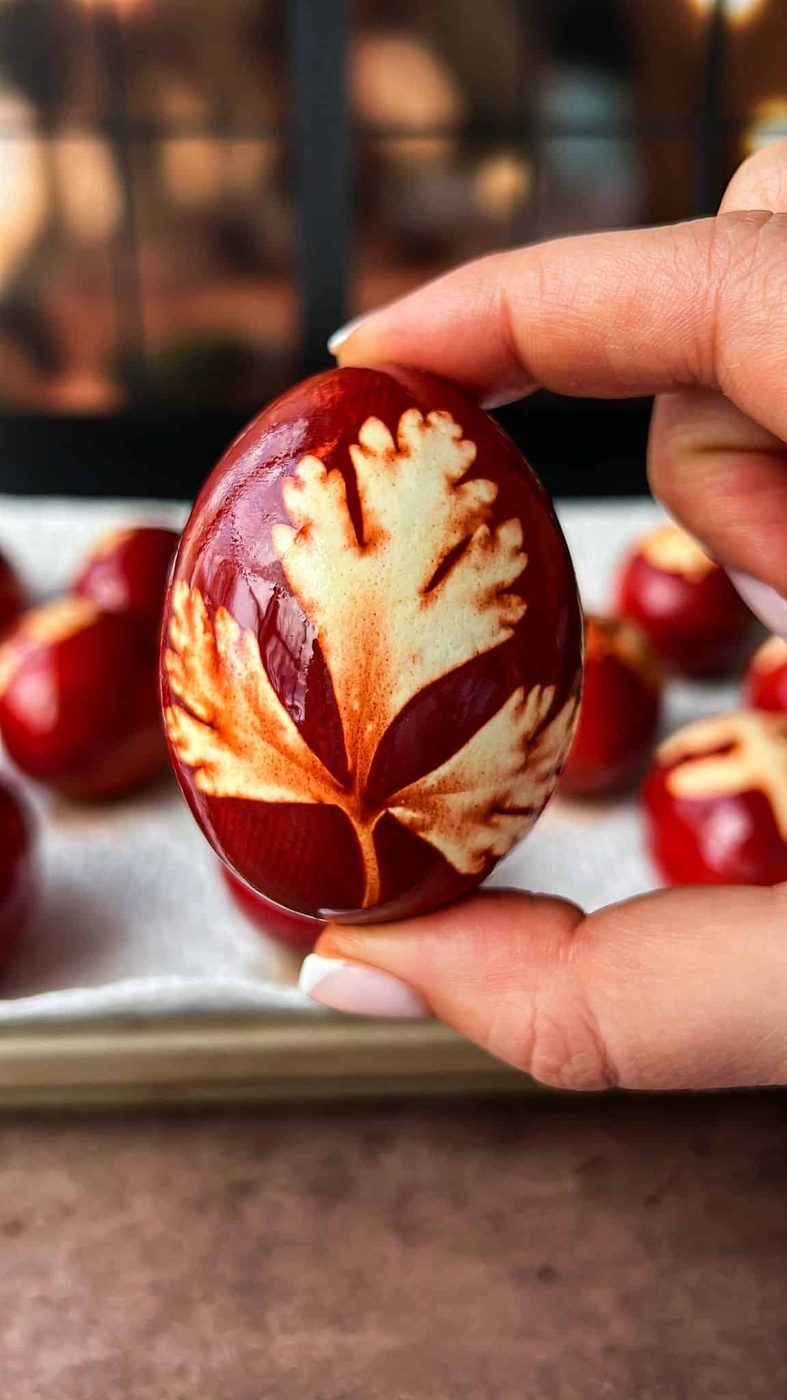
OH you better grab Granny’s pantyhose and buckle up, cause we’re about to dye some Easter eggs the old-school Slavic way — and yes, pantyhose are the secret weapon.
If you thought pantyhose were just for that “church-chic” look, think again, boo boo. Not only do they barely protect your legs from the cold with that 0.0002 thread count, but turns out, they’re also suited to making gorgeous naturally dyed Easter eggs.
This is truly one of our favorite childhood traditions straight from the motherland — shoutout to our fellow Balkans who know exactly what we're talking about.
All you need are some eggs, leaves, old pantyhose, onion peels, and a splash of vinegar. You wrap the eggs with leaves and pantyhose, boil them with the onion skins, and boom — naturally dyed, beautifully rustic Easter eggs with zero messzero chemicals and 100% Balkan magic!
Let’s dye these eggs together like it’s 1999, and your bapche is supervising with a cup of coffee and 16 opinions.
What stands out
Whether you’re Slavic or not you can’t resist this old-school method. Why? Because it uses stuff you probably already have lying around at home or just chilling outside your front door. No need to buy mysterious dyes or order things you’ll use once a year and then forget in the back of a drawer until the next DIY Easter project.
This method is tried, true and grandma-approved —passed down through generations, from baba to mama. The results? Gorgeous, naturally dyed eggs that look like they belong in a Crate & Barrel Easter spread —rustic, chic and unapologetically Balkanic. Plus, no scary toxic dyes are seeping into your eggs, and you get to go wild with leaf choices and placement.
How to Prepare
First, take a pair of nylon panty hose (stockings) and then cut them into 6-inch pieces starting from the foot of the panty hose.
Soak your choice of leaves, flowers, or herbs in warm water. The warm water will soften up the foliage and also help it stick to the egg.
Next, center a leaf on the raw egg, and place it gently inside a piece of stocking. Tightly wrap the egg in the stocking making sure to twist at the base once, and then tie it the same way you would tie a balloon. Repeat this step for each egg.
Fill a pot with 1/2 of the onion peels, and then place the wrapped eggs in the pot with the leaf side down. Add half of the water, the vinegar, the rest of the onion peels, and the other half of the water to the pot.
Bring to a simmer and leave it to boil gently. Don’t let it boil vigorously, as the eggs can crack. Remove from the heat and let it sit for a minimum of 8 hours (or overnight).
Cut the string at the top, remove the leaf, and then set your eggs on a paper towel to dry. Once the eggs are dry, cover each one in some oil to add a bit of shine. Enjoy!
Kitchen tip
The more onion peels you use and the longer you let it sit, the deeper the color will be. Aim for at least 8 hours, we let ours sit in the fridge for about 20.
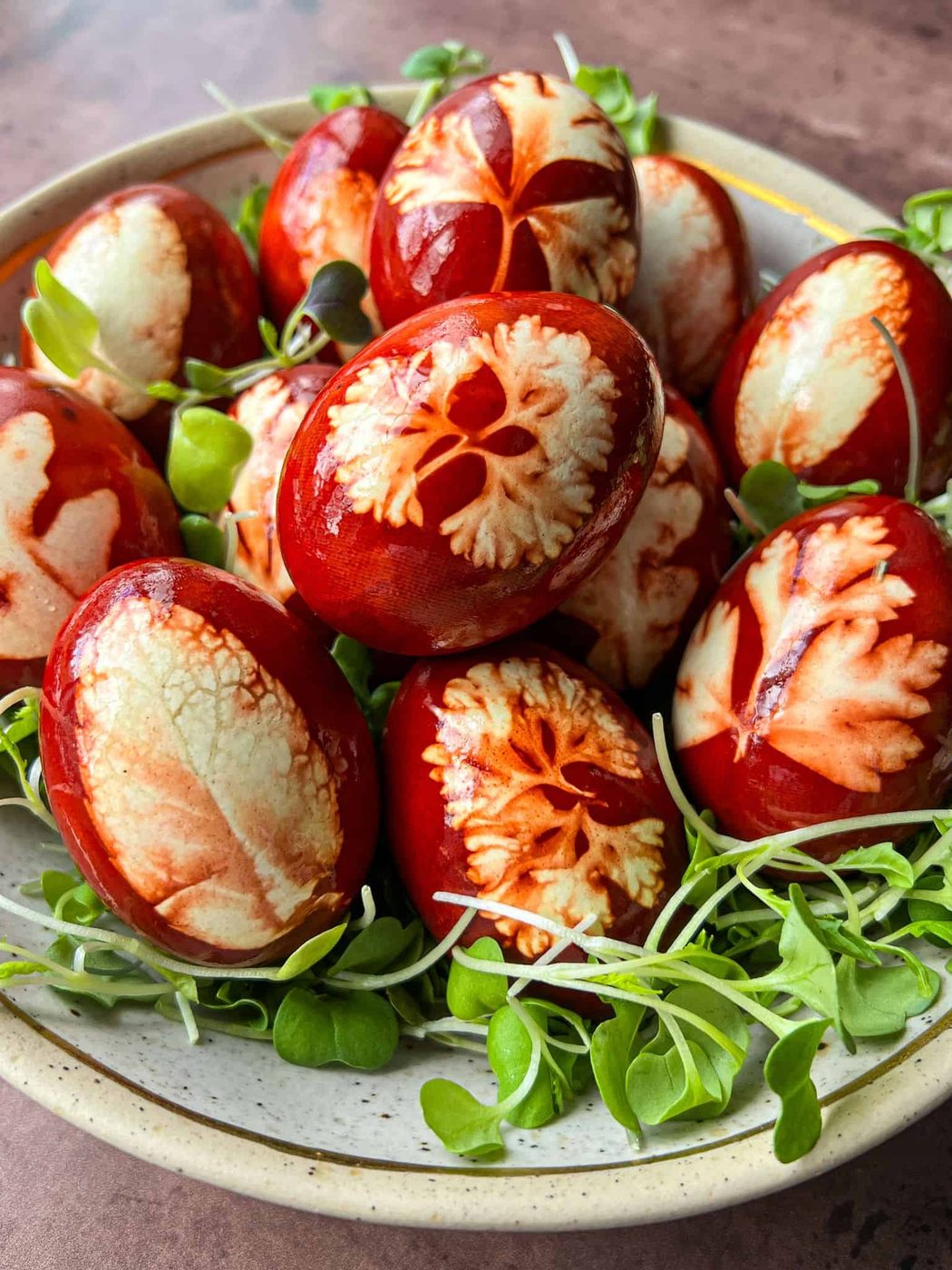
Balkan Egg Cracking Game
In Bulgarian Easter tradition (and many other Balkan countries), there’s a beloved, slightly chaotic egg-cracking game known as “egg tapping” or “egg fighting” where the winner is blessed with good luck for the whole year. But we're warning you now: things get intense. It’s all fun and games until your cousin shows up with her suspiciously indestructible egg, and you have stress sweat dripping down your back trying to preserve your chosen egg.
Here’s how it goes: everyone picks a hard-boiled egg preferably the strongest-looking one (Slavic egg intuition is real). Two players face off, holding their eggs pointy-end up. One holds their egg steady while the other taps it with theirs, aiming to crack the opponent’s egg without breaking their own. Only pointy-end-to-pointy-end hits are allowed — we have rules, people. The egg that cracks is out, and the survivor egg moves on to challenge the next contender. The last uncracked egg standing is crowned the champion.
Swaps
- White eggs are the canvas for producing vibrant bold colors. You can also use brown or heirloom eggs, just keep in mind that the colors will be soft and muted.
- Experiment with different foods to create more dye colors, like spinach for green, beets for pink, and turmeric for the golden egg!
- Try different leaves, flowers, and herbs to create different patterns.
- Before dyeing, use a clear wax crayon to write your child’s name on the back of the egg for a personalized touch.
Serve it with
- Make this gorgeous Roasted Leg of Lamb (European Style) for Easter dinner.
- Any leftover eggs can be transformed into these cute Deviled Egg Chicks.
- Bake a batch of Cadbury Chocolate Chip Cookies for a sweet treat.
- Charcuterie boards aren’t just for Christmas! Accessorize your Easter board with beautifully dyed eggs.
Questions
Can we eat naturally dyed easter eggs?
Yes! In fact, they’re healthier than using an artificial dye kit. This method uses natural foods to create vibrant colors that are perfectly safe for eating.
What types of flowers and leaves work best?
Small flowers like daisies, pansies, and violets work great! You can also use ferns and herbs with intricate patterns, like cilantro, mint, or parsley.
What foods make other natural dye colors?
Use these foods to make more natural dye colors: Red cabbage = Blue/PurpleBeets = Pink/RedTurmeric = YellowSpinach or Matcha = Green
How long should the eggs soak in the dye?
The longer you let the eggs soak, the more vibrant the color will be. Therefore, we recommend letting them soak for 8 hours, or overnight. Conversely, for a pastel hue, soak for less time.
How do we remove the panty hose without smudging the design?
Cut the panty hose away with scissors and then gently peel them off. Let the eggs dry completely on a paper towel before handling.
Why aren’t our eggs shiny?
Rub a little bit of vegetable or coconut oil on the eggs once they’re dry to make them shine.
How long do naturally dyed eggs last?
Naturally dyed eggs will last for up to one week in the refrigerator.
Ingredients
Makes 12 eggs
- 12 eggs
- 12 leaves (any of choice), parsley, mint, basil, etc.
- 1 pair nude panty hose
- onion peels, enough to fill up the pot
- 8 cups water
- ¼ cup white vinegar
- touch of oil, for the end to make them shiny
Equipment
- Large Pot
- Measuring Cups + Spoons
- Nylon Stockings
- Always Pot Chocolate Set
Method
- Take a pair of nylon panty hose (stockings) and cut them into pieces starting from the foot of the panty hose.
- For us, each piece turns out to be 5-6 inches in length and 4 inches in width.
- Next, start on the foliage. You can use any small leaves of choice from outside or the grocery store. We like to make it fun by including herbs (or flowers) that are different. You can use: parsley, basil, mint, flowers, cilantro, or anything else you like.
- Pick off each leaf and soak them in warm water. The warm water will soften it up and help stick to the egg.
- Next, take an egg and place the leaf right in the middle on the clean side of the egg, which is the side that’s not stamped.
- Take a square of the stocking and place the egg gently on the inside between the two sides.
- Tightly wrap the egg in the stocking making sure to twist at the base and tie it the same way you would tie a balloon.
- If you’re unsure, have someone assist you or look at the step-by-step photos in the prep section of this post.
- Repeat this step for each egg.
- Next, fill a pot with 1/2 of the onion peels and place the wrapped eggs in the pot with the herb side down.
- Add half of the water, the vinegar, followed by the rest of the onion peels and the other half of the water.
- Let this come up to a simmer and leave it for 15-20 minutes. Don’t let it boil vigorously as the eggs can crack.
- After 15-20 minutes, take it off the heat and let it sit for a minimum of 8 hours (or overnight). When the water has cooled, you can store them in the fridge.
- Note: the more onion peels you use and the longer you let it sit, the deeper the color will be.
- When the eight hours is up, cut the string, remove the herb, and set on paper towel to dry.
- Once the eggs are dry, cover each one in some oil which will make them nice and shiny!
Kitchen notes
- Traditions: In Bulgarian Easter tradition, an egg-cracking game called “egg tapping” or “egg fighting” is a key part of our celebration. The object of the game? Try to crack your opponent’s egg without breaking your own. The winner is believed to have good luck for the year!
- Onions: You can use yellow or red onions for this recipe. Some cultures even use other produce such as red cabbage so feel free to experiment. We peeled 20 onions to fill up the pot, we like to collect ours as we cook and store them in a ziplock bag in the freezer.
- Foliage: Feel free to go outside and have FUN looking for different leaves or flowers. You can use any herb of choice at the grocery store as well.
- Pantyhose: Use any nylon pantyhose you have on hand. We like nude as the colour won’t leak and we can see the placement of our leaf.