Thanksgiving Turkey
- Makes 8 servings
- Prep 30 minutes
- Cook 4 hours
- Total 5 hours
In this Thanksgiving turkey recipe, we'll guide you through the process of cooking a and juicy turkey using the Julia Child method. From thawing to roasting, we've got you covered. Whether you’re a seasoned chef or a first-time Thanksgiving cook, this recipe is sure to please. Follow these steps for a turkey that’s juicy on the inside, beautifully browned on the outside, and bursting with flavors.
How To Thaw Thanksgiving Turkey
Thawing the turkey properly is the crucial first step in preparing your Thanksgiving feast. Thaw your turkey based on the package directions provided by the manufacturer. These directions are essential as they consider the specific weight and size of your turkey.
The ideal method for thawing a frozen turkey is to use your refrigerator. This ensures a controlled temperature environment, keeping the turkey safe from bacteria growth. However, keep in mind that t hawing can take time so plan ahead. Thawing times in the refrigerator can vary depending on the size of the bird. Here’s a general guideline:
- For turkeys weighing 4-12 pounds: Allow 2 to 4 days.
- For turkeys weighing 12-16 pounds: Plan for 4 to 5 days.
- For turkeys weighing 16-20 pounds: Expect 5 to 6 days.
- For larger turkeys weighing 20-24 pounds: Allocate 6 to 7 days for thawing.
Do We Brine The Turkey?
A lot of turkeys come “seasoned” which means they were pre-brined. You can brine it yourself though by soaking the turkey in 4% brine (40grams of salt per 1000ml water) for at least 24 hours. If you brine the turkey, you don’t have to worry about basting as you’ll be left with the juiciest bird!
Remove The Giblets
Once the turkey has fully thawed carefully remove it from the refrigerator. Begin by patting the turkey dry with paper towels. This helps remove excess moisture from the surface, which is essential for achieving crispy skin during roasting. Now, it’s time to deal with the giblets and neck. These are typically found nestled inside the turkey.
Check inside the main cavity of the bird, which is usually located in the body cavity. Additionally, look into the neck cavity positioned between the wings of the turkey. Once you’ve located the giblet package and neck, gently remove them. It’s crucial to ensure they are fully detached from the turkey’s cavities. After removal, set the giblets and neck aside. They can be used to enhance the flavor of your gravy or other dishes. Store them in the refrigerator until you’re ready to use them.
Note: Sometimes, giblets are packaged in plastic, so be sure to remove the plastic packaging before use. Leaving the giblets in plastic inside the turkey can have adverse effects on the turkey’s flavor and overall cooking process, so always double-check.
Taking these steps to thaw your turkey and remove the giblets properly sets the foundation for a perfectly cooked Thanksgiving centerpiece. It ensures that your turkey is safe to cook and that you’re making the most of every component as well.
Kitchen tip
Thawing time depends on the turkey’s size. For a typical turkey: 4-12 pounds takes 2 to 4 days, 12-16 pounds takes 4 to 5 days, 16-20 pounds takes 5 to 6 days, and 20-24 pounds takes 6 to 7 days.
How to Prepare Thanksgiving Turkey
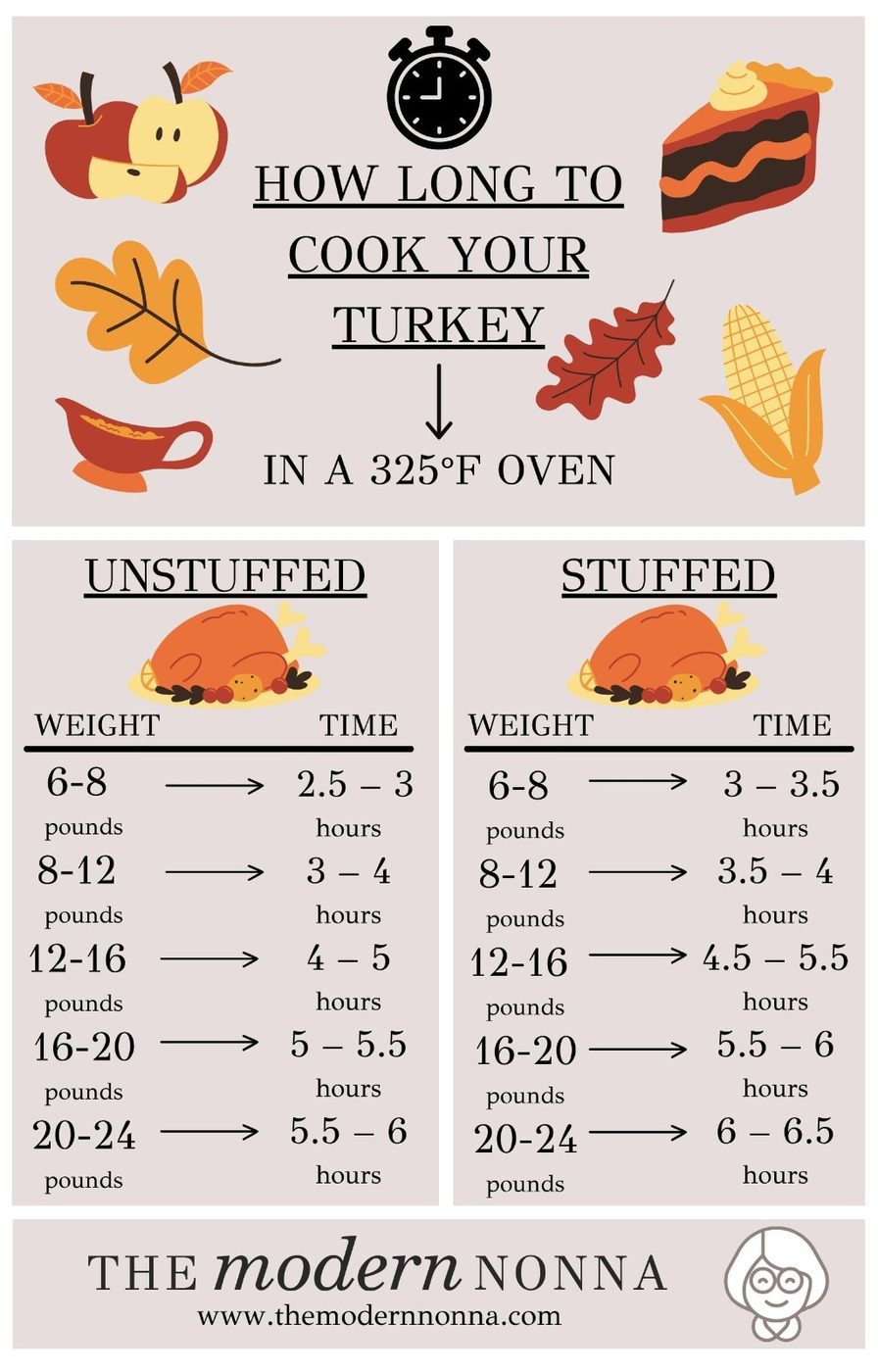
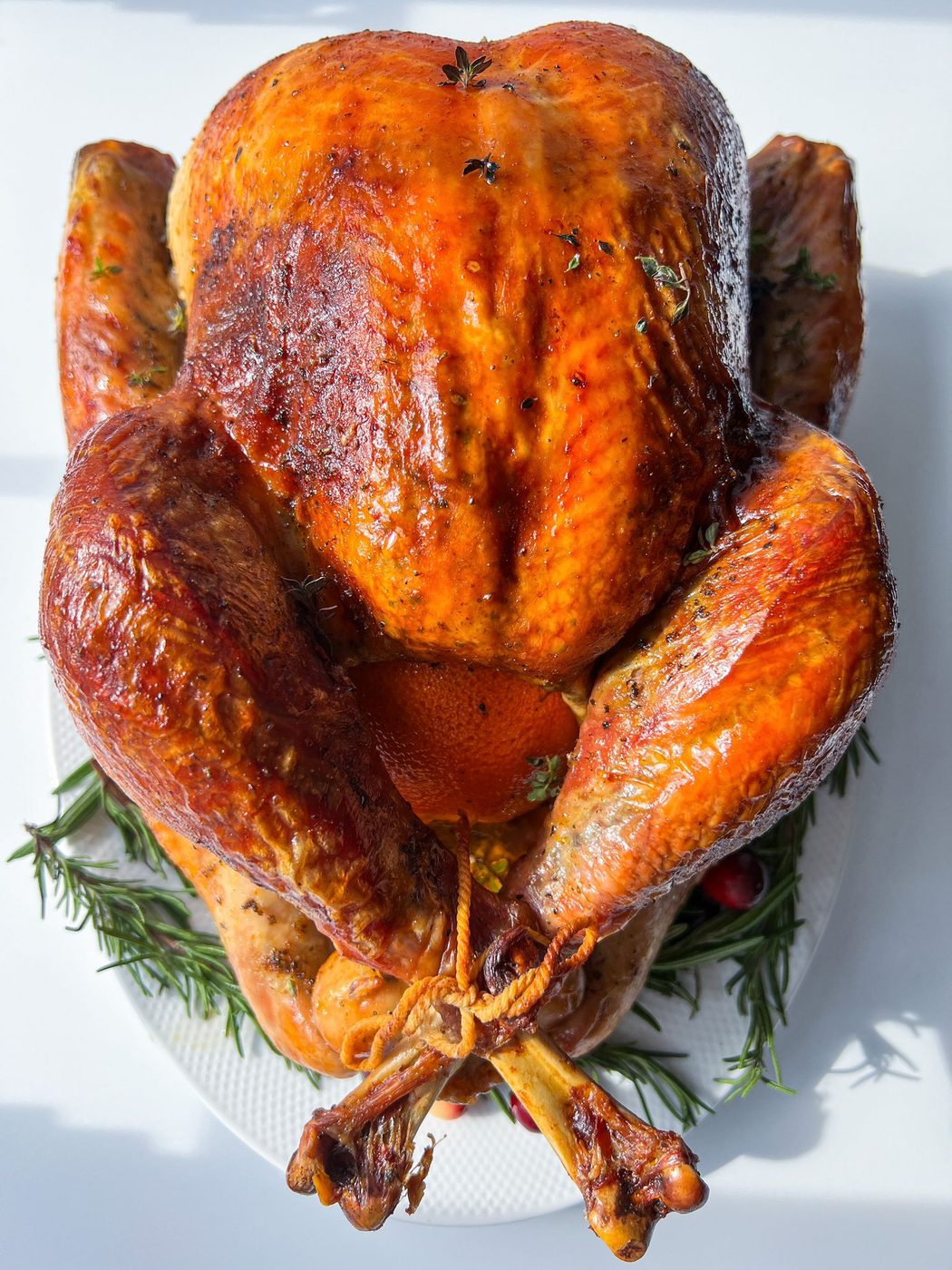
Now that your turkey is prepped, you can preheat the oven to 325°F/165°C and gather the other ingredients. For the exterior, prepare a spice-infused butter mixture and coat the turkey evenly. We also like to gently loosen the skin under the breast and add some butter there as well. This is not a straightforward step and it is completely optional. Make sure to spread the butter in the crevice along with a whole orange. Tuck the wings under the rack and tie the legs with twine.
What makes this recipe special is the use of the Julia Child method. To implement this technique, soak a cheesecloth in melted butter (we also add some beer or wine) and lay it on top of the turkey. Place the prepared turkey on a roasting rack for even cooking.
Throughout the roasting process, it’s essential to maintain the turkey’s moisture to enhance its flavor. To accomplish this baste the turkey with its own juices approximately every 30-45 minutes. If you want to add an extra layer of flavor, consider introducing some broth, white wine, or even a mixture of beer and water to the roasting pan. These liquids not only contribute to taste but also serve as the foundation for a pan gravy.
Download As a PDF
Final Touches
As you approach the last 30 to 45 minutes of roasting time, take the final step to your turkey. Carefully remove the cheesecloth allowing the skin to crisp and develop a delightful golden brown color. This simple step adds a satisfying crunch to the turkey’s exterior while preserving its succulent interior.
When the turkey is done letting it rest for a minimum of 30 minutes is crucial. Carve and soak the carved turkey into the remaining juices that sit on the bottom of the pot.
By following these steps and incorporating the Julia Child method, your Thanksgiving turkey will be a flavorful and moist centerpiece that your guests will savor. Say goodbye to dry turkey breast, and hello to a turkey that’s both and visually stunning.
Swaps
These variations offer a chance to infuse your personal touch into this time-honored holiday centerpiece.
- Experiment with different herb combinations for your butter mixture. Rosemary, thyme, sage, are classic choices, but you can also try tarragon, marjoram, or cilantro for a unique twist.
- While orange adds a lovely citrusy note, you can switch it up with lemon or lime.
- Add a bit of heat by incorporating spices like paprika, cayenne pepper, or chili powder into your herb butter mixture for a spicy turkey variation.
Other Holiday Recipes
- Gravy
- Cranberry Sauce
- Mac and Cheese
- Stuffing
- Sweet Potato Donuts
- Pumpkin Pie
- Brussels Sprouts
- Sweet Potatoes
- Garlic Mashed Potatoes
- Turkey Noodle Soup
- Butternut Squash Pasta
- Baked Apples
- Mushrooms
- Green Beans
- Whole Roasted Sweet Potato
Questions
What type of salt do you use?
Why isn’t the butter sticking to the turkey?
The bird may be condensating or your butter may be too cold and firm. Make sure the turkey comes to room temperature for an hour and pat it with paper towels to remove moisture before you butter it.
What if our turkey didn’t come with the neck or giblets?
This can happen, so be sure to check both areas to double-check. If you do find the neck and giblets, remove them. You can use them for another recipe (to make gravy or stock).
Do we need to baste the turkey every 30 minutes?
No, you don’t need to baste it, it’s totally up to you. You will get a crispier, juicier bird if you do.
strong Can we stuff the turkey before roasting it?
Yes, you can certainly stuff the turkey, but it’s essential to ensure that the stuffing reaches a safe internal temperature of 165°F (74°C). It’s often safer to cook stuffing separately to avoid undercooking the bird. Cooking the stuffing inside the bird can also create soggy stuffing.
strong What’s the purpose of the cheesecloth during roasting?
The cheesecloth soaked in melted butter serves as a basting tool that helps keep the turkey moist during roasting. It also prevents the skin from drying out and protects the breast meat, ensuring it stays juicy.
strong How often should we baste the turkey?
Baste the turkey approximately every 30 minutes to enhance flavor and moisture. You can use the turkey’s own juices to baste, or a flavorful liquid like broth, white wine, or a beer and water mixture instead.
strong How can we ensure a crispy skin on the turkey?
To achieve crispy skin, remove the cheesecloth during the last 30 minutes of roasting. This allows the skin to brown and crisp up while keeping the meat juicy.
strong How do we know when the turkey is done cooking?
The turkey is done when it reaches an internal temperature of 165 degrees Fahrenheit (74 degrees Celsius) in the thickest part of both the thigh and the breast. Use a meat thermometer to ensure accuracy.
strong What should we do if we forgot to thaw our turkey in advance?
If you’re short on time, you can use the cold water thawing method. Submerge the turkey in its packaging in cold water, changing the water every 30 minutes. This method takes about 30 minutes per pound.
strong How long does it take to thaw a frozen turkey in the fridge?
Thawing time depends on the turkey’s size. For a typical turkey: 4-12 pounds takes 2 to 4 days, 12-16 pounds takes 4 to 5 days, 16-20 pounds takes 5 to 6 days, and 20-24 pounds takes 6 to 7 days.
Ingredients
Makes 8 servings
- 1 5kg turkey, 11 lbs
- 2 sticks butter, unsalted
- ½ tablespoon paprika
- 3 teaspoons salt, to taste
- 1 tablespoon dry oregano
- ½ tablespoon garlic powder, optional
- 1 orange, washed
- 3 cups water, for the bottom of the roasting dish
- 1 cup beer, white wine or broth will work as well
Cheesecloth Method
- 1 stick butter, unsalted
- ⅓ cup beer, (or white wine) optional
Equipment
- Roasting Dish
- Baster
- Cheesecloth
- Butchers Twine
- Meat Thermometer
- Measuring Cups + Spoons
Method
The Compound Butter
- Leave the butter on the counter the night before to soften. Once the butter is soft, mix in the seasonings of choice. Feel free to add herbs like thyme or sage as well. Set aside and work on the turkey.
The Turkey
- Take the thawed turkey out of the fridge. Mine thawed in the fridge for 4 days.
- Take it out of the package and drain it from any liquids. Remove the giblets (if any) ours didn't come with any this year but be sure to check in the cavity or under the neck at the back.
- Pat it dry really well with a paper towel and let it come to room temp for at least one hour.
- Preheat the oven to 325F (ours was at 350F) as our oven is slow.
- Put the turkey on the rack in the roasting dish.
- Massage the turkey all over with the seasoned butter.
- NOTE: If the turkey is cold and not at room temp, the butter will solidify and be hard to spread so keep that in mind.
- We like to butter the top, inside the cavity, and we gently loosen up the skin under the breasts and add some in there as well. You don't need to add any under the skin if it's intimidating for you.
- Once the turkey is buttered, add a whole orange in the cavity.
- Tuck the wings under so they don't burn (you can tuck them under the rack) and tie the legs with butchers twine.
- Pour in the 3 cups of water and 1 cup beer (or wine) to the bottom of the baking dish.
Cheesecloth Method
- In a separate pot on the stove, melt a stick of butter. Add a touch of beer (or wine) and soak the cheesecloth in this goodness.
- When the cheesecloth is cool enough to handle, place it on top of the turkey making sure to cover it.
- Place the turkey in a preheated 325F oven and bake making sure to baste every 40 minutes. Basting is optional but ensures a juicy bird.
- Note: The most reliable way to see if your turkey is thoroughly cooked is by using a meat thermometer. A reading of 180F in the breast and 170F in the thigh means you’re ready to serve the turkey. Some birds come with a pop-up thermometer that pops when it has finished cooking.
- Take off the cheesecloth 30-45minutes before the Turkey is done. We lift it up with cooking tongs, baste it and let it get golden for the rest of the time.
- When the turkey has a reading of 180F in the breast and 170F in the thigh means you’re ready to serve the turkey.
- Take it out of the oven and let is rest for a minimum of 30 minutes.
- We like to carve it and soak it in the extra juices from the pan. Enjoy!