
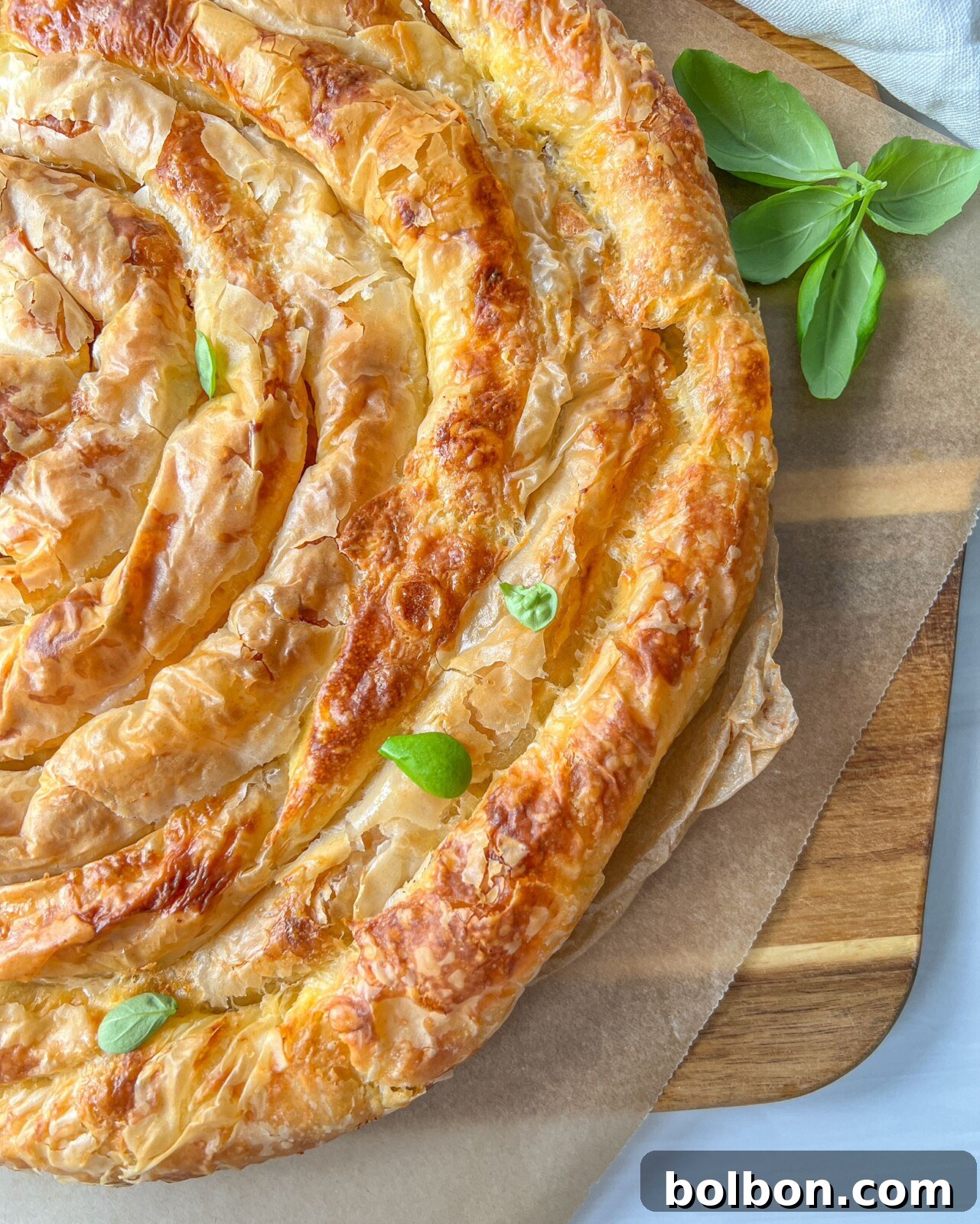
Welcome to the enchanting world of Banitsa, a quintessential Bulgarian phyllo feta pie that captures the heart with its irresistible flakiness and savory goodness. This traditional dish, deeply rooted in Bulgarian culinary heritage, offers a delightful experience with every bite. Our recipe presents the most straightforward version of this classic, allowing anyone to recreate the magic of authentic Banitsa at home. Imagine delicate, whisper-thin sheets of phyllo dough, generously filled with a tangy, salty feta and yogurt mixture, then expertly rolled into an elegant spiral. Brushed with golden melted butter and baked to a perfect crisp, the result is a pastry that shatters with a satisfying crunch, revealing a rich, creamy interior that will truly transform your perception of comfort food. This iconic puffed pastry holds immense sentimental value, often evoking cherished memories of grandmothers meticulously preparing this beloved dish, sometimes with sweet variations like pumpkin or apple. Banitsa stands as a proud member of a global family of stuffed phyllo dough pastries, sharing kinship with the likes of Greek Tiropita and various forms of Burek found across the Balkans and the Middle East. Our family recipe, a treasured heirloom passed down through generations, was lovingly taught to me by my grandmother, ensuring that the authentic taste and tradition live on.
Why Banitsa Will Become Your New Favorite Pastry
If your palate yearns for the sublime combination of flaky, buttery layers embracing a savory, creamy filling, then Banitsa is about to become your culinary obsession. This exquisite Bulgarian phyllo feta pie, with its tangy and salty feta and yogurt mixture, offers a flavor profile reminiscent of its Mediterranean cousins like Burek and Tiropita, yet possesses a unique charm all its own. The secret to its incredible texture lies in phyllo dough – an ingenious ingredient readily available in the freezer aisle of most grocery stores. It’s the ultimate culinary hack for crafting an impressive, quick, and easy pastry in your own kitchen. When brushed with melted butter and baked, these unassuming sheets of phyllo dough undergo a remarkable transformation, emerging from the oven as crisp, golden, and impossibly flaky pastry layers. They shatter into a million delicious crumbs with the first bite, delivering an unparalleled textural experience. Beyond its sensational taste and texture, Banitsa boasts an undeniably impressive appearance, making it a show-stopping dish for any occasion. Despite its sophisticated look, the simplicity of its preparation is truly astonishing, making it accessible even for novice bakers. It’s a versatile dish that can serve as a hearty breakfast, a delightful brunch item, an elegant appetizer, or a comforting snack any time of day.
The Art of Preparing Homemade Banitsa: A Step-by-Step Guide
Creating this authentic Bulgarian Banitsa is a journey that’s as rewarding as it is delicious. Follow these detailed steps to achieve a perfectly golden, flaky, and savory pie that will impress everyone.
- Prepare Your Baking Dish: Begin by lining a 12-inch round baking dish (a springform pan works wonderfully for easy removal, but any round dish will suffice) with parchment paper. This simple step ensures your Banitsa doesn’t stick and makes for effortless serving. Lightly grease the parchment paper with a small amount of melted butter. While preparing the rest of your ingredients, preheat your oven to a precise 400°F (200°C) to ensure it’s ready when your pastry is assembled.
- Thaw the Phyllo Dough: The most crucial step for working with phyllo dough is proper thawing. Remove the frozen phyllo sheets from their packaging and allow them to thaw completely according to the package directions. This usually takes several hours in the refrigerator or about 30-60 minutes at room temperature. While the phyllo thaws, gather and prepare the rest of your ingredients; this minimizes the time the delicate phyllo sheets are exposed to air, preventing them from drying out.
- Craft the Creamy Feta Filling: In a spacious mixing bowl, combine the heart of your Banitsa: the feta and yogurt mixture. Begin by crumbling the feta cheese into generous chunks using a fork. The texture is key here – you want some smaller bits for creaminess and larger pieces for a burst of salty flavor. Add the eggs to the crumbled feta and mix thoroughly with your fork until well incorporated. Finally, add the plain yogurt (Bulgarian or Balkan-style is preferred for authentic taste, but any good quality plain yogurt will do) and the baking soda. Mix everything until you have a cohesive, creamy, and slightly bubbly filling. The baking soda reacts with the yogurt to give the filling a lighter, airier texture when baked.
- Assemble the Phyllo Layers: Unroll the thawed phyllo sheets carefully. To prevent them from drying out, keep the stack covered with a clean, lightly damp kitchen towel throughout the assembly process. Place one sheet of phyllo on your clean work surface. Using a pastry brush, lightly coat the entire surface of this sheet with melted butter. Place a second phyllo sheet directly on top of the first, aligning the edges perfectly. Brush this second sheet with more melted butter. Now, take a few generous spoonfuls of your prepared yogurt-feta mixture and spread it thinly and evenly over the top phyllo sheet, leaving a small border at the edges.
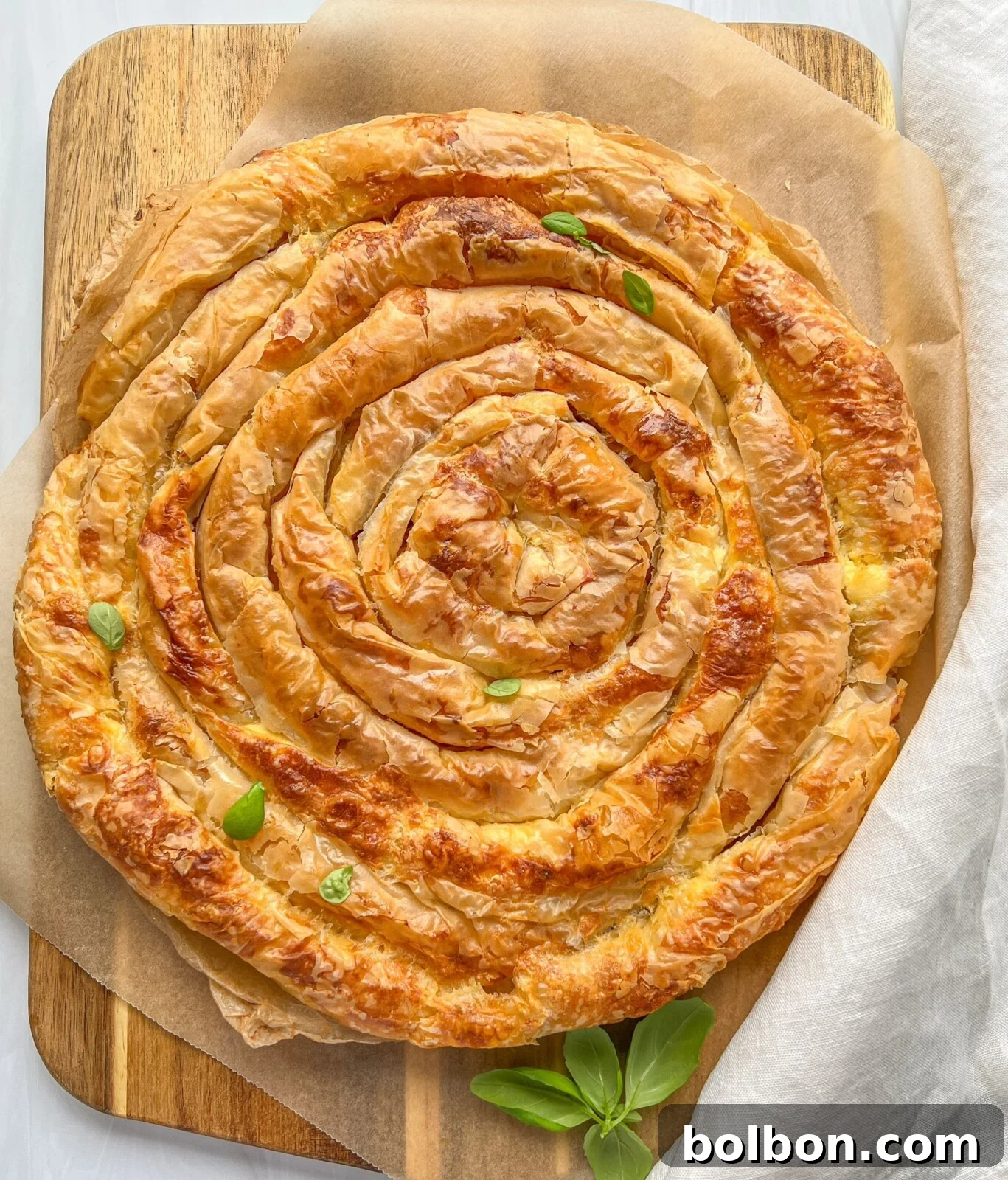
- Roll and Coil the Banitsa: Starting from one of the longer sides, tightly roll up the buttered and filled phyllo sheets lengthwise to form a long, slender “rope.” Ensure the roll is firm but not so tight that it tears the phyllo. Once you have your phyllo rope, gently coil it into a spiral shape. Carefully transfer this spiral to the center of your prepared baking dish. Repeat this rolling and coiling process with the remaining phyllo sheets and yogurt-feta mixture. As you create each new stuffed rope and coil, arrange it around the central spiral in the baking dish, creating a beautiful, continuous coiled pattern that fills the entire dish. Typically, a standard package of 16 phyllo sheets will yield 8 such ropes, which fit perfectly into a 12-inch round dish.
- The Final Bake: Once your baking dish is full and beautifully coiled, give the top surface of the Banitsa a final, light brush with any remaining melted butter. This final touch will contribute to that coveted golden-brown, crispy crust. Place the Banitsa in the preheated oven on the middle rack, uncovered. Bake for approximately 45 to 50 minutes, or until the top is gorgeously golden brown and flaky, and the bottom is also light and golden. Baking times can vary slightly depending on your oven, so keep an eye on it. Once baked to perfection, remove it from the oven and let it cool for a few minutes before slicing and serving. Enjoy the unparalleled taste of homemade Bulgarian Banitsa!
Nonna’s Essential Tip for Phyllo Perfection
The key to working with delicate phyllo dough is speed and moisture. To prevent phyllo from drying out, which can make it brittle and difficult to handle, always keep the unused sheets covered with a slightly damp, clean kitchen towel while you are assembling the recipe. This simple trick will ensure your phyllo remains pliable and easy to work with.
Mastering Variations and Creative Substitutions for Banitsa
While the traditional feta and yogurt Banitsa is a masterpiece in itself, this versatile pastry lends itself beautifully to various delightful variations and substitutions. Feel free to unleash your creativity and tailor this recipe to your personal taste or available ingredients, without compromising its essence.
- Yogurt Choices: The quality of yogurt significantly impacts the filling’s flavor and texture. For an authentic Bulgarian taste, opt for rich Bulgarian yogurt or a thick Balkan-style plain yogurt. However, don’t hesitate to use any good quality plain yogurt you prefer; Greek yogurt can also work, just be aware it’s thicker and might require a touch more liquid (milk or water) to achieve the right consistency.
- Cheese Alternatives: Bulgarian white cheese, known as Sirene, is the traditional choice and bears a striking resemblance to feta in its crumbly texture and salty tang. However, the beauty of Banitsa lies in its adaptability. You can confidently use any white, crumbly, salty cheese you enjoy. Consider a blend of feta with a milder cheese like ricotta or cottage cheese for a creamier, less intensely salty filling.
- Butter vs. Oil: While melted butter is the preferred choice for brushing the phyllo layers, imparting an unparalleled rich flavor and golden crispness, you can certainly use cooking oil as an acceptable alternative. A neutral-flavored oil like sunflower, vegetable, or a light olive oil will work well, though it may result in a slightly different flavor profile and texture. For a subtle nutty flavor, clarified butter (ghee) is also an excellent option.
- Baking Dish Flexibility: A 12-inch round baking dish, especially a springform pan, is ideal for achieving the classic coiled shape of Banitsa, making it visually stunning. However, any oven-safe baking dish will work perfectly. You can easily form the same beautiful spiral on a larger baking sheet, or even in a rectangular baking pan. The shape primarily affects presentation, not the delicious outcome.
- Shaping Alternatives: The traditional coiled spiral is iconic, but for an easier, quicker method, you can opt for a linear arrangement. Instead of rolling each stuffed phyllo rope into a spiral, simply lay the rolled “logs” side by side in straight lines across your baking sheet or rectangular dish. This method is particularly convenient when preparing Banitsa for a crowd or when time is of the essence, offering the same fantastic taste with minimal fuss.
- Sweet Banitsa: For a delightful dessert or a unique breakfast treat, consider a sweet variation. Substitute the savory feta filling with a mixture of grated pumpkin and sugar, or thinly sliced apples mixed with cinnamon and sugar. These sweet fillings are surprisingly traditional in certain regions of Bulgaria and offer a wonderful contrast to the savory versions.
- Herbaceous Additions: Elevate the savory filling with fresh herbs. Finely chopped parsley, dill, or mint can add a refreshing aromatic note to the feta and yogurt mixture. A pinch of black pepper or a touch of garlic powder can also deepen the flavor profile.
Explore More Delights: Similar Recipes to Try
Puff Pastry Spanakopita
35 mins
Custard Baklava
15 mins
Honey and Feta Pita
2 hrs 19 mins
Puff Pastry Strudel
1 hr
Puff Pastry Nutella Twists
30 mins
Mekitsi
20 mins
Perfect Pairings: How to Serve Your Banitsa
Banitsa is a versatile dish that can be enjoyed in various settings, from a comforting breakfast to an elegant appetizer. Its rich, savory flavor pairs beautifully with a range of accompaniments, enhancing the overall culinary experience.
- Traditional Yogurt Companion: The most classic and traditional way to enjoy Banitsa in Bulgaria is alongside a serving of cool, tangy Balkan-style yogurt. The refreshing creaminess of the yogurt provides a perfect counterpoint to the savory, flaky pastry, creating a balanced and deeply satisfying meal.
- A Feast for Entertaining: If you’re serving Banitsa as part of a larger spread for entertaining guests, it truly shines when accompanied by other Mediterranean and Balkan-inspired delights. Consider pairing it with bright and flavorful Roasted Bell Peppers, succulent Marinated Feta Stuffed Olives, and savory Spinach Stuffed Mushrooms. This combination creates an inviting and diverse platter that caters to various tastes.
- Savory Breakfast Indulgence: For those who relish a hearty and flavorful breakfast, a warm slice of Banitsa is an absolute treat. Enjoy it with a steaming cup of freshly brewed coffee or a glass of hot tea for a truly delightful start to your day. The substantial nature of the pie makes it a filling and energizing morning meal.
- Light Lunch or Snack: Banitsa is equally fantastic as a light lunch or a satisfying snack. Pair it with a simple green salad dressed with a vinaigrette to add a fresh, vibrant element. A bowl of clear vegetable soup would also complement its richness beautifully.
- Wine Pairings: For a more sophisticated pairing, consider a crisp, dry white wine like a Sauvignon Blanc or a light-bodied red wine that won’t overpower the delicate flavors of the pastry and cheese.
Frequently Asked Questions About Banitsa
I typically use a 12-inch round baking dish, such as a springform pan, which helps to create the classic spiral shape and allows for easy removal. However, the beauty of this recipe is its adaptability; any oven-safe baking dish will work here. You can even use a standard baking sheet if you prefer to arrange the rolled phyllo logs side-by-side rather than in a coil.
Absolutely! While this recipe celebrates my family’s traditional feta and yogurt Banitsa, the pastry is incredibly versatile. Many cultures, and even different regions within Bulgaria, enjoy various fillings. Popular sweet variations in Bulgaria include cooked pumpkin or finely sliced apples with cinnamon. For savory alternatives, spinach is a very popular addition, especially in Greek-style spanakopita, often combined with feta. You could also experiment with ground meat, leeks, or even a mix of mushrooms and herbs. Just ensure your chosen filling isn’t too wet, as this can make the phyllo soggy.
Banitsa is best enjoyed within a few hours of coming out of the oven when its layers are at their crispiest. However, leftovers can be delicious with proper reheating. Store any remaining Banitsa in an airtight container in the refrigerator for up to 2-3 days. To restore its flakiness, crisp up leftovers in a 300°F (150°C) oven for 10-15 minutes, or in an air fryer for 3-5 minutes until heated through and crispy again. Microwaving is not recommended as it will make the phyllo soft and chewy.
Yes, Banitsa shares a delicious kinship with these other beloved pastries! Across Europe, especially in the Balkans and Mediterranean regions, you’ll discover countless incredible variations of savory stuffed phyllo pastries. While each has its unique name, regional ingredients, and shaping techniques, they all celebrate the delightful combination of thin, crisp phyllo layers and a flavorful filling. This Banitsa is my family’s cherished Bulgarian version, offering a distinct taste and texture that stands proudly among its relatives like Bosnian Burek, Greek Spanakopita (with spinach), and Tiropita (purely cheese-filled).
While the absolute best Banitsa is served shortly after it cools from the oven, you can prepare certain components in advance to streamline your baking process. The feta and yogurt filling can be mixed one day prior to assembling and baking; simply cover it tightly and refrigerate. For the phyllo, it’s best to assemble and bake it fresh. However, if you need to, you can assemble the entire pie (without baking) and refrigerate it for a few hours, then bake as directed, possibly adding 5-10 minutes to the baking time.
Ingredient weights can vary for several reasons. Factors such as the brand of ingredients, the type and style of measuring cups and spoons (wet vs. dry), and your specific measuring technique (e.g., scooping and leveling flour versus spooning it into the cup) can all influence the precise weight. For instance, 1 cup of flour might weigh 160g in my kitchen, but could range from 120g to 180g in yours. To ensure the most accurate results and consistency with the recipe as intended, it is always best to go by the weight listed in the recipe instructions, especially for baking where precision is key.
Authentic Bulgarian Banitsa (Phyllo Feta Pie)
Facebook Share
Rate Recipe
Print Recipe
Appetizer, Breakfast, Brunch, Snack
Bulgarian, Eastern European
6 servings
The Modern Nonna
30 minutes
50 minutes
1 hour 20 minutes
Video Tutorial
Essential Equipment
Ingredients
- 1 cup unsalted butter (equivalent to 2 sticks), melted, plus extra for greasing the baking dish
- 454 grams Phyllo dough (1 standard package, typically containing about 16 sheets), frozen
- 5 large eggs
- 350 grams Bulgarian white cheese (Sirene or a good quality, crumbly feta cheese)
- 1.5 cups plain yogurt (Balkan-style or your preferred plain, full-fat yogurt for best results)
- ½ teaspoon baking soda
Detailed Instructions
-
Line a 12-inch round baking dish with parchment paper, ensuring it covers the bottom and sides, then lightly grease the parchment with a brush of melted butter. Preheat your oven to 400°F (200°C). This high initial temperature helps create that signature crisp phyllo.
-
Thaw the phyllo sheets according to the package directions. It’s crucial for the phyllo to be fully thawed but still chilled enough to handle. While the phyllo thaws, prepare your filling ingredients to minimize the time the delicate sheets are exposed to air, which prevents them from drying out and cracking.
-
In a large bowl, use a fork to break the feta cheese into small, crumbly chunks. Add the five eggs to the crumbled feta and mix thoroughly with the fork until the eggs are well incorporated into the cheese. Finally, add the plain yogurt and baking soda, mixing until the filling is homogenous and slightly airy.
-
Carefully unroll the thawed phyllo sheets and keep them covered with a clean, slightly damp kitchen towel. This prevents them from drying out. Place one sheet of phyllo on your clean work surface and brush its entire surface lightly with melted butter. Place a second phyllo sheet directly on top, aligning the edges, and brush this top sheet with more melted butter. Now, evenly spread a few generous spoonfuls of the yogurt-feta mixture over the top phyllo sheet, leaving a small border around the edges. Aim for a thin, even layer of filling.
-
Starting from one of the longer sides, tightly roll up the buttered and filled phyllo sheets lengthwise to form a long, firm “rope.” Then, gently coil this “rope” into a spiral shape. Carefully transfer this spiral to the center of your prepared baking dish. Repeat this process with the remaining phyllo sheets and yogurt-feta mixture, wrapping each new stuffed “rope” around the previous spiral to create a continuous, beautiful coiled pattern until the baking dish is completely full. (A pack of 16 phyllo sheets, using two per roll, should yield 8 filled ropes.)
-
Visual Aid & Alternative Shaping: For a clearer understanding of the rolling and coiling technique, please refer to the video tutorial provided above. If the coiled shape feels too intricate, a simpler method is to place the phyllo rolls side by side lengthwise in a rectangular baking dish instead of coiling them around one another. This provides the same great taste with less effort.
-
Give the top surface of the assembled Banitsa a final, light brush with melted butter. Bake in the preheated oven, uncovered, for 45 to 50 minutes, or until the top is beautifully flaky and golden brown, and the bottom is also nicely browned. Baking it on the middle rack ensures even cooking. Allow the Banitsa to cool for a bit before slicing and serving warm to fully enjoy its incredible texture and flavor.
Nutritional Information (per serving)
Calories: 742kcal
,
Carbohydrates: 45g
,
Protein: 21g
,
Fat: 53g
,
Saturated Fat: 31g
,
Polyunsaturated Fat: 3g
,
Monounsaturated Fat: 15g
,
Trans Fat: 1g
,
Cholesterol: 278mg
,
Sodium: 1445mg
,
Potassium: 247mg
,
Fiber: 1g
,
Sugar: 3g
,
Vitamin A: 1450IU
,
Vitamin C: 0.3mg
,
Calcium: 400mg
,
Iron: 3mg
Nutrition information is automatically calculated and should be used as an approximation.
Additional Information
Appetizer, Breakfast, Brunch, Snack
Bulgarian, Eastern European