
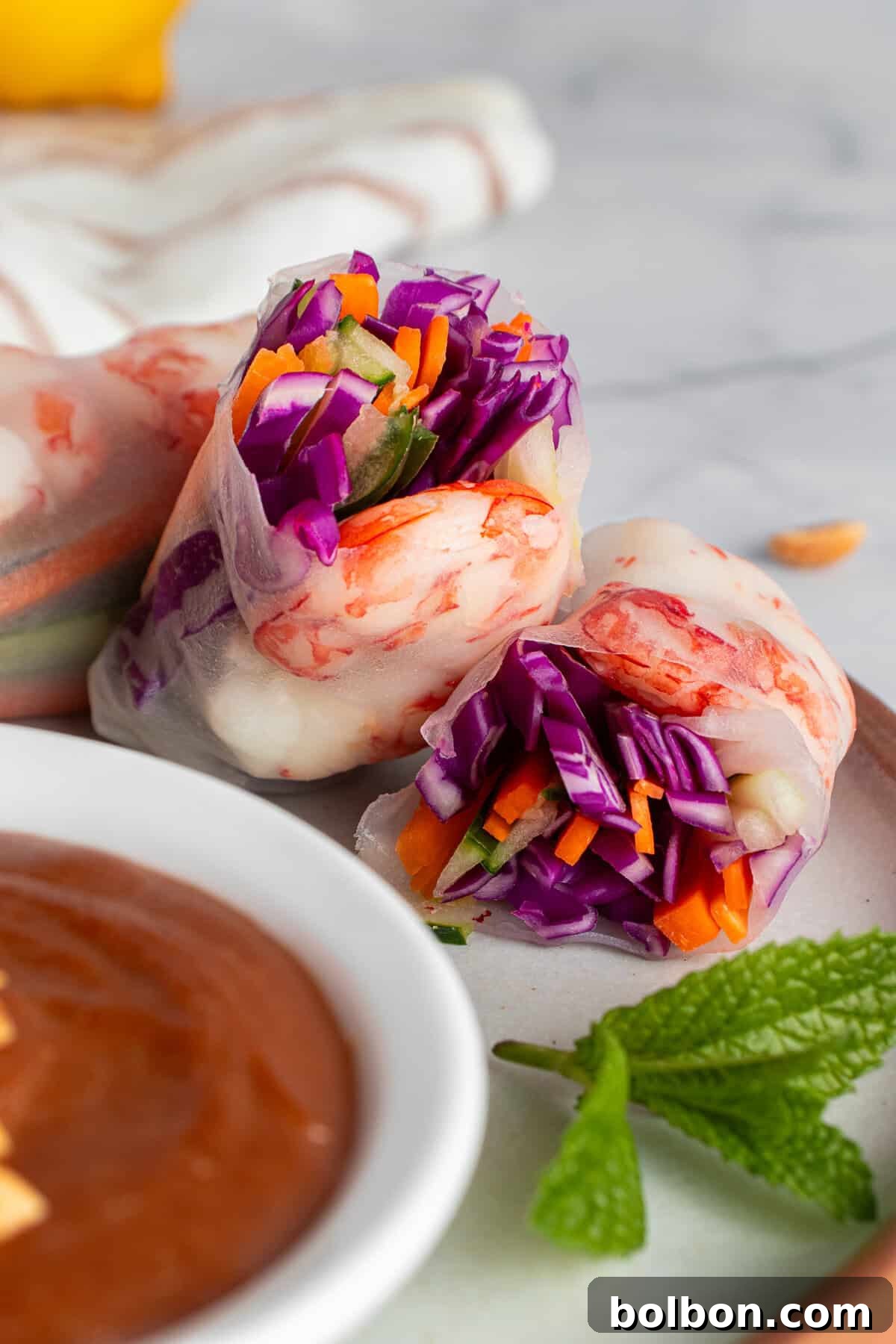
Embark on a culinary journey with these exquisite 🍤 Shrimp Spring Rolls, a dish that captivates both the eye and the palate. Far more than just a meal, fresh spring rolls are a vibrant celebration of wholesome ingredients, bursting with color and unparalleled flavor. While mastering the delicate art of handling rice paper wrappers might require a touch of practice and patience, you’ll soon discover the surprising ease of creating restaurant-quality homemade shrimp spring rolls right in your kitchen. Moreover, this experience will unlock a world of limitless possibilities for fillings and flavor combinations, making each roll a unique masterpiece.
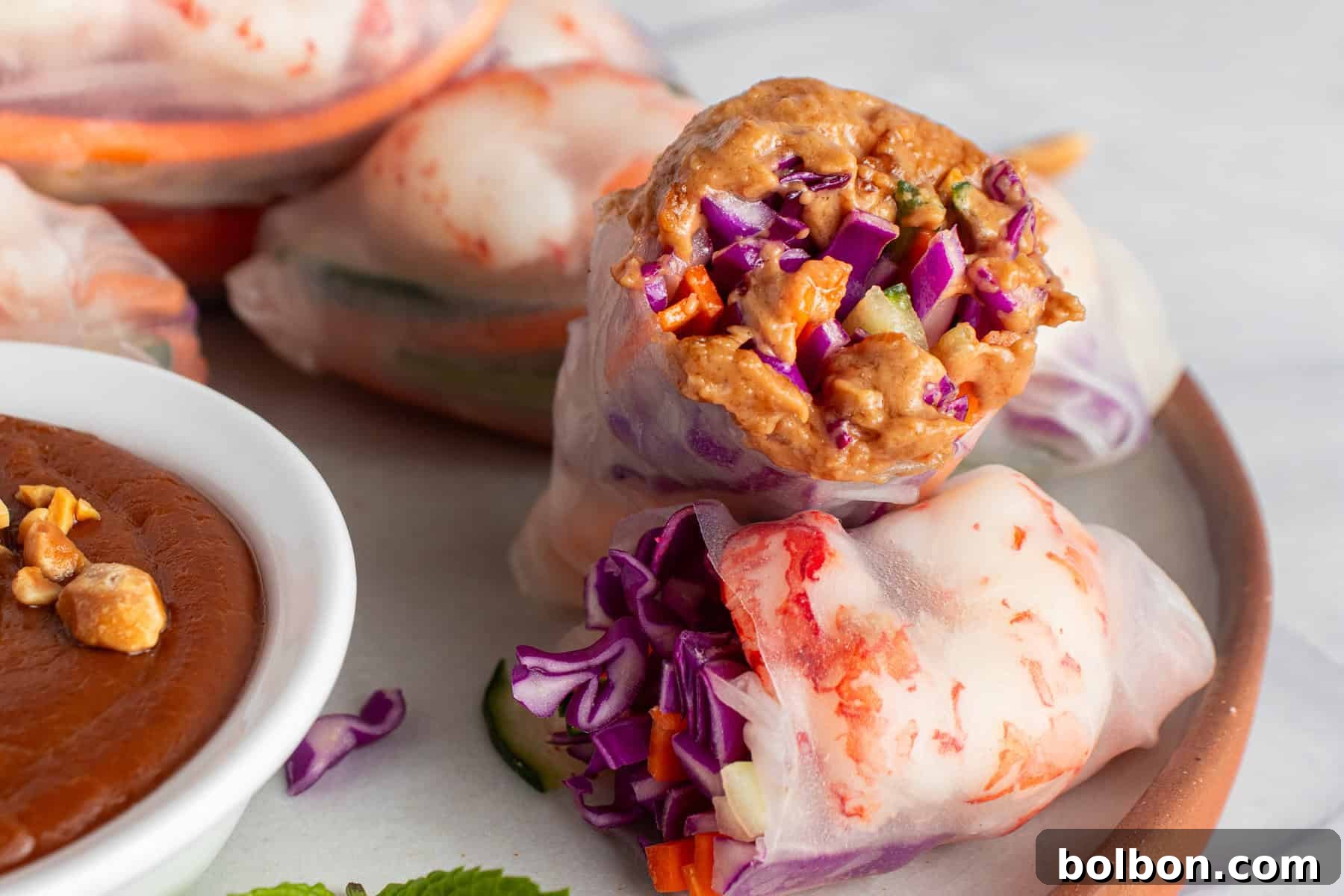
Discover the Irresistible Appeal of Homemade Shrimp Spring Rolls
What truly sets this Shrimp Spring Rolls recipe apart is its inherent beauty and nutritional prowess, largely thanks to the diverse array of fresh fillings that can be incorporated. Think beyond the ordinary: any colorful vegetable can find a home in these rolls, from crisp sprouts and delicate micro-greens to creamy slices of avocado 🥑, vibrant strips of bell pepper, crunchy lettuce leaves, and thinly shredded radishes. The vegetables outlined in this recipe form some of our absolute favorite combinations, offering a perfect starting point for your culinary creativity. However, the true joy lies in personalizing your rolls with whatever fresh produce you have on hand or seasonal finds that inspire you. Each ingredient contributes not only to the visual feast but also to a symphony of textures and essential nutrients.
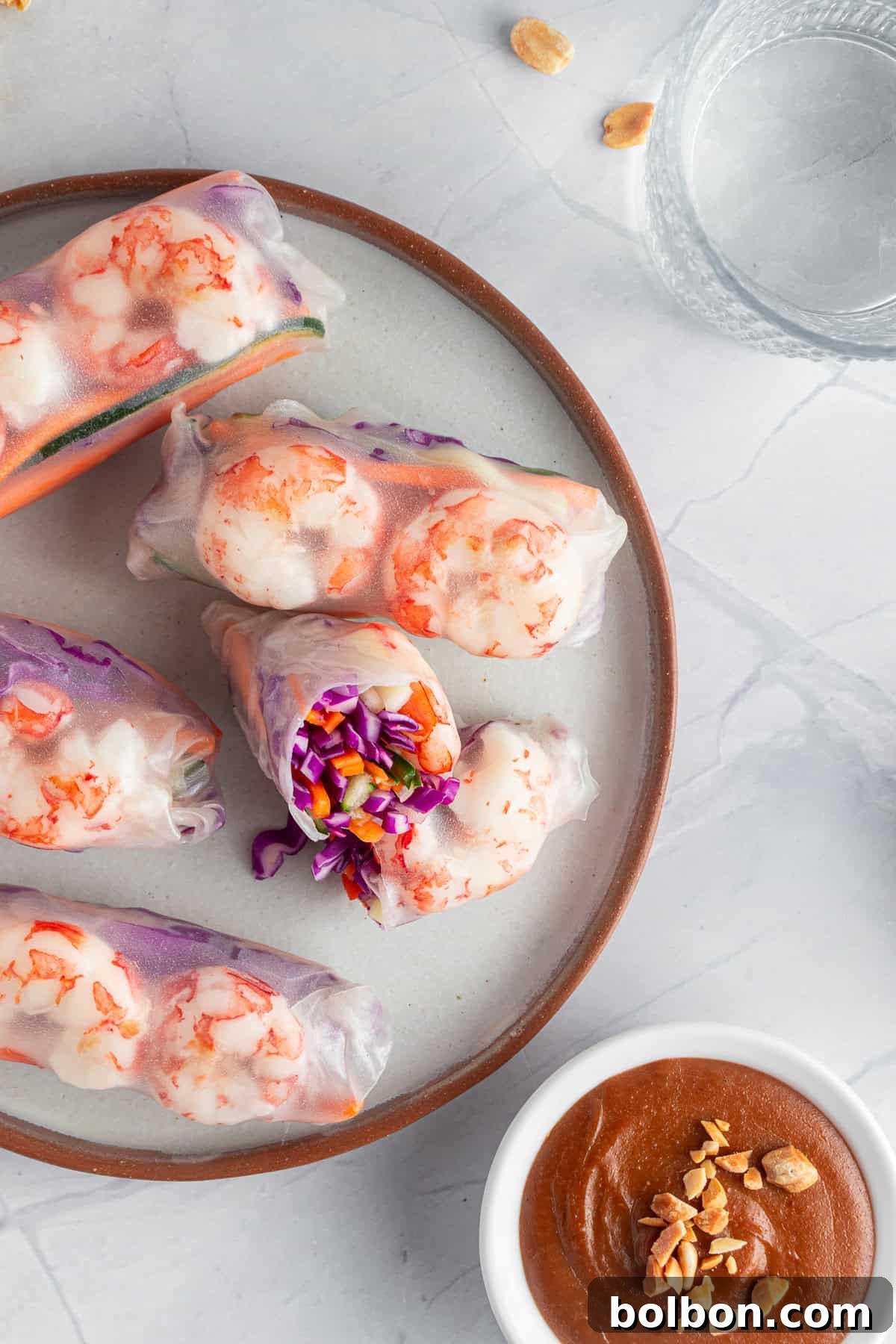
Accompanying these delightful rolls is our incredibly simple yet profoundly satisfying peanut-soy dipping sauce. Crafting this creamy, savory dip is effortless; merely whisk together a handful of pantry staples and gradually thin with a touch of water 💦 until it reaches your desired consistency. The smooth, salty, and slightly sweet notes of this dipping sauce are an absolute complement to the fresh, crisp textures of the spring rolls, creating a harmonious balance in every bite. For the ultimate enjoyment, these healthy shrimp spring rolls are best savored immediately after assembly, ensuring maximum freshness and crunch with every dip.
Crafting Your Perfect Shrimp Spring Rolls: A Step-by-Step Guide
Making fresh spring rolls might seem intricate at first glance, but with a structured approach, it becomes an enjoyable and rewarding process. The key to success lies in meticulous preparation and understanding each step, from finely slicing your vegetables to perfectly poaching your shrimp and mastering the roll. Follow these detailed instructions to create stunning and delicious shrimp spring rolls.
🔪 Begin by preparing your vegetables. Using a sharp knife or a specialized julienne peeler, thinly slice or julienne all your chosen vegetables. The thinner the slices, the more aesthetically pleasing and easier to roll your spring rolls will be. A consistent cut ensures even distribution and a delightful crunch in every bite. Once prepared, set your vibrant medley of vegetables aside, ready for assembly.
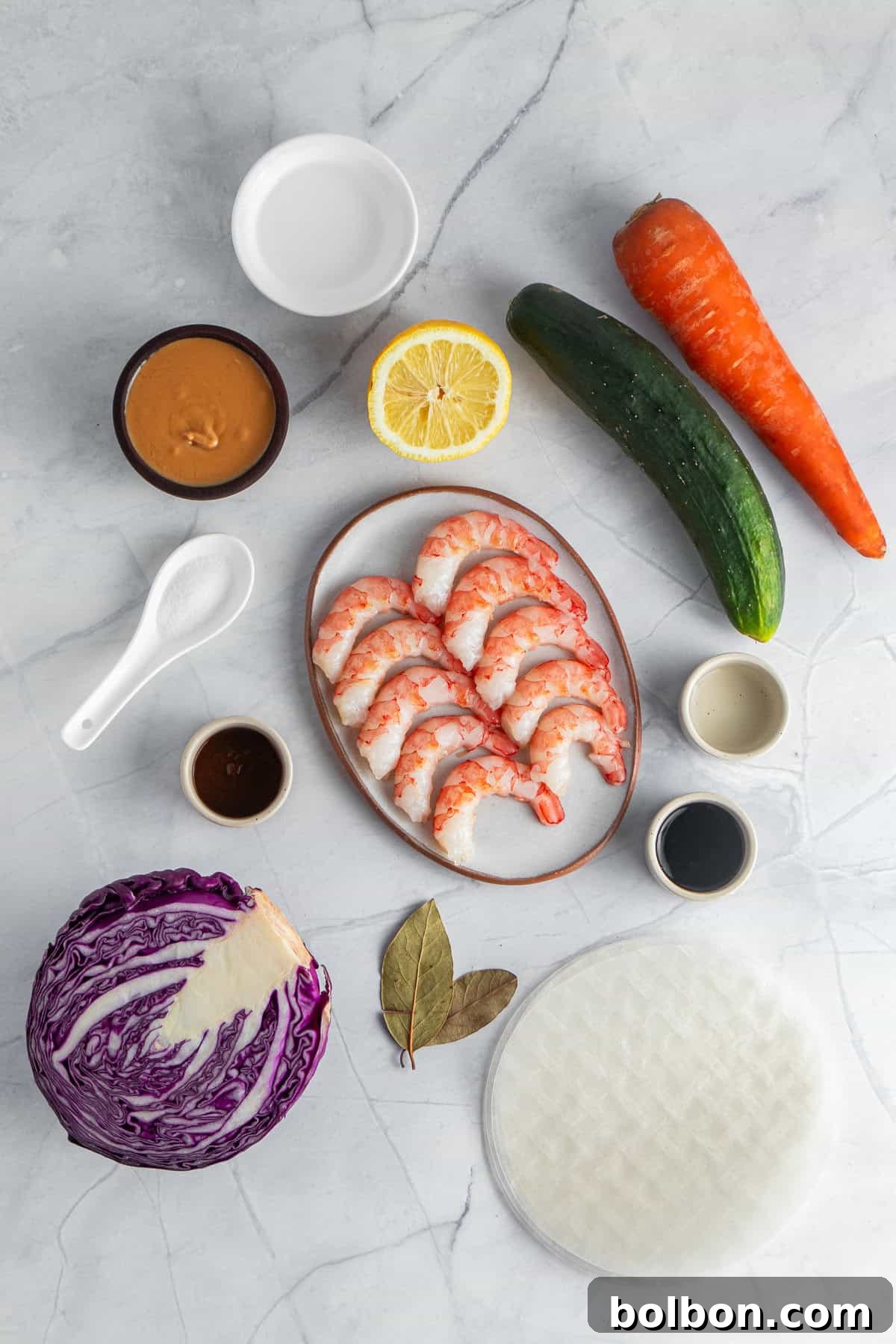
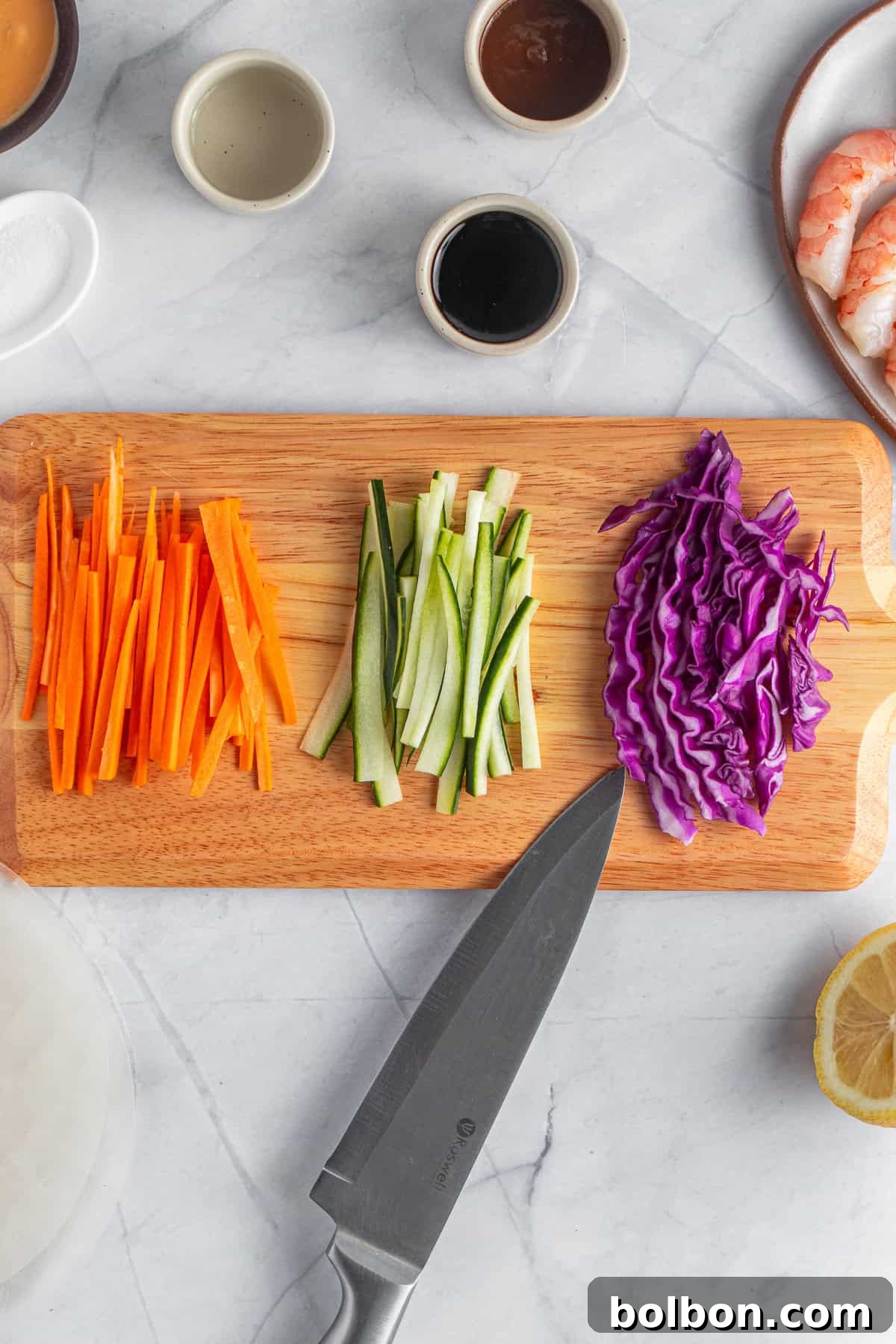
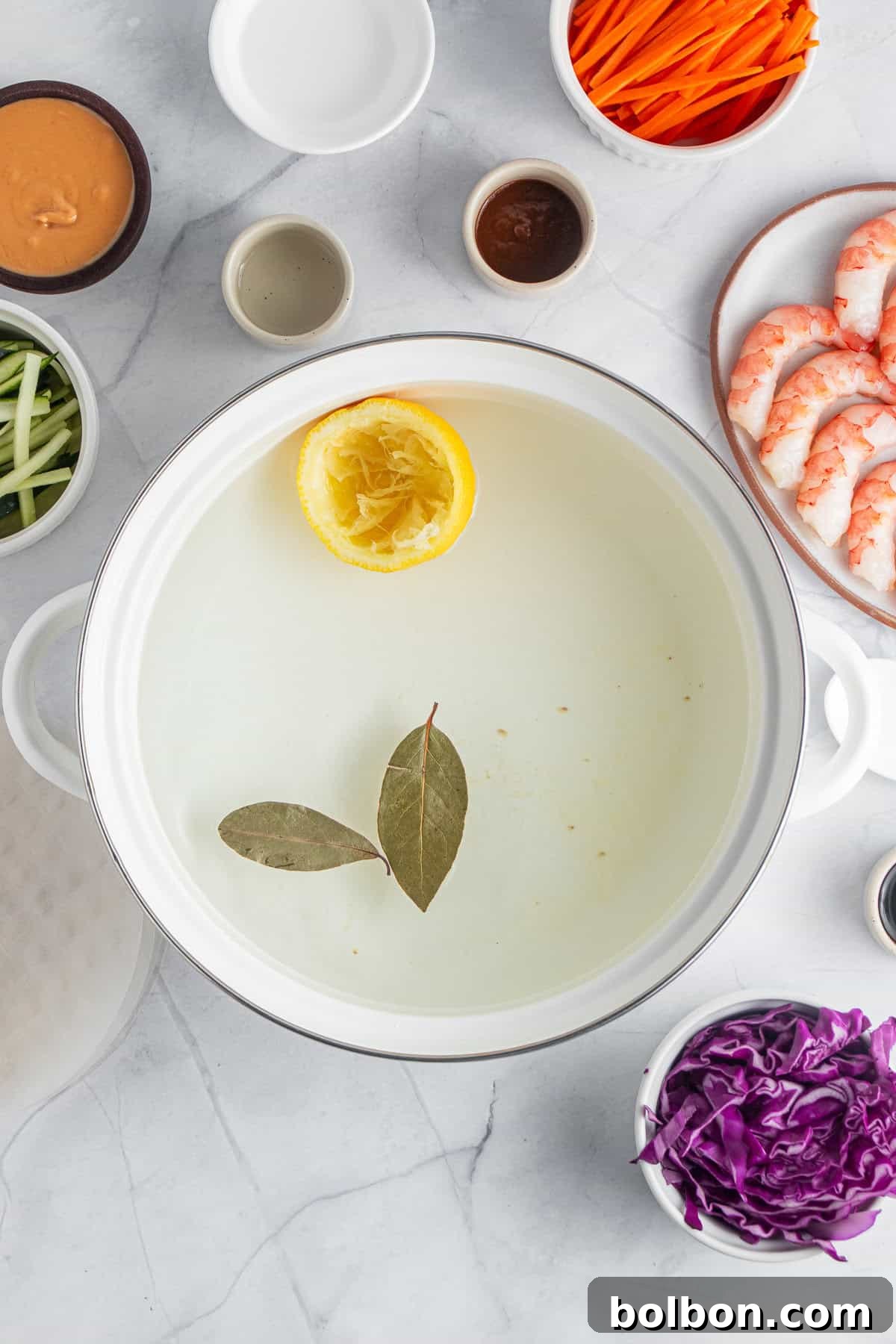
🫧 For the shrimp, fill a large pot with approximately 4 cups of water. Enhance the poaching liquid with aromatics by adding bay leaves, a generous squeeze of lemon juice, and the spent lemon half. A big pinch of salt will season the shrimp from within. Bring this mixture to a rolling boil over high heat. This flavorful poaching liquid will infuse the shrimp with subtle citrus notes, making them even more delectable.
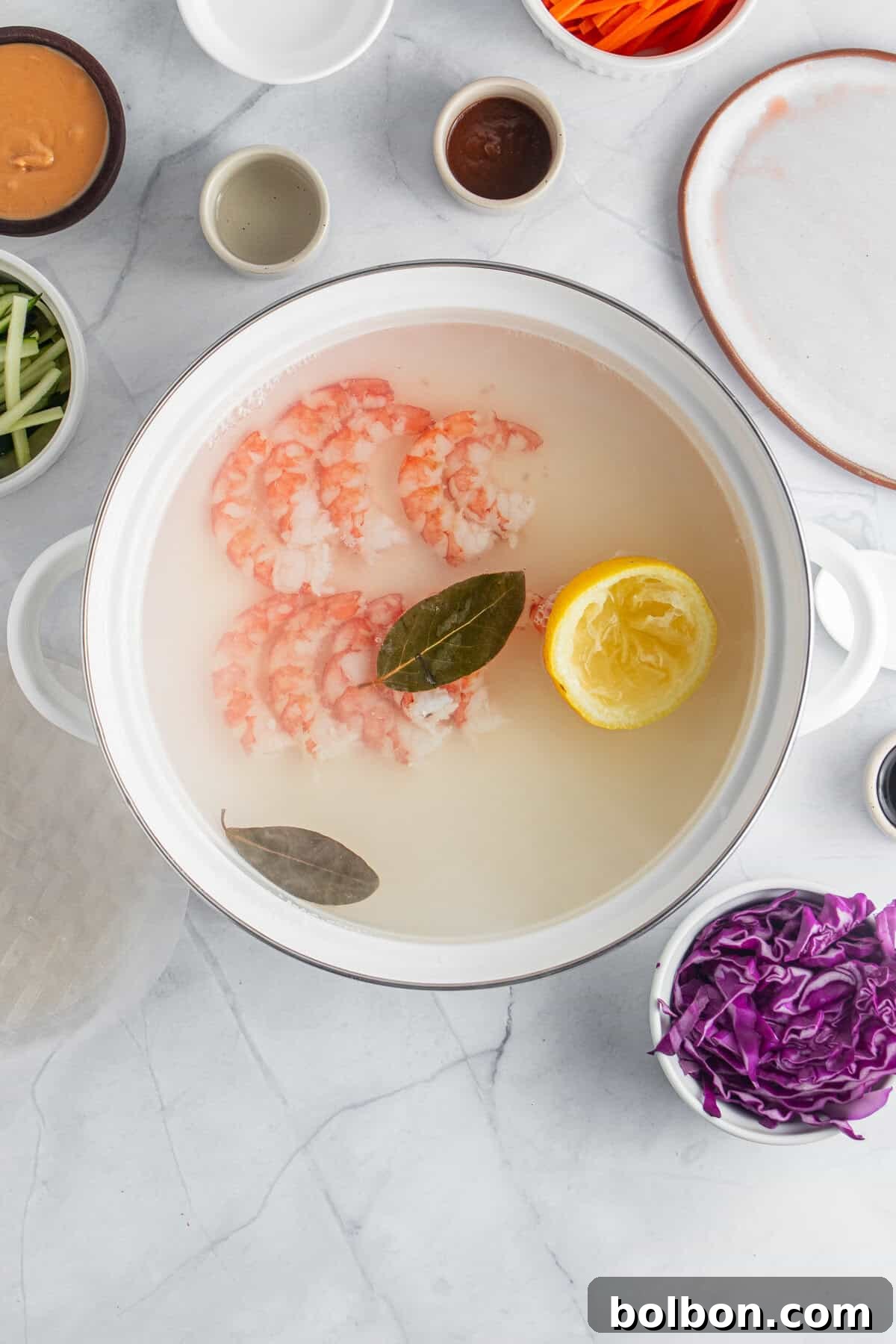
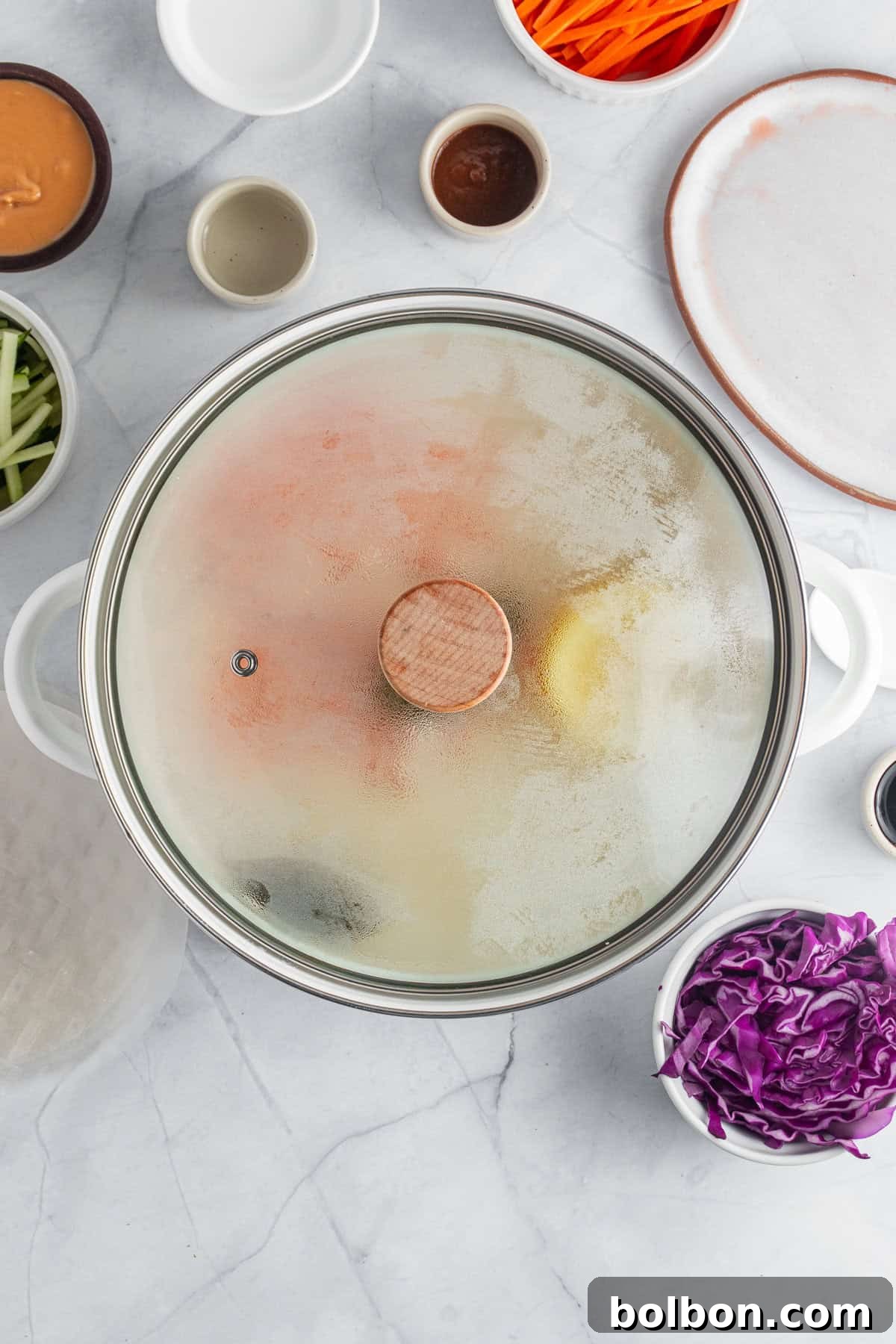
🦐 Once the water reaches a vigorous boil, immediately turn off the heat. Add the raw shrimp to the hot water. Cover the pot with a lid and allow the shrimp to cook gently for about 3 minutes, or until they beautifully curl into a ‘C’ shape and transform into a delicate pink hue. Overcooking shrimp can lead to a rubbery texture, so keep a close eye on them. While the shrimp are poaching, prepare a large bowl filled with ice water. This ice bath is crucial for halting the cooking process and ensuring the shrimp remain tender and succulent.
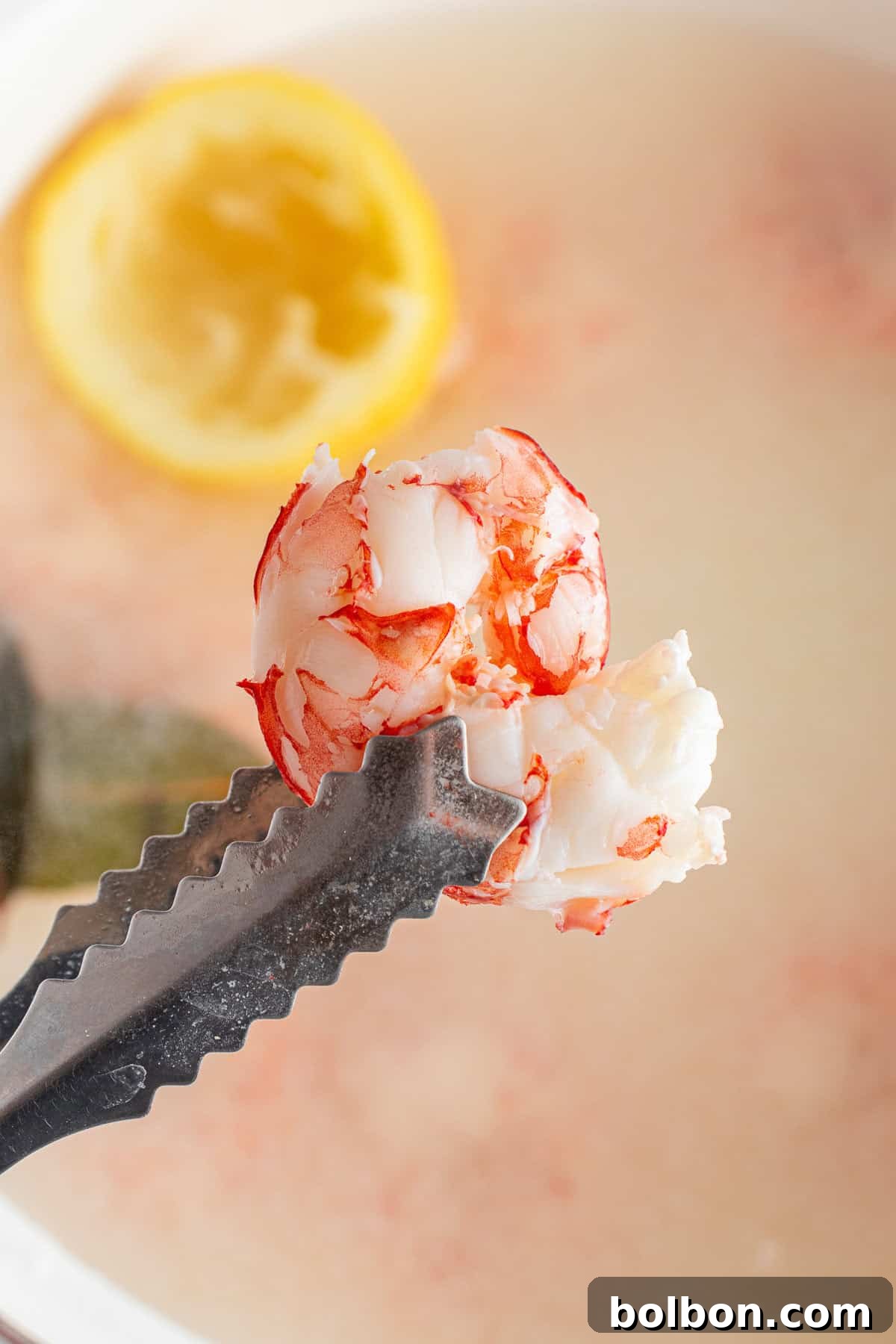
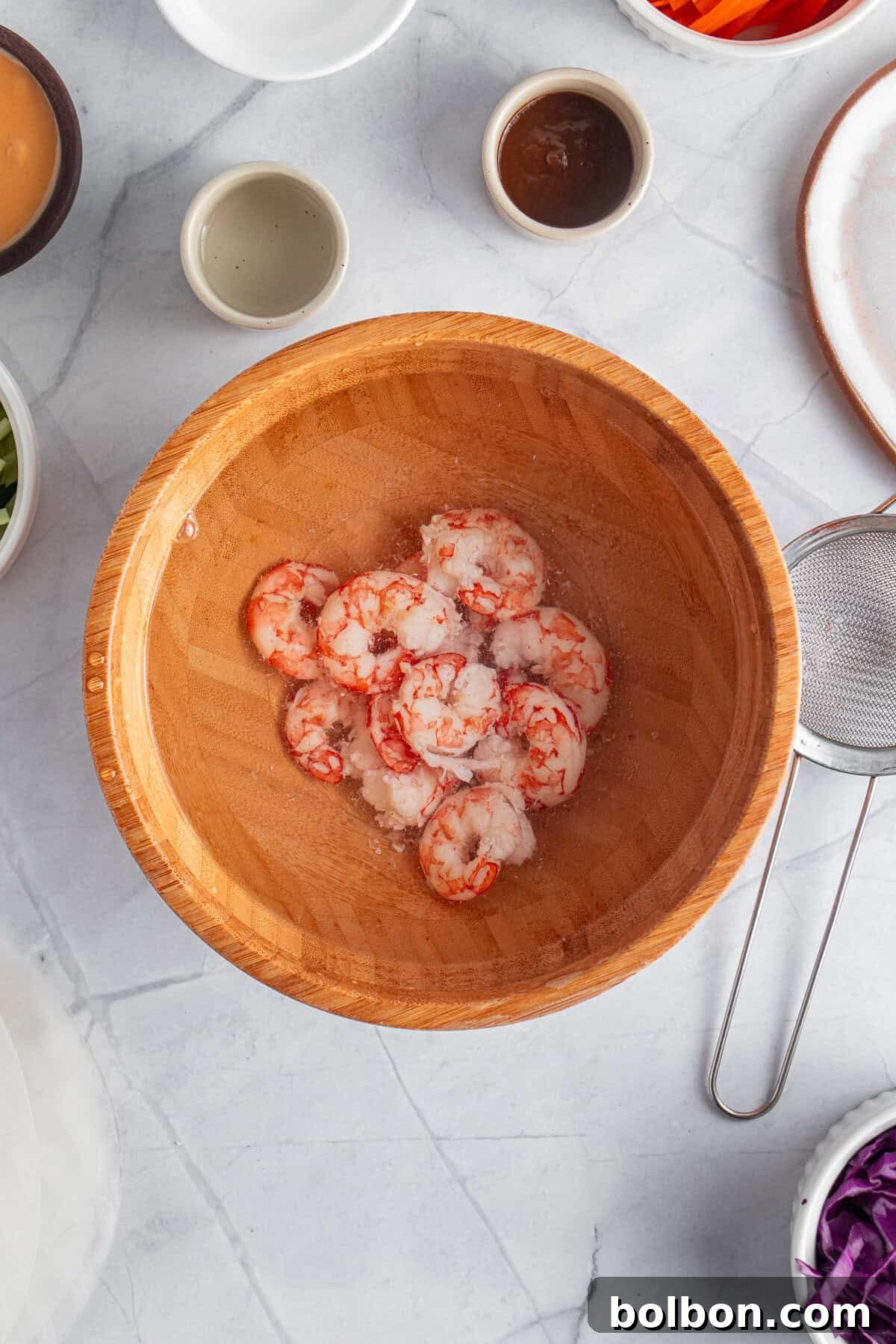
⏲️ Promptly, after the 3 minutes of cooking, transfer the shrimp using a spider strainer or a small slotted spoon into the prepared ice water. Allow the shrimp to chill thoroughly for 1 to 2 minutes. This rapid cooling helps them retain their firm texture and vibrant color. Afterward, remove the shrimp from the ice bath, pat them dry, and arrange them on a plate, ready for the next step in your spring roll assembly.
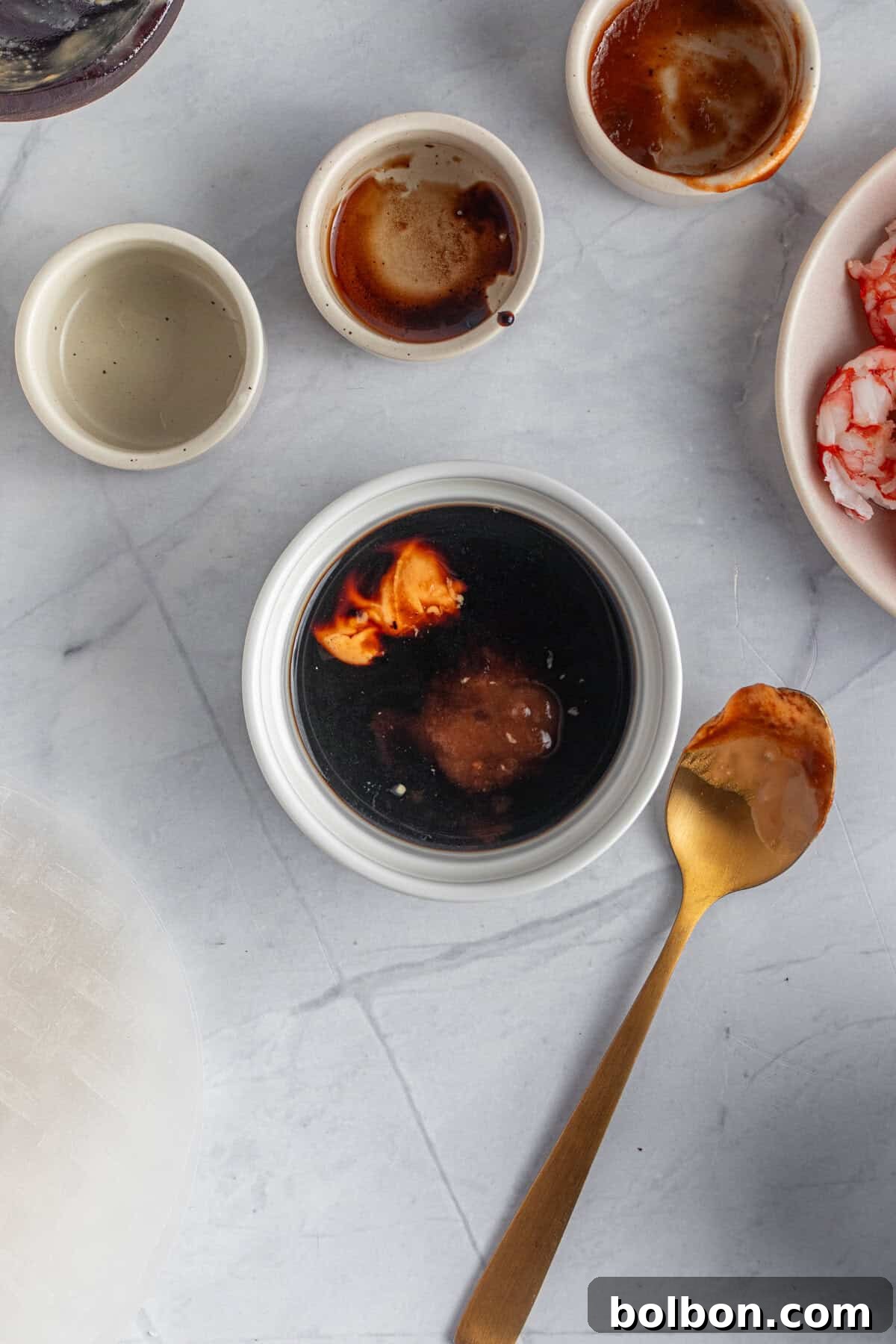
🥣 Now, for the star dipping sauce: in a small bowl, combine the natural creamy peanut butter, soy sauce, sweet Thai chili sauce, and rice vinegar. These ingredients form the savory and slightly sweet base of your dip. If you’re looking for a spicier kick, feel free to add a dash more chili sauce to taste.
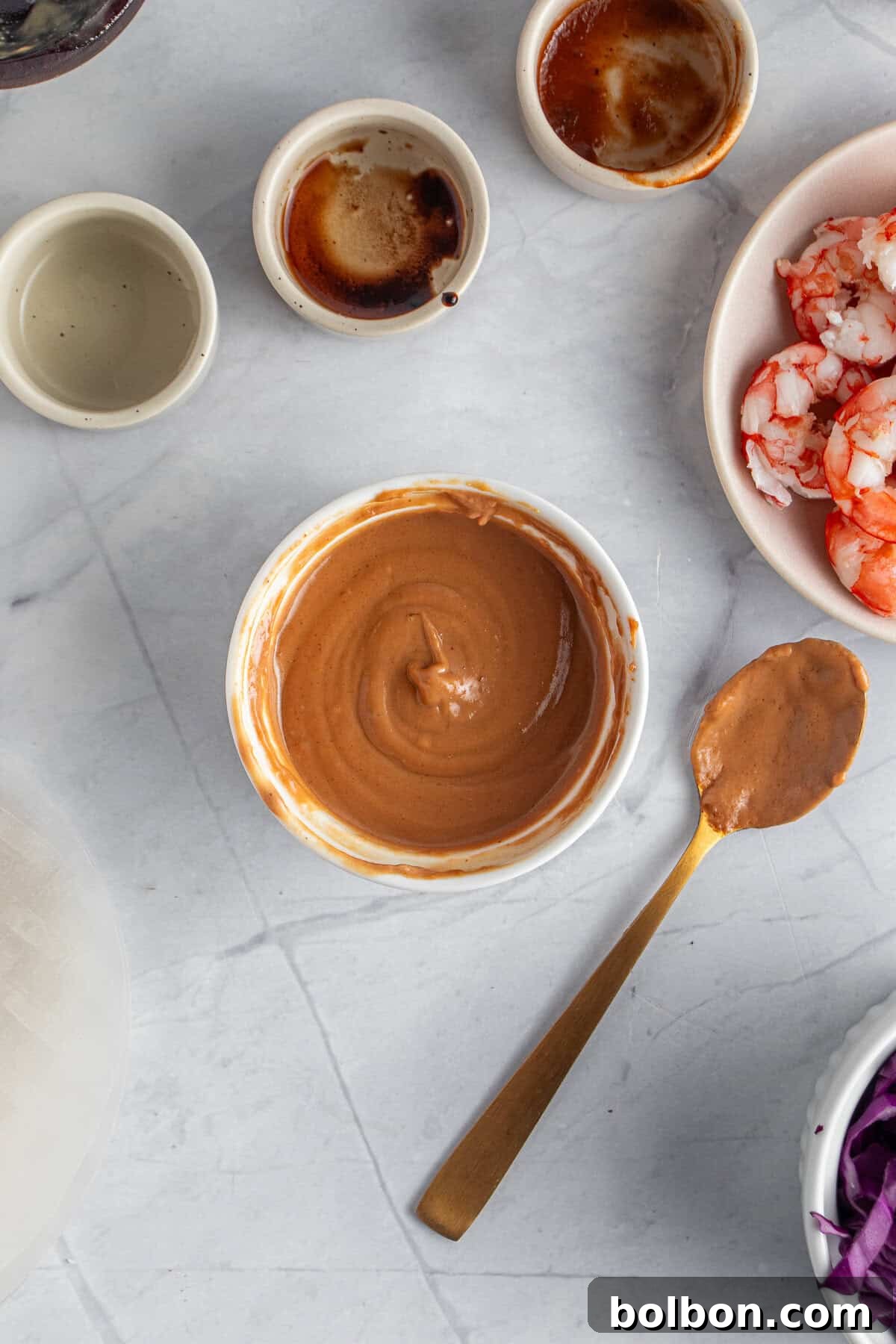
♨️ Gradually incorporate hot water into the mixture, stirring continuously. The hot water helps the peanut butter emulsify and smooth out, creating a luscious, pourable consistency. Continue adding water until the dip reaches your desired thickness. Set this irresistible dipping sauce aside; it’s the perfect companion for your fresh, crunchy spring rolls.
💧 The assembly process is where your spring rolls truly come to life. Take one sheet of rice paper and gently submerge it in a shallow dish of warm water for precisely 15 to 20 seconds. The goal is for the wrapper to become pliable but not overly soft or sticky, as this can make it difficult to handle. Once softened, carefully lay the wrapper onto a clean plate or a damp kitchen towel – the damp towel helps prevent sticking.
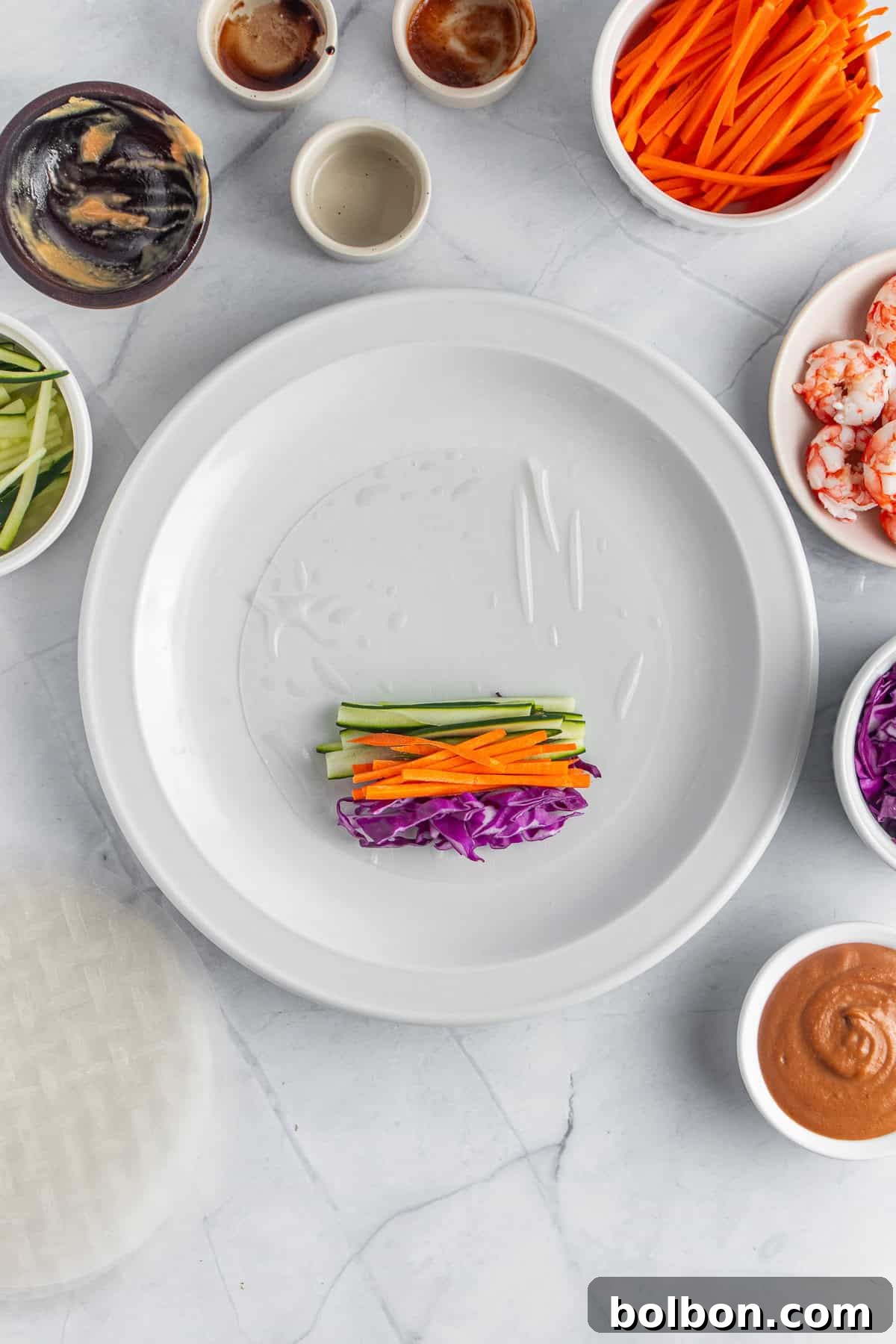
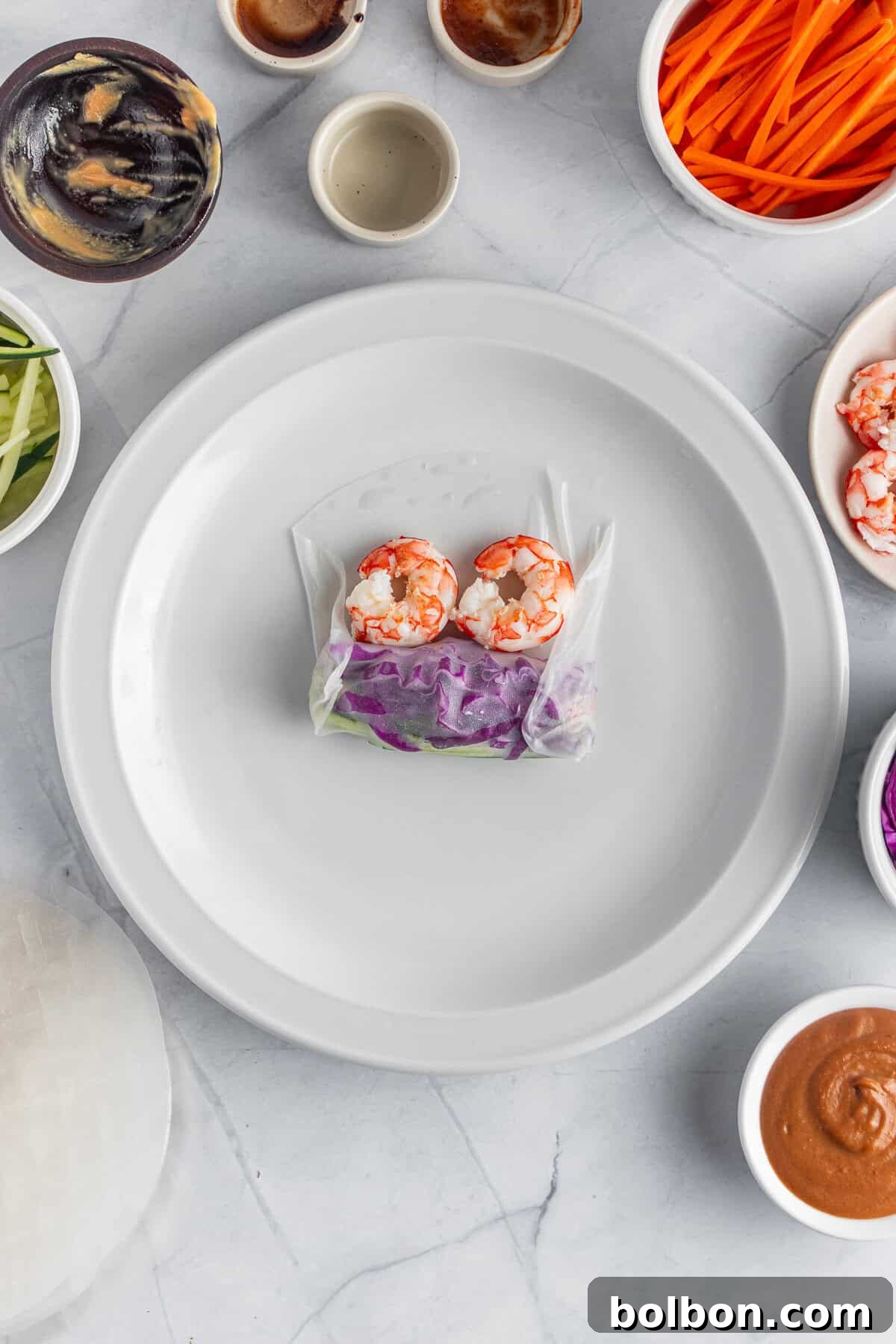
🥕 Arrange a small amount of your prepared vegetables in the bottom third of the wrapper, leaving ample space on the sides for folding. Begin to roll the wrapper halfway up into a snug cylinder. Next, fold in the sides of the wrapper over the filling, creating neat edges. Finally, lay two pieces of your perfectly cooked shrimp on top of the partially rolled ingredients. Continue rolling tightly into a firm cylinder until it’s completely sealed. A tight roll is essential for keeping the fillings secure and providing a satisfying bite.
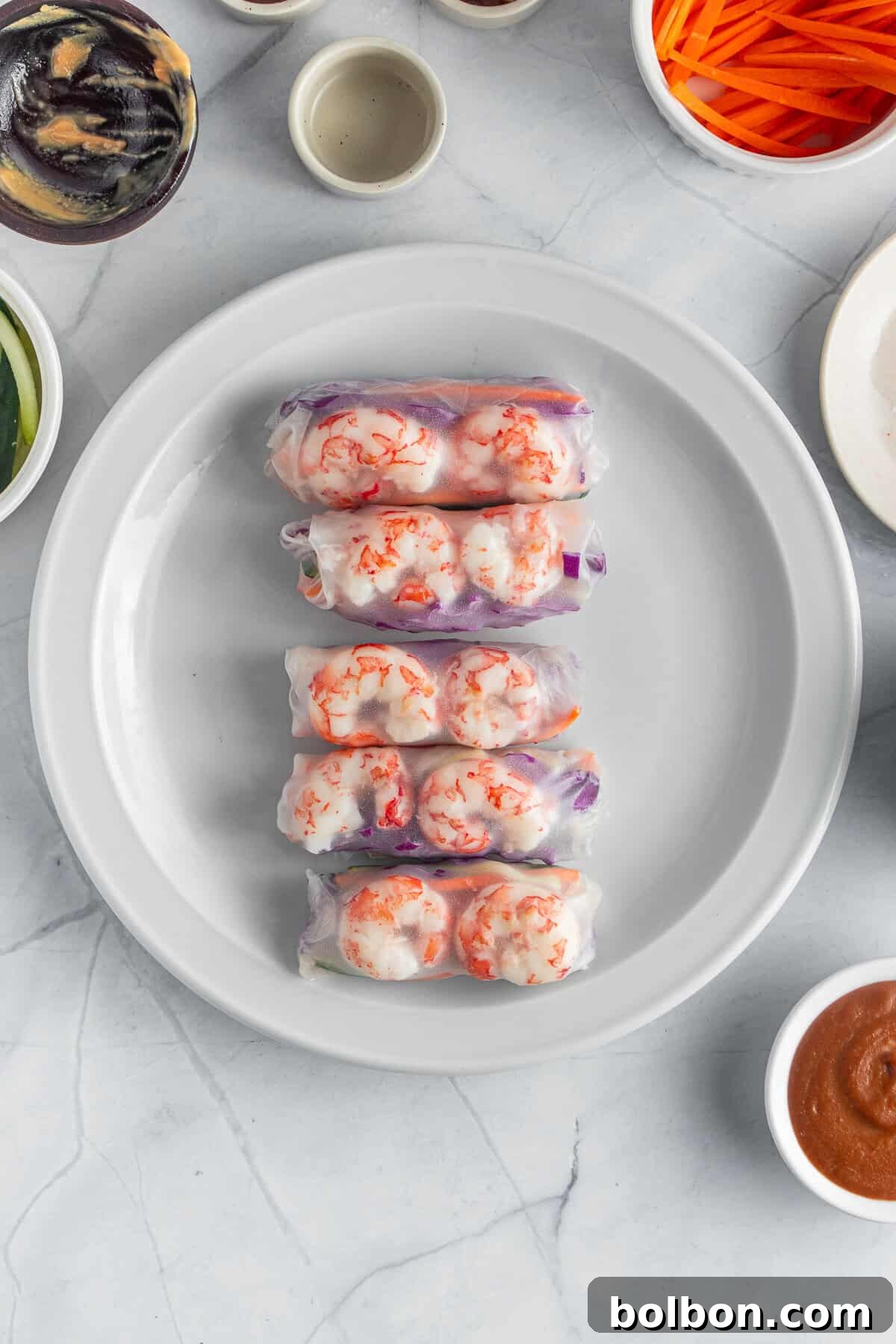
😋 Repeat this rolling process for each shrimp spring roll, ensuring a consistent size and shape. Serve your freshly made spring rolls immediately, alongside the creamy peanut dipping sauce, and savor every delicious, vibrant bite! This is a dish that truly shines when enjoyed fresh.
Nonna’s Essential Tip for Seamless Spring Roll Assembly 👩🍳
For an even smoother and more enjoyable spring roll making experience, I highly recommend adopting a ‘mise en place’ approach. This means meticulously prepping all the individual components for these Shrimp Spring Rolls – slicing vegetables, poaching shrimp, and mixing the dipping sauce – and arranging them into an organized workstation *before* you even begin the process of wetting the wrappers and rolling them. This organized setup minimizes stress and allows for a fluid, efficient assembly line, ensuring your wrappers don’t dry out or become overly sticky while you’re scrambling for ingredients.
Unleash Your Creativity: Variations and Substitutions for Shrimp Spring Rolls
The beauty of homemade spring rolls lies in their incredible adaptability. Feel empowered to customize these Shrimp Spring Rolls to perfectly align with your personal taste preferences, dietary requirements, or simply whatever ingredients you have on hand. Don’t shy away from experimenting with different protein swaps, incorporating an even wider spectrum of colorful vegetables, or tweaking the dipping sauce to discover new favorites. Here are just a few inspiring options to get you started on your customization journey:
- Protein Power-Ups: Instead of shrimp, consider succulent crabmeat 🦀 for a luxurious touch, or firm, marinated tofu for a satisfying plant-based alternative. Grilled chicken strips or thinly sliced cooked pork are also fantastic choices that add a different texture and flavor profile to your fresh rolls.
- Veggie-Only Delights: For a lighter, purely plant-based option, simply leave out the protein entirely. Focus on an abundance of fresh, crunchy vegetables and aromatic herbs for a refreshing and equally delicious vegetarian spring roll.
- Boost Your Crunch and Sweetness: Elevate your rolls with additional textures and flavors. Try adding crisp bean sprouts for an extra layer of crunch, or introduce a hint of tropical sweetness with thinly sliced ripe mango. These additions create a more dynamic and exciting filling.
- Allergy-Friendly Dipping: For those with a peanut allergy, effortlessly substitute the peanut butter in the dipping sauce with an equal amount of your favorite seed butter (like sunflower seed butter) or another nut butter of your choice. Always double-check ingredient labels to ensure they meet your dietary needs.
- Low-Carb Wrapper Alternatives: If you’re looking to reduce carbohydrates, swap out the traditional rice paper wrappers for large, crisp lettuce leaves 🥬. Butter lettuce or romaine hearts work exceptionally well, providing a refreshing crunch and a natural “wrap” for your delicious fillings.
- Herbaceous Additions: Don’t underestimate the power of fresh herbs! Incorporate sprigs of mint, cilantro, Thai basil, or even a hint of dill into your rolls for an aromatic burst that complements the other ingredients beautifully.
Explore More Fresh & Flavorful Recipes
Vegetable Egg Rolls
15 mins
Shrimp Cucumber Rolls
15 mins
Shrimp Sushi Cups
25 mins
Healthy Shrimp Bowl
12 mins
Creamy Shrimp Salad
13 mins
Shrimp Ceviche
1 hr 20 mins
Mastering the Art of Rice Paper Wrappers for Perfect Spring Rolls
A fundamental component of this Shrimp Spring Rolls recipe is the specialized rice paper wrapper. These versatile wrappers, often referred to as Vietnamese rice paper, are readily available at many major grocery stores in the international or Asian food aisle, as well as at dedicated Asian markets. They come in various sizes and thicknesses, so choosing one that suits your preference for rolling is key.
These super-thin, translucent sheets are primarily crafted from a blend of tapioca and rice flour 🌾, making them a naturally gluten-free option for those with dietary sensitivities. When dry, they are brittle and firm, but once hydrated in warm water, they undergo a remarkable transformation. They soften into a soft, highly pliable, and slightly sticky texture, which is precisely what makes them ideal for carefully wrapping around your colorful fillings. However, their delicate nature requires a gentle touch and a bit of technique. To ensure success, avoid over-soaking the wrappers, as this will make them excessively sticky, prone to tearing, and almost impossible to roll neatly. Work swiftly but gently once the wrapper is softened, and importantly, resist the urge to over-stuff your spring rolls. An overloaded wrapper is a recipe for breakage. Remember, like any culinary skill, practice makes perfect! Don’t be discouraged by your first few attempts; you’ll quickly develop a feel for handling them.
Elevate Your Meal: Best Served With Shrimp Spring Rolls
While Shrimp Spring Rolls are a delight on their own, pairing them with complementary dishes and sauces can transform them into a complete and unforgettable meal. Here are some fantastic serving suggestions to enhance your spring roll experience:
- Dynamic Dipping Sauce Duo: Beyond our signature peanut 🥜 dipping sauce, you can easily create a refreshing alternative or additional dip. Simply combine soy sauce (or gluten-free tamari) with freshly squeezed lime juice for a bright, tangy, and salty accompaniment that cuts through the richness of the rolls beautifully.
- Crunchy Asian-Inspired Slaw: Serve your spring rolls alongside a quick and easy Asian-inspired slaw. Start with a pre-packaged coleslaw mix for convenience, and dress it with either a portion of the peanut dipping sauce or a homemade blend of soy sauce, sesame oil, a touch of chili oil for heat, and fresh lime juice. This adds a fantastic textural contrast and vibrant flavors.
- Tangy Pickled Vegetable Harmony: These Shrimp Spring Rolls pair exquisitely with pickled vegetables 🥕. You can find ready-made pickled carrots, daikon, or cucumber at most Asian grocery stores, or easily make your own. The bright acidity and satisfying crunch of pickled vegetables provide a wonderful counterpoint to the fresh flavors of the spring rolls.
- A Feast of Asian-Inspired Rolls: If you find yourself captivated by the world of fresh and fried Asian-inspired rolls, be sure to expand your repertoire by checking out my equally delicious Vegetable Egg Rolls. They offer a different but equally rewarding culinary adventure.
- Light Noodle Salad: For a more substantial meal, serve your shrimp spring rolls alongside a light vermicelli noodle salad tossed with fresh herbs, crisp vegetables, and a light vinaigrette dressing. The delicate noodles absorb flavors wonderfully and complement the rolls without overwhelming them.
Your Top Questions About Shrimp Spring Rolls Answered
No problem at all! You can easily adapt the dipping sauce by using your preferred seed butter (such as sunflower seed butter) or any other nut butter that fits your dietary needs. Always ensure to check labels for hidden allergens.
Vietnamese rice paper wrappers are widely available. You can typically find them in the international or Asian food aisle of most major grocery stores. Alternatively, dedicated Asian markets are a guaranteed source, often offering a wider selection of brands and sizes. These wrappers are thin, dry, and translucent circular sheets made primarily from rice flour.
While the unparalleled freshness of spring rolls is best enjoyed immediately after preparation, you can certainly make them a few hours ahead of time if necessary. To prevent them from drying out, which can cause the wrappers to become brittle, arrange the rolls in a single layer in an airtight container. Then, place a damp paper towel or clean cloth gently over them before sealing the container and refrigerating. This method helps maintain their moisture and pliability.
The versatility of spring rolls allows for numerous protein substitutions. You can easily replace the shrimp with marinated and pan-fried firm tofu for a vegetarian option, cooked chicken breast (shredded or thinly sliced), imitation crabmeat, or even delicate slices of smoked salmon for a unique twist. These alternatives cater to various dietary preferences and flavor profiles.
Absolutely! To ensure your shrimp spring rolls are completely gluten-free, simply use gluten-free tamari or a certified gluten-free soy sauce substitute for the dipping sauce. As rice paper wrappers are naturally gluten-free, the main consideration is ensuring all other condiments and ingredients, especially soy sauce, are specifically labeled as gluten-free.
Of course! While peanut sauce is a beloved classic pairing for spring rolls, feel free to explore other delicious dipping sauces. Popular alternatives include a sweet chili sauce, a rich hoisin-based sauce, a zesty sesame-ginger sauce, or even a simple nuoc cham (Vietnamese dipping sauce). Experiment to find the perfect flavor combination that suits your taste preferences.
Shrimp Spring Rolls
Facebook Share
Rate Recipe
Print Recipe
Video
Equipment
Ingredients
Poaching Ingredients
- 2 bay leaves
- ½ lemon
- salt
- 10 raw jumbo tiger shrimp, thawed if frozen; peeled and deveined
Additional Ingredients
- 5 rice paper wrappers
- finely sliced red cabbage
- julienned carrots
- julienned cucumber
Peanut Dipping Sauce
- ¼ cup natural creamy peanut butter, use seed butter if allergic
- 1 tablespoon soy sauce, I used coconut aminos
- 1 tablespoon sweet Thai chili sauce, or your favorite chili sauce
- ½ tablespoon rice vinegar, optional
- 2 tablespoons hot water
Instructions
-
NOTE: If the shrimp are not already peeled and deveined, you can easily peel them after they have been poached for convenience.
-
Carefully julienne your vegetables of choice by slicing them as thinly and uniformly as possible. Utilize a julienne peeler for firmer vegetables like carrots and cucumbers, or meticulously cut them with a sharp knife. This precision ensures a beautiful presentation and even distribution within your rolls. Set aside your prepared vegetables.
Preparing the Shrimp
-
Pour approximately 4 cups of water into a large pot. Add the fragrant bay leaves, generously squeeze in the juice from half a lemon, and then drop the squeezed lemon half into the pot. Finish with a substantial pinch of salt to season the water. Bring this mixture to a rapid boil over high heat, creating a flavorful poaching liquid for the shrimp.
-
Once the water has reached a vigorous boil, immediately remove the pot from the heat. Gently add the raw, peeled, and deveined jumbo tiger shrimp to the hot water. Cover the pot tightly with a lid and allow the shrimp to cook for about 3 minutes. They will transform, curling into a distinct ‘C’ shape and turning a vibrant pink when perfectly cooked. In the meantime, prepare a large bowl filled with ice water, which will be used to stop the cooking process.
-
After the 3 minutes, swiftly transfer the cooked shrimp from the hot water into the ice water using a spider strainer or a slotted spoon. Allow the shrimp to chill in the ice bath for 1 to 2 minutes. This crucial step prevents overcooking and ensures the shrimp remain tender and juicy. Once chilled, transfer the shrimp to a clean plate and set them aside, ready for assembling your spring rolls.
Crafting the Peanut Dipping Sauce
-
In a small mixing bowl, combine the natural creamy peanut butter, soy sauce (or coconut aminos for a gluten-free option), sweet Thai chili sauce (or your preferred chili sauce for an adjusted spice level), and optional rice vinegar. Begin to gradually add hot water to this mixture, stirring continuously with a whisk or spoon. Continue adding water and stirring until you achieve a smooth, creamy, and desired consistency for your dipping sauce. Set the finished sauce aside.
Assembling Your Spring Rolls
-
Prepare your rice paper wrapper. Take one sheet and submerge it gently in a shallow dish of warm water for approximately 15 to 20 seconds. The wrapper should become pliable but not overly soft or sticky. Carefully remove it from the water and lay it flat onto a clean, damp kitchen towel or a non-stick plate.
-
Arrange a small amount of your prepared vegetables in the bottom third of the softened wrapper, creating a neat line. Begin to roll the wrapper tightly upwards, forming a cylinder, until you’ve reached about halfway. Then, fold in the left and right sides of the wrapper over the filling to create sealed ends. Finally, place two pieces of the cooked shrimp on top of the partially rolled contents. Continue rolling the wrapper firmly and tightly from the bottom up to create a fully sealed and compact spring roll.
-
Repeat the entire assembly process for each remaining shrimp spring roll until all ingredients are used. Serve your freshly rolled spring rolls immediately, accompanied by the luscious peanut dipping sauce, and savor the delightful combination of fresh flavors and textures!
Nutrition
Nutrition information is automatically calculated, so should only be used as an approximation.