
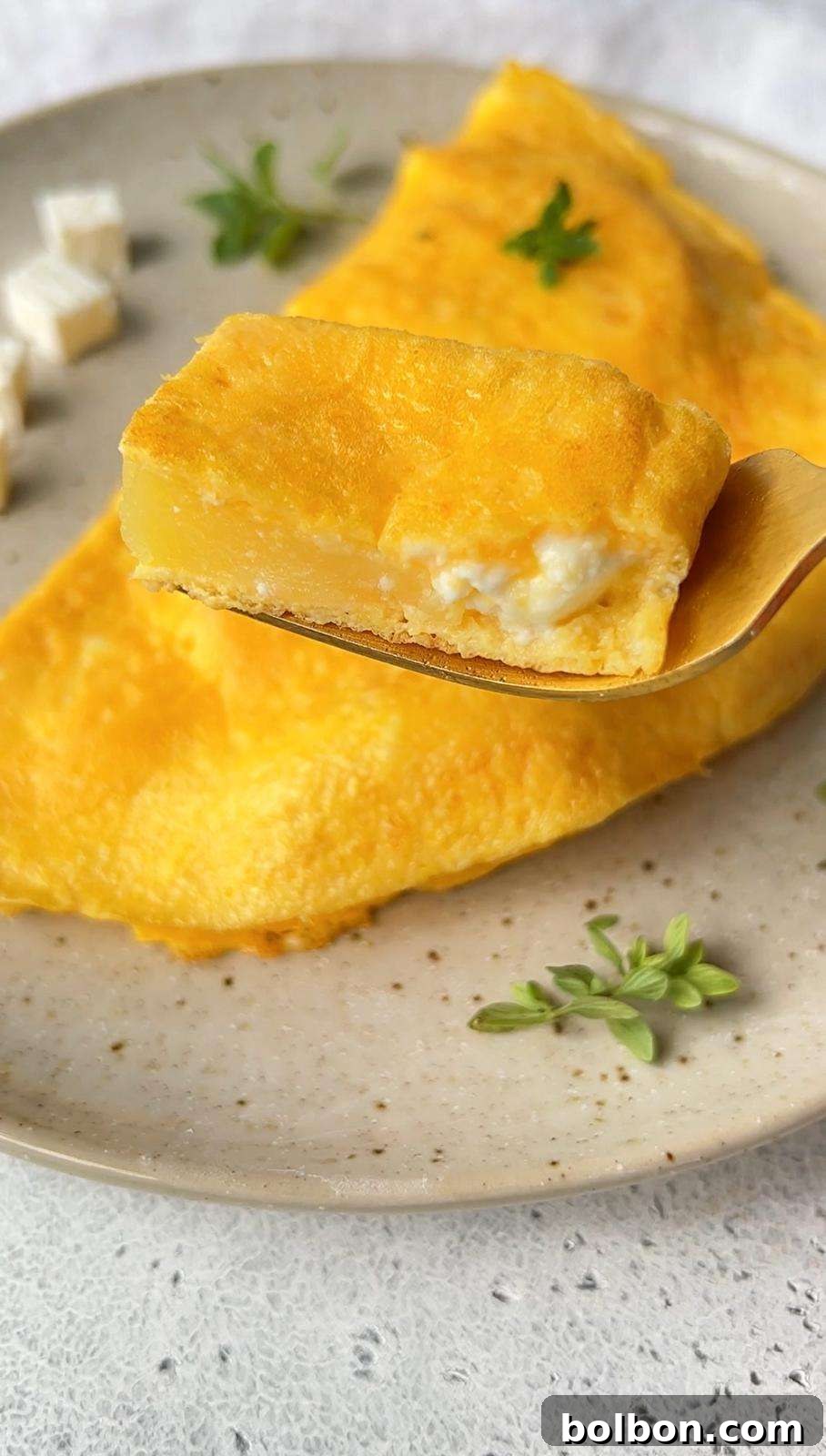
There are some breakfast dishes so utterly satisfying, so inherently simple yet bursting with flavor, that they earn a permanent spot on your weekly menu. For many, that dish is an omelet. But not just any omelet – we’re talking about the incredible Feta and Potato Omelet. This isn’t just a meal; it’s a culinary hug, a delightful fusion of hearty potatoes and tangy, salty feta cheese nestled within perfectly cooked, fluffy eggs. It’s a dish I could happily savor every single day, a true celebration of comforting Mediterranean flavors (🇧🇬❤️🇬🇷) that elevates your morning routine from mundane to magnificent.
This recipe is designed for ease and enjoyment. Imagine a busy weekday morning or a leisurely weekend brunch; this four-ingredient wonder comes together in mere minutes, especially if you plan ahead. The secret to its effortless preparation lies in a simple trick: boiling the potato the night before. This foresight transforms your morning cooking into a swift, seamless process, allowing you to whip up this delicious omelet in literally minutes and, let’s be honest, devour it even faster!
Why the Feta and Potato Omelet Will Become Your New Favorite
If you’ve found yourself in an “egg rut,” preparing the same scrambled eggs or fried eggs day in and day out, then this Feta and Potato Omelet is your ticket to breakfast liberation. It’s a dish that promises to invigorate your taste buds and add a touch of Mediterranean charm to your mornings. Here’s why this recipe stands out:
- Unbeatable Flavor Combination: The marriage of creamy, earthy potatoes with the sharp, salty tang of feta cheese creates a flavor profile that is both robust and incredibly satisfying. Each bite offers a delightful contrast that keeps you coming back for more. This unique blend of savory and briny notes makes it truly addictive.
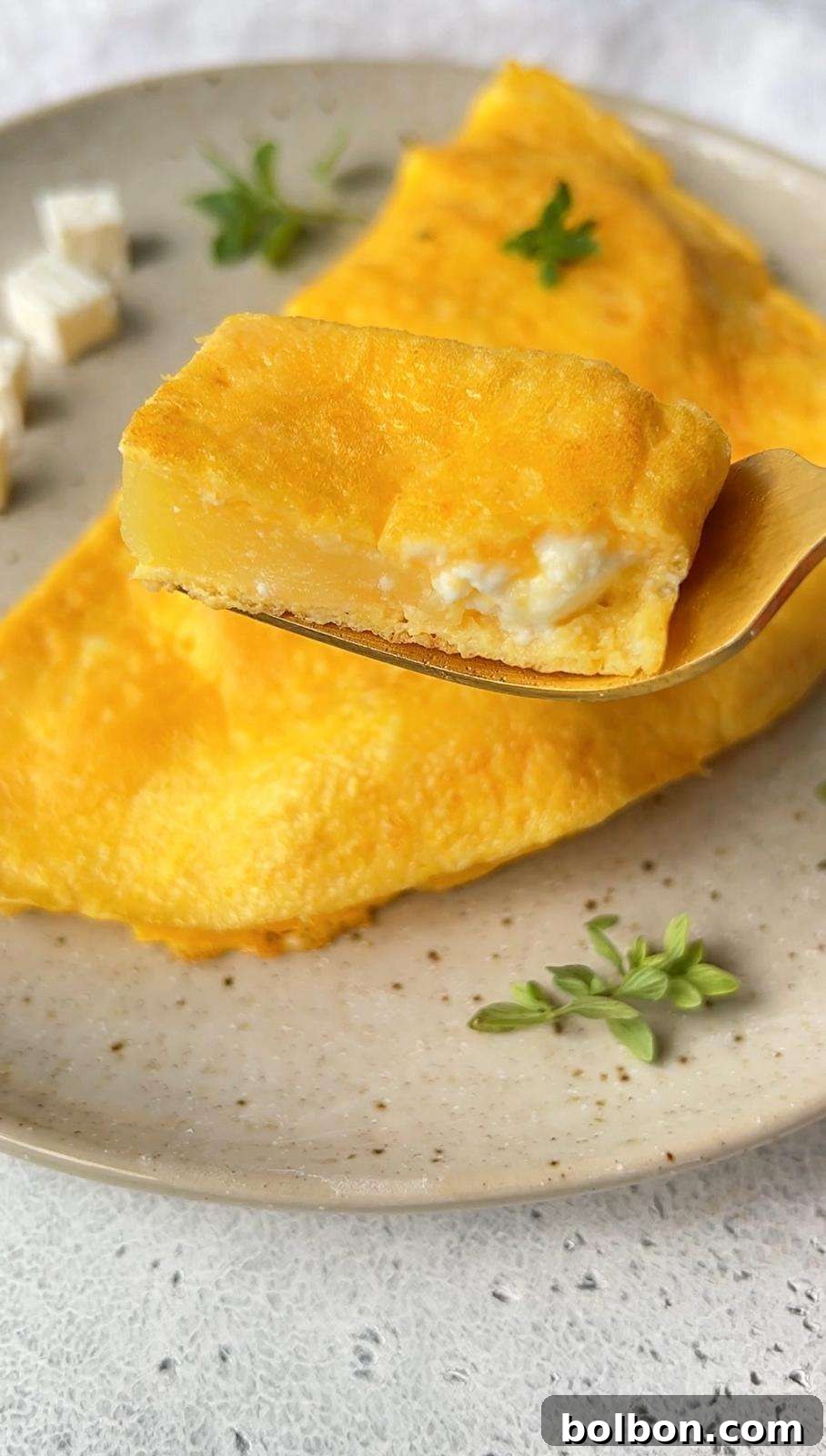
- Perfect Texture Play: You’ll experience eggs that are wonderfully fluffy and light, offering a delicate embrace to the filling. The perfectly cooked potatoes add a comforting softness, while the feta, especially when sourced correctly, melts into a smooth, slightly gooey consistency, enriching the overall mouthfeel. The combination is a textural dream.
- Effortlessly Simple: With just a handful of primary ingredients and straightforward steps, this omelet is incredibly simple to prepare. It’s the ideal recipe for novice cooks seeking impressive results and seasoned chefs looking for a quick yet gourmet option, proving that extraordinary flavor doesn’t require complicated techniques or a long list of obscure items.
- Quick & Convenient: By taking the smart step of pre-boiling the potatoes, you drastically cut down on morning prep time. This makes the omelet a fantastic option for a speedy weekday breakfast, allowing you more time to enjoy your morning, or for a stress-free weekend brunch when you want delicious food without the fuss. From pan to plate, you’re looking at just a few minutes of active cooking.
- Nutritious and Filling: Packed with high-quality protein from the eggs and wholesome complex carbohydrates from the potatoes, this omelet provides sustained energy to kickstart your day. Feta adds healthy fats and essential calcium, making it a well-rounded, deeply nourishing, and satisfying meal that will keep you full and focused.
- Versatility: While delicious on its own, this omelet also serves as an excellent base for variations, allowing you to customize it with other vegetables, herbs, or even meats to suit your dietary preferences or what you have on hand. It’s a truly adaptable dish.
Yummy. Just simply yummy.
– Roomina Merali
Essential Ingredients for Your Perfect Omelet
Crafting the perfect Feta and Potato Omelet begins with selecting quality ingredients. Each component plays a vital role in achieving that sought-after flavor and texture. Here’s what you’ll need and why your choices matter:
- 🥔 Yellow Potato: For this recipe, waxy yellow potatoes are highly recommended. Varieties like Yukon Gold or similar types offer a creamy, tender texture when boiled, without becoming mushy or crumbly. Their inherent sweetness also beautifully balances the saltiness of the feta. The pre-boiling step ensures they are perfectly cooked through and soft, ready to add a hearty base to your omelet. If yellow potatoes aren’t available, red new potatoes also work well, maintaining a good bite and creamy consistency. Avoid starchy potatoes like Russets, as they tend to become too floury for an omelet filling and might not hold their shape as well.
- 🧂 Salt: Salt is crucial for seasoning, but its application is key. You’ll want to season your potato boiling water generously. This infuses the potatoes with flavor from the inside out, making them taste incredible even before they hit the pan. For the eggs themselves, I often skip additional salt. The wonderful salinity from the feta cheese is typically sufficient, preventing the omelet from becoming overly salty. It’s always best to taste the finished product and adjust if needed, as feta varies in saltiness.
- 🍳 Eggs: The foundation of any great omelet. Opt for the freshest, highest quality eggs your budget allows. Pasture-raised eggs, with their vibrant, rich orange yolks, not only offer superior flavor but also contribute to a more visually appealing and nutritious omelet. The quality of your eggs directly impacts the fluffiness, richness, and overall taste of the finished dish, so don’t skimp here; it makes a noticeable difference.
- 🫒 Olive Oil: As a staple of Mediterranean cuisine, high-quality extra virgin olive oil is my preferred cooking fat for this omelet. Its subtle fruity and peppery notes wonderfully complement the earthy potatoes and briny feta, enhancing the overall flavor profile without overpowering it. Olive oil also offers healthy monounsaturated fats. If olive oil isn’t to your taste or readily available, unsalted butter offers a rich, golden finish and creamy flavor, while a neutral oil like avocado oil or grapeseed oil can also be used effectively without imparting significant flavor.
- 🧀 Feta: This is where tradition and taste truly meet! For an authentic and superior flavor, promise yourself (and your imaginary Nonna!) that you will buy whole feta sold in brine. This traditional method keeps the feta moist, perfectly crumbly, and incredibly flavorful. Pre-crumbled feta, while convenient, often tastes dry, lacks the desirable creamy texture, and has a significantly muted flavor profile. A good quality feta is firm but easily crumbled, with a distinct salty tang that melts beautifully into the warm omelet, distributing its characteristic savory punch.
Nonna’s Secret to a Fluffy Omelet 🥚
The secret to truly light and fluffy eggs lies in a simple yet often overlooked preparation step. Before they even touch the hot pan, take an extra moment to whisk your eggs vigorously with a fork for at least 30 seconds, or even up to a minute. This process isn’t just about combining yolks and whites; it’s about incorporating as much air as possible into the mixture. This air expands when heated, creating that desirable airy, tender, and light texture in your omelet. When cooking, maintaining a medium-low heat is paramount. High heat can lead to rubbery, browned, and unappetizing eggs. Instead, a gentle, consistent heat allows the eggs to cook slowly and evenly, ensuring they stay light and delicate throughout. Cook for only a minute or so on each side, just until set, to prevent any dark spots and preserve their beautiful golden hue and tender consistency. Using a good non-stick pan will also make this process much easier, allowing the omelet to slide out effortlessly and facilitating a perfect flip.
Creative Variations and Simple Substitutions for Your Omelet
While the classic Feta and Potato Omelet is undeniably delicious and satisfying, this recipe serves as an excellent canvas for culinary creativity. Feel free to adapt it to your taste preferences, dietary needs, or whatever ingredients you have on hand in your kitchen. Here are some inspiring ideas to make this omelet uniquely yours:
- Choose Your Cooking Fat: The base fat you use can slightly alter the flavor. While olive oil, with its Mediterranean essence, or unsalted butter 🧈, for its rich flavor, are fantastic choices, feel free to use a neutral oil like avocado, grapeseed, or canola oil if you prefer a less pronounced flavor or have specific dietary considerations. The key is to use a fat that can handle medium-low heat without smoking, ensuring a clean taste.
- Cheese Exploration Beyond Feta: The beauty of this omelet is its adaptability to various cheeses 🧀. While feta is wonderful, experiment with different options! For a tangier profile, consider crumbled goat cheese. If you’re seeking a melty, savory experience, grated Manchego, a sharp cheddar, or even a soft, creamy brie can be delightful. For those following a dairy-free lifestyle, there are many excellent plant-based cheese alternatives available that can mimic the creaminess and flavor of traditional feta, ensuring everyone can enjoy this delicious dish.
- Adjust Salt to Taste (and Beyond): While I find the inherent saltiness of brine-packed feta and potatoes cooked in salted water to be sufficient, individual preferences vary greatly. Feel free to add an extra pinch of salt 🧂 to your whisked eggs if you prefer a bolder flavor. Beyond salt, a dash of freshly ground black pepper can enhance the overall taste without adding more sodium, and a tiny pinch of red chili flakes can introduce a subtle, exciting kick.
- Add a Boost of Greens & Veggies: Incorporating fresh vegetables is a wonderful way to boost flavor, texture, and nutrition. Adding a handful of fresh baby spinach 🥬 to the omelet while it cooks will wilt beautifully and add a subtle earthy note. Finely chopped chives or green onions sprinkled in with the eggs or as a fresh garnish will offer a mild oniony zest. Other delicious additions could include finely diced bell peppers, sautéed mushrooms, caramelized onions, or even blanched asparagus tips, all of which add complexity and color.
- Herbs & Spices for Aromatic Depth: Elevate the Mediterranean profile and add aromatic depth with fresh or dried herbs. A generous sprinkle of fresh dill, flat-leaf parsley, or dried oregano can brighten the flavors and add an authentic touch. For a hint of warmth and exotic flavor, a pinch of smoked paprika or a tiny dash of cumin could add an interesting dimension, transforming the omelet’s character.
- Protein Power-Up: For a heartier meal that will keep you satisfied even longer, consider adding cooked protein to your omelet. Diced cooked ham, crumbled breakfast sausage, or even delicate flakes of smoked salmon can be folded into the omelet alongside the potatoes and feta, making it a more substantial and protein-packed option for any meal of the day.
- Sweet Potato Twist: For a slightly different flavor profile and added sweetness, try using cooked sweet potatoes instead of yellow potatoes. This offers a unique twist and extra nutrients.
Explore More Delicious Egg Recipes
Egg Sandwiches
13 mins
Over Medium Eggs
5 mins
Viral Feta Fried Eggs
10 mins
How to Poach Eggs
6 mins
Tofu Scramble
13 mins
Air Fryer Hard Boiled Eggs
13 mins
Perfect Pairings for Your Feta and Potato Omelet
This versatile Feta and Potato Omelet can be the star of any meal, from a quick solo breakfast to a lavish brunch spread. Its rich flavors and satisfying textures make it a wonderful companion to a variety of side dishes, enhancing the overall dining experience. Here are some of the best ways to serve it, whether you’re aiming for a hearty meal or a lighter complement:
- Classic Breakfast Proteins: For a hearty, well-rounded, and balanced meal, serve your Feta and Potato Omelet alongside your favorite breakfast proteins. Crispy 🥓 bacon, lighter turkey bacon, or a savory Homemade Breakfast Sausage would perfectly complement the omelet’s flavors and add an extra layer of satisfaction and protein to your plate, making it a truly filling start to the day.
- Fresh & Vibrant Salads: To introduce a refreshing contrast and cut through the richness of the eggs and cheese, a crisp side 🥗 salad is an excellent choice. A bright, zesty Greek Feta Salad, with its cool cucumbers, juicy tomatoes, briny olives, and extra feta, would echo the Mediterranean theme beautifully. Alternatively, a Simple Green Salad with a light vinaigrette offers a refreshing, cleansing palate, providing a delightful balance.
- Brunch Favorites: Transforming your Feta and Potato Omelet into a centerpiece for a weekend brunch is simple. Pair it with homemade, fluffy pancakes or a decadent, easy-to-prepare French toast casserole. The irresistible sweet and savory combination is always a crowd-pleaser, creating a diverse and delightful brunch experience that caters to all tastes.
- Toasted Breads & Spreads: A slice of crusty artisan bread, a warm, soft pita, or even a simple piece of whole-wheat toast, lightly buttered or with a smear of creamy avocado, can be an excellent accompaniment. These are perfect for soaking up any flavorful bits of egg and cheese, adding another textural element to your meal.
- Fresh Fruit: For a lighter side or to add a touch of natural sweetness, a vibrant bowl of seasonal fresh fruit – think juicy berries, sweet melon, or tangy citrus segments – adds natural sweetness, vibrant color, and essential vitamins, creating a beautifully balanced and refreshing breakfast or brunch plate.
Your Feta and Potato Omelet FAQs Answered
The ultimate secret to truly fluffy eggs is incorporating plenty of air before they even hit the pan. Whisk the eggs vigorously with a fork for at least 30 seconds, or even up to a full minute, until they are noticeably light and slightly foamy. This aeration creates tiny air pockets that expand with steam during cooking, resulting in a lighter, more tender, and incredibly fluffy omelet. Additionally, cooking them on medium-low heat is crucial; this gentle heat prevents them from becoming tough, rubbery, or overly browned, ensuring they stay perfectly light and delicate.
Knowing precisely when to flip is crucial for a perfectly cooked and structured omelet. Look for a few key indicators: the edges of the omelet should begin to pull away from the pan, allowing you to easily lift them with a spatula. The surface of the egg should appear mostly opaque and almost fully set, no longer runny, but still slightly moist and glossy on top. You might observe tiny bubbles on the surface as well. Once these signs are present, gently slide your spatula under one side and carefully fold it over the side containing your delicious potato and feta toppings. Don’t worry if it doesn’t look absolutely perfect on your first try; a delicious omelet is still a delicious omelet, even with a few charming imperfections!
Absolutely, this omelet can easily be adapted for those following a dairy-free diet without compromising on flavor or texture. Simply substitute the traditional feta cheese with your favorite high-quality dairy-free cheese alternative. Many excellent plant-based feta or savory cheese options are available on the market that will provide a similar tangy and creamy texture, ensuring you don’t miss out on any of the delightful taste of this Mediterranean-inspired breakfast.
While feta is traditional and wonderfully flavorful, feel free to get creative and experiment with other cheese options to discover new flavor profiles. For a different tang, try crumbled goat cheese. If you prefer a milder, meltier cheese, grated options like mozzarella, provolone, Gruyère, or even a sharp cheddar can be incredibly delicious. Manchego, a Spanish sheep’s milk cheese, would also offer a unique, nutty twist. The key is to choose a cheese that melts well and complements the earthy potatoes and rich eggs.
Mastering the omelet involves a few essential techniques that, once perfected, will consistently yield fantastic results. First, as previously mentioned, whisking the eggs vigorously for at least 30 seconds is vital for achieving that desirable fluffy, airy texture. Second, precise heat control is paramount; cooking on medium-low heat prevents scorching, ensures even cooking without undesirable browning, and keeps the eggs tender. Third, a reliable nonstick pan is a game-changer, allowing the omelet to slide freely without sticking, making flipping a breeze. If you don’t have a dedicated nonstick pan, you can also learn techniques to make any pan nonstick with proper seasoning and fat usage. Lastly, avoid overcooking – an omelet should be just set, still moist, and never dry.
The beauty of an omelet lies in its incredible versatility; there’s truly no wrong answer when it comes to delicious fillings! Most vegetables are absolutely delicious and add freshness and nutrients: think sautéed onions, colorful bell peppers, tender zucchini, diced fresh tomatoes, a handful of fresh spinach, and, of course, any variety of potatoes (as in this recipe!). Beyond vegetables, consider all kinds of cheese for richness and flavor, and various cooked meats like diced ham, crumbled breakfast sausage, or even delicate flakes of smoked salmon for a protein boost. For unique gourmet twists, try oil-packed sun-dried tomatoes, briny pitted olives, capers, or even a sprinkle of fresh herbs like dill or parsley. The possibilities are endless, allowing you to customize your omelet to perfectly suit your current cravings and available ingredients.

Feta and Potato Omelet Recipe
Rated 5 out of 5 stars based on 2 reviews.
Facebook Share
Rate Recipe
Print Recipe
Video Guide for Feta and Potato Omelet
Recommended Equipment
Ingredients
- Salt, for the water
- 1 yellow potato, peeled and cut into wedges
- 2 large eggs
- ½ tablespoon olive oil, or butter
- 2 tablespoons feta cheese, sliced or crumbled (preferably brine-packed)
Instructions for Preparing Your Omelet
-
Begin by bringing a large pot of generously salted water to a rolling boil. Carefully add the peeled and wedged yellow potatoes to the boiling water. Cook for approximately 5-7 minutes, or until the potatoes are tender when pierced with a fork but still hold their shape. Once cooked, drain the potatoes thoroughly and set them aside to cool slightly. This step can conveniently be done the night before and the cooled potatoes refrigerated in an airtight container, ready for a quick morning meal.
-
Place a medium pan (preferably non-stick) over medium-low heat. Add the olive oil or butter to the pan and allow it to warm. While the pan is heating, crack the eggs into a bowl and whisk them vigorously with a fork for at least 30 seconds to incorporate plenty of air, which will ensure your omelet is light and fluffy. Pour the whisked eggs into the warm pan and gently swirl to evenly coat the bottom. Allow the eggs to cook undisturbed for about 30 seconds to 1 minute, until the edges begin to set and the center is mostly opaque but still slightly moist.
-
Once the eggs are partially set, carefully arrange 3-4 slices of the cooked potato wedges and the crumbled or sliced feta cheese on one half of the omelet. Distribute them evenly, ensuring a good amount of filling in each bite.
-
When the sides of the omelet can be easily lifted from the pan with a spatula and the egg is almost fully cooked (with no visible runny liquid on top), carefully flip the un-topped side of the omelet over the side containing the potato and feta fillings. Gently press down slightly with your spatula to help the cheese melt and the omelet to hold its shape. Allow the folded omelet to cook for another minute or so, just until the cheese is warm and slightly softened. Serve immediately and savor your delicious homemade creation!
Chef’s Notes & Expert Tips
- Make Ahead Tip: To truly expedite your morning routine and enjoy this omelet even on the busiest days, consider boiling the potatoes the night before. Once cooked and drained, let them cool completely, then store them in an airtight container in the refrigerator. They’ll be perfectly ready to be added to your morning omelet, saving you valuable time.
- Trouble-Shooting Omelets: Don’t be discouraged if your omelet isn’t absolutely picture-perfect on your first try! Omelets are delicate, and sometimes they can rip, tear, or not fold perfectly. Remember, taste is paramount, and a slightly imperfectly shaped omelet will still be incredibly delicious and just as enjoyable. Practice truly makes perfect when it comes to omelet flipping!
- Garnish with Style: A simple garnish can elevate the presentation of your omelet significantly, making it look as good as it tastes. A single fresh herb sprig, such as delicate oregano, fragrant thyme, or a sprinkle of finely chopped chives or parsley, adds a touch of freshness, vibrant color, and an aromatic finish. It’s an effortless way to make your homemade meal appear gourmet.
- Temperature Matters: Always ensure your pan is at the right temperature (medium-low) before adding the eggs. If the pan is too hot, the eggs will cook too quickly, become tough, and brown undesirably. If it’s too cold, they won’t set properly, leading to a soggy omelet. Patience with heat is key.
- Avoid Overcrowding: This recipe is designed for a single-serving omelet. If you’re making multiple omelets, cook them one at a time to ensure even cooking and easier handling. Overcrowding the pan can lead to steaming instead of a proper set, affecting the texture.
Nutrition Information (Approximate)
Nutrition information is automatically calculated, so should only be used as an approximation.