
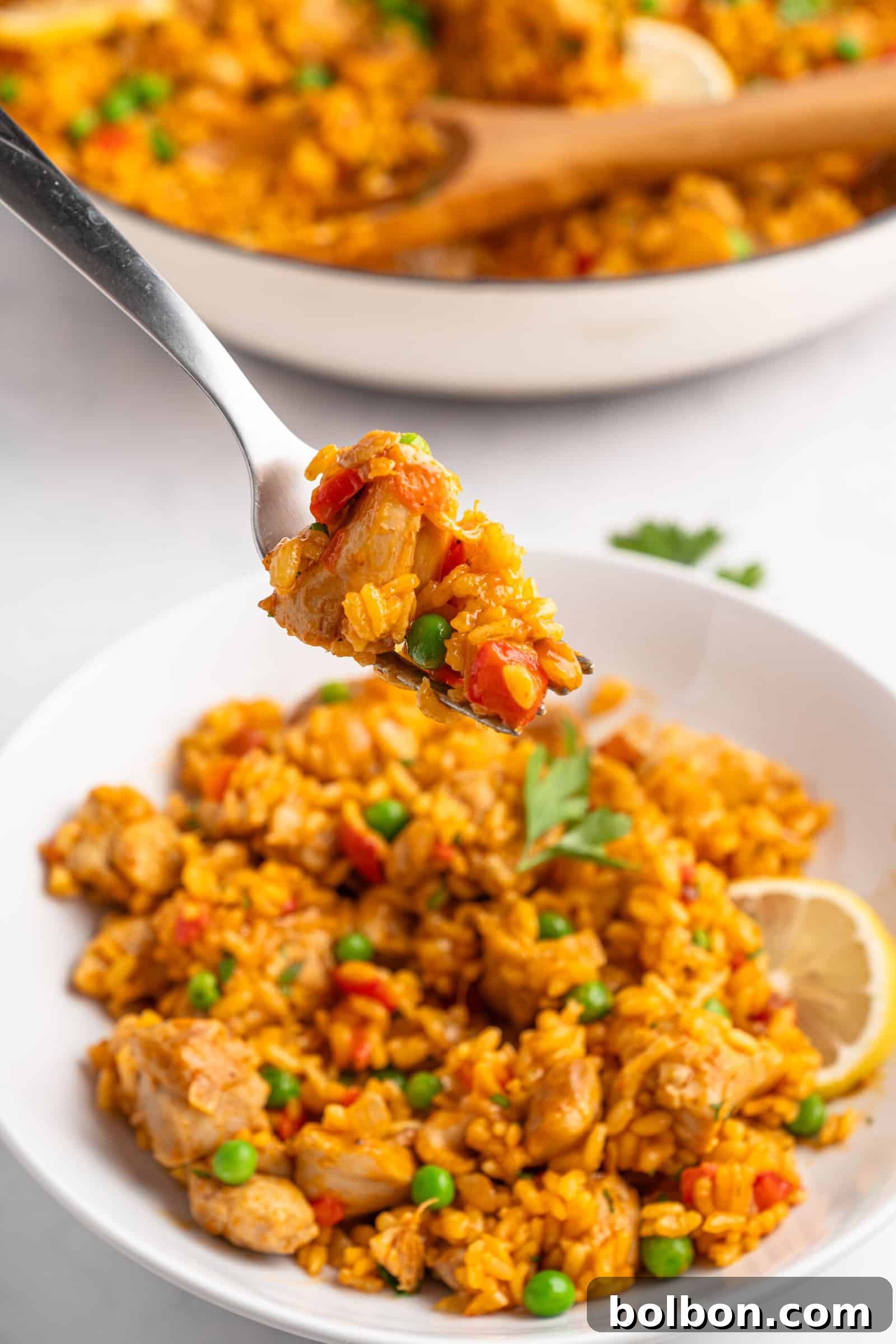
There’s a unique magic that happens when food brings people together. For over two decades, my best friend, Ange, and I have navigated life’s countless adventures, from questionable fashion choices in our youth to embarking on new passions in adulthood. Today, one of our greatest shared joys is the culinary journey – discovering, creating, and sharing delicious recipes. Among our recent culinary obsessions, **Chicken Paella** stands out, a vibrant and flavorful dish that perfectly embodies our shared love for great food and memorable meals. This recipe is a heartfelt tribute to that friendship and the joy of a shared table, offering a taste of Spanish sunshine right in your kitchen.
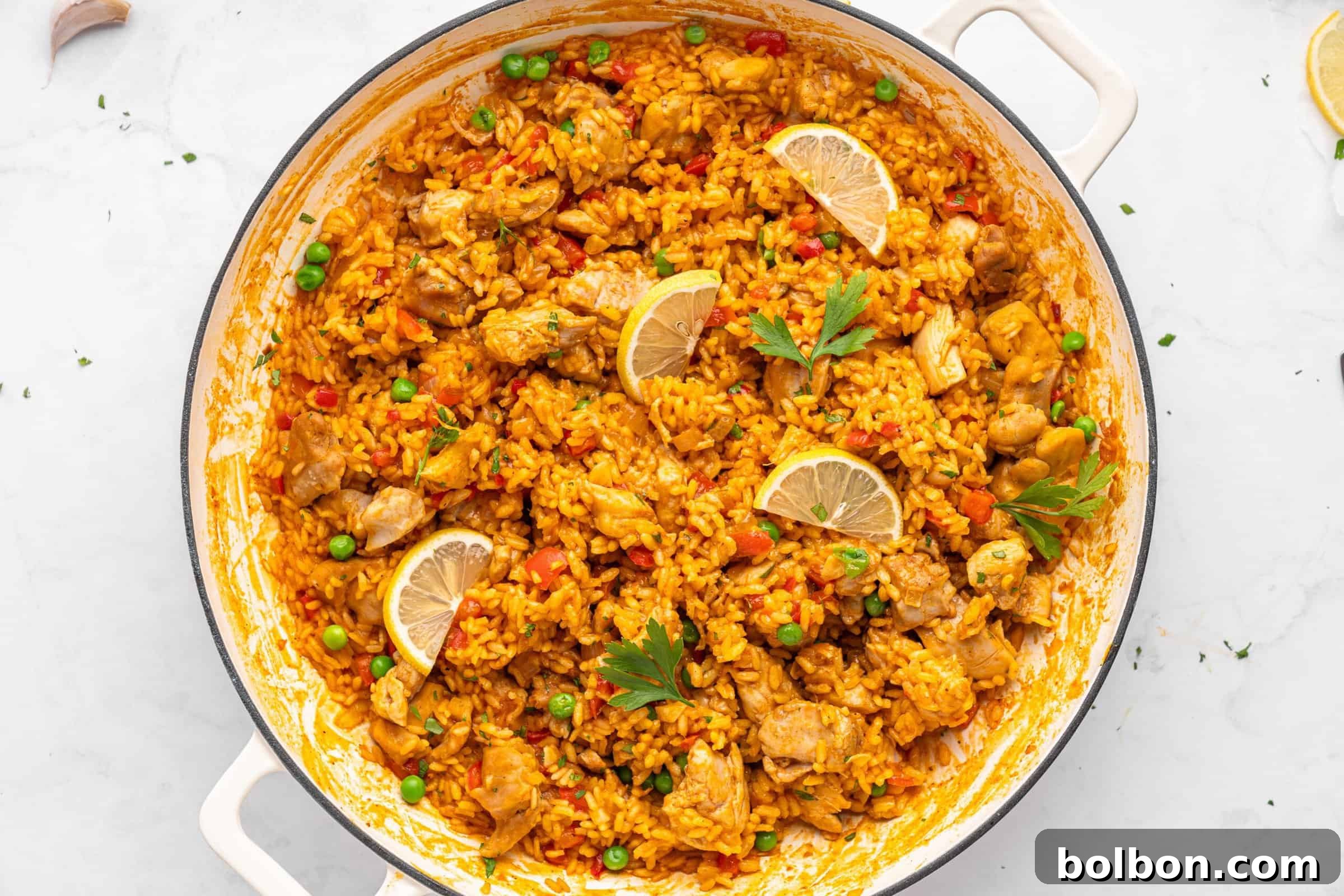
Discover the Delight: Why This Chicken Paella Will Captivate Your Senses
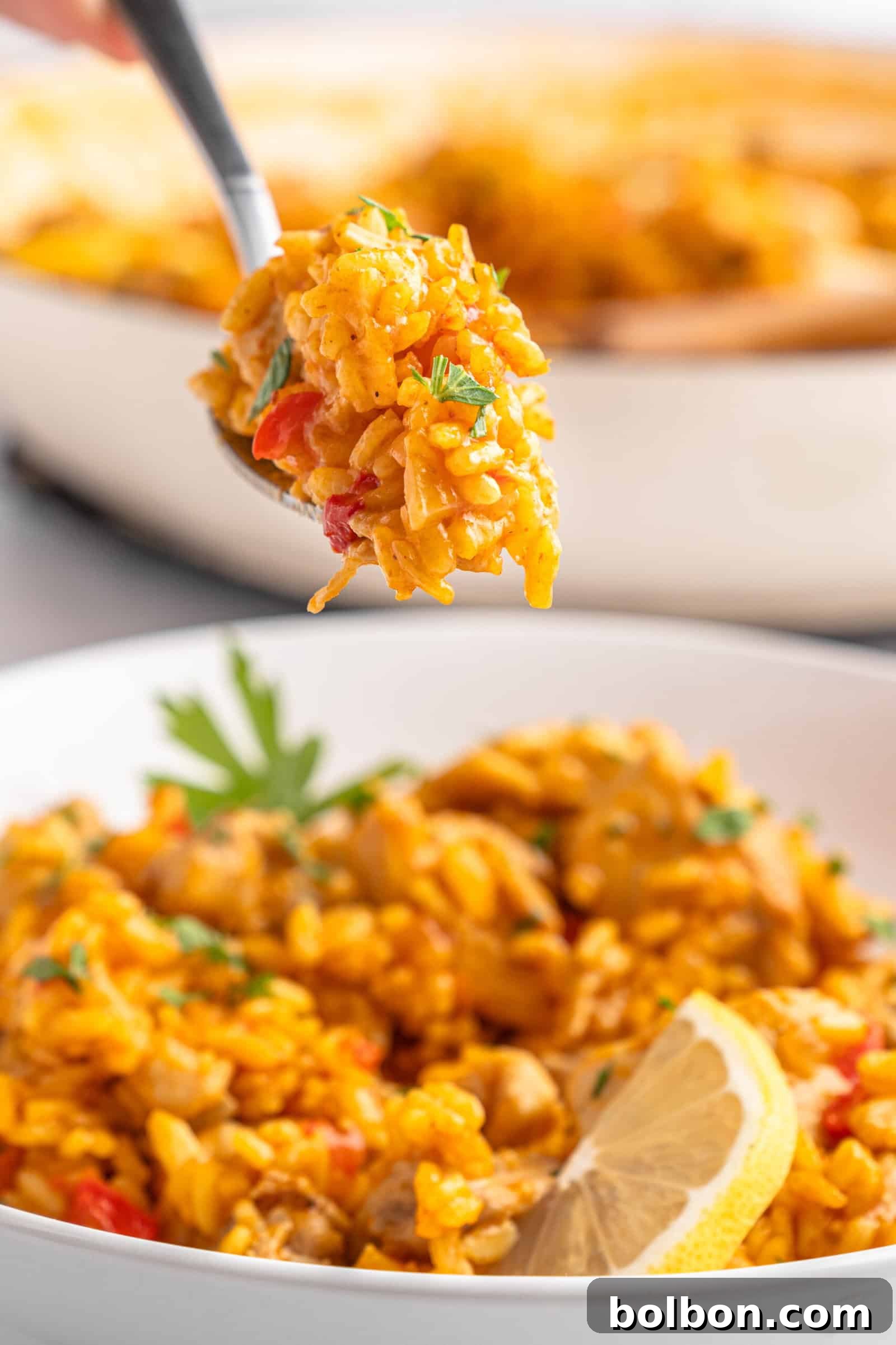
While inspired by the authentic flavors of Spain, this Chicken Paella recipe is thoughtfully simplified, making it incredibly accessible for a bustling 👨👩👧👦 family dinner without compromising on depth or complexity. Every spoonful offers a symphony of tastes and textures that will transport you straight to the Mediterranean. You’ll instantly fall in love with the harmonious blend of aromatic spices, tender chicken, and beautifully cooked rice.
The texture is truly unparalleled: expect a delightful contrast with the coveted **crispy rice (socarrat)** forming a golden crust at the bottom of the pan, while the rice on top remains wonderfully tender and moist. This perfect balance is complemented by a generous medley of flavorful vegetables, such as sweet bell peppers and fragrant onions, and succulent, juicy pieces of chicken thigh (or breast, your choice!). Each bite is a unique experience – vibrant, rich, deeply satisfying, and absolutely “delicioso!” This isn’t just a meal; it’s an invitation to savor a moment, making weeknights feel like a special occasion or gatherings truly unforgettable.
Mastering the Art of Chicken Paella: A Step-by-Step Guide
Creating this Spanish-inspired masterpiece is a rewarding experience, and with these clear steps, you’ll achieve a perfect paella every time. The key is in preparing your ingredients beforehand and allowing the flavors to build gradually.
Gathering Your Ingredients: Mise en Place for Success
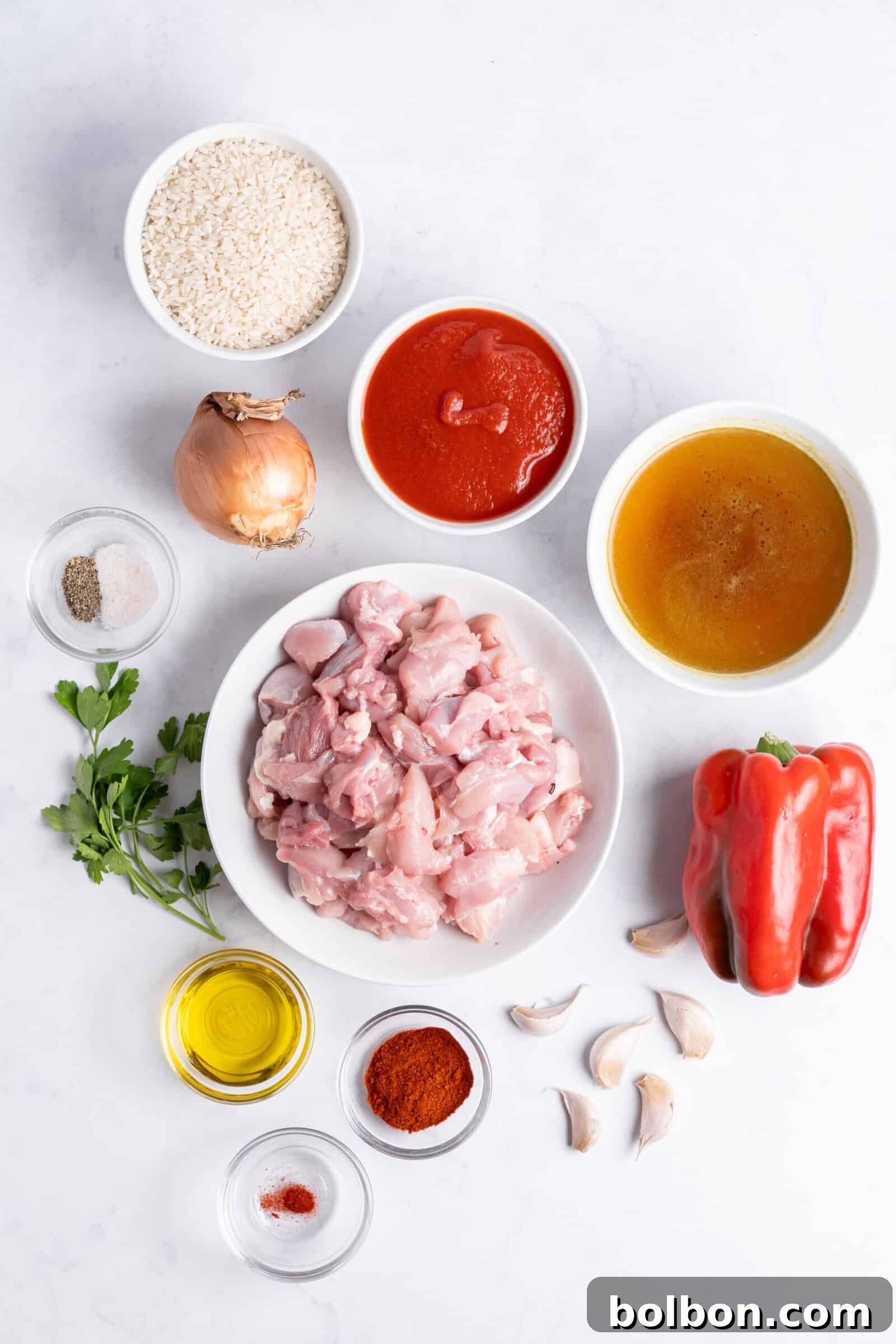
Before you begin cooking, ensure all your ingredients are prepped and ready to go. This “mise en place” approach makes the cooking process smooth and enjoyable:
- 🔪 Start by dicing 4 skinless, boneless chicken breasts or thighs into uniform, bite-sized cubes using a sharp knife. Uniformity ensures even cooking.
- 🫑 Next, finely dice one bell pepper (red is preferred for color and sweetness) and one onion. Mince 6 cloves of garlic – the more the merrier for that foundational aromatic flavor.
- 🍗 Season the chicken cubes generously with salt and freshly ground black pepper. This initial seasoning is crucial for building flavor from the ground up.
Cooking the Paella: Building Layers of Flavor
The magic of paella lies in layering flavors. Follow these steps to create a rich and complex base for your rice:
- 🥑 In a large, wide pan or paella pan on the stove, heat your oil of choice (avocado oil is recommended for its high smoke point and neutral flavor) over medium-high heat. A wide pan is essential for developing the crispy rice crust.
- 🔥 Add the seasoned chicken pieces to the hot oil. Sear them on each side for 1 to 2 minutes, or until they develop a light golden crust. This browning adds depth of flavor to the chicken and the overall dish. Do not overcrowd the pan; cook in batches if necessary.
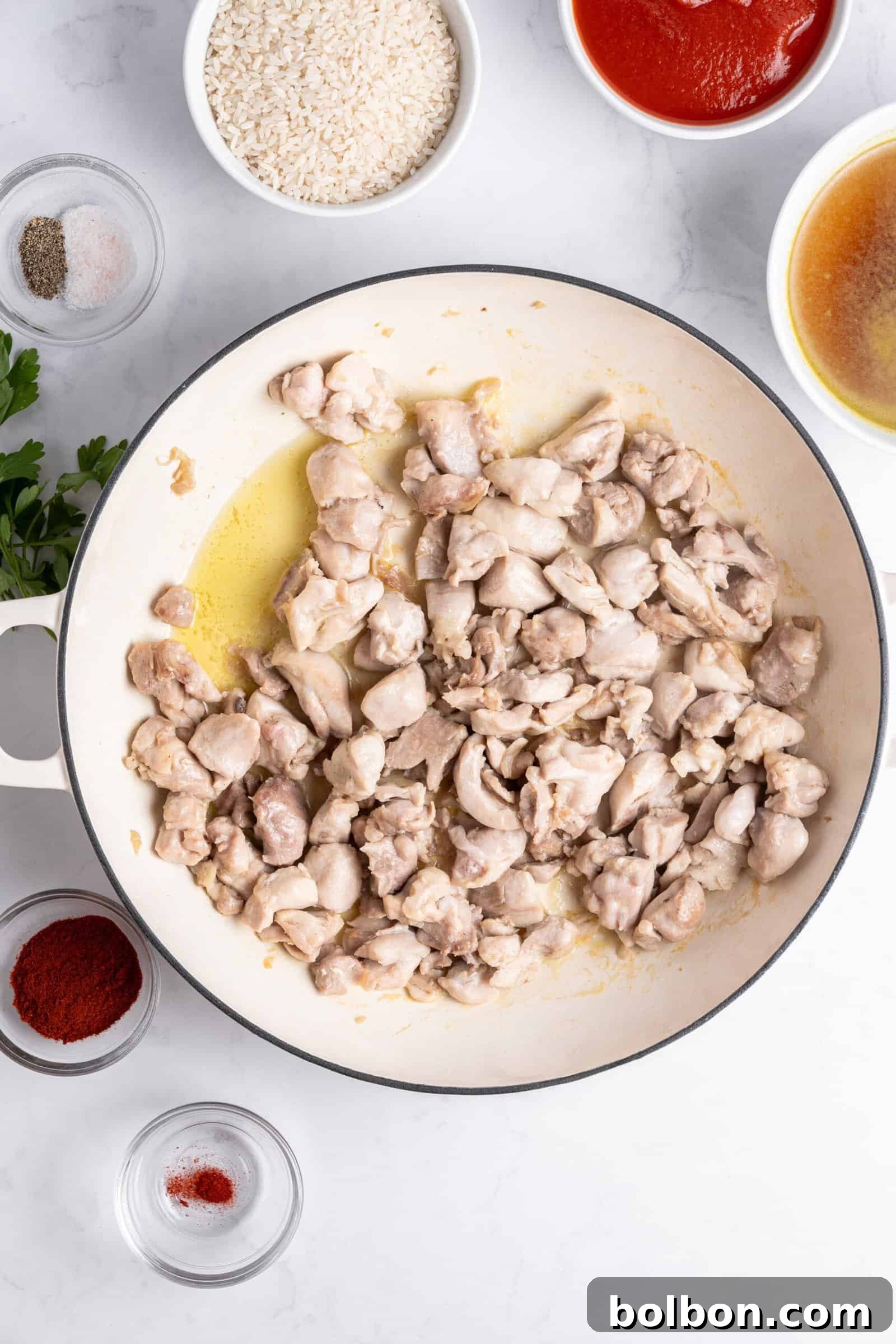
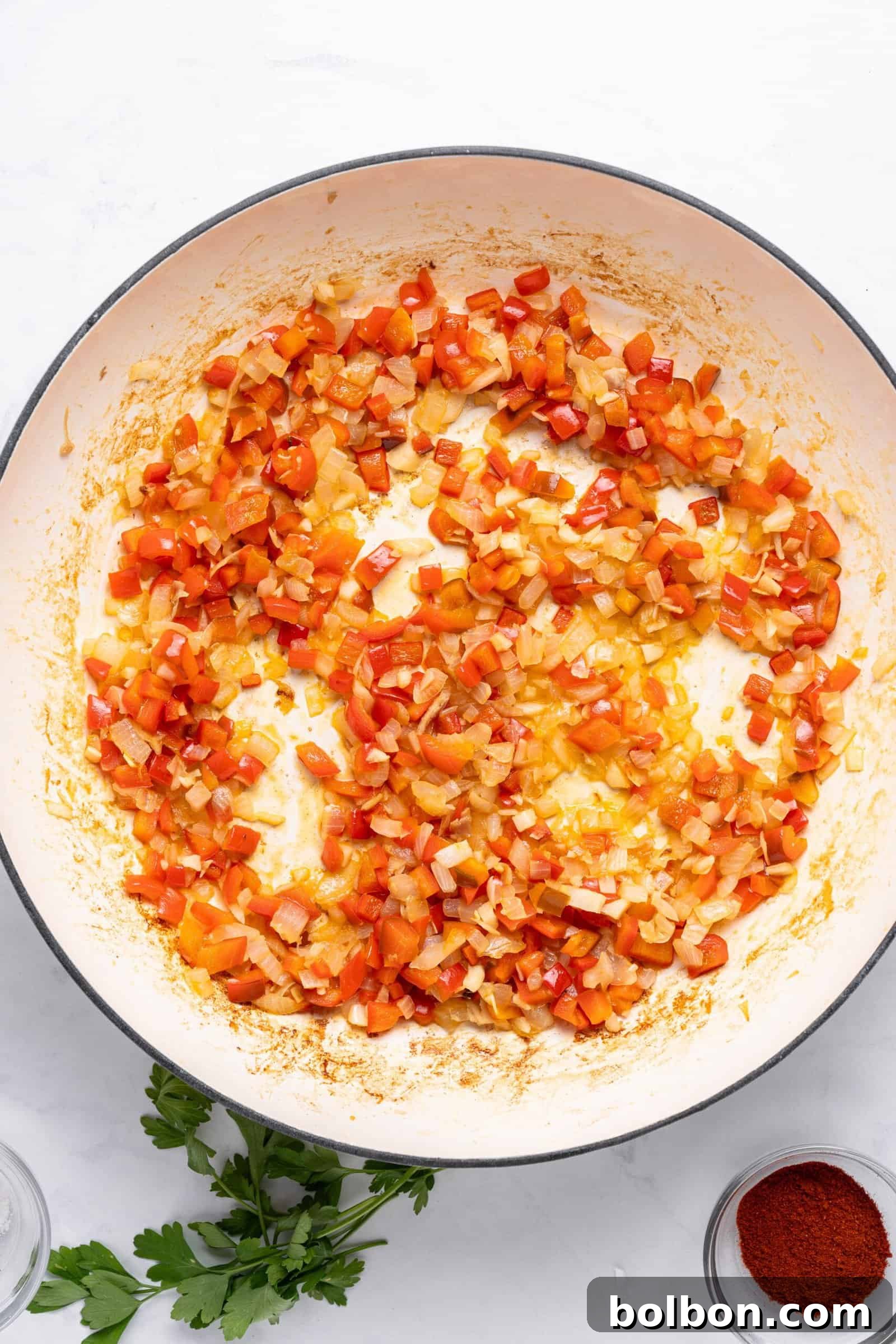
- 🧅 Once seared, remove the chicken from the pan and set it aside. In the same pan, add the diced onions, bell pepper, and minced garlic. Sauté these aromatics for about a minute until fragrant and slightly softened. The goal is to soften them without browning too much.
- 🔥 To enhance the flavor and deglaze the pan, add a tiny splash of vegetable or chicken broth. Scrape up any browned bits (fond) from the bottom of the pan; these bits are packed with flavor.
- 🧂 Now, stir in 1 tablespoon of paprika (smoked paprika is highly recommended for an authentic Spanish flavor) and additional salt to taste. Ensure the spices are well incorporated and fragrant.
- 🍚 Add 1.5 cups of your preferred rice (jasmine or long-grain works beautifully here) to the pan and stir it for a minute, allowing the grains to toast slightly and absorb the flavors of the aromatics and spices. This step is important for the texture of the finished paella. Then, pour in 1.5 cups of plain tomato sauce or crushed tomatoes and stir again, coating the rice evenly.
- Return your semi-cooked chicken breast cubes to the pan, nestling them among the rice and vegetables.
- Finally, pour in 2.5 cups of vegetable broth (or chicken broth) over everything. Give it one final gentle stir to distribute the ingredients evenly.
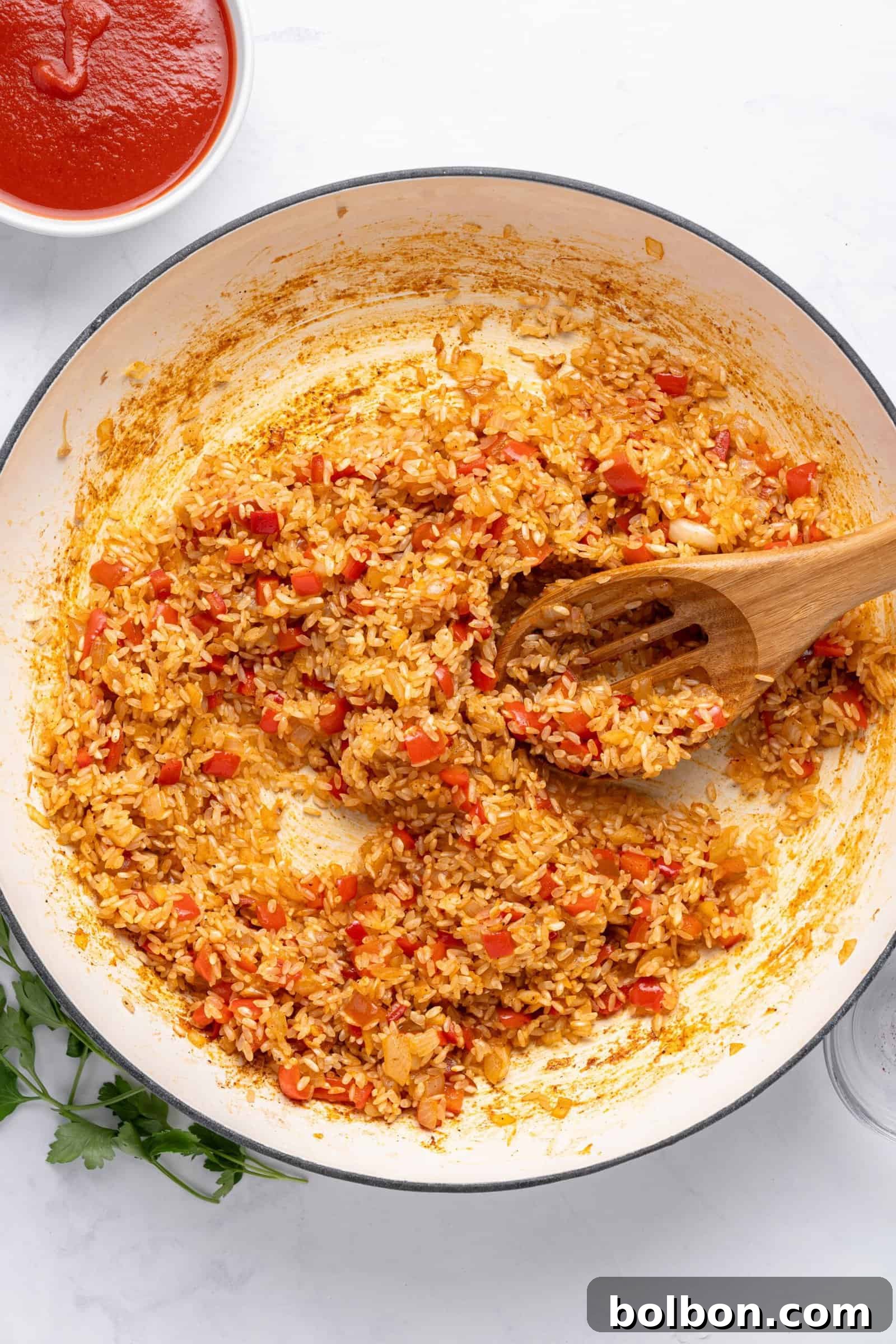
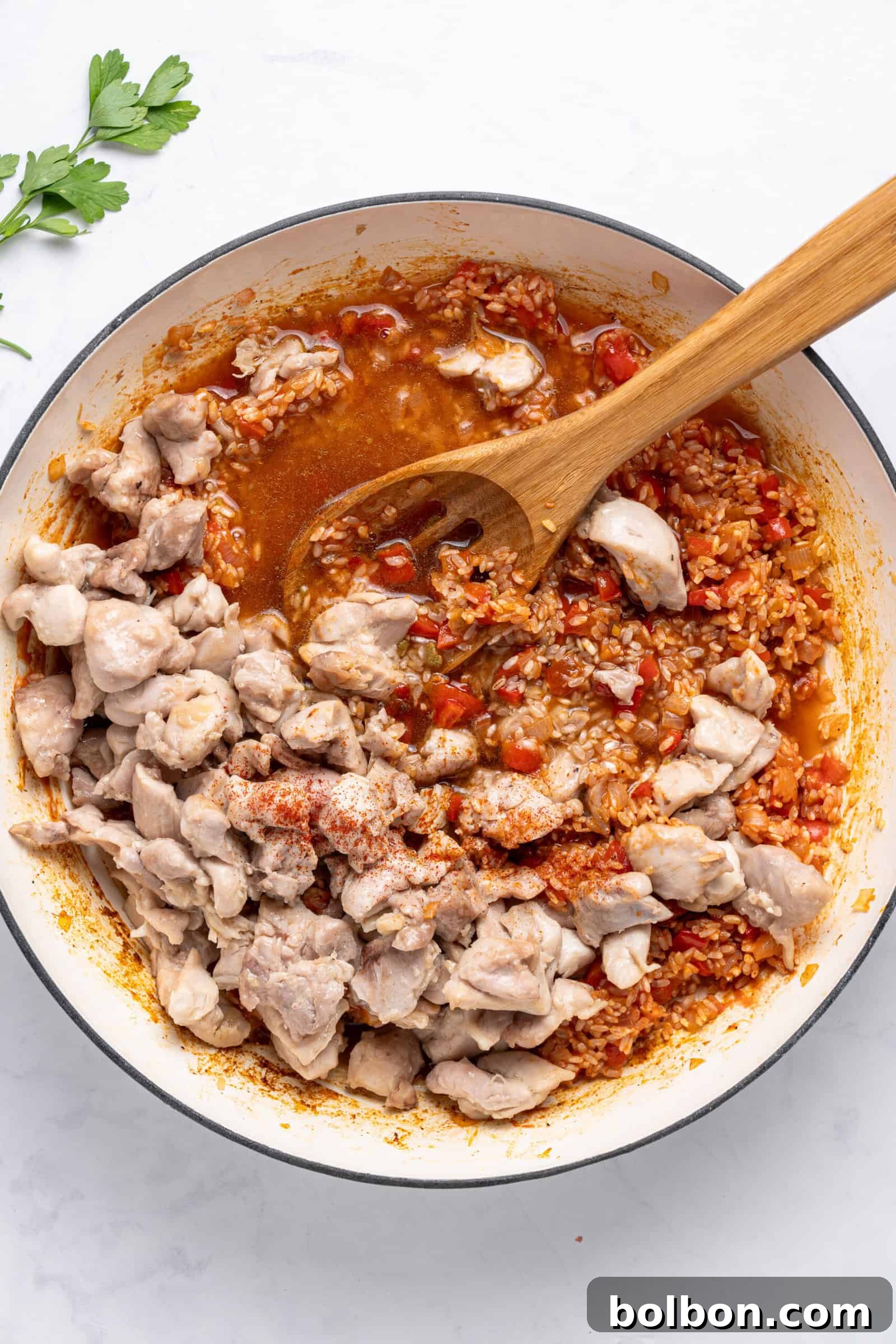
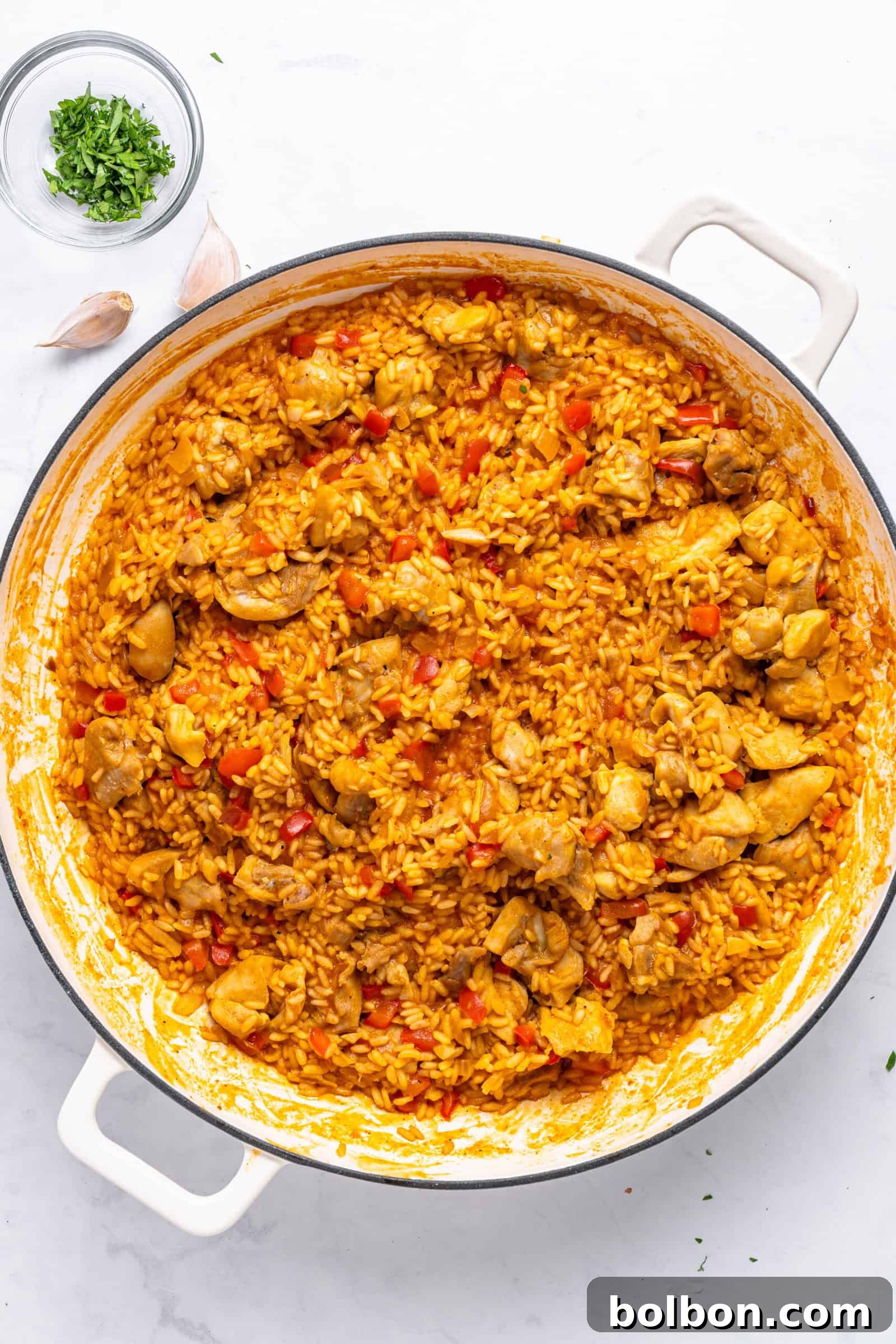
- 🔥 At this point, you can add a pinch of saffron threads (optional). Saffron is a traditional Spanish spice that lends a beautiful golden color and a subtle, earthy aroma. Allow the mixture to come to a rolling boil over medium-high heat.
- 🥘 Once boiling, reduce the heat to medium-low, cover the pan tightly, and let it simmer for approximately 25 minutes. During this time, resist the urge to stir! Stirring can prevent the formation of the beloved “socarrat” – the crispy, caramelized rice crust at the bottom of the pan. The rice is ready when it’s soft and most of the liquid has been absorbed.
- 🌿 Finally, remove the pan from the heat and garnish generously with fresh chopped parsley or green onions for a burst of color and freshness.
- ⏲️ This next step is crucial for perfection: allow the dish to rest, covered, for 5-10 minutes before serving. This resting period allows the flavors to meld beautifully and the rice to fully absorb any remaining liquid, resulting in a perfectly tender and flavorful paella. Then, serve and enjoy!
Nonna’s Essential Tip for Perfect Paella 🥘
The secret to a truly exceptional Chicken Paella, according to Nonna (and many paella masters!), lies in a simple yet often overlooked step: allowing it to **rest** off the heat for 5 to 10 minutes after cooking. This vital period is not just about letting the dish cool slightly; it’s about culinary alchemy. During this rest, the rice grains continue to steam and soften, ensuring a uniformly tender texture throughout. More importantly, it gives all those incredible flavors – the savory chicken, aromatic vegetables, sweet paprika, and rich broth – ample time to meld and deepen, creating a harmonious and truly delicious experience. It also allows any residual moisture to be fully absorbed, preventing a watery paella and perfecting the consistency of the rice. Don’t skip this step for a truly magnificent result!
Unlock Your Creativity: Delicious Variations and Substitutions for Chicken Paella
While this recipe provides a fantastic foundation for a classic chicken paella, don’t hesitate to personalize it! Paella is a versatile dish that welcomes a variety of ingredients, allowing you to tailor it to your preferences and what you have on hand.
- **Choosing Your Chicken:** I often prefer using boneless, skinless chicken **thighs** 🍗 in this Chicken Paella recipe for their inherent juiciness and rich flavor, which holds up wonderfully during cooking. However, boneless, skinless chicken breasts are also a perfectly acceptable and delicious choice if you prefer leaner meat. If using breasts, just be mindful not to overcook them to maintain their tenderness. You could also experiment with bone-in chicken pieces for even deeper flavor, though they may require a slightly longer cooking time.
- **The Heart of the Dish: Rice Varieties:** While traditional Spanish paella often calls for short-grain varieties like Bomba rice, my preference for this simplified recipe is Jasmine or long-grain rice 🍚 due to their accessibility and excellent texture. However, the beauty of paella is its adaptability! Feel free to use any **rice** variety you like. Arborio rice (commonly used in risotto) can also work in a pinch, though it will produce a creamier texture. Just remember that different rice types absorb liquid at different rates, so you may need to adjust the broth quantity slightly.
- **Experimenting with Proteins:** Paella truly shines when you get creative with its protein components. This recipe offers a wonderful base, but you can certainly experiment with different **proteins** to transform the dish. Traditional Spanish paellas frequently incorporate savory chorizo sausage, often added at the beginning to render its flavorful oils. For a taste of the sea, succulent 🍤 shrimp, tender calamari, or sweet mussels are fantastic additions. You could even combine chicken with seafood for a delightful “mar y montaña” (sea and mountain) paella. For those who enjoy a richer flavor, consider adding pork loin or even rabbit for a truly rustic experience. Always consider the cooking times for different proteins; seafood, for instance, cooks much faster and should be added towards the end of the cooking process.
- **Vegetable Additions:** Enhance your paella with more vegetables! Green peas, green beans, artichoke hearts, broad beans, and even asparagus can be wonderful additions. Add heartier vegetables like carrots or potatoes at the beginning with the onions and peppers, while quick-cooking vegetables like peas can be stirred in during the last 5-10 minutes of simmering.
Explore More Rice-Inspired Delights: Similar Recipes to Try
Vegetable Fried Rice Recipe
15 mins
Simple Risotto Recipe
45 mins
Salmon Rice Bowl
15 mins
Zucchini Rice
25 mins
Elevate Your Meal: Best Served With Chicken Paella
While Chicken Paella is a complete meal in itself, pairing it with a few complementary dishes can truly elevate the dining experience and create a Spanish-inspired feast. Here are some of my favorite accompaniments:
- **Crusty Bread is a Must!** There’s nothing quite like using a piece of warm, crusty bread 🍞 to soak up all the flavorful juices at the bottom of the paella pan. It’s perfect for scooping up any delicious bits of “socarrat” that might resist your spoon. Try my No Knead Peasant Bread for a homemade touch that pairs beautifully.
- **A Refreshing Green Salad:** A vibrant and Simple Green Salad 🥗 with a light vinaigrette is the perfect counterpoint to the rich and savory flavors of paella. It adds a much-needed freshness and a delightful crunch, balancing out the meal and cleansing the palate between bites.
- **Crispy Parmesan Potatoes:** For a heartier side that still feels distinctly Spanish, these Crispy Parmesan Potatoes 🥔 would be an incredibly delicious addition. Their savory, cheesy crispness provides a wonderful textural contrast and an extra layer of indulgence that complements the paella without overpowering it.
- **A Glass of Sangria:** For the ultimate Spanish dining experience, don’t forget a pitcher of homemade sangria! Its fruity, refreshing notes are a perfect match for the robust flavors of paella.
Your Paella Queries Answered: Common Questions & Expert Tips
Making paella can sometimes come with a few questions, especially when striving for that perfect texture and flavor profile. Here are answers to some common inquiries to help you achieve paella perfection.
Absolutely! While I personally love the tenderness and inherent juiciness of chicken thighs in paella, which stand up well to the cooking process and absorb flavors beautifully, you can certainly use chicken breast instead. If opting for chicken breast, ensure you cube it into even, bite-sized pieces and be careful not to overcook it, as it can dry out more easily than thigh meat. Both options will yield a delicious result, so choose what you prefer!
Ah, the “socarrat” – the crispy, caramelized rice crust at the bottom of the pan – is the hallmark of an exceptional paella! The key to achieving this coveted texture is multifaceted. First, using a large, wide pan is paramount. This maximizes the surface area, allowing the rice to spread out in a thin layer and come into direct contact with the heat. Second, once you’ve added the broth and brought it to a boil, reduce the heat to medium-low and, crucially, resist the urge to stir! Stirring releases starches and prevents the crust from forming. Let it cook undisturbed for the final 10-15 minutes, listening for a gentle crackling sound. A slight increase in heat right at the very end can help, but watch it closely to avoid burning. You’ll know it’s ready when you can smell a toasted aroma and gently scrape the bottom to reveal that golden, crispy layer.
Saffron is indeed a traditional and prized spice in authentic Spanish paella, known for imparting its unique, delicate floral flavor and beautiful golden-yellow hue. However, it’s also one of the world’s most expensive spices and isn’t a staple in every kitchen. For this recipe adaptation, I consider saffron optional. While it adds an unparalleled layer of authenticity and aroma, you can still achieve a wonderfully flavorful and visually appealing paella without it. The paprika and tomatoes in this recipe will contribute significantly to the dish’s signature color, and the rich flavors of the broth, chicken, and other aromatics will ensure a delicious outcome regardless. If you have it, use it! If not, don’t let it deter you from making this fantastic dish.
Absolutely! One of the joys of paella is its versatility with proteins. Feel free to have fun and experiment with different options. Traditional variations frequently feature savory chorizo sausage, often cooked at the beginning to infuse its smoky, spicy flavors into the oil. Seafood such as succulent shrimp, tender calamari, or sweet mussels are also classic choices, often added towards the end of the cooking process as they cook quickly. You could even create a “surf and turf” paella by combining chicken with some seafood or chorizo. Just be mindful of cooking times for different proteins to ensure everything is perfectly cooked without becoming tough or overdone.
Yes, transforming this Chicken Paella into a delicious vegetarian version is definitely achievable! You can simply omit the chicken altogether and replace the chicken broth with vegetable broth to make it entirely plant-based. If your diet includes fish, you could add shrimp or mussels as a primary protein source, turning it into a seafood paella (Paella de Marisco). For a heartier vegetarian option, consider adding a variety of colorful vegetables like green peas, artichoke hearts, broad beans, mushrooms, or even smoked tofu cubes for texture. While I haven’t personally tried tofu in this specific paella recipe, it could be an interesting substitution. If you do try a vegetarian or vegan variation, please come back and comment to let me know how it turned out! Your insights would be invaluable to other readers.
Chicken Paella
Facebook Share
Rate Recipe
Print Recipe
Main Course
Spanish
4
The Modern Nonna
10 minutes
35 minutes
45 minutes
Video
Equipment
Ingredients
- 2 tablespoons avocado oil, any variety
- 4 chicken breasts (skinless, boneless) , or cubed thighs
- ½ teaspoon salt, to taste
- ¼ teaspoon pepper, to taste
- 1 onion, finely diced
- 1 red bell pepper, finely diced
- 6 cloves garlic , minced
- 1 tablespoon paprika, to taste
- additional salt , to taste
- 1.5 cups jasmine rice, any variety you prefer
- 1.5 cups plain tomato sauce, or can of crushed tomatoes
- 2.5 cups vegetable broth, or chicken broth
- pinch saffron , optional
- parsley/green onions for garnish
Instructions
-
In a large pan on the stove over medium-high heat, warm your chosen oil. Add the cubed and seasoned chicken pieces, searing for 1 to 2 minutes per side until they turn a light golden brown. Once seared, remove the chicken from the pan and set aside.
-
In the same pan, add the diced onions, bell pepper, and minced garlic. Sauté for about a minute until fragrant. Add a small splash of broth to deglaze the pan and loosen any flavorful browned bits. Stir in the paprika and additional salt to taste, ensuring everything is well combined.
-
Add the rice to the pan and stir, allowing it to toast slightly. Then, incorporate the plain tomato sauce and stir again. Return the semi-cooked chicken cubes to the pan. Pour in the vegetable broth and give it one final, gentle stir to evenly distribute the ingredients.
-
Optionally, add a pinch of saffron. Bring the mixture to a boil, then reduce the heat to medium-low. Cover the pan tightly and let it simmer undisturbed for 25 minutes, or until the rice is tender and most of the liquid has been absorbed. Remove from heat, garnish with fresh parsley or green onions, let it rest for 5-10 minutes, and then serve immediately.
Nutrition
Carbohydrates: 68g,
Protein: 31g,
Fat: 11g,
Saturated Fat: 2g,
Polyunsaturated Fat: 2g,
Monounsaturated Fat: 6g,
Trans Fat: 0.01g,
Cholesterol: 72mg,
Sodium: 1452mg,
Potassium: 921mg,
Fiber: 4g,
Sugar: 7g,
Vitamin A: 2539IU,
Vitamin C: 48mg,
Calcium: 54mg,
Iron: 2mg
Nutrition information is automatically calculated, so should only be used as an approximation.
Additional Info
Main Course
Spanish