
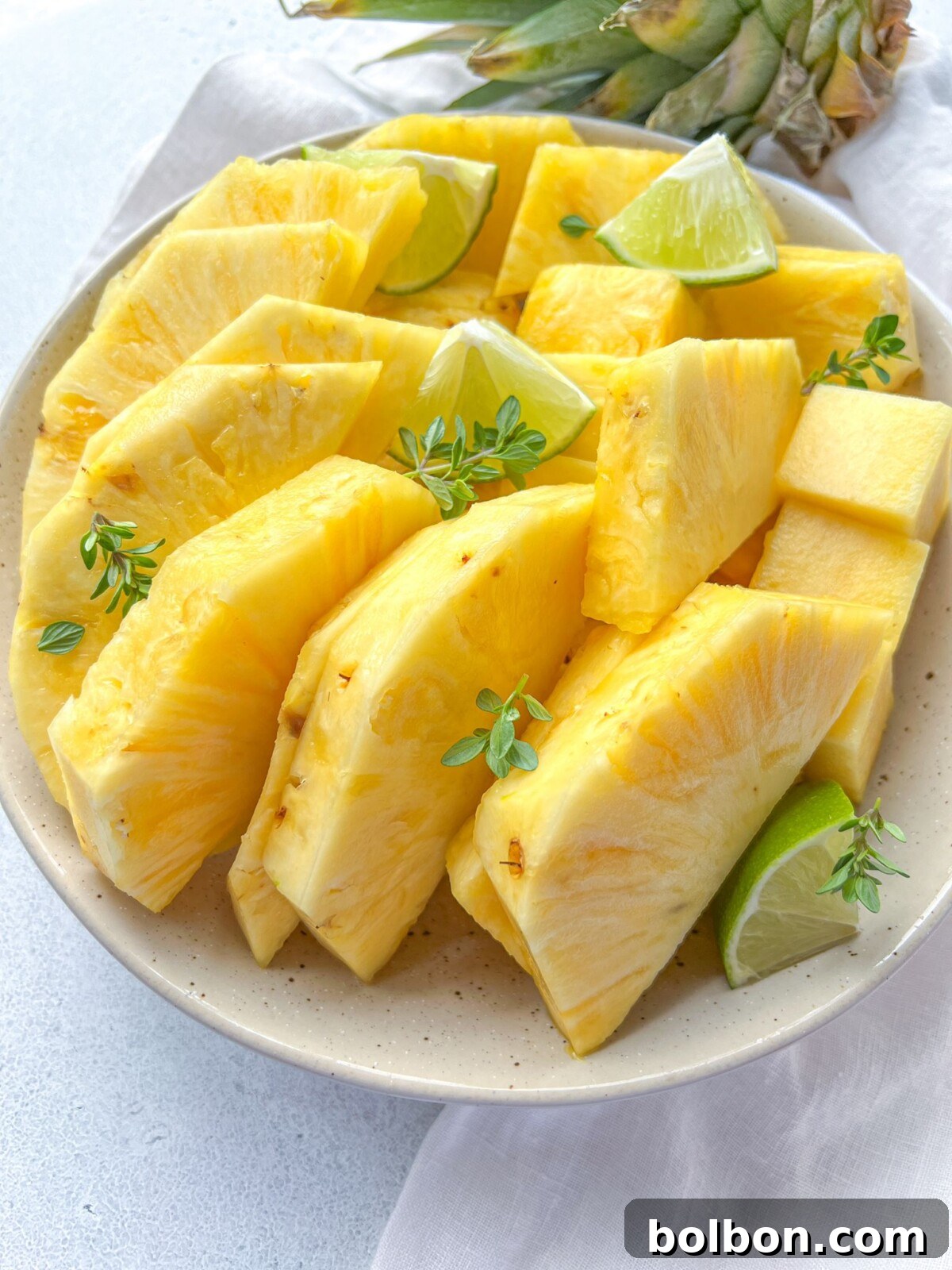
If you’ve ever found yourself wondering, “How do I perfectly cut a pineapple?”, you’re in the right place! This comprehensive guide will walk you through a simple, efficient, and safe method to transform a whole, thorny pineapple into succulent, ready-to-eat pieces. Say goodbye to tough skins and fibrous cores, and hello to juicy fruit perfect for snacking, grilling, adding to vibrant salads, or enhancing a multitude of recipes. Whether you prefer your pineapple chilled, blended into a smoothie, or even controversially topping your pizza 🍕, mastering this essential kitchen skill ensures minimal waste and maximum enjoyment of this tropical delight.
Why Mastering Pineapple Cutting is a Game-Changer
There are numerous compelling reasons why learning to expertly cut a fresh pineapple 🍍 will revolutionize your culinary experience. While pre-packaged and canned pineapple offer convenience, they simply can’t compare to the superior taste, texture, and nutritional benefits of fresh fruit. Opting for a whole pineapple is not only significantly more cost-effective 💸 in the long run but also provides a burst of authentic tropical flavor that processed alternatives lack. You’ll gain complete control over the ripeness, sweetness, and quality of your fruit, ensuring every bite is as delicious as nature intended.
Beyond its unparalleled taste, fresh pineapple is incredibly versatile. Once you’ve mastered the art of cutting, you can effortlessly incorporate this vibrant fruit into a vast array of dishes. Imagine starting your day with a healthy breakfast smoothie featuring fresh pineapple chunks, adding a tangy sweetness to vibrant fruit salads, or creating exotic desserts and refreshing tropical cocktails. This step-by-step process is designed to be straightforward and accessible, empowering even beginner home cooks to confidently tackle this seemingly daunting task.
Furthermore, fresh pineapple is a powerhouse of nutrition. It’s packed with Vitamin C, essential for immune health, and contains bromelain, an enzyme known for its anti-inflammatory properties and digestive benefits. By choosing fresh, you avoid the added sugars and preservatives often found in canned versions, making it a healthier choice for you and your family. Enjoying fresh pineapple is a simple yet impactful way to infuse your diet with natural goodness and the vibrant taste of sunshine ☀️.
Essential Tools for Pineapple Preparation
Before you begin your pineapple transformation, ensure you have the right equipment on hand. Having the proper tools not only makes the process easier but also significantly enhances safety and efficiency.
-
🔪 Sharp Chef’s Knife or Nakiri Knife: The robust, fibrous skin of a pineapple requires a truly sharp blade. A good quality, sharp chef’s knife with an 8-10 inch blade is ideal, offering the leverage and control needed. Alternatively, a nakiri knife, with its straight blade and blunt tip, is excellent for precise slicing. Using a dull knife is not only more difficult but also significantly increases the risk of slippage and injury. Ensure your knife is sharpened before you start.
-
🟫 Large, Stable Cutting Board: A sturdy and spacious cutting board is paramount for safe pineapple preparation. Look for one with a non-skid bottom, or place a damp paper towel or a non-slip mat underneath a standard board to prevent it from sliding during use. This stable base provides a secure surface for handling the large fruit and applying pressure with your knife.
-
🍍 Whole, Ripe Pineapple: The star of the show! A chilled, whole ripe pineapple is easier to handle as its flesh will be firmer, leading to cleaner cuts and less mess. Chilling also enhances its refreshing flavor.
Pro Tip: Chill for Easier Cutting 🍍
Always chill your pineapple in the refrigerator for at least a few hours before you plan to cut it. A cold pineapple has firmer flesh, which makes it much easier to slice and dice accurately. This simple trick also significantly reduces the risk of your knife slipping, making the entire process safer and more enjoyable.
How to Choose the Perfectly Ripe Pineapple
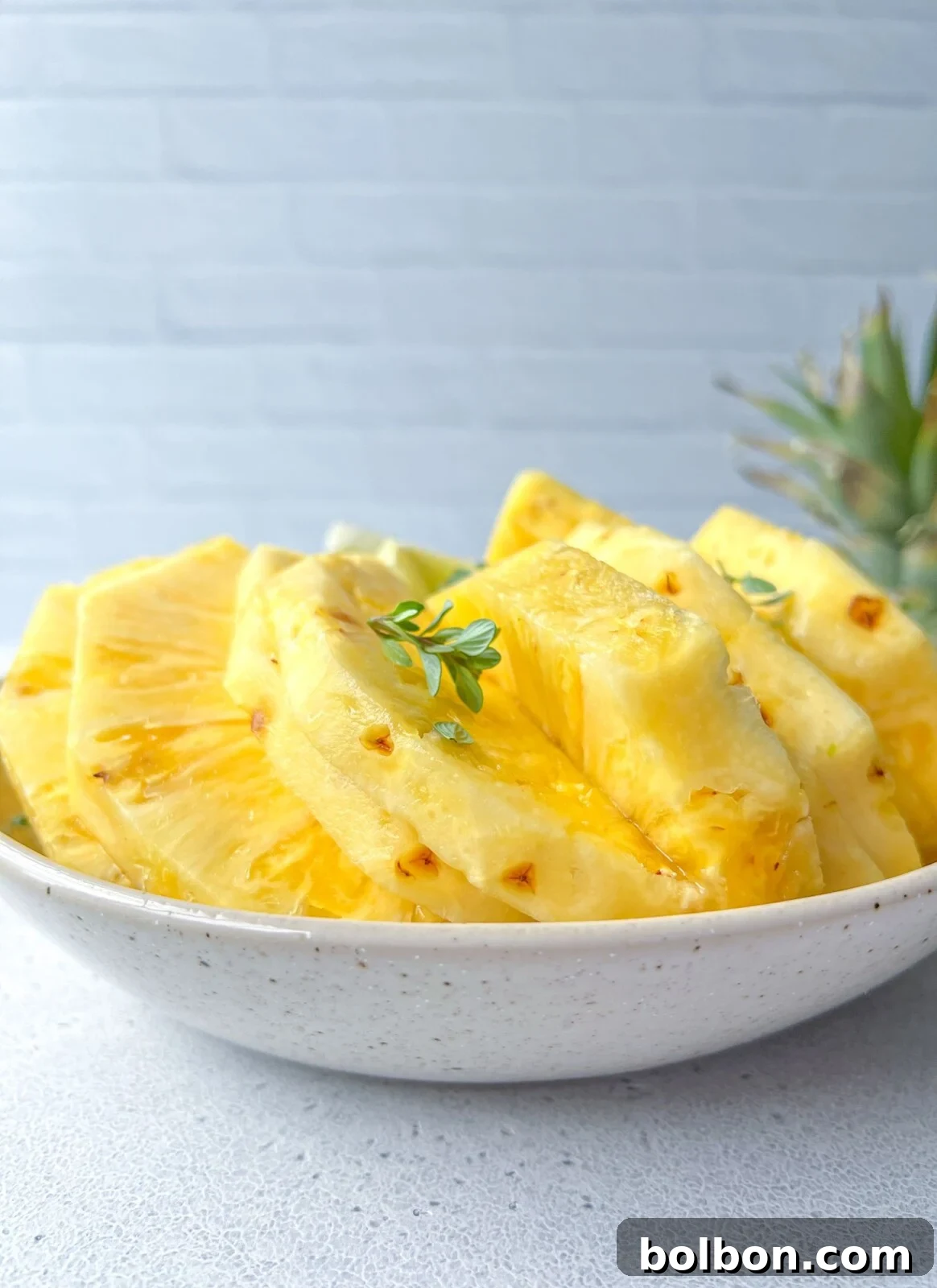
Selecting a ripe pineapple 🍍 is the first crucial step to ensure maximum flavor and sweetness. A perfectly ripe pineapple will not only taste better but will also be easier to cut. Here’s what to look for when picking your next tropical treasure:
- Color at the Base: Examine the bottom of the pineapple. You want to see some golden-yellow color starting to develop at the base and slowly creeping up the fruit. A completely green pineapple is generally under-ripe, while a fully golden-yellow one is perfectly ripe or even overripe.
- Firmness with a Slight Give: Gently squeeze the pineapple. It should feel firm but have a slight give, much like a ripe peach. Avoid pineapples that are rock-hard (under-ripe) or mushy (overripe).
- Sweet, Tropical Aroma: Bring the pineapple to your nose and smell the base near the stem. A ripe pineapple will emit a distinctively sweet, tropical, and slightly floral aroma. If there’s no scent, it’s likely not ripe enough. If it smells fermented or vinegary, it’s past its prime.
- Weight: Pick up a few pineapples of similar size. A heavier pineapple typically indicates more juice 💦 and a richer flavor.
- Easily Removable Leaf: A classic tell-tale sign of ripeness: try to gently pull a single leaf from the center of the crown 👑. If it comes out with minimal effort, your pineapple is likely ripe and ready to enjoy. If it resists, it needs more time.
If you find a pineapple that is still a bit green, you can let it ripen on your counter for a few days. Storing it upside down (on its crown) can sometimes help distribute the sugars more evenly throughout the fruit.
Tips for Storing Fresh Pineapple
Proper storage is key to maintaining the freshness and flavor of your pineapple, both before and after cutting.
- Whole Pineapple: A whole, uncut pineapple 🍍 can be stored at room temperature for 1-2 days to encourage ripening, or in the refrigerator for 3-5 days to slow down the ripening process. Keep an eye on it; if the bottom starts to feel overly soft or if the sweet aroma becomes excessively strong or fermented, it’s a sign that it needs to be cut and consumed soon.
- Cut Pineapple: Once you’ve cut your pineapple 🔪, it’s best to store the pieces in an airtight container in the refrigerator. This will keep them fresh, juicy, and flavorful for up to a week. Storing it in an airtight container also prevents the pineapple from absorbing odors from other foods in your fridge.
- Freezing Pineapple: For longer storage, fresh pineapple freezes beautifully! Simply cut your pineapple into desired chunks or slices, arrange them in a single layer on a baking sheet lined with parchment paper, and freeze until solid (about 1-2 hours). Transfer the frozen pieces to a freezer-safe zip-top bag or container. Frozen pineapple can be stored for up to 6 months and is perfect for smoothies, sorbets, or even grilled directly from the freezer.
Step-by-Step Guide: How to Cut a Pineapple
Follow these detailed steps to expertly peel, core, and cut a fresh pineapple with ease and safety.
How To Cut a Pineapple – The Ultimate Guide
Video Guide
Equipment
Ingredients
- 1 whole ripe pineapple
Instructions
-
Prepare the Pineapple Ends: Place the pineapple on its side on your stable cutting board. Using a sharp chef’s knife, carefully slice off the crown (top leafy part) and the base (bottom end) of the pineapple. Aim to cut off about half an inch from each end, ensuring you create flat, stable surfaces. Discard the cut ends.
-
Stabilize and Peel the Skin: Stand the pineapple upright on one of its freshly cut flat ends. This creates a secure base. Now, starting from the top, glide your sharp knife downwards, following the natural curve of the pineapple, to remove the tough outer skin. Make sure to cut deep enough to remove all the brown, spiky peel, but try to preserve as much of the yellow flesh as possible. Continue rotating the pineapple and slicing downwards until all the outer skin has been removed.
-
Remove the “Eyes”: After peeling, you’ll notice small, brownish “eyes” arranged in diagonal lines across the pineapple’s surface. These are tough and inedible. You can remove them in two ways:
- V-Cut Method: Carefully make shallow, diagonal V-shaped cuts along the lines of the eyes to scoop them out. This method is efficient and minimizes waste.
- Shallow Trimming: If you prefer, you can make additional shallow vertical cuts to shave off any remaining eyes or tough spots.
Ensure the surface is clean and smooth before proceeding.
-
Remove the Core: The core of a pineapple is fibrous and generally not enjoyable to eat. Stand the peeled pineapple upright again. Imagine the core running directly through the center. Make vertical cuts down all four sides of the pineapple, as close to the core as possible without cutting into it. This will yield four large, fleshy slabs of pineapple. Discard the central fibrous core, which can be composted or used to make infused water.
-
Slice or Dice the Fruit: You should now be left with four beautiful, core-free pieces of pineapple fruit. From here, you can easily slice or dice them according to your preference and intended use.
- For Rings/Half-Moons: Lay a slab flat and slice horizontally into desired thickness.
- For Chunks/Dices: Cut the slab into long spears, then chop crosswise into bite-sized pieces.
- For Spears: Simply cut each slab into longer, thinner wedges.
-
Serve and Store: Your freshly cut pineapple is now ready to be enjoyed! Serve it immediately as a refreshing snack, add it to recipes, or store any leftover pieces in an airtight container in the refrigerator for up to 5-7 days. Enjoy the vibrant taste of fresh pineapple!
Notes & Tips
- Choosing a Pineapple: Look for a pineapple with a firm shell, a sweet aroma at the base, and leaves that are easy to pull out. The skin should have a golden-yellow color starting from the bottom.
- Storing Cut Pineapple: Store cut pineapple in an airtight container in the refrigerator. It will stay fresh for up to 5-7 days. For longer storage, freeze pineapple chunks as described above.
- Chilling for Safety: Always chill the pineapple in the refrigerator before cutting it. Cold pineapple is firmer and easier to handle, significantly reducing the risk of the knife slipping during the cutting process.
- Knife Grip: When handling your knife, ensure you have a sturdy grip. Your entire hand should wrap around the handle closer to the bottom, providing maximum control and stability. Never place your pointer finger on top of the blade, as this can reduce control and lead to accidents.
- Utilize the Scraps: Don’t discard the skin and core immediately! While inedible, they can be used to make delicious pineapple-infused water or vinegar. Simply simmer the scraps in water with some ginger or herbs for a refreshing drink.
Nutrition Information (per serving)
Nutrition information is automatically calculated and should be used as an approximation.
Delicious Ways to Enjoy Fresh Pineapple
Once you’ve mastered the art of cutting, the culinary possibilities with fresh pineapple are endless! Its sweet and tangy flavor complements a wide range of dishes.
- Grill pineapple slices for a caramelized treat, perhaps as a side to juicy burgers or a batch of Air Fryer Pineapple 🍍.
- Add diced pineapple to a fresh fruit salad alongside 🍓 strawberries, blueberries, watermelon, and kiwi for a vibrant, healthy dessert.
- Incorporate it into savory dishes like Mango Salsa Recipe or Watermelon Mango Salsa, pairing perfectly with fish tacos or grilled chicken.
- Skewer pineapple chunks with marinated meat for delicious grilled Pork Skewers or Salmon Skewers.
- Blend it into smoothies or fresh juices for a refreshing and nutritious drink.
- Use it as a topping for yogurt, oatmeal, or pancakes.
- Bake it into cakes, tarts, or upside-down pineapple cake for a tropical dessert.
Similar Kitchen Hacks & Tutorials
Expand Your Kitchen Skills
How to Shred Lettuce
10 mins
How to Poach Eggs
6 mins
How to Dice an Onion
5 mins
How to Dice Bell Peppers
5 mins
Common Questions About Cutting Pineapple
Look for a pineapple with a firm shell that has a slight give when squeezed. The base should show some golden-yellow color, and it should emit a sweet, tropical aroma. You should also be able to easily pull a leaf from the center of its crown. A heavier pineapple often means more juice.
Store cut pineapple in an airtight container in the refrigerator. It will remain fresh and delicious for up to 5-7 days. For longer storage, consider freezing the pineapple chunks.
Absolutely! Freezing cut pineapple is an excellent way to preserve it and is fantastic for smoothies. Simply arrange the pieces in a single layer on a parchment-lined baking sheet and freeze until solid. Then, transfer them to a zip-top freezer bag or other freezer-safe container. Frozen pineapple can last for up to 6 months.
It’s essential to use a large, steady cutting board that won’t move on your counter. To ensure stability, place a damp paper towel or a non-slip mat underneath your board. Alternatively, use a cutting board that already has built-in grips on the bottom. My personal favorite method for stability is the damp paper towel trick.
Maintain a sturdy, secure grip on your knife. Wrap your entire hand around the handle, positioned closer to the base for optimal control. Never place your pointer finger on top of the knife blade, as this reduces your control and can be unsafe.
It is always better to peel a pineapple while it is whole. After removing the crown and base to create flat, stable ends, stand the pineapple upright on your cutting board. Then, slice the peel from top to bottom in small, even rows. Cutting the pineapple into pieces before peeling will make the process much more difficult and messy, potentially leaving tough bits of skin on your fruit.
Pineapple is a fantastic source of Vitamin C, which boosts immunity, and manganese, important for bone health. It also contains bromelain, an enzyme known for its anti-inflammatory properties and ability to aid digestion, especially of proteins. It’s also rich in antioxidants and dietary fiber.
