
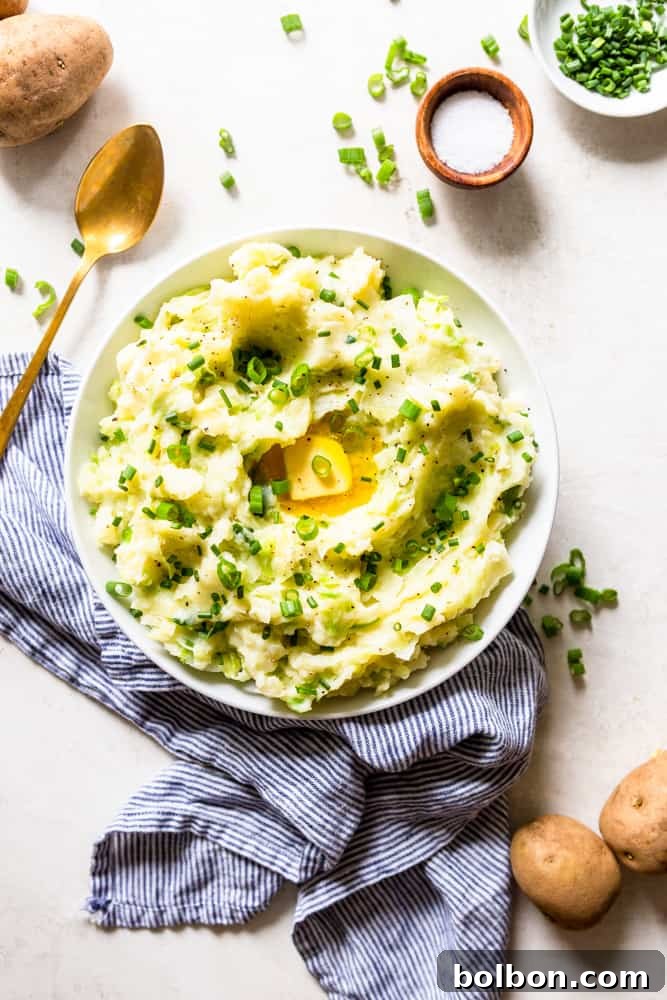
Colcannon: The Timeless Appeal of Ireland’s Beloved Mashed Potatoes
Colcannon stands as a culinary cornerstone in Irish tradition, a simple yet profoundly satisfying dish crafted from humble potatoes, vibrant cabbage, rich butter, and creamy milk. This irresistible side dish, featuring gloriously creamy mashed potatoes, is the quintessential accompaniment to hearty meals, transforming any dinner into a comforting feast. Whether served alongside a robust Irish Beef Stew or as the star of a family gathering, Colcannon embodies the soul of Irish comfort food.
What is Colcannon? Unpacking the Irish Staple
At its heart, Colcannon is perhaps the most celebrated and well-recognized of all traditional Irish potato dishes. This inexpensive yet incredibly flavorful dish is a testament to the power of simple, wholesome ingredients. It masterfully combines fluffy mashed potatoes with tender, sautéed cabbage (or sometimes kale), enriched with generous amounts of butter and milk, often enhanced by the subtle oniony bite of scallions (also known as green onions). The addition of scallions introduces an extra layer of flavor and a gentle freshness that brightens the entire dish.
A hallmark of serving Colcannon is the creation of a “well” or hollow in the center of the mound of mashed potatoes, into which a generous knob of butter is placed. As the butter slowly melts, it creates a luscious, golden pool, inviting diners to dip each spoonful into its rich depths. This tradition not only adds to the dish’s flavor but also elevates the dining experience, making each serving a delightfully buttery and creamy bite.
The Historical Roots and Cultural Significance of Colcannon
The name “Colcannon” itself offers a glimpse into its origins, believed to derive from the Gaelic term cal ceanneann, which translates to “white-headed cabbage.” This etymology clearly indicates the dish’s fundamental reliance on cabbage as a primary ingredient. Historically, Colcannon emerged as a vital and economical meal for Irish families, particularly during leaner times. Potatoes, being a staple crop in Ireland, combined with readily available greens like cabbage or kale, provided a nourishing and filling dish that could feed many without breaking the bank.
Its endurance through generations speaks volumes about its comforting qualities and its ability to nourish both body and soul. Colcannon is more than just food; it’s a piece of Irish culinary heritage, a connection to a past where resourcefulness and hearty ingredients created dishes that continue to be loved today.
Colcannon: A Halloween Tradition, Not Just St. Patrick’s Day
While many outside of Ireland might associate traditional Irish dishes like Colcannon with St. Patrick’s Day celebrations, its true place in Irish cultural tradition is firmly rooted in Halloween. In Ireland, Colcannon is a classic dish served on Samhain (Halloween), steeped in folklore and playful superstitions. It was customary to hide various trinkets within the mashed potatoes, each carrying a different prophecy for the finder’s upcoming year.
- Discovering a **coin** symbolized impending wealth or prosperity.
- A **ring** hinted at marriage in the near future.
- Finding a **thimble** was traditionally a sign of spinsterhood for women.
- A **button** indicated bachelorhood for men.
These playful predictions added an element of excitement and anticipation to the Halloween feast, making Colcannon an integral part of the holiday’s festivities. However, this rich tradition doesn’t mean you should reserve this creamy and comforting dish solely for October 31st. Colcannon is a versatile and welcoming dish that can be enjoyed at any time of year, bringing a taste of Irish warmth to your table, whether it’s a cold winter evening or a celebratory spring gathering.
Cabbage or Kale? Exploring the Greens in Colcannon
The choice of green in Colcannon is a point of delightful debate and regional variation. As highlighted by its Gaelic etymology, cal ceanneann, meaning “white-headed cabbage,” cabbage was historically the original and primary green used. Green cabbage, with its mild flavor and tender texture when cooked, provides a subtle sweetness and body to the mashed potatoes.
However, over time, curly kale has also become a popular choice, particularly in certain regions of Ireland. Kale offers a slightly more robust, earthy flavor and a firmer texture, which some prefer for the added chewiness and nutritional boost. David Bowers, in his cookbook “Real Irish Food,” notes that curly kale often appears in Irish grocery stores closer to Halloween, suggesting a seasonal preference for its inclusion.
Ultimately, the decision between cabbage and kale often comes down to personal preference and what is most readily available. Historically, the greens used would have been whatever was cheap and abundant, reflecting the dish’s humble origins. Both options yield a delicious Colcannon, so feel free to experiment and use the green you enjoy most. For those who enjoy a milder, sweeter flavor, green cabbage is ideal. If you prefer a more pronounced, slightly bitter, and hearty green, curly kale is an excellent substitute.
Colcannon vs. Champ: A Tale of Two Irish Potato Dishes
Ireland boasts a variety of beloved potato dishes, and while Colcannon is perhaps the most famous, it shares the culinary spotlight with a close cousin: Champ. The two are similar in their comforting nature and their base of mashed potatoes, milk, and butter, but they have one crucial distinguishing factor.
**Champ** is essentially mashed potatoes generously mixed with chopped scallions (green onions) and enriched with milk and butter, but it *does not* contain cabbage or kale. It is simpler in its green component, focusing entirely on the fresh, mild onion flavor of scallions. Champ is particularly popular in Ulster (Northern Ireland) and is often served as a warming side dish, much like Colcannon.
In essence, if you prefer your creamy mashed potatoes without the added texture and flavor of cooked greens, Champ is your dish. If the tender, sweet, or earthy notes of cabbage or kale are what you crave alongside your mash, then Colcannon is the way to go. Both are delightful expressions of Irish comfort food, perfect for different moods and meals.
Mastering the Art of Colcannon: Tips for the Perfect Dish
Creating the perfect Colcannon is a straightforward process, but a few key tips can elevate your dish from good to unforgettable:
- **Potato Choice:** Opt for floury potatoes like Russets or Maris Pipers. These varieties break down beautifully when mashed, resulting in a light, fluffy texture that readily absorbs the butter and milk. Waxy potatoes tend to become gummy.
- **Proper Boiling:** Cut potatoes into uniform pieces to ensure even cooking. Salt the water generously, as this seasons the potatoes from the inside out and prevents them from tasting bland. Cook until fork-tender, but not mushy.
- **Thorough Draining:** After boiling, drain the potatoes thoroughly and allow them to steam dry for a few minutes in the hot pot. This removes excess moisture, preventing a watery mash and allowing the butter and milk to create true creaminess.
- **Mashing Technique:** Mash the potatoes immediately while hot. For the smoothest consistency, use a potato ricer or a sturdy masher. Avoid over-mashing, as this can make the potatoes gluey.
- **Cooking the Greens:** Whether using cabbage or kale, sauté them until tender but still slightly vibrant. Overcooked greens can become mushy and lose their distinct flavor. Adding garlic and the white parts of green onions during this stage infuses the greens with aromatic depth.
- **Warm Milk:** Warm the milk gently before adding it to the mashed potatoes. Cold milk can cool down the potatoes and make them harder to incorporate smoothly, potentially leading to lumps.
- **Seasoning is Key:** Don’t forget to season generously with salt and freshly ground black pepper throughout the cooking process – when boiling the potatoes, when sautéing the greens, and finally, when combining everything. Taste and adjust as needed.
- **The Butter Well Ritual:** Embrace the tradition of making a well in the center of your serving bowl and filling it with a large pat of melting butter. This is not just for visual appeal; it allows everyone to enjoy a rich, buttery accent with each serving.
Serving Your Colcannon: Perfect Pairings
Colcannon’s rich and comforting profile makes it an incredibly versatile side dish that complements a wide array of main courses. Its creamy texture and subtle flavors from the cabbage and butter provide a perfect balance to many hearty meals:
- **Classic Stews:** The most iconic pairing is with a traditional Irish stew, such as a rich beef and Guinness stew or a lamb stew. The Colcannon soaks up the savory gravy beautifully.
- **Roasted Meats:** It makes an excellent accompaniment to roasted chicken, pork, or beef, offering a creamy contrast to crispy skins and succulent meats.
- **Sausages and Chops:** Serve it alongside pan-fried sausages, pork chops, or lamb chops for a simple yet deeply satisfying meal.
- **Fish:** Believe it or not, Colcannon can also pair wonderfully with baked or pan-seared white fish, offering a grounding, comforting element.
- **Vegetarian Mains:** For a vegetarian meal, Colcannon can be served with hearty mushroom dishes, roasted root vegetables, or lentil loaves.
- **Breakfast/Brunch:** Don’t let leftovers go to waste! Form leftover Colcannon into patties and pan-fry them until golden and crispy for delicious Colcannon cakes, perfect with a fried egg for breakfast or brunch.
The beauty of Colcannon lies in its ability to be both a humble side and a standout dish, always bringing warmth and satisfaction to the table.
Colcannon Recipe
By Meghan McMorrow | Fox and Briar
Servings: 8
Print Recipe
Ingredients
- 2 lbs russet potatoes, peeled and diced
- 1 head green cabbage or kale, cored and thinly sliced
- 1 cup milk
- 8 tablespoons butter (4 ounces), divided
- 4 green onions, chopped (green parts separated from white)
- 3 garlic cloves, minced
- Salt and pepper to taste
- Fresh chives for garnish (optional)
Instructions
- Add diced potatoes to a large pot. Cover with cold water, ensuring potatoes are fully submerged. Salt the water generously. Bring the pot to a boil, then reduce heat and simmer until the potatoes are very tender, about 15-20 minutes.
- While potatoes are cooking, prepare your greens. In a separate large pan or Dutch oven, melt 4 tablespoons of butter over medium heat. Add the thinly sliced cabbage (or kale), season with salt and pepper, and cook, stirring occasionally, until the cabbage is soft and wilted, about 5-7 minutes.
- Once the cabbage is tender, add the minced garlic and the white parts of the chopped green onions to the pan. Sauté for another 1-2 minutes until fragrant, being careful not to brown the garlic. Remove the pan from heat and set aside.
- When potatoes are tender, drain them thoroughly. Return the empty pot to the heat for a minute or two to evaporate any remaining moisture. Then, return the drained potatoes to the dry pot. Mash them until smooth, using a potato ricer or masher.
- In a small saucepan, gently warm the milk and the remaining 2 tablespoons of butter over low heat until the butter is melted and the milk is warm. Do not boil.
- Add the warm milk and butter mixture to the mashed potatoes. Stir well until everything is combined and the potatoes are creamy. Fold in the cooked cabbage mixture.
- Taste the Colcannon and season generously with additional salt and pepper as needed.
- To serve, transfer the Colcannon to a large serving bowl. Create a well in the center of the dish and place the remaining 2 tablespoons of butter (or a large pat) into it to melt. Garnish with the reserved green parts of the green onions and fresh chives, if using. Serve hot.
Nutrition
Serving: 1 serving | Calories: 240kcal | Carbohydrates: 29g | Protein: 5g | Fat: 13g | Saturated Fat: 8g | Polyunsaturated Fat: 1g | Monounsaturated Fat: 3g | Trans Fat: 0.5g | Cholesterol: 34mg | Sodium: 129mg | Potassium: 736mg | Fiber: 4g | Sugar: 6g | Vitamin A: 572IU | Vitamin C: 49mg | Calcium: 107mg | Iron: 2mg
Nutrition information is automatically calculated, so should only be used as an approximation.
Additional Info
Course: Sides
If you’ve enjoyed making this traditional Irish Colcannon, we’d love to hear from you! Please consider commenting or sharing your experience. Your feedback helps others discover delicious recipes. Don’t forget to tag us on Instagram @foxandbriar and use the hashtag #foxandbriar so we can see your wonderful creations!
Disclosure: This post contains affiliate links, which means that if you purchase the items I recommend through the links I provide, I get a small commission at no extra cost to you. For more info, please see my disclosure policy. Thanks for supporting Fox and Briar!