
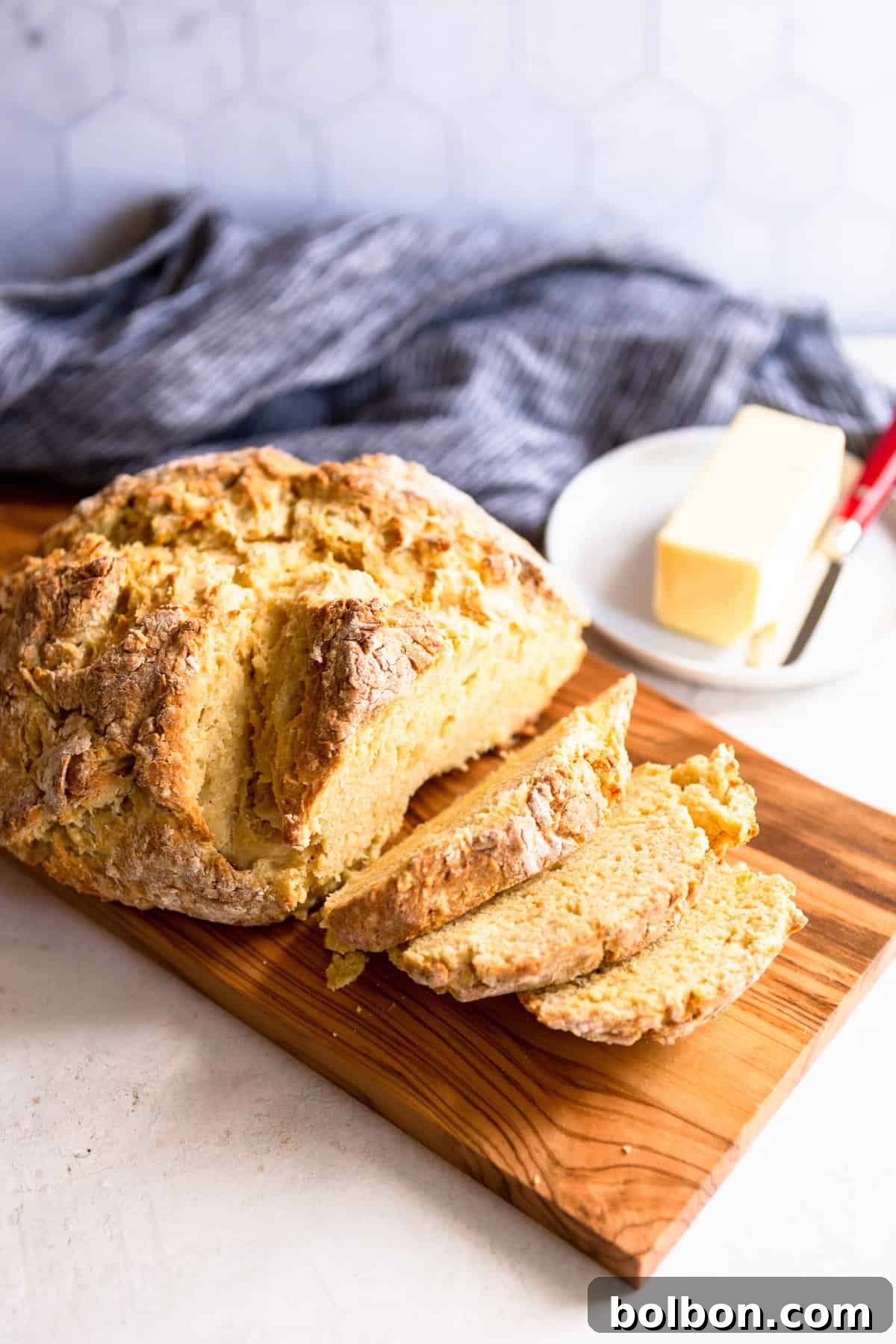
The Best Easy Irish Soda Bread Recipe: A Quick, Delicious No-Yeast Bread
There’s something truly magical about freshly baked bread, especially when it’s as simple and quick to prepare as this incredible Irish Soda Bread. This isn’t just any soda bread; it’s the absolute best—a comforting, rustic loaf that comes together in minutes and requires no yeast, no kneading, and minimal fuss. Perfect for a cozy breakfast, a hearty lunch alongside stew, or simply enjoyed with a generous smear of Irish butter and your favorite jam, this recipe promises warmth, flavor, and a touch of Irish charm in every bite.
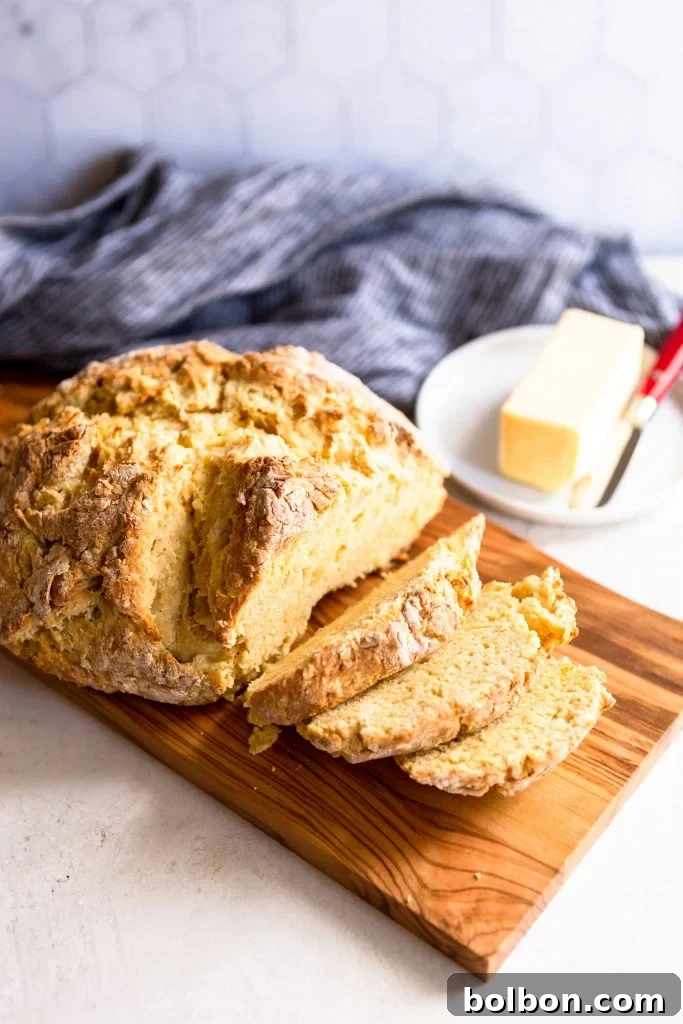
Growing up in an Irish American household, St. Patrick’s Day was always a highlight, a time for celebrating heritage with delicious food. Our family traditions often centered around classic dishes like a robust Beef Stew, always served with fresh baked bread. Yet, somewhat surprisingly, traditional Irish soda bread rarely made an appearance on our table. It wasn’t until later that I discovered the sheer joy and simplicity of baking this iconic loaf, realizing what a delightful culinary experience we had been missing out on. Irish Soda Bread, with its unique chemistry and straightforward method, quickly became a cherished staple, especially given its yeast-free nature, making it an ideal choice for busy bakers.
Understanding Traditional Irish Soda Bread
At its heart, traditional Irish Soda Bread is a testament to resourceful simplicity. Its original recipe calls for just four fundamental ingredients: flour, salt, baking soda, and buttermilk. The magic happens when the acidic buttermilk reacts with the baking soda, creating carbon dioxide bubbles that act as a leavening agent. This chemical reaction allows the bread to rise beautifully without the need for yeast or extensive proofing times, making it a remarkably quick bread. Historically, it was a practical, everyday bread, often made with coarser flours and baked over an open fire in a bastible pot.
While the purest form remains revered, many variations have emerged over time. Sometimes, dried currants were added for a touch of sweetness, transforming it into a “Spotted Dog” or “Railway Cake.” My journey to perfect this recipe led me to an adaptation from Alexandra’s Kitchen, a source I admire for its excellent bread recipes. What makes this particular version stand out is the thoughtful addition of eggs and butter. While it might deviate slightly from the austere simplicity of the most “traditional” recipes, these ingredients contribute to a richer, more tender crumb and an incredibly satisfying flavor profile. I like to think our Irish ancestors, who once relied on the most basic ingredients, would appreciate the ability to enjoy such a luxurious version today, a delicious evolution that reflects a journey from necessity to culinary delight.
How to Make the Best Irish Soda Bread: A Step-by-Step Guide
Crafting this delicious loaf is remarkably straightforward. Follow these simple steps for a perfect outcome every time:
- Prepare Your Baking Dish: Begin by preheating your oven to 400 degrees Fahrenheit (200 degrees Celsius). Lightly butter a 10-inch cast iron skillet or a similar round baking dish. The cast iron skillet is highly recommended as it helps create a wonderfully crisp crust.
- Combine Dry Ingredients: In a large mixing bowl, whisk together the all-purpose flour, kosher salt, baking soda, and granulated sugar. Ensure these dry ingredients are well combined to distribute the leavening evenly.
- Mix Wet Ingredients: In a separate, medium-sized bowl, whisk together the buttermilk, melted butter, and one egg until thoroughly blended.
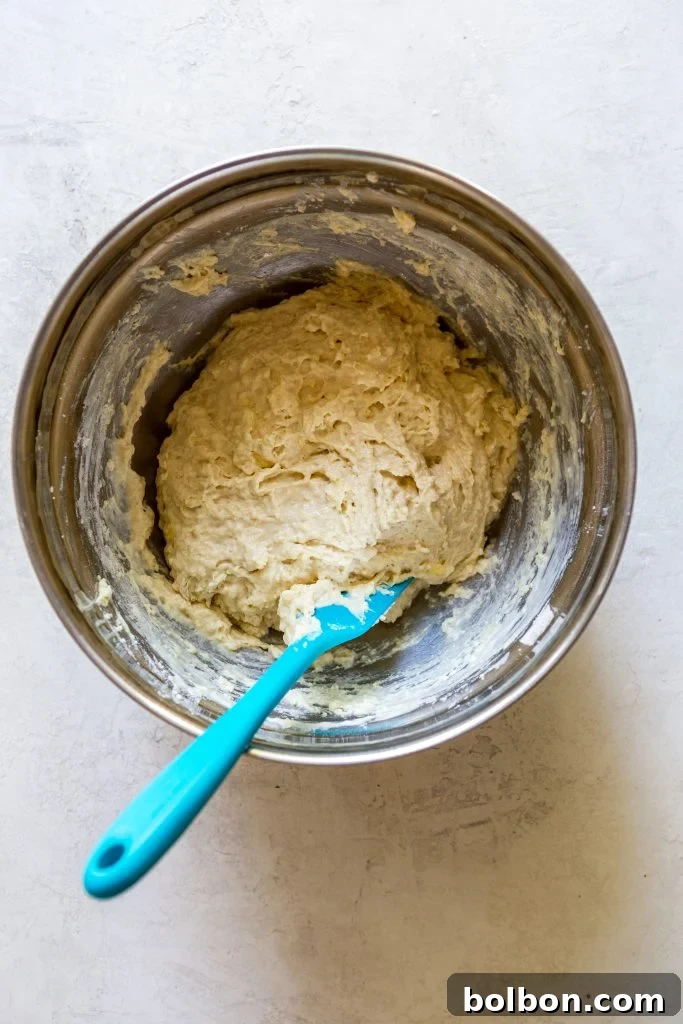
- Combine Mixtures: Pour the wet ingredient mixture into the dry ingredient bowl. Using a rubber spatula, gently mix the ingredients until they just come together to form a shaggy, somewhat sticky dough. Avoid overmixing, as this can lead to a tough bread.
- Form the Dough: If your dough feels excessively sticky, sprinkle a tiny bit more flour onto your hands and the dough. Gently shape the dough into a round ball. Handle the dough as little as possible to maintain its tender texture.
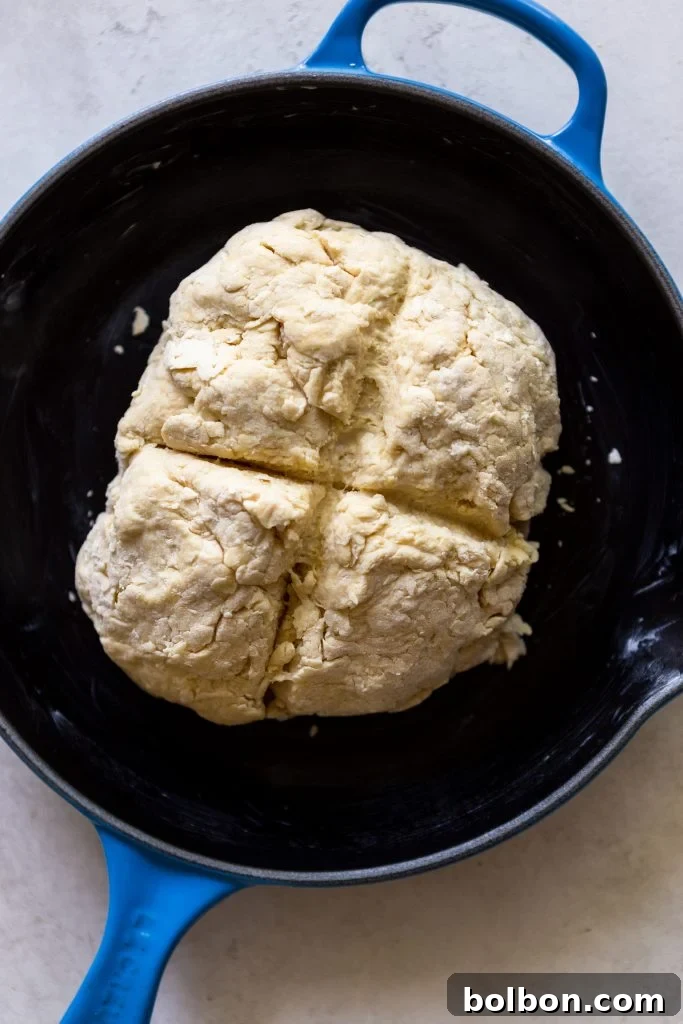
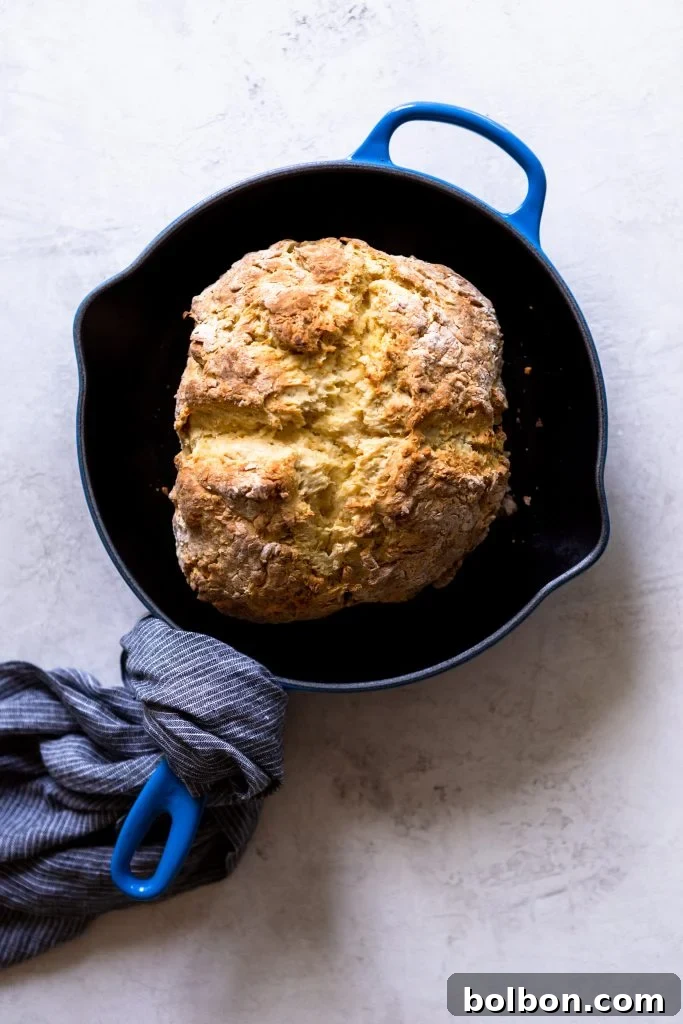
- Score and Bake: Transfer the dough ball to your prepared cast iron skillet or baking dish. Using a sharp knife, score a deep ‘X’ into the top of the bread loaf. This traditional scoring is not just for decoration; it helps the center of the bread bake more evenly and allows for traditional breaking of the loaf.
- Bake to Golden Perfection: Bake for 35-40 minutes, or until the loaf achieves a beautiful golden-brown color on the outside. To test for doneness, carefully tap the bottom of the loaf – it should sound hollow. This indicates it’s cooked through. Remove from the oven and allow it to cool slightly on a wire rack before slicing and serving. Cooling slightly helps the crumb set.
Tips for Perfect Irish Soda Bread Every Time
- Don’t Overmix: This is perhaps the most crucial tip for soda bread. Overmixing develops the gluten in the flour too much, resulting in a tough, dense loaf rather than a tender one. Mix just until the ingredients are combined.
- Buttermilk is Key: The acidity in buttermilk is essential for activating the baking soda, which provides the bread’s rise. If you don’t have buttermilk, you can make a quick substitute by adding 1 tablespoon of white vinegar or lemon juice to a measuring cup, then filling the rest with regular milk to 1 ¾ cups. Let it sit for 5-10 minutes until it slightly curdles.
- Score Deeply: The ‘X’ on top of the loaf should be cut fairly deep, about a third of the way into the dough. This allows the heat to penetrate the center of the loaf, ensuring it bakes evenly and prevents the crust from splitting irregularly.
- Check for Doneness: The hollow sound when tapping the bottom of the loaf is the most reliable indicator that your soda bread is fully cooked through.
- Serve Warm: While delicious at any temperature, Irish Soda Bread is particularly delightful when served warm, straight from the oven, with melting butter.
Delicious Variations and Serving Suggestions
While fantastic on its own, Irish Soda Bread is incredibly versatile. Here are some ideas to elevate your experience:
- Sweet Variations: Incorporate 1/2 cup of dried currants, raisins, or even chopped candied peel into the dry ingredients for a sweeter loaf. A touch of orange zest or caraway seeds also adds a wonderful aromatic flavor.
- Savory Enhancements: For a savory twist, try adding a handful of fresh chopped chives, grated sharp cheddar cheese, or even a tablespoon of caraway seeds to the dough. This makes it a fantastic accompaniment to soups.
- Hearty Meals: This bread is the quintessential companion to hearty Irish dishes. Serve it alongside a rich Irish Guinness Beef Stew, a warming bowl of Potato Leek Soup, or a traditional Irish Breakfast.
- Breakfast & Brunch: Toast slices lightly and serve with fresh jam, marmalade, honey, or your favorite cheese. It pairs wonderfully with a cup of strong tea or coffee.
- Cheese Board Addition: A rustic loaf of Irish Soda Bread makes a wonderful addition to any cheese board, especially with sharp Irish cheddar or creamy soft cheeses.
Frequently Asked Questions About Irish Soda Bread
What kind of flour should I use for Irish Soda Bread?
Most recipes, including this one, call for all-purpose flour. However, traditional Irish soda bread often used whole wheat flour, especially coarse wholemeal flour (known as “brown bread” in Ireland). You can experiment with a mix of all-purpose and whole wheat flour for a nuttier flavor and denser texture.
Can I make Irish Soda Bread without buttermilk?
Yes, if you don’t have buttermilk, you can easily make a substitute. For 1 ¾ cups of buttermilk, measure 1 ¾ cups of regular milk (dairy or non-dairy), remove 1 tablespoon, and then stir in 1 tablespoon of white vinegar or lemon juice. Let it sit for 5-10 minutes until it slightly thickens and curdles. This creates the necessary acidity for the baking soda to react.
How should I store Irish Soda Bread?
Irish Soda Bread is best enjoyed fresh, ideally on the day it’s baked. Store any leftovers at room temperature in an airtight container or wrapped tightly in plastic wrap for up to 2-3 days. It tends to dry out quickly due to the absence of yeast. For longer storage, you can freeze slices wrapped individually for up to 3 months. Thaw and toast before serving.
Why do I score an ‘X’ on top of the bread?
The ‘X’ (or cross) traditionally scored into the top of the loaf serves a practical purpose: it helps the bread bake more evenly by allowing heat to penetrate the thickest part of the dough. It also aids in breaking the bread into four quarters once baked. Some old Irish superstitions also say it’s to “let the fairies out” or to bless the bread.
Can I add dried fruit or other ingredients?
Absolutely! Adding dried fruits like currants (for a traditional “Spotted Dog”), raisins, or cranberries is a popular variation. You can also include caraway seeds, orange zest, or even some sugar for a slightly sweeter loaf. Just mix them in with your dry ingredients before adding the wet components.
Recipe Details
This recipe for the Best Irish Soda Bread serves approximately 15 slices.
Ingredients
- 4 cups all-purpose flour
- 2 teaspoons kosher salt*
- 1 teaspoon baking soda
- 1 Tablespoon granulated sugar
- 1 and 3/4 cups buttermilk
- 2 tablespoons melted butter
- 1 egg
Instructions
- Preheat oven to 400 degrees F and butter a 10 inch cast iron skillet (or similar baking dish).
- In one bowl, whisk together the flour, salt, baking soda and sugar.
- In another bowl, whisk together the buttermilk, egg and melted butter.
- Pour liquid mixture into flour mixture. Use a rubber spatula to mix into a shaggy dough.
- If dough is sticky, sprinkle with a little flour, shape into a ball with your hands.
- Transfer dough ball to prepared skillet. Use a knife to score an X in the top of the bread loaf (this will help the center bake).
- Bake for 35-40 minutes, until loaf is golden. To test for doneness, tap the bottom of the loaf – it should sound hollow. Allow to cool slightly before slicing.
Nutrition Information (per 1 slice serving)
Serving: 1 slice | Calories: 159kcal | Carbohydrates: 28g | Protein: 5g | Fat: 3g | Saturated Fat: 2g | Trans Fat: 1g | Cholesterol: 18mg | Sodium: 431mg | Potassium: 78mg | Fiber: 1g | Sugar: 2g | Vitamin A: 109IU | Calcium: 39mg | Iron: 2mg
Nutrition information is automatically calculated, so should only be used as an approximation.
Additional Information
Course: Baked Goods/Breads
Cuisine: American, Irish
Looking for more Irish-inspired recipes to complement your soda bread? Be sure to try my hearty Irish Guinness Beef Stew or a rustic loaf of Irish Brown Bread. For a simple and delicious side dish, give this Sautéed Cabbage recipe a try. And to truly embrace the spirit, you can’t go wrong with a refreshing Irish Mule or an elegant Irish Maid Cocktail!
Did you enjoy this recipe?
Please leave a comment below, rate the recipe, and share it with your friends and family! We’d love to see your creations. Don’t forget to tag me on Instagram @foxandbriar and use the hashtag #foxandbriar so I can see what you’ve made!
This recipe was adapted from Alexandra’s Kitchen.