
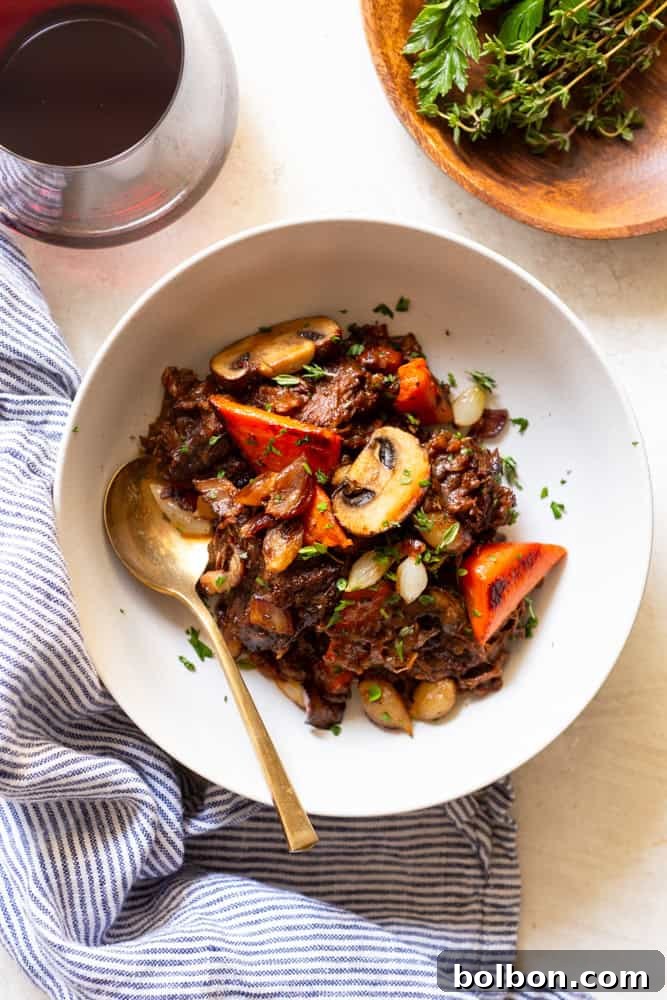
Hearty French-Style Red Wine Beef Stew: A Comforting Classic
Indulge in the ultimate comfort food with this exquisite French-style Red Wine Beef Stew. Imagine incredibly tender, fall-apart beef, perfectly caramelized vegetables, and a thick, velvety sauce that coats every bite. This isn’t just a meal; it’s a culinary experience designed to warm you from the inside out, making it the perfect centerpiece for chilly evenings and cozy gatherings. Often referred to as a simpler take on the classic Beef Bourguignon, this recipe promises profound flavor without unnecessary complexity, transforming humble ingredients into a truly spectacular dish.
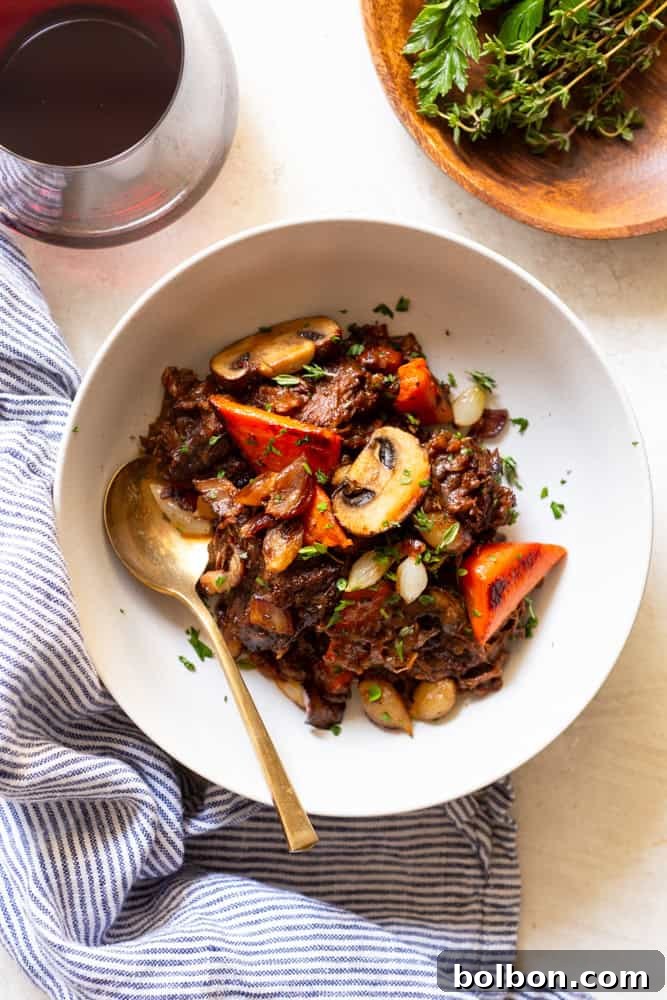
This beloved recipe was first shared on December 14, 2015. It has since been thoroughly updated with fresh photography, enhanced instructions, and additional tips on October 9, 2025, to ensure the best possible experience for our readers.
The Enduring Legacy of French Red Wine Beef Stew: A Culinary Journey
The inspiration for this magnificent red wine beef stew draws directly from the revered French classic, Beef Bourguignon. This dish embodies centuries of French culinary wisdom, showcasing how simple, robust ingredients can be transformed into something extraordinary. Historically, Beef Bourguignon was a peasant dish from the Burgundy region of France, where tough, inexpensive cuts of beef were slow-cooked with local red wine, bacon, mushrooms, and pearl onions to create a tender, deeply flavorful stew. It was a testament to resourcefulness, turning what might otherwise be discarded into a celebrated meal.
My journey with this red wine beef stew recipe began over a decade ago, in the early days of this blog. Even then, the goal was to capture the essence of that French tradition: to take a resilient cut of meat and coax it into unparalleled tenderness, to build a broth so rich and velvety it feels like a warm embrace, and to infuse it with earthy, slightly caramelized vegetables. Over the years, this recipe has become a staple in our home, evolving with each iteration to perfect its balance of rustic charm and refined flavor. It’s a dish that tells a story of culinary heritage, offering a taste of French countryside warmth right in your kitchen.
Selecting the Perfect Cut: Why Chuck Roast Reigns Supreme for Tender Beef Stew
Achieving truly tender, melt-in-your-mouth beef in your stew is paramount, and it all starts with choosing the right cut of meat. This is where many home cooks can go wrong, often falling prey to pre-packaged “stew meat” at the grocery store. While convenient, these packages are frequently a blend of various lean cuts, chopped into pieces that are often too small and lack the essential fat and connective tissue needed for slow cooking. Leaner cuts, despite prolonged cooking times, will only become tougher and dryer, disappointing your palate and wasting your efforts.
The secret to an exquisitely tender beef stew lies in one specific cut: the **CHUCK ROAST**. This cut, typically sourced from the shoulder of the cow, is abundant in both marbling (intramuscular fat) and connective tissue. These elements are not your enemy; they are your allies in the slow-cooking process. Over several hours in the oven, the fat renders, infusing the stew with incredible flavor, while the tough connective tissues (collagen) break down into gelatin. This gelatin enriches the sauce, making it silky and luxurious, and transforms the beef into succulent, fall-apart morsels that are the hallmark of a truly great red wine beef stew. When shopping, look for a chuck roast with good marbling and avoid anything labeled generically. Ask your butcher for a boneless chuck roast if you prefer, and plan to cut it into generous 1.5-inch chunks yourself for optimal results.
Essential Ingredients for an Unforgettable Red Wine Beef Stew
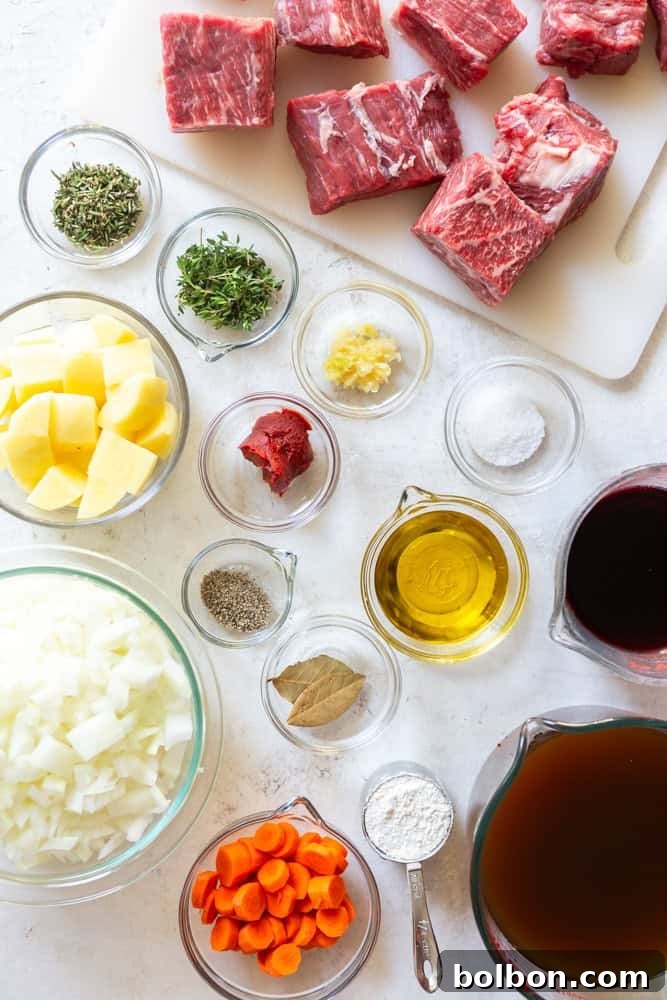
Crafting the perfect red wine beef stew is about building layers of flavor with quality ingredients. Each component plays a vital role in creating that rich, savory, and comforting experience.
- Boneless Beef Chuck Roast: As discussed, this is the star. Look for a roast with excellent marbling for maximum tenderness and flavor. Cut it into substantial 1.5-inch chunks. Larger pieces hold up better during long cooking and brown beautifully. Remember to season generously with salt before setting aside. Avoid “stew meat” at all costs.
- Red Wine: This is the heart of the “red wine” stew, adding depth, acidity, and complex fruity notes. A dry red wine like Syrah, Zinfandel, Pinot Noir, or even a Cabernet Sauvignon works wonderfully. You don’t need an expensive bottle, but choose one that you would genuinely enjoy drinking. The rule of thumb is: if it’s not good enough to drink, it’s not good enough for your stew.
- Beef Broth: The primary liquid base, beef broth (or stock) provides a foundational layer of savory flavor. Opt for a good quality, low-sodium beef broth to control the seasoning of your stew.
- Tomato Paste: A small but mighty ingredient. Tomato paste offers a concentrated umami punch, adding richness and a subtle tang that deepens the overall flavor profile of the sauce.
- Onions and Garlic: These aromatic vegetables form the essential flavor base. Slow-cooked onions become sweet and caramelized, adding incredible depth, while fresh garlic provides pungent, savory notes.
- Carrots and Potatoes: Classic stew additions, carrots offer sweetness and a pop of color, while potatoes (Yukon Gold are excellent here for their creamy texture) thicken the stew and make it hearty and satisfying. Cut them into appropriately sized pieces to ensure even cooking.
- Fresh Herbs (Thyme, Rosemary, Bay Leaf): Herbs are crucial for aromatic complexity. Fresh thyme and rosemary impart earthy, piney notes. Be sure to chop the rosemary very finely, as large pieces can be unpleasant to encounter in your stew. Bay leaves add a subtle, savory background note.
- Olive Oil: Used for sautéing the aromatics and contributing a fruity, rich base to the stew.
- All-Purpose Flour: This acts as a thickener, creating a roux with the sautéed onions and fats, which ensures your stew develops that desired thick, velvety sauce.
- For the Topping (Bacon, Pearl Onions, Mushrooms, Carrots): This optional, yet highly recommended, topping elevates the stew from great to truly exceptional. Cooking these ingredients separately and adding them at the end provides contrasting textures and fresh, vibrant flavors that brighten the rich stew. Bacon adds smoky saltiness, pearl onions offer a delicate sweetness, and mushrooms bring an earthy, umami depth.
Mastering the Art of Red Wine Beef Stew: Step-by-Step Guide
Creating this deeply flavorful red wine beef stew is a labor of love, but the process is straightforward and incredibly rewarding. Follow these steps for a perfect pot every time:
- Prepare Your Oven: Begin by preheating your oven to 325°F (160°C). If you’re using a convection oven, reduce the temperature slightly to 300°F (150°C) for even cooking.
- Season the Beef: Cut your chuck roast into roughly 1.5-inch pieces. This size ensures they remain tender and substantial after long cooking. Season them generously with kosher salt and set them aside. There’s no need to brown the beef beforehand, as it will caramelize beautifully in the oven.
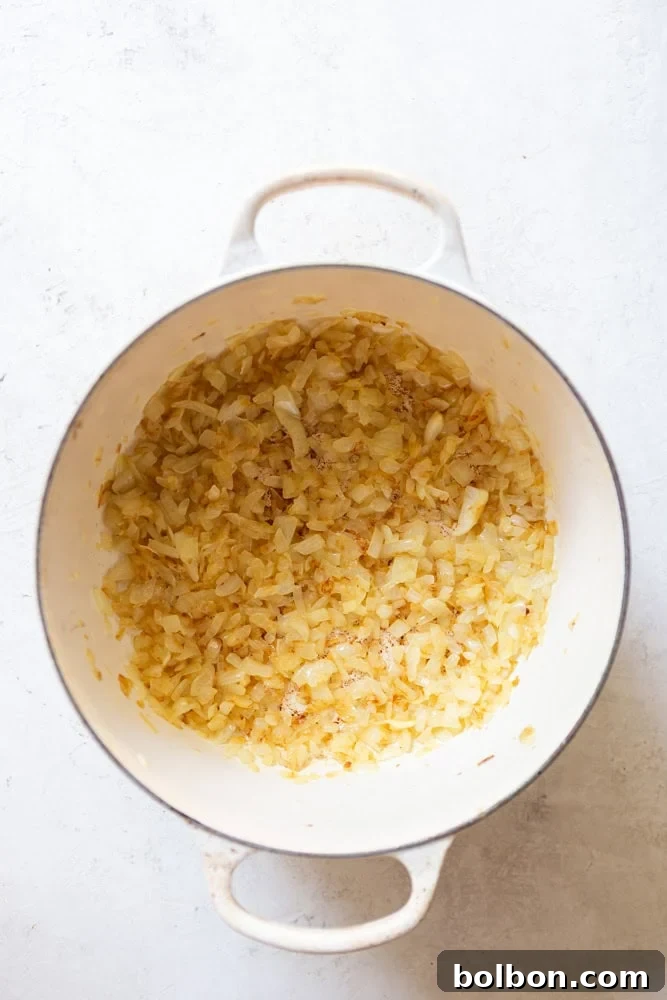
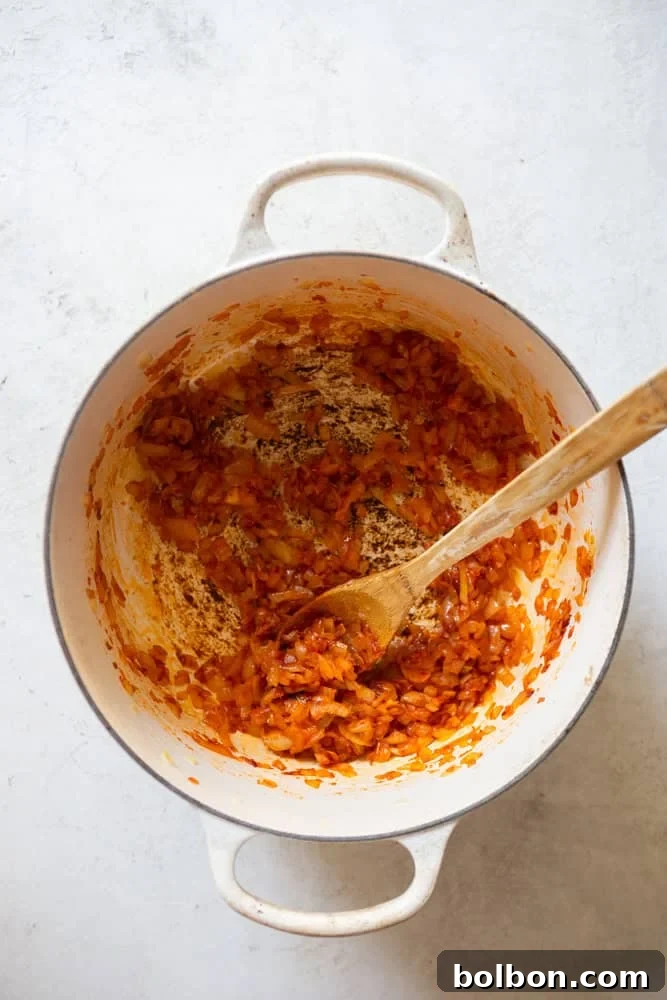
- Sauté the Onions: In a large Dutch oven or heavy-bottomed pot, heat 3 tablespoons of olive oil over medium heat. Add the diced onions, season with a pinch of salt, and sauté them patiently for about 20 minutes. The goal here isn’t just to soften them, but to caramelize them to a deep golden color, which develops a crucial sweet and savory base for the stew.
- Add Garlic and Tomato Paste: Stir in the minced garlic and tomato paste. Cook for another 2 minutes, stirring constantly. The tomato paste will deepen in color, turning a rich rust hue, and its flavors will intensify.
- Incorporate Flour: Sprinkle the flour over the onion mixture and stir well. Cook for about 1 minute, allowing the flour to toast slightly. This creates a roux that will thicken the stew’s sauce to a luxurious consistency.
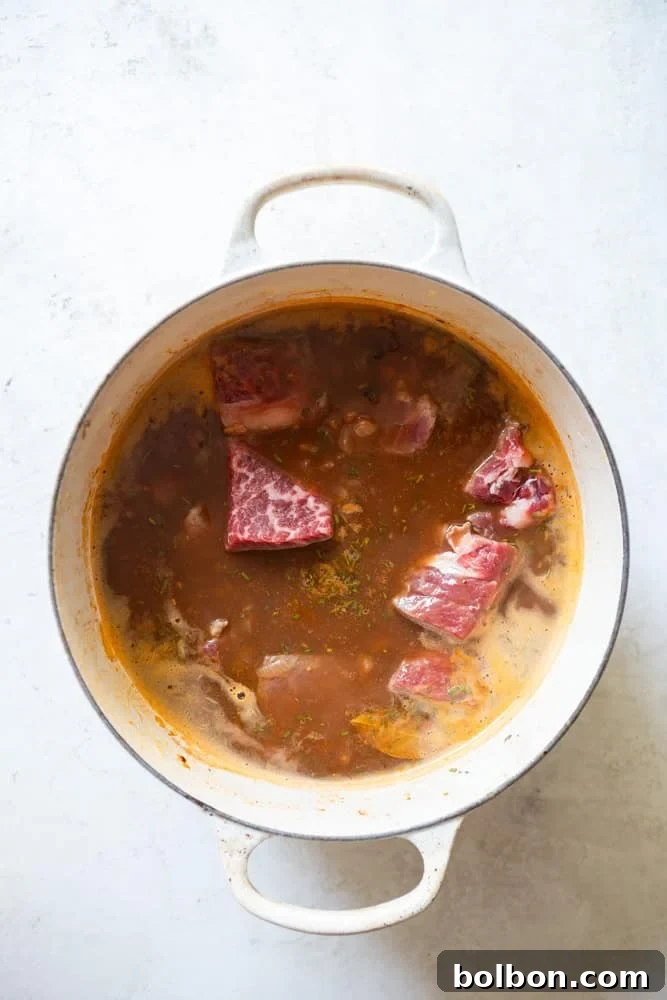
- Deglaze with Liquids: Slowly whisk in the beef broth, ensuring no lumps form. Then, add the red wine. Use a wooden spoon to scrape up any browned bits (fond) stuck to the bottom of the pot. These bits are packed with flavor and are essential for a rich sauce.
- Add Herbs and Simmer: Toss in the fresh thyme, finely chopped rosemary, and bay leaves. Bring the mixture to a gentle simmer for about 3 minutes, allowing the flavors to meld.
- Introduce the Beef: Add the seasoned beef chunks to the pot. Stir to combine, then arrange the beef so that some pieces are partially sticking out of the liquid. This positioning allows them to brown and develop a crust in the oven, adding another layer of flavor and texture without pre-browning on the stovetop. Return to a gentle simmer.
- First Oven Cook: Transfer the uncovered Dutch oven to your preheated oven. Cook for 1 hour and 45 minutes. Cooking uncovered is key to allowing the beef to brown and the sauce to reduce and concentrate.
- Add Vegetables: Remove the pot from the oven. Using a spoon, scrape down any browned bits from the sides of the pot back into the stew. Add the peeled and cut potatoes and carrots. Stir to distribute them evenly, then rearrange the beef so it’s again mostly on top of the vegetables and exposed to the air.
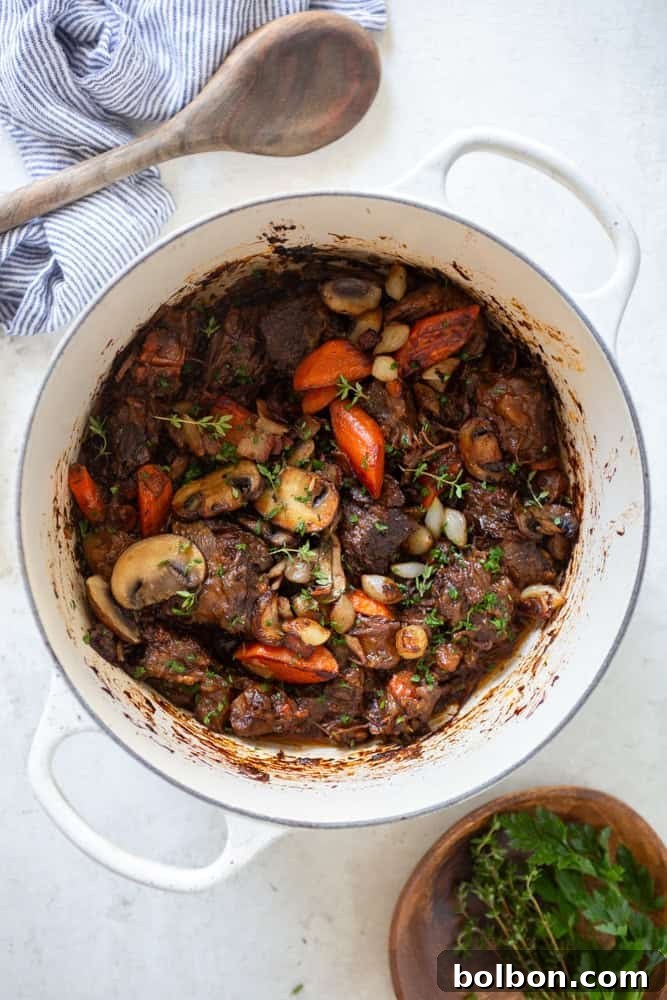
- Second Oven Cook: Return the uncovered pot to the oven and cook for another hour, or until the potatoes and carrots are tender and the beef is fork-tender.
- Prepare the Topping (While Stew Finishes): While the stew is in its final cooking stage, prepare the optional but highly recommended topping. In a medium sauté pan, add enough water to just cover the bottom. Add the bacon lardons, cover the pan, and bring to a boil over medium-high heat.
- Sauté Topping Vegetables: Once the water is boiling, remove the lid and add the pearl onions and chopped carrots. Cook, stirring frequently, until the water has evaporated and the bacon begins to render its fat.
- Add Mushrooms: Add the thickly sliced crimini mushrooms and season with just a little salt (remember the bacon is already salty!). Reduce the heat to medium-low.
- Caramelize Topping: Continue to cook, stirring often, for 20-30 minutes, until the vegetables are beautifully browned and tender. If your bacon doesn’t release much fat, you might need to add a splash of olive oil to help coat and brown the vegetables.
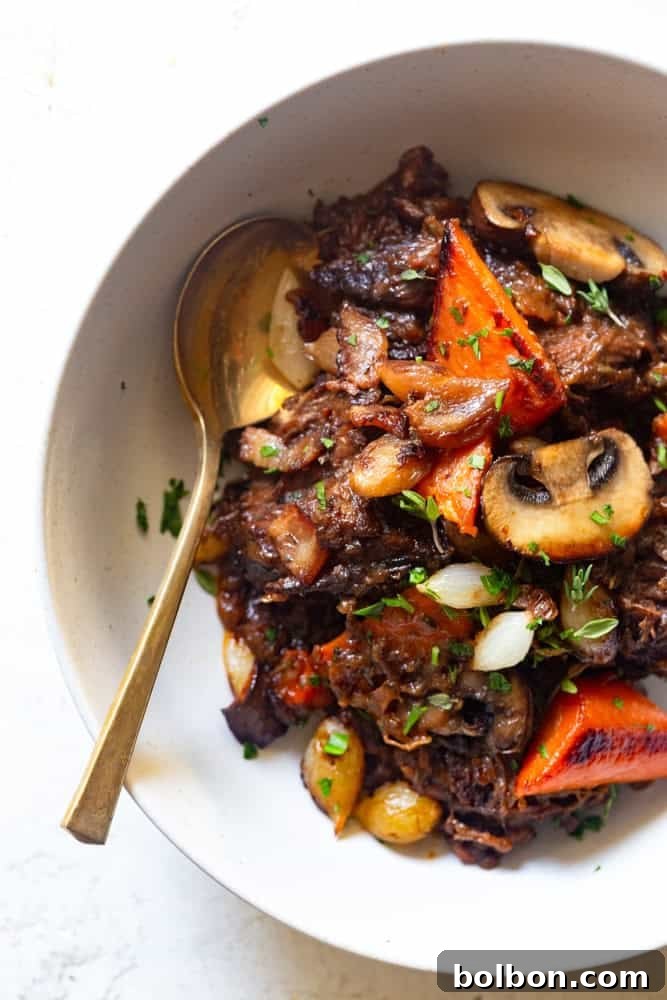
- Final Seasoning and Serve: Once the stew is done, remove it from the oven. Stir well and scrape down any final browned bits from the sides into the stew. Taste and adjust seasoning with salt and freshly ground black pepper as needed. Ladle the hot stew into bowls, top generously with the caramelized bacon, pearl onions, mushroom, and carrot mixture, and garnish with fresh parsley if desired. Serve immediately with crusty bread.
Pro Tips for Your Best Red Wine Beef Stew Yet
Even with a detailed recipe, a few expert tips can elevate your red wine beef stew from good to absolutely phenomenal:
- The Right Meat Matters: Reiterate the importance of using a chuck roast. Its marbling and connective tissue are vital for achieving that desirable fall-apart tenderness. Generic “stew meat” will almost always lead to a tough, disappointing result.
- No Need to Brown First: This recipe cleverly utilizes the oven for browning. By cooking the stew uncovered and arranging the beef partially out of the liquid, the meat develops a beautiful crust and deeper flavor without the extra step of pan-searing. Trust the process!
- Temperature Control is Key: Stick to 325°F (300°F convection). This moderate temperature allows for slow, gentle cooking, giving the connective tissues ample time to break down without drying out the meat or burning the sauce.
- Patience for Tenderness: If, after the suggested cooking time, your beef isn’t fork-tender, don’t despair. Different cuts can vary. Simply return the stew to the oven for another 30-60 minutes. If the top is getting too dark, you can loosely cover it with foil for this extra cooking period. Tender beef is non-negotiable for a perfect stew.
- Pearl Onion Hacks: Pearl onions can sometimes be a bit tricky to peel and prepare. Look for them in the freezer section of your grocery store; they often come pre-peeled. You can add them directly to your topping pan from frozen – no need to thaw them first, saving you time and effort.
- Taste and Adjust: Always taste your stew before serving. Seasoning can vary based on your broth, wine, and personal preference. A final adjustment of salt and freshly ground black pepper can make all the difference.
- Don’t Rush the Onions: The initial 20-minute sauté for the onions might seem long, but this step is crucial for developing deep, sweet flavors. Don’t cut it short!
- Storage and Reheating: Red wine beef stew often tastes even better the next day as the flavors have more time to meld. Store leftovers in an airtight container in the refrigerator for up to 3-4 days. Reheat gently on the stovetop over low heat, adding a splash of beef broth or water if the sauce has thickened too much. It also freezes beautifully for up to 3 months.
Adaptations & Dietary Considerations for Your Stew
While this red wine beef stew recipe is a classic, it can be adapted to suit various preferences and dietary needs:
- Wine-Free Version: Although red wine is a signature flavor component, you can certainly make a delicious stew without it. Replace the 1 cup of red wine with an equal amount of additional beef broth. To mimic the acidity and depth that wine provides, consider adding 2-3 tablespoons of good quality balsamic vinegar or a splash of red wine vinegar during the simmering stage.
- Gluten-Free Alternative: For a gluten-free version, the primary modification involves the thickening agent. Instead of all-purpose flour, you can use a cornstarch slurry. At the end of the cooking process (after removing from the oven), mix 2 tablespoons of cornstarch with 2 tablespoons of cold water to create a slurry. Stir this into the simmering stew on the stovetop and cook until thickened. Alternatively, some readers have successfully used gluten-free all-purpose flour blends as a direct substitute for the wheat flour in the roux. Always double-check that all other ingredients, especially beef broth, are certified gluten-free.
Perfect Pairings: What to Serve with Your Hearty Beef Stew
This rich and robust red wine beef stew is a meal in itself, but certain accompaniments can enhance the dining experience, providing balance and texture to complement its deep flavors. Here are some of our favorite pairings:
- Crusty Bread: A must-have! A warm, crusty baguette or a rustic loaf is perfect for soaking up every last drop of the velvety, flavorful sauce. It’s truly essential for savoring the full essence of the stew.
- Creamy Mashed Potatoes: The classic choice for a reason. The smooth, buttery texture of mashed potatoes provides a wonderful contrast to the tender beef and hearty vegetables. Try our Garlic Mashed Potatoes for an extra layer of flavor, or for a unique twist, consider our Parsnip Mashed Potatoes, which add a subtle sweetness and earthy note.
- Simple Green Salad: A light, crisp green salad with a bright vinaigrette can cut through the richness of the stew, offering a refreshing counterpoint.
- Roasted Vegetables: Beyond the stew’s own vegetables, a side of simply roasted asparagus, green beans, or Brussels sprouts can add more texture and a fresh, slightly charred flavor.
- Polenta or Pasta: For a different starch, creamy polenta or even a wide pasta like pappardelle or tagliatelle can be an excellent base for the rich stew.
Discover More Comfort Food Classics
If you’ve enjoyed the heartwarming goodness of this Red Wine Beef Stew, we’re confident you’ll love these other hearty and comforting recipes:
- Red Wine Braised Beef Short Ribs: Another rich and tender beef dish, perfect for special occasions.
- Irish Guinness Beef Stew: A traditional, deeply flavored stew with a distinctive stout richness.
- Slow Cooker Chili: An easy, flavor-packed chili that’s perfect for game day or a casual family dinner.
- Chicken and Dumplings: A true Southern classic, wonderfully creamy and satisfying.
Red Wine Beef Stew Recipe
By Meghan McMorrow | Fox and Briar
Prep Time: 45 mins
Cook Time: 3 hrs
Total Time: 3 hrs 15 mins
Servings: 8 Servings
This Red Wine Beef Stew is rich and hearty, with tender beef and a velvety, savory sauce that you will not believe!
Ingredients
- 2 ½ pounds beef chuck roast, cut into 1.5 inch chunks.
- 2 onions, diced
- 3 tablespoons olive oil
- 1 tablespoon tomato paste
- 2 cloves garlic, pressed or finely minced
- 1 tablespoon fresh thyme
- 1 tablespoon fresh rosemary, chopped
- 1-2 bay leaves
- 1 cup red wine, such as Syrah or Zinfandel
- 3 cups beef stock
- 1/4 cup flour
- 2 Yukon Gold potatoes, peeled and cut into 1 inch cubes
- 2 carrots, peeled and cut into 1/2 inch coins
- Kosher salt
- Fresh ground black pepper
- Chopped fresh parsley for garnish (optional)
For The Topping:
- 1 cup pearl onions or cipollini onions
- 2-3 carrots, cut into 1 inch pieces
- 8 crimini mushrooms, thickly sliced
- 2 slices of bacon, cut into 1 inch lardons
Instructions
- Preheat oven to 325°F.
- Season beef pieces with salt, set aside.
- Heat 3 tablespoons of olive oil in a Dutch oven over medium high heat. Add onions and season with kosher salt. Cook, stirring often, until golden brown, about 20 minutes.
- Add tomato paste and garlic, cook, stirring constantly for about 2 minutes, until rust colored.
- Add flour and stir, cooking for about 1 minute.
- Whisk in broth slowly, then wine. Use a wooden spoon to scrape the brown bits from the bottom of the pot (deglazing).
- Add herbs and bay leaves and bring to a simmer, about 3 minutes.
- Stir in beef, arrange so beef is partly above the liquid. Return to a simmer.
- Transfer to oven and cook, uncovered for 1 hour and 45 minutes.
- Remove from oven and using a spoon, scrape down the brown bits that have formed on the side of the pot. Add the potatoes and carrots to the stew, stir and rearrange meat so that it is on top of the vegetables and sticking out of the sauce as much as possible (this way it will brown in the oven).
- Return to oven and cook uncovered for another hour or until potatoes and carrots are tender.
- While stew is cooking, prepare topping.
- In a medium sauté pan, add just enough water to cover the bottom of the pan.
- Add bacon pieces, cover pan and turn heat on to medium high. Bring to a boil.
- When water is boiling, remove lid and add pearl onions and carrots. Cook, stirring often, until water has evaporated.
- Add mushrooms and season with just a little salt (remember, bacon is already salty!). Reduce heat to medium low.
- Cook, stirring often, until vegetables are nicely browned, 20–30 minutes. Depending on how much fat your bacon releases, you may need to add just a little olive oil to the pan to coat the vegetables.
- When stew is done, remove from oven, stir and again scrape browned bits from the sides into the stew. Taste stew and season with salt and pepper if needed.
- To serve, spoon stew into bowl and top with some vegetable topping and fresh parsley, if desired.
- Serve with bread (optional, but strongly advised).
Notes
- When preparing the beef, cut off any large pieces of fat. 1.5 inch chunks may seem like really large pieces, but that helps them to stick out of the broth and get browned.
- There is no need to brown the beef before cooking. It will brown in the oven as it is cooked with the lid off.
- If the meat is not tender at the end of cooking time, cook for another 30-60 minutes. If the stew is very brown on top, you can cover it for this extra cooking time.
- Using frozen pearl onions is fine, they can be added frozen, no need to thaw.
Nutrition
- Serving:
- 1 serving
- Calories:
- 436kcal
- Carbohydrates:
- 19g
- Protein:
- 32g
- Fat:
- 24g
- Saturated Fat:
- 9g
- Polyunsaturated Fat:
- 2g
- Monounsaturated Fat:
- 13g
- Trans Fat:
- 1g
- Cholesterol:
- 101mg
- Sodium:
- 373mg
- Potassium:
- 1081mg
- Fiber:
- 3g
- Sugar:
- 5g
- Vitamin A:
- 5198IU
- Vitamin C:
- 12mg
- Calcium:
- 70mg
- Iron:
- 4mg
Nutrition information is automatically calculated, so should only be used as an approximation.
Additional Info
Course: Dinners, Soups/Stews
Cuisine: American
Did you like this recipe?
Please comment, rate and share! And don’t forget to tag me on Instagram @foxandbriar AND #foxandbriar so I can see what you made!
Adapted from Food & Wine and Cook’s Country