
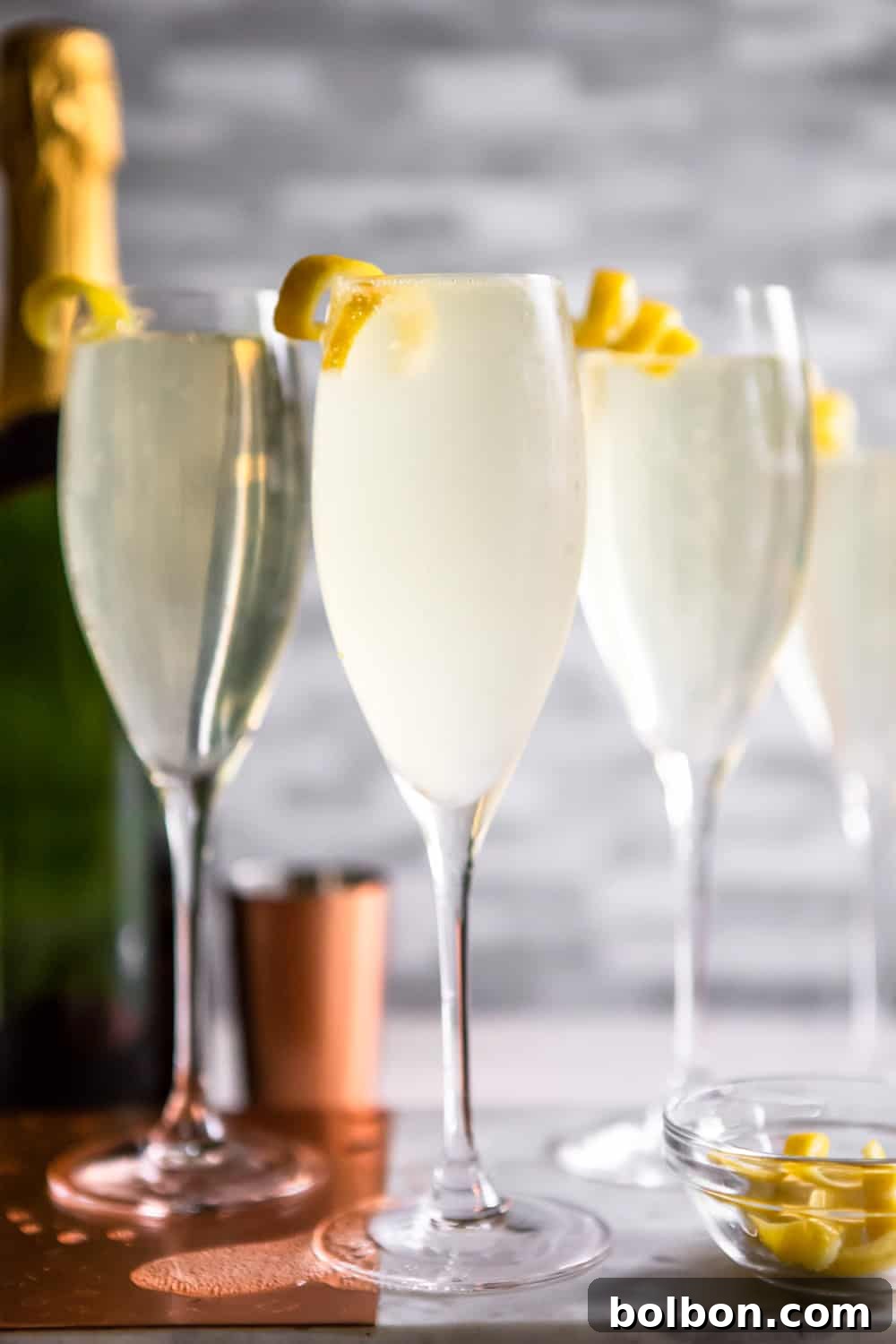
The Classic French 75 Cocktail: An Elegant Guide to Crafting This Timeless Bubbly Drink
Step into the world of sophisticated cocktails with the French 75, a dazzling concoction that effortlessly blends the strength of gin with the delicate fizz of champagne, brightened by lemon and a hint of sweetness. More than just a drink, it’s a celebration in a glass, perfect for ushering in the New Year, toasting a special occasion, or simply elevating a casual brunch into an extraordinary event.
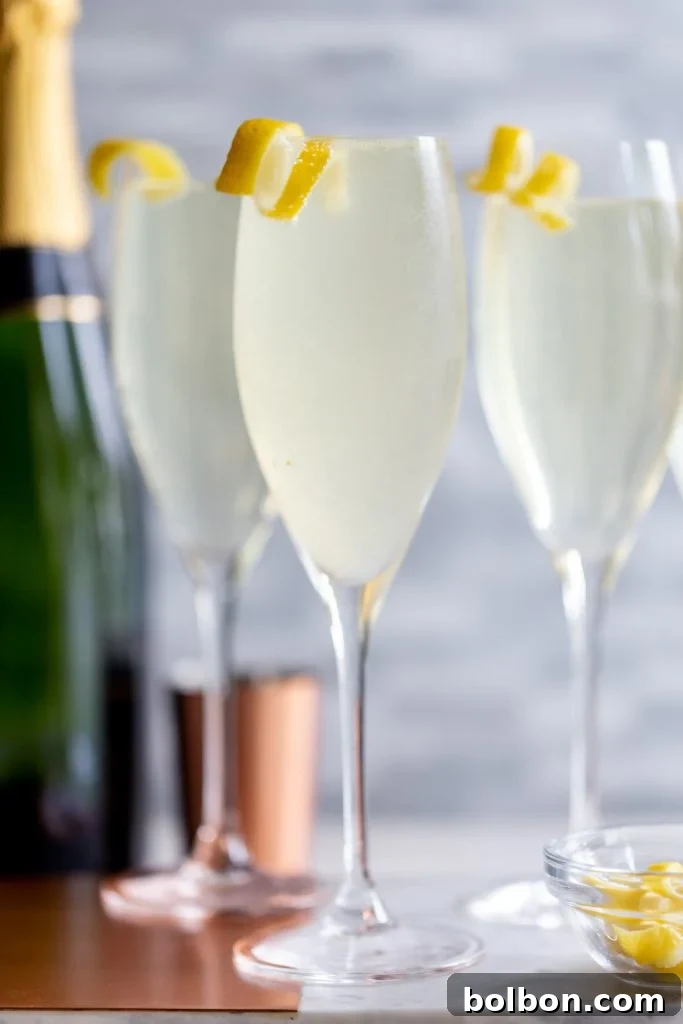
What Exactly is a French 75?
At its heart, the French 75 is a vibrant cocktail combining gin, fresh lemon juice, simple syrup, and champagne. This seemingly simple combination yields a complex and refreshing drink that is both crisp and celebratory. While gin is the traditional spirit, cognac is a popular and historically significant alternative, offering a different depth of flavor. Similarly, while champagne lends its prestigious name to the drink, any quality sparkling wine can be used to achieve a similar effervescent delight.
The beauty of the French 75 lies in its perfect balance. The tartness of the lemon juice cuts through the richness of the gin, while the simple syrup provides just enough sweetness to harmonize the flavors without making the drink cloying. Finally, the sparkling wine adds a lively effervescence, transforming it into a truly uplifting experience. It’s a cocktail that feels both classic and contemporary, making it a beloved choice across generations.
The Intriguing History Behind the French 75
The origins of the French 75 are steeped in legend and wartime lore, dating back to World War I. The drink is famously named after the French 75-mm field gun, known for its rapid firing capability and potent kick. This powerful artillery piece was a formidable weapon for the French army, and the cocktail, much like its namesake, is reputed to deliver a surprisingly strong punch despite its elegant appearance and easy drinkability.
While the exact inventor remains a subject of debate, an early version of the drink is believed to have been created at the New York Bar in Paris around 1915, potentially by bartender Harry MacElhone. This initial iteration might have used cognac, a spirit more readily available in France during that era, earning it the moniker “Soixante Quinze” (Seventy-Five). The cocktail gained further recognition when it appeared in Harry Craddock’s influential “The Savoy Cocktail Book” in 1930, cementing its place in the pantheon of classic cocktails. Its journey through history reflects its enduring appeal and adaptability.
What Does a French 75 Taste Like? A Sensory Experience
Imagine a drink that invigorates your palate with every sip. The French 75 offers a wonderfully crisp, bright, and effervescent profile. It leads with a zesty citrus burst from the fresh lemon, which is beautifully complemented by the botanical notes of the gin. The subtle sweetness from the simple syrup acts as a masterful balancer, smoothing out any harsh edges and ensuring a harmonious blend of flavors.
Despite its refreshing and easy-to-drink nature, the French 75 “packs a punch,” living up to its military-inspired name. It’s deceptively potent, making it a favorite for those seeking a celebratory yet powerful cocktail. Its versatile flavor profile makes it a superb alternative to a mimosa at brunch, sophisticated enough for any party or gala, and wonderfully refreshing for a summer afternoon. The delicate bubbles add a luxurious texture, making each sip a delightful experience.
Choosing Your Spirits: Gin vs. Cognac for Your French 75
The base spirit is crucial to the character of your French 75. While gin is the most common choice today, historically, cognac also played a significant role. Understanding the nuances of each can help you craft your ideal cocktail.
The Best Gin for a French 75
For a truly classic French 75, a London Dry Gin is highly recommended. This style of gin is known for its strong juniper backbone and traditional botanical profile, which stands up well to the tart lemon and sparkling wine without being overwhelmed. Brands like Tanqueray, Beefeater, and Hendrick’s are excellent, widely available options that deliver consistent quality. Local gins, such as Big Gin mentioned in the original recipe, can also be fantastic choices, often bringing unique regional botanicals to the forefront.
When selecting your gin, consider how its specific botanical blend will interact with the other ingredients. A gin with a prominent citrus or floral note can enhance the drink’s freshness, while one with a more savory or peppery profile might add an interesting layer of complexity. The key is to choose a gin you enjoy drinking on its own, as its character will shine through.
Exploring Cognac as an Alternative
Some purists argue that the original French 75 (or “Soixante Quinze”) was made with cognac. Using cognac instead of gin creates a “French 125” or simply a “Cognac French 75,” offering a richer, smoother, and slightly fruitier profile. The warm, mellow notes of aged brandy provide a stark contrast to gin’s juniper-forward crispness, making for a distinctively different but equally delicious experience. If you prefer a less botanical, more rounded spirit, or simply want to explore the drink’s historical roots, a VS or VSOP cognac would be an excellent choice.
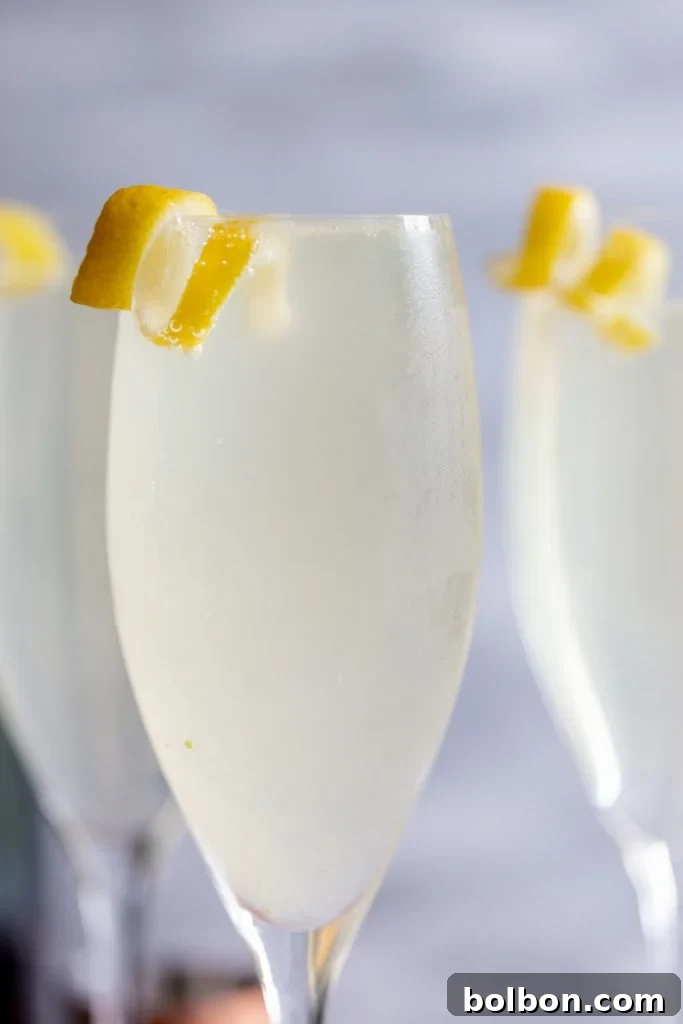
Selecting the Perfect Sparkling Wine for Your French 75
The sparkling component is what truly makes the French 75 a celebratory cocktail. While the name specifically calls for Champagne, the category of “sparkling wine” offers many excellent and often more affordable alternatives.
Champagne, Prosecco, or Cava: What to Choose?
For an authentic and luxurious French 75, actual Champagne from the Champagne region of France is the traditional choice. Its refined bubbles and complex yeast notes elevate the cocktail. However, don’t hesitate to explore other high-quality sparkling wines.
- Prosecco: Hailing from Italy, Prosecco is typically fruitier and lighter than Champagne, with larger, less persistent bubbles. A dry (Brut) Prosecco works beautifully, adding a softer touch.
- Cava: Spain’s answer to Champagne, Cava is made using a similar traditional method, often resulting in a drier, more savory profile with fine bubbles. A Brut Cava is an excellent and cost-effective alternative.
- Crémant: French sparkling wines made outside the Champagne region, like Crémant de Bourgogne or Crémant d’Alsace, offer Champagne-like quality at a more accessible price point.
Understanding Brut and Dryness Levels
When selecting your sparkling wine, pay close attention to its sweetness level. For a French 75, a “Brut” designation is generally preferred. Brut indicates a dry sparkling wine, meaning it has very little residual sugar. This dryness is crucial for balancing the sweetness of the simple syrup and the tartness of the lemon juice, preventing the cocktail from becoming overly sweet. Avoid “Demi-Sec” or “Doux” sparkling wines, as these are much sweeter and would throw off the delicate balance of the French 75.
Mastering the Simple Syrup (and Fresh Lemon Juice!)
Two often-overlooked components that are absolutely essential for a stellar French 75 are simple syrup and fresh lemon juice. They might seem minor, but their quality dictates the cocktail’s overall harmony.
How to Make Simple Syrup
Simple syrup is exactly what it sounds like: a simple solution of sugar and water. Making it at home is incredibly easy and yields a much better result than store-bought versions, which can sometimes contain additives. To make classic simple syrup:
- Combine equal parts granulated sugar and water in a small saucepan. For example, 1 cup of sugar and 1 cup of water.
- Heat the mixture over medium heat, whisking constantly, until the sugar is completely dissolved. Do not boil vigorously; a gentle simmer is sufficient.
- Once clear, remove the pan from the heat and let the syrup cool completely to room temperature.
- Pour the cooled simple syrup into a clean, airtight container and store it in the refrigerator for up to two weeks.
For an elevated touch, consider making a rich simple syrup (2 parts sugar to 1 part water) for a more viscous texture, or infusing your simple syrup with botanicals like lavender, rosemary, or ginger for a unique twist on the classic.
The Importance of Fresh Lemon Juice
There is simply no substitute for fresh-squeezed lemon juice in a French 75. Bottled lemon juice often contains preservatives and lacks the vibrant, zesty aroma and bright acidity that fresh lemons provide. The acidity of the fresh lemon is vital for cutting through the richness of the gin and balancing the sweetness of the syrup and the bitterness of the gin’s botanicals. Always opt for fresh lemons, and give them a good roll on the counter before juicing to maximize the yield.
French 75 Variations and Creative Twists
While the classic French 75 is perfect as is, its simple structure makes it ripe for creative variations:
- French 75 with Elderflower: Add a splash of elderflower liqueur (like St-Germain) for a floral and aromatic dimension.
- Herbal French 75: Muddle a few sprigs of fresh rosemary or thyme with the gin and lemon juice before shaking for an earthy, fragrant twist.
- Berry French 75: Muddle fresh raspberries or blackberries at the bottom of the shaker for a fruity, colorful rendition. Strain well before adding champagne.
- Gin Alternatives: Beyond cognac, experiment with other clear spirits like vodka (for a less botanical profile) or even a light rum for a tropical touch.
- Garnish Galore: While a lemon twist is traditional, consider a maraschino cherry, a few fresh berries, or a delicate edible flower for visual appeal.
When to Serve the French 75: Occasions & Pairings
The French 75 is incredibly versatile, fitting seamlessly into a multitude of occasions:
- New Year’s Eve: Its bubbly nature makes it a quintessential toast to new beginnings.
- Brunch: A sophisticated alternative to mimosas, offering a more complex flavor profile.
- Holidays & Celebrations: Perfect for Easter, Mother’s Day, or any special gathering that calls for elegance.
- Summer Refreshment: Its crisp and citrusy notes make it an ideal cooler on warm days.
- Weddings & Anniversaries: A chic and celebratory signature cocktail.
Pair the French 75 with light appetizers like oysters, delicate cheese boards, fruit tarts, or even a classic Eggs Benedict. Its acidity and effervescence also make it a great palate cleanser.
Tips for Crafting the Ultimate French 75
Achieving a perfectly balanced French 75 is simple with a few key considerations:
- Chill Your Ingredients: Ensure your gin, lemon juice, and especially your sparkling wine are well-chilled before mixing. This helps maintain the drink’s refreshing temperature and preserves the bubbles.
- Use Fresh Ice: Always use fresh, clean ice in your cocktail shaker for optimal chilling and minimal dilution.
- Shake Vigorously: A good, hard shake with ice ensures proper chilling and dilution of the gin, lemon, and syrup, while also emulsifying the ingredients slightly.
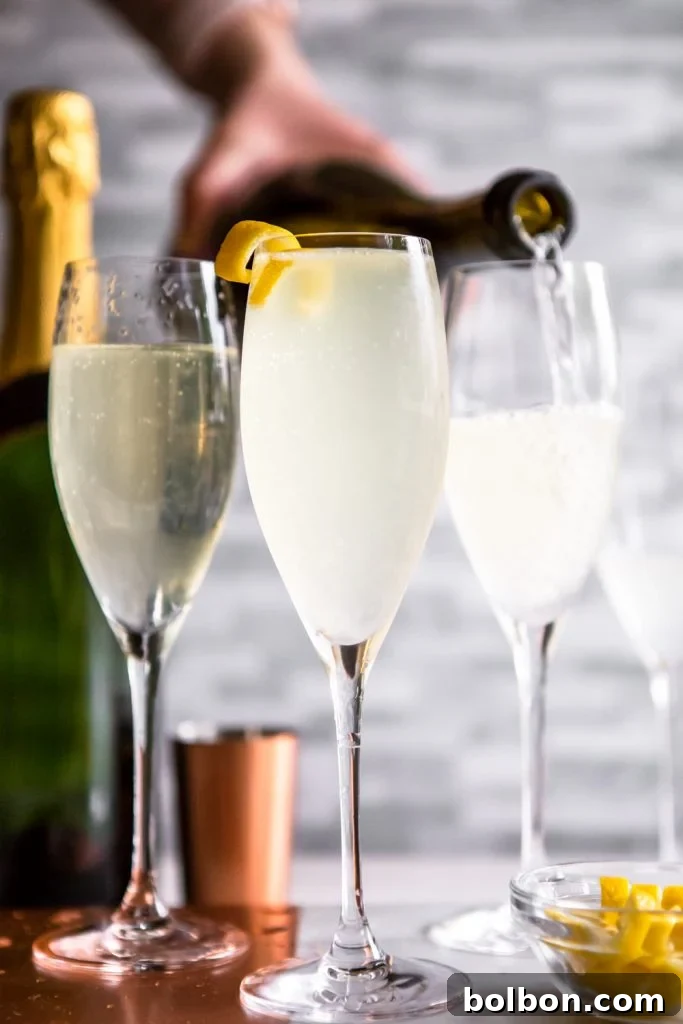
- Pour Carefully: When topping with champagne, pour slowly and gently to preserve as much effervescence as possible.
- Garnish Thoughtfully: A fresh lemon twist, expressed over the drink to release its essential oils, adds a final aromatic flourish.
French 75 Cocktail Recipe
Ingredients
- ▢ 1.5 ounces London Dry Gin
- ▢ .75 ounces lemon juice fresh squeezed
- ▢ .75 ounces simple syrup see notes
- ▢ 3 ounces champagne or any sparkling wine
Instructions
-
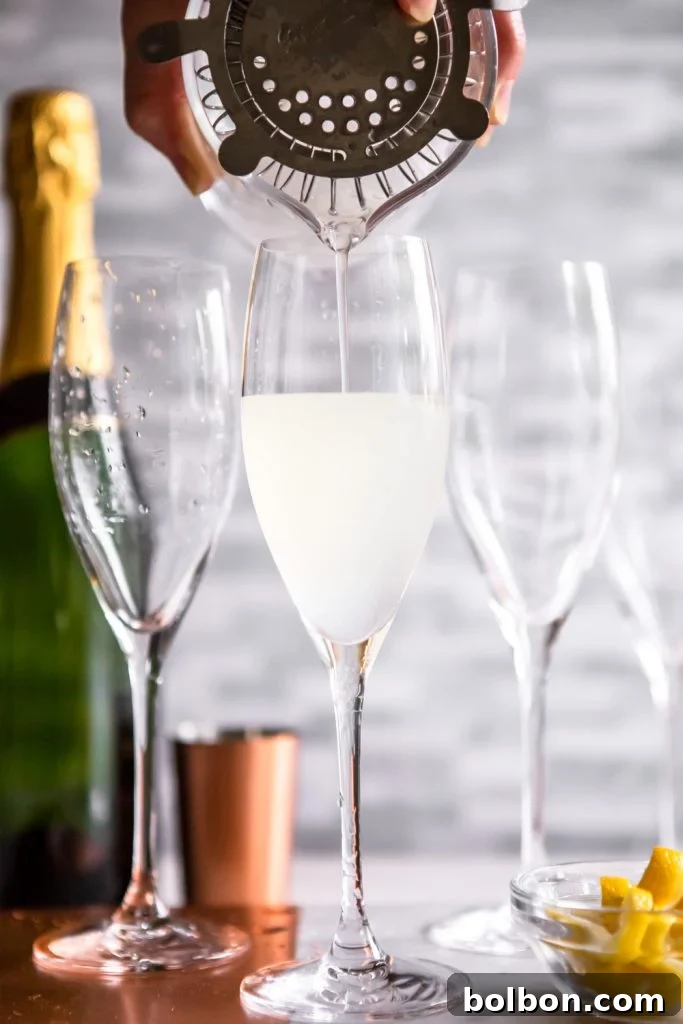
Add gin, lemon juice and simple syrup to a cocktail shaker with ice. Shake vigorously until well chilled.
-
Strain the mixture into a chilled champagne flute. Top carefully with cold champagne or your chosen sparkling wine. Garnish with an elegant twist of lemon peel.
Notes
Nutrition
Nutrition information is automatically calculated, so should only be used as an approximation.
Additional Info
Frequently Asked Questions About the French 75
Is a French 75 a strong cocktail?
Yes, despite its refreshing taste and elegant appearance, the French 75 is considered a relatively strong cocktail. It combines a significant amount of gin (or cognac) with sparkling wine, which can make it go down smoothly but with a noticeable alcoholic kick. Drink responsibly!
What’s the difference between a French 75 and a Mimosa?
While both are sparkling wine cocktails often enjoyed at brunch, they are distinctly different. A Mimosa typically combines equal parts orange juice and sparkling wine, offering a sweeter, fruitier profile. A French 75 uses gin (or cognac), fresh lemon juice, and simple syrup topped with sparkling wine, resulting in a more complex, drier, and spirit-forward beverage.
Can I make a batch of French 75 for a party?
You can certainly prepare the gin, lemon juice, and simple syrup mixture in advance. Combine these three ingredients in a pitcher and chill. When ready to serve, pour the mixture into individual champagne flutes and top with cold sparkling wine. This keeps the bubbles fresh and serving easy.
How long does homemade simple syrup last?
When stored in an airtight container in the refrigerator, homemade simple syrup typically lasts for up to two weeks. Always check for any signs of cloudiness or mold before use.
More Sparkling Cocktails to Explore
If you love the effervescence of the French 75, you might also enjoy exploring other champagne and sparkling wine cocktails:
- Cranberry Mimosas: A festive and colorful twist on the classic mimosa, perfect for holiday brunches.
- Rosé Raspberry Sorbet Mimosas: An incredibly elegant and delicious cocktail featuring rosé sparkling wine and a scoop of raspberry sorbet for a delightful treat.
Conclusion: A Toast to Timeless Elegance
The French 75 stands as a testament to the power of a few simple, high-quality ingredients coming together to create something truly exceptional. Its rich history, balanced flavor profile, and undeniable elegance make it a staple for any cocktail enthusiast. Whether you’re celebrating a milestone, hosting brunch, or simply enjoying a quiet evening, the French 75 is a guaranteed way to add a touch of sparkle to your moments. So, gather your ingredients, follow these steps, and raise a glass to this iconic, effervescent delight!
Disclosure: This post contains affiliate links, which means that if you purchase the items I recommend through the links I provide, I get a small commission at no extra cost to you. For more info, please see my disclosure policy. Thanks for supporting Fox and Briar!