No Knead Cheddar Bread
- Makes 10 Slices
- Prep 10 minutes
- Cook 1 hour
- Total 6 hours 10 minutes
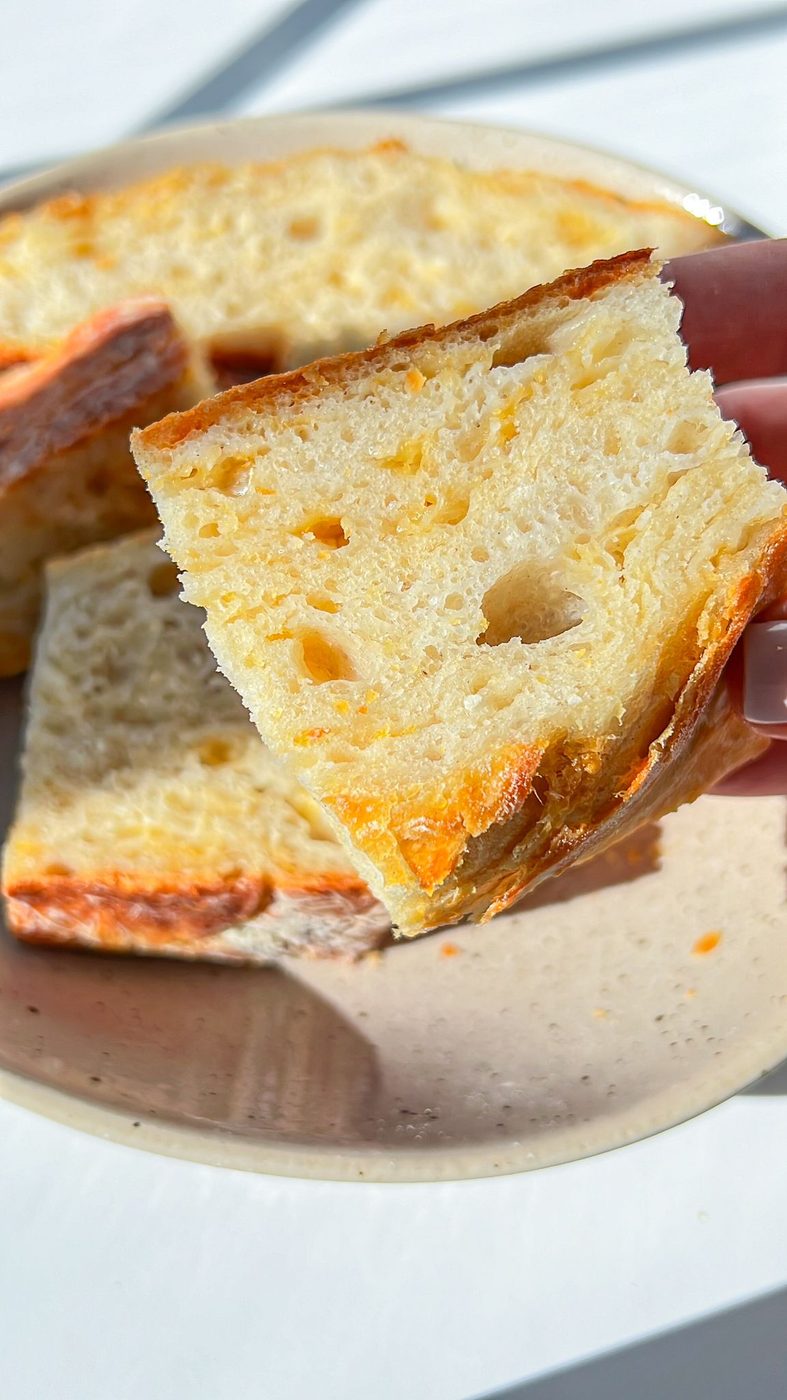
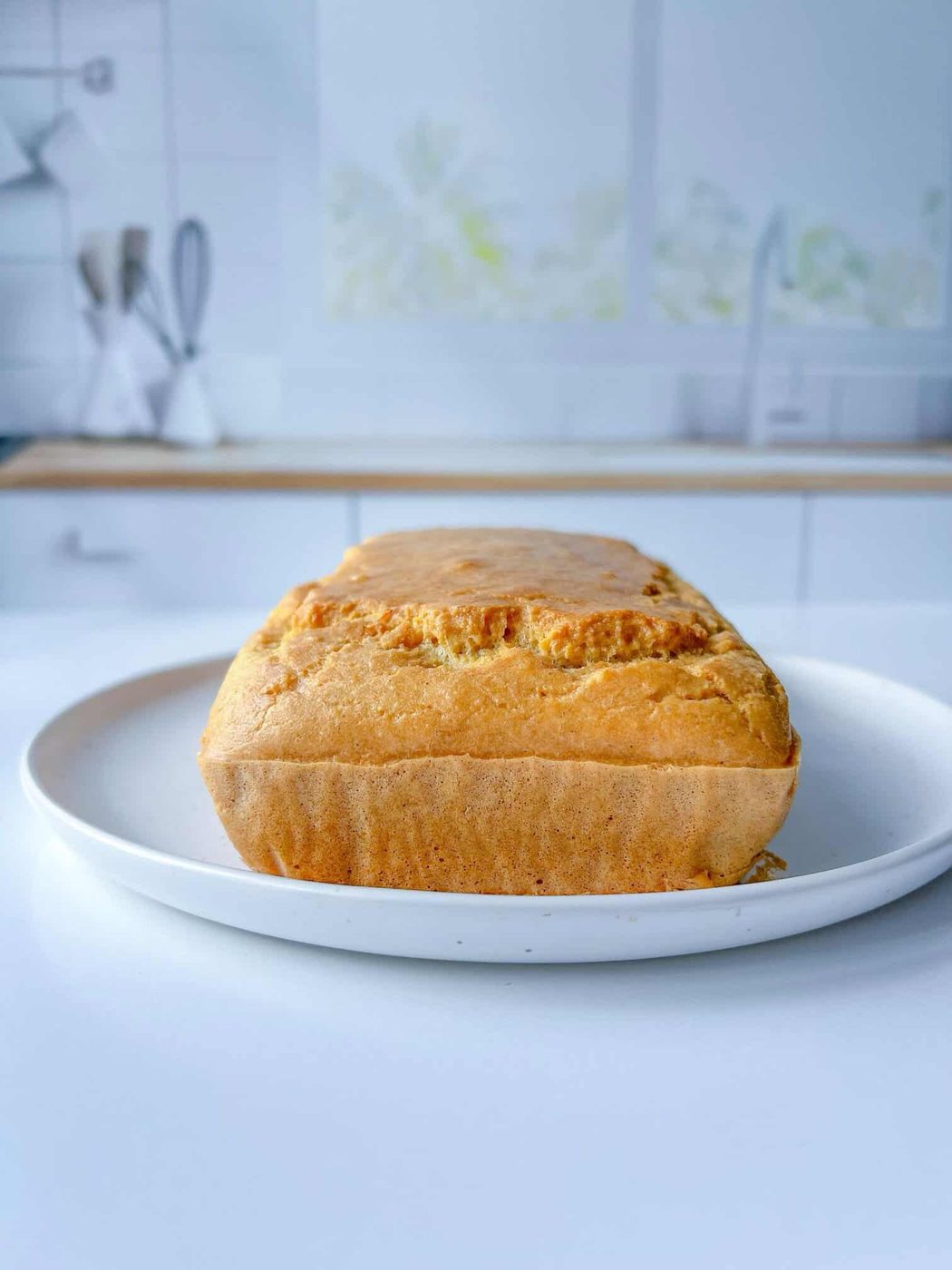
Roses are red violets are blue, this cheesy goodness has us in a chokehold and we know you’ll feel the same way too! The recipe for this straightforward cheesy loaf was inspired by our beloved grandma’s simple No Knead Peasant Bread. If you’ve been searching for the bread recipe to dip into any soup, then look no further as Bolbon has got you covered!
One of our favorite things to do in the kitchen is to take the recipes that our Bapche (grandma) shared with us and add our own twist. It makes us feel connected to her even though she’s no longer with us in person. We hope you enjoy this small piece of history and family tradition just as much as we do.
What stands out
- Taste and Texture: Adding cheddar to our classic no knead bread creates an cheesy version that you’ll want to make every day. The crispy outside and soft inside is to die for.
- Endless Options: Customize your loaf with various herbs, spices, and seeds.
- Prep: The no knead method makes this bread a great option for anyone who is new to bread-making or short on time.
- Gluten-Free and Sourdough Options: Feel free to experiment with different techniques, such as using a sourdough starter or using gluten-free flour.
How To Prepare
Mix Ingredients: In a large bowl combine the floursalt then, add the active dry yeast and warm water and stir until the dough comes together.
Fold in the Cheese: Add insome freshly grated cheddar (or other cheese of choice) and gently fold it into the dough.
Cover and Rest: Cover the bowl with plastic wrap and let the dough rest for a minimum of 5 hours at room temperature. During this time, the dough will rise and develop flavor.
Shape the Dough: Shape the dough (don’t knead it!) into a round loaf on a floured surface.
Bake: Carefully place the dough into an oven-safe dish lined with parchment paper . Cover it with the lid place it in a cold oven, turn the oven on to 45 0°F (230°C) and bake for 30 minutes. After 30 minutes remove the lid and bake for an additional 25-30 minutes until the bread is golden brown.
Cool and Enjoy: Remove the bread from the oven and let it cool (a bit) on a wire rack (or dig into it hot).
Kitchen tip
Make sure the yeast is not expired. You can always add the yeast to warm water and let it foam up. When it foams up, it’s active and ready to be used. If it doesn’t foam up, start this step again.
Substitutions and Variations
This Bulgarian No Knead Cheddar Bread” known as “Selski Hliab,” has deep-rooted traditions. But with a bit of creativity, you can make it your own.
- Flour Options: You can use whole wheat flour or a mixture of whole wheat and all-purpose flour for a heartier loaf.
- Add Herbs and Spices: You can add herbs like rosemary, thyme, or spices such as garlic powder or onion powder to the dough.
- Seeds and Nuts: Sprinkle sesame seeds, poppy seeds, or chopped nuts (like walnuts or sunflower seeds) on top of the bread before baking for added texture and flavor.
- Shape Variations: Experiment with different shapes – you could make rolls, baguettes, or even stuffed bread with your favorite fillings.
- Gluten-Free Option: Use a gluten-free flour blend and ensure your yeast is gluten-free if you follow a gluten-free diet.
- Use Sourdough Starter: Use one cup of sourdough starter instead of the yeast. Be sure to let it rest and ferment for at least 6 hours.
Serve it with
Our No Knead Cheddar Bread pairs wonderfully with a variety of dishes, including soups and stews, cheese and butter boards, and more. Some of our favorite soups to enjoy with this bread:
- Pastina Soup
- Greek Lemon Soup
- The Best Lentil Soup
- Hidden Veggie Orzo Soup
- Healthy Cream of Broccoli Soup
- Healthiest Cream of Hidden Veggie Soup
- Hidden Veggie Meatball Soup
- Chicken Noodle Soup
- Viral Butter Board With Goat Cheese
- Holiday Butter Board
- Holiday Charcuterie Board
- Holiday Cheese Board
Other No Knead Recipes
If you like this no knead bread, try some of our others:
- No-Knead Gluten-Free Bread
- Our Viral No-Knead Peasant Bread
- Grandma’s No-Knead Olive Bread
- No-Knead Foccacia
Questions
Where can we find the baking dish that you use?
Why is it essential for the water temperature to be between 100 and 110 degrees?
Maintaining this water temperature range is crucial because it ensures that the yeast activates properly. Water that’s too hot or too cold can hinder yeast activation.
How can we measure the consistency of the dough when traditional measurements aren’t used?
In this traditional recipe, we encourage you to add water gradually until you achieve a thick and sticky dough, following the “na oko” or “by eye” method.
What should we do if we're unsure whether our yeast is still active?
To test the yeast’s activity, add it to warm water. If it doesn’t foam up, you’ll need to start with new yeast. Foaming indicates that the yeast is active and is ready to be added to the flour and salt.
What do we do if the dough turns out too wet or too dry?
If the dough is too wet, you can sprinkle in a bit more flour to adjust. Conversely, if it’s too dry, add warm water a little at a time until you have a tacky dough.
Can we use any baking dish for this bread?
If we have a Dutch oven, do we need to preheat it?
Yes, due to the material you will have to preheat the Dutch oven in a 450°F (230°C) oven with its lid on, shape the dough, place it inside, bake for 30 minutes with the lid on, then remove the lid and bake for an additional 15-20 minutes until golden brown.
Can we use a different type of yeast other than active dry yeast?
You certainly can. Although this recipe specifically calls for active dry yeast you can also try instant yeast as well.
Why is it important to scoop and level off the flour before adding it to the bowl?
This method ensures more precise measurements, helping you achieve the right consistency for the dough.
Can we use aluminum foil instead of a dish lid for baking?
While we have not explicitly tested it, aluminum foil should work as a substitute for a dish lid.
Can we use whole-wheat flour instead of all-purpose flour?
Yes, you can definitely use whole-wheat flour.
Can we make a gluten-free version of this recipe?
Yes, you can use a 1-1 gluten-free flour for this recipe, or you can make our strong a No-Knead Gluten-Free Bread.
How long should the dough rest?
The dough should rest for a minimum of 5 hours, but it’s common to leave it overnight and bake it the following morning. Let the dough rest at room temperature and away from drafts.
How does temperature affect the dough’s rising time?
In hotter climates, the dough may rise much faster, so we would advise placing it in a cooler room or limiting the rise to a maximum of 2 to 3 hours to prevent over-expansion. Once it doubles or triples in size, it should be baked immediately.
Can we use this recipe in higher altitudes?
The recipe hasn’t been tested at higher altitudes, so adjustments may be necessary.
What should the consistency of the dough be like?
The dough should not be watery or dry; it should have a thick and sticky consistency.
Ingredients
Makes 10 Slices
- 3 cups all purpose flour, plus more for dusting the counter and top of the bread
- 1 teaspoon salt
- ½ teaspoon active dry yeast, check the expiration; see notes below
- 1 ¾ cups warm water, between 100 and 110 degrees Fahrenheit (37 to 43 degrees Celsius)
- 1 ½ cups cheddar cheese, grated; you could also use manchego, parmesan, or other cheese of choice
- additional flour for dusting the counter plus the top of the bread, no kneading, just dust well, lightly shape and transfer into baking dish
Equipment
- Corning Ware Dish
- Measuring Cups + Spoons
- Rotary Grater
Method
- In a large bowl, combine the flour, salt, and yeast. Mix with a whisk, wooden spoon, or with clean hands. Add the water and mix with a spatula until you have a sticky dough. Fold in the grated cheese.
- Note: The water must be between 100 and 110 degrees Fahrenheit (37 to 43 degrees Celsius). If the water is too hot or too cold the yeast will not activate.
- Cover the bowl with a clean kitchen towel (or plastic wrap) and let rest at room temperature for at least 5 hours or overnight. Place the bowl of dough away from drafty areas, such as in the microwave, cupboard, or in a cold oven.
- After the dough has tripled in size, uncover it, and flour the counter. Pour the dough out onto the counter and generously sprinkle the top with flour.
- You do not need to KNEAD the dough. You can simply move it around until you have a really nice and soft dough that is no longer sticky and is oval in shape. If the loaf sticks to your hands or the counter, sprinkle on a little more flour.
- Place the loaf into any oven-safe dish lined with parchment paper. Place a lid on the dish, and place the dish in a cold oven (an oven that is NOT preheated).
- Turn the oven on to 450F (230C) once the bread is inside. Bake the bread with the lid on the dish for 30 minutes. After 30 minutes, carefully remove the hot lid from the dish and bake the bread for another 25 to 30 minutes. The bake time will depend on your oven, so keep an eye on it. Total bake time will be about 1 hour from the moment you place the bread into the cold oven.
- The bread is done once it’s light and golden all over. Let it cool for 5 to 10 minutes and dig in! Enjoy.
- To store leftover bread, let the bread cool completely, wrap it up in plastic wrap, beeswax wrap, or a clean kitchen towel, and store the bread on the counter. This bread is always best served warm the same day.