Baguette
- Makes 2 baguettes
- Prep 10 minutes
- Cook 45 minutes
- Total 12 hours 55 minutes
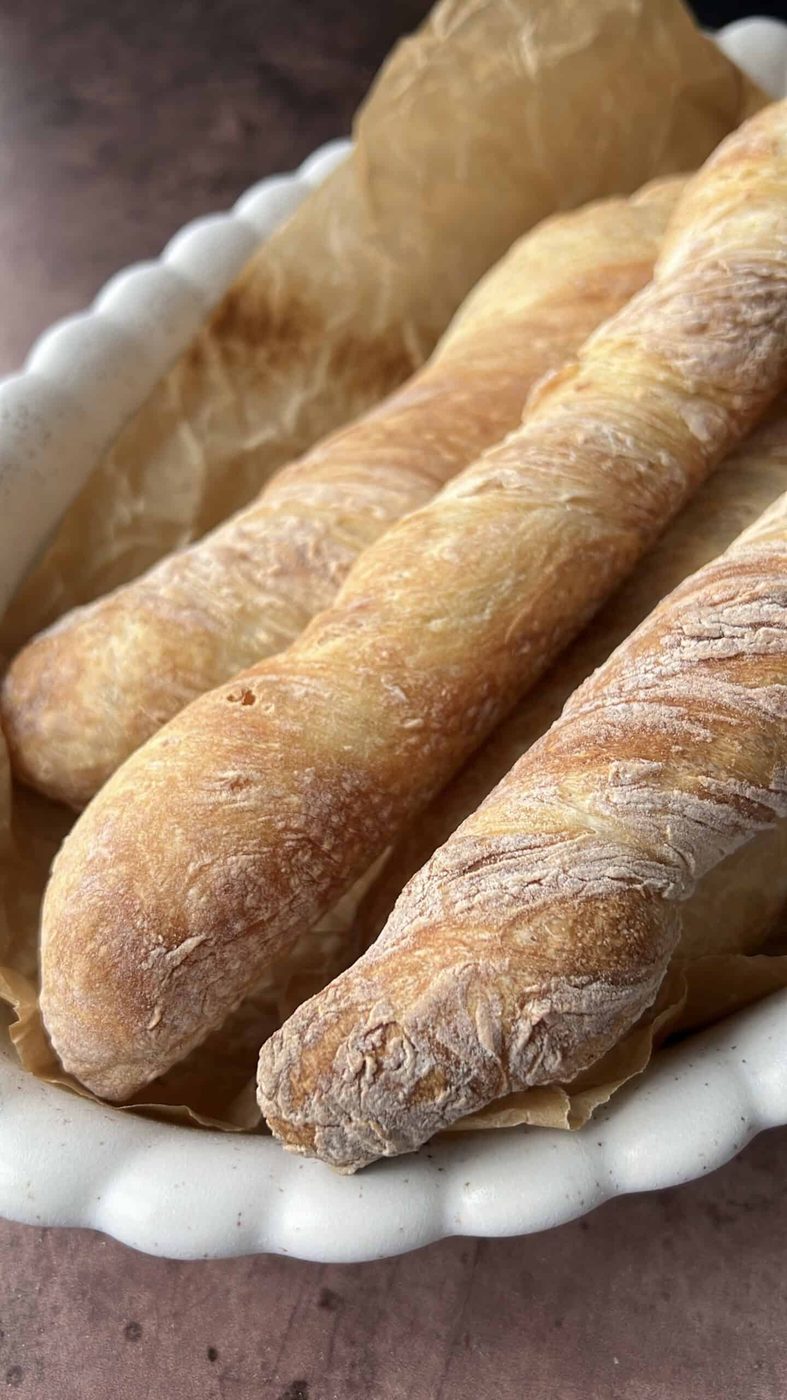
Bring a little slice of France to your kitchen with our homemade crusty NO KNEAD four ingredient Baguette. This iconic loaf may come from simple ingredients, but, when done right, its complex flavors and textures are the talk of any table. This versatile bread is the base for small bites like charcuterie boards and bruschetta, and your family and friends will feel extra special knowing you baked it with love. Even if you don’t consider yourself a baker, our Baguette is so straightforward to follow, you’ll never go back to store bought bread!
What stands out
Crispy golden on the outside, warm and chewy on the inside, our no knead Baguette is the ultimate comfort carb! We know, the words ‘homemade baguette’ can be intimidating if you’re not a baker, but we promise you got this. Our four-ingredient, no-knead Baguette is simple to follow, and full of tips and tricks to cut out the guesswork and get you those, airy results. Let’s go!
How to Prepare
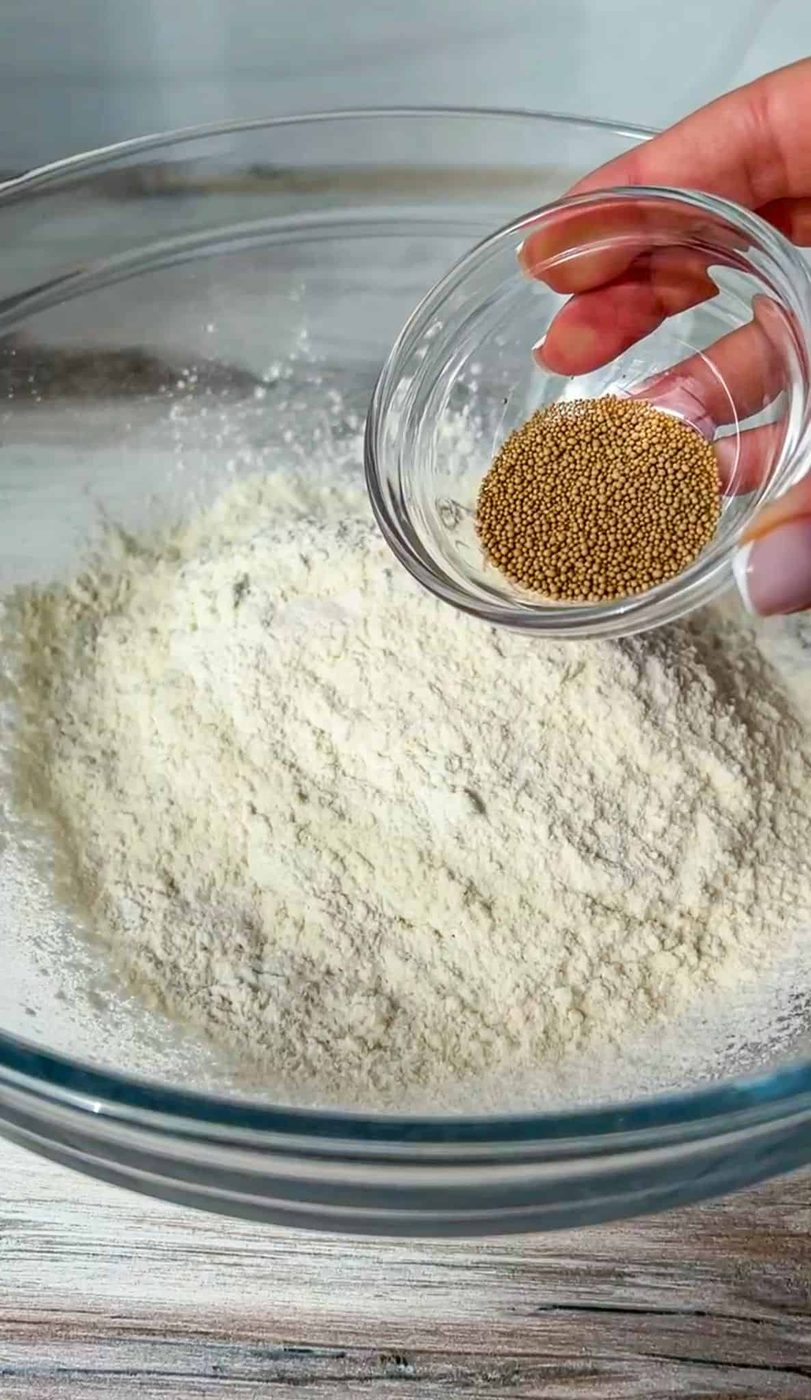
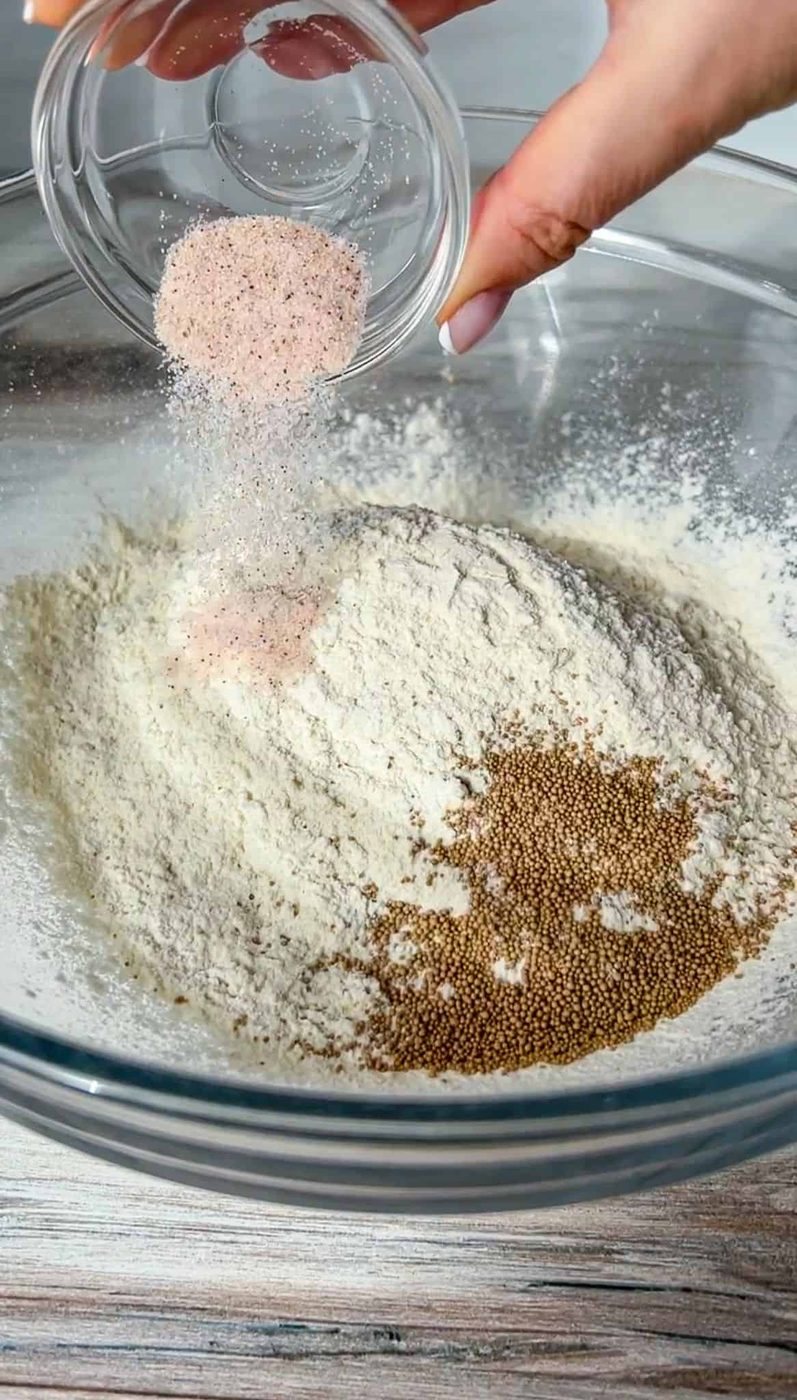
In a large bowl, combine the flour salt and yeast. Mix with a whisk, wooden spoon, or with clean hands.
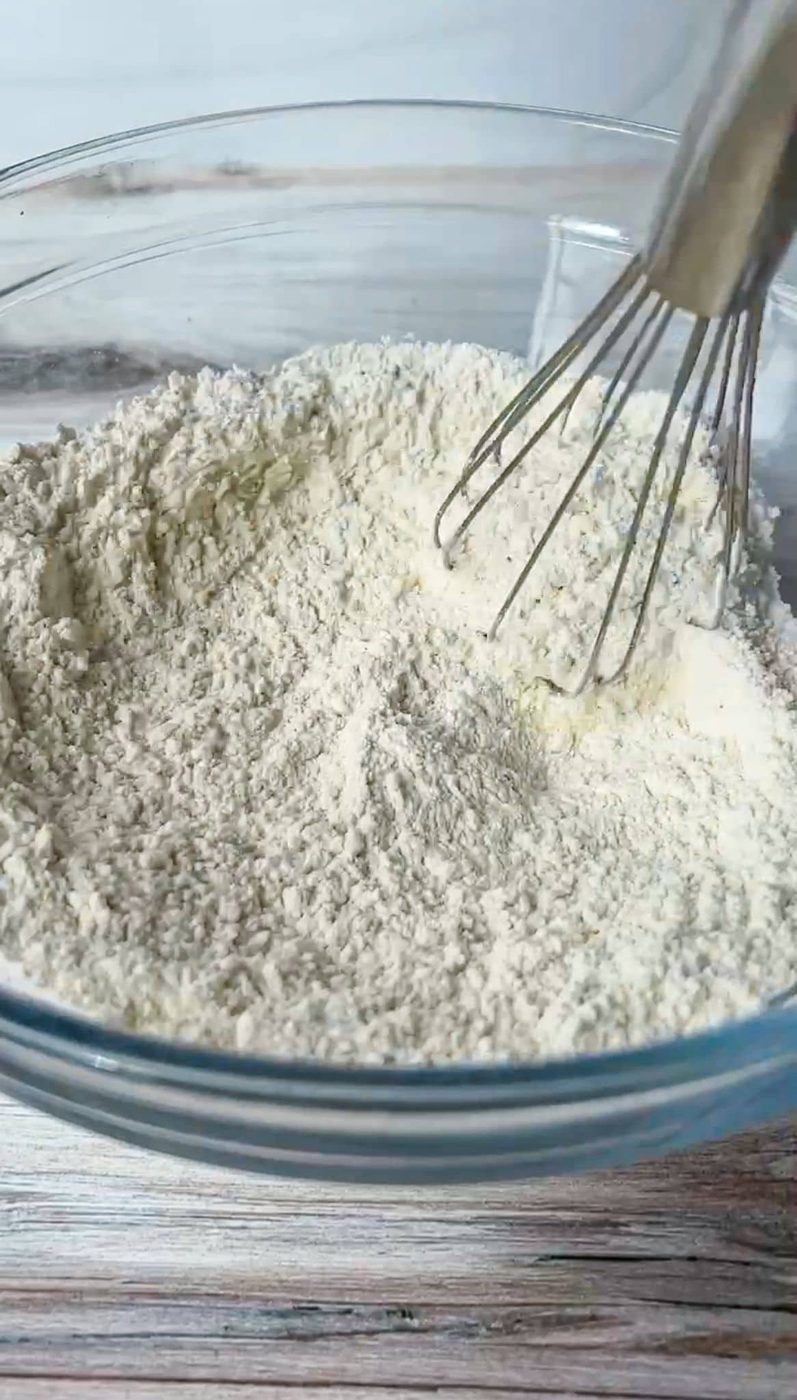
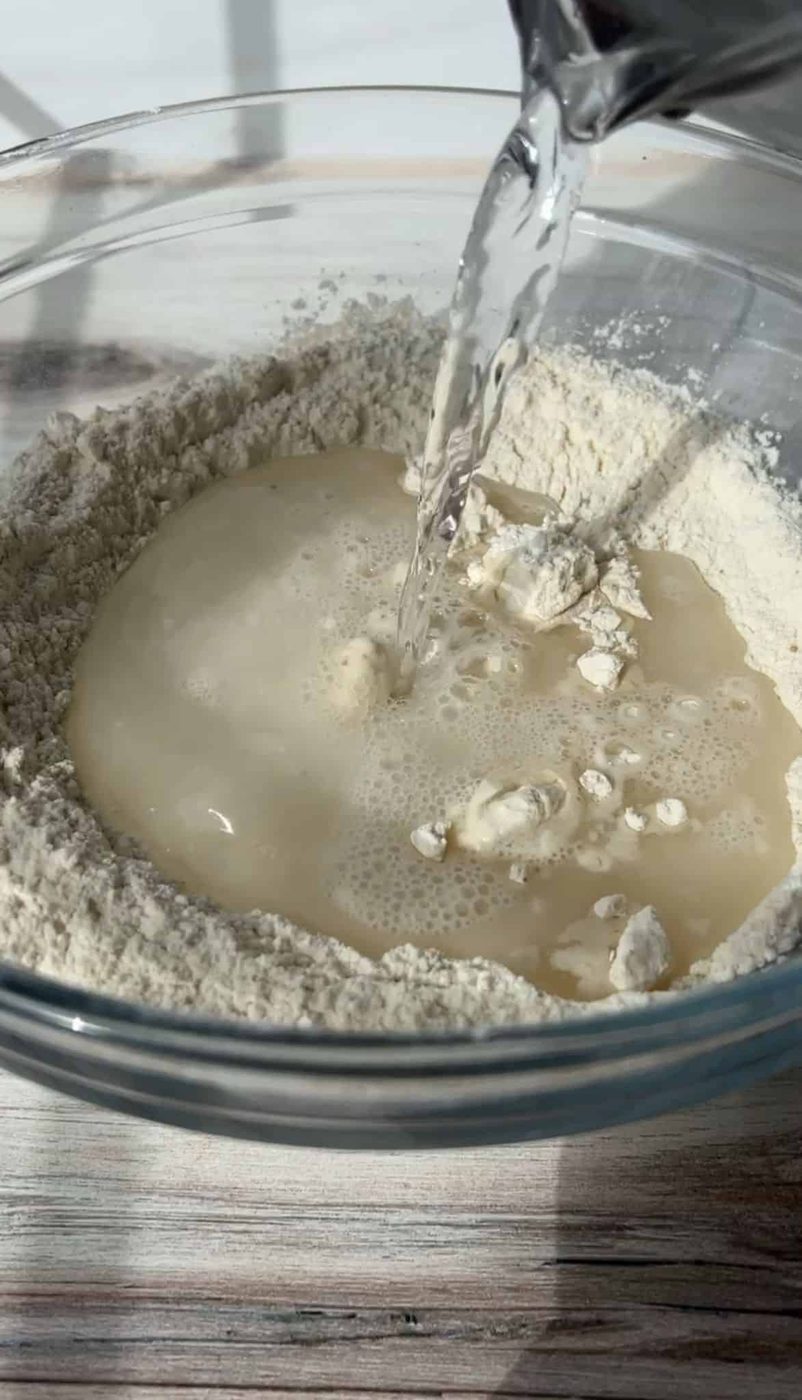
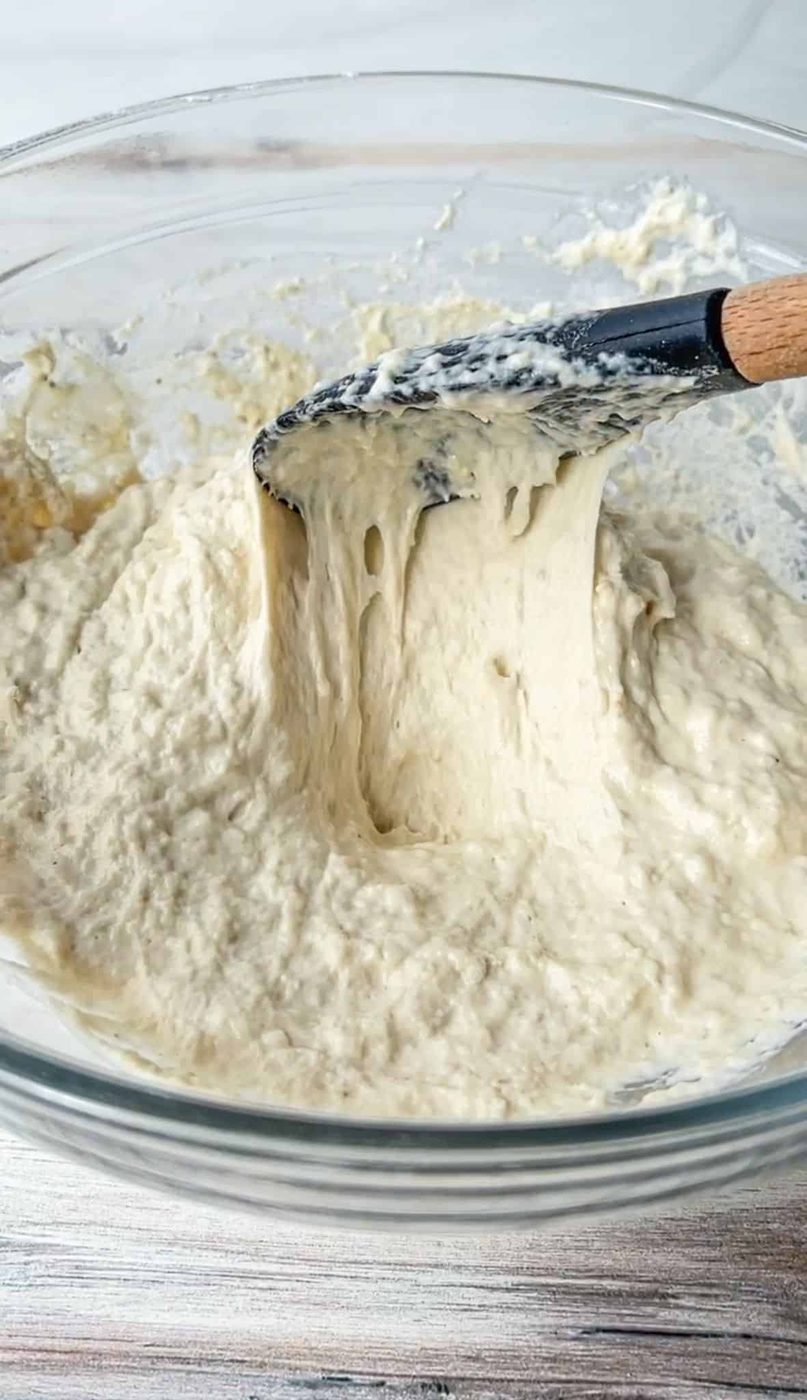
Add the water and mix with a spatula until you have a sticky dough.
Note: The water must be between 100 and 110 degrees Fahrenheit (37 to 43 degrees Celsius). If the water is too hot or too cold the yeast will not activate.
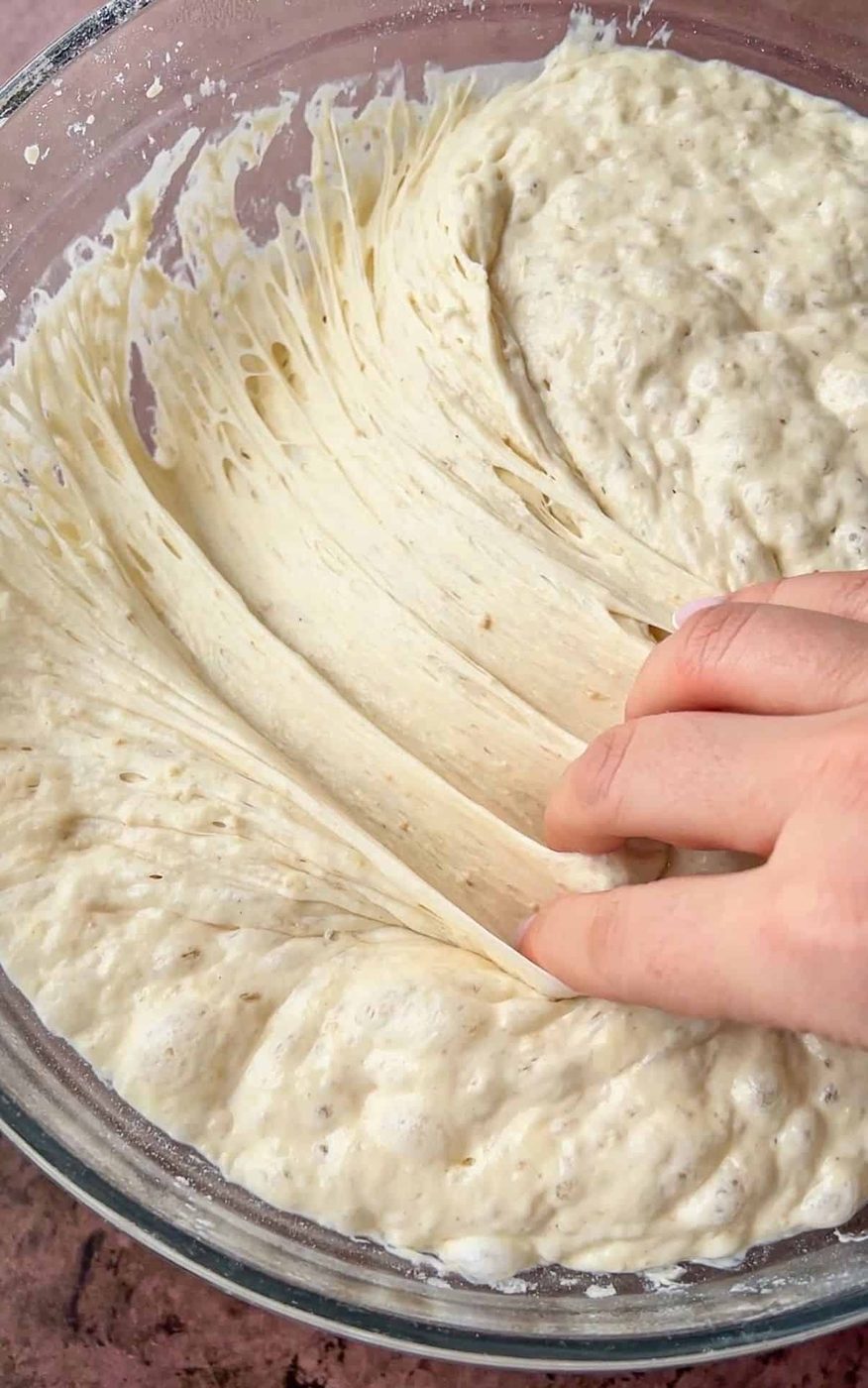
Cover the bowl with plastic wrap or a clean kitchen towel and let rest at room temperature for at least 5 hours to overnight. Place the bowl of dough away from drafty areas, such as in the microwave, cupboard, or in a cold oven.
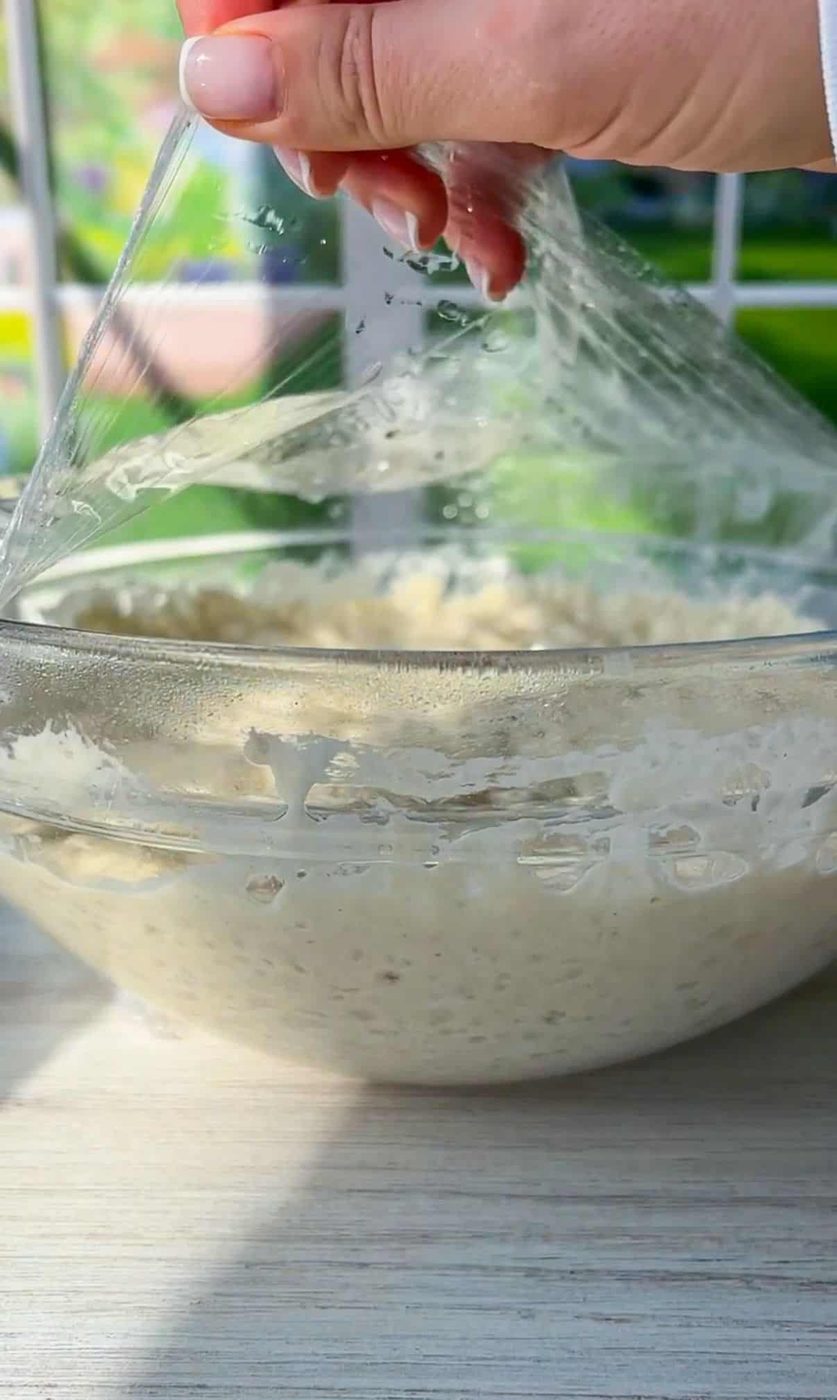
After the dough has tripled in size, preheat the oven to 450F (230C). Next, remove the plastic wrap and flour the counter. Pour the dough out onto the counter and generously sprinkle the top with flour.
◐ Divide the dough in half (for two large baguettes) or in four if you want to bake 4 smaller ones.
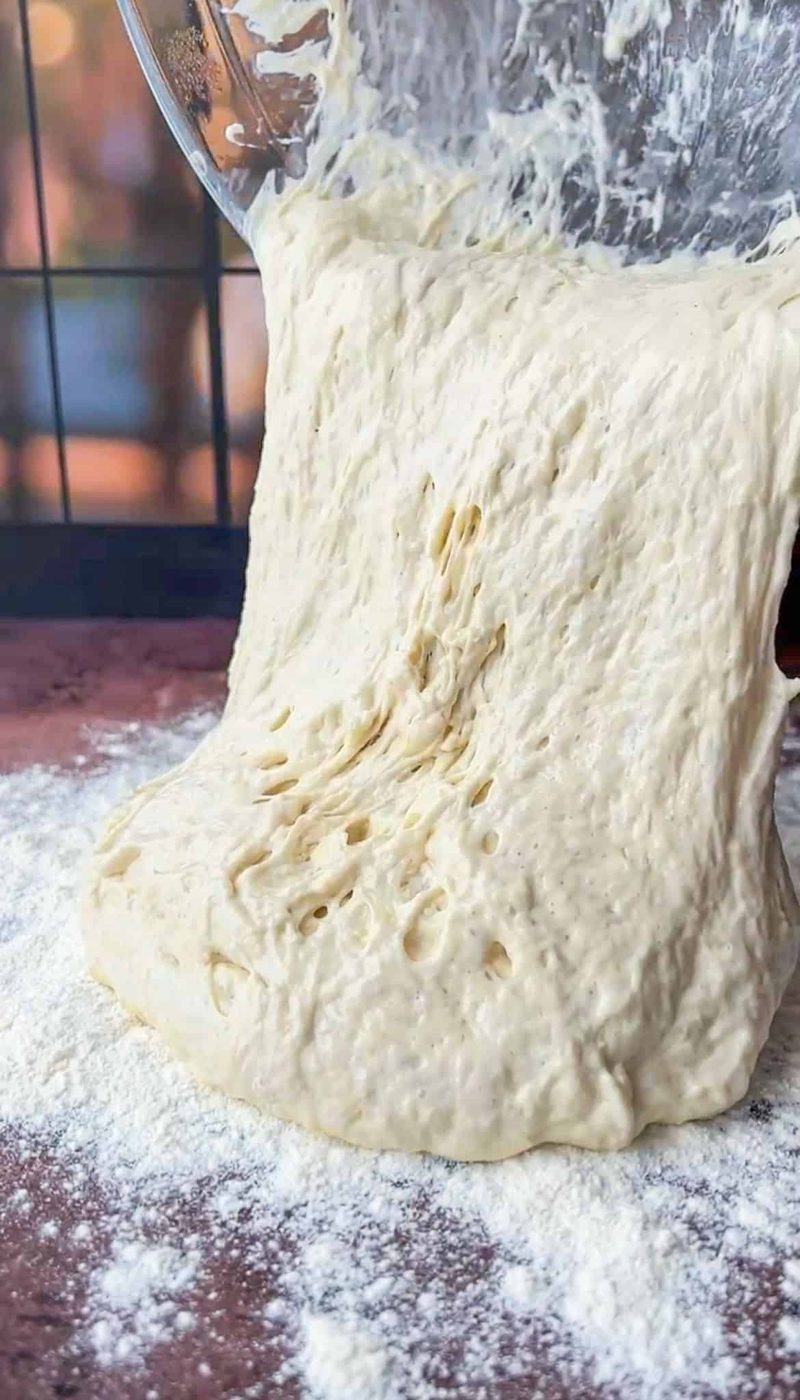
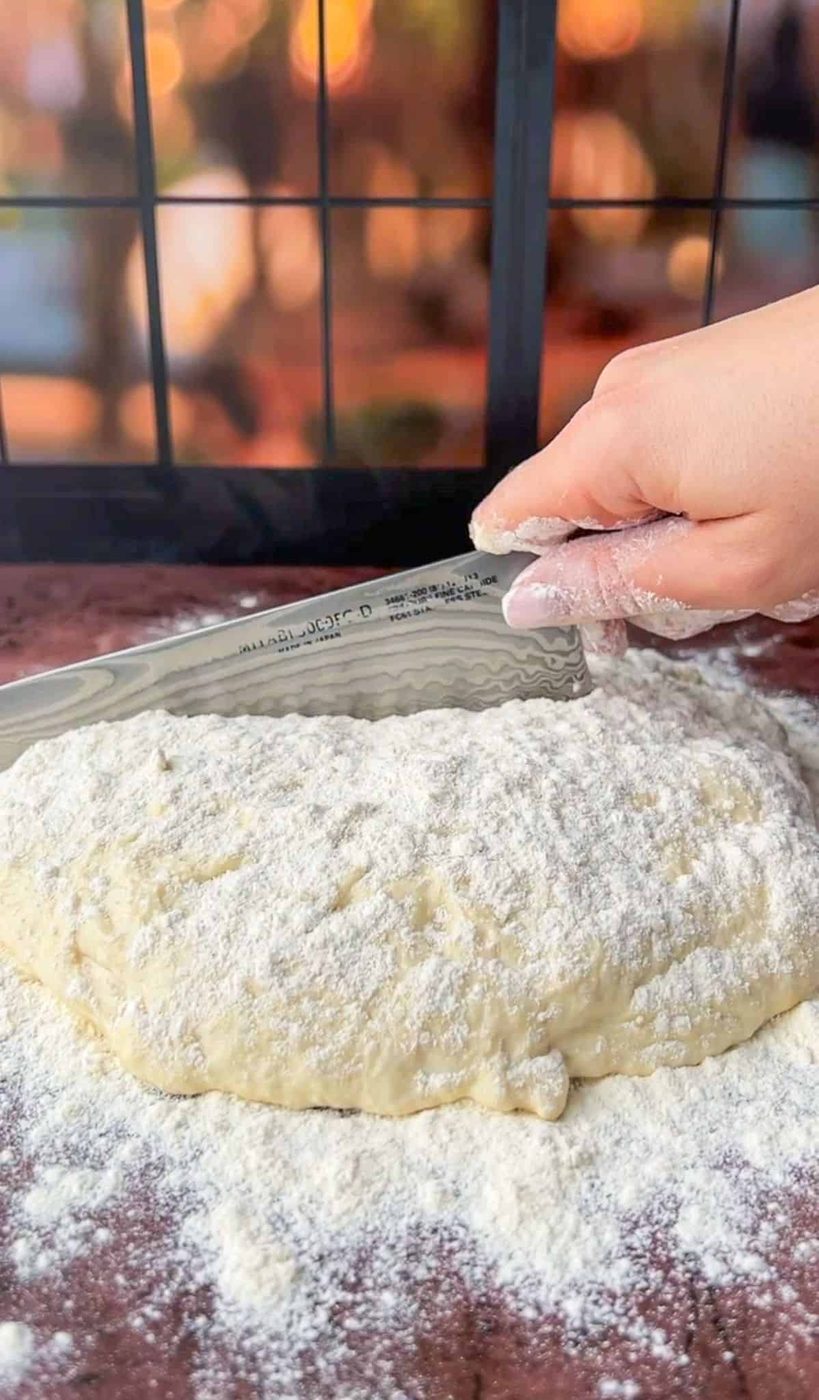
Next, shape each dough ball into a long, even cylinder, then using both hands, gently twist one end of the rope in the opposite direction of the other.
Note: You do NOT need to knead the dough. You can move it around until its’s no longer sticky and shape it. If it sticks to your hands or the counter, sprinkle on a little more flour at a time.
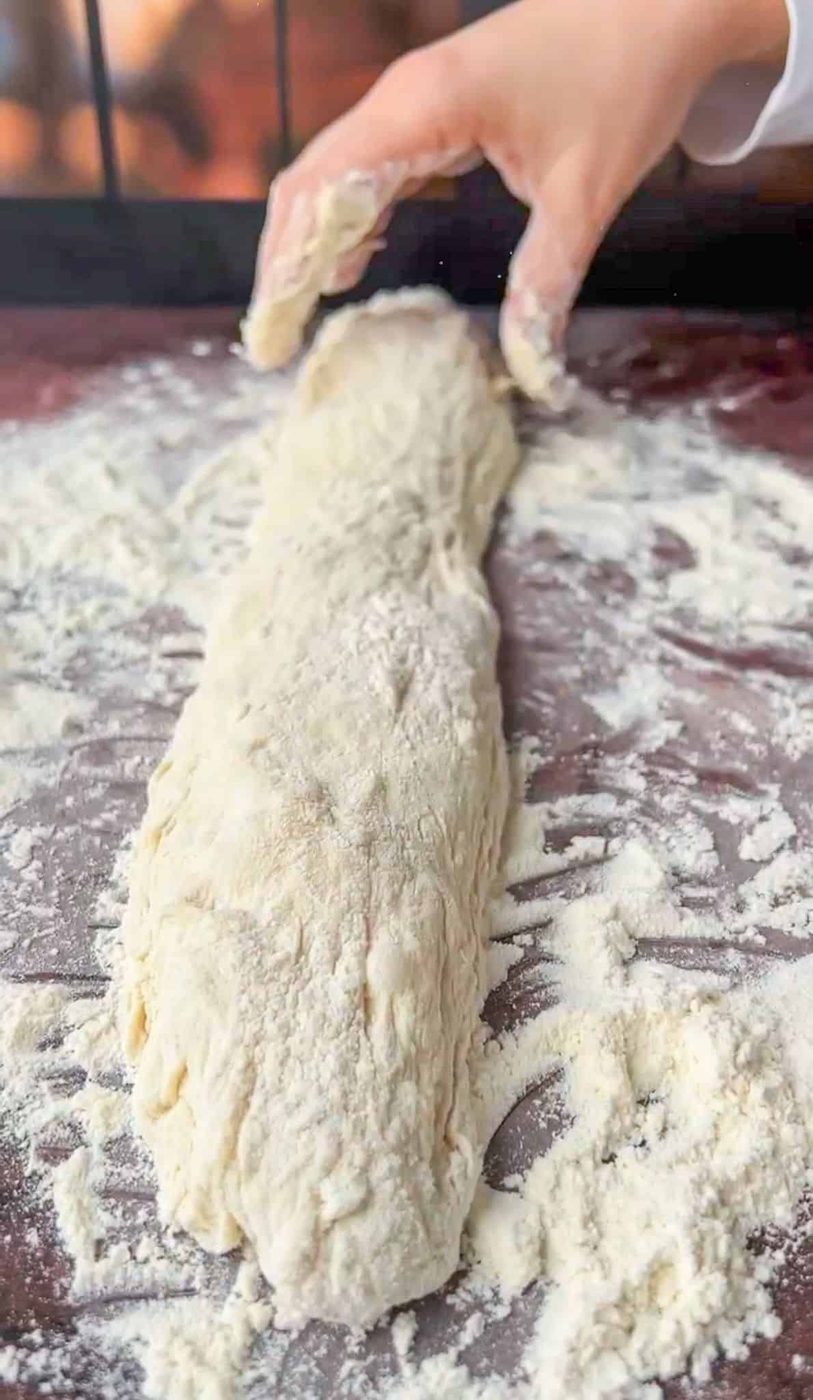
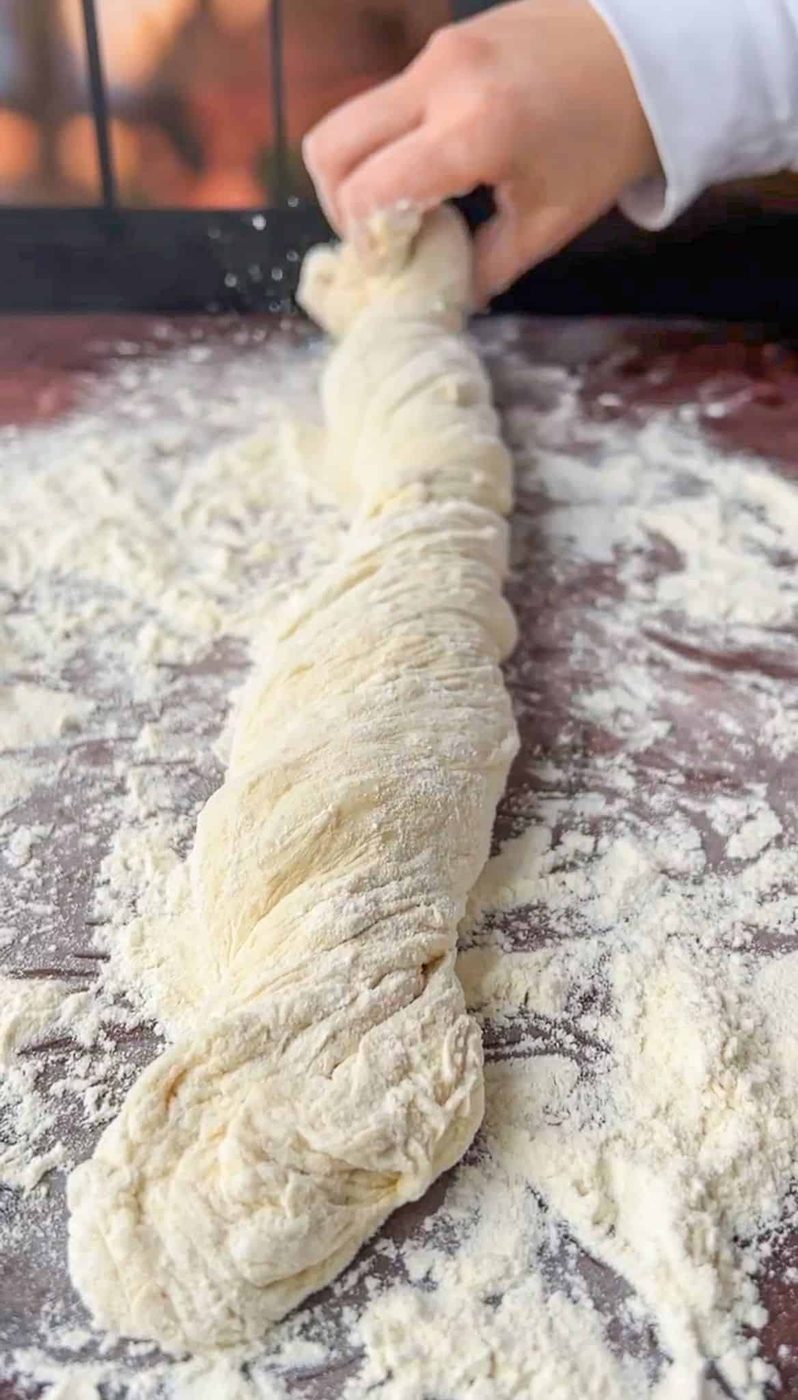
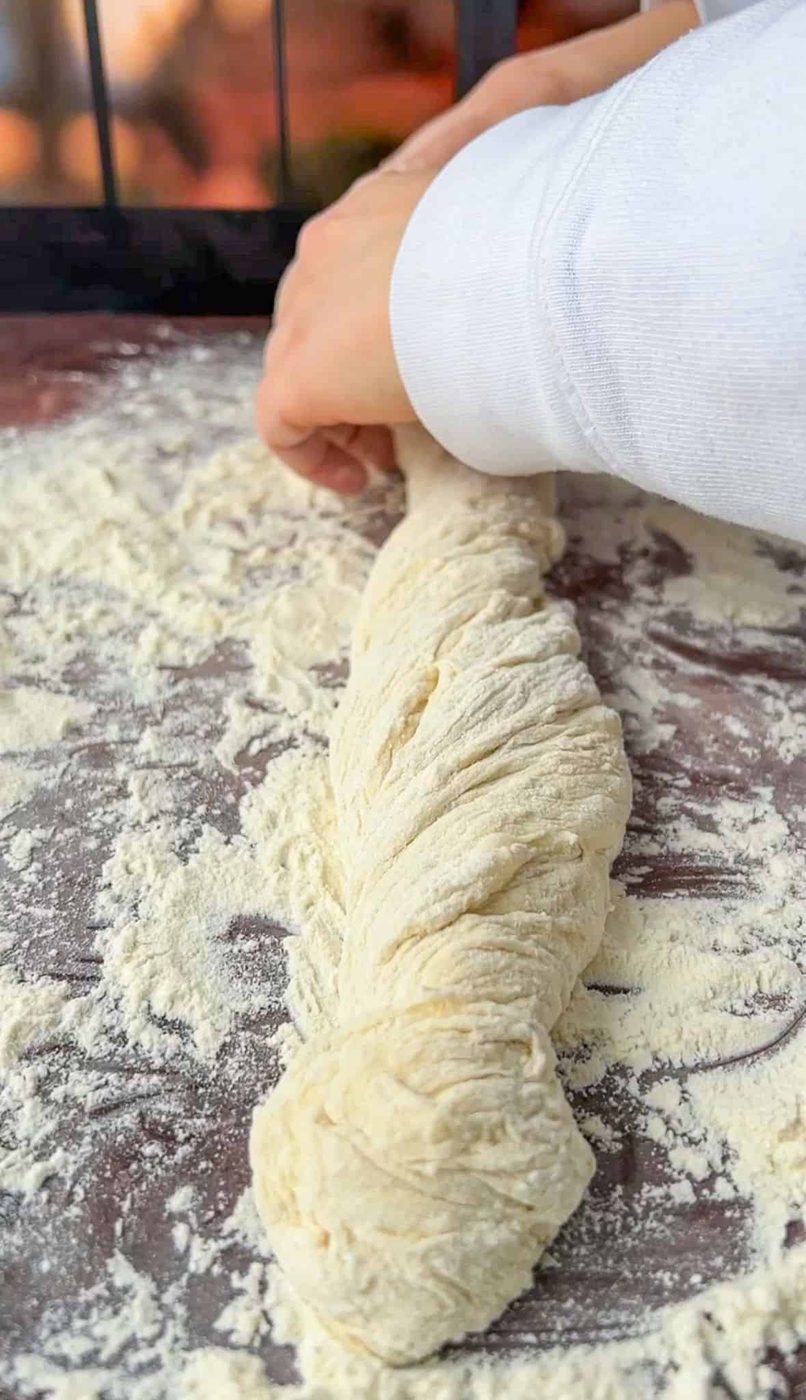
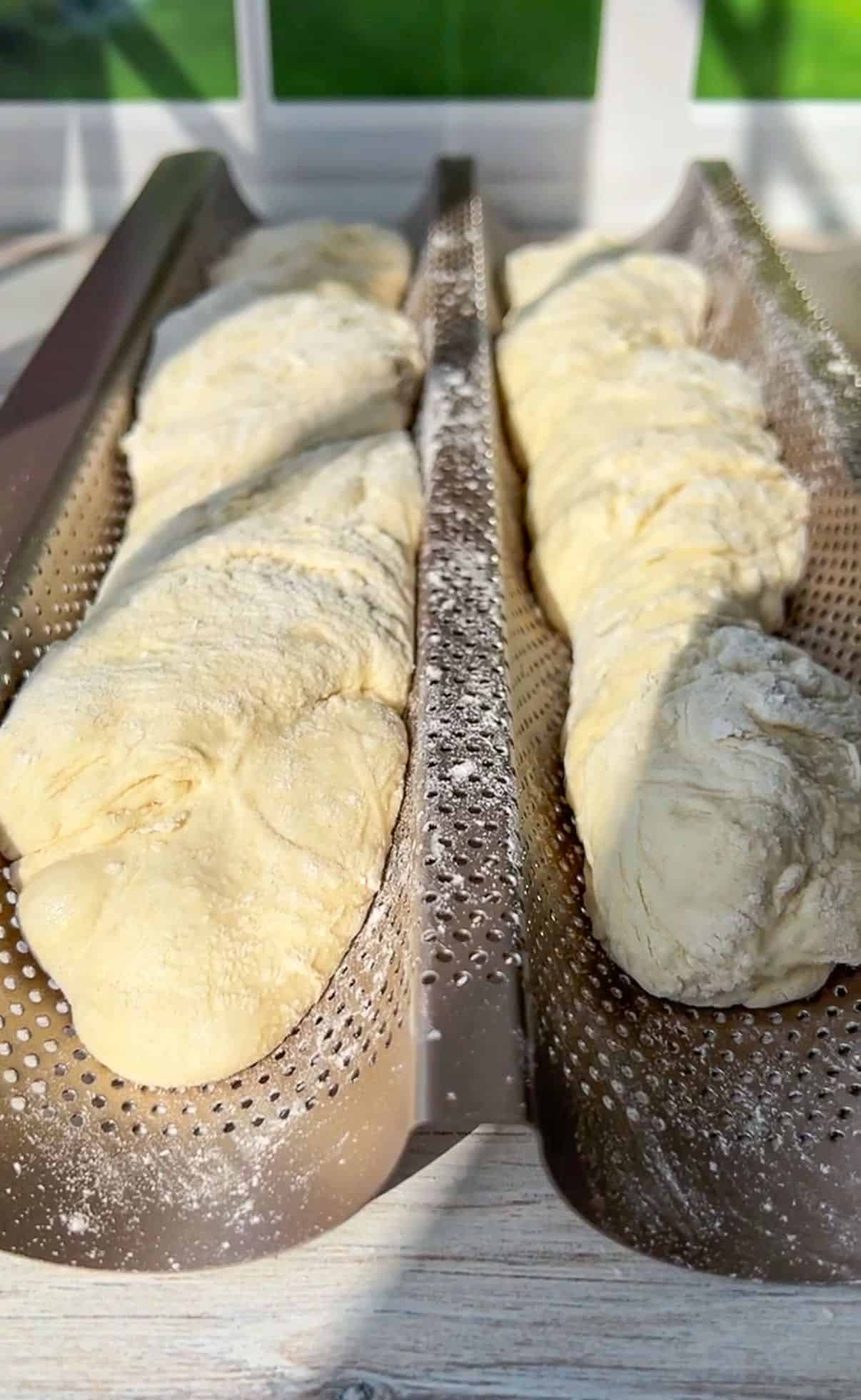
Next, place the twisted ropes into a baguette dish or a regular baking sheet lined with parchment paper.
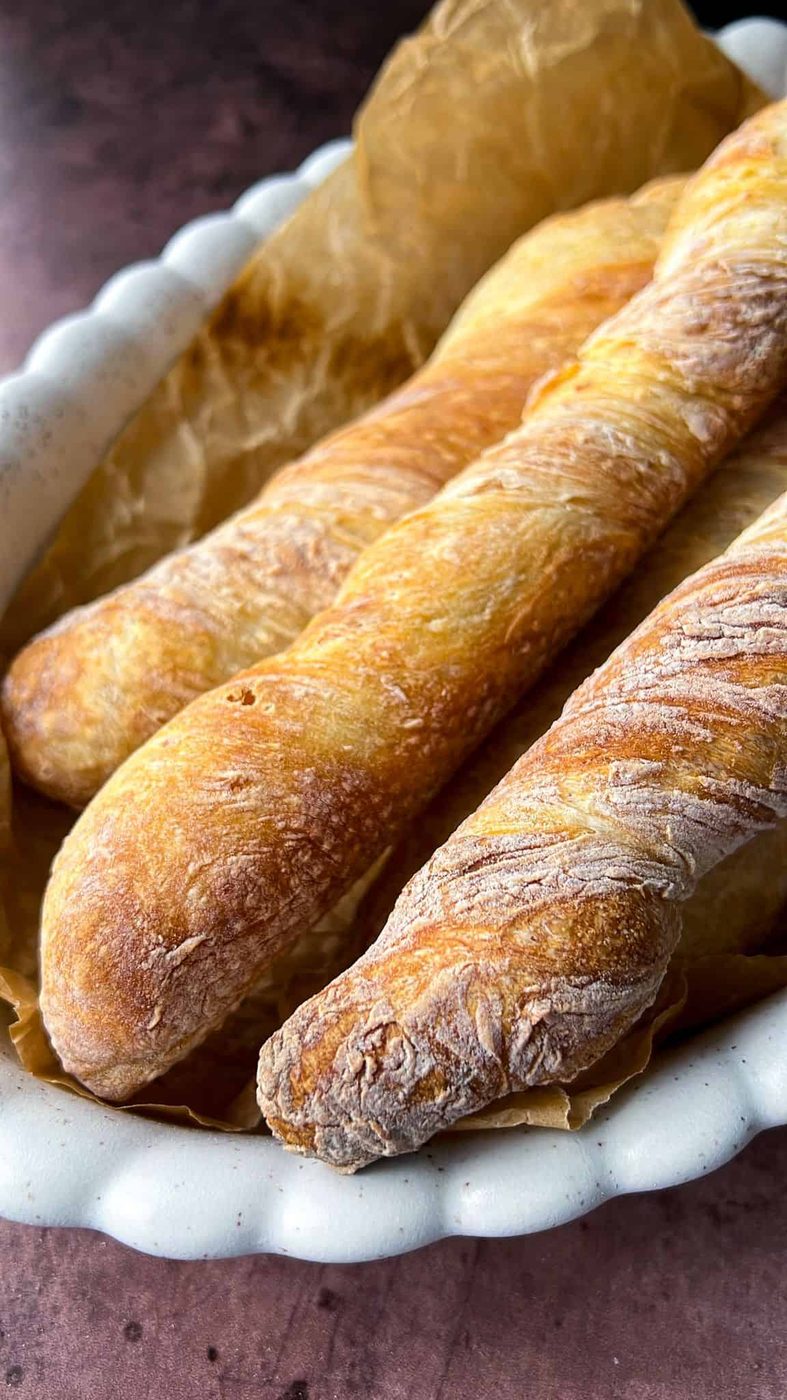
Place the baguettes in the 450F (230C) preheated oven and throw in a large ice cube in the bottom of the oven. Close the door immediately and bake the baguettes until golden.
The bake time will depend on your oven, so keep an eye on it. Total bake time will be about 40-45 minutes or until golden on top if you’re making two large baguettes.
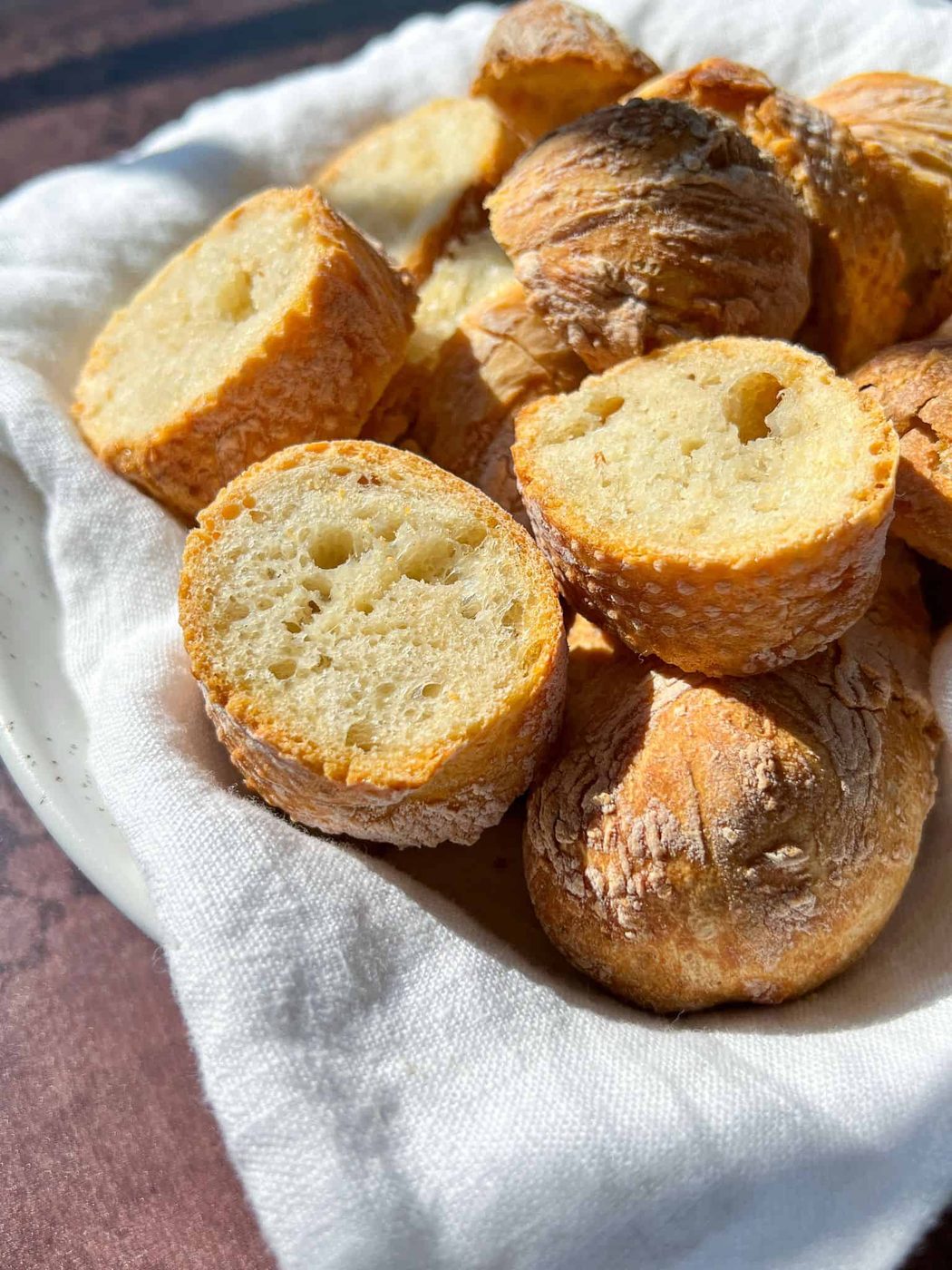
Note: The ice cube(s) will create steam in the oven creating a soft and fluffy inside while the outside gets nice and crispy! Feel free to place a few small ice cubes if you don’t have a large one.
⭐ When the baguettes are golden on top, take them out of the oven and let them rest for 5-10 minutes. While still crispy on the inside, break them apart and enjoy!
Kitchen tip
The ice cube(s) will create steam in the oven creating a soft and fluffy inside while the outside gets nice and crispy! Feel free to place a few small ice cubes if you don’t have a large one.
Baguette Variations and Substitutions
- In a pinch, you can substitute all-purpose flour for bread flour. Just keep in mind that bread flour contains more protein, or gluten, and gives the baguette its signature chewy texture. Look for an all-purpose flour that is high in protein, like King Arthur unbleached flour, if you can’t find bread flour.
- This recipe calls for active dry yeast, but instant yeast will work here, too. Just keep in mind that instant yeast will rise more quickly. You’ll still need to let the dough rest for at least 5 hours.
- If you’re on a gluten-free diet, you may substitute the bread flour for a 1:1 gluten-free flour.
- This recipe will make two large loaves or four small ones. divvy up the dough into four pieces instead of two, shape, and bake!
- No baguette dish? No worries! You can still make homemade baguettes on a regular baking sheet.
Baguette Tips for Success
From activating the yeast to adjusting the rising time -and even popping ice cubes in the oven- these foolproof tips for success will help you bake the tastiest baguettes.
- Activating the yeast: The water must be between 100 and 110 degrees Fahrenheit (37 to 43 degrees Celsius). If the water is too hot or too cold the yeast will not activate.
- Ice cube in the oven: The ice cube will create steam in the oven creating a soft and fluffy inside while the outside gets nice and crispy! Feel free to place a few small ice cubes if you don’t have a large one.
- No Kneading: You do NOT need to knead the dough. You can move it around until its’s no longer sticky and shape it. If it sticks to your hands or the counter, sprinkle on a little more flour at a time.
- Rising time: The dough should rest in a cool area for at least 5 hours. In warmer climates, the dough may rise much faster. Place your dough in a cooler room or limit the rise to a maximum of 2 to 3 hours to prevent over-expansion. Once it doubles or triples in size, it should be baked immediately.
Serve it with
- Slice your baugettes into bite sized pieces and place on this Simple Charcuterie Board.
- Make our Italian Bruschetta for the sliced baguette topping.
- Toasted baguettes add a comforting touch to this warm and creamy Butternut Squash Soup.
- Slice and slather your baguettes with a garlic and herb compound butter, then toast and serve alongside pasta dishes like Pasta LimoneLasagna Soup or Homemade Spaghettios.
- Turn your day-old bread into croutons or french toast so nothing goes to waste.
Questions
Why does the water need to be warm?
The water must be between 100 to 110 degrees Fahrenheit to ensure that the yeast activates properly.
How can we test the yeast to make sure it’s still active?
To test the yeast, add it to the warm water before adding it in the bowl. If it doesn’t foam up, you’ll need to start with new yeast. Foaming indicates that the yeast is still active and ready to be added to your recipe.
Can i make a gluten-free version of this recipe?
We have not tested this recipe with a gluten-free flour yet, but please let us know if you do.
How long should the dough rest?
The dough should rest for a minimum of 5 hours, but it’s common to leave it overnight and bake the next morning. Just make sure it rests at room temperature away from drafts, such as inside a cold oven or microwave.
Can we use all-purpose flour instead of bread flour?
All-purpose flour will work in a pinch, but keep in mind the bread might not have the same chewy texture since bread flour typically has more gluten.
Can we use another type of yeast besides active Dry Yeast?
Yes, you can substitute with the same amount of instant yeast. Just keep in mind that instant yeast will rise more rapidly.
Ingredients
Makes 2 baguettes
- 3 cups bread flour
- 1 teaspoon active dry yeast, 1/2 packet
- 1 teaspoon salt
- 1.5 cups water, warm
- 1 cup bread flour (approximately), for dusting
- 1 large ice cube, for the bottom of the oven
Equipment
- Baguette Pan
- Measuring Cups + Spoons
- Redmond Real Salt
- Parchment Paper
- Baking Mat
- Bread Knife
- Mixing Bowls
- Spatula
- Baking Sheet
Method
- In a large bowl, combine the flour, salt, and yeast. Mix with a whisk, wooden spoon, or with clean hands. Add the water and mix with a spatula until you have a sticky dough.
- Note: The water must be between 100 and 110 degrees Fahrenheit (37 to 43 degrees Celsius). If the water is too hot or too cold the yeast will not activate.
- Cover the bowl with plastic wrap or a clean kitchen towel and let rest at room temperature for at least 5 hours to overnight. Place the bowl of dough away from drafty areas, such as in the microwave, cupboard, or in a cold oven.
- After the dough has tripled in size, preheat the oven to 450F (230C). Next, remove the plastic wrap and flour the counter. Pour the dough out onto the counter and generously sprinkle the top with flour.
- Divide the dough in half (for two large baguettes) or in four if you want to bake 4 smaller ones.
- Next, shape each dough ball into a long, even cylinder, then using both hands, gently twist one end of the rope in the opposite direction of the other.
- Note: you do NOT need to knead the dough. You can simply move it around until its's no longer sticky and shape it. If it sticks to your hands or the counter, sprinkle on a little more flour at a time.
- Next, place the twisted ropes into a baguette dish or a regular baking sheet lined with parchment paper.
- Place the baguettes in the 450F (230C) preheated oven and throw in a large ice cube in the bottom of the oven. Close the door immediately and bake the baguettes until golden.
- The bake time will depend on your oven, so keep an eye on it. Total bake time will be about 40-45 minutes or until golden on top if you're making two large baguettes.
- Note: the ice cube(s) will create steam in the oven creating a soft and fluffy inside while the outside gets nice and crispy! Feel free to place a few small ice cubes if you don't have a large one.
- When the baguettes are golden on top, take them out of the oven and let them rest for 5-10 minutes. While still crispy on the inside, break them apart and enjoy!
Kitchen notes
Flour Substitute: In a pinch, you can substitute all-purpose flour for bread flour. Just keep in mind that bread flour contains more protein, or gluten, and gives the baguette its signature chewy texture. Look for an all-purpose flour that is high in protein, like King Arthur unbleached flour, if you can’t find bread flour. Yeast Alternatives: This recipe calls for active dry yeast, but instant yeast will work here, too. Just keep in mind that instant yeast will rise more quickly. You’ll still need to let the dough rest for at least 5 hours. Gluten-Free: If you’re on a gluten-free diet, you may substitute the bread flour for a 1:1 gluten-free flour. We would try Caputo’s gluten-free flour as we haven’t tested others. Quantities: This recipe will make two large loaves or four small ones. Simply divvy up the dough into four pieces instead of two, shape, and bake! Special Equipment: No baguette dish? No worries! You can still make delicious homemade baguettes with a regular baking sheet lined with parchment paper.