
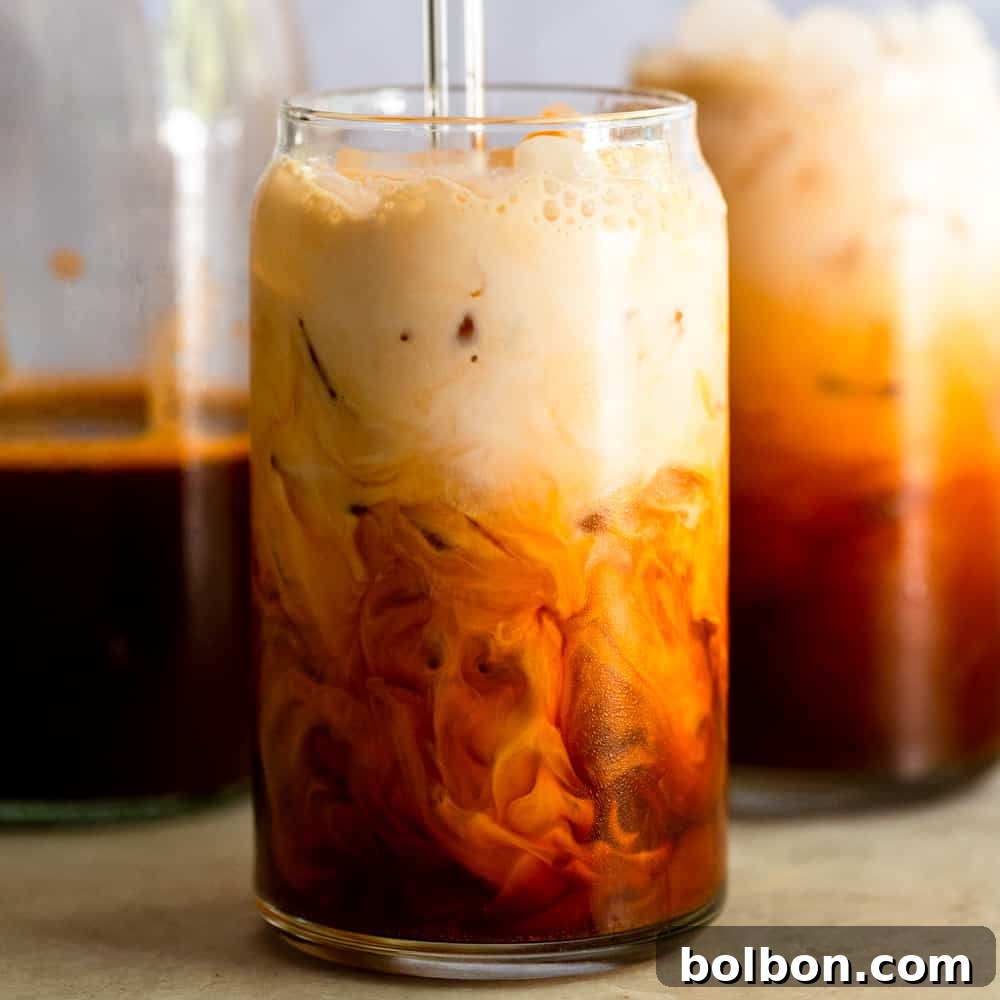
Welcome to your culinary escape, where the vibrant flavors of Thailand meet the comfort of your own kitchen! Have you ever found yourself craving that exquisitely sweet, creamy, and subtly spiced drink you get at your favorite Thai restaurant? That distinctive golden-orange hue, the rich aroma, and the refreshing chill of a perfect Thai Iced Tea—it’s a truly unforgettable experience. What if we told you that replicating this beloved beverage at home is not only possible but surprisingly simple? Get ready to transform your daily routine into a delightful journey with our easy-to-follow recipe for authentic homemade Thai Iced Tea. This guide will walk you through every step, ensuring you can enjoy this refreshing, exotic drink whenever the mood strikes, bringing a piece of your favorite Thai eatery right to your doorstep. Prepare to indulge in a sweet, creamy concoction that promises to tantalize your taste buds and transport you to the bustling streets of Thailand with every sip.
Recreating a Restaurant Favorite at Home: The Magic of Thai Iced Tea
For those who adore the rich tapestry of Thai cuisine, it’s clear that the culinary delights extend far beyond savory dishes like Chicken Satay or the unparalleled richness of Thai Peanut Sauce. Among these treasured experiences, Thai Iced Tea holds a special place, a truly unique beverage that captivates with its harmonious blend of flavors. This creamy, delightfully sweet iced tea is far more than just a refreshing drink; it’s an aromatic symphony featuring subtle notes of vanilla, star anise, tamarind, and often other warm spices like cardamom and cloves. This complex profile sets it apart from any other beverage, creating a captivating taste that is both comforting and exotic.
While often compared to Iced Chai due to its spiced tea base and creamy finish, Thai Iced Tea possesses a distinct character all its own. The underlying black tea provides a robust foundation, perfectly complemented by the unique blend of spices that give it its signature aroma and taste. Unlike Chai, which often leans heavily into ginger and cinnamon, Thai Iced Tea embraces a more delicate, fragrant spice blend, resulting in a smoother, less assertive, yet equally captivating experience. The creaminess, whether from half-and-half, condensed milk, or a dairy-free alternative, ties all these elements together, delivering a velvety texture that lingers pleasantly on the palate. Mastering this iconic drink at home allows you to elevate any meal, transport your senses, and savor a genuine taste of Thailand without leaving your kitchen.
Crafting Authentic Thai Iced Tea: A Simple Guide for Home Enthusiasts
Discovering the sheer simplicity of preparing Thai Iced Tea at home was a delightful revelation. Far from being an intimidating task, it’s a straightforward process that yields incredibly rewarding results. The key to authentic flavor lies in sourcing a good quality Thai tea mix. These specialized blends, often containing black tea, star anise, crushed tamarind seed, and sometimes orange blossom water or other food colorings, are readily available at most Asian grocery stores or through convenient online retailers. For those ready to embark on this delicious journey, popular choices include this blend and this option, both known for their authentic flavor profiles.
Once you have your tea mix, the process unfolds with ease. Begin by steeping the tea in hot water, allowing the rich aromas and flavors to infuse. After steeping for the recommended time (we’ll dive into optimal steeping later!), sugar is stirred in until fully dissolved. The mixture is then strained, traditionally through a fine mesh tea strainer (such as this type), to remove all tea leaves and spice particles, resulting in a smooth, clear tea base. This concentrate is then chilled thoroughly in the refrigerator, a crucial step for achieving that refreshing iced tea experience. When you’re ready to serve, simply pour the chilled tea over a generous amount of ice and, to taste, swirl in your preferred creamy addition. While many opt for half-and-half, sweetened condensed milk offers a richer, sweeter alternative, and coconut milk provides a delicious dairy-free option, perfect for customization. This effortless method ensures a consistently perfect glass of Thai Iced Tea, ready to be enjoyed anytime.
Unraveling the Mystery: Why is Thai Iced Tea Orange?
The distinctive, vibrant orange color of Thai Iced Tea, as many Americans have come to know and love it, is a fascinating result of cultural confluence and culinary innovation. While tea itself is relatively new to Thailand, having been imported from China, its integration into local culture has led to unique adaptations. Iced tea, known as Cha Yen in Thailand, likely began as a simple, unflavored refreshment served alongside popular street food. However, its meteoric rise in popularity in American Thai restaurants spurred a creative evolution.
Early Thai chefs in the US, eager to differentiate their iced tea from standard black iced teas and coffees, began to experiment. They found that adding a touch of orange food coloring, alongside a distinct blend of spices like star anise, tamarind, and sometimes cardamom, created a visually striking and uniquely flavored beverage. This vibrant hue quickly became synonymous with Thai Iced Tea, establishing its iconic identity in the Western world. It’s important to note that this coloring is purely for aesthetic appeal and does not contribute to the flavor profile. For those who prefer to avoid artificial dyes, natural Thai tea mixes are available that achieve a beautiful amber color without the addition of orange food coloring. While I haven’t personally tried a dye-free version yet, this particular brand is on my list for my next Thai tea purchase, promising the same delightful taste without the artificial tint. Ultimately, whether you opt for the classic orange or a naturally hued version, the rich taste remains the heart of this beloved drink.
Making Thai Iced Tea Vegan: A Dairy-Free Delight
For those following a vegan lifestyle or simply seeking dairy-free alternatives, adapting Thai Iced Tea is remarkably straightforward. The traditional creaminess of the drink, typically achieved with half-and-half or sweetened condensed milk, can easily be replicated with plant-based options without compromising on flavor or texture. The simplest modification is to swap regular half-and-half with a high-quality dairy-free version. My personal favorite for its smooth consistency and neutral flavor profile is this specific dairy-free half-and-half, which blends seamlessly into the tea, providing that familiar creamy richness.
Another excellent and readily available option is coconut milk. While it introduces a subtle coconut flavor, this often complements the exotic spices of Thai tea beautifully, adding another layer of complexity. The richness of full-fat coconut milk can mimic the indulgent texture of traditional versions, making it a popular choice for many. When selecting a dairy-free creamer, consider its fat content and sweetness level to achieve your desired balance. With these simple substitutions, everyone can enjoy a luscious, creamy, and entirely vegan Thai Iced Tea at home.
Crafting a Sugar-Free Thai Iced Tea: Customize Your Sweetness
One of the greatest advantages of preparing Thai Tea at home is the freedom to customize every element, especially its sweetness. If you’re looking to reduce your sugar intake or avoid it altogether, creating a sugar-free version is incredibly easy and allows you to tailor the drink precisely to your preferences. You can simply opt to omit the granulated sugar entirely for an unsweetened tea, letting the natural flavors of the tea and spices shine through.
Alternatively, for those who still desire a touch of sweetness but without the sugar, a wide array of sugar substitutes can be used. Popular choices include erythritol, stevia, monk fruit sweetener, or xylitol. It’s important to experiment with these, as different sweeteners can have varying levels of potency and sometimes impart a slight aftertaste. Start with a small amount and adjust until you achieve your ideal level of sweetness. You can also significantly reduce the amount of sugar from the traditional recipe for a drink that is subtly sweet rather than overtly sugary. Conversely, if your palate craves an intensely sweet iced tea, feel free to add more sugar, or consider using sweetened condensed milk instead of half-and-half, as condensed milk itself is heavily sweetened, adding both creaminess and a powerful sugary kick.
Half and Half or Sweetened Condensed Milk: Choosing Your Creamy Finish
When it comes to perfecting the creamy finish of Thai Iced Tea, a common debate revolves around the choice between half-and-half and sweetened condensed milk. Both options deliver that signature richness, but they each offer distinct characteristics that can significantly alter the final taste and sweetness profile of your beverage. In this recipe, we opt for half-and-half, a choice driven by a desire for controlled sweetness and a lighter, yet still indulgent, creaminess.
Sweetened condensed milk, a staple in many traditional Thai Iced Tea recipes, brings a dual benefit: intense sweetness and a thick, luxurious texture. The first time I experienced homemade Thai Iced Tea, it was prepared by friends using sweetened condensed milk, and the result was undeniably decadent. However, for those who prefer their drinks less overtly sweet, this option can sometimes be overwhelming. Half-and-half, on the other hand, offers a rich creaminess without the added sugar, allowing you to independently control the sweetness of your tea by adjusting the amount of granulated sugar you add during the steeping process. This flexibility is particularly appealing if you enjoy a more balanced flavor or wish to reduce overall sugar content. Ultimately, the choice between half-and-half and sweetened condensed milk boils down to personal preference and your desired level of sweetness and richness. Experiment with both to discover which creamy addition best suits your palate!
Mastering the Steep: How Long is Just Right for Thai Iced Tea?
The steeping time for your Thai tea mix is a crucial factor that significantly impacts the flavor profile of your finished drink. While many recipes suggest steeping the tea for an extended period, often 20 to 30 minutes, personal experience has shown that this can frequently lead to an overly bitter and astringent tea. The longer tea leaves steep, the more tannins are released, which are compounds responsible for that dry, puckering sensation often associated with over-steeped tea.
For a smoother, more balanced flavor that highlights the aromatic spices without bitterness, I highly recommend a shorter steeping time, typically around 5 minutes. This duration allows the tea to fully infuse, extracting its vibrant color and complex spice notes, while minimizing the release of those bitter tannins. However, if you genuinely prefer a stronger, more robust, and even slightly more astringent tea, you absolutely have the flexibility to steep it for a longer duration. Just be aware that extending the steeping time much beyond 5-7 minutes might yield a tea that some find too intense. Experiment with small variations to find your personal sweet spot for the perfect Thai Iced Tea, keeping in mind that fresh, high-quality water and an appropriate tea-to-water ratio also play vital roles in achieving optimal flavor extraction.
Essential Equipment for Brewing the Best Thai Iced Tea
While the process of making Thai Iced Tea at home is wonderfully simple, having the right tools can make the experience even more enjoyable and efficient. Here’s a quick look at the helpful equipment you’ll want to have on hand:
- Thai Tea Mix: The absolute essential! A good quality mix, whether with or without food coloring, is the foundation of authentic flavor.
- Tea Strainer: Crucial for separating the tea leaves and spices from your infused tea. A fine-mesh strainer or traditional Thai tea filter bag will ensure a smooth, clean beverage.
- Large Glass Measuring Cup: Ideal for precise measurement of water and for easily pouring the strained tea into a pitcher for chilling. Its heat-resistant properties also make it safe for handling hot liquids.
- 3 Quart Sauce Pan: A generously sized saucepan is perfect for boiling the water and steeping the tea, preventing any overflows and allowing ample space for infusion.
More Asian-Inspired Recipes You Will Love
If you’ve enjoyed the journey of making your own Thai Iced Tea, you’re in for a treat with these other incredible recipes that bring the vibrant flavors of Asia right to your kitchen. Expand your culinary repertoire and explore more delicious dishes that perfectly complement your homemade Thai tea:
- Thai Green Curry: A classic, aromatic, and deeply flavorful curry that pairs wonderfully with a refreshing glass of Thai Iced Tea.
- Chicken Satay: Skewered and grilled chicken served with a rich peanut sauce, perfect as an appetizer or a light meal.
- Thai Basil Beef: A quick and easy stir-fry featuring tender beef, aromatic Thai basil, and a savory sauce.
- How to Make Chai: If you enjoy spiced teas, learning to make your own Chai concentrate is another delightful venture, offering a different, yet equally comforting, flavor profile.
Thai Iced Tea Recipe
By Meghan McMorrow | Fox and Briar
Chilling Time: 1 hr
Servings: 4 servings
Ingredients
- 1/2 cup Thai tea mix
- 4 cups water
- 3/4 cup granulated sugar
- 1 cup half and half (or alternative of choice)
Instructions
- In a 3 quart sauce pan, bring water to a rolling boil.
- Once the water is boiling, remove the pan from the heat and carefully add the Thai tea mix. Stir gently to ensure all the tea leaves are fully moistened by the hot water.
- Allow the tea to steep for 5 minutes. After steeping, add the granulated sugar and stir continuously until the sugar is completely dissolved into the tea mixture.
- Strain the steeped tea thoroughly using a fine-mesh tea strainer to remove all solid tea particles. Transfer the smooth tea liquid into a pitcher or an airtight container and refrigerate until it is completely chilled, which typically takes at least one hour.
- When you are ready to serve, fill a tall glass generously with ice. Pour the chilled Thai tea into the glass, filling it approximately three-quarters full. Top with 2-4 tablespoons of half-and-half (or your chosen milk/creamer) to taste. Stir gently to combine the cream with the tea, creating that beautiful swirl, and enjoy your refreshing homemade Thai Iced Tea.
Notes
Nutrition information provided below does not include the addition of half and half or any other milk/creamer.
Other milk options to consider include: dairy-free half and half, rich coconut milk, or traditional sweetened condensed milk for extra sweetness.
Nutrition
Nutrition information is automatically calculated, so should only be used as an approximation. It does not include the optional half-and-half or other creamers.
Additional Info
Cuisine: American, Thai
There you have it—a comprehensive guide to crafting the perfect Thai Iced Tea right in your own home. We hope this recipe not only satisfies your cravings for that distinct restaurant-quality flavor but also empowers you to customize it to your heart’s content, whether you’re adjusting sweetness, exploring dairy-free options, or simply perfecting your steeping technique. Making this exotic beverage is a rewarding experience that brings a splash of vibrant culture and refreshing delight to any occasion. So go ahead, gather your ingredients, brew a batch, and let the creamy, spiced sweetness transport you. Don’t forget to share your creations and tag us on social media; we love to see your culinary adventures!
Disclosure: This post contains affiliate links, which means that if you purchase the items I recommend through the links I provide, I get a small commission. For more info, please see my disclosure policy. Thanks for supporting Fox and Briar!