
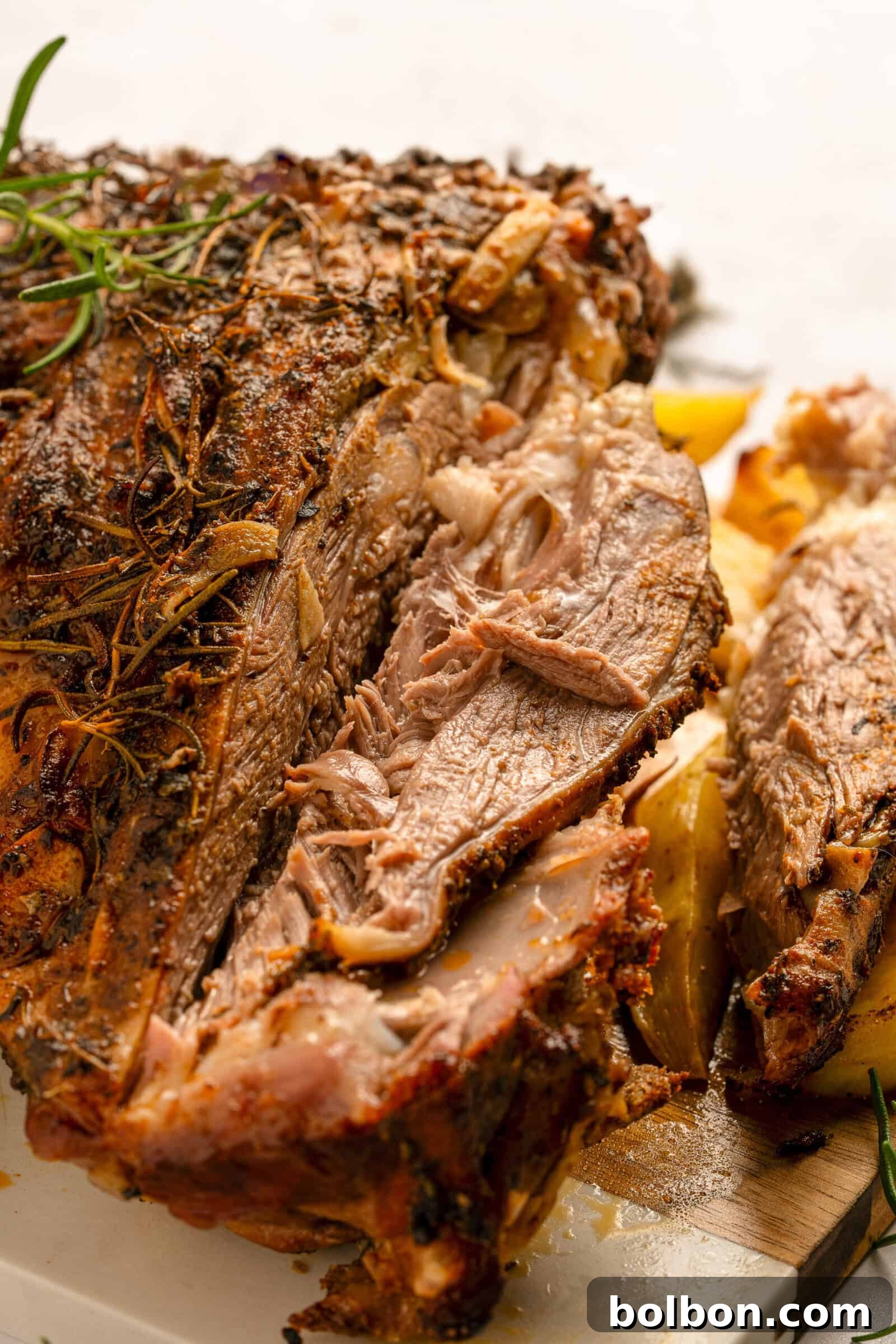
Prepare to elevate your culinary experience with this exquisite Roasted Leg of Lamb, a dish destined to be the crowning glory of any celebratory table, especially for cherished holidays like Easter. While many envision a grand outdoor spit roast for such a magnificent cut of meat, our oven method promises an equally tender, incredibly flavorful, and succulent result, bringing the essence of traditional European feasts right into your home, no outdoor fire required.
In many Eastern European and Mediterranean cultures, particularly in Bulgaria and Greece, lamb holds profound significance, often forming the centerpiece of the Easter meal. Traditionally, a whole lamb 🐑 is slow-cooked on a spit, artfully skewered and roasted over an open flame, embodying generations of culinary heritage. This cherished main course is typically accompanied by a vibrant array of sides: aromatic roasted 🥔 potatoes or fluffy rice, crisp green salads, sweet Easter bread, and savory baked phyllo pastries filled with feta cheese – known as “Banitsa” in Bulgaria or “Tiropita/Spanakopita” in Greece. For those who observe the religious aspects of Easter, the lamb carries a deeper symbolic meaning, representing Christ 😇, revered as the Holy Lamb of God. Our recipe captures the spirit and flavors of these traditions, adapted for the modern kitchen, ensuring a perfect, fall-apart tender roast every time.
Why This Roasted Leg of Lamb Will Become Your Go-To Recipe
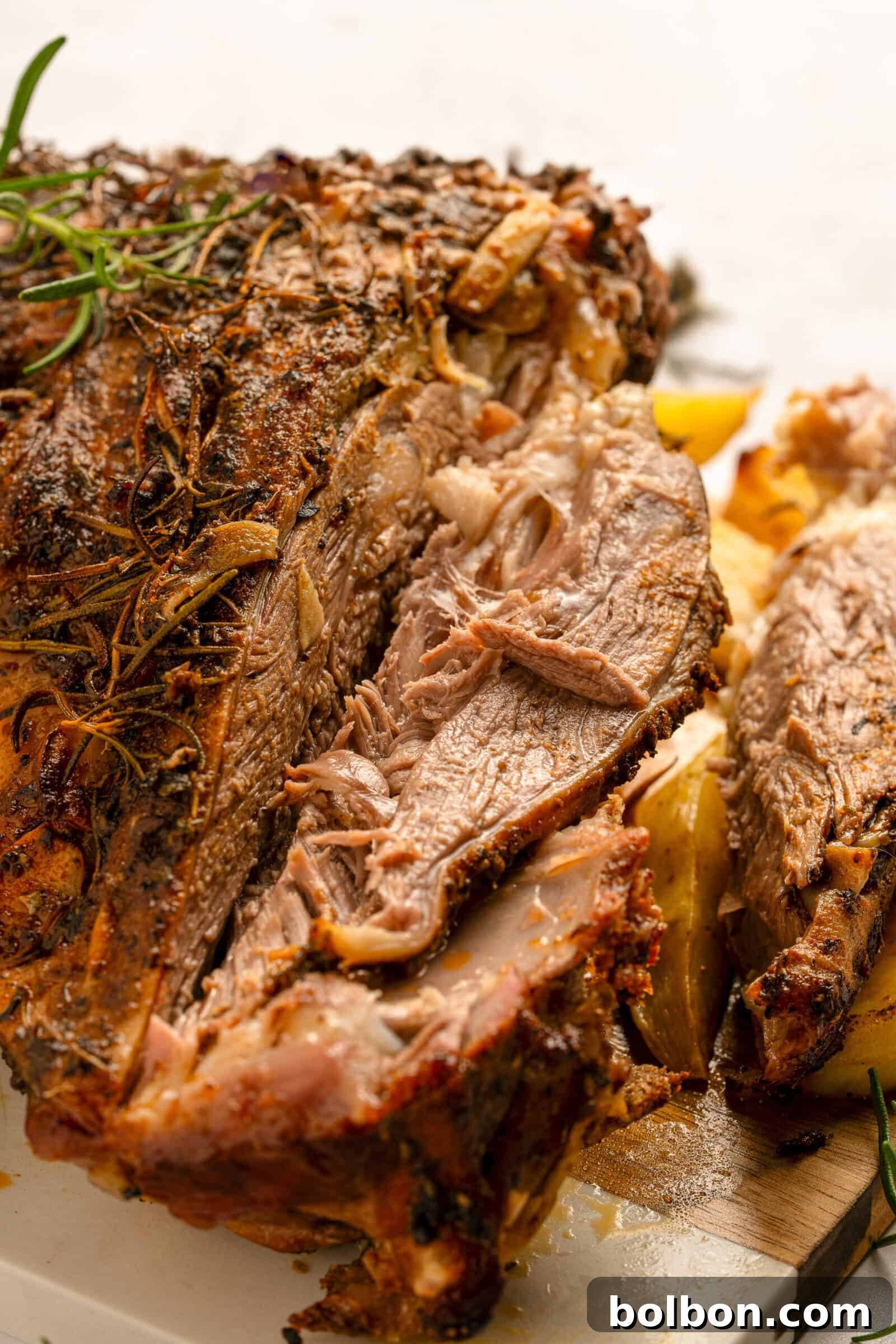
This recipe for Roasted Leg of Lamb is a true kitchen hero because it allows your oven to do most of the hard work, transforming a simple cut of meat into an unforgettable meal. Imagine the rich, complex aromas that will fill your home as a beautifully seasoned leg of lamb slowly roasts to perfection. The magic begins with a custom-blended, aromatic mix of spices, carefully massaged into the lamb, allowing every fiber to absorb the enticing flavors. Generous cloves of 🧄 garlic are then expertly nestled into the meat, infusing it with their pungent, sweet essence as it slowly roasts. The result is nothing short of culinary bliss: a fall-apart-tender leg of lamb that yields the most delicious, savory juices, creating a natural sauce that is pure gold. The absolute best part of this method is the smart convenience it offers: we roast the potatoes directly in the same pan as the lamb. This genius move ensures the potatoes absorb all those incredible, flavorful drippings, becoming wonderfully golden and irresistibly tender. It’s more than just a meal; it’s a magnificent feast designed to effortlessly serve a crowd 👪, leaving you with more time to enjoy with your loved ones and less time fussing in the kitchen.
Mastering the Art of Preparing Your Roasted Leg of Lamb
Creating this show-stopping Roasted Leg of Lamb is a straightforward process, broken down into simple, manageable steps that guarantee outstanding results. Follow these instructions carefully, and you’ll be rewarded with a tender, flavorful roast that will impress everyone at your table.
🌙 **Begin with Preparation:** For optimal tenderness and to enhance the flavor, it’s highly recommended to soak or marinate the lamb overnight. This crucial step allows the meat to become exceptionally juicy and helps to mellow any strong gamey notes.
🔥 **The Next Day, Get Ready to Roast:** The following day, remove the lamb from its soak or marinade. It’s essential to thoroughly pat the lamb completely dry using paper towels. This step ensures a beautiful sear and helps in forming a delicious crust. Preheat your oven to a robust 400°F (200°C).
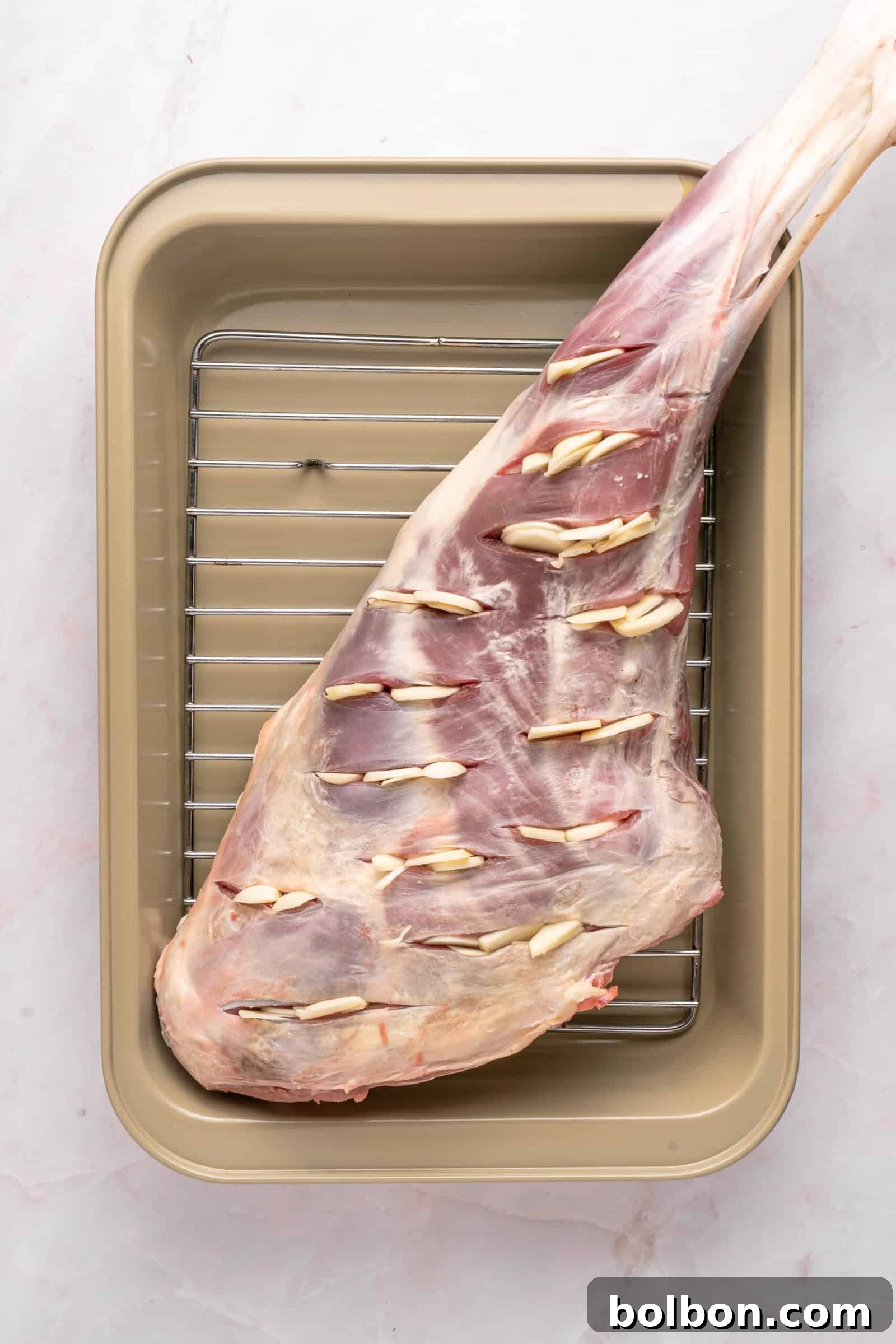
🧄 **Score and Infuse with Garlic:** Carefully place the lamb in a large baking dish, preferably with a wire rack at the bottom to allow air circulation and even cooking. Ensure the fat cap side of the lamb is facing up. Using a small, very sharp knife, make shallow, diagonal scores across the fat cap. These scores, about ½ to ¾ inch deep, help the seasonings penetrate deeper into the meat and allow the fat to render beautifully, crisping up the skin. Next, take slivered pieces of fresh garlic and carefully press a piece into each scored incision. This infuses the lamb with incredible garlic flavor from the inside out.
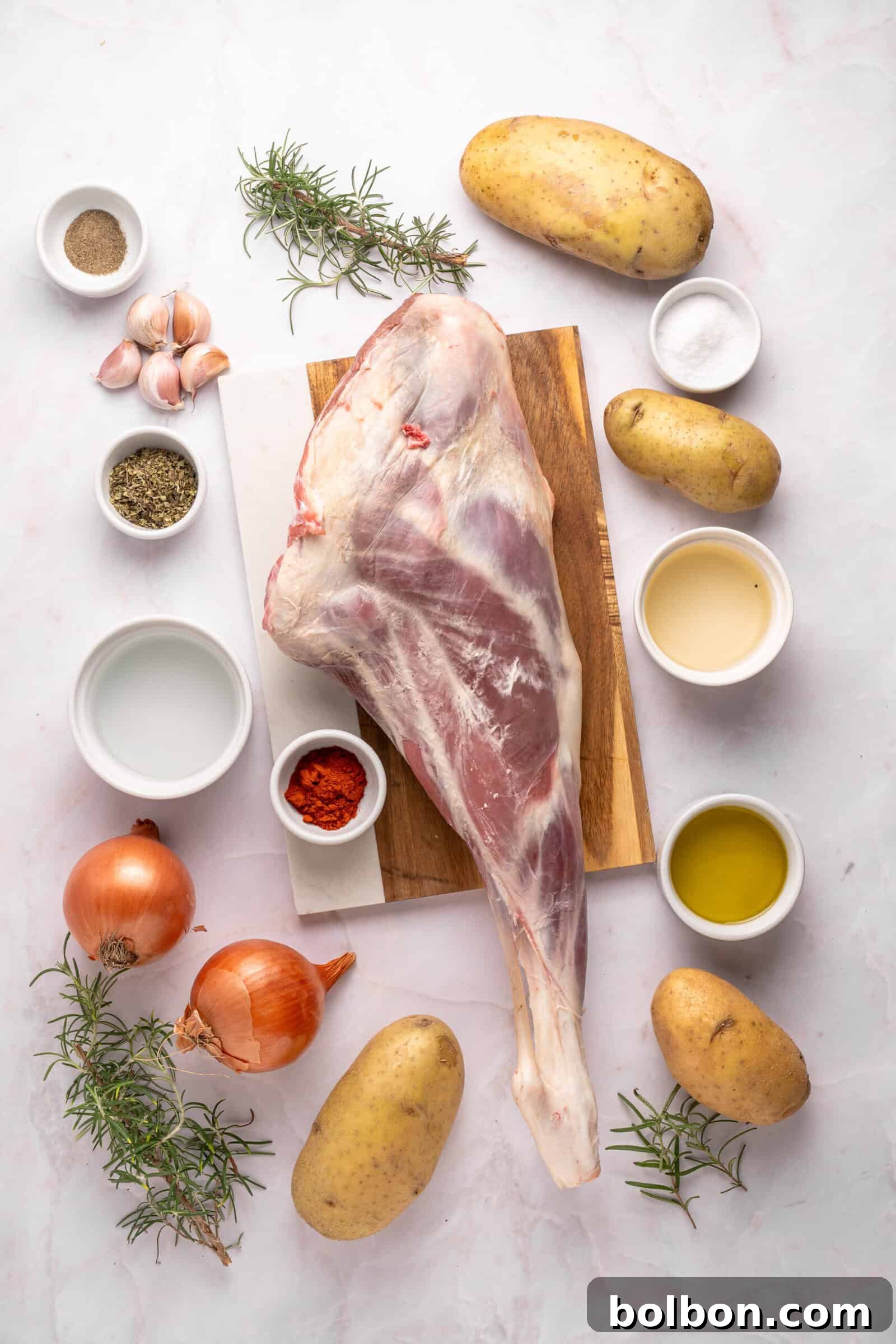
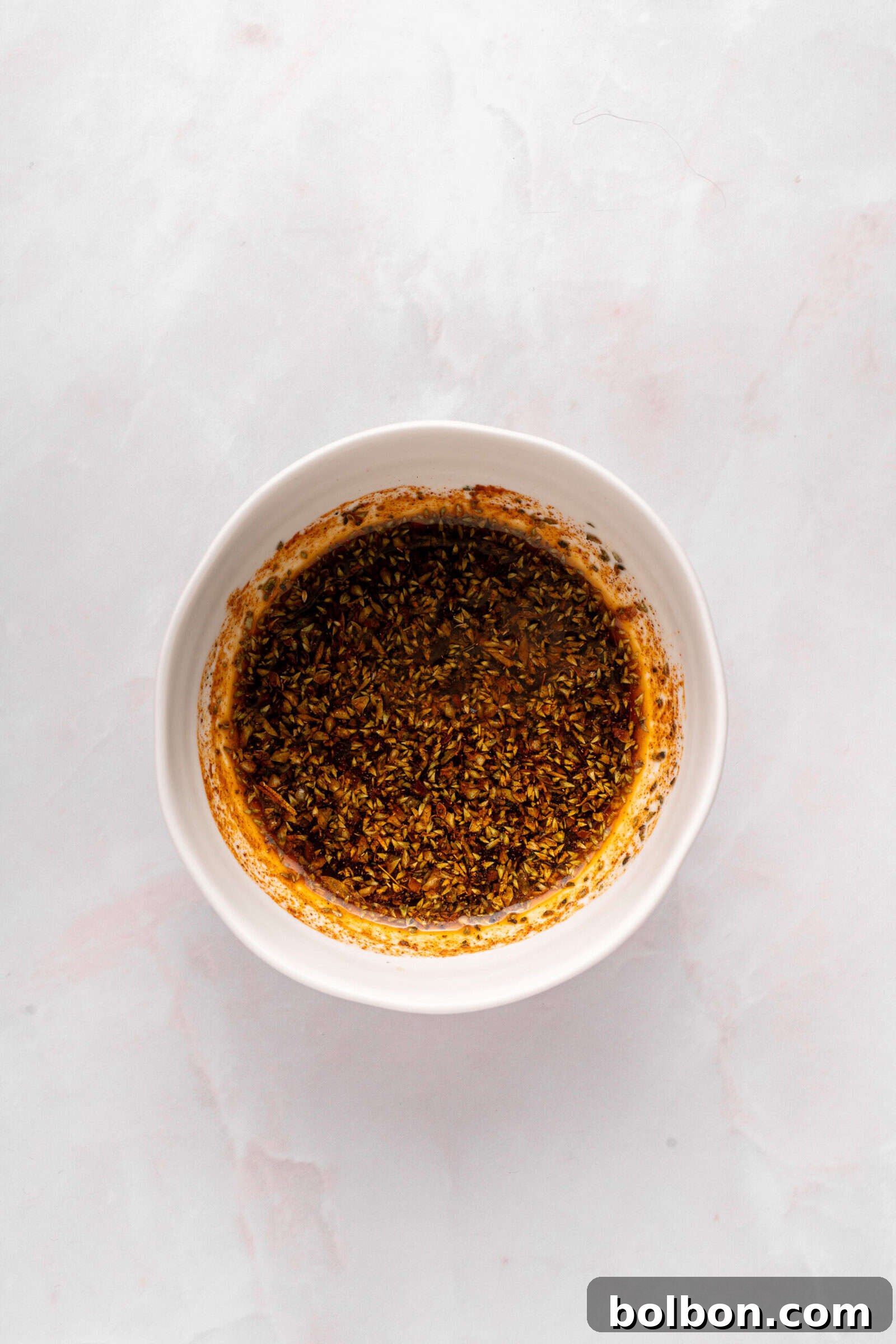
🥣 **Create and Apply the Spice Paste:** In a small bowl, combine your chosen spices: salt, freshly ground black pepper, sweet paprika, dried oregano, and a generous pour of high-quality olive oil. Mix these ingredients thoroughly until they form a smooth, fragrant paste. This paste is your secret weapon for a deeply flavored roast. Now, with clean hands (or a basting brush), generously massage the spice paste all over the surface of the lamb, ensuring it gets into all the scored areas and covers every inch of the meat. This hands-on step ensures maximum flavor absorption.
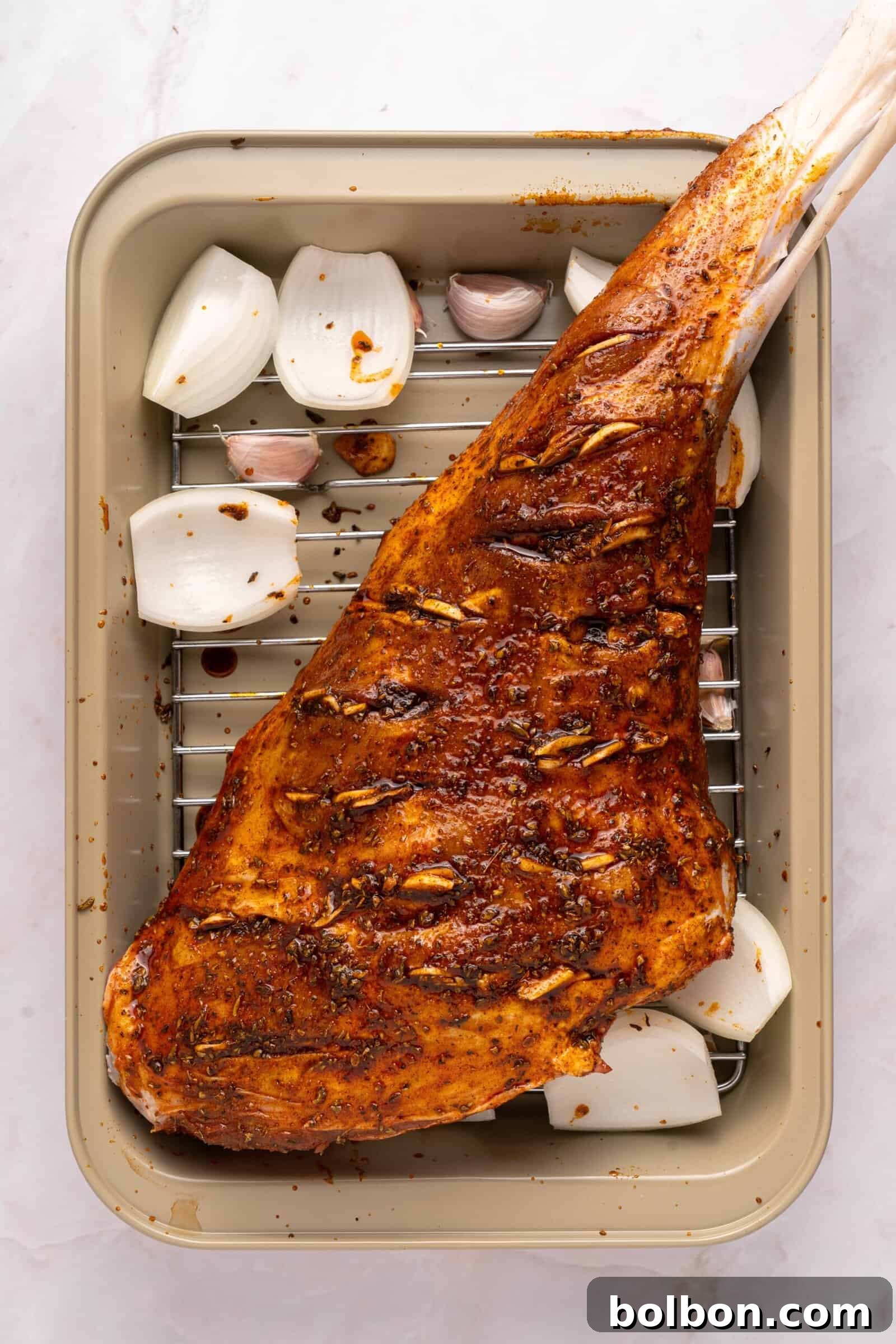
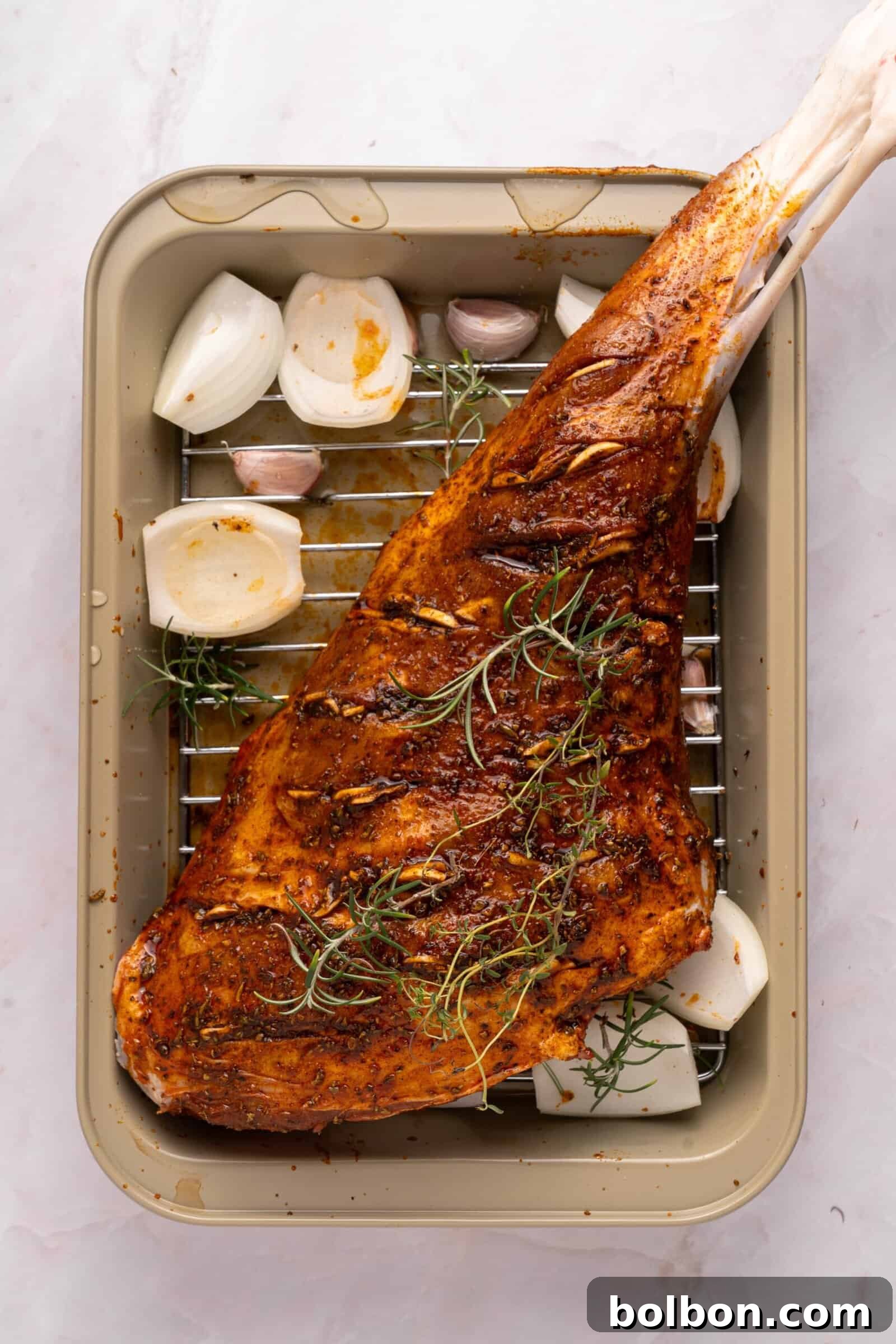
🧅 **Build the Flavor Base:** To the bottom of the baking dish, around the lamb, add large wedges of onion, several unpeeled garlic cloves (these will roast to a sweet, spreadable consistency), and fresh sprigs of rosemary (or thyme/mint). Pour in a cup of water and ½ cup of white wine (if using). This liquid will create a fragrant steam bath for the lamb, keeping it moist, and will form the flavorful pan juices for basting.
⏲ **Initial Roast:** Cover the lamb securely with a layer of parchment paper directly on the meat, followed by a tight seal of aluminum foil. This dual-layer covering locks in moisture and helps steam the lamb, ensuring ultimate tenderness. Roast in the preheated 400°F (200°C) oven for 40 minutes.
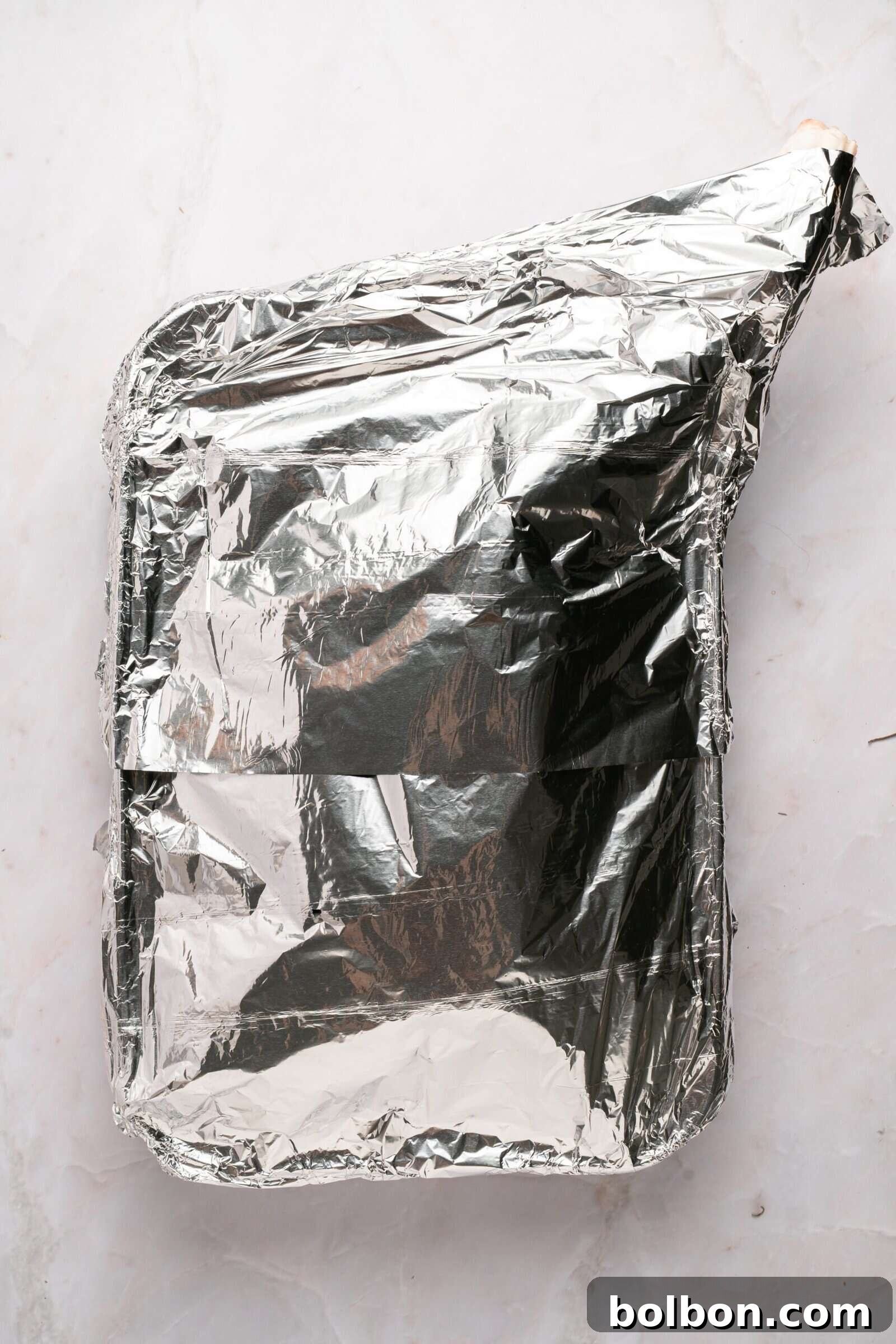
🌡 **Slow Roast to Perfection:** After the initial 40 minutes, reduce the oven temperature to 350°F (175°C) and continue to cook. The goal is for the meat to become so tender it’s practically falling off the bone. The total cooking time will depend on the size of your leg of lamb (approximately 20 minutes per ½ pound for slow roasting).
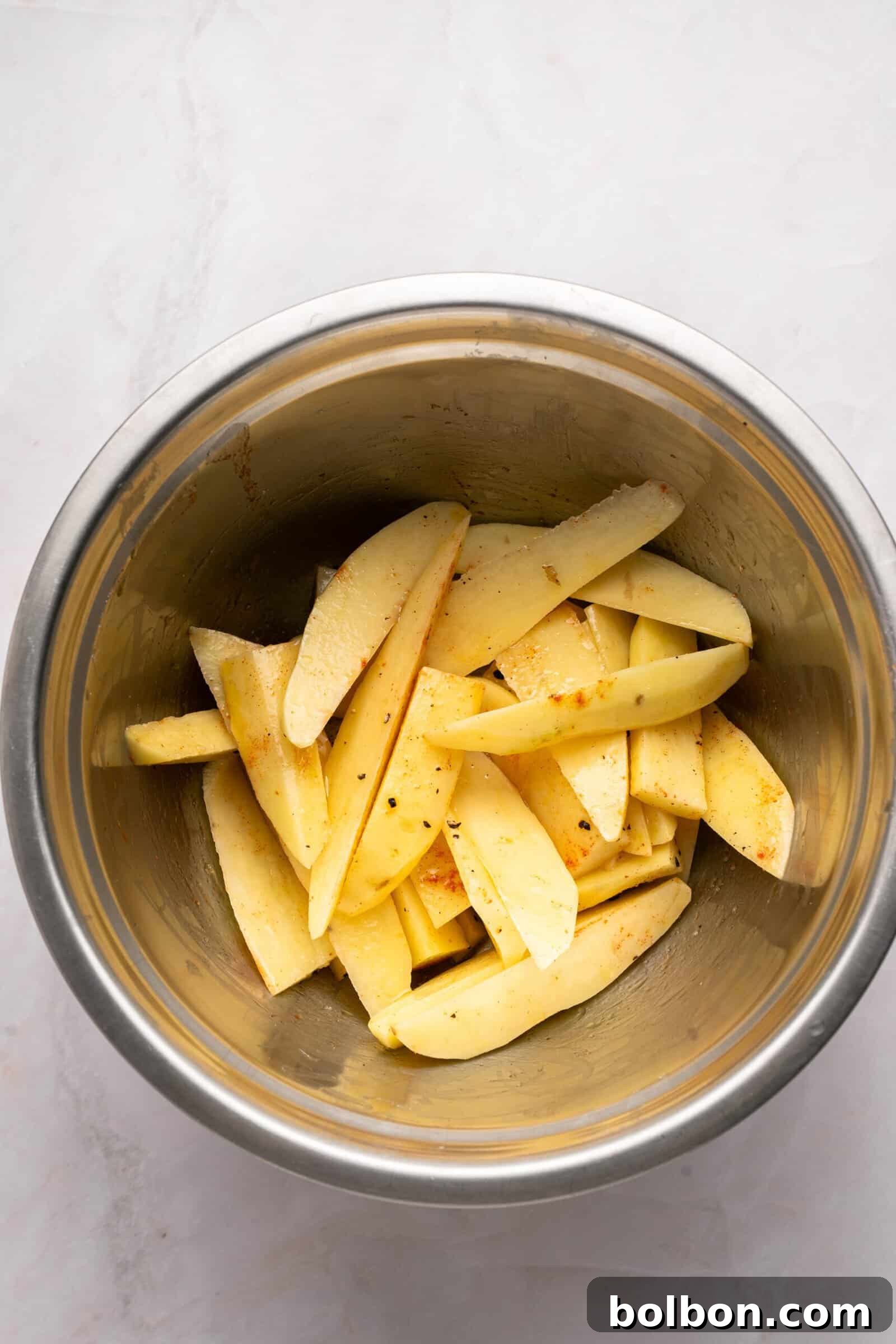
🍋 **Prepare the Potatoes:** While the lamb is gently roasting, prepare your potatoes. Peel and cut large yellow potatoes into uniform wedges. In a bowl, toss them with a drizzle of olive oil, a generous pinch of salt to taste, and a bright squeeze of fresh lemon juice. This simple seasoning will allow them to perfectly absorb the lamb’s rich flavors.
🥔 **Combine and Finish Roasting:** Once the lamb has cooked approximately halfway through (about 2-3 hours for an 8-10lb leg), carefully remove the foil and parchment paper. Using a large spoon or a baster, generously baste the lamb with the accumulated pan juices. Then, pour the seasoned potato wedges into the bottom of the baking dish, arranging them around the lamb. The potatoes will cook directly in the savory drippings, becoming incredibly flavorful and golden brown. Continue roasting, basting the lamb and stirring the potatoes occasionally, until the lamb is fork-tender and the potatoes are golden and soft.
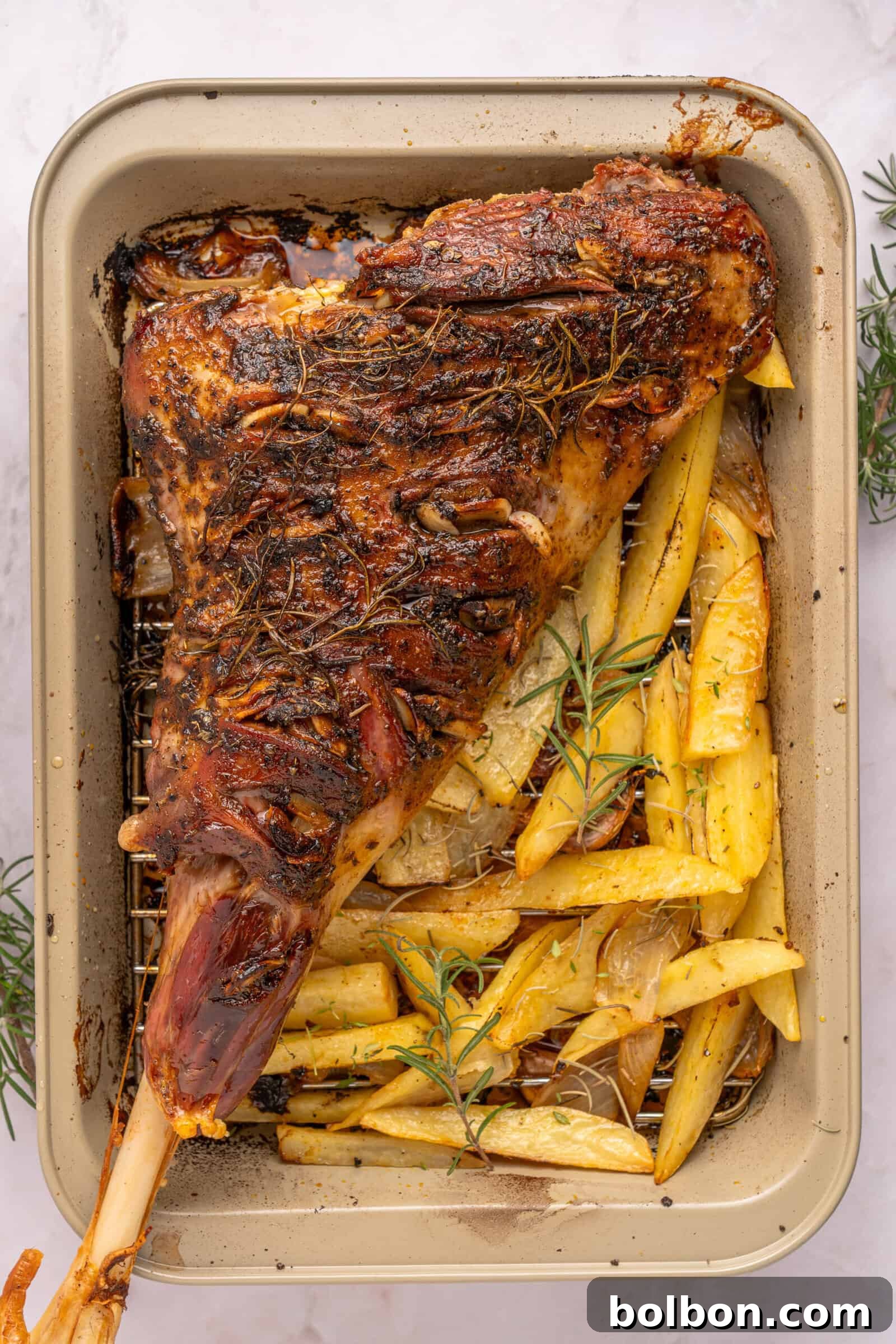
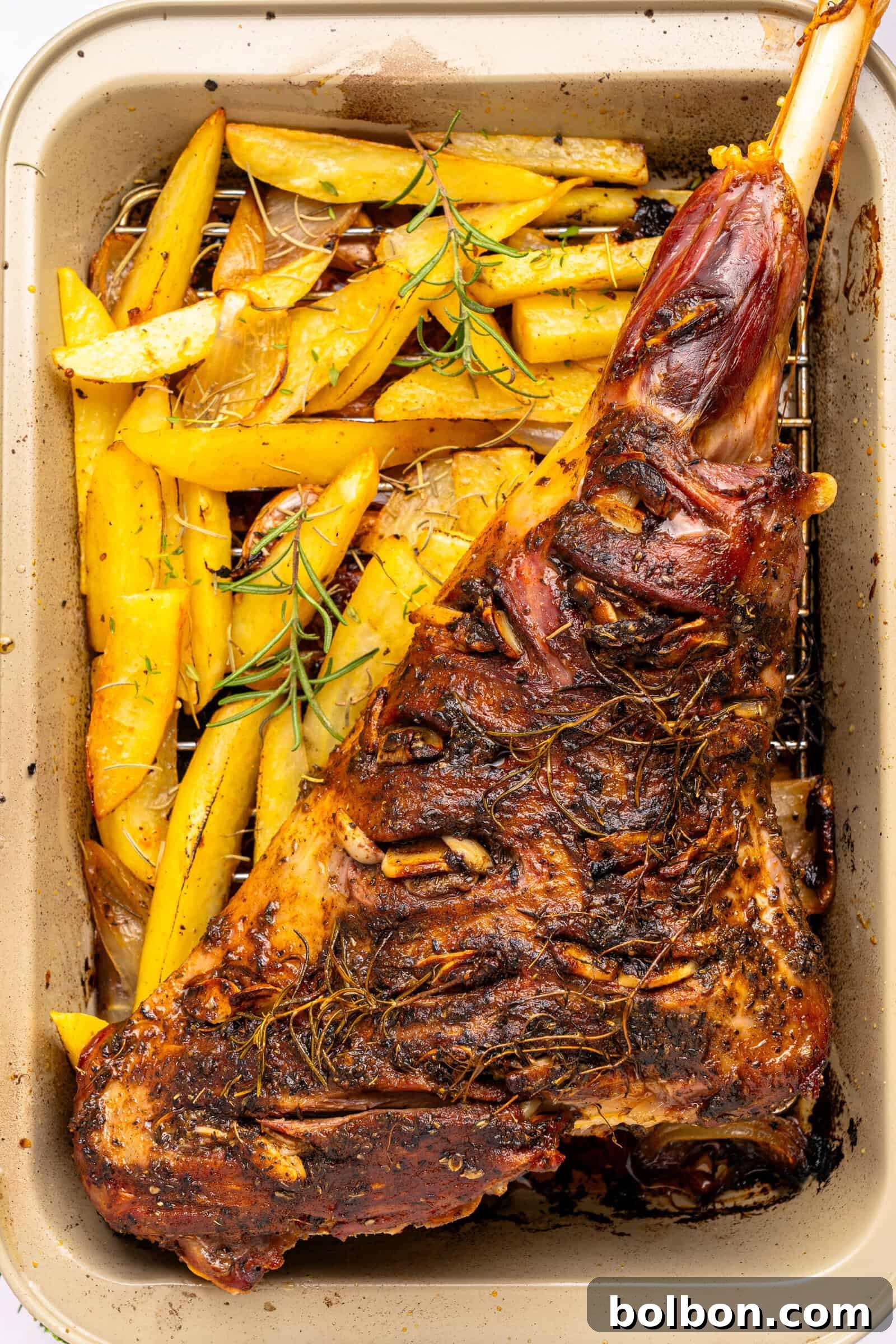
🍽 **Rest and Enjoy:** When your Roasted Leg of Lamb and potatoes are perfectly cooked, remove the baking dish from the oven. This is a crucial step: allow them to rest, uncovered, for 15 to 20 minutes before carving and serving. Resting allows the meat’s juices to redistribute throughout the roast, resulting in a significantly more tender and moist texture. The potatoes will also retain their heat and absorb even more flavor during this brief resting period. Slice, serve, and savor this magnificent feast!
Foolproof Tips for Achieving the Perfect Roasted Leg of Lamb
Embarking on the journey to roast a leg of lamb for your holiday dinner or a special gathering might seem daunting, but it’s truly an approachable endeavor with the right guidance. My “set-it-and-forget-it” oven method is designed to make you look like a culinary genius, leaving your guests convinced you spent hours slaving over a hot stove – when in reality, your oven handled all the heavy lifting! Follow these tried-and-true foolproof tips for perfect execution and a roast that’s moist, tender, and bursting with flavor:
- Marinate Overnight for Deep Flavor: This is arguably the most impactful step for exceptional flavor and tenderness. Marinating the lamb for an extended period, ideally 12 to 24 hours, allows the acids (if using a vinegar or lemon juice based marinade) and enzymes to gently break down the meat fibers, while the aromatics deeply infuse every part of the roast. This process not only tenderizes the meat but also locks in moisture, ensuring a remarkably juicy and flavorful result. Planning ahead makes all the difference here, so aim for the full 24 hours for the best possible outcome.
- Bring to Room Temperature Before Roasting: Resist the urge to pull your lamb straight from the refrigerator and pop it into a hot oven. For optimal and even cooking, remove your marinated lamb from the fridge and let it sit at room temperature for approximately one hour before you begin roasting. This simple step ensures that the meat cooks more uniformly from edge to center, preventing the outside from drying out while the inside struggles to reach the desired temperature.
- Score the Fat Cap for Crispy Perfection: While scoring the fat cap may look like a chef’s artistic touch, it serves a highly important functional purpose. By making shallow, diamond-patterned cuts across the top layer of fat, you create openings that allow your aromatic seasonings to penetrate deeper into the meat. More importantly, these scores enable the fat to render down more efficiently and evenly during the roasting process. This results in a beautifully crispy, golden-brown crust on the outside, adding wonderful texture and rich flavor. Always roast the lamb with the fat cap side facing up to allow the rendered fat to self-baste the meat below.
- Baste Like a Pro for Layers of Flavor: Basting is often an unsung hero in the roasting process, but its impact on flavor and texture is profound. Regularly spooning the savory pan juices over the lamb, roughly once every hour while it roasts uncovered, helps to keep the surface moist and prevents it from drying out. This continuous reapplication of drippings builds layers of flavor, encourages a beautiful caramelized crust, and ensures that every bite is incredibly rich and succulent.
- The Essential Rest Period: Patience is a virtue, especially after roasting! Once your lamb reaches its desired doneness, remove it from the oven and let it rest, uncovered, for at least 15 to 20 minutes before carving. This critical resting period allows the muscle fibers to relax and the internal juices, which have been pushed to the center during cooking, to redistribute throughout the entire roast. Skipping this step will result in juices running out onto your cutting board, leaving you with a drier, less flavorful piece of meat. Good things truly come to those who wait!
- Pair it with Something Bright to Balance Richness: Lamb is a wonderfully rich and robust meat, and its depth of flavor is best complemented and balanced by lighter, brighter side dishes. Think about contrasting textures and acidity. Classic pairings include a creamy, cooling tzatziki sauce, a crisp and refreshing Greek salad with a tangy vinaigrette, or bright, lemony roasted potatoes. These lighter elements cut through the richness of the lamb, creating a perfectly harmonious and well-rounded meal.
Nonna’s Tip 🐑: The Vinegar Soak
The vinegar and water soak is an optional step, but it’s a time-honored tradition passed down through generations, especially from grandmothers like mine. Nonna would always swear by it, as it helps to significantly reduce or completely remove some of the stronger, more gamy taste often associated with lamb. This method gently tenderizes the meat and ensures a clean, fresh flavor profile. If you prefer to skip this step and embrace the natural, robust flavor of lamb, simply marinate the lamb in a mixture of olive oil, fresh lemon juice, dried oregano, and a generous amount of salt. Then, proceed with the roasting recipe in the exact same way. The choice is yours, but Nonna’s secret is always a good one to keep in mind!
Delicious Variations and Smart Substitutions for Your Roasted Leg of Lamb
While this recipe delivers a classic and consistently delicious Roasted Leg of Lamb, there are many ways to customize it to your personal preferences or dietary needs. Don’t hesitate to experiment with these variations and substitutions to make this dish uniquely yours:
- **Herb Power:** Fresh rosemary is undeniably one of the most beloved and complimentary herbs for lamb, offering a piney, earthy aroma that perfectly enhances the meat’s rich flavor. However, if you’re looking to explore other aromatic profiles, any hardy 🌿 herb will work beautifully. Consider using fresh thyme for a slightly milder, woodsy note, or fresh mint for a surprisingly bright and refreshing contrast that truly elevates lamb. Experiment with what you have on hand or what flavors you love most!
- **Add More Veggies:** Our recipe already includes fantastic roasted potatoes and onions, but you can easily expand the vegetable medley. When you add the potatoes to the baking dish, consider tossing in some chunky 🥕 carrot wedges. Carrots sweeten as they roast, absorbing the lamb drippings and adding another layer of flavor, color, and nutrition to your meal. Other root vegetables like parsnips or sweet potatoes would also be excellent additions.
- **Wine Alternatives:** The addition of white wine contributes a wonderful depth of flavor and acidity to the pan juices, but it is entirely optional. If you prefer not to use wine, or simply don’t have any on hand, you can easily substitute it. For a neutral alternative, add in another ½ cup of water. Alternatively, for an extra boost of savory flavor, a low-sodium chicken or vegetable broth would be an excellent choice, adding richness without the alcohol.
- **Spice Profile Swap:** While our core spices (paprika, oregano, salt, pepper) create a traditional and comforting flavor, feel free to adapt the spice rub. Consider adding ground cumin for an earthy warmth, a pinch of chili flakes for a subtle heat, or even a Mediterranean blend that includes coriander and allspice.
- **Citrus Boost:** A squeeze of fresh lemon juice over the lamb before roasting, or even during the last hour of cooking, can add a vibrant zest that brightens the rich lamb flavor. Alternatively, thin lemon slices can be placed directly on top of the lamb or scattered in the pan.
Complementary Easter Recipes & More
Cadbury Chocolate Chip Cookies
22 mins
Simple Green Salad
15 mins
Easter Bunny Bread
35 mins
Sweet Easter Bread
2 hrs 45 mins
Deviled Egg Chicks
25 mins
Chocolate Easter Nests
45 mins
Best Served With: Perfect Pairings for Roasted Leg of Lamb
A glorious Roasted Leg of Lamb deserves equally remarkable companions. Here are some of my favorite traditional and complementary dishes that will complete your festive meal, offering a symphony of flavors and textures:
- **Easy Traditional Bulgarian Banitsa:** Growing up, this savory phyllo pastry with feta cheese was always a staple with lamb at my grandma’s table. The rich, cheesy layers of my Easy Traditional Bulgarian Banitsa offer a comforting contrast to the robust lamb, making them a truly dynamic duo 👯♀️.
- **Easy Healthy & Creamy Bulgarian Salad:** The rich, deep flavor of Roasted Leg of Lamb is perfectly balanced by the fresh, crisp, and slightly tangy notes of my family recipe for Easy Healthy & Creamy Bulgarian Salad 🥗. It adds a refreshing counterpoint and vibrant color to the plate.
- **Sweet Easter Bread:** If you’re preparing this magnificent leg of lamb for your holiday meal, pairing it with my delicate and aromatic Sweet Easter Bread 🐰 will add an extra layer of festive charm and traditional sweetness to your celebration.
- **Easiest & Most Delicious Tzatziki:** The creamy, cool, and garlicky freshness of my easy Tzatziki is absolutely perfect for dipping slices of lamb, offering a refreshing and classic Mediterranean accompaniment.
- **Crispy Greek Lemon Potatoes:** While this recipe allows you to roast potatoes alongside the lamb, if you prefer a separate side or want extra crispiness, definitely make these bright and zesty 🍋 Greek Lemon Potatoes instead! Their tangy flavor and crispy texture are an ideal match for lamb.
Common Questions About Roasting Leg of Lamb
The beauty of cooking lamb is its versatility with spices. Traditionally in Bulgaria, we often keep it simple, using just salt, olive oil (or sometimes butter for richness), and paprika, with mint occasionally added for a fresh note. In Greece, a popular combination involves olive oil, salt, dried oregano, and a touch of lemon juice, especially if skipping the vinegar soak. Feel free to customize your seasonings based on your personal preference! Mediterranean blends with coriander, cumin, or even a hint of red pepper flakes can also create a delicious profile. The key is to massage the spices thoroughly into the meat for maximum flavor.
Not at all! While roasting the potatoes in the same pan as the lamb is a fantastic way to infuse them with all the savory drippings and minimize cleanup, it’s not compulsory. You can certainly bake the potatoes completely separately from the lamb if you prefer. This method is particularly useful if you need a specific type of potato dish, or if you’re serving guests with dietary restrictions and need a totally vegetarian side. For a truly exceptional standalone potato dish, I highly recommend trying my Crispy Greek Lemon Potato recipe; it’s absolute perfection and yields deliciously tangy and golden potatoes!
For this Roasted Leg of Lamb recipe, I specifically recommend using a bone-in leg of lamb, as the bone adds incredible flavor and helps the meat cook more evenly. The exact cut I used for developing this recipe was the Canadian Lamb Leg Bone In from The Butcher Shoppe in Etobicoke. While bone-out lamb leg is also an option and can be easier to carve, it typically comes at a slightly higher price point. If using a boneless cut, be sure to adjust your cooking time as it will cook faster.
The vinegar soak is entirely optional, but it’s a technique my grandma always employed, and for good reason! Soaking the lamb overnight in a solution of water and vinegar helps to effectively remove the strong, sometimes gamy taste that some people find undesirable in lamb. Beyond flavor, it also aids in thoroughly cleaning the meat. If you appreciate the inherent robust flavor of lamb and aren’t concerned about gameyness, or if you’re simply short on time, you can certainly skip this step and proceed directly to marinating the lamb with olive oil, lemon, herbs, and salt.
Absolutely do not discard them! After roasting, the onions at the bottom of the pan become wonderfully soft, tender, and incredibly flavorful, having absorbed all the lamb’s juices. They are fantastic served right on top of the carved meat or can be mixed in with the roasted potatoes for an extra burst of savory goodness. As for the roasted garlic cloves, they transform into sweet, caramelized gold! Simply squeeze the soft, sweet garlic pulp out of its skin and spread it onto a slice of fresh crusty bread. It’s an unbelievably sensational treat that should not be missed!
A good general rule of thumb for seasoning lamb is to use approximately ½ teaspoon of salt per pound of meat. So, if you have an 8-pound leg of lamb, you would need roughly 4 teaspoons of salt distributed over the entire piece. However, this is merely a guideline. Seasoning is truly to TASTE, and personal preference plays a huge role. Always start with a measured amount and feel free to adjust up or down based on your family’s preferences. It’s easier to add more salt than to remove it!
If you happen to have a roasting pan with a lid that’s large enough to comfortably cover your leg of lamb, that works perfectly for the initial covered roasting stage. If not, my suggested method of layering parchment paper directly on top of the meat followed by aluminum foil creates an excellent seal, trapping moisture and steam. I prefer using parchment paper first because it prevents the lamb’s skin from sticking to the foil, which can happen. Even if you use a lid, if it touches the meat, you might still want to place a layer of parchment directly over the lamb to prevent sticking and ensure a beautiful crust.
Basting is a simple yet crucial step for a moist and flavorful roast. To baste your lamb while it’s cooking, carefully open the oven and, using a turkey baster or a large serving spoon, gently scoop up some of the hot, savory juices from the bottom of the pan. Then, pour these juices evenly over the top surface of the meat. Repeating this process every hour or so, especially after removing the foil, helps to keep the meat’s surface moist, adds layers of flavor, and contributes to forming that desirable caramelized crust.
The general rule of thumb for slow roasting lamb is approximately 20 minutes for every ½ pound (or 40 minutes per pound) of meat. For example, if you have a 10-pound leg of lamb, you would estimate a total cooking time of around 6 hours and 40 minutes to 7 hours. Always use a meat thermometer inserted into the thickest part of the meat (avoiding the bone) to ensure it reaches your desired internal temperature. Lamb is typically served medium-rare (135-140°F), medium (140-145°F), or medium-well (150-155°F). Remember to factor in resting time, as the internal temperature will continue to rise a few degrees after it’s removed from the oven.
If, towards the end of the cooking time, your Roasted Leg of Lamb hasn’t developed the crispy, golden-brown skin you desire, there’s an easy fix. Simply switch your oven to the BROIL setting (top element only) for the last few minutes of cooking. Broiling will quickly add a beautiful color and irresistible crispness to the surface of the meat. However, it’s crucial to keep a very close eye on the lamb while it’s under the broiler, as it can go from perfectly golden to burnt in a matter of seconds!
Every oven behaves a little differently, so it’s always recommended to watch your lamb closely during the roasting process. If you notice the top of the meat is browning too quickly or getting too dark at any point before the lamb is fully cooked, simply place the aluminum foil (or parchment paper followed by foil) back on top of the roasting pan. This will shield the surface from direct heat, allowing the interior to continue cooking without the exterior becoming overly dark or burnt.
Roasted Leg of Lamb: A Traditional Feast
Facebook Share
Rate Recipe
Print Recipe
Video Overview
Equipment You’ll Need
Ingredients for Your Feast
Vinegar Soak (Optional, for less gamey taste)
- 28 cups water
- 7 cups white vinegar
The Lamb & Aromatics
- 1 leg of lamb , 8-10 lbs, bone-in recommended
- 5 cloves garlic (peeled) , cut into slivers for stuffing
- 4 teaspoons salt, adjust to taste based on meat size
- ½ teaspoon black pepper, freshly ground
- 2 teaspoons paprika, sweet or smoked
- 3 teaspoons dry oregano
- 4 tablespoons extra virgin olive oil
- 2 yellow onions, peeled and quartered
- 15 cloves garlic, unpeeled, for roasting in pan
- 3 sprigs fresh rosemary, or thyme/mint
- 1 cup water
- ½ cup white wine , (optional, or use broth)
The Flavorful Potatoes
- 6 large yellow potatoes, peeled and cut into wedges (approx. 900g or 2 lbs)
- 1 tablespoon olive oil
- 1 pinch salt, to taste
- 1 lemon , freshly juiced
Step-by-Step Roasting Instructions
The Optional Vinegar Soak
-
The vinegar and water soak is entirely OPTIONAL, but it’s a cherished family tip to help remove some of the stronger, gamy taste from the lamb. My grandma always swore by this method for a cleaner flavor. If you prefer the robust natural taste of lamb, or wish to save time, you can skip this step entirely and proceed to marinate the lamb with olive oil, lemon, oregano, and salt.
-
To perform the soak, place the lamb in a very large dish or container. Add water and white vinegar in a ratio of 4 parts water to 1 part vinegar, ensuring the lamb is fully submerged. For example, if you use 16 cups of water, you’ll need 4 cups of vinegar. For our 8-10lb leg, we typically use 28 cups of water with 7 cups of white vinegar.
-
Cover the dish securely and refrigerate the lamb to soak overnight (for at least 12-24 hours). This allows ample time for the vinegar to work its magic.
-
The following morning, carefully discard the vinegar water. Rinse the lamb thoroughly under cold running water, then pat it completely dry with paper towels. A very dry surface is key for proper browning.
Marinating and Roasting the Lamb
-
Preheat your oven to 400°F (200°C). Arrange an oven rack in the middle position.
-
Once the lamb is thoroughly patted dry, place it into a large baking dish, ideally with a wire rack at the bottom to allow juices to collect and prevent the bottom of the lamb from steaming. Position the lamb with the fat cap facing up. Using a small, sharp knife, make several shallow incisions or scores across the fat cap, about ½ to ¾ inch deep. Into each of these inserts, carefully press a sliver of peeled garlic. This ensures deep garlic flavor penetration.
-
In a small bowl, combine the salt, black pepper, paprika, dried oregano, and olive oil. Mix these ingredients thoroughly until they form a thick, aromatic paste.
-
Chef’s Note: The amount of salt can vary based on the size of your lamb and personal preference. A good guideline is ½ teaspoon of salt per pound of lamb. For an 8-pound leg, this would mean approximately 4 teaspoons of salt. However, feel free to adjust to your taste – we always encourage cooking with your heart!
-
Take the seasoning paste and, using clean hands or a basting brush, generously massage it all over the lamb, ensuring it covers the entire surface and gets into all the scored areas.
-
To the bottom of the baking dish, around the lamb (but under the wire rack if using), add the quartered yellow onions and the unpeeled garlic cloves. We use unpeeled garlic so that it roasts slowly and sweetens without burning. Add the fresh rosemary sprigs (or thyme/mint), water, and white wine (if using). These ingredients will form a flavorful aromatic bed for your roast.
-
Cover the lamb first with a layer of parchment paper, pressing it gently onto the surface, then tightly seal the entire baking dish with aluminum foil. This dual covering creates a steaming effect, locking in moisture and ensuring a tender interior. If you have a roasting pan with a snug-fitting lid, you can use that instead of parchment and foil. The parchment helps prevent the skin from sticking to the foil during the long cook.
-
Place the covered lamb in the preheated oven and roast for 40 minutes at 400°F (200°C). After this initial period, reduce the oven temperature to 350°F (175°C) and continue cooking. The ultimate goal is for the meat to become incredibly tender, practically falling off the bone. You’ll remove the foil and add the potatoes a little after the halfway mark (see next step).
-
Roughly a little more than halfway through the cooking process (e.g., after about 2-3 hours for an 8-10lb leg), carefully remove the foil and parchment paper from the lamb. This allows the lamb to start browning and for excess juices to evaporate, concentrating flavor. Using a turkey baster or a large serving spoon, generously baste the lamb with the flavorful pan juices that have accumulated at the bottom of the dish. This creates a beautiful caramelized crust and keeps the meat wonderfully moist.
-
The exact bake time will vary depending on the size of your leg of lamb. For an 8 to 10-pound leg, expect it to take approximately 4 ½ to 5 hours in most ovens. As a general rule of thumb for slow roasting lamb, allocate about 20 minutes of cooking time for every ½ pound of meat (or 40 minutes per pound).
-
Important Note: If you are roasting a LARGER cut of meat, you can choose to increase the temperature to 400°F to 425°F (200-220°C) after you remove the foil to encourage faster browning. Conversely, if you notice the meat is getting too dark on top too quickly, don’t hesitate to loosely cover it with foil or parchment paper again. Every oven is unique, so constant monitoring is always recommended for the best results.
-
For an extra crispy, beautifully browned skin on top, if the lamb hasn’t quite achieved the desired color by the end of its cooking time, you have an optional final step. Switch your oven to the BROIL (grill) setting (using only the top heating element) for the last few minutes of cooking. This intense heat will quickly caramelize the surface. Be extremely vigilant during this step, as meat can go from golden to burnt very rapidly under the broiler!
Adding the Potatoes
-
You have flexibility in how you prepare your potatoes. You can either make them separately in their own baking dish – for instance, following my favorite recipe for Crispy Greek Lemon Potatoes for a tangy and crispy result.
-
Alternatively, to infuse them with maximum lamb flavor, prepare them directly in the same roasting pan. In a bowl, toss the peeled and cut potato wedges with 1 tablespoon of olive oil, a pinch of salt to taste, and the juice of 1 lemon. Stir until all ingredients are well combined. You won’t need much oil or seasoning here, as the potatoes will beautifully absorb the rich fat and seasonings rendering off the lamb. Pour these seasoned potatoes into the bottom of the baking dish containing the lamb, roughly 1 ½ hours before the estimated finish time for the lamb. Stir them occasionally to ensure even cooking and browning.
Final Notes for Serving
-
Once both the lamb and potatoes are perfectly cooked to your liking, remove the entire baking dish from the oven. Allow them to rest for a crucial 15 to 20 minutes before carving and serving. This resting period allows the succulent juices within the lamb to redistribute throughout the meat, ensuring every slice is incredibly tender and moist.
-
Depending on how fatty your specific cut of lamb is, it may release a significant amount of oil into the pan. You can easily skim this excess fat off the top, discard it, or reserve it for other culinary uses if desired.
-
Prepare for a truly spectacular meal: the onions will be incredibly soft and sweet, the potatoes irresistibly delicious from cooking in the lamb drippings, and the lamb itself will be so tender it practically melts in your mouth. Don’t forget to squeeze out the sweet, roasted garlic cloves from their peels – they are divine spread on fresh bread!
-
This magnificent meal can be elegantly served with my Bulgarian Green Salad for freshness, my festive Sweet Easter Bread, a hearty slice of No-Knead Bread, a cooling side of Tzatziki or Bulgarian Yogurt Salad, or even a decadent Carrot Cake for dessert. Explore these and other wonderful recipes on the site to complete your perfect spread.
Helpful Recipe Notes
- Herb Choices: While fresh rosemary is traditionally the most popular herb for lamb and complements this type of meat beautifully, any hardy herb will work wonderfully. Consider experimenting with fresh thyme or mint to subtly alter the flavor profile.
- Additional Vegetable Options: When you add the potatoes to the roasting pan, you can also include other root vegetables like chunky carrot wedges, parsnips, or even sweet potato chunks for added flavor and color.
- Wine Substitutions: The white wine in this recipe is completely optional. If you prefer not to use it, simply substitute with an equal amount (½ cup) of water or, for a more robust flavor, use low-sodium chicken or vegetable broth.
Nutrition Information (Approximate)
Nutrition information is automatically calculated and should be used as an approximation only. Individual results may vary.