
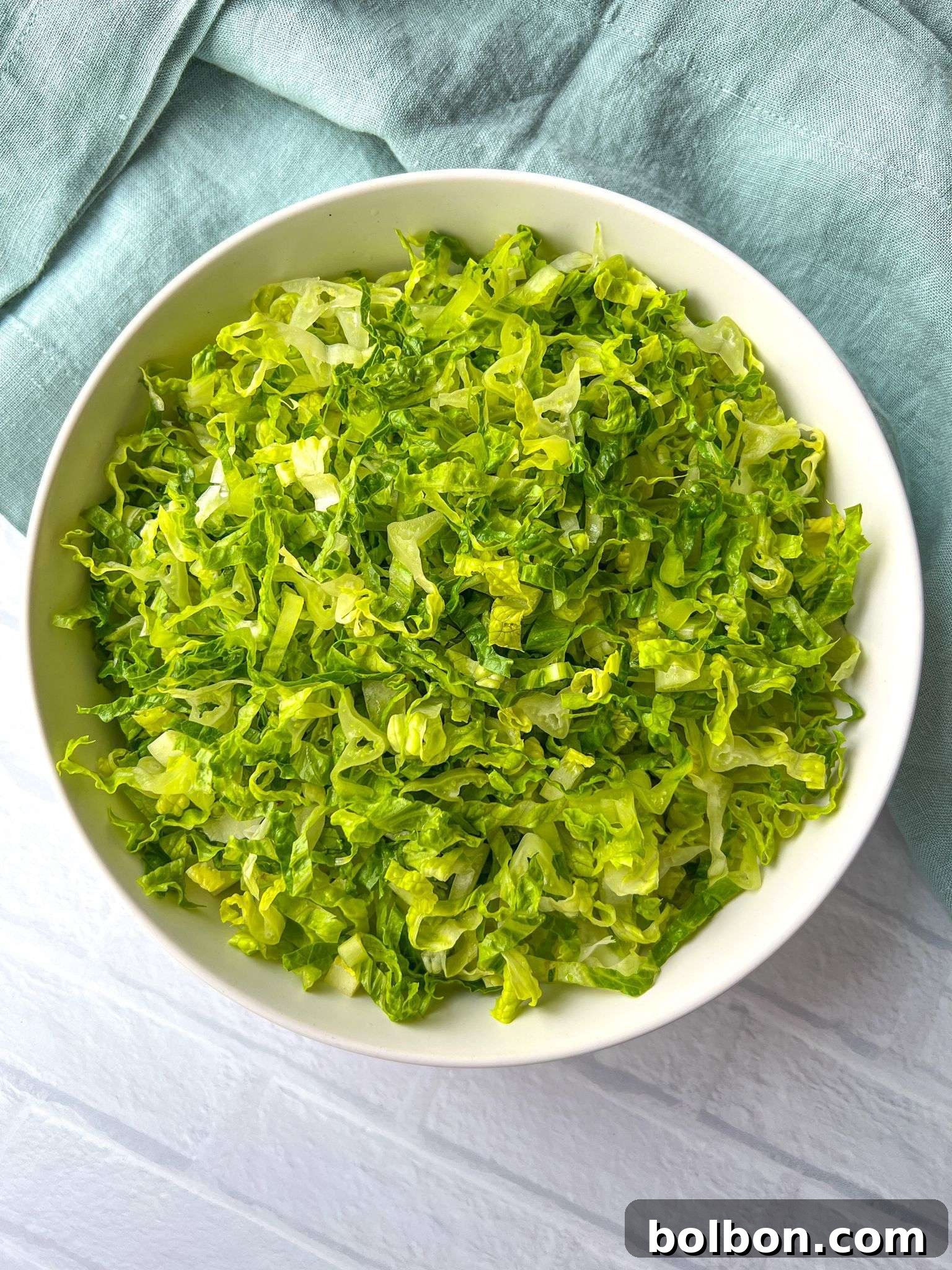
Welcome, fellow home cooks! I’m thrilled to share a fundamental kitchen skill that will truly elevate your culinary creations: How to Shred Lettuce. This versatile technique isn’t just for lettuce; it’s a game-changer for thinly slicing basil, spinach, kale, and many other vibrant leafy greens. Over the years, I’ve noticed a common curiosity about mastering basic cooking tasks, whether it’s dicing an onion with precision, perfectly poaching eggs for a delightful breakfast, or simply achieving that ideal texture in your salads. While I’ve never attended culinary school, my journey in the kitchen over the last decade has been one of continuous learning through hands-on practice. I’m excited to distill these practical insights into valuable tips and tricks, empowering you to cook with confidence and joy. Mastering the art of finely shredded lettuce is more than just a cutting technique; it’s about transforming ordinary salads into extraordinary dining experiences, ensuring every bite is infused with flavor and a delightful crunch.
Why Mastering How to Shred Lettuce Will Transform Your Dishes
You are absolutely going to adore this tutorial on How to Shred Lettuce because it’s a simple skill with a profound impact, destined to take your everyday recipes to the next level. The truth is, I grew up with salads prepared this way; my mother always meticulously cut our lettuce into delicate, thin strips. Because of this, both she and I find it incredibly challenging to enjoy salads featuring thicker, clumsier cuts of lettuce. There’s a tangible difference in the eating experience when your greens are finely shredded. This method creates a softer, more inviting texture that blends harmoniously with other ingredients, rather than overpowering them. Moreover, finely shredded lettuce offers a larger surface area, allowing your salad dressings to cling beautifully and permeate every single piece, ensuring a more consistent and flavorful experience with each forkful. It transforms a simple bowl of greens into a sophisticated side dish or a hearty main course. I genuinely believe that when you invest a little time and patience to savor the process of preparing your ingredients, the resulting salad tastes infinitely better. This foundational skill isn’t limited to just lettuce; it seamlessly transfers to other leafy greens and delicate herbs like fresh basil, allowing you to bring restaurant-quality precision to all your home-cooked meals.
The Art of Shredding Lettuce: A Step-by-Step Guide for Perfect Salads
Achieving perfectly shredded lettuce is an easy process when you follow these key steps. With a little practice, you’ll be creating beautiful, uniform strips every time.
- Ensure Your Cutting Board is Stable: Before you begin any cutting, always prioritize safety. A stable cutting surface is paramount. Use a cutting board equipped with rubber grips, place a non-slip mat underneath, or, my personal favorite method, dampen a paper towel and place it flat under your cutting board. This creates friction, preventing the board from shifting during the slicing process, which significantly reduces the risk of accidents and allows for more precise cuts.
- Utilize a Razor-Sharp Knife: This cannot be overstated. A sharp knife is not only more efficient but also much safer than a dull one. A sharp blade glides cleanly through the lettuce, making precise cuts and preventing bruising, which can lead to premature wilting and an unappetizing appearance. A dull knife requires more force, increasing the chance of slipping and injury. Any good quality chef’s knife or santoku knife will work beautifully, provided it’s properly sharpened.
- Prepare Your Lettuce Leaves: Begin by separating the romaine lettuce leaves from the head. Thoroughly wash them under cool running water to remove any dirt or debris. After washing, it is crucial to pat the leaves completely dry. Excess moisture can dilute your dressing and prevent it from adhering properly, resulting in a less flavorful salad. You can use a salad spinner for efficiency, followed by gentle blotting with paper towels.
- Stack and Roll for Uniformity: Once your leaves are clean and dry, take 3-4 individual romaine lettuce leaves and carefully stack them one on top of the other. Now, starting from the stem end, tightly roll the stacked leaves into a compact cylinder, much like rolling a cigar. This tight roll is essential for achieving uniform, thin strips. The tighter the roll, the more consistent your shredded lettuce will be.
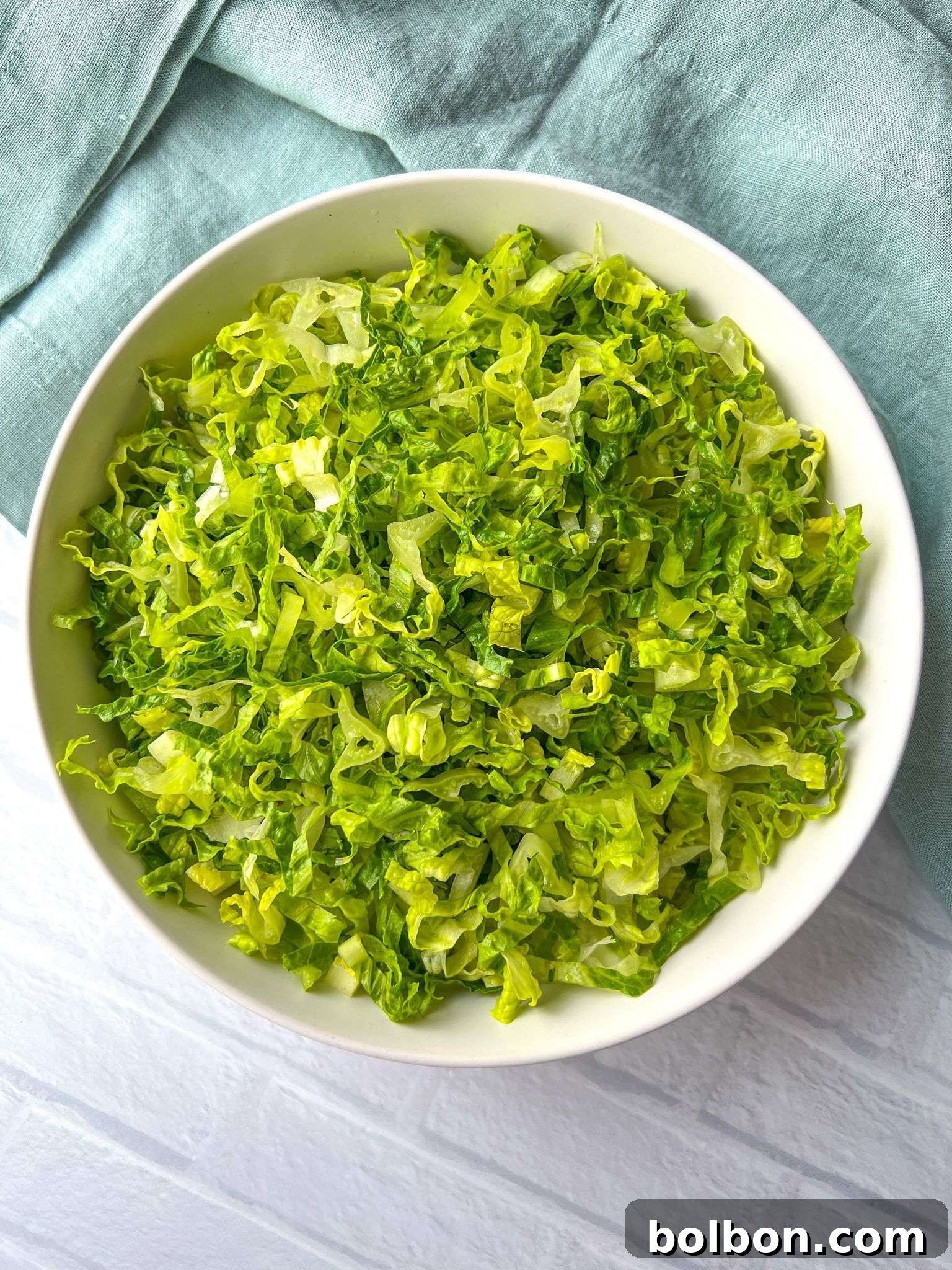
- Master the Chiffonade Slicing Technique: With your rolled lettuce firmly in one hand (using the ‘claw’ grip for safety, which we’ll discuss further in the common questions section), use your sharp knife to cut thin strips perpendicular to the roll. This specialized slicing technique is known as Chiffonade (pronounced “shiff-oh-NAHD”). Originating from French cuisine, chiffonade is specifically designed for cutting leafy green vegetables and herbs into long, delicate ribbons. By slicing across the tight roll, you create perfectly uniform, feathery strips that are ideal for salads, garnishes, and more. And just like that, you’ve mastered How to Shred Lettuce with a professional touch!
The Modern Nonna’s Essential Tip
Always use a sharp knife. While almost any kitchen knife can get the job done, a truly sharp blade makes a world of difference in safety, efficiency, and the final quality of your shredded lettuce. Take your time, focus on the technique, and let the sharpness of the blade do the work.
Expand Your Skills: Variations and Substitutions for Shredding
The beauty of the chiffonade technique isn’t limited to just romaine lettuce. Once you’ve mastered How to Shred Lettuce, you’ll discover that this invaluable method can be applied to a wide array of other common leafy vegetables and aromatic herbs, opening up a world of culinary possibilities. Don’t hesitate to experiment! I’d love to hear about your favorite applications in the comments section below.
- Explore Different Lettuce Varieties: While romaine is an excellent choice for shredding due to its firm leaves, you can certainly use other types of lettuce. Try this technique with crisp iceberg lettuce for a classic taco topping, vibrant butter lettuce for delicate wraps, or even red leaf lettuce for added color and texture in your salads. Each variety offers a slightly different mouthfeel and visual appeal.
- Venture Beyond Lettuce to Other Leafy Greens: The chiffonade method is perfect for preparing a host of other leafy greens that benefit from a finer cut. Consider finely shredding fresh spinach for a quick sauté or as a base for warm salads. Swiss chard and collard greens, often known for their tougher texture, become tender and more palatable when thinly sliced, making them ideal additions to stir-fries, soups, or even as a bed for roasted meats. Arugula, with its peppery bite, also benefits from a finer chop to distribute its flavor more evenly throughout a dish.
- Mastering Herbs with Chiffonade: This technique is traditionally used for flat-leaved herbs like basil. Imagine perfectly thin ribbons of basil to garnish a Caprese salad, sprinkle over pasta, or infuse into homemade pesto. You can also use it for mint to top a fruit salad or finely chop parsley for tabbouleh, ensuring uniform pieces that release their aromatic oils beautifully.
By experimenting with these variations, you’ll not only hone your knife skills but also broaden your culinary repertoire, making your meals more diverse and appealing.
Enhance Your Kitchen Skills: Related Tutorials
How to Dice an Onion
5 mins
How to Poach Eggs
6 mins
How to Dice Bell Peppers
5 mins
How to Cut a Pineapple
7 mins
Best Served With: Delicious Ways to Enjoy Shredded Lettuce
Once you’ve mastered the art of shredding lettuce, you’ll find endless possibilities to incorporate this perfectly prepared green into your meals. Finely shredded lettuce isn’t just a garnish; it’s a foundation that enhances the texture and flavor of countless dishes. Here are some of my favorite ways to enjoy it:
- Elevate Your Salads: The most obvious, yet most satisfying application! Try your beautifully shredded lettuce as the crisp base for vibrant salads like my flavorful Green Goddess Salad or the surprisingly delicious and nostalgic Big Mac Salad. The fine strands ensure every bite is coated with dressing and offers a delightful crunch.
- Perfect Pairing with Crusty Bread: A simple bowl of finely shredded lettuce, lightly dressed, makes an exquisite accompaniment to a warm, crusty bread. There’s nothing quite like dipping a piece of my homemade No Knead Peasant Bread into a vibrant salad filled with delicate greens.
- Complementary to Hearty Dishes: Shredded lettuce adds a refreshing counterpoint to richer meals. Serve it alongside grilled meats, hearty stews, or even a classic lasagna to cut through the richness and add a fresh element.
- Homemade Dressings: For the ultimate fresh experience, pair your shredded lettuce with a simple, homemade dressing. My creamy Nut Butter Honey Dijon Dressing is a fantastic option that beautifully coats each delicate strand of lettuce, maximizing flavor.
- Tacos, Wraps, and Sandwiches: Forget bulky, uneven chunks. Finely shredded lettuce is the ideal filling for tacos, burritos, wraps, and sandwiches. It distributes evenly, adds a satisfying crunch without overwhelming other ingredients, and stays neatly in place.
- Garnish and Finishing Touch: Use a sprinkle of finely shredded lettuce as a fresh, crisp garnish for soups, stir-fries, or even pizzas to add a touch of color and texture right before serving.
Common Questions About Shredding Lettuce and Knife Skills
When you are learning How to Shred Lettuce, or any knife work for that matter, using a steady cutting board is absolutely non-negotiable for safety. A board that slides on the counter is an accident waiting to happen. You have a few excellent options to ensure stability:
- Boards with Grips: Many modern cutting boards come equipped with rubber feet or a non-slip perimeter, designed to stay put on your countertop.
- Non-Slip Mats: Specialized silicone or rubber mats can be placed under any cutting board to provide an excellent gripping surface.
- Damp Paper Towel Method: This is my personal favorite, and it’s effective with any cutting board. Simply dampen a paper towel (or a thin kitchen towel), wring out the excess water so it’s moist but not soaking wet, and lay it flat on your counter. Place your cutting board directly on top of the damp towel. The moisture creates suction and friction, locking your board firmly in place. This simple trick provides incredible stability, giving you the confidence to slice efficiently and safely.
Proper knife grip is fundamental for control, precision, and safety. You should always have a sturdy, controlled hold on the knife. The common mistake I see is people placing their pointer finger on top of the knife blade. This reduces your control and can cause strain. Instead, wrap your entire hand around the handle, holding it closer to the blade (rather than the very end of the handle). Your thumb should be on one side of the blade, and your pointer finger curled around the other side, gripping the blade near the bolster (where the blade meets the handle). The remaining three fingers should comfortably wrap around the handle. This “pinch grip” provides maximum control over the blade’s movement, allowing for more stable and precise cuts. Your hand should not be near the very top of the handle, as this leaves you with minimal leverage and control over the cutting edge.
Safety in the kitchen, especially when handling sharp objects, is paramount. When learning How to Shred Lettuce or cutting any ingredient, always employ the “claw” technique with your non-cutting hand. Here’s how to do it:
- The Claw Hand: Curl the fingers of your non-cutting hand inwards, tucking your fingertips under your knuckles. Place your knuckles down firmly on the vegetable you are cutting, using them as a guide against the knife blade. Your knuckles will act as a protective barrier, preventing the knife from accidentally cutting your fingertips.
- Guiding the Blade: As you slice, your knuckles guide the knife. Always move your guiding hand back slowly and deliberately as you cut, maintaining the “claw” shape. This ensures your fingers are always safely out of the blade’s path.
- Pay Attention and Take Your Time: Stay focused on the task at hand. Avoid distractions. There’s no rush in the kitchen, especially when handling sharp tools. Go as slow as you need to! Patience is a virtue here; precision and safety come from deliberate, controlled movements, not speed.
- Enjoy the Process: Believe it or not, developing your knife skills can be a very relaxing and therapeutic activity. The rhythmic motion, the satisfaction of clean cuts, and the eventual delicious meal can be incredibly rewarding. Embrace the learning curve, practice regularly, and soon these techniques will become second nature.
How to Shred Lettuce
Facebook Share
Rate Recipe
Print Recipe
Salad
American, Bulgarian, Greek, Mediterranean
The Modern Nonna
10 minutes
10 minutes
Video Tutorial
Equipment
Instructions
-
Ensure your cutting board is completely stable. Use a board with grips, a non-slip mat, or a damp paper towel underneath to prevent any movement.
-
A sharp knife is absolutely essential for clean cuts and safety. A dull knife can bruise produce and is more prone to causing accidents. Wash your romaine lettuce leaves thoroughly and pat them dry to remove all excess moisture.
-
Stack 3-4 clean, dry lettuce leaves on top of each other. Tightly roll them up like a cigar.
-
Using your sharp knife, make thin cuts perpendicular to the rolled lettuce. This technique is called Chiffonade, resulting in long, thin strips perfect for any leafy green or flat-leaved herb like basil.
Additional Info
Salad
American, Bulgarian, Greek, Mediterranean