
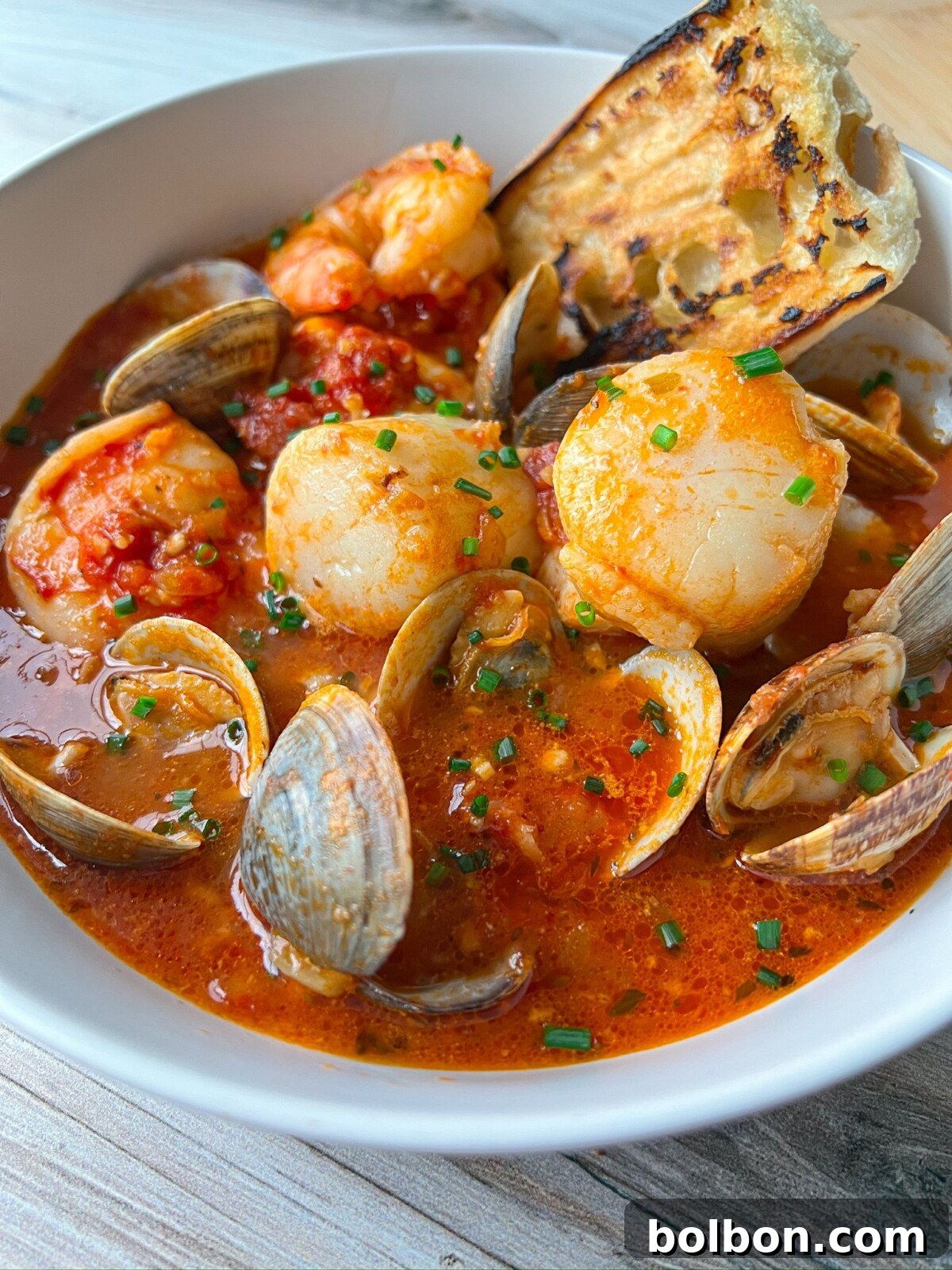
Embark on a delightful culinary adventure with our exquisite Cioppino recipe, a quintessential Italian-American seafood stew that promises to be the vibrant centerpiece of any meal. This deeply comforting dish masterfully blends a magnificent array of fresh seafood with a robust, aromatic wine and tomato sauce, culminating in the ultimate seafood feast. Originating in the bustling fishing port of San Francisco, California, Cioppino was traditionally crafted from the day’s fresh catch, a true testament to its humble yet incredibly rich beginnings.
In our household, preparing this magnificent stew is a cherished and eagerly anticipated tradition, particularly during the festive holiday season. It plays a starring role in celebrating Steve’s Southern Italian 🇮🇹 heritage, especially during the revered “The Feast of Seven Fishes” (Festa dei Sette Pesci). This enchanting Christmas Eve meal showcases seven distinct seafood dishes, each symbolizing abundance, cultural richness, and the joy of family gathering. Our Cioppino, with its diverse seafood bounty and profoundly flavorful broth, perfectly encapsulates the spirit and essence of this beloved annual celebration.
As a passionate seafood enthusiast, I find immense joy and satisfaction in creating this dish, not just for grand holiday gatherings but also whenever a craving strikes for something both light yet profoundly satisfying. Each spoonful of this rich, savory, and delicately briny stew has the remarkable power to transport you directly to the sun-drenched Italian seaside 🌊. Imagine yourself amidst the gentle lapping of waves, with the only worry on your mind being the pleasant dilemma of choosing the perfect glass of wine to complement your expertly prepared Cioppino. If you’ve yet to experience this culinary delight, I wholeheartedly encourage you to try this recipe – I guarantee it will become an instant favorite and a regular request from your loved ones!
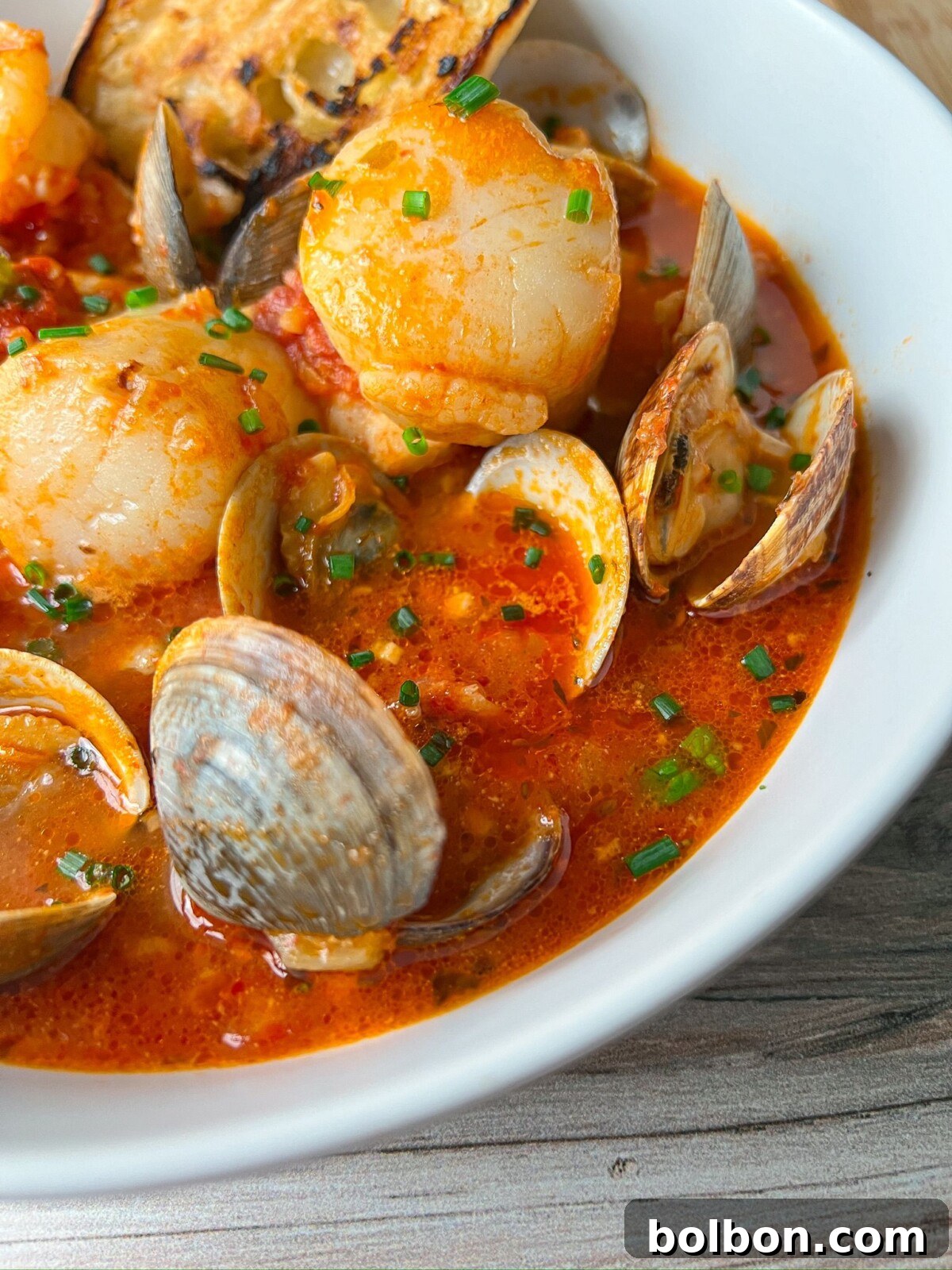
The Rich History and Humble Origins of San Francisco’s Cioppino
The fascinating story of Cioppino is as rich and multi-layered as the stew itself, deeply rooted in the vibrant, pioneering history of San Francisco. This iconic Italian-American dish first emerged in the late 1800s, born from the sheer resourcefulness, communal spirit, and culinary traditions of Italian immigrant fishermen. These resilient individuals settled in the city’s burgeoning neighborhoods, particularly around the bustling docks of North Beach and the iconic Fisherman’s Wharf, which quickly became centers of Italian culture.
According to enduring legend, if a fisherman returned to port empty-handed after a long, arduous day at sea, he wouldn’t despair or go hungry. Instead, he would take a pot and visit his fellow fishermen, asking them to “chip in” – a phrase phonetically akin to “cioppino” – whatever leftover seafood they had from their own day’s haul. This communal offering could include a diverse array of fresh catches, from various types of white fish to crabs, mussels, and clams that might not have been sold. Whatever ended up in that shared pot – be it humble scraps or prime pieces – was then combined with readily available ingredients like tomatoes, onions, garlic, and wine. The result was a hearty, nourishing stew that not only fed their families but also solidified the bonds within the tight-knit immigrant community, transforming potential scarcity into a warm, celebratory meal. Over time, this improvised, collaborative stew evolved from a simple fisherman’s sustenance to the refined yet rustic culinary staple known as Cioppino, a cherished symbol of San Francisco’s rich Italian culinary heritage that continues to captivate palates worldwide.
Why Our Cioppino Recipe Will Become Your New Culinary Obsession
Where does one even begin to praise the myriad merits of this sensational Cioppino recipe? It’s more than just a meal; it’s a multi-sensory experience that delights the palate and deeply comforts the soul. Not only is this Cioppino incredibly delicious, offering a symphony of savory, tangy, and briny flavors, but it’s also wonderfully comforting and surprisingly hearty, making it an ideal choice for both special occasions and a satisfying weeknight dinner. One of its most appealing and celebrated qualities is its complete customizability, empowering you to tailor it perfectly to your personal taste preferences and whatever fresh seafood is seasonally available.
For this particular recipe, we’ve carefully selected a delightful combination of flaky Haddock, plump, succulent clams, tender shrimp 🦐, and sweet scallops. However, the true beauty and adaptability of Cioppino lie in its unparalleled flexibility. You are absolutely encouraged to use any fish or seafood you adore or have on hand. Imagine enhancing your stew with flaky cod, firm halibut, rich salmon, sweet mussels, tender calamari rings, luxurious lobster chunks, or even delicate Dungeness crab. Each addition transforms the dish, offering new layers of flavor and texture. The possibilities are genuinely endless, ensuring that every pot of Cioppino you create can be a unique and exciting culinary adventure tailored precisely to your desires.
Beyond its versatility in ingredients, this rich and aromatic seafood stew can be savored in numerous delightful ways, each offering a distinct dining experience. You can enjoy it simply as it is, ladled generously into deep bowls, accompanied by some fresh, crusty bread – perhaps a rustic ciabatta or baguette – to dutifully soak up every last drop of that exquisite, flavorful broth. The interplay of the warm, savory liquid and the tender, perfectly cooked seafood is simply divine. Alternatively, for a truly indulgent and satisfying meal, you could boil your favorite pasta al dente – think linguine, spaghetti, or even a robust short pasta – and serve this phenomenal stew directly over it, transforming it into a decadent seafood pasta sauce 🍝. This fusion offers a hearty and deeply flavored dish that is utterly satisfying. Whether you prefer it as a rustic stew, a gourmet pasta topping, or simply with a spoon, this Cioppino recipe is destined to become a beloved and regular fixture on your culinary menu.
Crafting Your Perfect Cioppino: A Detailed Step-by-Step Preparation Guide
Creating this magnificent Cioppino is a remarkably straightforward process, but paying meticulous attention to each step ensures a truly exceptional and unforgettable result. Here’s a detailed guide to preparing your fresh seafood and expertly building the incredibly flavorful sauce that forms the heart of this dish.
Preparing the Fresh Seafood
- 🦪 Begin by thoroughly cleaning your clams. Place them in a large bowl filled with cold water and let them sit for at least 10 minutes. This crucial step encourages them to naturally release any hidden dirt and sand from within their shells. Drain the murky water, rinse the clams thoroughly, and repeat this entire process until the water remains perfectly clear. For an extra touch of cleanliness, you can also gently scrub their shells with a sturdy brush in the sink to remove any remaining grit.
- 🦐 Once meticulously cleaned, set the prepared clams aside. Also, ensure all your other seafood is ready to go: this includes your thawed (and peeled, if necessary) shrimp, your beautiful, sweet scallops, and the cubed white fish (such as haddock or cod). Having all your seafood prepped and waiting will make the final cooking stages smooth, efficient, and stress-free.
Building the Flavorful Tomato and Wine Sauce
- 🧅 In a large skillet with high sides, or a sturdy Dutch oven or pot, add the olive oil and let it heat gently over medium heat. Once the oil is shimmering and ready, add the finely diced onions and the bacon (if using). Sauté these foundational ingredients for a few minutes until the onions turn golden and translucent, and the bacon crisps up beautifully, releasing its savory aroma and rich flavor into the olive oil. This forms the essential foundational layer of your exquisite sauce.
- 🧄 Introduce the minced garlic to the skillet and cook for just 1-2 minutes, stirring constantly. Be extremely careful not to burn the garlic, as it can quickly turn bitter and ruin the delicate balance of flavors. Immediately after, pour in the white wine to deglaze the pan. Use a wooden spoon to vigorously scrape up any delicious browned bits from the bottom of the skillet, as these contain incredible concentrated flavor. Allow the wine to simmer and cook off completely, ensuring all the alcohol evaporates and leaving behind only its rich, complex essence.
- 🥫 Once the wine has significantly reduced, stir in the concentrated tomato paste and cook it for another minute or two, stirring frequently. This step is crucial, as it deepens the tomato flavor and removes any raw, metallic taste. Then, generously pour in the high-quality tomato sauce and your chosen vegetable or fish stock. Add the bay leaves and season the mixture generously with salt, freshly ground black pepper, and dried oregano. Bring the sauce to a gentle boil, then immediately reduce the heat to medium-low. Cover the pot with a lid, making sure to leave a slight opening to allow steam to escape and the sauce to thicken properly. Simmer the sauce for 20-30 minutes, or until it has thickened to your desired consistency. We aim for it to reduce by about half, beautifully concentrating and intensifying its flavors.
Adding the Seafood and Finishing Touches
- 👩🍳 When your rich, aromatic sauce has achieved its perfect thickness and flavor, it’s finally time to introduce the delicate seafood. Add the meticulously cleaned clams to the pot, nestling them gently into the sauce. Cover the pot tightly with the lid for approximately 3 minutes. The clams will naturally begin to open up anywhere between 3 to 8 minutes as they cook. It is absolutely essential to remember: if any clams do not open during this time, they should be discarded. Do not consume any unopened clams, as this is a clear indication that they were not alive or fresh, and consuming them could pose a health risk.
- 🐟 Finally, add the cubed fish, tender scallops, and succulent shrimp to the stew. Gently stir them into the hot sauce, ensuring they are well submerged and coated. Cover the pot with the lid once more. Cook for just another 2-3 minutes. This final step requires extreme vigilance: be exceptionally mindful not to overcook the delicate seafood, as it can very quickly become tough and rubbery, losing its tender texture and exquisite natural flavor.
- 🍽️ Remove the pot from the heat immediately to prevent any further cooking. Garnish your spectacular Cioppino with a generous sprinkle of finely diced fresh chives or any fresh herbs of your choice, such as vibrant parsley or fragrant basil. Serve piping hot, either alongside your favorite pasta (linguine or spaghetti work wonderfully) or with slices of fresh, crusty bread, perfect for soaking up every last drop of that incredible, savory broth! For an added touch, I love to buy a fresh ciabatta loaf, slice it, drizzle the top with olive oil, and grill it cut-side down on a grill pan until it’s beautifully charred and crisp. This creates a delightful textural contrast.
- This dish is always best served fresh, immediately after the seafood has cooked. While you can prepare the sauce ahead of time (cook it fully, let it cool, then store it in the refrigerator for up to 2-3 days and reheat), adding the fresh seafood just before serving ensures the best possible flavor and texture experience.
Nonna’s Essential Tips for Perfect Cioppino 🦐
Achieving the perfect, tender texture for your seafood is paramount to a truly successful Cioppino. Make sure you don’t overcook any of the delicate seafood, as even a minute too long can render it tough and unappetizingly rubbery. The fish, scallops, and shrimp require only a very brief cooking time at the end – typically just 2-3 minutes – so it’s crucial to keep a very close eye on them during this final stage. Furthermore, always, always discard any clams that do not open during cooking; this is a clear and important indication that they were not alive or fresh before cooking, and consuming them could pose a serious health risk. Adhering to these simple yet crucial tips will ensure your Cioppino is a culinary triumph every single time.
For an even deeper and more authentic flavor in your broth, consider using homemade fish stock. If opting for store-bought stock, always choose a low-sodium version to better control the overall seasoning of your stew. And remember to always taste your sauce before adding the seafood to adjust salt, pepper, and any other seasonings as needed – the sauce is the foundation of flavor!
Creative Variations and Smart Substitutions for Your Perfect Cioppino
One of the many joys of cooking Cioppino is its incredible adaptability and the freedom it offers for personal customization. This recipe serves as a fantastic foundation, but don’t hesitate to experiment and make it truly your own with these delicious variations and smart substitutions:
- You can get as wonderfully creative as you’d like with your seafood choices 🐟. Feel free to craft this recipe using a wider variety or different combinations of seafood. Options like flaky cod, firm halibut, rich salmon, sweet mussels, tender calamari rings, luxurious lobster chunks, delicate crab meat, or any other type of fish or shellfish you particularly enjoy can be incorporated. The key is always to select fresh, high-quality ingredients that you love to eat and that cook at similar rates.
- Regarding the tomato sauce, almost any good quality canned crushed tomatoes or tomato puree will work beautifully in this recipe. However, for the most authentic, vibrant, and pure flavor, we highly recommend choosing a sauce or product with cleaner, simpler ingredients, much like premium brands such as Rao’s. Our preferred homemade sauce, for example, contains only ripe tomatoes, a pinch of salt, and fresh basil, allowing the pure, sweet tomato flavor to shine through without overpowering the delicate seafood. You can find our beloved homemade tomato sauce recipe HERE.
- Don’t shy away from experimenting with different spices and seasonings to elevate the flavor profile of your stew. For those who appreciate a touch of heat 🔥, a pinch or two of red pepper flakes can add a delightful, warming kick. Alternatively, a dash of smoked paprika can introduce a wonderful smoky depth that beautifully complements the briny seafood. Consider adding a bay leaf during simmering or a sprig of fresh thyme for additional aromatic complexity and an herbaceous note.
- For an even heartier, more substantial, and perhaps more nutritious meal, consider incorporating some finely chopped vegetables into your sauce base. Diced bell peppers (red or yellow for sweetness), small cubes of potatoes (which will absorb the rich broth beautifully), or thinly sliced leeks can add wonderful texture, flavor, and additional nutrients, transforming the stew into an even more robust and filling dish. Add them with the onions and bacon to cook down and soften before adding liquids.
- Enhance the freshness and aromatic qualities of your Cioppino by stirring in a generous amount of fresh herbs just before serving. Finely chopped fresh parsley, fragrant basil, or earthy thyme can brighten the entire dish, adding a burst of green and a lift to the flavors.
- For a hint of bright freshness and a zesty, clean finish, consider grating some lemon 🍋 zest directly over the top of your finished stew or squeezing a touch of freshly pressed lemon juice just before serving. This acidic component beautifully cuts through the richness of the tomato sauce and awakens the natural flavors of the seafood, making them pop.
- While bacon adds a wonderful smoky depth and umami richness to the broth, enhancing its complexity, it is entirely optional. For a lighter version, or if you prefer a pork-free dish, simply omit the bacon. You can replace the rendered bacon fat with an extra tablespoon of olive oil to sauté your onions, ensuring your flavor base remains robust.
- If you prefer not to use white wine for deglazing the pan or in the sauce, an equal amount of **good quality fish or vegetable broth** makes an excellent non-alcoholic substitute. While the wine contributes a unique layer of acidity and depth, a flavorful broth will still contribute significant body and taste to your sauce, maintaining the delicious essence of Cioppino.
Explore More Delicious Seafood Recipes
If you’re a passionate lover of the ocean’s bounty and thoroughly enjoyed the vibrant flavors of this Cioppino, you’ll certainly want to explore these other fantastic and equally delicious seafood dishes from our collection:
Creamy Coconut Shrimp
Time: 20 mins
Creamy Shrimp Salad
Time: 13 mins
Branzino Recipe
Time: 40 mins
Fried Calamari
Time: 15 mins
Perfect Pairings: How to Serve Your Exquisite Cioppino
A truly exceptional meal is often elevated and defined by its thoughtfully chosen accompaniments. Our Cioppino, with its rich, aromatic broth and tender seafood, pairs beautifully with a variety of sides, each designed to complement and enhance its incredible flavors, ensuring a complete and satisfying dining experience:
- This hearty and flavorful stew pairs wonderfully with some truly fresh, crusty bread. We highly recommend a rustic loaf like our homemade No-Knead Peasant Bread. Its sturdy, chewy crust and airy, open interior are absolutely perfect for soaking up every last drop of that savory broth, ensuring none of its exquisite flavor goes to waste. For an extra touch of deliciousness, grilling or lightly toasting thick slices of ciabatta with a drizzle of good olive oil creates a delightful smoky crunch that adds another irresistible layer of enjoyment to your meal.
- For a more substantial and comforting meal, you could boil some pasta separately – a long strand pasta like linguine or spaghetti, which beautifully captures the sauce, or even a shorter, robust shape like paccheri or rigatoni that holds the chunks of seafood well. Serve this incredible stew generously spooned directly on top of the cooked pasta. The rich, seafood-infused sauce coats the pasta magnificently, transforming the dish into a decadent seafood pasta sauce that is utterly satisfying and deeply flavorful.
- For a lighter yet equally fulfilling and elegant option, consider serving your Cioppino on a bed of perfectly cooked white or wild rice. The rice absorbs the flavorful broth, providing a delicate yet satisfying contrast to the robust seafood and the tangy tomato sauce. This pairing is an excellent choice for those seeking a healthier alternative that doesn’t compromise on the vibrant flavors or comforting essence of Cioppino.
Frequently Asked Questions About Crafting the Perfect Cioppino
Here are some common questions and detailed answers to help you master your Cioppino recipe and achieve culinary success:
Any good quality crushed tomatoes or tomato puree will work effectively in this recipe. However, for the absolute best results and a truly authentic, vibrant flavor profile, we highly recommend choosing a sauce or product made with clean, simple, and high-quality ingredients, similar to premium brands like Rao’s. If you’re feeling ambitious and have the time, our homemade sauce, consisting only of ripe tomatoes, a pinch of salt, and fresh basil, creates an incredibly fresh and rich base that truly allows the seafood flavors to shine. You can find the recipe for our beloved homemade tomato sauce HERE.
The order of adding the seafood is a crucial step to prevent overcooking and ensure each type of seafood reaches its ideal texture. First, introduce the clams to the simmering sauce, as they generally take a bit longer to open and cook through. After a few minutes, once the clams have started to open, then add the more delicate and faster-cooking seafood: the cubed fish, scallops, and shrimp. These types of seafood cook very quickly, typically in just 2-3 minutes, so it’s essential to add them last and watch them extremely closely to avoid them becoming tough and rubbery.
Absolutely! The inherent beauty and versatility of Cioppino lie in its incredible adaptability to various seafood. You can be as creative and adventurous as you wish with your seafood choices. Feel free to customize this recipe with robust cod, flaky halibut, rich salmon, sweet fresh mussels, tender calamari rings, luxurious lobster, delicate crab, or any other type of fish or shellfish you particularly enjoy and find fresh. Always ensure your chosen seafood is of the highest quality and freshness for the best flavor and texture.
Yes, the bacon is entirely optional in this Cioppino recipe. While it adds a fantastic smoky and deeply savory depth to the broth, which many people adore and consider a vital flavor enhancer, you can certainly choose to leave it out for a lighter version or if you prefer a pork-free dish. If you decide to omit the bacon, you might want to add a bit more olive oil (perhaps an extra tablespoon) to sauté the onions and create a rich, aromatic base for your sauce.
If you prefer not to use white wine for deglazing the pan or as an ingredient in the sauce, a good quality vegetable or fish broth makes an excellent and effective substitute. While the white wine contributes a distinct layer of acidity and complex depth of flavor to the stew, choosing a flavorful broth that complements seafood will certainly help maintain the rich and savory taste profile of your Cioppino without the alcohol.
Yes, you can absolutely prepare the rich and flavorful sauce component of Cioppino in advance! Cook the sauce fully as instructed in the recipe, allow it to cool completely, and then store it in an airtight container in the refrigerator for up to 2-3 days. When you’re ready to serve, simply reheat the sauce gently on the stovetop until simmering, and then add your fresh seafood as per the recipe. This strategy is excellent for entertaining, as it significantly reduces last-minute cooking stress and ensures the seafood is cooked perfectly fresh.
Leftover Cioppino should be stored promptly in an airtight container in the refrigerator for no more than 1-2 days. While it can be reheated, please be mindful that seafood, especially delicate fish and shellfish, can become a bit tougher and lose some of its tender texture upon reheating. For the best culinary experience, it’s always ideal to enjoy Cioppino fresh. If reheating, do so gently on the stovetop over low heat until just warmed through, avoiding high heat which can further toughen the seafood.
Cioppino
Facebook Share
Rate Recipe
Print Recipe
Main Course
American, Italian
4 servings
The Modern Nonna
10 minutes
40 minutes
50 minutes
Video Tutorial
Essential Equipment
Ingredients
The Seafood
- 400 grams Haddock, cubed and deboned
- 12 clams, pasta clams that are soaked and scrubbed
- 8 tiger shrimp (thawed), large
- 6 scallops (thawed), large fresh ocean scallops
The Sauce
- 1.5 tablespoons olive oil
- 1 onion, finely diced
- 3 slices bacon, pancetta or guanciale also work (optional)
- 6 cloves garlic, minced
- 1 tablespoon tomato paste
- 1 cup tomato sauce, good quality
- 2 bay leaves
- 2 cups stock, veggie or fish stock
- ½ cup white wine, (Pinot Grigio recommended, or substitute with broth)
- 1 pinch salt
- 1 pinch pepper
- ½ teaspoon dry oregano
- chives, for garnish (or fresh parsley/basil)
Instructions
-
IMPORTANT NOTE: Remember to practice “Mise en place,” which translates to “everything in its place.” This means carefully preparing and measuring all of your ingredients before you begin cooking. This crucial organizational step will set you up for absolute success, ensuring a smooth, stress-free cooking process without having to scramble for ingredients mid-way.
Part 1: Seafood Preparation
-
1. Begin by thoroughly cleaning your clams. Place them in a large bowl filled with cold water, and let them sit for at least 10 minutes. This allows them to naturally purge and release any hidden dirt and sand from inside their shells. Drain the now murky water, rinse the clams meticulously, and repeat this entire process until the water consistently runs completely clear. For an extra touch of cleanliness, you can also gently scrub their shells with a sturdy brush in the sink to remove any remaining external grit.
-
2. Once meticulously cleaned, set the prepared clams aside. Also, ensure all your other seafood is perfectly ready to go: this includes your thawed (and peeled, if necessary) shrimp, your beautiful, sweet scallops, and the cubed white fish. Having all your seafood prepped, cubed, and waiting will make the final, rapid cooking stages of the stew smooth, efficient, and prevent any last-minute stress.
Part 2: Crafting the Rich Sauce
-
3. As part of your “mise en place,” ensure all your vegetables are finely chopped and every ingredient is accurately measured out before you even begin to cook the sauce. This proactive step is absolutely key to maintaining a smooth and enjoyable cooking flow.
-
4. In a large skillet with high sides (or a substantial Dutch oven or pot), add the olive oil and let it heat gently over medium heat. Once the oil is shimmering, add the finely diced onions and the bacon (if you are using it). Sauté these foundational ingredients for a good few minutes until the onions turn golden and translucent, and the bacon has browned and become beautifully crisp, releasing its rich, savory aroma and deep flavor into the olive oil. This forms the essential and aromatic foundational layer of your exquisite sauce.
-
5. Introduce the minced garlic to the skillet and cook for just 1-2 minutes, stirring constantly to prevent sticking. Be extremely careful not to burn the garlic, as it can quickly turn bitter and negatively impact the delicate balance of flavors in your stew. Immediately after, pour in the white wine (or broth substitute) to deglaze the pan. Use a sturdy wooden spoon to vigorously scrape up any delicious browned bits that may have accumulated at the bottom of the skillet, as these contain incredible concentrated flavor. Allow the wine to simmer and cook off completely, ensuring all the alcohol evaporates and leaving behind only its rich, complex essence.
-
6. Once the wine has significantly reduced, stir in the concentrated tomato paste and cook it for about a minute or two, stirring frequently. This critical step concentrates the tomato flavor and removes any raw, metallic taste, deepening the overall richness of the sauce.
-
7. Now, generously pour in the high-quality tomato sauce and your chosen vegetable or fish stock. Add two fragrant bay leaves and season the mixture generously with salt, freshly ground black pepper, and dry oregano. Bring the sauce to a gentle boil, then immediately reduce the heat to medium-low. Cover the pot with a lid, making sure to leave a small opening to allow steam to escape and the sauce to thicken properly.
-
8. Allow the sauce to simmer gently on low heat for 20-30 minutes, or until it has noticeably thickened to your desired consistency. We prefer to reduce it by about half to create a deeply flavored, robust, and concentrated base for the seafood, which makes all the difference.
-
9. When your rich, aromatic sauce has achieved its perfect thickness and flavor, it’s finally time to introduce the delicate seafood. Add the meticulously cleaned clams to the pot, nestling them gently into the simmering sauce. Cover the pot tightly and allow them to cook for approximately 3 minutes. The clams will naturally begin to open up anywhere between 3 to 8 minutes as they cook. It is absolutely essential to remember: if any clams do NOT open during this time, they must be discarded immediately. Do not consume any unopened clams, as this is a clear and important indication that they were not alive or fresh before cooking, and consuming them could pose a serious health risk.
-
10. After the clams have started opening, add the cubed fish, tender scallops, and succulent shrimp to the pot. Gently stir them into the hot sauce, ensuring they are well submerged and coated. Cover the pot with the lid once more. Cook for just another 2-3 minutes. This is a truly critical stage: be extremely vigilant and mindful not to overcook the delicate seafood, as it will very quickly become tough and unappetizingly rubbery if left on the heat for too long, completely ruining the texture.
-
11. Immediately take the pot off the heat to prevent any further cooking of the delicate seafood. Garnish your spectacular Cioppino generously with a vibrant sprinkle of finely diced fresh chives (or any fresh herbs of your choice, like fragrant parsley or sweet basil) and serve piping hot, either alongside your favorite pasta (linguine or spaghetti work wonderfully) or with thick slices of fresh, crusty bread, perfect for soaking up every last drop of that incredible, savory broth!
-
12. For an extra special touch that elevates the meal, I love to buy a fresh ciabatta loaf, slice it thickly, drizzle the top with a generous amount of good quality olive oil, and then place it cut-side down onto a hot grill pan until it’s beautifully charred and wonderfully crisp. This creates a delightful smoky crunch that perfectly complements the rich stew.
-
13. This flavorful dish is always best enjoyed fresh, immediately after the seafood has cooked to perfection. While you absolutely can prepare the delicious sauce ahead of time (cook it fully, allow it to cool, then store it in an airtight container in the refrigerator for up to 2-3 days and reheat), adding the fresh seafood just before serving ensures the best possible flavor, texture, and overall culinary experience.
Nutrition Facts (per serving)
Carbohydrates: 12g,
Protein: 39g,
Fat: 14g,
Saturated Fat: 3g,
Polyunsaturated Fat: 2g,
Monounsaturated Fat: 7g,
Trans Fat: 0.04g,
Cholesterol: 213mg,
Sodium: 1854mg,
Potassium: 790mg,
Fiber: 2g,
Sugar: 5g,
Vitamin A: 869IU,
Vitamin C: 9mg,
Calcium: 107mg,
Iron: 2mg
Nutrition information is automatically calculated and should only be used as an approximation. Individual results may vary based on exact ingredients and preparation methods.
Additional Info
Main Course
American, Italian