
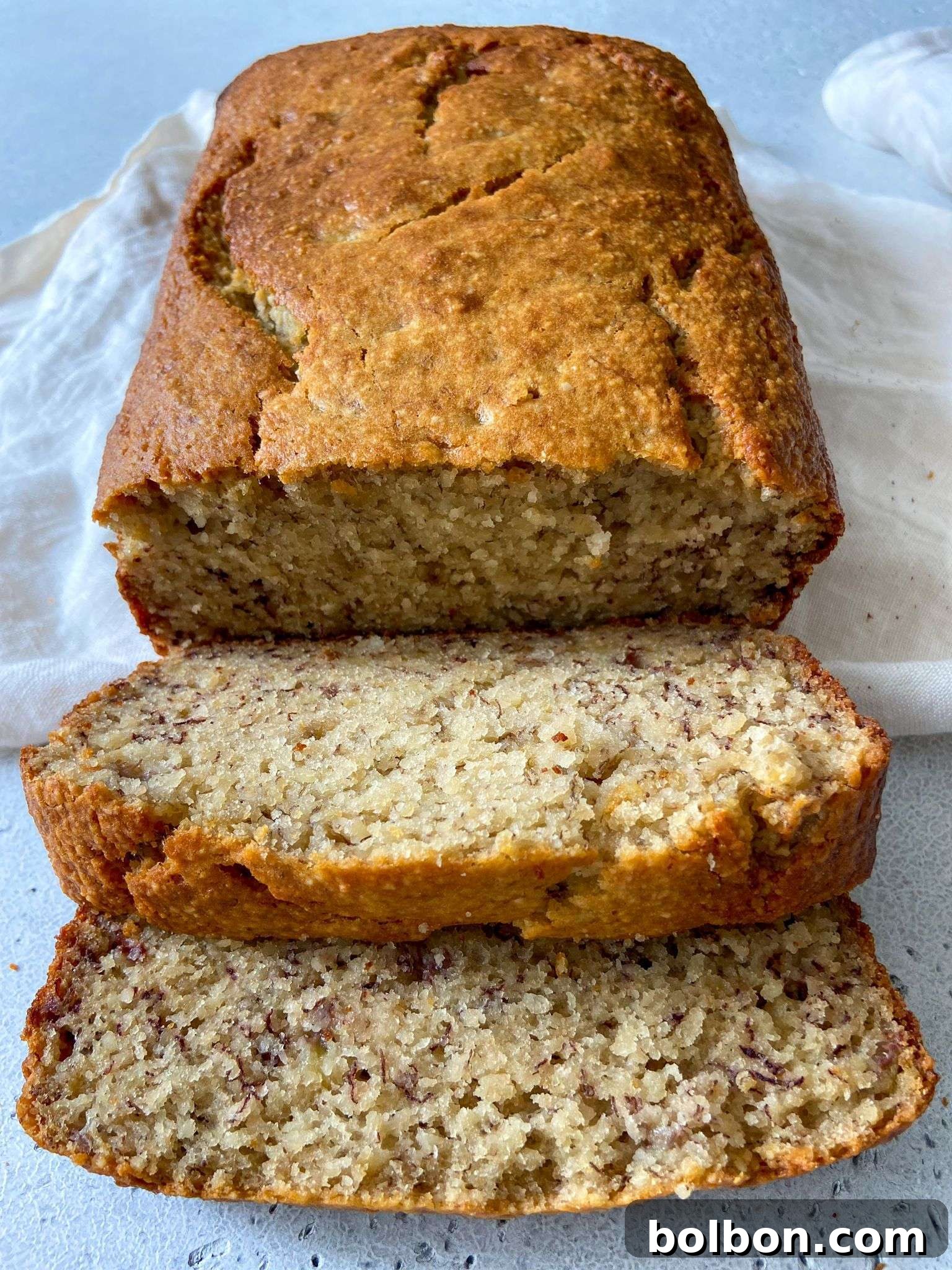
The Ultimate Gluten-Free & Dairy-Free Banana Bread: A Moist and Wholesome Delight
Imagine biting into a slice of banana bread so incredibly moist, tender, and bursting with rich banana flavor that you’d never guess it caters to dietary restrictions. That’s exactly what you’ll get with this revolutionary Gluten-Free Banana Bread recipe. What started as an unplanned substitution turned into an absolute revelation, yielding a loaf that is pure perfection. Originally intending to use almond flour, I found myself improvising with 🥥 coconut flour, a happy accident that gifted this bread its uniquely fluffy and delicate texture. Not only is it a triumph for those avoiding gluten, but with the inclusion of almond milk, it’s also entirely dairy-free. This recipe truly is a win-win, proving that healthier eating doesn’t mean compromising on taste or satisfaction.
This delightful banana bread is more than just a recipe; it’s an experience. It’s about indulging in a comforting treat that nourishes your body without sacrificing flavor. Whether you have specific dietary needs or are simply looking for a wholesome alternative to traditional baked goods, this gluten-free and dairy-free banana bread is destined to become a staple in your kitchen. Prepare to impress your family and friends, as they’ll be asking for the secret to its irresistible moistness and delightful sweetness.
Why This Gluten-Free Banana Bread Will Become Your New Favorite
This Gluten-Free Banana Bread strikes the perfect balance between wholesome ingredients and a robust, authentic banana flavor, making it an exceptional choice for a healthier indulgence. It’s designed to be simple, satisfying, and suitable for a wide range of palates and dietary preferences. Here’s why you’ll fall in love with it:
- Unrivaled Texture and Flavor: Forget dry, crumbly gluten-free baked goods! This recipe delivers a consistently moist, tender, and fluffy crumb that rivals any traditional banana bread. The natural sweetness from perfectly ripe bananas combined with rich 🍁 maple syrup creates a deeply satisfying flavor profile without the need for any refined white sugar.
- Dietary Inclusivity: Crafted to be both gluten-free and dairy-free, this banana bread is a fantastic option for individuals with sensitivities or those following specific dietary lifestyles. Using almond milk ensures its dairy-free status, while coconut flour provides a superb gluten-free base. It’s a treat truly everyone can enjoy.
- Wholesome Ingredients: Made with nutritious components like ripe bananas, eggs, and a healthy oil like avocado oil, you can feel good about every slice. It’s a guilt-free pleasure that fits seamlessly into a mindful eating plan.
- Effortless Preparation: This recipe is incredibly straightforward and comes together in just one bowl, minimizing cleanup and making it ideal for busy mornings or spontaneous baking sessions. You’ll love how quickly you can transform those ripe 🍌 bananas sitting on your counter into a delicious loaf.
- Versatile Treat: Perfect as a fulfilling breakfast, a satisfying mid-day snack, or a light and wholesome dessert. Its comforting aroma and taste make it suitable for any time of day.
- A Happy Accident with Coconut Flour: The use of coconut flour, originally an improvisation, contributes to the unique moistness and tender texture, setting this recipe apart. It’s surprisingly light for a gluten-free bread!
The Magic of Coconut Flour in Gluten-Free Baking
One of the key elements that makes this banana bread so exceptional is the strategic use of coconut flour. While often considered a more challenging gluten-free flour to work with due to its high absorbency, it truly shines in this recipe. Coconut flour is rich in fiber and protein, and when used correctly, it contributes to an incredibly moist and tender crumb that other gluten-free flours might struggle to achieve without additional gums or starches. Its unique properties help bind the ingredients beautifully, preventing the dryness often associated with gluten-free baked goods. This isn’t just a gluten-free alternative; it’s a delicious transformation.
Because coconut flour absorbs a significant amount of liquid, the quantity needed is much less compared to wheat or almond flour. This also means that variations in the size of your eggs and bananas can influence the final consistency of the batter. As Nonna wisely advises in her tip, “I used 1.5 cups of coconut flour but you might need a little bit less depending on how big the eggs and bananas are. The consistency of the dough should be wet and sticky.” Trust the process and observe the batter’s texture – it should be thick and somewhat sticky, not runny, but also not overly dry. This flexibility ensures your banana bread turns out perfectly every time, adapting to natural ingredient variations.
Step-by-Step: How to Prepare Your Gluten-Free Banana Bread
Preparing this wholesome banana bread is refreshingly simple, designed for maximum flavor with minimal fuss. Follow these easy steps to bake a loaf that will disappear in no time!
- 🌡️ Preheat Your Oven: Start by preheating your oven to 350°F (177°C). This ensures your oven is at the correct temperature when the batter is ready, promoting an even bake.
- 🍌 Combine Wet Ingredients: In a large mixing bowl, thoroughly mash your ripe bananas. To them, add the first seven ingredients from the recipe list (eggs, almond milk, vanilla extract, avocado oil, maple syrup, and a pinch of salt). Stir these together until they are well combined and smooth. This forms the flavorful liquid base of your bread.
- 🥥 Incorporate Dry Ingredients: Now, add the coconut flour, baking powder, and baking soda to the wet mixture. Stir gently until just combined. Be careful not to overmix, as this can lead to a tougher texture. The batter should be wet and notably sticky, as is characteristic when using coconut flour.
- 🥣 Prepare Your Loaf Pan: Line a standard loaf pan with parchment paper, leaving an overhang on the sides. This makes it incredibly easy to lift the baked bread out of the pan once it’s done. Pour the prepared batter into the lined loaf pan.
- 🥄 Evenly Distribute the Batter: The batter will be quite sticky, so use clean, slightly dampened hands or the back of a spoon to gently spread it evenly into the pan. This ensures a consistent bake and a beautifully shaped loaf.
- ⏲️ Bake to Golden Perfection: Place the loaf pan in your preheated oven and bake for 50-60 minutes. Baking times can vary slightly depending on your oven, so keep an eye on it. The bread is ready when it’s golden brown on top and a toothpick inserted into the center comes out clean.
- Cool and Enjoy: Once baked, remove the loaf from the oven and let it cool in the pan for about 10-15 minutes before carefully lifting it out by the parchment paper overhang. Transfer it to a wire rack to cool completely before slicing. This helps the bread set and prevents it from crumbling.
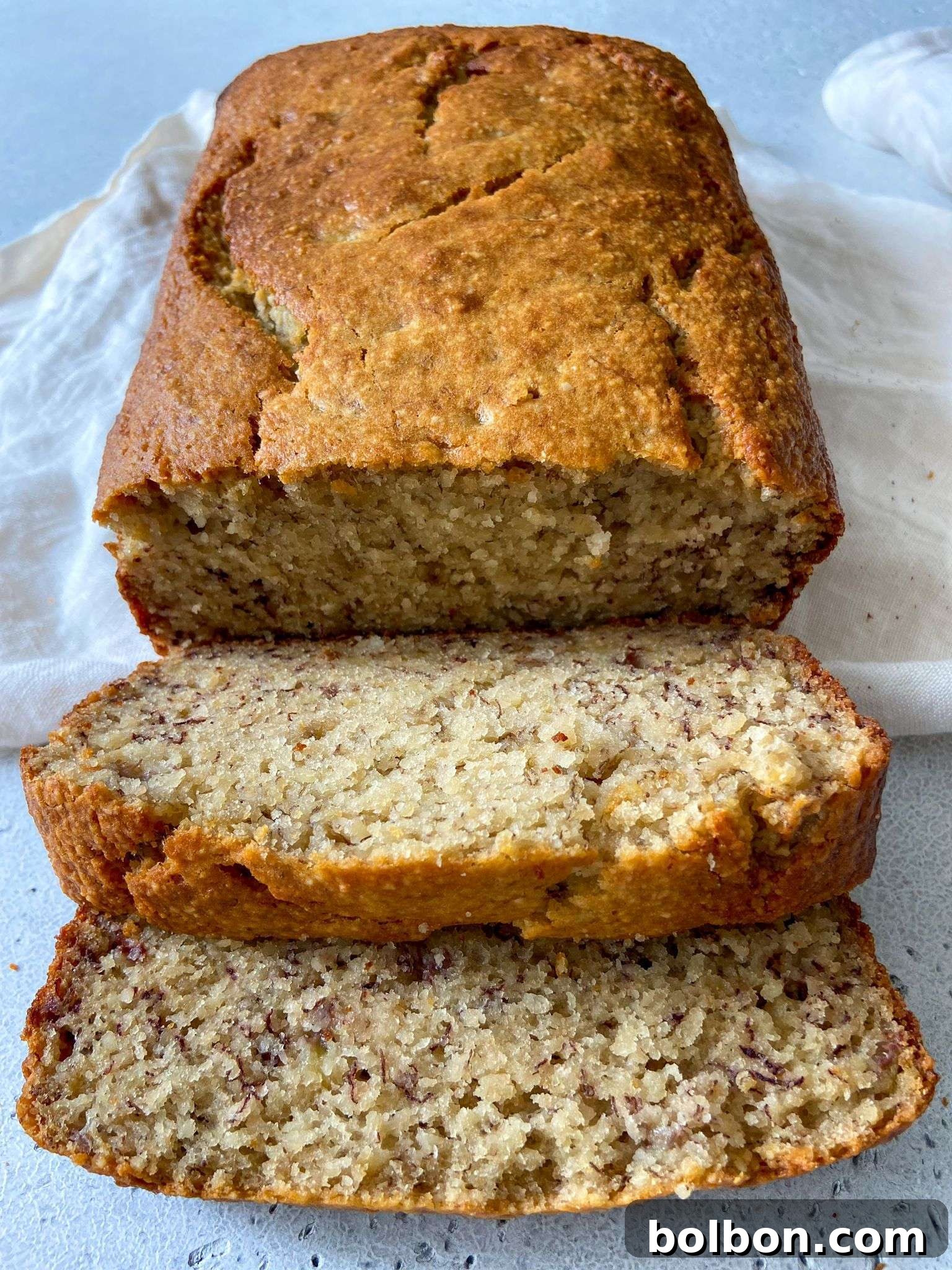
Variations and Substitutions to Customize Your Gluten-Free Banana Bread
This recipe is wonderfully adaptable, allowing you to tailor it to your preferences or whatever ingredients you have on hand. Don’t be afraid to experiment and make it your own!
- Flour Alternatives: If you’d prefer to use almond flour instead of coconut flour, be aware that you will need a significantly larger quantity. Coconut flour is highly absorbent, so if switching to almond flour, you will likely need to increase the amount to approximately 2.5 to 3 cups to achieve a similar batter consistency. Alternatively, a gluten-free all-purpose flour blend can also work, though results may vary, and you might need to adjust liquids. For a nut-free option, certified gluten-free oat flour can be a good substitute, again, likely requiring more than coconut flour.
- Sweetener Options: Feel free to use any liquid sweetener you like to complement the natural sweetness of the bananas. While maple syrup is recommended for its rich flavor and natural properties, alternatives like agave syrup or 🍯 honey will also work beautifully. For those looking to reduce sugar content further, a sugar-free maple syrup substitute could be considered, but adjust to taste.
- Choice of Oil: The type of oil you use can subtly influence the flavor and moisture of your banana bread. Avocado oil is a fantastic neutral-tasting option, but olive oil or canola oil are also excellent choices. If you’re not adhering to a dairy-free diet, melted 🧈 butter can also be used, adding a rich, classic flavor.
- Milk Variety: This recipe calls for almond milk to keep it dairy-free, but you can use whatever 🥛 milk variety you prefer. Oat milk or soy milk are great non-dairy alternatives that will also contribute a lovely creaminess. If dairy isn’t an issue, regular cow’s milk works perfectly fine.
- Can I add mix-ins like nuts or chocolate chips? Absolutely! Adding your favorite mix-ins is a fantastic way to personalize your banana bread and add extra flavor and texture.
- Favorite Mix-Ins: Consider folding in chopped nuts like walnuts, pecans, or almonds for a delightful crunch. 🍫 Chocolate chips (dairy-free if needed) are always a crowd-pleaser, or add shredded coconut for a tropical twist. Dried fruits such as raisins, cranberries, or chopped dates can also add bursts of sweetness and chewiness. Simply fold them into the batter just before pouring it into the loaf pan. For an extra special touch, sprinkle some over the top before baking.
- Spiced Banana Bread: Enhance the flavor profile by adding warm spices like cinnamon, nutmeg, or a touch of cardamom to the dry ingredients. About 1 teaspoon of cinnamon and ¼ teaspoon of nutmeg would be a great start.
- Make Muffins Instead: This versatile batter can easily be adapted for muffins! Simply pour the batter into a lined muffin tin and bake at 350°F (177°C) for approximately 20-25 minutes, or until a toothpick inserted into the center of a muffin comes out clean. This makes for a perfect grab-and-go breakfast or snack.
Best Served With
This Gluten-Free Banana Bread is delicious on its own, but pairing it with the right accompaniment can elevate the experience even further. Here are some of our favorite ways to enjoy it:
- A Warm Beverage: Serve a slice for breakfast or dessert with a freshly brewed ☕ coffee or your favorite herbal tea. The warmth of the drink perfectly complements the comforting flavors of the bread.
- Creamy Spreads: Enhance the richness by spreading a slice of banana bread with a spoonful of creamy 🥜 peanut butter, almond butter, or my luscious Homemade Nutella. A dairy-free cream cheese frosting would also be an indulgent treat.
- Fresh Fruit or Yogurt: For a lighter option, serve it alongside a bowl of fresh berries or a dollop of Greek yogurt (or dairy-free yogurt) for added protein and tang.
- Warm from the Oven: While delicious at room temperature, there’s nothing quite like a slice of banana bread warmed slightly in the microwave or toaster oven. The aromas intensify, and the bread becomes even more tender.
Storage and Freezing Tips for Freshness
To ensure your Gluten-Free Banana Bread stays fresh and delicious, proper storage is key. Whether you plan to enjoy it over a few days or save it for later, these tips will help:
- Room Temperature: Once completely cooled, store the banana bread in an airtight container at room temperature for up to 3-4 days. Placing a paper towel at the bottom of the container can help absorb any excess moisture and keep it from getting soggy.
- Refrigeration: For longer storage, you can refrigerate the banana bread in an airtight container for up to a week. The texture might become slightly firmer when cold, but it will still be delicious.
- Freezing for Long-Term: This banana bread freezes beautifully! Once completely cooled, wrap the entire loaf or individual slices tightly in plastic wrap, then place them in a freezer-safe bag or container. It can be stored in the freezer for up to 3 months.
- Thawing and Reheating: To thaw, simply remove from the freezer and let it come to room temperature on the counter. For a warm, freshly baked experience, you can gently reheat slices in the microwave for 15-30 seconds or in a toaster oven until warmed through.
Common Questions About Gluten-Free Banana Bread
Yes, you can experiment with different flour varieties. While coconut flour provides a unique moisture and texture, almond flour, oat flour (ensure it’s certified gluten-free), or a gluten-free all-purpose flour blend can be used. However, keep in mind that the absorbency and binding properties of flours vary significantly. Coconut flour is highly absorbent, so if using another flour, you will likely need to adjust the amount of flour (e.g., more almond flour, less liquid) to achieve the right batter consistency. Always start with less and add more if needed, aiming for a wet, sticky dough.
Absolutely! This recipe is flexible with sweeteners. Instead of maple syrup, you can use agave syrup or honey. For a truly refined sugar-free option, ensure your chosen sweetener aligns with your dietary goals. You can also slightly increase the amount of very ripe bananas for more natural sweetness and reduce the added sweetener, though this may affect moisture content slightly.
Yes, definitely! Have fun personalizing your banana bread with your favorite mix-ins. Popular choices include chopped nuts (walnuts, pecans), chocolate chips (dark, milk, or dairy-free), shredded coconut, or dried fruits like raisins or cranberries. For best distribution, fold them into the batter just before pouring it into the loaf pan. You can also sprinkle some on top before baking for a pretty finish.
Yes, you can certainly make delicious muffins using this recipe! Simply prepare the batter as directed. Line a standard muffin tin with paper liners and fill each cup about two-thirds full. Bake at the same temperature (350°F / 177°C) for a shorter duration, typically 20-25 minutes, or until a toothpick inserted into the center of a muffin comes out clean. Keep an eye on them as baking times can vary.
It’s a common culinary conundrum! The weight of ingredients, particularly flours, can vary significantly due to several factors. These include the specific brand of ingredients (different moisture content or grind size), the brand and style of measuring cups and spoons (wet vs. dry measures are different), and the technique used for measuring (scooping and leveling vs. spooning ingredients into the cup). For instance, 1 cup of flour might weigh 120g for one baker and 160g for another. For the most consistent and reliable results, especially in baking where precision is key, always go by the weight listed in the recipe if provided, or use a kitchen scale for accuracy.
For the best flavor and moisture, your bananas should be very ripe – ideally with dark brown spots or even mostly black peels. This indicates that the starches have converted to sugars, resulting in a naturally sweeter and more aromatic bread. Under-ripe bananas will result in a less flavorful and potentially drier loaf.
A dry loaf often indicates overbaking or too much flour. Ensure you measure your coconut flour accurately (do not pack it) and check for doneness with a toothpick. If it’s gummy, it might be underbaked or overmixed. Coconut flour can sometimes create a slightly denser texture if not enough liquid is present or if the mixture is overworked, developing gluten-like strands even without actual gluten. Make sure to combine ingredients just until uniform.
Gluten Free Banana Bread
This Gluten Free Banana Bread is the perfect blend of wholesome ingredients and big, banana flavor, making it a fantastic choice for a healthier treat. It’s also dairy-free!
Rating: 5 out of 5 stars (based on 3 votes)
Course: Dessert
Cuisine: American
Makes: 7 slices
Author: The Modern Nonna
Prep Time: 10 minutes
Cook Time: 1 hour
Total Time: 1 hour 10 minutes
Equipment
- Mixing Bowls
- Measuring Cups + Spoons
- Liquid Measuring Cup
- Loaf Pan
- Parchment Paper
Ingredients
- 3 ripe bananas
- 2 large eggs
- ¼ cup unsweetened almond milk (or any milk)
- 1 teaspoon pure vanilla extract
- ½ cup avocado oil (or any oil)
- ½ cup maple syrup (or any sweetener)
- Pinch of salt
- 1 ¼ – 1.5 cups coconut flour (depending on how big the eggs and bananas are)
- 1 teaspoon baking powder
- ½ teaspoon baking soda
Note: US Customary and Metric measurements are common in baking. For best results, it’s recommended to use the provided measurements as variations can occur depending on ingredient density and measuring methods.
Instructions
- Preheat oven to 350°F (177°C). In a bowl, mash the bananas and stir in the eggs, almond milk, vanilla extract, avocado oil, maple syrup, and salt.
- Add the coconut flour, baking powder, and baking soda and stir until just combined.
- Line a loaf pan with parchment paper and add in the batter.
- The batter will be really sticky, so use clean hands or the back of a spoon to distribute it evenly in the pan.
- Bake for 50-60 minutes, depending on your oven, or until golden brown and a toothpick inserted into the center comes out clean.
- Allow the bread to cool in the pan for 10-15 minutes before transferring to a wire rack to cool completely before slicing and serving. Enjoy!
Nutrition Information (per slice, approximately)
- Calories: 357 kcal
- Carbohydrates: 39g
- Protein: 5g
- Fat: 20g
- Saturated Fat: 5g
- Polyunsaturated Fat: 2g
- Monounsaturated Fat: 12g
- Trans Fat: 0.004g
- Cholesterol: 47mg
- Sodium: 216mg
- Potassium: 251mg
- Fiber: 9g
- Sugar: 22g
- Vitamin A: 100 IU
- Vitamin C: 4mg
- Calcium: 79mg
- Iron: 1mg
Nutrition information is automatically calculated and should be used as an approximation.
Similar Recipes You Might Love
Chocolate Banana Bread Recipe
50 mins
Best Banana Bread Recipe
1 hr 10 mins
Single Serve Banana Bread
35 mins
Gluten Free Banana Pancakes
20 mins
Healthy Banana Pancakes
10 mins
Healthy Banana Brownies
25 mins
COOKED IT? SLAYED IT? 💅
If you tried this incredible Gluten-Free Banana Bread recipe, we’d love to see your creations! Tag @themodernnonna on social media so I can hype you up 👏, and don’t forget to rate ⭐, drop a comment 💬, and show some love right here on the recipe! Your feedback helps others discover this amazing wholesome treat.