
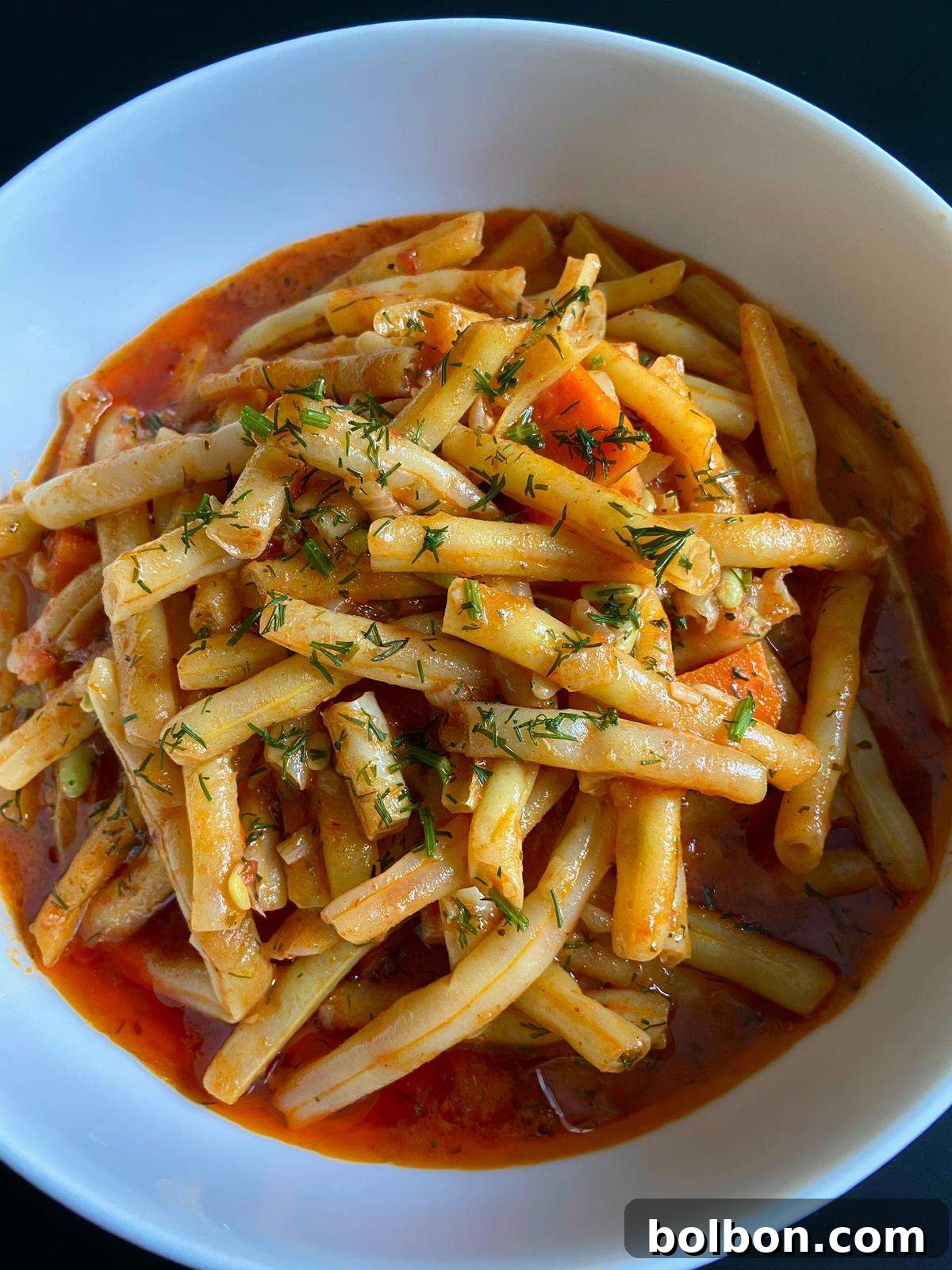
Delve into the heartwarming world of Fasolakia, an exquisite green bean stew that transcends borders, celebrated in both Greece 🇬🇷 and Bulgaria 🇧🇬. While widely known as Greek Fasolakia, we’re taking a journey to the heart of Bulgaria with the traditional “Zelen Fasul” – a beloved family recipe that elevates humble beans to an extraordinary culinary experience. This rich, savory, and incredibly comforting vegetable stew is a staple in Mediterranean and Balkan diets, cherished for its simplicity and profound flavor. Prepare to discover why this dish, particularly when crafted with tender yellow beans, becomes an instant favorite, slow-cooked to perfection in a luscious garlic-tomato sauce infused with fresh dill.
Why Fasolakia is Your Next Favorite Comfort Food
As summer draws to a close and the harvest yields its bounty, there’s no better time to embrace the seasonal goodness of fresh beans. Fasolakia, also known as Green Bean Stew or Zelen Fasul, is more than just a meal; it’s an ode to simple, quality ingredients and the magic of slow cooking. This recipe introduces you to the superior charm of yellow beans (often called wax beans), which boast a sweeter, more tender profile than their green counterparts, making them an ideal choice for a melt-in-your-mouth stew. Simmered in a vibrant tomato sauce brimming with aromatic garlic, earthy oregano, and fragrant dill, the beans transform into a velvety, deeply flavored dish that is both satisfying and incredibly nourishing.
Beyond its irresistible taste, Fasolakia is a powerhouse of nutrition, packed with vitamins, fiber, and wholesome goodness. It’s a testament to healthy eating without compromising on flavor, making it a perfect fit for a balanced diet. Whether you’re a seasoned home cook or new to Mediterranean cuisine, this stew is remarkably easy to assemble, relying on the quality of your produce to shine. Seek out the freshest, ripest tomatoes and crisp beans, then let the gentle simmer do the heavy lifting, infusing every bite with rich, layered flavors. This is not just a dish; it’s a comforting embrace, a healthful indulgence, and a testament to the timeless appeal of home-cooked food.
Mastering the Art of Bulgarian Green Bean Stew: A Step-by-Step Guide
Crafting the perfect Fasolakia is a straightforward process that yields incredibly rewarding results. The key lies in layering flavors and allowing ample time for the ingredients to meld beautifully. Here’s a detailed breakdown of how to bring this traditional Bulgarian Zelen Fasul to life in your kitchen:
- Sautéing the Aromatics: Begin by warming your preferred oil—avocado or olive oil work wonderfully—in a large, heavy-bottomed pot over medium-high heat. Add finely diced onions and sauté them gently, stirring occasionally, until they become translucent and fragrant, which typically takes about 5 minutes. This step is crucial as it forms the aromatic base of your stew, unlocking the sweet, savory essence of the onions.
- Building the Flavor Base: Once the onions are ready, introduce the diced carrots, minced garlic, dry oregano, and paprika to the pot. Stir well, allowing the spices to bloom in the hot oil for about a minute until their aroma intensifies. Next, add the tomato sauce and tomato paste, stirring thoroughly after each addition to ensure all ingredients are well combined. Season generously with salt at this stage; this helps to draw out the flavors and ensures the final stew is perfectly balanced. A minimum of 1 ½ teaspoons of salt is recommended, but adjust to your taste.
- Thickening and Combining: Sprinkle in the all-purpose flour and stir vigorously to create a smooth roux with the tomato mixture. This flour acts as a natural thickener, giving the stew its comforting, luscious consistency. Immediately add the trimmed yellow (or green) beans, stirring until each bean is thoroughly coated in the rich tomato sauce. Pour in just enough hot water to cover the beans completely. This ensures they braise evenly and absorb all the wonderful flavors.
- The Slow Simmer: Cover the pot with a lid, leaving a slight indent or crack to allow steam to escape. Bring the contents to a gentle boil, then reduce the heat to medium-low. Let the stew simmer for 30 to 35 minutes, stirring gently halfway through the cooking process. The goal is for the sauce to reduce and thicken further, and for the beans to become incredibly tender, almost melting in your mouth – a hallmark of perfectly cooked Fasolakia, far from an al dente bite.
- Finishing Touches: Once the beans are fork-tender and the stew has reached its desired consistency, remove the pot from the heat. Stir in the fresh dill, allowing its bright, herbaceous notes to infuse the hot stew. The residual heat will gently warm the dill without cooking out its delicate flavor. Serve immediately and savor the fruits of your slow-cooking labor.
Nonna’s Harvest Tip: The Best Beans
For the most exquisite Fasolakia, prioritize fresh yellow beans, often referred to as wax beans. These tender gems are at their peak season from midsummer through early fall. Seek them out at local farmers’ markets or specialty European grocery stores to ensure you’re getting the sweetest, most delicate flavor profile for your stew. While green beans are a suitable alternative, the unique sweetness and tenderness of wax beans truly elevate this dish.
Customize Your Fasolakia: Delightful Variations and Smart Substitutions
One of the beauties of Fasolakia is its versatility. While the core recipe remains comforting and delicious, you can easily adapt it to your preferences or what you have on hand. Here are some popular variations and substitutions to inspire your culinary creativity:
- The Greek Touch with Potatoes 🥔: In Greece, Fasolakia often incorporates chunks or slices of potatoes. These starchy additions cook down beautifully alongside the green beans, absorbing the rich tomato sauce and adding a hearty, filling dimension to the stew. If adding potatoes, cut them into medium-sized pieces (about 1-inch cubes) so they cook evenly with the beans and don’t turn mushy. Add them when you add the beans to the pot.
- Green Beans as a Classic Alternative: While our Bulgarian-inspired recipe champions yellow beans for their unique tenderness and sweetness, fresh green beans are a perfectly acceptable and delicious substitute. If using green beans, ensure they are fresh and vibrant; avoid canned or frozen varieties for this particular stew, as their texture and flavor won’t yield the same desired results. The cooking time might remain similar, but keep an eye on them to achieve that desired fork-tender consistency.
- Herbaceous Explorations 🪴: Dill is the traditional and preferred herb, lending a distinct freshness that complements the tomato and garlic beautifully. However, feel free to experiment with other fresh herbs. Parsley offers a bright, peppery note, while additional oregano can deepen the Mediterranean flavor profile. You might also consider a touch of mint for an unexpected burst of freshness, particularly if you’re aiming for a lighter, more vibrant stew.
- Tomato Sauce Your Way 🥫: The quality of your tomato sauce significantly impacts the overall flavor of Fasolakia. While a good quality, store-bought tomato sauce works perfectly, making your own homemade Italian tomato sauce can elevate the dish to another level of freshness and richness. Alternatively, you can use crushed tomatoes, diced tomatoes, or even fresh blended tomatoes for a seasonal twist. Just ensure the consistency is suitable for a stew, potentially adjusting the amount of water accordingly.
Explore More Mediterranean and Balkan Delights
If you’ve fallen in love with the wholesome flavors of Fasolakia, you’ll surely enjoy these other comforting and easy-to-make recipes from Mediterranean and Balkan traditions. Each dish brings its unique charm to your table, perfect for expanding your culinary repertoire:
Asian Style Green Beans
15 mins
Grilled Zucchini Recipe
10 mins
Italian Tomato Sauce
2 hrs 45 mins
Stuffed Peppers with Feta
50 mins
Elevate Your Meal: Perfect Pairings for Fasolakia
Fasolakia, with its rich and savory tomato base, is incredibly versatile and pairs beautifully with a variety of dishes. Whether you’re aiming for a traditional Mediterranean feast or a simple, wholesome meal, here are some ideal accompaniments:
- Classic Greek Mains: For an authentic Greek culinary experience, serve Fasolakia as a delightful side dish to a succulent Roasted Leg of Lamb. The robust flavors of the lamb beautifully complement the tender beans and tangy tomato sauce.
- Lemon-Infused Poultry: The brightness of lemon chicken is a fantastic counterpoint to the earthy notes of the stew. Consider pairing Fasolakia with a perfectly seasoned Spatchcock Greek Lemon Chicken 🍗 for a balanced and flavorful meal.
- Crusty Bread for Sopping: No Mediterranean stew is complete without a generous supply of fresh, crusty bread. My No Knead Peasant Bread is ideal for soaking up every last drop of the delicious, thickened tomato sauce, ensuring no flavor goes to waste.
- Bulgarian Breakfast & Brunch Staples: To truly embrace its Bulgarian 🇧🇬 heritage, serve Fasolakia alongside other traditional Bulgarian dishes. The flaky layers of Banitsa, the savory goodness of Spanakopita Toast, or the cheesy delight of Bulgarian Cheese Feta and Egg Toast offer delightful contrasts in texture and flavor, creating a truly authentic spread.
Your Fasolakia FAQs Answered
You can store leftover Fasolakia in the fridge in a tightly sealed container for up to 3 days. It often tastes even better the next day as the flavors have more time to meld.
No, not for this recipe. Unlike some dishes where beans are desired al dente, for Fasolakia, we specifically aim for them to be velvety soft and fall-apart tender. This texture is characteristic of a truly comforting, traditional stew, allowing them to fully absorb the rich sauce.
The flour serves as a crucial thickening agent, giving the stew its hearty, substantial consistency. If you need a gluten-free alternative or wish to omit it, you can use cornstarch, chickpea flour, or a 1-to-1 gluten-free flour blend. Whisk any of these alternatives with a small amount of cold water before adding to the stew to prevent lumps.
Yes, absolutely! While yellow (wax) beans are preferred for their unique tenderness and sweetness, fresh green beans are an excellent substitute. It’s important to use fresh beans, however; avoid canned or frozen varieties, as they will not achieve the desired texture and flavor profile.
Fasolakia is wonderfully versatile. I love enjoying a big bowl of these tender beans with some crusty bread to soak up the delicious sauce. You can also serve it as a fulfilling vegetarian main course, or as a hearty side dish alongside grilled chicken, roasted meat, or fresh fish for a complete and wholesome Mediterranean meal.
Fasolakia (Bulgarian Green Bean Stew)
Facebook Share
Rate Recipe
Print Recipe
Course: Main Course, Side Dish
Cuisine: Bulgarian, Greek
Makes: 4 servings
Author: The Modern Nonna
Prep Time: 10 minutes
Cook Time: 45 minutes
Total Time: 55 minutes
Video Tutorial
Equipment
- Cutting Board
- Chefs Knife
- Measuring Cups + Spoons
- Large Pot
Ingredients
- ⅓ cup avocado oil, or olive oil
- 1 onion, diced
- 1 carrot, peeled and diced
- 6 cloves garlic, diced
- 2 ½ teaspoons dry oregano
- 2 teaspoons paprika
- 1 cup tomato sauce
- 2 teaspoons tomato paste
- salt, to taste (minimum 1 ½ teaspoons recommended)
- 1 tablespoon all-purpose flour
- 2 pounds yellow beans, ends trimmed
- 2 ½ cups hot water
- ⅓ cup fresh dill, chopped, for garnish
Instructions
- Warm the oil over medium-high heat in a large pot. Add the onions and cook, stirring occasionally, until translucent, about 5 minutes.
- Add the carrot, garlic, oregano, and paprika. Stir between adding each ingredient. Then add the tomato sauce and tomato paste, stirring thoroughly. Season to taste with salt (I recommend a minimum of 1 ½ teaspoons). Add the flour and stir well until combined. Add the beans and stir until they’re coated in tomato sauce. Pour in just enough of the hot water to cover the beans.
- Cover the pot, leaving a small gap for air to escape. Once the contents come to a boil, reduce the heat to medium and let it cook for 30 to 35 minutes, stirring gently one time halfway through. The sauce should be reduced and thickened, and the beans should be fork-tender.
- Lastly, add the fresh dill and remove the pot from the heat. Serve hot and enjoy this delicious, comforting stew!
Nutrition Facts (per serving)
Calories: 296kcal, Carbohydrates: 28g, Protein: 7g, Fat: 19g, Saturated Fat: 2g, Polyunsaturated Fat: 3g, Monounsaturated Fat: 13g, Sodium: 341mg, Potassium: 834mg, Fiber: 6g, Sugar: 5g, Vitamin A: 3373IU, Vitamin C: 57mg, Calcium: 154mg, Iron: 4mg
Nutrition information is automatically calculated, so should only be used as an approximation.
Additional Information
Course: Main Course, Side Dish
Cuisine: Bulgarian, Greek