
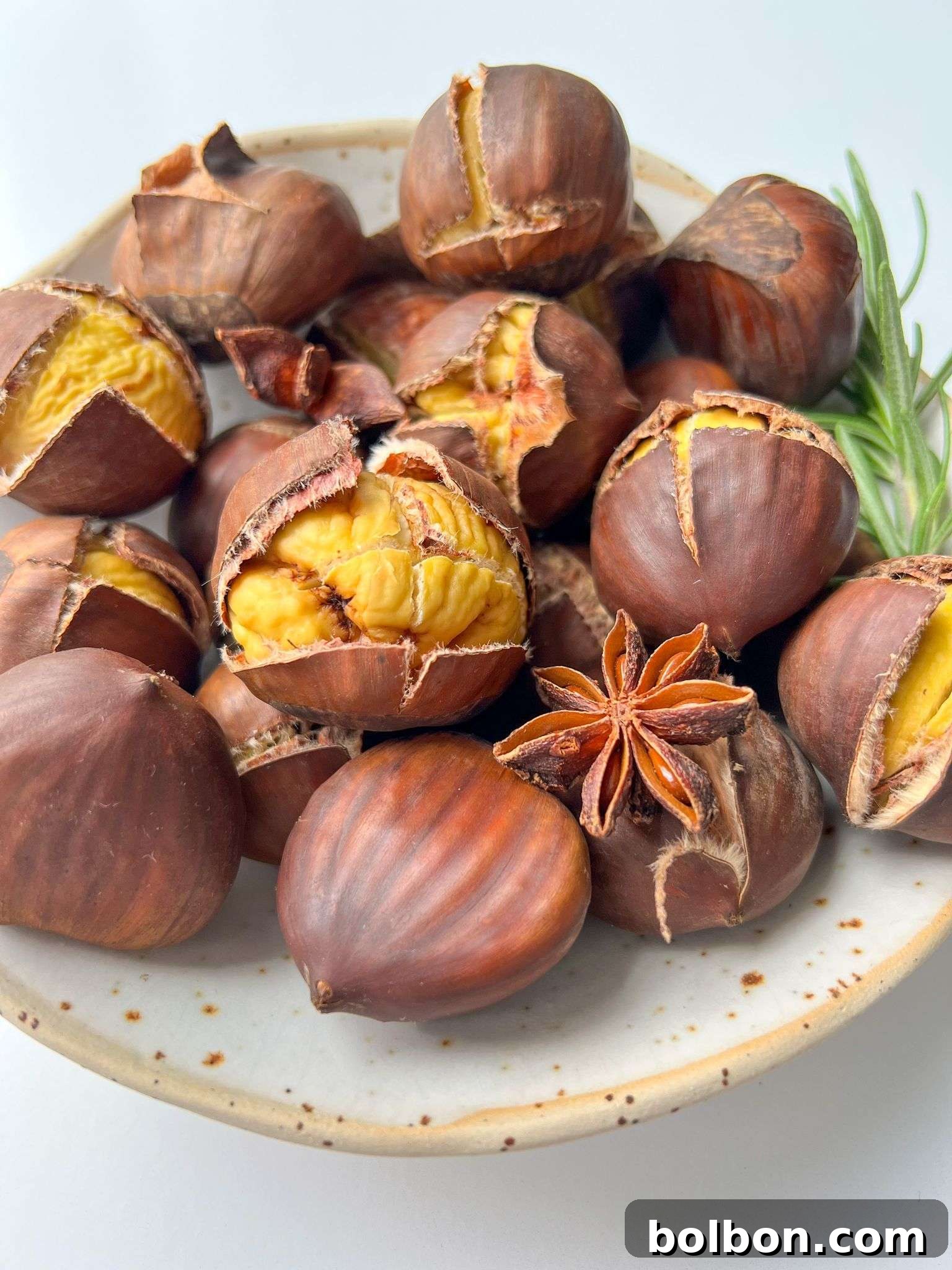
Welcome to the enchanting world of roasted chestnuts, a culinary delight that transforms simple nuts into a symbol of warmth, comfort, and festive cheer. For many, including myself, the season of chestnuts is a cherished annual event, marking the transition from autumn’s crisp air to winter’s cozy evenings. The moment these earthy treasures appear in grocery stores, typically around late October, until they gracefully exit the shelves, our home is filled with their irresistible aroma. I could savor them daily, and they evoke some of my most cherished and nostalgic memories. Growing up in Bulgaria, the experience was even more magical; city streets were abundantly lined with chestnut trees, offering a natural bounty that needed no purchase. These vivid childhood recollections bring me immense joy, and I am thrilled to introduce you to what I believe is one of the most nutritious, versatile, and utterly delicious nuts available.
Discover the Irresistible Charm of Roasted Chestnuts
There’s truly nothing quite like the comforting scent of roasted chestnuts wafting from the oven on a chilly winter night. It’s an aroma that is at once earthy, subtly nutty, and deeply nostalgic, instantly transporting you to cherished moments and simpler times. Beyond their captivating fragrance, roasted chestnuts offer a culinary experience that is both simple and profoundly satisfying. This timeless method of preparation masterfully enhances the chestnut’s naturally rich, sweet flavor, making them an ideal after-dinner treat or a versatile ingredient in a multitude of dishes. Imagine them finely chopped and sprinkled over a crisp winter salad, or as a decadent addition to your holiday turkey stuffing, infusing it with a unique depth of flavor and texture. But their appeal extends far beyond taste and aroma. Chestnuts are also remarkably nutritious, packed with an array of health benefits. They are renowned for their ability to aid in digestive health, improve cognitive function, bolster the immune system, help regulate blood pressure, and contribute to overall heart wellness. Considering how incredibly easy they are to prepare, there’s every reason to give this delightful snack a try and integrate it into your culinary repertoire.
A Nutritional Powerhouse
Unlike most nuts, chestnuts are relatively low in fat and high in complex carbohydrates, making them a fantastic source of sustained energy. They are rich in dietary fiber, which is crucial for a healthy digestive system, preventing constipation, and supporting gut health. Moreover, chestnuts are packed with essential vitamins and minerals, including a significant amount of Vitamin C, a rarity among nuts, which acts as a powerful antioxidant and supports immune function. They also provide B vitamins, such as folate, which is vital for cell development and brain health, and potassium, essential for maintaining healthy blood pressure and cardiovascular function. Their iron content contributes to oxygen transport in the blood, combating fatigue. With their unique nutritional profile, chestnuts offer a wholesome snack that nourishes your body while delighting your palate.
Selecting and Storing Fresh Chestnuts
The journey to perfectly roasted chestnuts begins with selecting the best quality nuts. When shopping for chestnuts, look for those that are firm to the touch, glossy, and heavy for their size. Avoid any that feel light, hollow, or have signs of mold, tiny holes (indicating worms), or soft spots. A good chestnut will have a taut skin without wrinkles. Once you’ve brought your fresh chestnuts home, proper storage is key to maintaining their freshness and preventing them from drying out or spoiling. Raw chestnuts should be stored in a cool, dark place, ideally in the refrigerator, in a perforated bag or a container that allows for some air circulation. This helps to prevent moisture buildup and keeps them fresh for several weeks. You can also freeze raw chestnuts for longer storage, ensuring you can enjoy them beyond their typical season. Simply place them in an airtight freezer-safe bag, and they’ll keep for up to six months. When ready to use, thaw them in the refrigerator before preparing.
How to Master the Art of Roasting Chestnuts
Roasting chestnuts is a surprisingly simple process that yields incredibly rewarding results. Follow these straightforward steps to achieve perfectly tender and easily peelable roasted chestnuts every time:
- **Preheat Your Oven:** Begin by preheating your oven to 350°F (177°C). This ensures a consistent temperature for even roasting.
- **Prepare the Chestnuts for Roasting:** This crucial step involves scoring each chestnut. Using a dedicated chestnut cutter or a sharp paring knife, make a deep cut (an ‘X’ or a single slit) across the flat side of each chestnut. Ensure the cut penetrates through the tough outer shell and the inner skin, but not into the nut itself. Place the chestnut flat on a sturdy surface, with the pointy end facing you, and make your incision on the wider, rounder part. This incision is vital as it allows steam to escape during baking, preventing the chestnuts from bursting in the oven and making them significantly easier to peel once cooked.
- **Arrange on a Baking Sheet:** Once all your chestnuts are properly scored, arrange them in a single layer on a baking sheet. Avoid overcrowding the pan, as this can lead to steaming rather than roasting.
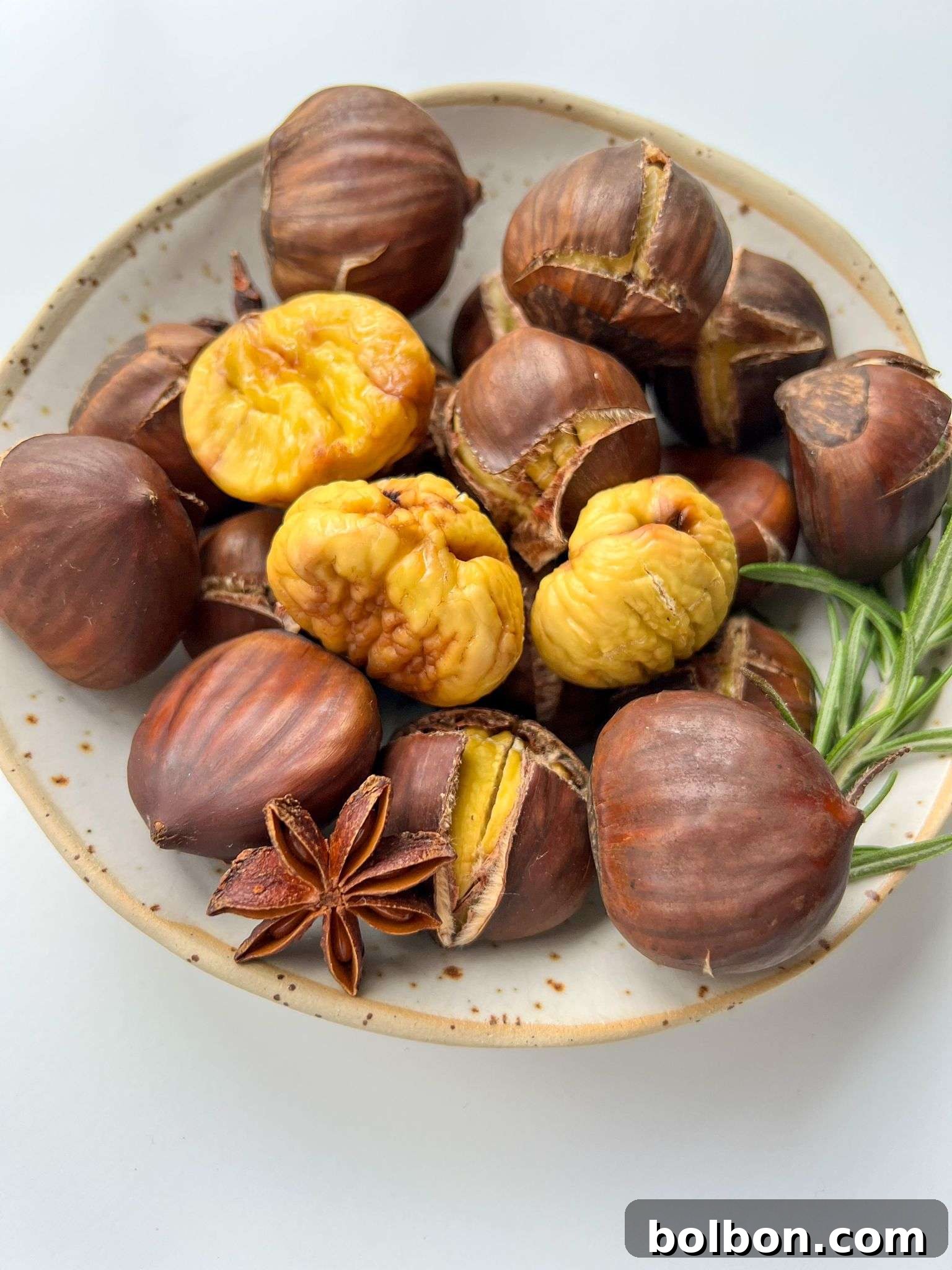
- **Roast to Perfection:** Place the baking sheet in your preheated oven and roast for approximately 30-35 minutes. Roasting times can vary slightly depending on your oven’s calibration and the size of the chestnuts. You’ll know they’re ready when the shells begin to curl back at the cuts, and the chestnuts feel tender when gently squeezed or pressed. For our oven, 30 minutes is usually sufficient, but always keep an eye on them.
- **The Steam & Rest Method:** Immediately after removing the chestnuts from the oven, transfer them into a bowl that has been lined with a clean, lint-free kitchen towel. Cover the bowl securely with the towel, creating a warm, steamy environment.
- **Peel While Warm:** Allow the roasted chestnuts to rest under the towel for about 5 to 10 minutes. This steaming period is critical; it further loosens the shells and the pesky inner skin, making them much easier to peel. Once slightly cooled but still warm, begin peeling. Peeling them while warm is paramount for effortless removal of both the outer shell and the fibrous inner membrane, often referred to as the pellicle. If they cool down too much, peeling becomes considerably more challenging.
Nonna’s Expert Tip
Scoring the chestnuts before baking is a time-honored tradition and an absolute must for successful roasting. This simple step serves two crucial purposes: it allows steam to escape from the nut during cooking, preventing them from bursting explosively in your oven, and perhaps even more importantly, it makes the arduous task of peeling significantly easier after they are roasted and rested. Trust Nonna on this one!
Creative Variations and Alternative Preparations
While oven roasting is our preferred method for its rich flavor and ease, chestnuts are wonderfully versatile and can be prepared in several delightful ways. Don’t hesitate to experiment and find your favorite:
- **Boiled Chestnuts:** If you prefer a softer texture, you are more than welcome to boil chestnuts. After scoring, simply place them in a pot of boiling water and cook for about 20-30 minutes, or until tender. While boiled chestnuts are delicious, we personally find the baked version offers a more intense, caramelized flavor.
- **Open Fire Roasting:** For an authentic, rustic experience, roasting chestnuts over an open fire is truly unparalleled. This method imparts a smoky depth of flavor that can’t be replicated. If you have a fireplace, fire pit, or even a grill, you can use a long-handled chestnut pan with holes or a heavy-duty cast-iron skillet. Be sure to score them first, and turn them frequently to ensure even cooking and prevent burning.
- **Using a Knife for Scoring:** Traditionally, and still commonly done, a sharp utility knife can be used to cut the chestnuts. Make an ‘X’ on the flat side, ensuring it penetrates both layers of skin. This method is more time-consuming than using a specialized cutter, and utmost caution must be exercised to prevent accidental cuts. Always use a stable cutting surface and keep your fingers away from the blade.
- **Air Fryer Chestnuts:** For a quick and efficient method, an air fryer can produce beautifully roasted chestnuts. Score them as usual, then air fry at 375°F (190°C) for 15-20 minutes, shaking the basket halfway through.
- **Microwave Prep for Easier Peeling:** While not for cooking, a quick microwave zap can sometimes aid in peeling. After scoring, microwave chestnuts on high for 30 seconds to 1 minute. This can make the inner skin easier to remove, especially for stubborn batches, before proceeding with your preferred cooking method.
Elevate Your Culinary Creations: Best Served With
Roasted chestnuts are not just a snack; they are a versatile ingredient that can enhance both sweet and savory dishes, adding a unique texture and a subtly sweet, nutty flavor. Here are some of our favorite ways to enjoy them:
- **As an Aperitivo or Charcuterie Board Addition:** Served warm, roasted chestnuts make a sensational aperitivo. Their comforting nature pairs beautifully with a glass of wine or cider. They are also a sophisticated and unexpected addition to a Charcuterie Board, offering a delightful counterpoint to savory meats, cheeses, and tangy preserves.
- **In Salads:** Roughly chopped roasted chestnuts add a wonderful crunch and subtle sweetness to winter salads. They pair particularly well with bitter greens like radicchio or endive, goat cheese, apples, and a balsamic vinaigrette.
- **Holiday Stuffing:** Elevate your traditional stuffing for Thanksgiving or Christmas by incorporating chopped roasted chestnuts. Their earthy sweetness complements herbs like sage and thyme, creating a rich and flavorful side dish that will impress your guests.
- **Soups and Stews:** Puréed roasted chestnuts can thicken and enrich creamy soups, adding a nutty depth. Whole or halved chestnuts can also be added to hearty stews for a unique texture and flavor dimension.
- **Desserts:** While often enjoyed savory, chestnuts are a classic dessert ingredient. Think chestnut purée for Mont Blanc desserts, candied chestnuts (marrons glacés), or simply chopped and added to cakes, muffins, or even ice cream.
- **Vegetable Side Dish:** Serve them alongside roasted root vegetables like carrots, parsnips, and Brussels sprouts for a hearty and flavorful side.
- **Breakfast Topping:** Chop them finely and sprinkle over oatmeal, yogurt, or pancakes for an unexpected twist.
Common Questions About Roasted Chestnuts
Cutting the chestnuts before baking is a critical step for two main reasons. First, it allows the steam generated inside the nut during cooking to escape, which prevents the chestnuts from bursting open in the oven. This ensures both safety and less mess. Second, the cuts help the shells and the inner membrane to loosen, making the chestnuts significantly easier to peel once they are roasted and rested, allowing you to enjoy them without hassle.
The key to easily peelable roasted chestnuts lies in a combination of proper scoring and the post-roasting steaming process. Using a specialized chestnut cutter creates a clean, deep cut that aids in peeling. After roasting, immediately transfer the hot chestnuts to a bowl, cover them with a lint-free kitchen towel, and let them steam for 5-10 minutes. This creates moisture and heat, which softens the shell and inner pellicle, making them slip off much more smoothly. Always peel them while they are still warm.
Yes, absolutely. While a chestnut cutter offers convenience and safety, a sharp paring knife can be used effectively. To score with a knife, carefully make an “X” or a single deep slit on the flat side of each chestnut, ensuring you cut through both the outer shell and the inner skin. Exercise extreme caution when using a knife, as chestnuts can be slippery, and always cut away from your body on a stable surface.
Roasted chestnuts are typically done when their shells begin to curl away from the cuts you made, and the nuts themselves feel tender when gently pressed. Another good indicator is their texture; they should be soft and slightly floury inside, not hard or crunchy. If you’re uncertain, you can carefully remove one chestnut from the oven, let it cool for a moment, and attempt to peel it. If it peels easily and the texture is as described, the batch is ready.
Yes, roasted chestnuts can be reheated. The best method is to gently warm them in an oven at a low temperature (around 250°F / 120°C) for 10-15 minutes, or in a dry skillet over medium-low heat until warmed through. Be careful not to overheat them, as they can dry out. A quick microwave zap is also an option, but it can sometimes make them a bit rubbery.
Once roasted and peeled, chestnuts can be stored in an airtight container in the refrigerator for up to 3-4 days. For longer storage, you can freeze roasted and peeled chestnuts in a freezer-safe bag or container for up to 2-3 months. Thaw them in the refrigerator before reheating.
Roasted Chestnuts
Facebook Share
Rate Recipe
Print Recipe
Snack
European
2
The Modern Nonna
5 minutes
35 minutes
40 minutes
Video
Equipment
Ingredients
-
1
cup
raw chestnuts
Instructions
-
Preheat your oven to 350°F (177°C).
-
Using a chestnut cutter or a sharp knife, make a deep ‘X’ or slit on the flat side of each chestnut. Ensure the cut goes through both the outer shell and the inner skin. This prevents bursting and aids in peeling.
-
Place the scored chestnuts in a single layer on a baking sheet. Bake for 30-35 minutes. Cooking time may vary depending on your oven and chestnut size. The shells should begin to curl back at the cuts, and the chestnuts should feel tender.
-
Remove the chestnuts from the oven and immediately transfer them to a bowl lined with a lint-free kitchen towel. Cover the bowl with the towel to allow the chestnuts to steam.
-
Let them rest for 5-10 minutes. This steaming process helps loosen the shells, making them much easier to peel. Peel the chestnuts while they are still warm for the best results.
Nutrition
Calories:
280
kcal
,
Carbohydrates:
63
g
,
Protein:
2
g
,
Fat:
2
g
,
Saturated Fat:
0.3
g
,
Polyunsaturated Fat:
1
g
,
Monounsaturated Fat:
1
g
,
Sodium:
3
mg
,
Potassium:
692
mg
,
Vitamin A:
37
IU
,
Vitamin C:
57
mg
,
Calcium:
27
mg
,
Iron:
1
mg
Nutrition information is automatically calculated, so should only be used as an approximation.
Additional Info
Snack
European