
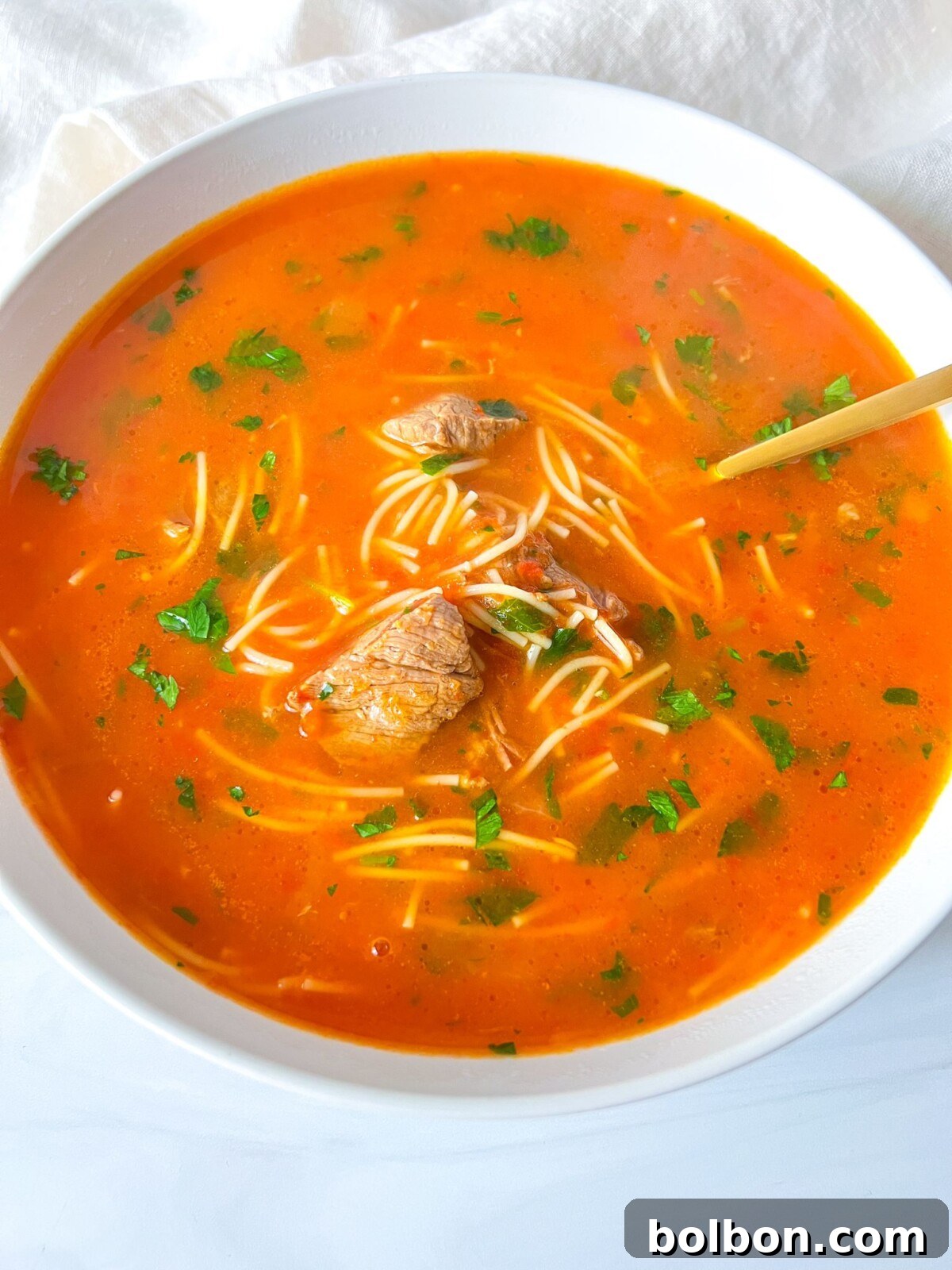
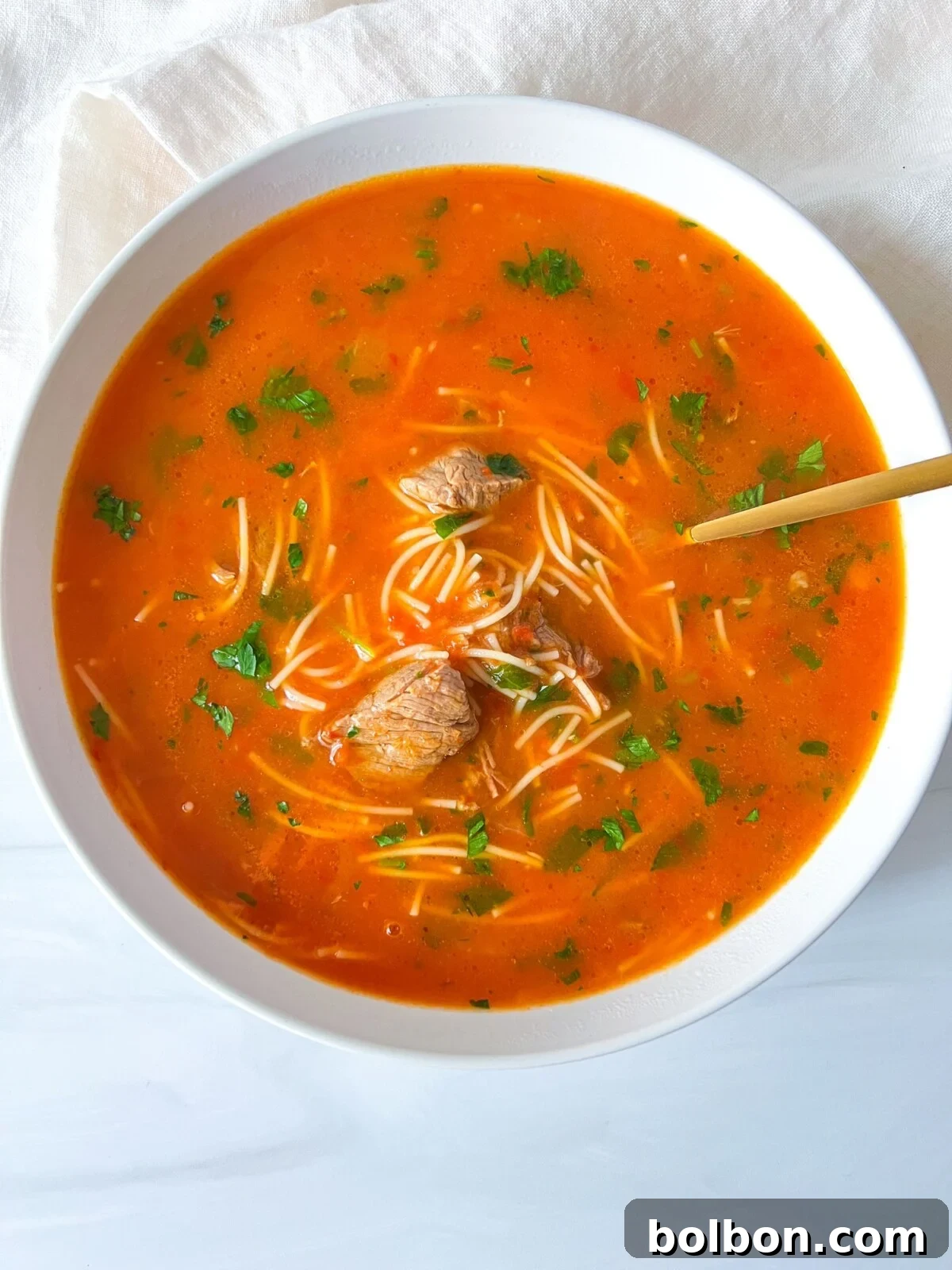
Embark on a culinary journey with this incredibly comforting and healthy Beef Noodle Soup, a truly heartwarming and robust meal perfectly suited for any day of the week. This recipe takes my father’s cherished, classic beef soup base and elevates it with a modern, family-friendly twist that I believe makes all the difference. While my dad taught me the fundamentals of crafting a rich beef soup, his traditional approach never included noodles or the clever technique of blending the vegetables back into the broth. These innovative additions transform the soup into a velvety, smooth, and irresistibly creamy concoction, subtly concealing all the nutritious vegetables in a way that delights everyone, especially those who might typically shy away from whole veggies. This isn’t just a meal; it’s a comforting embrace in a bowl, brimming with flavor and wholesome goodness.
Why This Beef Noodle Soup Will Become Your New Family Favorite
You’ll absolutely adore this Beef Noodle Soup for its harmonious blend of succulent, fall-apart tender beef, the silky texture of puréed vegetables, and delicate thin noodles, all coalescing to create a profoundly rich and creamy broth. Beyond its incredible taste, this soup is a powerhouse of nutrition, making it a guilt-free pleasure. It masterfully combines the best elements of my Dad’s time-honored recipe with a contemporary twist designed for modern palates. The genius lies in blending the vegetables, which ensures that even the most discerning eaters—especially children or those sensitive to textures—will enjoy a hearty dose of goodness without even realizing it. This adaptation ensures maximum flavor and nutritional intake, transforming simple ingredients into an extraordinary dish that’s both comforting and incredibly good for you. It’s truly the ultimate healthy comfort food, perfect for chilly evenings or whenever you crave a soulful, satisfying meal.
Mastering the Art of Homemade Beef Noodle Soup: A Step-by-Step Guide
Crafting this delightful Beef Noodle Soup is a straightforward process, yielding incredibly flavorful results. Follow these detailed steps to achieve a rich, tender, and creamy soup:
💦 **Step 1: Initiate the Broth Base.** In a large pot filled with water (or your preferred unsalted broth for an even deeper flavor foundation), add the whole, peeled vegetables such as garlic cloves, onion, carrots, and celery ribs. Place the pot over high heat and bring the liquid to a vigorous boil. This initial stage extracts the foundational flavors from the vegetables, creating a aromatic base for the beef.
🥩 **Step 2: Introduce the Beef.** Once the water reaches a full boil, carefully add the beef stewing meat. For quicker cooking and easier eating, you may cut the meat into smaller, uniform chunks, though larger pieces will also tenderize beautifully over time. Allow the meat to boil for a few minutes. During this time, impurities will rise to the surface in the form of foam. Use a slotted spoon to diligently skim off and discard any foam, ensuring a clean and clear broth for your soup.
🫒 **Step 3: Begin the Simmering Process.** After skimming, add a tablespoon of olive oil to the pot. Reduce the heat significantly to low. Semi-cover the pot with its lid, allowing steam to escape while retaining moisture. Let the soup gently simmer for a full hour. This slow cooking phase is crucial for beginning the tenderization of the beef and further infusing the broth with deep, savory flavors.
🍅 **Step 4: Season and Enhance.** After the first hour of simmering, it’s time to season your soup. Add salt to taste, remembering that you can always add more later but cannot remove it. Next, stir in the plain tomato sauce. The tomato sauce adds a wonderful depth of flavor, a subtle tang, and a beautiful color to the broth. If using homemade tomato sauce with added seasonings like basil, adjust your salt accordingly.
🔥 **Step 5: Continue to Tenderize.** Semi-cover the pot once more and allow the soup to continue its slow simmer for another hour. This extended cooking time is key to achieving melt-in-your-mouth tender beef. The goal is for the meat to be incredibly soft, easily shredding with a fork. Periodically check the meat for tenderness during this phase.
🥕 **Step 6: Create the Creamy Vegetable Base.** Once the meat is perfectly tender, carefully remove the cooked vegetables from the pot using a slotted spoon. Transfer these softened vegetables to a blender. Add a ladle or two of the flavorful broth from the pot to aid in blending. Blend the mixture until it is completely smooth and creamy, with no visible chunks. This purée is what gives the soup its luxurious, velvety texture and hides all those healthy veggies. Carefully return this smooth vegetable purée to the pot, stirring it into the beef and broth. The soup will instantly gain body and richness.
♨️ **Step 7: Cook the Noodles.** Bring the soup back to a gentle boil. Add your chosen noodles to the pot. Cook the noodles directly in the soup for approximately 5-6 minutes, or according to package directions, until they are al dente. Cooking them in the broth allows them to absorb the wonderful flavors of the soup.
🌿 **Step 8: Garnish and Serve.** Remove the pot from the heat as soon as the noodles are cooked. Ladle the hot, fragrant Beef Noodle Soup into individual bowls. Garnish generously with fresh, finely chopped parsley. The vibrant green parsley adds a burst of freshness and a beautiful aromatic finish. Serve immediately and enjoy this comforting, homemade masterpiece!
Nonna’s Essential Tip for Blending Hot Liquids 🥩
When blending hot soup or any hot liquid, safety is paramount to prevent spills and burns. Always blend in small batches, filling the blender jar no more than half full. Crucially, remove or loosen the center cap of the blender lid to allow steam to escape. Place a clean dishcloth over the lid to catch any splatters, and hold the lid down firmly while blending. Start on the lowest speed and gradually increase. This technique ensures a smooth purée without dangerous pressure buildup.
Creative Variations & Smart Substitutions for Your Beef Noodle Soup
One of the beauties of homemade soup is its versatility. Feel free to customize this Beef Noodle Soup recipe to your liking, remembering that adding or changing ingredients might require a bit of experimentation to adjust quantities and cooking times for optimal flavor and texture. Don’t be afraid to make this recipe truly your own!
- **Vegetable Medley Enhancements:** Beyond the core vegetables, feel free to incorporate a variety of other root vegetables. Delicious additions include chunks of 🥔 potatoes, parsnips for a touch of sweetness, or turnips for an earthy note. For added color and nutrients, consider stirring in leafy greens like fresh 🥬 spinach or chopped kale towards the very end of the cooking process, allowing them just enough time to wilt into the hot soup while retaining their vibrant color and nutrients. You can also add peas or green beans for extra texture and flavor.
- **Flavor Boost with Stock:** For an even richer and more complex broth, consider adding some Vegetable Stock Cubes, or any high-quality bouillon, to the boiling water at the beginning of the cooking process. This can significantly deepen the savory profile of your soup, especially if you’re using plain water as your base. Remember to adjust salt content accordingly if using salted stock cubes.
- **Alternative Proteins:** While beef is the star of this recipe, it’s incredibly adaptable to other proteins. You can easily prepare this comforting soup with tender pieces of 🐔 chicken (thighs work wonderfully), lean turkey, savory pork, or even delicate lamb. Adjust simmering times as needed; poultry, for instance, will cook faster than beef or lamb. Ensure the meat is fully cooked and tender before proceeding.
- **Wholesome Vegetarian Version:** For a delightful vegetarian rendition, simply omit the beef and use a robust vegetable broth as your base. Incorporate plant-based proteins such as firm tofu (pressed and cubed), flavorful tempeh, or a hearty mix of 🫘 beans (like cannellini or kidney beans) and lentils. These additions will provide excellent texture and make the soup satisfyingly filling. Consider adding mushrooms for an umami depth.
- **Noodle and Grain Alternatives:** The “noodle” aspect of this soup is highly flexible. Instead of traditional egg noodles, try small pasta shapes like pastina or orzo, or break up regular spaghetti into shorter pieces. For a more substantial meal, use cooked rice or nutritious quinoa. If you’re looking for a low-carb or gluten-free option, spiralized zucchini or cauliflower rice are excellent substitutes that integrate seamlessly into the creamy broth. There are truly so many wonderful options to customize this aspect of the soup to suit any dietary preference or craving!
Explore More Comforting Soup Recipes
If you loved this Beef Noodle Soup, you’re sure to enjoy these other heartwarming and family-friendly soup recipes from our kitchen. Each offers a unique flavor profile while delivering that familiar comfort you crave.
Hearty Meatball Soup Recipe
50 mins
Classic Beef Soup Recipe
2 hrs 10 mins
Hidden Veggie Meatball Soup
55 mins
Hidden Veggie Chicken Soup
50 mins
Perfect Pairings: What to Serve with Beef Noodle Soup
This rich and hearty Beef Noodle Soup is a satisfying meal on its own, but it truly shines when paired with a few complementary sides that enhance its flavors and textures. Here are some of our favorite recommendations:
- **Crusty Bread:** There’s nothing quite like a slice of warm, crusty 🥖 bread to soak up every last drop of the delicious, creamy broth. My personal favorite is my No Knead Peasant Bread, which offers a perfect balance of a chewy interior and a crisp crust.
- **Fresh Green Salad:** To balance the richness of the soup, a light and refreshing 🥗 salad is an excellent choice. A simple green salad with a bright vinaigrette, such as my Simple Green Salad, provides a fresh contrast and adds a wonderful crunch to your meal.
Common Questions About Beef Noodle Soup
For an exceptionally rich and nourishing broth, I highly recommend any of the bone broths from Kettle and Fire. They provide an incredible depth of flavor and added health benefits. You can click HERE to visit their site and use my exclusive code THEMODERNNONNA for a generous 20% off your purchase!
Absolutely! The beauty of this recipe is its flexibility. You can confidently use unsalted veggie broth, chicken broth, or another beef broth variety. If you’re feeling ambitious and want to control the ingredients precisely, making your own broth at home is always an excellent option. Alternatively, for a quick and flavorful boost, feel free to use my homemade Vegetable Stock Cubes to create a delicious broth directly in the pot for your Beef Noodle Soup!
I typically use Redmond Real Salt for its natural mineral content and balanced flavor. It’s important to note that different types of salt (table salt, kosher salt, sea salt) can have varying levels of salinity. Therefore, depending on the salt you choose, your dish may be less or more salty. Always taste your soup as you cook and adjust the salt to your personal preference. Seasoning to taste is key to achieving a perfectly balanced flavor!
Ensuring your meat is perfectly tender and safe to eat is essential for the best Beef Noodle Soup experience. While the simmering times provided are a good guide, meat thickness and type can vary. If you want to be completely confident, you can most definitely use a meat thermometer to check the internal temperature. Beef should reach at least 145°F (63°C) for medium-rare, though for stewing meat that is meant to be fall-apart tender, you’ll cook it beyond this point until it easily shreds. The best indicator is a fork-tender texture.
Packing this soup for a child’s lunch is a fantastic idea to provide them with a warm, nutritious meal! Here’s a simple trick to keep it piping hot until lunchtime: first, add boiling hot water into their thermos, close the lid, and let it sit for a few minutes to pre-heat the container. In the meantime, thoroughly warm up the Beef Noodle Soup on the stovetop until it’s steaming. Just before packing, carefully dump the hot water out of the thermos. Immediately add the warm soup, ensuring you leave some room at the top. This prevents a vacuum seal from forming, which can make the thermos incredibly hard for little hands to open later.
Yes, absolutely! This Beef Noodle Soup freezes wonderfully, making it perfect for meal prep or saving for a busy day. Simply allow the soup to cool down completely to room temperature before transferring it into a freezer-safe container. Ensure the container is airtight to prevent freezer burn. It can be stored in the freezer for up to 3 months.
When you’re ready to enjoy your delicious homemade Beef Noodle Soup from the freezer, the simplest method is to transfer the frozen container to the refrigerator and allow it to thaw overnight. Once thawed, you can reheat it gently on the stovetop over medium-low heat, in the microwave, or even in an oven-safe pot. Make sure to heat it thoroughly until it’s steaming hot all the way through. You may find that the consistency has thickened slightly after freezing and thawing, so feel free to add a splash of water or extra broth to achieve your desired consistency.
Beef Noodle Soup
Facebook Share
Rate Recipe
Print Recipe
Video Tutorial
Equipment
Ingredients
- 3.5 L water, or unsalted broth for richer flavor
- 5 garlic cloves, whole and peeled
- 1 large onion, whole and peeled
- 2 carrots, whole and peeled
- 2 celery ribs, cut in half for easier blending
- 1 lb. beef stewing meat, (approx. 0.45 kg), cut into desired chunks
- 1 tablespoon olive oil
- 1 cup plain tomato sauce, (preferably homemade for best flavor)
- 1 tablespoon salt, or to taste, adjust as you cook
- 1.5 cups egg noodles, or thin noodles (fide), or pasta of choice
- Fresh parsley, finely chopped, for vibrant garnish
Instructions
-
Begin by placing a large pot of water (or broth) on the stove over high heat. Add your whole, peeled vegetables: garlic cloves, onion, carrots, and celery ribs. Allow the water to come to a full, rolling boil.
-
Once the liquid is boiling, carefully add the beef stewing meat. You can cut the stewing meat into smaller, bite-sized chunks if you prefer, or leave them larger for a more rustic feel. Let the meat boil for several minutes, then use a slotted spoon to diligently skim off and discard any foam or impurities that rise to the surface. This step ensures a clean, flavorful broth.
-
Now, add the olive oil to the pot. Reduce the heat to a very low simmer, then semi-cover the pot with its lid. Allow the soup to gently simmer for one full hour. This initial simmering period helps tenderize the meat and allows the flavors to meld.
-
After the first hour, it’s time to season. Add salt to taste, remembering to start with a little and add more as needed. Next, stir in your plain tomato sauce. My personal choice is homemade tomato sauce, which typically contains only basil, salt, and tomatoes, contributing a fresh, rich flavor to the soup.
-
Semi-cover the pot again and continue to let the soup slowly simmer for another hour, or until the beef is incredibly tender and easily pulls apart with a fork. Once the second hour of simmering is complete, carefully remove all the cooked vegetables from the pot using a slotted spoon. Transfer them to a blender along with a ladle or two of the hot broth, then blend until perfectly smooth and creamy.
-
Return the smooth, blended vegetable purée back into the pot with the beef and broth, stirring well to combine. Bring the soup back to a gentle boil, then add your choice of thin noodles (like fide or egg noodles). Cook the pasta according to package directions, usually 5-6 minutes, until al dente. As soon as the pasta is cooked, remove the soup from the stove. Ladle into bowls, garnish generously with fresh, finely chopped parsley, and enjoy your delicious, comforting Beef Noodle Soup!
Nutrition Information (Approximate)
Nutrition information is automatically calculated and should only be used as an approximation. Actual values may vary based on specific ingredients and preparation methods.