
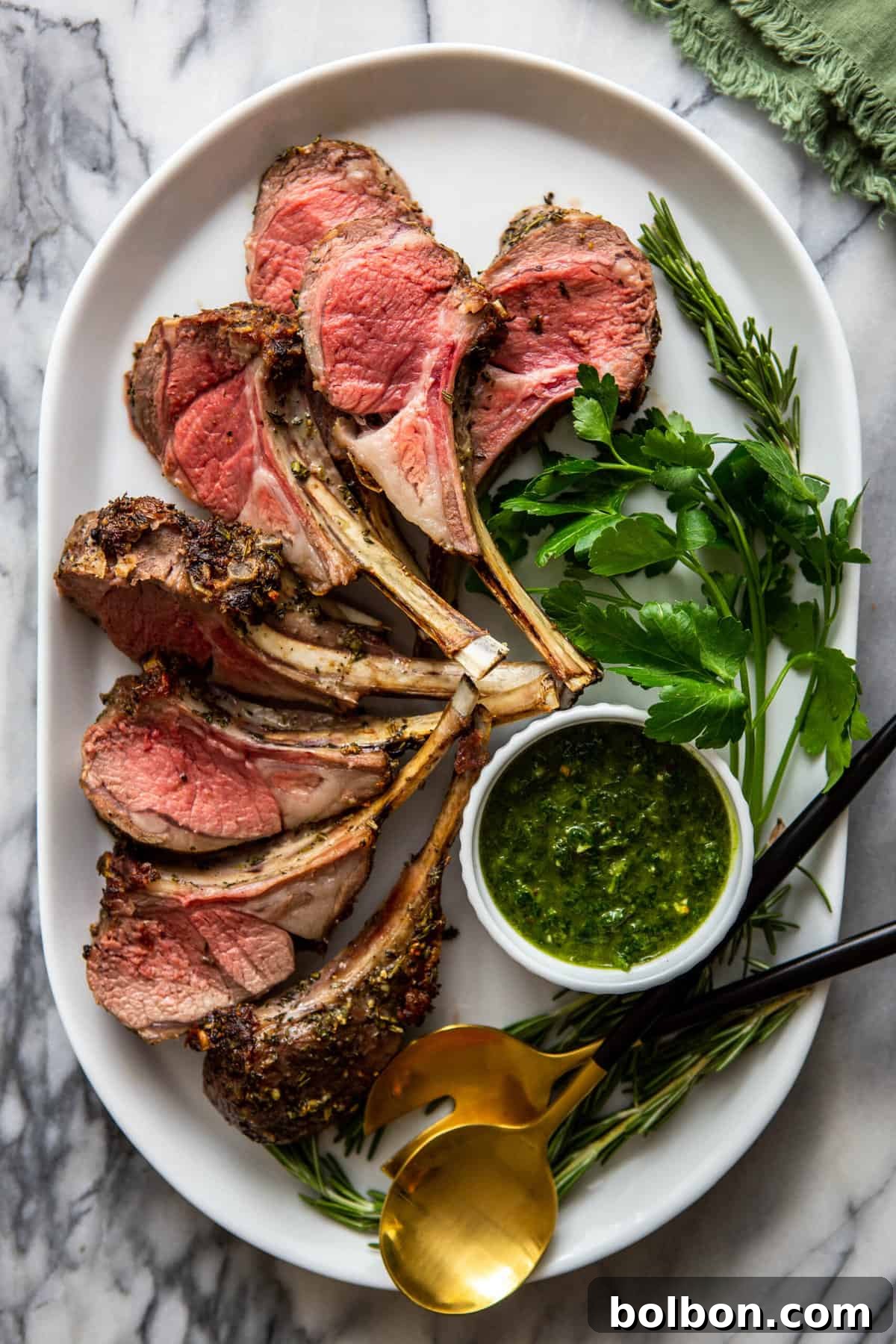
Elevate your dinner table with a show-stopping dish that looks incredibly impressive yet is surprisingly simple to prepare: our Garlic and Herb Roasted Rack of Lamb. This exquisite recipe promises a succulent, flavorful centerpiece perfect for any special occasion, from an elegant Easter dinner to a memorable holiday feast, or even a celebratory weekend meal. Forget the intimidation often associated with lamb; this method ensures a perfectly cooked, tender, and juicy rack every single time, making gourmet dining accessible for every home cook.
Rack of lamb, often considered the crown jewel of lamb cuts, embodies the essence of spring dining and is a quintessential choice for festive gatherings like Easter. Our recipe demystifies its preparation, making it so straightforward you might even consider it for a regular weeknight treat. The secret lies in a simple yet incredibly potent paste of fresh garlic and aromatic herbs – rosemary and thyme – which infuses the rich, earthy lamb with an unforgettable burst of flavor. One of the many advantages of this recipe is its make-ahead potential; you can prepare the lamb, rub it with the herb mixture, and let it marinate in the refrigerator for several hours or even overnight, deepening those incredible flavors. When you’re ready to dine, the rack of lamb cooks surprisingly quickly in the oven, meaning less time in the kitchen and more time enjoying your guests and the delicious meal.
Understanding Rack of Lamb: A Premium Cut
Before diving into the cooking process, let’s appreciate the cut itself. A rack of lamb consists of typically 7-8 ribs, taken from the loin area of the lamb. It’s renowned for its tenderness and delicate flavor. Often, racks are “Frenched,” meaning the meat and fat are trimmed from the ends of the bones, exposing them for an elegant presentation. While your butcher can do this for you, it’s also a straightforward task to do at home. This cut is naturally lean, making proper cooking techniques essential to ensure it remains moist and tender.
Why This Garlic and Herb Combination Works Wonders
The synergy between garlic, rosemary, and thyme is a classic for a reason, especially when paired with lamb. Garlic, when roasted, mellows and sweetens, adding a foundational depth of flavor without being overpowering. Fresh rosemary introduces a robust, piney, and slightly peppery note that beautifully complements lamb’s inherent richness. Thyme contributes a more subtle, earthy, and floral aroma, balancing the stronger flavors. Together, these herbs create a fragrant crust that enhances every bite, transforming a simple piece of meat into a gourmet experience. While fresh herbs are highly recommended for their vibrant flavor, in a pinch, high-quality dried herbs can be used, though you might need to adjust the quantities slightly as dried herbs are more concentrated.
Achieving Perfect Doneness: What Temperature Should Rack of Lamb Be Cooked At?
Cooking lamb to your desired level of doneness is crucial for taste and texture. The United States Department of Agriculture (USDA) recommends a minimum internal temperature of 145 degrees Fahrenheit (63°C) for safety, followed by a three-minute rest. However, many lamb enthusiasts prefer their rack of lamb cooked to a medium-rare or rare doneness, which yields a more tender and juicy result. The key to consistently perfect lamb lies in using a reliable meat thermometer. It takes the guesswork out of cooking and ensures you hit your preferred temperature every time. Investing in a quality instant-read thermometer, like a Thermapen, is invaluable for any home cook who wants precision and confidence in their meat preparation.
Optimal Cooking Temperatures for Rack of Lamb (Lamb Chops)
- 115-120 degrees F (46-49°C) – Rare: A cool, red center with maximum juiciness and tenderness.
- 125 degrees F (52°C) – Medium Rare: A warm, vibrant pink center that is incredibly tender and flavorful. This is often considered the ideal doneness for rack of lamb.
- 130 degrees F (54°C) – Medium: A slightly less pink center, still moist and tender.
- 145 degrees F (63°C) – Medium Well: A mostly gray center with only a hint of pink. The lamb will be firmer and less juicy.
- 150 degrees F (66°C) – Well Done: Cooked through with no pink remaining. While safe, this often results in a tougher, drier texture.
Remember that the internal temperature of the lamb will continue to rise by a few degrees (known as “carryover cooking”) after it’s removed from the oven, especially during the resting period. So, it’s often best to pull it out a few degrees before your target temperature.
To Sear or Not to Sear: The Browning Advantage
Many recipes call for searing lamb on the stovetop before roasting. Searing creates a beautiful, deep brown crust through the Maillard reaction, developing complex flavors. In this particular recipe, we achieve a similar effect by starting the lamb in a very hot oven (450°F or 230°C). This initial high-heat blast helps to quickly brown the exterior, forming that desirable crust, before we reduce the temperature to finish cooking. This method not only saves you an extra step and an additional pan to wash but also ensures an even sear across the entire surface of the rack, contributing to a more flavorful and visually appealing result without the hassle of stovetop searing.
Mastering Moisture: How Do You Keep Lamb Moist When Roasting?
A rack of lamb, or individual lamb chops, is a relatively lean and smaller cut of meat, which means it can overcook very quickly, leading to a dry and tough result. The ultimate trick to keeping lamb moist is precise cooking and, crucially, not overcooking it. Our two-stage roasting method is specifically designed for this purpose: starting in a hot oven creates that delicious seared crust, while finishing at a lower temperature allows the interior to cook gently and evenly without drying out the delicate meat. This approach helps maintain the lamb’s tenderness and keeps it incredibly moist. As reiterated, using a meat thermometer is paramount; it’s the only reliable way to know when your lamb has reached the perfect internal temperature and to prevent it from going past its prime.
How Long Does Rack of Lamb Take in the Oven?
The cooking time for a rack of lamb can vary based on several factors, including the precise weight and thickness of your lamb rack, the calibration of your oven, and your desired level of doneness. Generally, a standard-sized rack of lamb will cook in the oven for approximately 20-30 minutes. However, relying solely on time can be misleading. This is precisely why we strongly advocate for using a meat thermometer. It removes all the guesswork, guaranteeing your lamb is perfectly cooked to your preferred internal temperature every single time. Always allow a few extra minutes if your lamb is particularly large or thick, and inversely, check a bit earlier for smaller racks.
The Art of Resting: A Crucial Step for Juicy Lamb
Often overlooked, allowing your roasted rack of lamb to rest after it comes out of the oven is one of the most critical steps for ensuring maximum juiciness. During cooking, the muscle fibers contract and push the juices to the center of the meat. If you carve immediately, these juices will simply run out onto your cutting board, leaving you with drier lamb. By allowing the lamb to rest for 10-15 minutes, tented loosely with foil, the muscle fibers relax, and the juices redistribute evenly throughout the entire rack. This results in every slice being incredibly tender and succulent. Don’t skip this step – patience will be rewarded!
What Sides to Serve with Rack of Lamb
A perfectly roasted rack of lamb deserves an equally delicious supporting cast of side dishes. Here are some fantastic pairings that complement the rich flavor of the lamb:
- Honey Roasted Carrots: The sweetness of honey-roasted carrots provides a lovely contrast to the savory lamb, and their vibrant color makes for a beautiful plate.
- Roasted Garlic Mashed Potatoes: Creamy, buttery mashed potatoes infused with the mellow flavor of roasted garlic offer a comforting and classic accompaniment.
- Roasted Asparagus: A fresh, green vegetable like roasted asparagus adds a touch of crispness and a slightly bitter note that cuts through the richness of the lamb.
- Crispy Smashed Potatoes: For a textural delight, crispy smashed potatoes offer a crunchy exterior and a fluffy interior, a delightful alternative to traditional roasted potatoes.
- Roasted Carrots and Potatoes: A simple yet satisfying combination, roasting these root vegetables together with herbs can echo the flavors of the lamb.
- Mediterranean Orzo Salad: A light and bright orzo salad with fresh vegetables and a zesty dressing can provide a refreshing counterpoint, especially in warmer months.
- Couscous Salad: Whether it’s a fluffy Israeli couscous or a fine Moroccan variety, a herb-infused couscous salad offers a delightful texture and absorbs the lamb’s juices beautifully.
- Mint Sauce or Chimichurri: While not a side dish, a fresh mint sauce or a vibrant chimichurri can elevate the lamb’s flavor profile and add an extra layer of gourmet appeal.
Carving and Serving Your Magnificent Rack
Once your lamb has rested, it’s time for the final, satisfying step: carving. Place the rack of lamb on a sturdy cutting board. Using a sharp carving knife, slice down between each bone to create individual lamb chops. This ensures each guest receives a perfectly proportioned and beautiful chop. Arrange the chops artfully on a warm platter, perhaps garnished with fresh rosemary sprigs, a sprinkle of sea salt, and a drizzle of any accumulated pan juices or a complementary sauce like mint or chimichurri. Serve immediately with your chosen side dishes for a truly memorable meal.
Roasted Rack of Lamb
Meghan McMorrow | Fox and Briar
4 from 9 votes
10 mins
30 mins
1 hr
4
Servings
Ingredients
- 1 rack of lamb
- 2 tablespoons olive oil
- 1 tablespoon fresh rosemary minced
- 1 tablespoon fresh thyme minced
- 3 cloves garlic minced
- 1 tsp kosher salt
- Freshly ground black pepper
Instructions
-
Pat the rack of lamb thoroughly dry with paper towels. Season generously with kosher salt and freshly ground black pepper on all sides.
-
In a small bowl, combine the olive oil, minced garlic, minced fresh rosemary, and minced fresh thyme. Mix well to form a fragrant herb paste.
-
Rub the herb mixture evenly all over the entire surface of the lamb rack. For optimal flavor, allow the lamb to sit at room temperature for at least one hour before cooking. If preparing ahead, keep it in the refrigerator until one hour before you plan to start cooking.
-
Preheat your oven to 450 degrees F (230°C). Place the lamb rack on a roasting pan or a baking sheet with a wire rack. Roast for 10 minutes at this high temperature to achieve a beautiful sear and crust.
-
Without opening the oven door, reduce the heat to 300 degrees F (150°C). Continue to roast for another 10-20 minutes, or until the lamb reaches your desired internal temperature (refer to the temperature chart above for guidance). Use a meat thermometer inserted into the thickest part of the meat, avoiding the bone, to accurately determine when the lamb is perfectly cooked.
-
Once the lamb reaches your desired temperature, remove it from the oven and transfer it to a cutting board. Tent loosely with aluminum foil and let it rest for 10-15 minutes. This crucial step allows the juices to redistribute, ensuring a tender and moist result.
-
After resting, slice the rack into individual chops by cutting between the bones. Serve immediately and enjoy your perfectly roasted rack of lamb!
Notes
Nutrition
Calories: 529kcal |
Carbohydrates: 1g |
Protein: 18g |
Fat: 50g |
Saturated Fat: 20g |
Polyunsaturated Fat: 4g |
Monounsaturated Fat: 23g |
Cholesterol: 94mg |
Sodium: 652mg |
Potassium: 259mg |
Fiber: 1g |
Sugar: 1g |
Vitamin A: 98IU |
Vitamin C: 4mg |
Calcium: 32mg |
Iron: 2mg
Nutrition information is automatically calculated, so should only be used as an approximation.
Additional Info
Dinner
American
Did you like this recipe?
Please comment, rate and share! And don’t forget to tag me on Instagram @foxandbriar AND #foxandbriar so I can see what you made!
Adapted from Simply Recipes.