
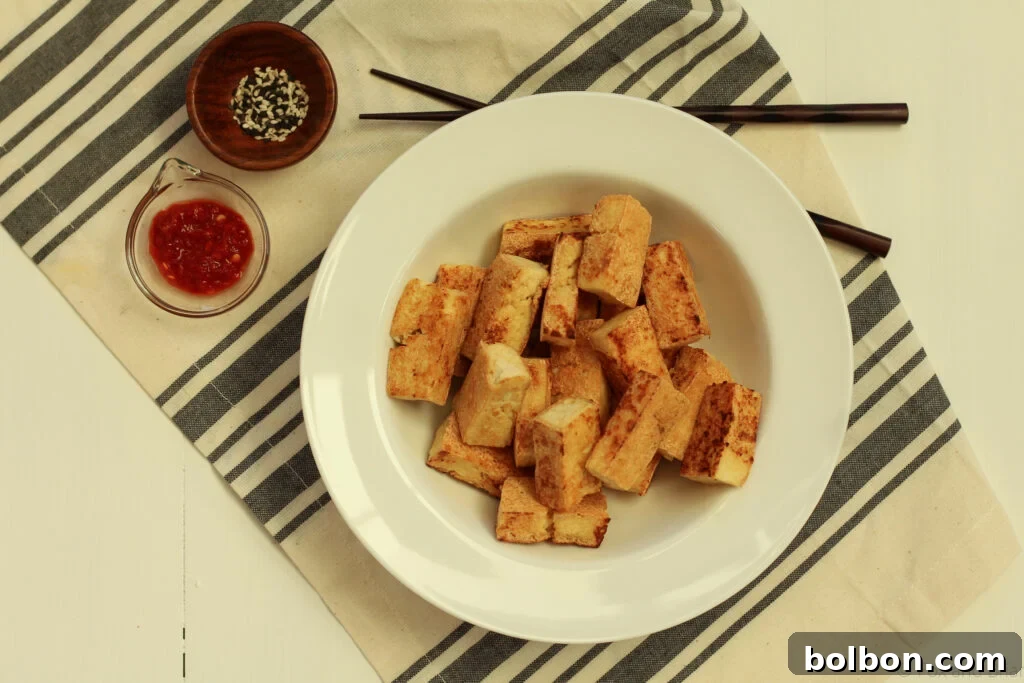
Mastering Tofu: How to Cook the Crispiest, Most Flavorful Tofu Every Time
For many, the mere mention of tofu conjures images of bland, rubbery, or soggy blocks. It’s a common misconception that often leaves people convinced they simply “hate tofu.” However, I firmly believe that those who dismiss this versatile plant-based protein have likely just never experienced it prepared correctly. Forget the tasteless, spongy stuff; when cooked with the right techniques, tofu transforms into a culinary marvel, capable of soaking up rich flavors and achieving a delightful, satisfying texture. This comprehensive guide will walk you through my absolute favorite method, ensuring consistently perfect results that will convert even the most skeptical tofu critics into enthusiastic fans.
Tofu, a staple in Asian cuisine for centuries, offers an incredible canvas for flavor. Rich in protein, it’s an excellent substitute for meat in a wide array of dishes, making it perfect for vegetarian, vegan, and flexitarian diets. The key to unlocking its potential lies in understanding how to properly prepare it, addressing common issues like its high water content and sometimes-boring texture. By following a few straightforward, yet often overlooked, steps, you’ll discover how to create a culinary masterpiece that is far from boring. Prepare to embark on a journey that will revolutionize your perception of tofu forever.
Choosing the Right Tofu: Extra-Firm is Your Best Friend
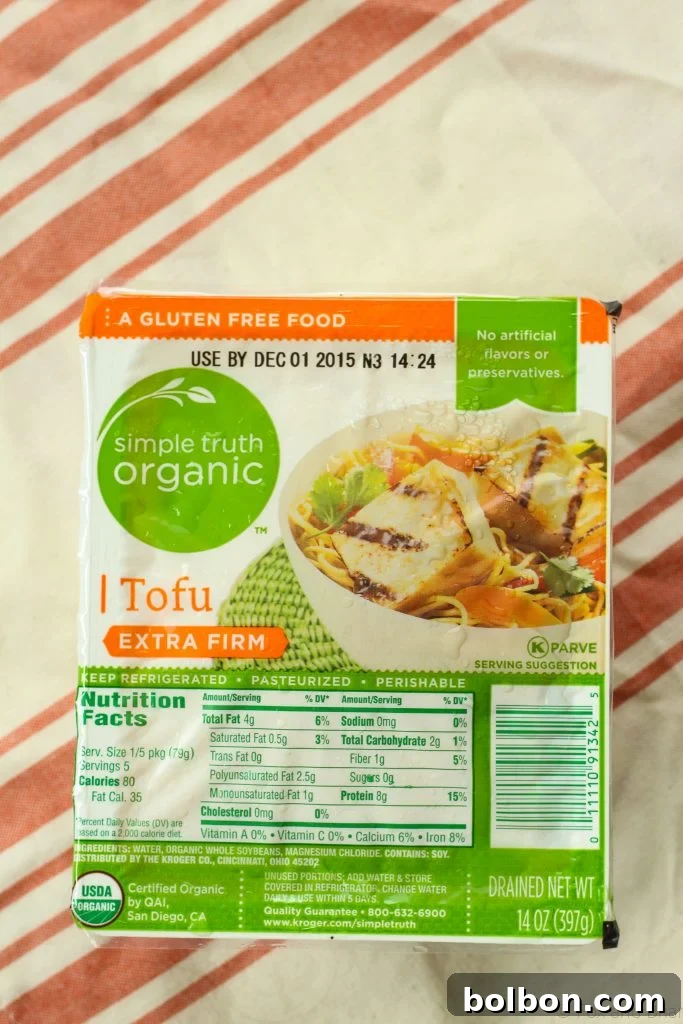
The foundation of truly great tofu begins with selecting the appropriate type. Tofu comes in various consistencies, ranging from silken (very soft) to super-firm (very dense), and your choice depends entirely on its intended culinary application. For recipes where tofu is meant to be the star, offering a substantial, meat-like bite and a crispy exterior—such as in stir-fries, curries, sandwiches, or crispy baked dishes—**extra-firm tofu** is absolutely non-negotiable. Its robust structure holds up beautifully to intense cooking methods and pressing.
It’s crucial to differentiate between the types. Silken tofu, with its delicate and creamy texture, is designed for smooth applications like smoothies, creamy sauces, dips, or egg substitutes. Using it for pan-frying will lead to a disastrous, mushy outcome. While “firm” tofu can sometimes work in a pinch, “extra-firm” offers a significantly superior density and inherently lower water content, making it much easier to achieve that coveted crispy, chewy exterior we are aiming for. When you’re at the grocery store, always reach for the firmest option available – often labeled “extra-firm” or “super-firm” – to ensure the best possible outcome for this preparation method. This initial choice sets the stage for all subsequent steps.
The Game-Changing Trick: Freezing Tofu for Superior Texture and Absorption
Here’s the secret weapon, a true game-changer that elevates tofu from merely good to truly exceptional: freezing it before cooking. This isn’t a widely known trick, but it’s a fundamental step that dramatically improves both its texture and its ability to absorb flavor. I stumbled upon this method years ago in my college days, likely from early internet health forums – remember those vibrant online communities from the early 2000s? It has been a cornerstone of my tofu preparation ever since, consistently delivering outstanding results.
The science behind this technique is elegantly simple yet remarkably effective: when tofu freezes, the water molecules within its porous structure expand, forming ice crystals. Upon thawing, these expanded ice crystals create larger, more open pockets and a sponge-like network throughout the tofu block. This transformation leads to a chewier, meatier texture that is far more satisfying than un-frozen tofu. Perhaps even more importantly, these newly created pores allow the tofu to act like a super-absorbent sponge, readily soaking up marinades, sauces, and seasonings. This means your tofu will not only have an incredible bite but will also be infused with incredible, deep flavor, solving both the texture and taste dilemmas that often plague poorly prepared tofu.
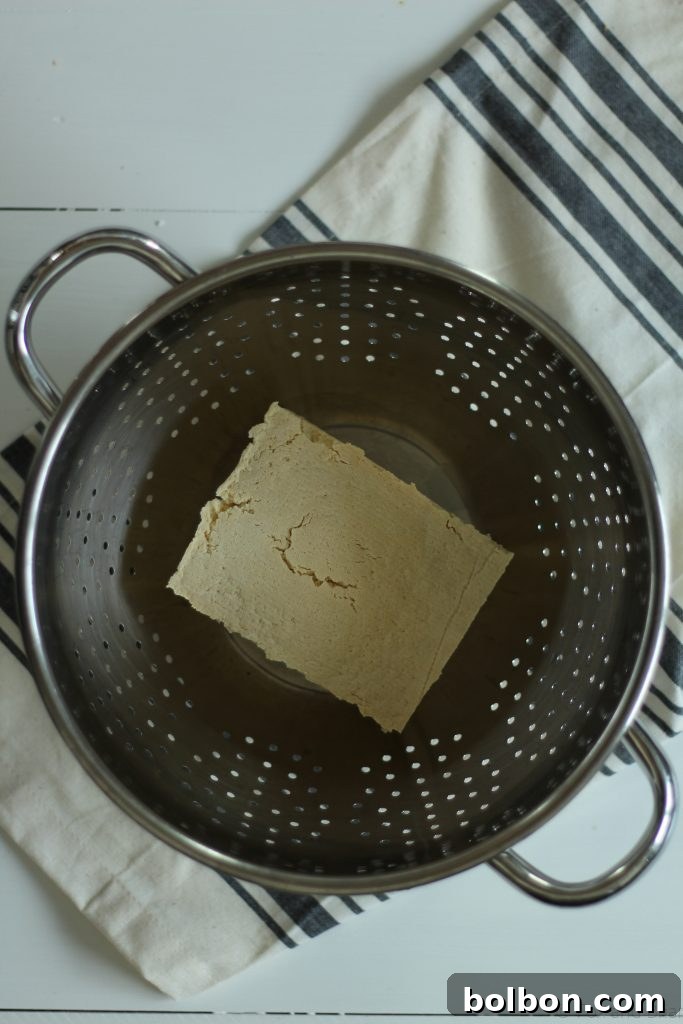
To implement this essential technique, simply place the entire unopened package of extra-firm tofu directly into your freezer as soon as you bring it home from the grocery store. There’s no need to drain or repackage it; the original liquid helps protect it from freezer burn. Let it freeze overnight, or for several days, or even weeks – tofu freezes remarkably well for extended periods, making it an excellent meal prep hack. When you’re ready to cook, transfer the frozen block to your countertop to thaw completely. Depending on its size and your kitchen’s ambient temperature, this usually takes a few hours. Alternatively, you can thaw it overnight in the refrigerator for a more gradual process. Once fully thawed, you’ll notice a distinct change in its appearance: it will often look slightly more yellowish and have a noticeably more porous, almost crumbly feel. This visual and tactile cue indicates that it’s perfectly primed for the next crucial step in our journey to crispy tofu perfection.
The Essential Step: Pressing Tofu for Optimal Crispness and Firmness
After the freezing and thawing process has worked its magic, the next vital stage is pressing the tofu. Tofu, by its very nature, contains a significant amount of water. Removing this excess moisture is absolutely paramount for achieving not only a firm, desirable texture but also that irresistible golden, crispy crust when cooked. Without adequate pressing, tofu tends to steam in the pan rather than fry, resulting in a rubbery and unappetizing outcome.
While specialized tofu presses are widely available and certainly convenient, a simple and effective DIY setup works perfectly using common kitchen items. Begin by carefully opening the thawed tofu package and draining any residual liquid. Place the tofu block in a colander, which should be positioned within your sink or over a bowl to efficiently catch the draining water. Layer a few sheets of absorbent paper towels (or a clean kitchen towel, though I find paper towels less likely to leave lint) on top of the tofu. Then, place something heavy on top – a stack of heavy ceramic bowls, a cast-iron skillet, or a large (28 oz) can of tomatoes are all excellent choices. Let this arrangement sit for at least 20 to 30 minutes, or even longer if you have the time; the more water you remove, the crispier your tofu will be. You’ll be genuinely surprised by the volume of water that is released during this process!
The prior freezing process significantly aids this pressing step. Because the expanded cell structure from freezing has already created larger pores, the tofu can release its moisture much more readily and efficiently than un-frozen tofu. This results in a denser, firmer, and ultimately more receptive block that is perfectly primed for absorbing flavors and achieving maximum crispness during cooking. Don’t skip this crucial stage; it’s a cornerstone of truly delicious, restaurant-quality tofu.
Precision Slicing: Maximizing Surface Area for Crispy Edges
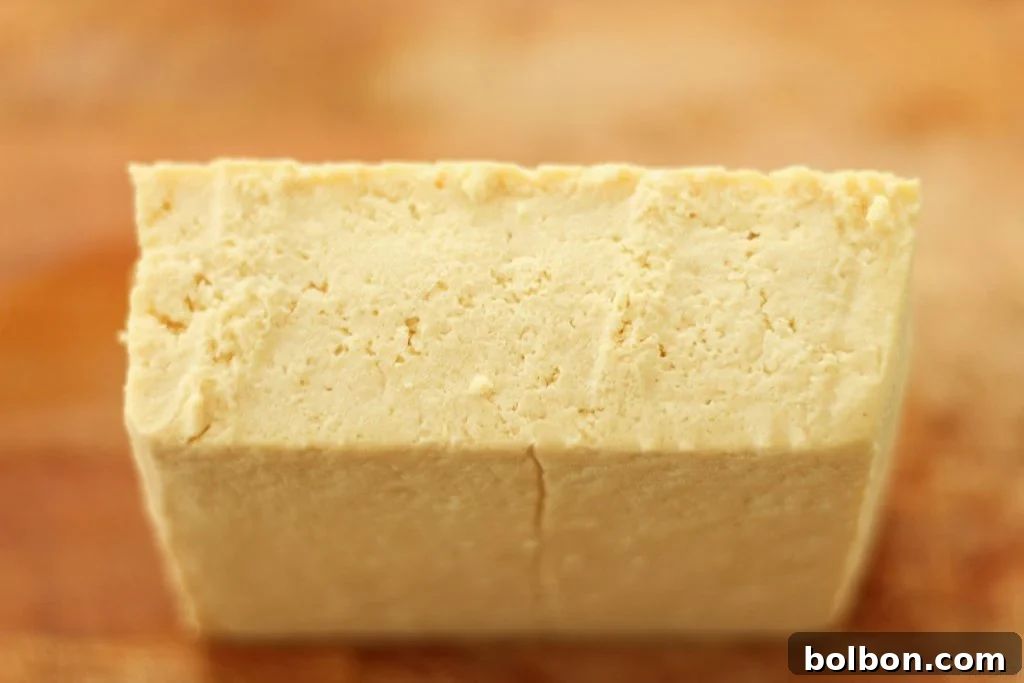
Once your tofu is thoroughly pressed and has released a significant amount of its internal moisture, it’s time to prepare it for cooking through precise slicing. The way you cut your tofu greatly impacts its final texture, how evenly it cooks, and how easily it can be flipped and crisped in a hot pan. While perfectly small cubes might look aesthetically pleasing, they can often be surprisingly difficult to maneuver and brown evenly, sometimes leading to unevenly cooked or burned spots. My preferred slicing method is designed to maximize surface area and make flipping a breeze, ensuring every piece gets beautifully golden and crispy on multiple sides.
Here’s how to achieve the optimal cut for maximum crispiness and ease of handling:
First, take the entire pressed block of tofu and carefully slice it lengthwise through the middle. This creates two thinner, rectangular slabs. This initial cut significantly reduces the overall thickness of the tofu, preparing it for smaller, more manageable pieces that will cook faster and crisp up much more uniformly than a thicker block.
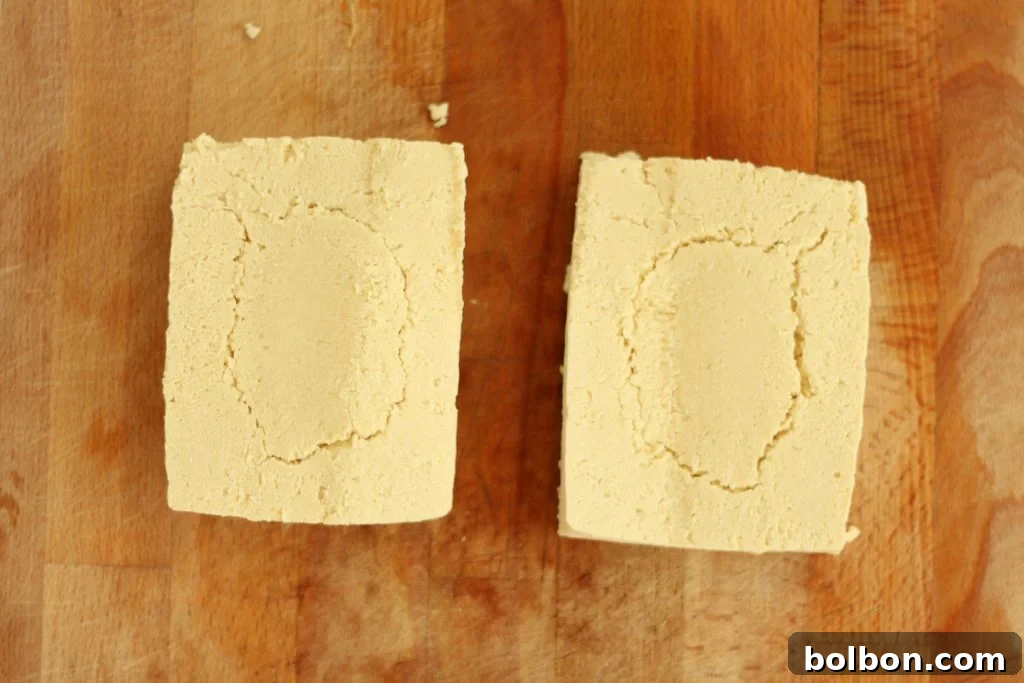
Next, take each of these two thinner slabs and cut them across the middle. This step will result in four roughly square-shaped pieces. This further breaks down the larger pieces into more practical sizes, which are ideal for incorporating into stir-fries, filling tacos, or adding to hearty grain bowls, where a medium-sized bite is desired.
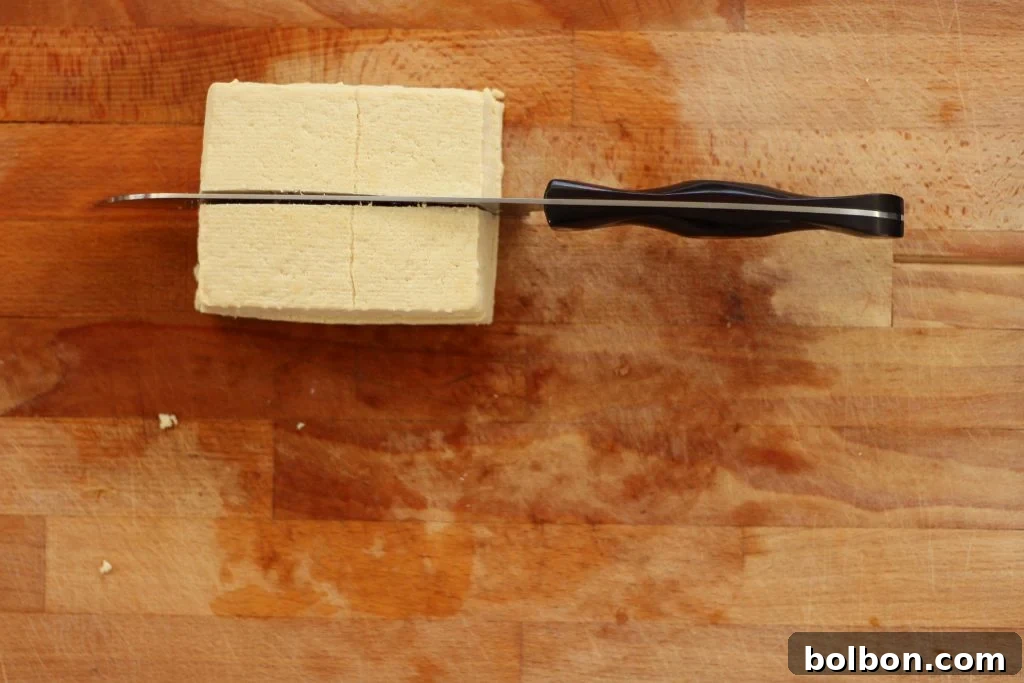
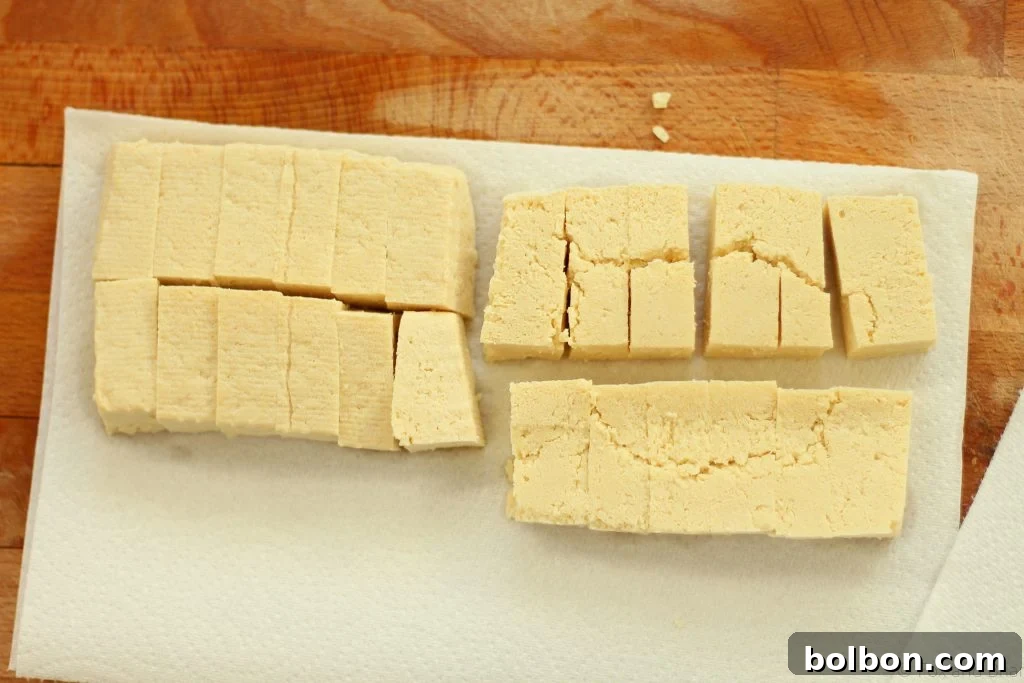
Finally, slice these four squares into smaller, uniform pieces. Depending on your preference and the dish you’re making, you can aim for rectangular strips (which I often prefer for easier flipping) or smaller cubes. The critical point is to keep the pieces relatively uniform in size to ensure even cooking and browning across the batch. This particular slicing style strategically creates pieces with more exposed edges and flat surfaces, which are prime real estate for developing that utterly irresistible crispiness and absorbing maximum flavor.
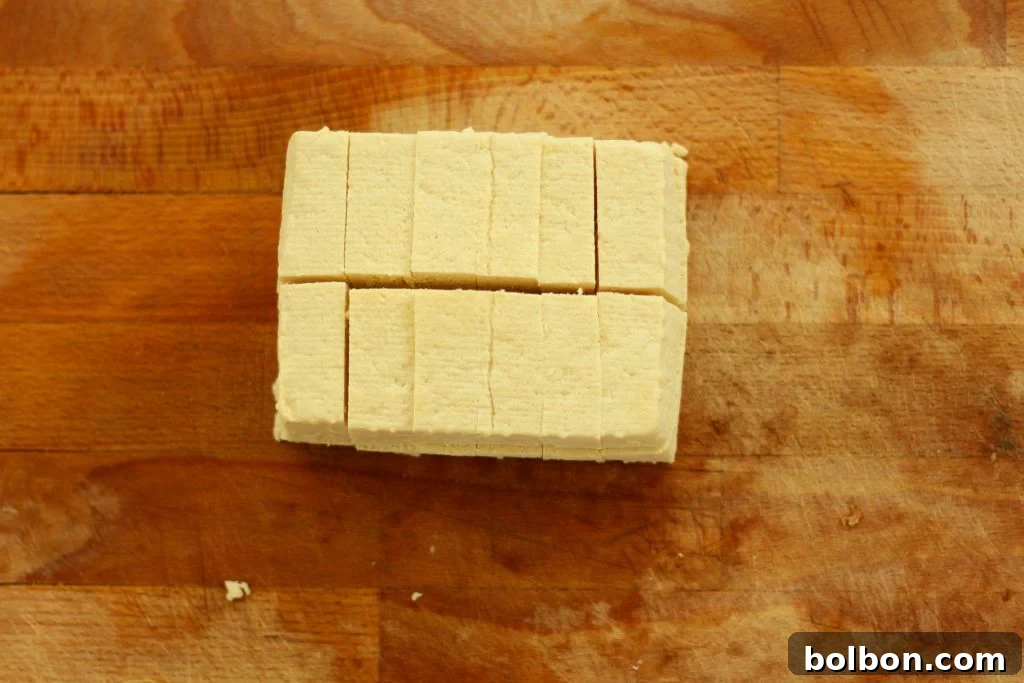
After all your meticulous slicing, arrange the individual tofu pieces in a single layer on a fresh sheet of clean paper towels. Cover them with another layer of paper towels and gently press down with your hands. This final, gentle press is a crucial step to wick away any lingering surface moisture that might have reappeared after cutting. Removing this last bit of moisture prevents the tofu from steaming in the pan and promotes maximum crispiness during the cooking process. You can leave the tofu resting on the paper towels until you’re completely ready to introduce it to the heat.
Pan-Frying for Golden Perfection: The Cooking Process
With your tofu perfectly prepped, pressed, and sliced, it’s finally time for the cooking stage, where all your efforts culminate in a beautifully golden and satisfyingly crispy result. A good quality, heavy-bottomed skillet – ideally cast iron, stainless steel, or a non-stick pan – is essential for even heat distribution and consistent browning. Avoid thin, flimsy pans that create hot spots and can lead to uneven cooking.
Heat your chosen skillet over medium-high heat. Add approximately two tablespoons of a high-smoke-point oil, such as canola, grapeseed, or avocado oil. These oils can withstand higher temperatures without burning, which is crucial for crisping. To test if the oil is hot enough, carefully place a single piece of tofu into the pan. If it immediately sizzles vigorously and consistently, your oil is perfectly ready. If it merely sits there without much sound, give it another minute or two to heat up further. Once the oil is shimmering and hot, carefully add the rest of the tofu pieces to the pan in a single layer. It’s vital not to overcrowd the pan, as this will lower the temperature and cause the tofu to steam rather than fry. Cook in batches if necessary to ensure each piece has ample space to crisp up. Be mindful that, depending on how much water you were able to extract from the tofu, the hot oil might spatter slightly. Keeping a splatter screen handy is a wise precaution, and reducing the heat slightly can help manage any excessive splattering.
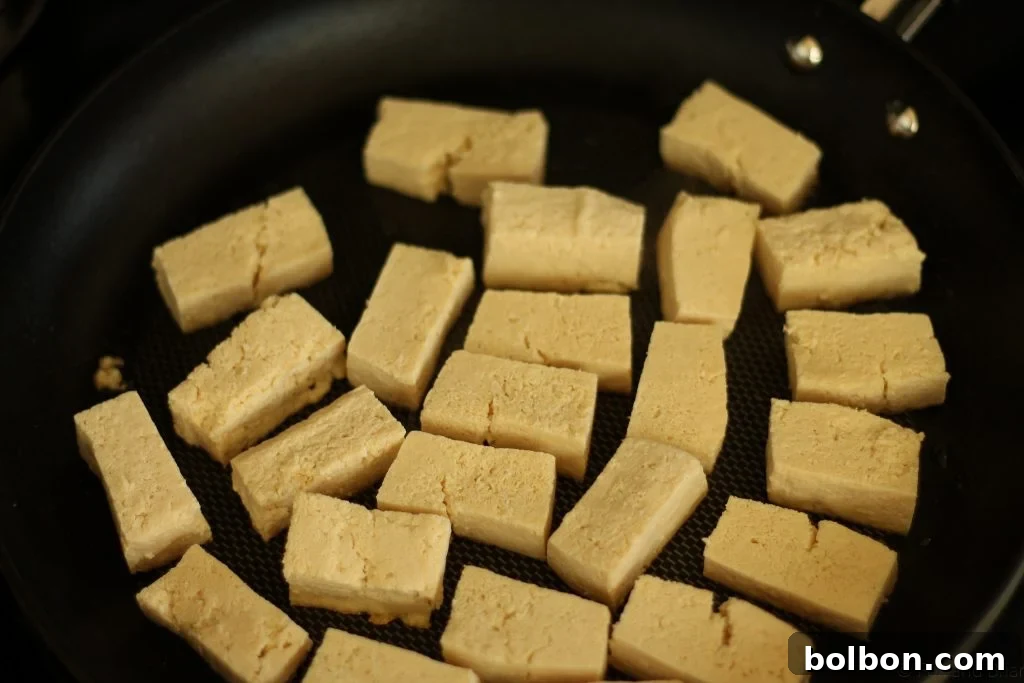
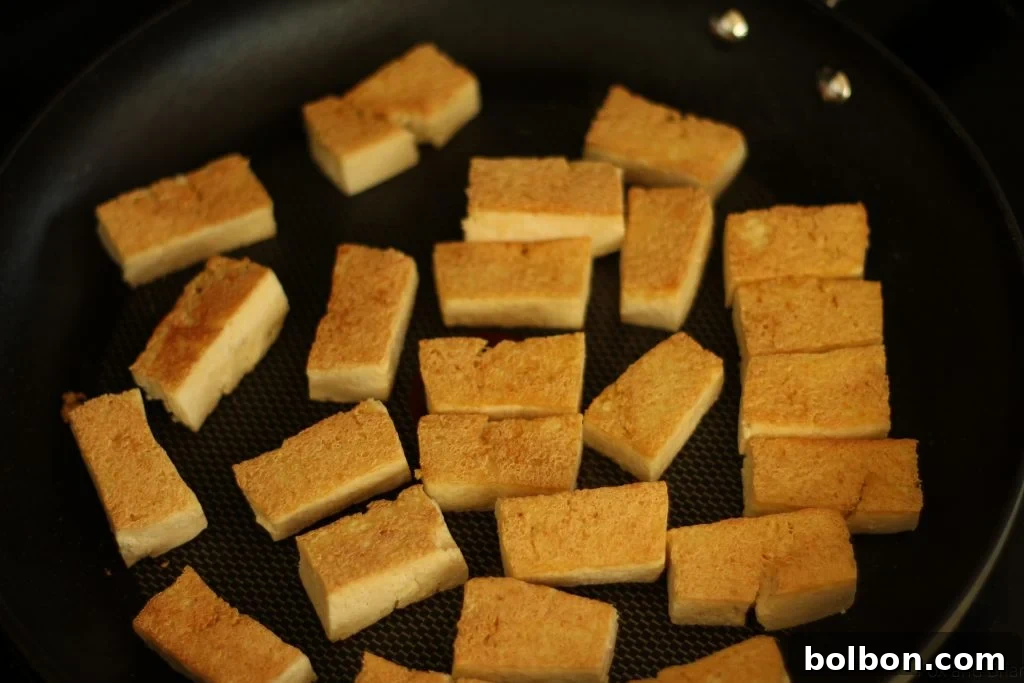
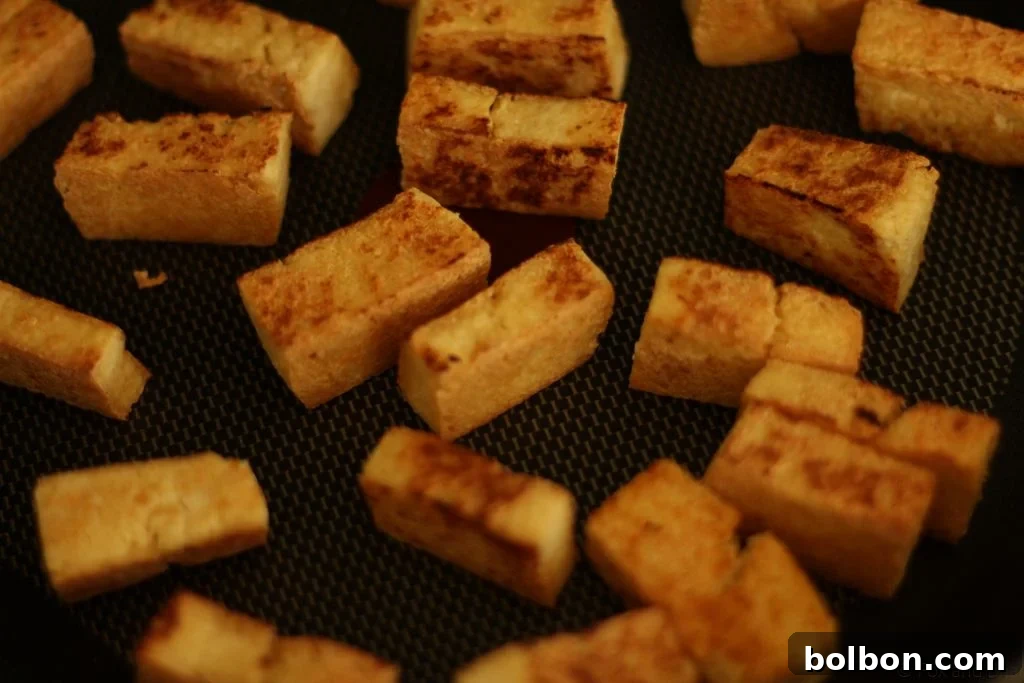
Once the tofu is in the pan, allow it to cook undisturbed for approximately 2-3 minutes on each side. The key here is patience; resist the urge to move or flip the pieces too soon. This dedicated cooking time allows a beautiful, golden, and crispy crust to form, which is essential for the desired texture. Once one side is gloriously golden and crispy, carefully flip each piece using tongs or a thin spatula. Continue this process, cooking each of the four sides until they are all evenly browned and delightfully crunchy. You might find you need to add a small amount of extra oil to the pan as you flip, especially if your tofu is absorbing it quickly. However, two tablespoons are generally sufficient for an entire block. The ultimate goal is a deep golden hue and a firm, satisfying crunch that will surprise and delight your taste buds.
Flavoring Your Tofu: From Pan to Plate
Congratulations! Your tofu is now perfectly crispy, beautifully textured, and ready to become the star of your next meal. At this stage, it has a wonderfully neutral base flavor, making it incredibly versatile. This is precisely where your culinary creativity comes into play. The porous texture, dramatically enhanced by the freezing and pressing process, means it’s primed to soak up any flavorful sauce or seasoning you introduce, transforming it into a true flavor bomb.
There are countless delicious ways to enjoy your freshly cooked crispy tofu. Toss it into a vibrant stir-fry, where it will absorb the savory-sweet notes of your favorite Asian-inspired sauce, adding both texture and protein. Create delicious plant-based tacos, layering the crispy tofu with fresh salsa, creamy avocado, and a zesty crema for a satisfying meal. Add it to hearty grain bowls, flavorful noodle dishes, or even fresh salads for a substantial and delicious protein boost. The possibilities are truly endless, limited only by your imagination!
I will be sharing my absolute favorite way to utilize this perfectly prepared tofu in an upcoming post, featuring a delectable spicy peanut tofu and spaghetti squash recipe. Be sure to subscribe to email notifications so you don’t miss it, or follow me on Pinterest or Instagram to stay connected and discover more plant-based culinary inspirations and delicious recipes.
Recipe: How to Make the Best Crispy Tofu
By Meghan McMorrow | Fox and Briar
If you think you hate tofu, this method will change your mind! This is my favorite way to make tofu, resulting in perfectly crispy and flavorful tofu every time. (Rated 5 stars from 1 vote)
Prep time: 25 minutes
Cook time: 8 minutes
Total time: 33 minutes
Servings: 4 Servings
Ingredients:
- 1 block (14 ounces) extra-firm tofu
- 2 tablespoons canola oil (or other high-smoke-point oil like grapeseed or avocado)
Instructions:
- **Freeze Tofu:** Prior to cooking, place the unopened block of tofu (in its water and packaging) directly into the freezer. Freeze for at least overnight, or for an extended period.
- **Thaw Tofu:** Thaw the frozen tofu completely before you plan to cook it. This can be done on the countertop for a few hours or in the refrigerator overnight.
- **Initial Drain:** Once thawed, cut open the package and drain the water. Gently press the tofu with your hands to help release some initial moisture.
- **Press Tofu:** Place the tofu block in a colander in the sink. Cover the tofu with a few layers of paper towels, then place something heavy on top (e.g., several ceramic bowls or a large can of tomatoes). Allow it to press and drain for at least 20-30 minutes.
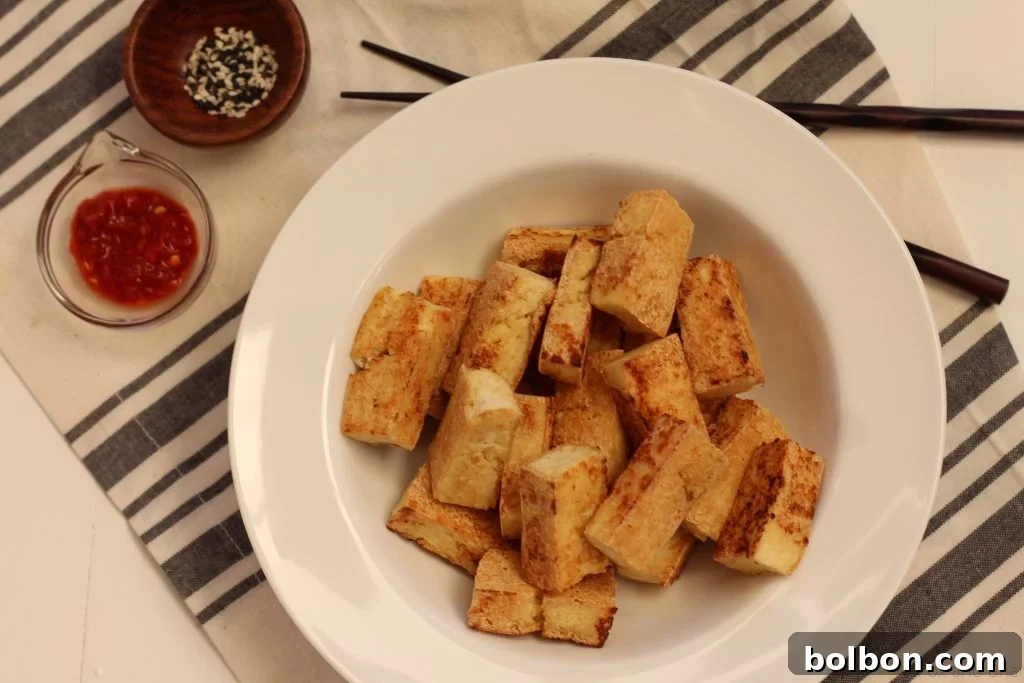
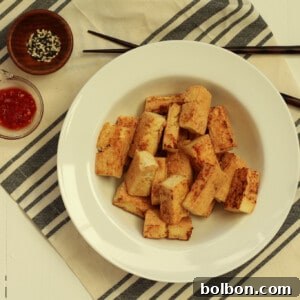
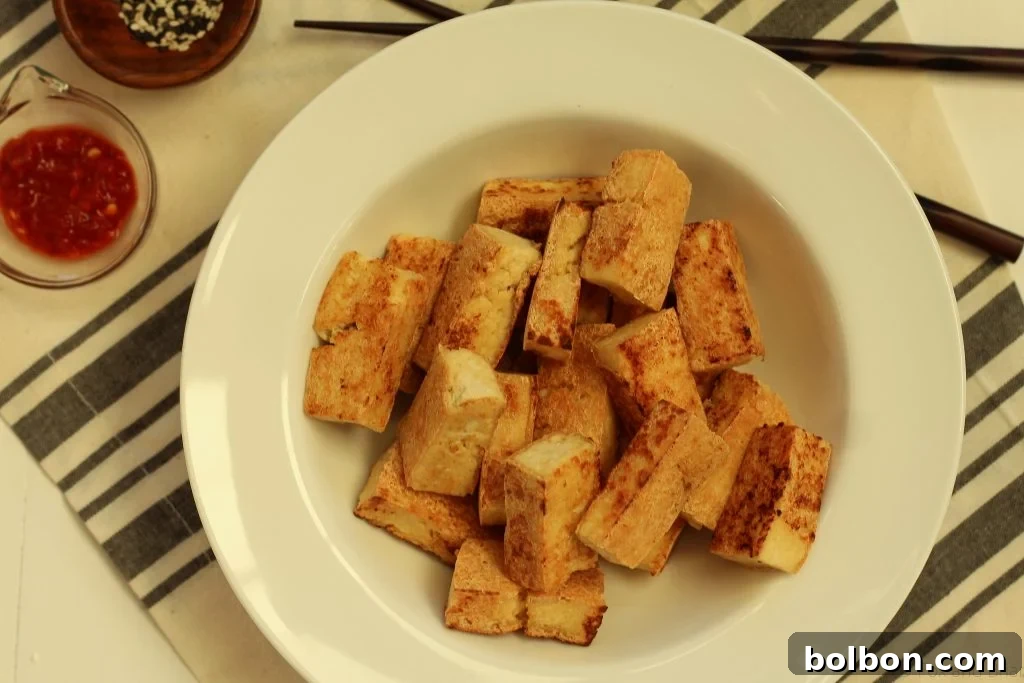
- **Slice Tofu:** After pressing, slice the tofu. First, slice the block lengthwise through the middle to create two thinner slabs. Then, cut each slab across the middle. Finally, slice these pieces into smaller, uniform rectangular strips or cubes as desired (as shown in photos above).
- **Final Surface Press:** Lay the sliced tofu pieces in a single layer on a clean sheet of paper towels. Cover with another paper towel and gently press down with your hands to remove any remaining surface moisture. Leave them on the paper towels until ready to cook.
- **Heat Oil:** Heat 2 tablespoons of oil in a large skillet over medium-high heat.
- **Cook Tofu:** Once the oil is hot and shimmering (test with one piece of tofu; it should sizzle immediately), add the tofu pieces to the pan in a single layer. Do not overcrowd; cook in batches if necessary.
- **Crisp Sides:** Allow the tofu to cook undisturbed for 1-2 minutes until golden and crispy on the bottom. Flip each piece and repeat the cooking process on all four sides until uniformly golden brown and crispy. You may add a little more oil if needed.
- **Serve:** Once finished, your crispy tofu is ready to be tossed in your sauce of choice, added to stir-fries, tacos, bowls, or any dish that benefits from a flavorful, protein-rich addition.
Notes:
*Be very careful when placing the tofu in hot oil, as it may splatter. Have a splatter screen or lid nearby, and reduce heat if splattering becomes excessive.
Nutrition (approximate per serving):
Calories: 116kcal | Carbohydrates: 2g | Protein: 7g | Fat: 9g | Saturated Fat: 1g | Sodium: 62mg | Potassium: 152mg | Fiber: 1g | Sugar: 1g | Calcium: 31mg | Iron: 1.2mg
Nutrition information is automatically calculated, so should only be used as an approximation.
Additional Info:
- Course: Dinners
- Cuisine: Asian
So, what’s your verdict on tofu? Are you a seasoned enthusiast, or are you ready to give this method a try and potentially change your mind forever? I encourage you to experiment with these techniques and discover the incredible potential of perfectly prepared tofu. It’s a versatile, healthy, and incredibly delicious addition to any diet, proving that tofu truly can be a culinary delight.
Disclaimer: This post contains affiliate links, which means that if you buy any of the items I recommend through my link, I will get a small commission. All of my opinions are my own. Thanks for supporting Fox and Briar!