
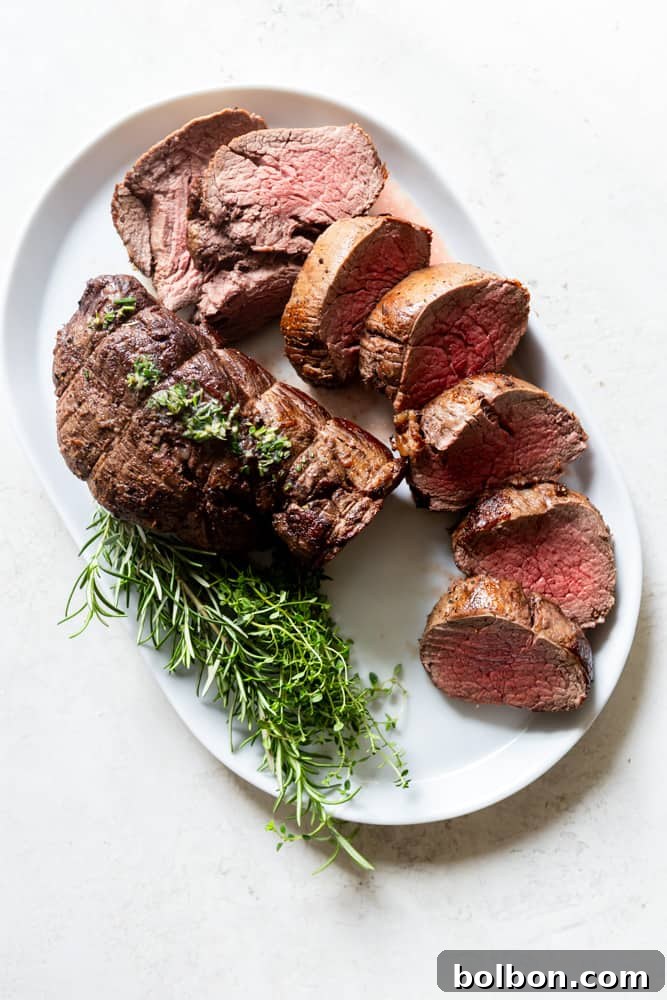
Elevate your culinary skills and impress your guests with a truly exceptional dish: Slow Roasted Beef Tenderloin. This recipe employs the highly effective reverse sear technique, ensuring an incredibly tender, buttery-soft interior coupled with an exquisite, deeply browned crust. Infused with a luscious garlic herb butter, this beef tenderloin is not just a meal; it’s a centerpiece, perfect for a special holiday gathering, an anniversary celebration, or any occasion where you desire to create an unforgettable dining experience.
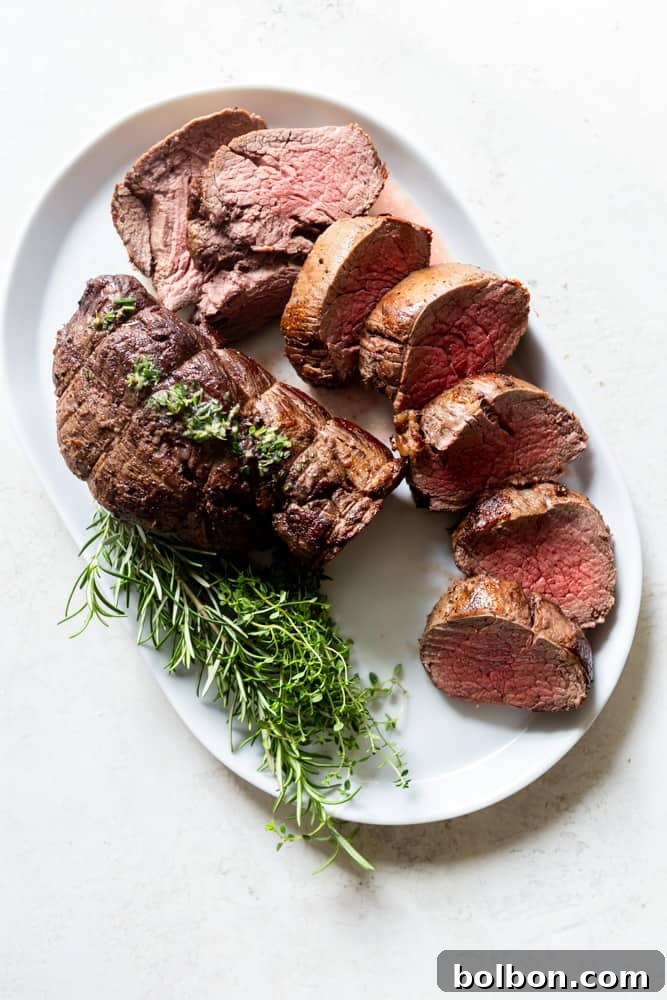
When planning a grand holiday dinner or a significant celebration, few main courses command as much attention and admiration as a perfectly cooked roast. While a classic Slow Roasted Prime Rib is often a crowd-pleaser, a Beef Tenderloin offers an unparalleled level of tenderness and sophistication. Known as one of the most prized and expensive cuts of beef, it consistently delivers a melt-in-your-mouth experience that is truly second to none. This guide will walk you through every step to achieve tenderloin perfection.
Understanding Beef Tenderloin: The Pinnacle of Tenderness
Beef tenderloin, often referred to as ‘fillet’ in other parts of the world, is undeniably one of the most sought-after and tender cuts of beef available. For connoisseurs, it’s the gold standard. The celebrated Filet Mignon, a beloved steakhouse staple, is actually derived from the smaller, pointed end of the tenderloin. What makes this cut so exceptionally tender? It originates from a muscle that sees very little use, meaning it’s not tough or fibrous like other parts of the animal. This minimal muscular activity results in a remarkably buttery-soft texture that requires careful cooking to preserve its delicate nature.
However, the very characteristic that makes it tender—its leanness—also presents a unique challenge. With minimal fat marbling, tenderloin can be prone to drying out if overcooked, and it often benefits from additional moisture and flavor. This is precisely why our recipe incorporates a rich garlic herb butter, applied both during and after the cooking process. This aromatic butter infuses the beef with savory notes, adds a layer of richness, and ensures the roast remains incredibly succulent, transforming an already delicious cut into a truly extraordinary dish.
Mastering the Slow Roasted Beef Tenderloin with Reverse Sear
Achieving the perfect slow-roasted beef tenderloin involves a few key techniques that guarantee a uniform cook and a superb crust. This comprehensive overview, followed by the detailed recipe, will guide you through each critical step.
Selecting and Preparing Your Tenderloin
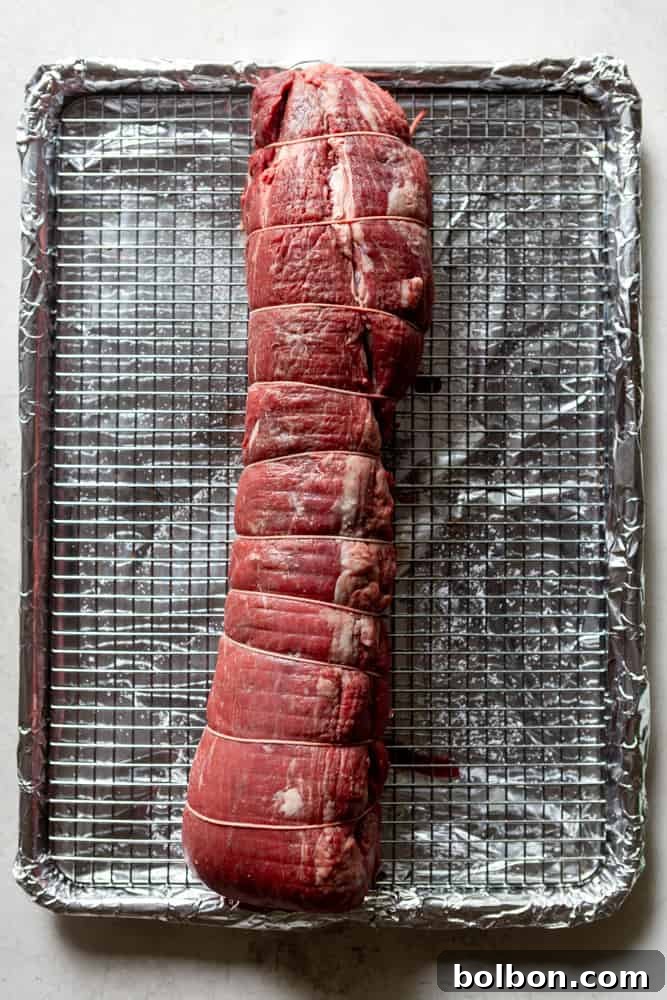
When purchasing beef tenderloin, you might encounter it sold as a whole tenderloin or as a “chateaubriand,” which is the thicker, center-cut portion, known for its uniform shape. Regardless of your choice, the goal is to create a roast that is as evenly sized as possible for consistent cooking. If you have a whole tenderloin, you may trim off the thinner, pointed ends (often called the “tail”) and the thicker “head” portion. These smaller pieces can be saved for other dishes like stir-fries or stroganoff. Alternatively, you can tuck the thinner ends under the main body of the roast to achieve a more uniform thickness, securing them with kitchen twine.
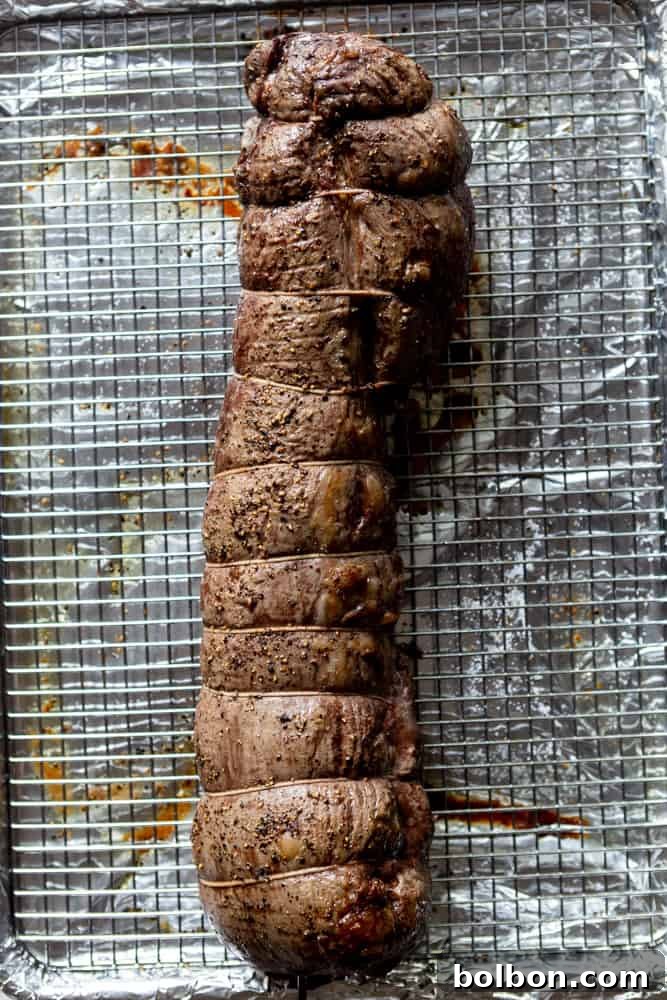
Tying the roast with kitchen twine at regular 1.5-inch intervals is a crucial step. This not only helps maintain a consistent shape but also ensures that the heat penetrates evenly, preventing overcooked edges and undercooked centers. Once shaped, generously season the entire roast with kosher salt. For best results and superior browning, dry-brine the tenderloin by seasoning it the day before and letting it rest uncovered on a wire rack in the refrigerator overnight. This allows the salt to penetrate deeply and draw out moisture, leading to a more flavorful and tender result. If time is short, season it at least one hour before cooking and let it sit at room temperature for that hour.
The Reverse Sear Technique: A Game Changer
For our slow-roasted beef tenderloin, we utilize the “reverse sear” method. This technique involves cooking the meat slowly at a lower temperature first, and then finishing it with a high-heat sear. This is the opposite of a traditional sear-first approach. The primary advantage of the reverse sear is that it allows the internal temperature of the roast to rise gradually and evenly from edge to center, resulting in a perfectly cooked, edge-to-edge medium-rare (or your preferred doneness) without the gray band often seen with high-heat roasting. The final sear then creates an irresistible, deeply browned crust.
Step-by-Step Cooking Process
Before the low-and-slow roasting begins, give your tenderloin a final flourish of flavor. Pat the roast completely dry with paper towels – this is essential for achieving a good sear later. Then, lightly season it with freshly ground black pepper and rub it all over with softened unsalted butter. This butter layer will contribute to the initial browning and help seal in moisture.
Place the buttered and seasoned tenderloin on a wire rack set over a rimmed baking sheet. Roast it in a preheated 300°F (150°C) oven until its internal temperature, measured with an instant-read thermometer, reaches about 120°F (for medium-rare). Remember, the roast should be removed from the oven 5-10 degrees BEFORE it reaches your desired final internal temperature due to carryover cooking (more on this below). The slow roasting process can take anywhere from 35 to 50 minutes, depending on the size and initial temperature of your roast.
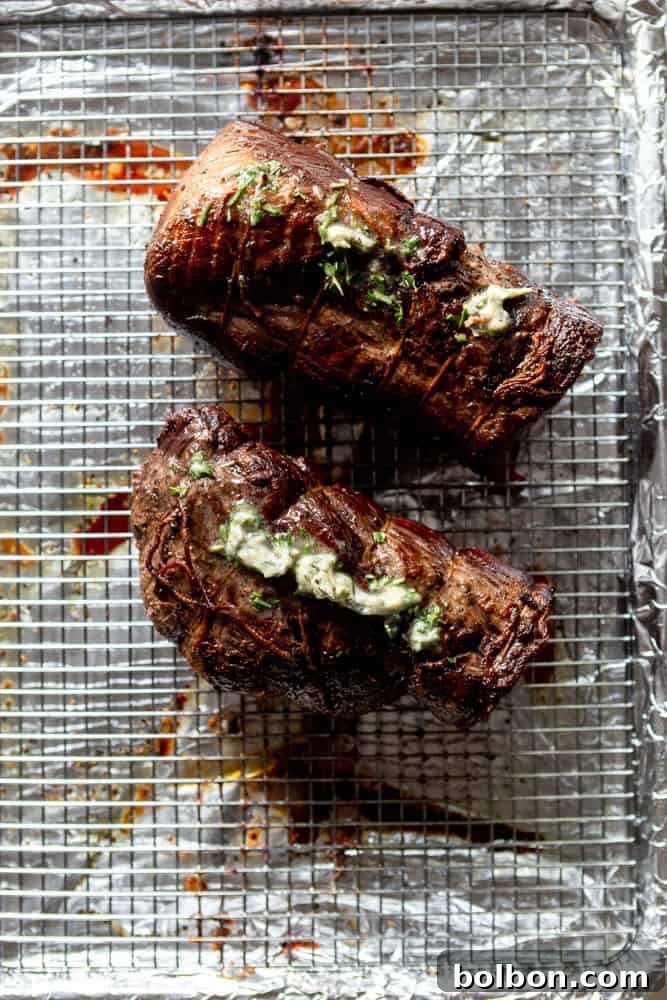
Once the roast reaches the target temperature, remove it from the oven and prepare for the sear. Heat a tablespoon of high smoke point vegetable oil, such as avocado oil or canola, in a heavy-bottomed pan like a cast iron skillet or Dutch oven, until it is shimmering hot. Carefully transfer the roast to the hot skillet and sear for 1-2 minutes per side, rotating it to brown all surfaces, until a beautiful, dark brown crust develops. This quick, high-heat sear is what creates that appealing texture and depth of flavor.
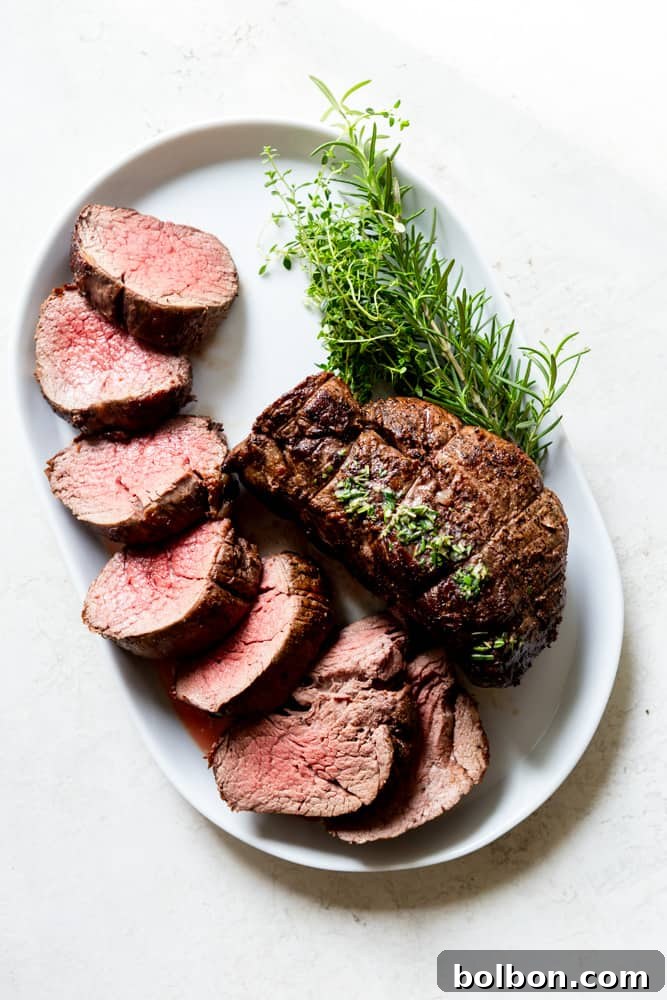
Finally, remove the seared roast from the pan and transfer it to a clean cutting board. Rub it generously with the prepared garlic herb butter. Allow the beef tenderloin to rest undisturbed for at least 15 minutes. This resting period is crucial; it allows the juices within the meat to redistribute, ensuring every slice is moist and tender. After resting, remove the kitchen twine, slice the tenderloin into 1/2-inch thick medallions, and serve immediately.
Achieving Perfect Doneness: Your Guide to Beef Tenderloin Temperature
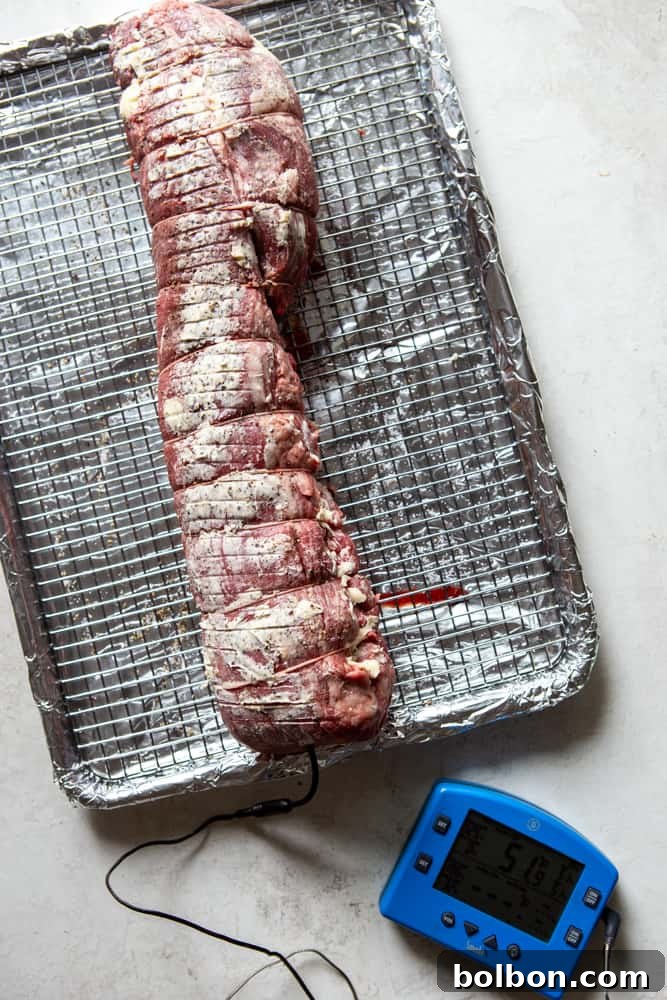
When cooking an expensive and delicate cut like beef tenderloin, precision is paramount. There is truly only one foolproof method to determine when your roast has reached the perfect doneness: using an accurate instant-read meat thermometer. This simple tool is your best investment to protect your culinary masterpiece. Once you start using one, you’ll wonder how you ever cooked without it!
An instant-read thermometer allows you to quickly and accurately check the internal temperature without significantly cooling the roast. Insert the probe into the thickest part of the meat, avoiding any bone or fat pockets, to get the most accurate reading. Investing in a reliable thermometer means consistently perfect results and confidence in your cooking.
Understanding Internal Temperatures for Beef Tenderloin
One of the most common mistakes in roasting is pulling the meat out of the oven too late. Meat continues to cook even after it’s removed from the heat source, a phenomenon known as “carryover cooking.” For beef tenderloin, you should always remove the roast from the oven when it is 5-10 degrees Fahrenheit BELOW your desired final temperature. During the crucial resting period, the internal temperature will continue to rise to the perfect doneness.
Beef Tenderloin Temperature Chart – When to Remove from Oven:
- Rare: Remove from oven at 115°F (46°C) – final temperature 120-125°F (49-52°C)
- Medium Rare: Remove from oven at 120°F (49°C) – final temperature 125-130°F (52-54°C)
- Medium: Remove from oven at 125°F (52°C) – final temperature 130-135°F (54-57°C)
- Medium Well: Remove from oven at 130°F (54°C) – final temperature 135-140°F (57-60°C)
- Well Done: Remove from oven at 140°F (60°C) – final temperature 145°F+ (63°C+) (Not recommended for tenderloin as it tends to dry out)
For the most tender and flavorful experience, medium-rare to medium is generally recommended for beef tenderloin. Higher temperatures can cause this lean cut to become dry and less enjoyable.
Optimal Cooking Temperature for Slow Roasted Beef Tenderloin
For this specific slow-roasted beef tenderloin recipe using the reverse sear method, we recommend a relatively low oven temperature. This gentle heat allows the meat to cook slowly and evenly, preventing the outer edges from overcooking before the center reaches its desired temperature.
Set your conventional oven to 300°F (150°C). If you are fortunate enough to have a convection oven, which circulates hot air more efficiently, you can reduce the temperature slightly to 275°F (135°C). The lower temperature and gradual cooking are key to achieving that uniform, rosy pink interior that makes beef tenderloin so desirable.
Serving Recommendations: How Much Slow Roasted Beef Tenderloin Do You Need?
Planning for a special dinner often involves calculating quantities. For beef tenderloin, a rich and satisfying cut, a general guideline is to plan for approximately 8 ounces (about half a pound) per person. This measurement refers to the weight of the meat before it is cooked. Keep in mind that some weight will be lost during the cooking process.
So, for instance, if you are hosting four guests, you would want to purchase about 2 pounds of beef tenderloin. For a larger gathering of eight people, a 4-pound roast would be appropriate. Adjust these amounts based on your guests’ appetites and whether other substantial dishes will be served alongside the tenderloin.
Perfect Pairings: What to Serve with Slow Roasted Beef Tenderloin
A magnificent beef tenderloin deserves equally delightful accompaniments. The rich, savory flavor of the beef pairs beautifully with a variety of classic and vibrant side dishes. Here are some of our favorite recommendations to complete your gourmet meal:
- Creamy Roasted Garlic Mashed Potatoes: A timeless combination, the subtle sweetness of roasted garlic perfectly complements the tender beef.
- Sweet Honey Roasted Carrots: The natural sweetness of carrots, enhanced by honey and roasting, adds a lovely color and flavor contrast.
- Crispy Roasted Brussels Sprouts: A hint of bitterness and a satisfying texture from roasted Brussels sprouts balance the richness of the tenderloin.
- Fresh Spinach Apple Pecan Salad: A light, crisp salad with notes of fruit and nut provides a refreshing counterpoint.
- Bright Shaved Brussels Sprouts Salad: For a lighter, more vibrant option, this salad offers crunch and a zesty dressing.
Slow Roasted Beef Tenderloin
By Meghan McMorrow | Fox and Briar
Prep Time: 1 hour
Cook Time: 1 hour 15 minutes
Servings: 4 Servings
Ingredients
- 2 pound Beef Tenderloin Roast (chateaubriand) or larger depending on needs
- 2 teaspoons kosher salt
- 2 teaspoons unsalted butter, softened (for rubbing the roast)
- 1 teaspoon black pepper
- 1 tablespoon refined avocado oil or other high smoke point oil, such as canola
For Garlic Herb Butter
- 4 tablespoons unsalted butter, softened
- 1 clove garlic, pressed or finely minced
- 1 teaspoon chopped fresh rosemary
- 1 teaspoon chopped fresh thyme
Instructions
- Fit a wire rack inside a rimmed baking sheet. Season the beef tenderloin roast liberally with kosher salt. Using kitchen twine, tie the roast crosswise at approximately 1.5-inch intervals to ensure uniform thickness. For optimal flavor and browning (dry brining), place the seasoned roast on the rack in the fridge for up to 24 hours. One hour before cooking, remove the roast from the refrigerator and let it sit at room temperature for 1 hour to ensure even cooking.
- Preheat your oven to 300 degrees F (150 degrees C). Position an oven rack in the center of the oven.
- Pat the roast thoroughly dry with paper towels. Season it with black pepper and spread 2 tablespoons of softened unsalted butter evenly over its entire surface.
- Transfer the prepared roast to the preheated oven. Roast until the internal temperature, measured with an instant-read thermometer inserted into the thickest part, reaches 120 degrees F (49 degrees C) for medium-rare, or 130 degrees F (54 degrees C) for medium. This typically takes about 35-50 minutes, depending on the roast’s size and desired doneness.
- While the roast is cooking, prepare the garlic herb butter: In a small bowl, combine 4 tablespoons softened unsalted butter with minced garlic, fresh rosemary, and fresh thyme. Mix well until thoroughly combined.
- Once the roast reaches the target internal temperature, remove it from the oven. Heat 1 tablespoon of refined avocado oil (or another high smoke point oil) in a cast iron skillet or heavy-bottomed Dutch oven over high heat until it begins to shimmer and lightly smoke.
- Carefully place the roasted tenderloin into the hot skillet. Sear all sides of the roast for 1-2 minutes per side, turning with tongs, until a beautiful, deep brown crust forms.
- Remove the seared roast from the skillet and transfer it to a clean cutting board. Immediately spread the prepared garlic herb butter generously over the entire surface of the hot roast.
- Allow the beef tenderloin to rest for at least 15 minutes before carving. This resting period is critical for the juices to redistribute, ensuring maximum tenderness and moisture. After resting, remove the kitchen twine, slice the tenderloin into 1/2-inch thick medallions, and serve.
Notes
Leftover Slow Roasted Beef Tenderloin can be stored in an airtight container in the refrigerator for 3-5 days. For best results when reheating, slice thinly and gently warm in a pan over low heat or in a low oven to prevent overcooking and drying out the meat.
Nutrition
Serving: 1 Serving | Calories: 659 kcal | Carbohydrates: 1g | Protein: 41g | Fat: 54g | Saturated Fat: 22g | Polyunsaturated Fat: 2g | Monounsaturated Fat: 23g | Trans Fat: 0.1g | Cholesterol: 166mg | Sodium: 1275mg | Potassium: 703mg | Fiber: 0.2g | Sugar: 0.01g | Vitamin A: 115 IU | Vitamin C: 1mg | Calcium: 23mg | Iron: 5mg
Nutrition information is automatically calculated and should only be used as an approximation.
Additional Info
Course: Dinner
Cuisine: American
Did you enjoy this recipe?
Please leave a comment below with your feedback! Your reviews and shares help others discover delicious recipes like this. We love seeing your culinary creations!