
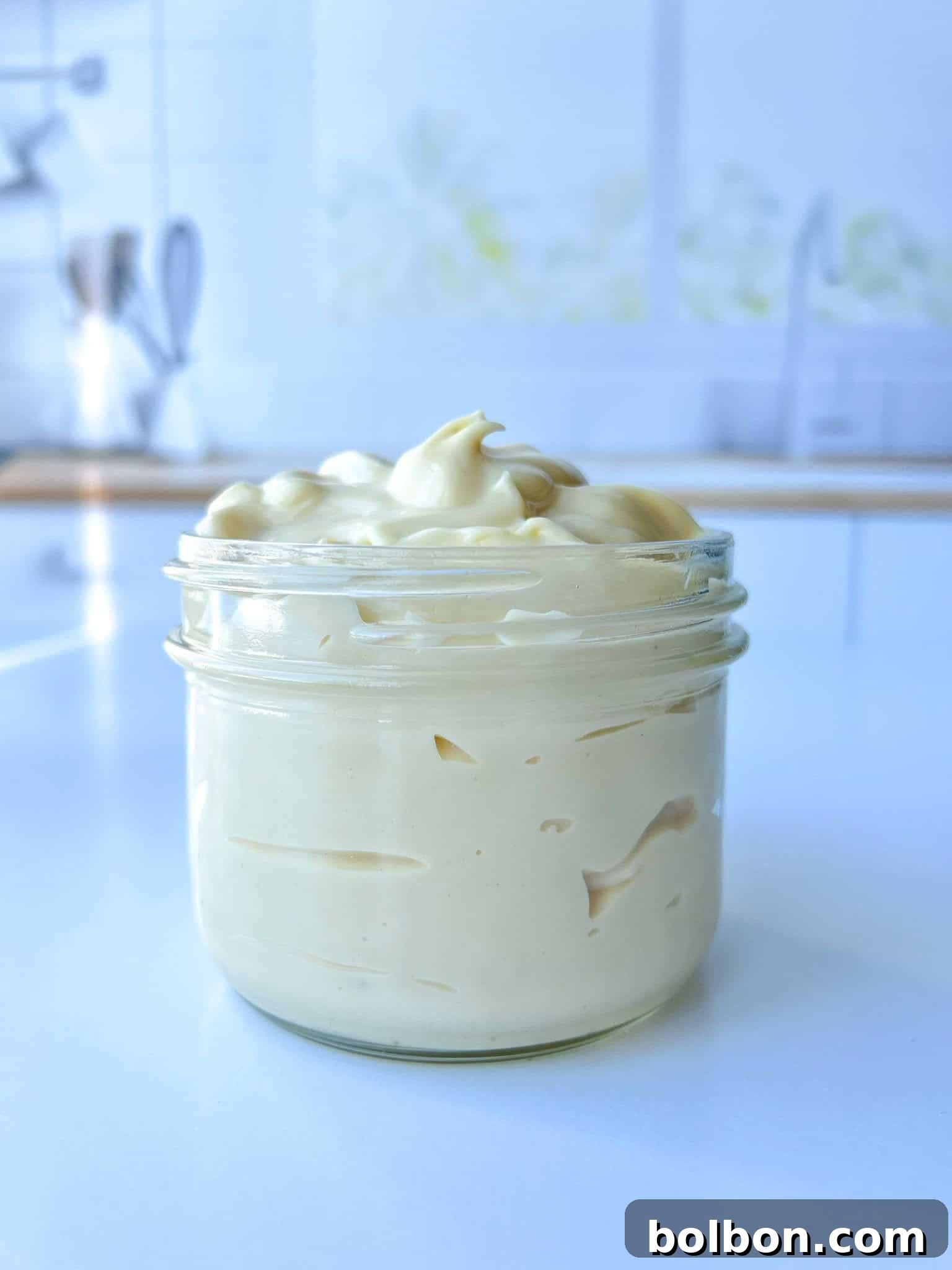
Unlock the secret to incredibly fresh, flavorful mayonnaise that far surpasses anything you’ll find on store shelves! This homemade mayo recipe is not only exquisitely delicious but also astonishingly quick to prepare, taking less than a minute from start to finish. If you’ve ever yearned to create your own mayonnaise, driven by a desire for better taste, purer ingredients, or even cost savings, then this is the ultimate guide for you. Our recipe champions simplicity, focusing on a few high-quality ingredients that deliver unparalleled results.
Unlike commercial mayonnaise, which often features a lengthy list of obscure additives and preservatives, our homemade version embraces transparency. You’ll gain complete control over every component, ensuring your family enjoys a wholesome and delicious condiment. The essence of this recipe lies in selecting a mild-tasting oil, such as luscious 🥑 avocado oil or a delicate light olive oil, paired with a premium, cold, pasture-raised egg straight from the fridge. This combination ensures a perfect emulsion and a rich, creamy texture that forms the ideal base for countless culinary creations. Whether you’re preparing 🥪 sandwiches, crafting flavorful wraps, or elevating your tuna and chicken salads, this homemade mayonnaise will become an indispensable staple in your kitchen.
The Irresistible Allure of Homemade Mayonnaise
Prepare to be amazed by the sheer speed and effortlessness of whipping up your own batch of gourmet-quality mayonnaise at home. This recipe sets a new standard for simplicity, yet delivers results that are nothing short of 😋 spectacular. The ingredient list is refreshingly streamlined, requiring just a handful of carefully chosen, high-quality items. This means you know precisely what goes into every jar, eliminating concerns about hidden sugars, artificial flavors, or unnecessary preservatives commonly found in store-bought alternatives.
The resulting mayonnaise boasts a luxurious, creamy texture that is both wonderfully thick and beautifully spreadable. Its tangy, bright flavor profile elevates any dish it graces. Imagine enhancing your morning toast, adding a dollop to a hearty burger, or stirring it into a vibrant potato salad. From everyday sandwiches and gourmet 🌯 wraps to sophisticated salad dressings and savory dips, homemade mayonnaise truly transforms the ordinary into the extraordinary. Experience the difference that fresh, natural ingredients make, and you’ll understand why countless home cooks are making the switch to this superior, made-from-scratch condiment.
Unlocking the Secret to Perfect Homemade Mayonnaise
Achieving mayonnaise perfection is surprisingly simple, provided you adhere to a few fundamental principles. The core of a stable, creamy emulsion lies in the quality of your ingredients and the method of combining them. First and foremost, the choice of oil is paramount. A mild-tasting oil is crucial to allow the natural flavors of the egg and lemon to shine through without being overpowered. Avocado oil is a fantastic choice due to its neutral flavor and healthy fat profile, but light olive oil, grapeseed oil, or even sunflower oil can also yield excellent results. Avoid extra virgin olive oil, as its robust flavor can dominate and create a bitter undertone in your finished mayo.
Secondly, the egg itself plays a starring role. We highly recommend using a high-quality, pasture-raised egg that is cold directly from the refrigerator. The cold temperature of the egg contributes significantly to the emulsification process, helping the oil and egg bind together into a thick, stable mixture. A pasture-raised egg often boasts a richer yolk, which not only provides a more vibrant color but also adds to the overall richness and nutritional value of your mayonnaise. Lastly, the acidity from fresh lemon juice (or apple cider vinegar) not only balances the richness of the oil and egg but also aids in the emulsification, preventing your mayonnaise from separating. These simple yet crucial elements are the foundation of a truly exceptional homemade mayonnaise.
Your Step-by-Step Guide to Homemade Mayo
Making your own mayonnaise is an incredibly rewarding experience, and with an immersion blender, it’s also one of the quickest kitchen tasks you’ll undertake. Follow these simple steps for a perfect batch every time:
- 🥚 Prepare Your Base: Begin by gently adding a whole, cold egg into a wide-mouth mason jar or a tall liquid measuring cup. The key here is to keep the yolk intact, as it plays a critical role in emulsification.
- 🍋 Add the Flavorings: Next, carefully pour in the salt, a generous dash of freshly ground pepper, a teaspoon of Dijon mustard, and the vibrant fresh lemon juice. These ingredients not only season your mayo but also contribute to its tangy character and help stabilize the emulsion.
- 🥑 Introduce the Oil: Now, add your chosen oil, such as a light avocado oil or light olive oil, directly into the jar with the other ingredients. Do not stir.
- 🌀 Emulsify with Precision: Take your immersion blender and carefully lower it into the jar, ensuring the head of the blender fully traps the egg yolk at the bottom. Turn the blender on high and hold it steady. As soon as you see the mixture at the bottom beginning to emulsify and turn thick and white, slowly start to lift the immersion blender upwards, moving it gently through the oil until the entire mixture is uniformly creamy and emulsified. This mesmerizing process typically takes less than 1 minute.
- 🫙 Store and Savor: Once your mayonnaise is luxuriously thick and smooth, transfer it to a clean, tightly sealed mason jar. Pop it into the fridge, and it’s ready to enjoy! When stored properly, homemade mayonnaise can last for up to 2 weeks in the refrigerator, offering a constant supply of fresh, delicious flavor.
Nonna’s Essential Tip 🥚
The foundation of exceptional mayonnaise starts with a superior quality egg. For the richest flavor and best emulsification, we always recommend using pasture-raised eggs. Their vibrant yolks and robust flavor make all the difference.
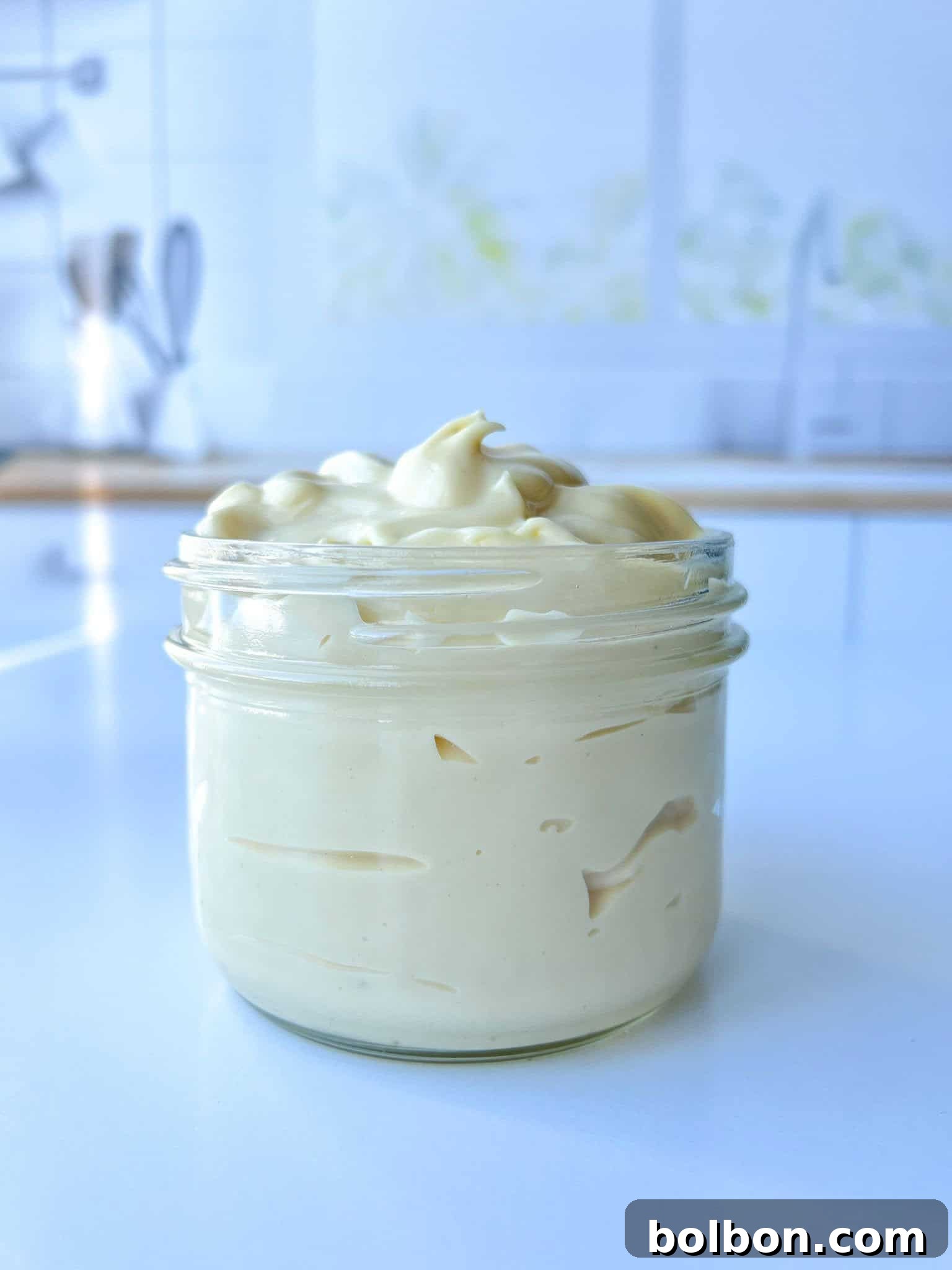
Creative Variations and Smart Substitutions for Homemade Mayo
One of the greatest joys of making your own mayonnaise is the freedom to customize it to your exact preferences. Once you master the basic recipe, a world of flavor possibilities opens up. Here are some fantastic ways to personalize your homemade mayo:
- Oil Exploration: Don’t hesitate to experiment with different oils to find your favorite. I frequently rotate between 🥑 avocado oil and light olive oil. Keep in mind that olive oil can have a much stronger flavor profile depending on its type, which is why I strongly recommend using a light olive oil or avocado oil. The taste of your finished mayonnaise will directly reflect the oil you choose, so opt for something you truly enjoy. Other great options include grapeseed oil or sunflower oil, both of which are quite neutral.
- Achieving Your Desired Consistency: If you prefer a thinner mayonnaise, simply increase the amount of 🍋 lemon juice you add. The acidity helps to thin out the mixture without compromising flavor. Remember, freshly squeezed lemon juice is an absolute MUST here; bottled lemon juice will significantly alter and diminish the fresh, bright taste.
- Acid Alternatives: While lemon juice is my go-to, apple cider vinegar can also be used as an acidic component. The key is to ensure your mayonnaise has some form of acidic element, as this is vital for flavor balance and proper emulsification. Feel free to adjust the amount of acid to your personal taste.
- Herbaceous Infusions: For an aromatic touch, once your mayonnaise is fully emulsified and smooth, you can stir in finely chopped fresh herbs. Fresh chives are a classic choice, adding a delicate oniony note. Other herbs like dill, parsley, or tarragon also work beautifully.
- Spicy Sensation: Craving a kick? Transform your homemade mayo into a zesty, flavorful spicy condiment. Try adding some 🌶️ Sriracha, your favorite hot sauce, or a pinch of cayenne pepper once the mayo is prepared. For inspiration, you can check out my Spicy Mayo recipe, which provides a detailed guide to creating this fiery variation. Smoked paprika can also add a delightful warmth and depth of flavor.
- Garlic Lover’s Delight: For a robust aioli-style mayonnaise, mince one or two cloves of fresh garlic very finely and stir them into the finished mayo. Allow it to sit for at least 30 minutes for the flavors to meld beautifully.
- Roasted Red Pepper Bliss: Puree a small amount of roasted red pepper and fold it into your mayonnaise for a smoky, slightly sweet, and vibrant spread perfect for sandwiches or vegetable dips.
Storing Your Homemade Mayonnaise for Freshness
Proper storage is essential to maintain the freshness and quality of your homemade mayonnaise. Since it contains raw egg, it’s crucial to handle and store it correctly to ensure safety and extend its shelf life. Once your mayonnaise is made, transfer it immediately to a clean, airtight container, ideally a glass mason jar. Sealing it tightly will protect it from absorbing odors from other foods in the refrigerator and prevent oxidation, which can affect its flavor and color.
Store your homemade mayonnaise in the coldest part of your refrigerator, typically the back of the bottom shelf. Avoid keeping it in the refrigerator door, as this area experiences more temperature fluctuations. When stored correctly, homemade mayonnaise will remain fresh and delicious for up to two weeks. Always use a clean spoon each time you scoop out mayonnaise to avoid introducing contaminants. Before using, give it a quick visual check for any signs of spoilage, such as an off-color, unusual odor, or separation that cannot be stirred back together. While unlikely within the recommended two-week period, these are indicators that it’s time to make a fresh batch.
Troubleshooting: What to Do If Your Mayo Doesn’t Work
While homemade mayonnaise is incredibly easy, sometimes things don’t go exactly as planned. The most common issue is a failure to emulsify, resulting in a runny, oily mess rather than a thick, creamy condiment. Don’t despair! Most “broken” mayonnaise can be salvaged.
Common Reasons for Failure:
- Egg Yolk Broken Too Soon: If the yolk breaks before the immersion blender can trap it, emulsification can be difficult.
- Oil Added Too Quickly (traditional methods): While the immersion blender method is forgiving, if you’re using a regular blender or whisk, adding oil too fast is the primary culprit.
- Ingredients Not at the Right Temperature: A cold egg is best, but sometimes if other ingredients are too warm, it can affect the emulsion.
- Incorrect Blender Placement: Not trapping the egg yolk at the bottom of the jar with the immersion blender head.
How to Fix Broken Mayonnaise:
- The “New Yolk” Method: In a separate clean jar, add another fresh egg yolk (or a whole cold egg for the immersion blender method). Slowly, drop by drop, add the broken mayonnaise mixture into the new yolk while continuously blending (with an immersion blender or whisk/regular blender). The new yolk acts as a fresh emulsifier, and the slow addition of the broken mixture helps it incorporate properly.
- The “Water” Method: Sometimes, adding a tiny amount (1/2 teaspoon) of hot water to the broken mayonnaise and whisking vigorously can help bring it back together. This works best for slightly separated mayo.
- The “Mustard” Method: A teaspoon of Dijon mustard can also act as an emulsifier. Whisk it into a new egg yolk, then slowly drizzle in the broken mayo.
Remember, practice makes perfect. Don’t be discouraged if your first attempt isn’t flawless. With these tips, you’ll be making perfect mayonnaise in no time!
Explore More Delicious Recipes
Egg Free Mayo
5 mins
How to Make Spicy Mayo
2 mins
Homemade Spicy Mayo
5 mins
Delicious Ways to Enjoy Your Homemade Mayonnaise
Once you’ve experienced the fresh, creamy goodness of homemade mayonnaise, you’ll want to put it on everything! Its superior flavor and texture make it a versatile condiment that elevates a wide range of dishes. Here are some of our favorite ways to enjoy this kitchen staple:
- The Ultimate Sandwich and Wrap Enhancer: Transform your everyday lunch into a gourmet meal. Spread this Homemade Mayo generously in any 🌯 wrap or sandwich, such as my Ham and Cheese Sandwiches, the hearty Italian Chopped Sandwich, or a refreshing Lettuce Wrap. It adds a crucial layer of moisture and rich flavor.
- Creamy Salads Master: This mayonnaise is the secret ingredient to making truly exceptional tuna salad, 🍗 chicken salad, or egg salad. Its fresh taste perfectly complements the other ingredients, binding them together into a luscious, satisfying dish.
- Base for Dressings and Dips: Say goodbye to store-bought dressings! Use this homemade mayo as the perfect base for any dressing or dip you adore. It’s the foundation for a vibrant Caesar dressing, a creamy homemade ranch, or a simple garlic aioli.
- Elevate Roasted Vegetables: Drizzle or dollop some mayo over roasted potatoes, asparagus, or broccoli for a rich, flavorful addition. A squeeze of lemon and a sprinkle of fresh herbs can turn this into an instant aioli.
- Garnish for Soups and Stews: A swirl of mayo on top of a hearty bowl of soup, like a creamy tomato or a rich seafood bisque, adds a touch of elegance and an extra layer of flavor.
- Burger and Fry Companion: Forget plain ketchup! A side of homemade mayo (especially a spicy or garlic variation) is the perfect dipping sauce for crispy fries, onion rings, or as a spread on your favorite burger or hot dog.
- Deviled Eggs Deluxe: Take your deviled eggs to the next level by using this fresh, tangy mayo for the filling. The difference in taste and texture is undeniable.
Common Questions About Homemade Mayonnaise
The best oil for homemade mayonnaise is one with a light or mild flavor that won’t overpower the other ingredients. Excellent choices include light avocado oil, sunflower oil, grapeseed oil, or a very light (not extra virgin) olive oil. Avoid strongly flavored oils, as they can impart a bitter or dominant taste to your mayo. Neutral oils allow the subtle tang of lemon and richness of the egg to shine through.
Absolutely! Customizing your homemade mayonnaise with additional flavorings is one of its greatest advantages. After the basic mayo is emulsified, you can stir in finely chopped fresh herbs like chives, dill, or parsley, a pinch of garlic powder or minced fresh garlic, chopped roasted red peppers, your favorite hot sauce (like Sriracha for a spicy kick), or smoked paprika for a deeper, warmer note. The possibilities are endless!
The safety of consuming raw eggs is a common concern. A good quality egg, especially pasture-raised, is key here. According to the USDA, raw eggs are not generally considered safe for consumption due to the potential risk of Salmonella. Therefore, this is my disclaimer to encourage you to do your own research and make an informed decision. Many people, including my family, have traditionally made and consumed homemade mayo with raw eggs for generations without issue. For those who prefer to avoid raw eggs entirely, pasteurized eggs (which have been gently heated in their shells to kill bacteria) offer a safer alternative. Alternatively, you can always enjoy my delicious Egg Free Mayo recipe!
Using a cold egg is a crucial tip for successful emulsification. The lower temperature of the egg helps the oil and egg molecules bind together more effectively, creating a stronger, more stable emulsion. This results in a consistently thicker, creamier, and beautifully structured mayonnaise, preventing it from separating and ensuring a perfect texture every time.
While an immersion blender makes this recipe incredibly fast and foolproof, you can certainly make mayonnaise using a regular blender or a food processor. The key difference is the technique for adding the oil: you must add it very slowly in a thin, steady stream while the blender or food processor is running on low. This gradual addition is essential to allow the oil to properly emulsify with the egg and acid, creating a smooth and creamy texture.
Homemade Mayo: The 1-Minute Recipe
Facebook Share
Rate Recipe
Print Recipe
Video Tutorial
Equipment
Ingredients
- 1 large egg, cold out of the fridge (pasture-raised is preferred for best quality)
- ½ teaspoon salt
- black pepper, freshly ground, to taste
- 1 teaspoon Dijon mustard
- ½ lemon, freshly juiced (approximately 1-2 tablespoons)
- 1 cup light avocado oil , or any light, mild-flavored oil of your choice (e.g., grapeseed, sunflower, light olive oil)
Instructions
-
Carefully place the whole, cold egg into a wide-mouth mason (glass) jar or a tall liquid measuring cup. It’s important that the egg yolk remains unbroken at this stage. Next, add the salt, pepper, Dijon mustard, and fresh lemon juice directly into the jar. Adjust the amounts of salt, pepper, mustard, and lemon to suit your personal taste preferences. Finally, pour the light avocado oil (or your preferred mild oil) over all the ingredients. Do not stir.
-
Insert the immersion blender (hand blender) into the jar, ensuring its head fully encloses and traps the egg yolk at the bottom. Turn the blender on to a high setting. Keep the blender stationary for a few seconds until you observe the mixture at the bottom starting to emulsify and turn thick and white. Once emulsification begins, slowly and gently move the blender upwards through the oil until the entire mixture is uniform, creamy, and fully emulsified. This remarkable process typically takes less than 1 minute to complete!
-
Transfer the freshly made mayonnaise to a clean, tightly sealed mason jar. Place it in the refrigerator and enjoy its incredible freshness! Homemade mayonnaise, when stored correctly, can last for up to 2 weeks in the fridge.
Nutrition
Nutrition information is automatically calculated and is intended to be used as an approximation. Individual results may vary.