
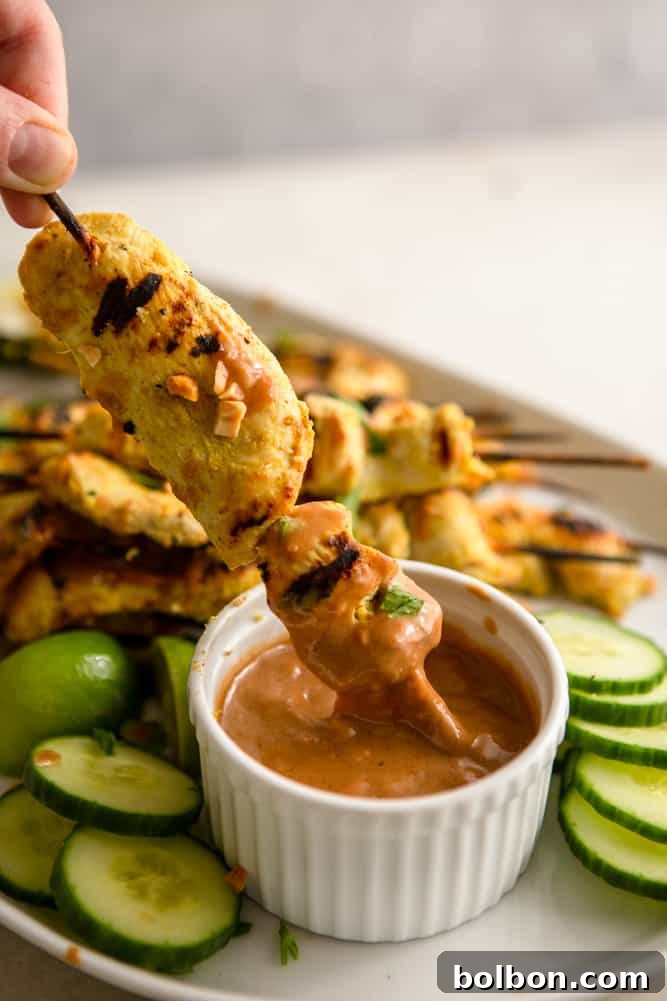
Experience the authentic flavors of Southeast Asia right in your kitchen with this incredible Easy Chicken Satay with Peanut Sauce. Forget takeout; this homemade version rivals your favorite Thai restaurant’s offering, delivering perfectly grilled chicken skewers alongside an irresistible, creamy peanut dipping sauce that will have everyone asking for more.
Simple to prepare yet bursting with complex flavors, this recipe transforms ordinary chicken into a culinary masterpiece, making it an ideal choice for appetizers, light dinners, or impressive party food.
What is Chicken Satay? A Culinary Journey Through Southeast Asia
Satay, also spelled Sate, is a beloved dish consisting of seasoned, skewered, and grilled meat, traditionally served with a rich and flavorful sauce. While widely enjoyed across Southeast Asia, its origins are most often traced back to Javanese cuisine in Indonesia, where it holds the esteemed status of a national dish. From the bustling street markets of Jakarta to the vibrant eateries of Bangkok, satay represents a cornerstone of regional gastronomy, embodying a perfect blend of smoky flavors and aromatic spices.
This iconic dish has evolved over centuries, with each country and region developing its unique variations in marinades, grilling techniques, and accompanying sauces. Beyond Indonesia, satay enjoys immense popularity in Malaysia, the Philippines, Thailand, Singapore, and many other neighboring nations. While the type of meat can vary—including beef, lamb, pork, and even tofu or tempeh—chicken satay remains one of the most universally cherished versions, known for its tender texture and ability to absorb a myriad of flavors.
In North American dining, chicken satay often appears as a delightful appetizer on Thai restaurant menus, almost always accompanied by its signature peanut sauce. Its popularity as a starter highlights its appeal as a vibrant, flavor-packed introduction to Southeast Asian cuisine. Though chicken is the most common, pork satay is also frequently found and equally delicious. The art of satay lies in the perfect balance of tender meat, aromatic spices, and a dipping sauce that complements and elevates every bite, making it a truly unforgettable culinary experience.
Unlocking Flavor: Essential Ingredients for Perfect Chicken Satay
Crafting exceptional chicken satay begins with a thoughtfully chosen marinade. Each ingredient plays a vital role in tenderizing the chicken and infusing it with that unmistakable Southeast Asian flavor profile. Here’s a closer look at the key components you’ll need for the chicken and its sensational marinade:
- Skinless Chicken Breast: While breast meat is commonly used for its leanness and ease of preparation, don’t hesitate to opt for skinless chicken thigh meat. Thighs offer a slightly richer flavor and tend to stay even juicier during grilling, making them a fantastic alternative for those who prefer a more succulent bite. Ensure the chicken is cut into uniform 1-inch strips for even cooking and optimal marinade absorption.
- Full-Fat Coconut Milk: This is the secret to a tender, flavorful marinade. Use canned, full-fat coconut milk, as it adds richness, helps to tenderize the chicken by breaking down muscle fibers, and provides a creamy base that carries the spices beautifully. Avoid light coconut milk for this recipe, as it won’t deliver the same depth of flavor or texture.
- Curry Powder: A cornerstone of satay flavor, curry powder is a convenient blend of various aromatic spices such as turmeric, coriander, cumin, and fenugreek. It imparts a warm, earthy, and slightly spicy depth to the chicken, creating the signature golden hue and fragrant aroma that is characteristic of authentic satay.
- Brown Sugar: Beyond adding a touch of sweetness that balances the savory and spicy notes, brown sugar is crucial for caramelization. As the chicken grills, the sugar helps create that beautiful, slightly charred exterior, enhancing both flavor and texture through the Maillard reaction.
- Fresh Lime Juice: The acidity from fresh lime juice serves multiple purposes. It brightens the flavors of the marinade, cuts through the richness of the coconut milk, and acts as a natural tenderizer, ensuring your chicken skewers are incredibly soft and moist. Always use fresh lime juice for the best vibrant taste.
- Salt: Essential for seasoning the meat from within, salt enhances all the other flavors in the marinade, making each bite more impactful and drawing out the natural juices to keep the chicken moist. Kosher salt is often preferred for its pure flavor and larger crystals.
- Ginger Root: Fresh ginger root adds a pungent, warm, and slightly spicy kick that is indispensable in Southeast Asian cuisine. For the best flavor and a smooth marinade, use a microplane to finely grate the ginger, ensuring it distributes evenly throughout the marinade without any fibrous chunks.
- Garlic: No savory marinade is complete without garlic! Its robust, aromatic presence is indispensable for building a complex flavor base. I recommend using a garlic press to achieve very fine minced garlic, allowing its powerful flavors to blend seamlessly into the marinade.
Expert Tips for Grilling Flawless Chicken Satay Skewers
Achieving that perfect tender texture and delightful char on your homemade chicken satay is easier than you think with these expert tips and tricks. Pay attention to these details for truly restaurant-quality results:
- Cut Against the Grain for Maximum Tenderness: This is a crucial step for ensuring your chicken is incredibly tender and not chewy. When slicing chicken breast or thigh, always observe the direction of the muscle fibers and cut perpendicular to them. This shortens the fibers, resulting in a much softer and more pleasant chew. Aim for uniform 1-inch thick strips for even cooking.
- Prevent Charring with Soaked Wooden Skewers: If you’re using wooden or bamboo skewers, it’s absolutely essential to soak them in water for at least 20-30 minutes before threading the chicken. This hydrates the wood, preventing them from burning, splintering, and charring excessively on the grill. Properly soaked skewers ensure they remain intact and don’t impart a burnt wood taste to your delicious chicken.
- Marinate for Optimal Flavor and Tenderness: The marinade is where all the magic happens! While a minimum of 30 minutes will start to infuse flavor, for truly exceptional results, aim to marinate the chicken for at least 2-4 hours. For the deepest possible flavor penetration and supreme tenderness, consider marinating overnight (up to 12 hours) in the refrigerator. The longer the chicken soaks, the more flavorful and tender it will become, making a significant difference in the final dish.
- Don’t Overcrowd the Grill: When grilling, arrange the skewers in a single layer, ensuring there’s enough space between each piece of chicken. Overcrowding the grill lowers its temperature and steams the chicken instead of searing it, preventing that desirable crispy, caramelized exterior and resulting in bland, pale chicken. Cook in batches if necessary.
- High Heat for Quick, Even Cooking: Chicken satay cooks best over medium-high to high heat, ideally between 400-450°F (200-230°C). The goal is to cook the chicken quickly until it’s done through, developing a nice char on the outside without overcooking and drying out the inside. Keep a close eye on it, as thin strips cook fast!
The Heart of Satay: Crafting the Best Homemade Peanut Sauce
While store-bought peanut sauce can be a convenient option, nothing compares to the rich, complex, and customizable flavor of a homemade version. The peanut sauce is undeniably the soul of chicken satay, elevating simple grilled chicken to an extraordinary culinary experience. Over the years, I’ve refined my recipe to create a truly delicious peanut sauce that perfectly complements the savory chicken, taking this dish to an entirely new level. Its creamy texture and harmonious blend of sweet, savory, tangy, and spicy notes are what make satay so uniquely addictive.
Making your own peanut sauce allows you to control the quality of ingredients, adjust the sweetness and spiciness to your preference, and avoid unwanted additives or high sodium content often found in commercially prepared sauces. It’s surprisingly simple and quick to prepare, requiring just a few staple pantry items and minimal effort. Once you try this fresh, vibrant homemade version, you’ll understand why it’s worth the minimal effort and become a convert! For a deeper dive into the full peanut sauce recipe and its nuances, you can find the complete guide HERE, or simply refer to the condensed version below in the recipe card.
Irresistible Peanut Sauce Ingredients:
This harmonious blend of ingredients creates a sauce that is simultaneously creamy, savory, tangy, and subtly sweet with a hint of spice – truly the perfect companion for your chicken satay. Precision in ingredient choice and balance is key to its exceptional taste.
- Natural, Unsweetened Peanut Butter: The creamy, nutty foundation of our sauce. Using natural, unsweetened peanut butter ensures you’re getting pure peanut flavor without excessive added sugars or hydrogenated oils, allowing you to control the sweetness yourself. Smooth or crunchy can work, depending on your desired texture.
- Low Sodium Soy Sauce: Provides the essential umami and savory depth that is characteristic of Asian cuisine. Opting for low-sodium soy sauce gives you better control over the overall saltiness of the sauce, allowing you to adjust it to your liking without making it overly salty.
- Rice Vinegar: Adds a crucial tang and acidity, balancing the richness of the peanut butter and enhancing the overall brightness of the sauce. It cuts through the creamy texture, preventing the sauce from being too heavy.
- Brown Sugar: A touch of brown sugar contributes a gentle sweetness and helps create a beautiful, glossy texture and a slight caramel note. Adjust the amount to your desired level of sweetness, complementing the other bold flavors.
- Chili Garlic Sauce: For that authentic Southeast Asian kick! This vibrant paste adds a lovely warmth and spice, along with fragrant garlic notes. Start with the recommended amount and increase or decrease based on your preferred level of heat, making it mild or fiery.
- Fresh Lime Juice: Another burst of fresh acidity, similar to its role in the marinade, lime juice cuts through the richness and brightens the flavor profile of the sauce. It adds a zesty freshness that lifts all the other ingredients.
- Minced or Grated Garlic: Fresh garlic provides a sharp, aromatic pungency that is indispensable in this sauce. It adds a foundational savory element that pairs perfectly with the peanuts and spices.
- Grated Ginger Root: Adds a warm, zesty, and slightly spicy note, complementing the garlic and other spices, bringing an extra layer of complexity to the sauce. Grating ensures it integrates smoothly.
- Warm Water: This is key for achieving your desired sauce consistency. Add one tablespoon at a time, whisking well after each addition, until the sauce is perfectly smooth and pourable, yet thick enough to generously cling to the chicken skewers.
Elevate Your Meal: What to Serve with Chicken Satay
Chicken Satay is incredibly versatile and can be enjoyed as a flavorful appetizer or transformed into a complete, satisfying meal. The most crucial accompaniment, of course, is the irresistible peanut sauce. I highly recommend pairing your skewers with my Best Thai Peanut Sauce for an authentic and deeply satisfying experience. However, if time is short, a good quality store-bought peanut sauce can also work in a pinch.
To create a well-rounded and delicious meal, consider these fantastic side dishes that perfectly complement the flavors of chicken satay, enhancing the overall dining experience:
- Coconut Rice: The creamy, fragrant notes of Coconut Rice provide a delightful contrast to the savory and slightly spicy chicken. Its subtle sweetness and rich texture make it an ideal carbohydrate pairing that soaks up all the delicious sauces.
- Cucumber Slaw: A refreshing and crisp Cucumber Slaw, perhaps with a light sesame-ginger dressing, offers a palate-cleansing crunch that balances the richness of the peanut sauce. It adds a vibrant, fresh element and a welcome textural contrast to the plate.
- Steamed Jasmine Rice: A classic and simple choice, plain steamed jasmine rice allows the bold flavors of the satay and peanut sauce to truly shine without overpowering them. It’s a comforting and absorbent base for the meal.
- Fresh Green Salad: A light, vibrant salad with a tangy citrus vinaigrette or a clear dressing can add freshness, essential greens, and a healthy vegetable component to your meal, cutting through the richness.
- Grilled Vegetables: Skewered and grilled bell peppers, zucchini, red onion, or even pineapple chunks can mirror the grilled aspect of the chicken and add extra texture, sweetness, and a smoky dimension to your plate.
- Asian Noodle Salad: A cold noodle salad with fresh herbs like mint and cilantro, crisp vegetables, and a light soy-lime dressing can be another excellent, refreshing side that adds substance and different textures.
Discover More Delicious Asian-Inspired Recipes
If you loved this chicken satay, you’ll be thrilled to explore more of our favorite Asian-inspired dishes that bring bold flavors and exciting culinary adventures right to your kitchen. Expand your repertoire and continue your journey through vibrant Asian cuisine with these fantastic recipes:
- Thai Basil Beef: A quick and incredibly flavorful stir-fry featuring tender beef, aromatic Thai basil, and a savory sauce – perfect for a satisfying weeknight meal that comes together in minutes.
- Thai Green Curry: Dive into the rich, spicy, and creamy world of Thai green curry with this comforting and vibrant chicken dish. It’s a hearty meal that’s both exotic and deeply satisfying.
- Peanut Chicken Wraps: If you can’t get enough of the irresistible peanut sauce, these fresh and crunchy wraps are a must-try. They combine succulent chicken with crisp vegetables in a delicious, portable, and healthy meal.
- Sesame Ginger Steak Skewers: For another fantastic skewer option, these steak skewers are marinated in a savory sesame-ginger sauce and grilled to perfection, offering a different yet equally delicious flavor profile.
Homemade Chicken Satay Recipe
Meghan McMorrow | Fox and Briar
20
7
30
15 skewers
Print Recipe
Ingredients
- 2 lbs chicken breast (or boneless, skinless chicken thighs)
For the Chicken Marinade:
- 1 cup full-fat coconut milk (from a can)
- 1 tbsp curry powder
- 1 tsp brown sugar
- 1 tsp kosher salt
- 4 cloves garlic, minced (or pressed)
- 1 tbsp fresh ginger, grated
- 1 tbsp fresh lime juice
For the Homemade Peanut Sauce:
- 1/2 cup natural, unsweetened peanut butter
- 2 TBSP low sodium soy sauce
- 1 TBSP rice vinegar
- 2 TBSP brown sugar
- 2 tsp chili garlic sauce (adjust to desired spiciness)
- 1 TBSP fresh lime juice
- 3 cloves garlic, grated or pressed
- 1 TBSP fresh ginger root, grated
- 2-4 TBSP warm water (add gradually to achieve desired consistency)
Instructions
- If using wooden skewers, soak them in water for 20-30 minutes to prevent charring during cooking.
- In a medium-sized bowl, whisk together all ingredients for the chicken marinade until well combined. Set aside.
- Slice the chicken breasts (or thighs) against the grain into uniform 1-inch thick strips. Add the chicken to the marinade bowl and toss until each piece is completely coated. Place the bowl in the refrigerator and allow the chicken to marinate for at least 30 minutes. For optimal flavor and tenderness, marinate overnight (up to 12 hours).
- While the chicken is marinating, prepare the peanut sauce. In a separate bowl, whisk together all ingredients for the peanut sauce, *except* for the warm water. Gradually add 2-4 tablespoons of warm water, one tablespoon at a time, whisking continuously until the sauce reaches your desired smooth, dippable consistency. Set the sauce aside until you are ready to serve.
- When ready to cook, thread the marinated chicken strips onto the pre-soaked skewers. Discard any remaining excess marinade.
- To Grill: Preheat your grill to medium-high to high heat. Place the chicken skewers on the hot grill. Cook for approximately 3 minutes per side, or until the chicken is cooked through and has developed a beautiful char and golden-brown exterior. The internal temperature of the chicken should reach 165°F (74°C).
To Cook Under Broiler (Oven Method):
- Line a large baking sheet with foil for easy cleanup, then place an oven-safe wire rack on the baking sheet. Lightly spray the rack with cooking spray or brush with oil. Arrange the chicken skewers in a single, even layer on the rack.
- Move your oven rack to the highest position, typically about 6 inches from the broiler element. Turn on the broiler (high setting if available) and allow it to preheat.
- Once the broiler is hot, place the baking sheet with skewers on the top rack. Broil the chicken for 2-3 minutes, watching carefully, until it begins to brown and develop some char.
- Carefully flip the chicken skewers and broil for another 2-3 minutes, or until the chicken is cooked through (internal temperature 165°F / 74°C) and nicely browned.
Notes
Please note that the nutrition facts provided below do not include the peanut sauce, as its nutritional content can vary significantly based on ingredients and specific brands used. Always check individual product labels for precise information.
For the ultimate taste experience, I highly recommend serving this chicken satay with my Best Thai Peanut Sauce. However, a good quality store-bought peanut sauce can be used if you’re short on time.
Feel free to use boneless, skinless chicken thighs instead of breast meat if you prefer; chicken thighs tend to stay even juicier. Just be aware that the cooking time might be slightly longer to ensure they are cooked through to an internal temperature of 165°F (74°C).
Leftover homemade peanut sauce can be stored in an airtight container in the refrigerator for up to one week. If it thickens upon chilling, simply whisk in a little warm water to restore its creamy, dippable consistency.
Nutrition
Serving: 1 skewer | Calories: 103kcal | Carbohydrates: 1g | Protein: 13g | Fat: 5g | Saturated Fat: 3g | Polyunsaturated Fat: 1g | Monounsaturated Fat: 1g | Trans Fat: 1g | Cholesterol: 39mg | Sodium: 228mg | Potassium: 270mg | Fiber: 1g | Sugar: 1g | Vitamin A: 23IU | Vitamin C: 1mg | Calcium: 10mg | Iron: 1mg
Nutrition information is automatically calculated and should only be used as an approximation. It does not include the peanut sauce.
Additional Info
Did you like this recipe?
Please comment, rate and share! And don’t forget to tag me on Instagram @foxandbriar AND #foxandbriar so I can see what you made!
Frequently Asked Questions (FAQs) About Chicken Satay
- Can I prepare the chicken satay marinade ahead of time?
- Absolutely! The chicken can be marinated for as little as 30 minutes, but for the best flavor and tenderness, we highly recommend marinating it for 2-4 hours, or even overnight (up to 12 hours) in the refrigerator. This allows the flavors to deeply penetrate the chicken, resulting in a more succulent and flavorful final product. Always keep marinated chicken refrigerated until ready to cook.
- What’s the best way to cook chicken satay without a grill?
- If you don’t have access to an outdoor grill, you can easily cook chicken satay using your oven’s broiler or an indoor grill pan. Follow the detailed instructions provided in the recipe for broiling, ensuring your oven rack is in the highest position for optimal browning. When using a grill pan, preheat it thoroughly and cook skewers for a few minutes per side until cooked through and nicely charred.
- Can I use chicken thighs instead of chicken breasts?
- Yes, absolutely! Boneless, skinless chicken thighs are a fantastic alternative to chicken breasts for satay. They tend to stay juicier and have a slightly richer flavor due to their higher fat content. Keep in mind that chicken thighs might require a minute or two longer to cook through compared to breasts, so adjust your cooking time accordingly and always check for an internal temperature of 165°F (74°C).
- How can I make the peanut sauce spicier?
- To increase the heat level of your homemade peanut sauce, simply add more chili garlic sauce, a pinch of finely minced bird’s eye chili, a dash of cayenne pepper, or a few drops of your favorite hot sauce. Add incrementally and taste as you go to achieve your desired level of spiciness without overwhelming the other flavors.
- Can I make this recipe gluten-free?
- Yes, making chicken satay gluten-free is straightforward. The primary ingredient to watch out for is soy sauce. Ensure you use a certified gluten-free soy sauce (like tamari). Additionally, verify that your curry powder blend is also gluten-free, as some commercial blends may contain wheat-based fillers. Most other ingredients are naturally gluten-free, but always double-check labels, especially for store-bought items.
- How long does homemade peanut sauce last and how do I store it?
- Homemade peanut sauce can be stored in an airtight container in the refrigerator for up to one week. For best results, allow it to come to room temperature for about 15-20 minutes before serving. If it thickens too much after chilling, simply whisk in a tablespoon or two of warm water, milk, or coconut milk until it reaches your preferred creamy, dippable consistency again.
Final Thoughts on Mastering Homemade Chicken Satay
Embarking on the journey of making homemade chicken satay is a rewarding experience that promises to delight your taste buds and impress your guests. By following these simple steps and expert tips, you can recreate the iconic, complex flavors of your favorite Thai restaurant in the comfort of your own kitchen. The succulent, perfectly marinated chicken, beautifully grilled or broiled, combined with the creamy, spicy, and tangy homemade peanut sauce, creates a symphony of flavors that is truly unforgettable and deeply satisfying.
Whether you’re serving it as an enticing appetizer for a festive gathering, a delightful snack, or as the star of a vibrant weeknight dinner, this Easy Chicken Satay with Peanut Sauce is more than just a meal; it’s an adventure in flavor that celebrates the rich culinary traditions of Southeast Asia. So gather your ingredients, fire up the grill (or broiler!), and prepare to savor every delicious bite of this authentic classic. Happy cooking, and enjoy the incredible flavors you’ve created!