
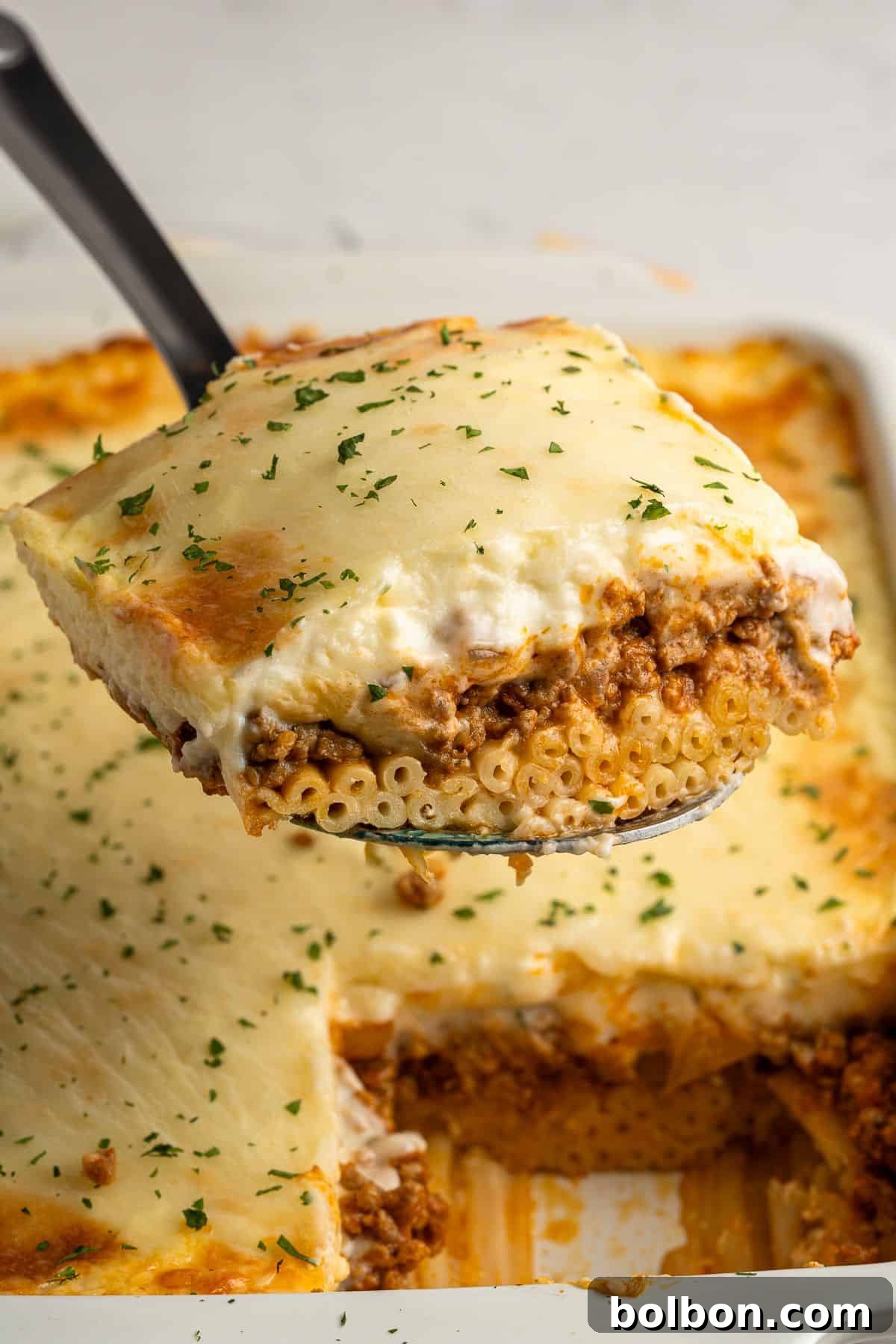
You’ve been patiently waiting for this Authentic Greek Pastitsio recipe, and the moment has finally arrived! Often heralded as Greece’s answer to lasagna, this iconic dish is a true classic, brimming with flavor and tradition. This particular version holds a special place in my heart, as it’s the exact recipe my mom perfected during our unforgettable years living in Heraklion, Crete 🇬🇷. It’s more than just a recipe; it’s a culinary journey back to our time on that beautiful island, a taste of home and cherished memories.

Our move to Crete wasn’t by chance; it was driven by my dad’s illustrious water polo 🤽 career. After the pinnacle of competing in the Olympics 🥇, he embraced a new role as a coach for the Greek men’s team, which brought our entire family to the vibrant shores of Greece. While my dad dedicated his time to coaching, my mom immersed herself in the local culture, spending invaluable time with the other team families. It was during this period that she truly delved into the art of authentic Greek cooking, learning traditional techniques and secret family recipes directly from the source. Greece quickly transitioned from a foreign land to our beloved home 🏠, and the water polo team, along with their wonderful families, became an extension of our own. This deep connection to Greek life and cuisine is woven into every strand of this Pastitsio.
This Pastitsio recipe is one of many culinary treasures that has been lovingly passed down to me through generations. I feel incredibly honored to continue cooking alongside my mom, preserving these cherished traditions, and now, sharing a piece of our family history and Greek heritage with the world ❤️. It’s a testament to the power of food to connect us to our past, our loved ones, and new friends.
Experience the Irresistible Layers of This Classic Greek Lasagna
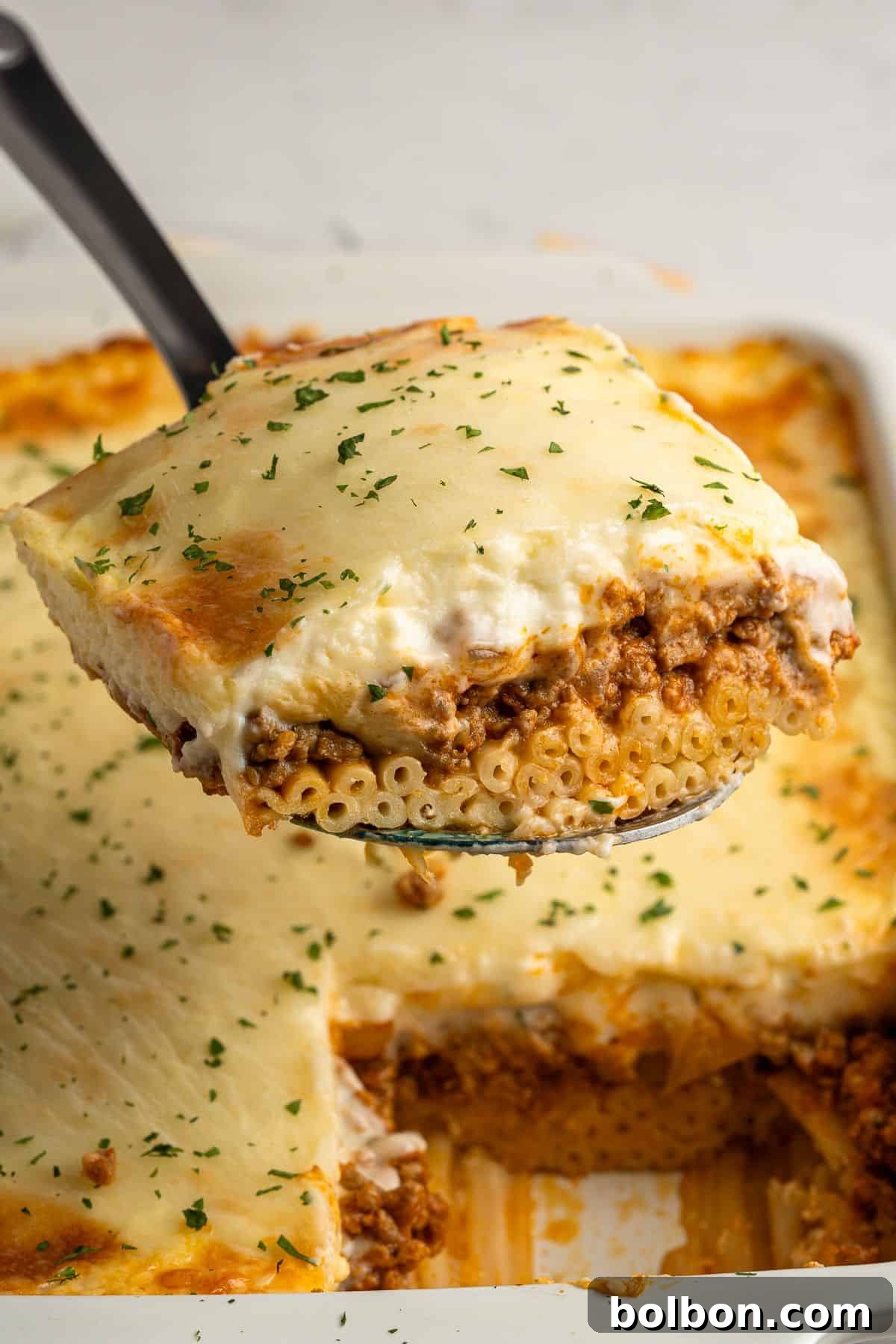
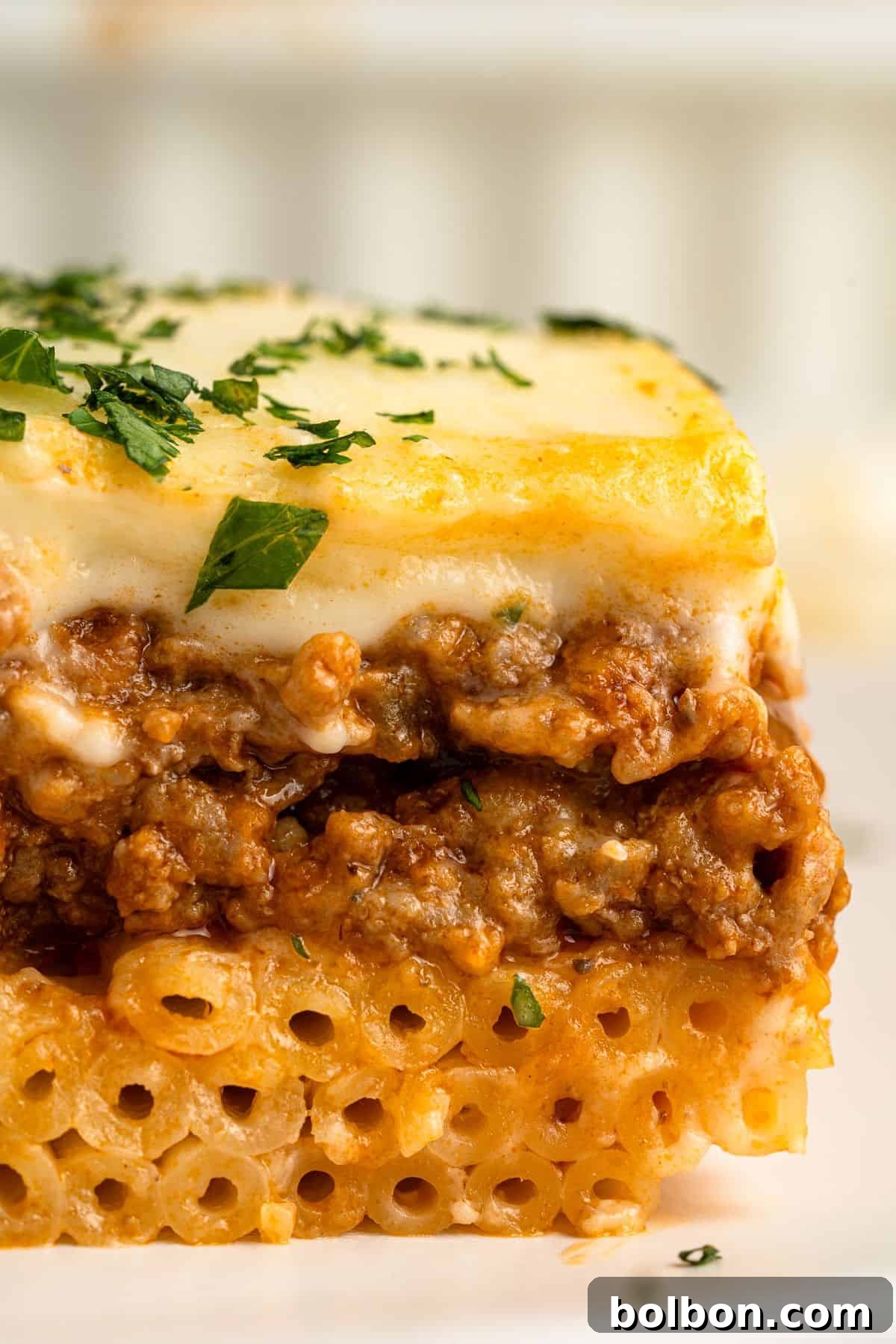
This Greek Pastitsio recipe is the epitome of comfort food and a truly indulgent culinary creation. It’s meticulously crafted with distinct layers that come together to form an unforgettable symphony of flavors and textures. Imagine tender, Greek bucatini-style pasta 🍝, each hollow strand perfectly capturing the rich, aromatic meaty sauce. This savory foundation is then crowned with a thick, luscious layer of creamy béchamel sauce, baked to a golden, bubbly perfection. The combination creates a dish that is not only visually stunning but also deeply satisfying, offering a hearty and comforting experience with every forkful.
Key Ingredients for a Perfect Homemade Pastitsio
Crafting an authentic Greek Pastitsio involves a careful selection of ingredients, each playing a crucial role in achieving its signature flavor and texture. Understanding the purpose of each component will help you create a truly memorable dish.
The Pasta: Foundation of Flavor
Traditional Pastitsio calls for thick, tubular pasta, specifically bucatini-style Greek Pastitsio pasta (often labeled as #2). Its hollow center is ideal for absorbing the rich meat sauce, ensuring every bite is flavorful. While traditional pasta is preferred, you can substitute with other tubular pasta shapes like penne, rigatoni, or ziti. The key is to arrange them uniformly in the baking dish to create those classic, neat slices.
The Meat Sauce: Aromatic Heart of the Dish
The meat sauce, or ragù, is the savory soul of Pastitsio. Typically made with ground beef or a mix of beef and pork, it’s slowly cooked with aromatic vegetables like onions and garlic, then simmered in a rich tomato base. The addition of red wine adds depth, and traditional Greek spices like oregano and paprika contribute to its distinctive character. Some families also include a hint of cinnamon or clove for a truly authentic touch, though this is optional based on personal preference.
The Béchamel: Creamy Crown
The béchamel sauce is what sets Pastitsio apart. This velvety, rich topping is made from a classic roux (butter and flour) slowly whisked with milk until smooth and thick. Enriched with egg yolks and grated cheese, it bakes into a golden-brown, creamy crust that beautifully complements the savory layers beneath. Achieving a smooth, lump-free béchamel is crucial for the perfect Pastitsio.
The Cheese: Binding and Flavor
Cheese plays a vital role both within the layers and on top. Traditionally, Greek Kefalotyri cheese (a hard, salty sheep’s milk cheese similar to Parmesan or Pecorino Romano) is used in the béchamel and as a sprinkle. However, if Kefalotyri is hard to find, good quality Parmigiano Reggiano or even Mozzarella can be excellent substitutes, offering a delightful melt and savory finish to the dish.
Expert Tips to Master Your Pastitsio Preparation
- Make-Ahead Magic for Stress-Free Cooking: To truly enjoy a stress-free cooking experience, you can prepare the luscious meat sauce and the creamy béchamel a day in advance. Simply store them separately in airtight containers in the refrigerator. The following day, gently warm both sauces over low heat before assembling your Pastitsio. This not only saves time but also allows the flavors to meld beautifully overnight, enhancing the overall taste. Alternatively, you can assemble the entire Pastitsio dish a day ahead, cover it tightly with foil or plastic wrap, and refrigerate. When ready to bake, simply place it in the preheated oven as usual. This is an excellent option for entertaining or busy weeknights.
- Embrace or Adjust Traditional Spices: Spices 🧂 like cinnamon and clove are deeply rooted in the traditions of most Greek meat sauces, lending Pastitsio its distinctive, rich, and aromatic flavor profile. While these spices offer an authentic touch, personal preferences vary. My family, for instance, prefers the meat sauce without them, focusing solely on the savory notes. Feel free to incorporate them if you desire a more traditional version, or omit them for a taste that aligns with your palate. A small pinch goes a long way.
- Choosing Your Cheese Wisely: Kefalotyri cheese 🧀 is the traditional choice for Pastitsio, prized for its sharp, salty flavor that complements the richness of the dish. However, it can sometimes be challenging to find outside of specialty Greek markets. In such cases, Parmigiano Reggiano makes an excellent substitute, offering a similar salty and nutty depth. For a milder, meltier finish, Mozzarella is what I often use or keep on hand, providing a wonderful gooey texture when baked. Don’t hesitate to use what’s accessible and appealing to you.
- The Art of the Perfect Slice: After baking, it can be tempting to dive right into your Pastitsio. However, for those beautifully defined, uniform layers and clean slices that are so characteristic of this dish, it’s crucial to let it rest. Allow the Pastitsio to cool for a minimum of 30 minutes (even up to an hour) after it comes out of the oven. This cooling period allows the pasta, meat sauce, and béchamel to set properly, ensuring that each slice holds its shape perfectly.
Step-by-Step Guide: Crafting Your Delicious Pastitsio Layers
Creating the Flavorful Meat Sauce (Ragù)
🫒 Heat the olive oil in a large pan with high sides over medium-high heat. This ensures enough space for your meat to brown evenly.
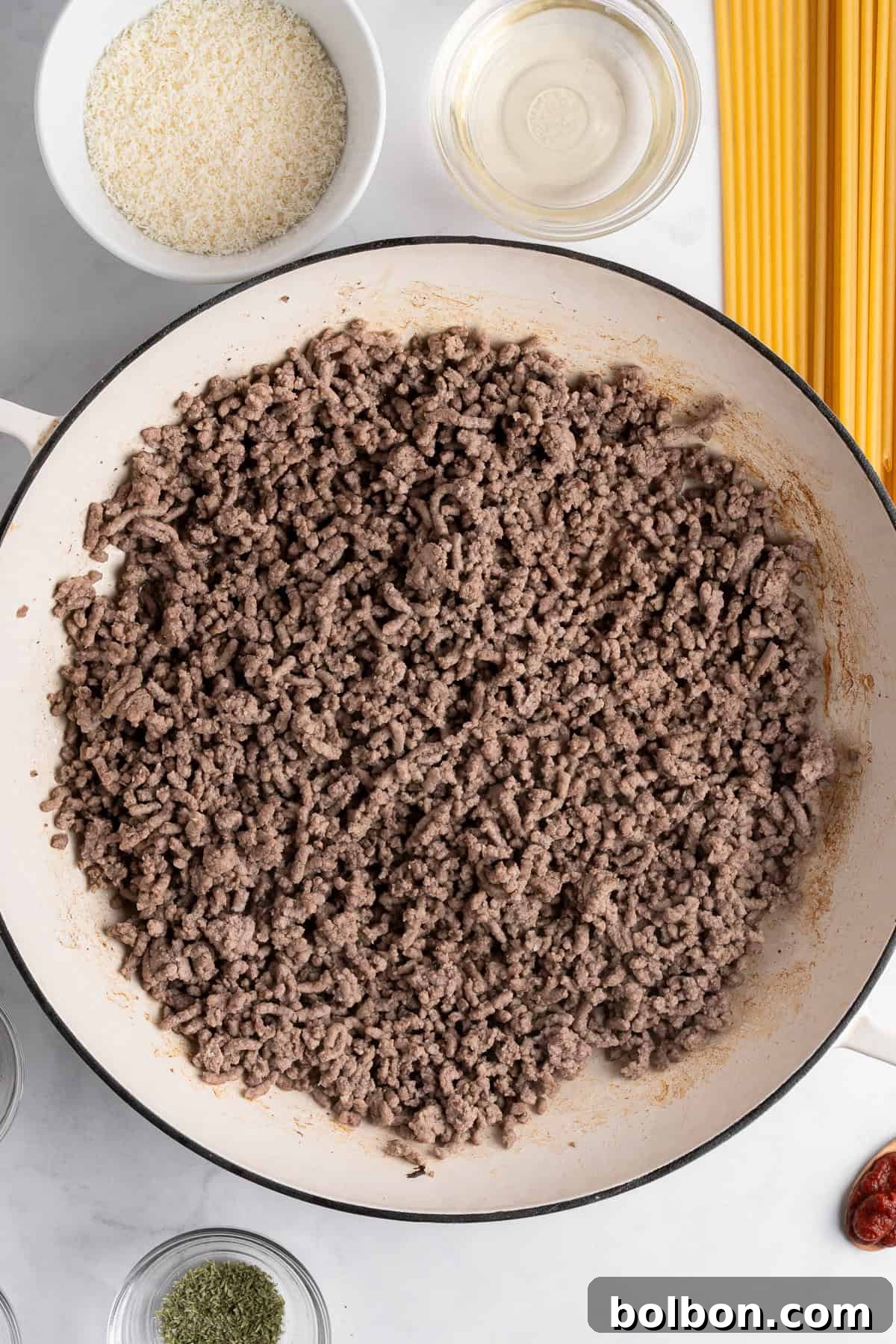
🥩 Add the ground meat (beef or pork) and use a spoon or spatula to break it up into small pieces. Continue to fry the ground meat for about 10 minutes, stirring occasionally, until it starts to “pop” and the water has completely evaporated from the pan, leaving the meat beautifully browned and the pan dry. This step is crucial for developing deep flavor.
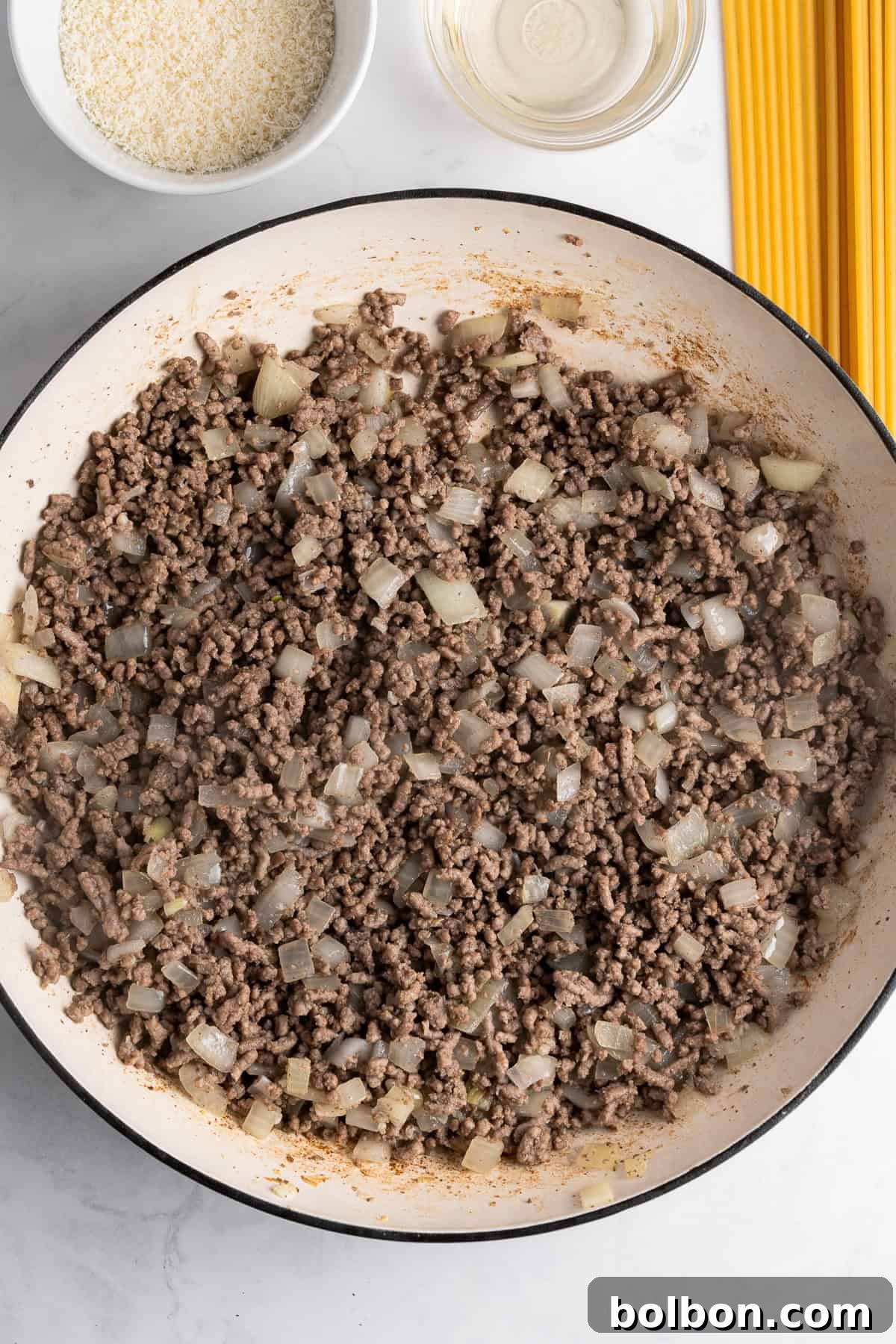
🧅 Once the water has evaporated and the meat is browned, reduce the heat to medium-low. Add the finely diced onions to the pan and sauté until they become soft and translucent. Then, add the minced garlic and stir for about a minute until fragrant, being careful not to burn it.
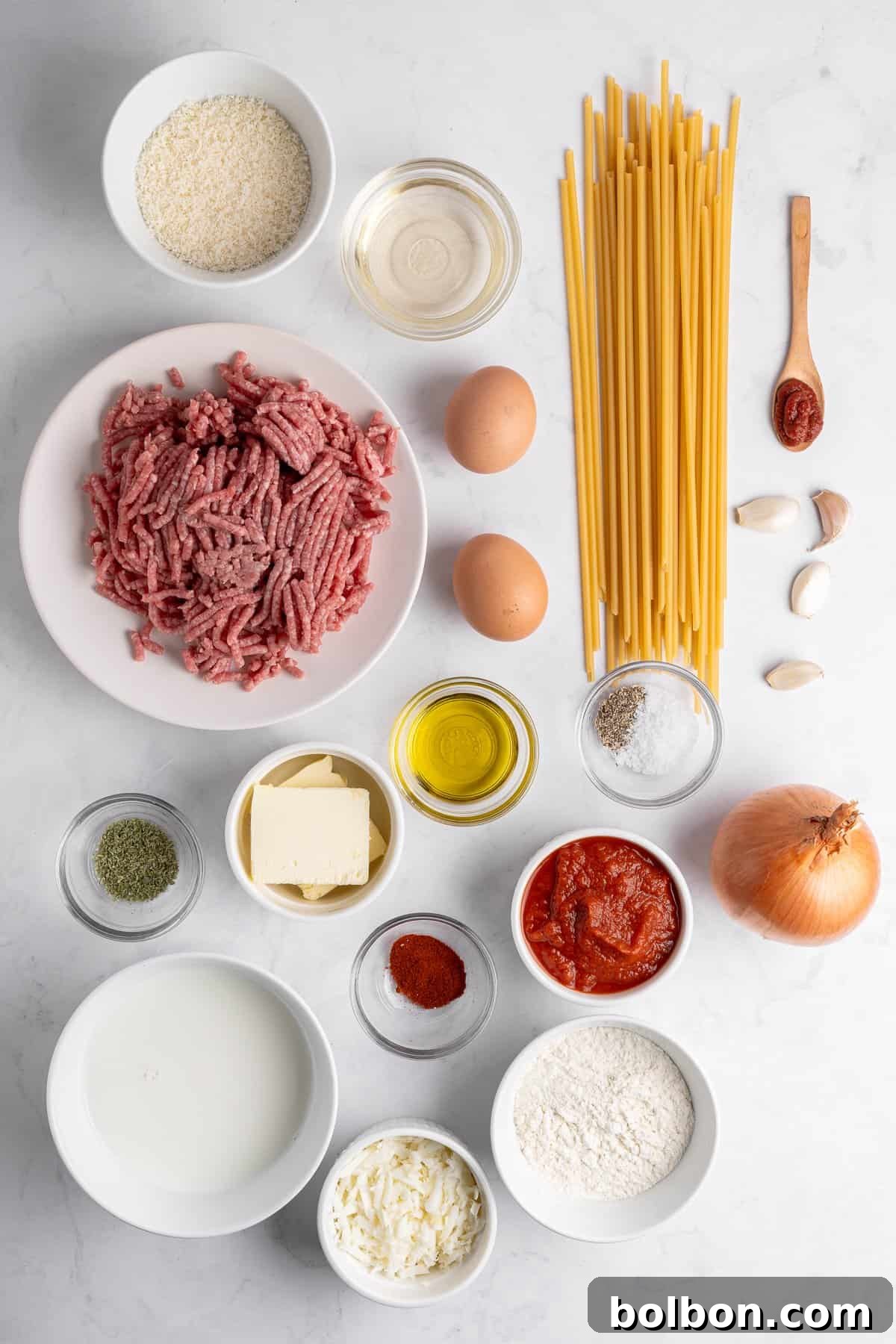
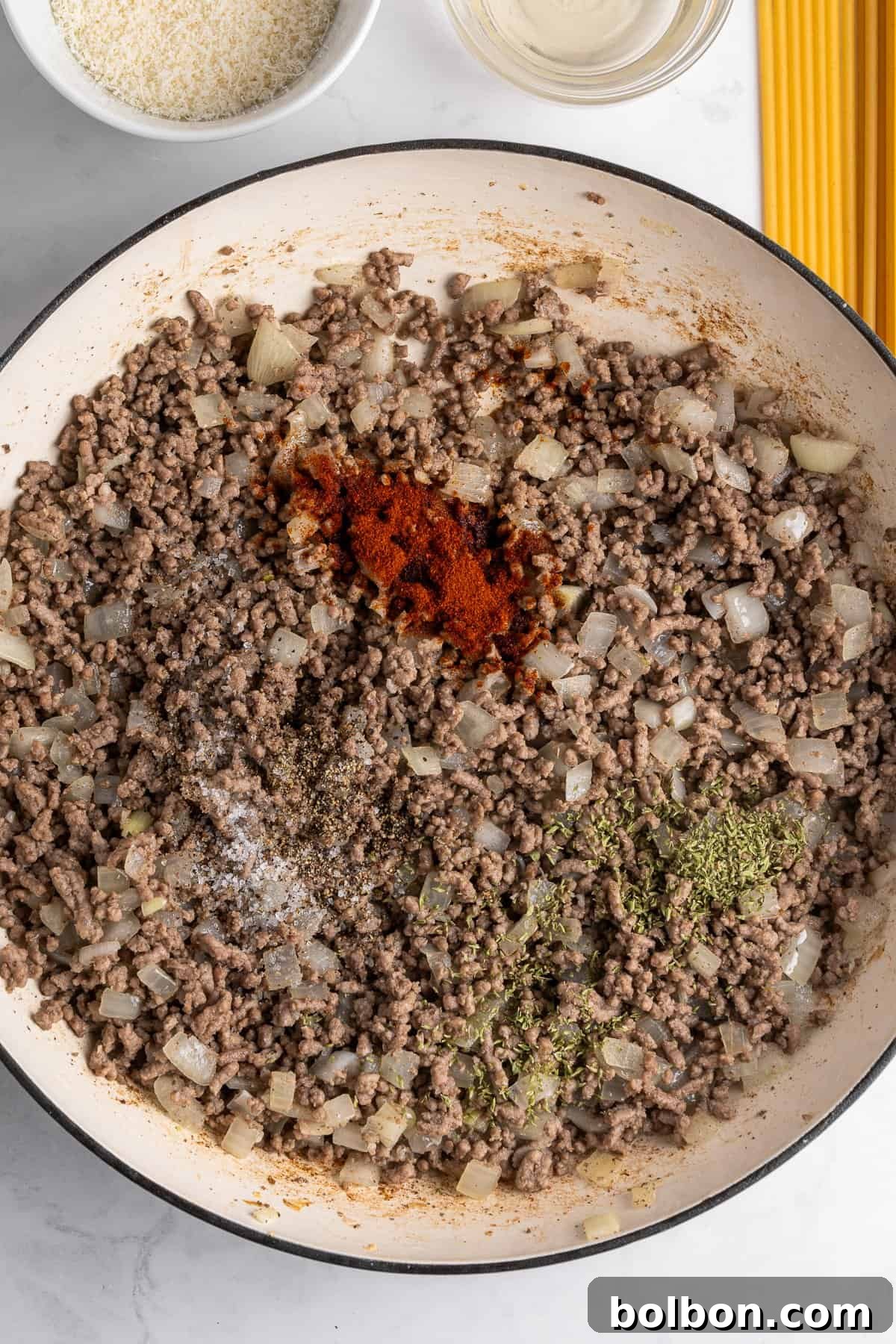
🧂 Next, season the meat mixture generously with oregano, paprika, salt, and pepper. Stir well to ensure the spices are evenly distributed and coat the meat, infusing it with aromatic flavors.
🍷 Pour in the red wine (or white, or unsalted broth for an alcohol-free option). Let it simmer for a few minutes, stirring occasionally, until the alcohol has completely evaporated and the rich aroma remains. This deglazing step adds incredible depth to the sauce.
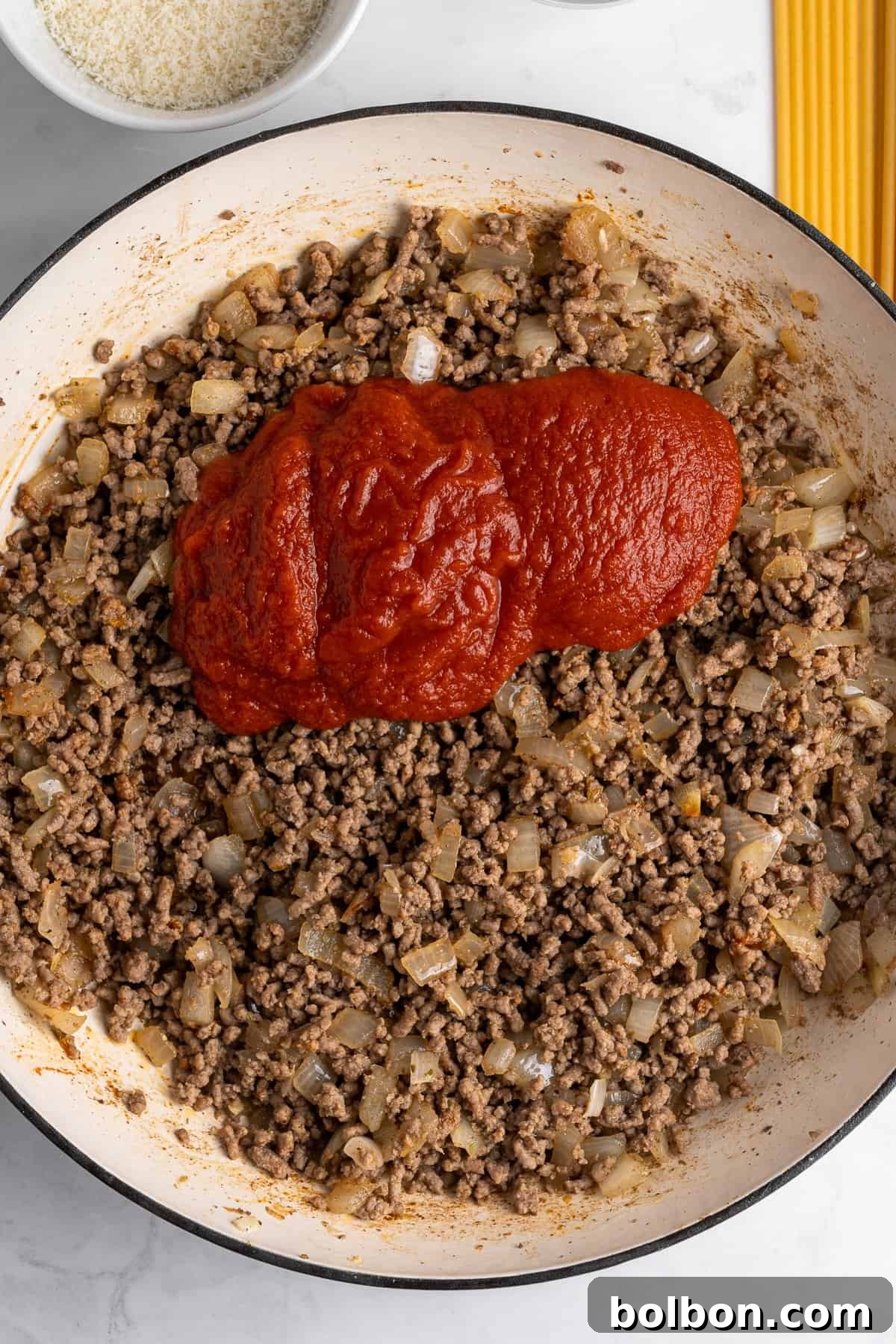
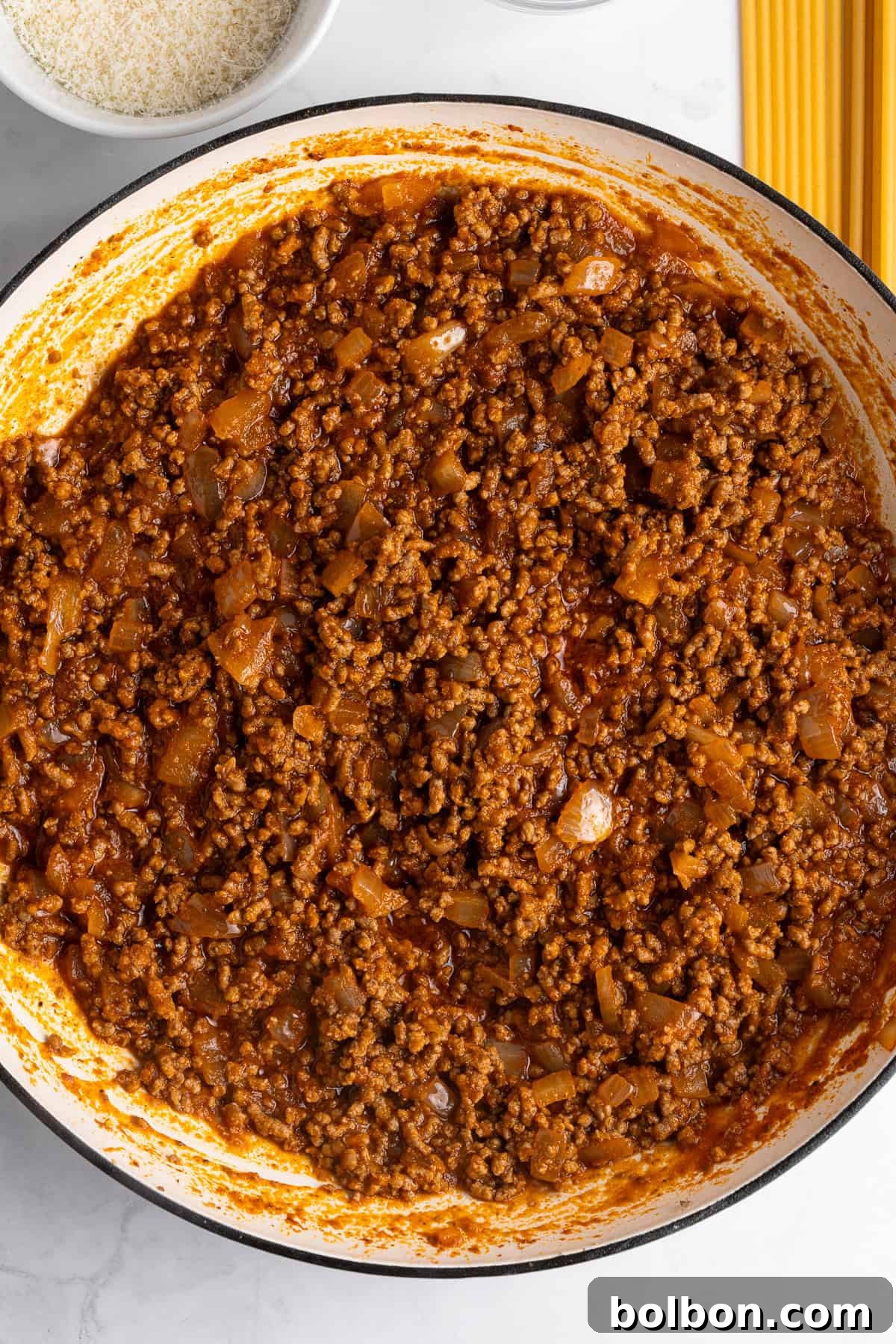
🍅 Stir in the tomato paste and cook for another minute, allowing it to slightly caramelize and deepen in flavor. Then, add the tomato sauce (we recommend a simple homemade sauce with just salt, basil, and tomatoes for the purest taste). Bring the sauce to a gentle simmer and cook on low heat for 10-20 minutes, or until it has thickened considerably. A thick sauce is key for well-defined layers in your Pastitsio.
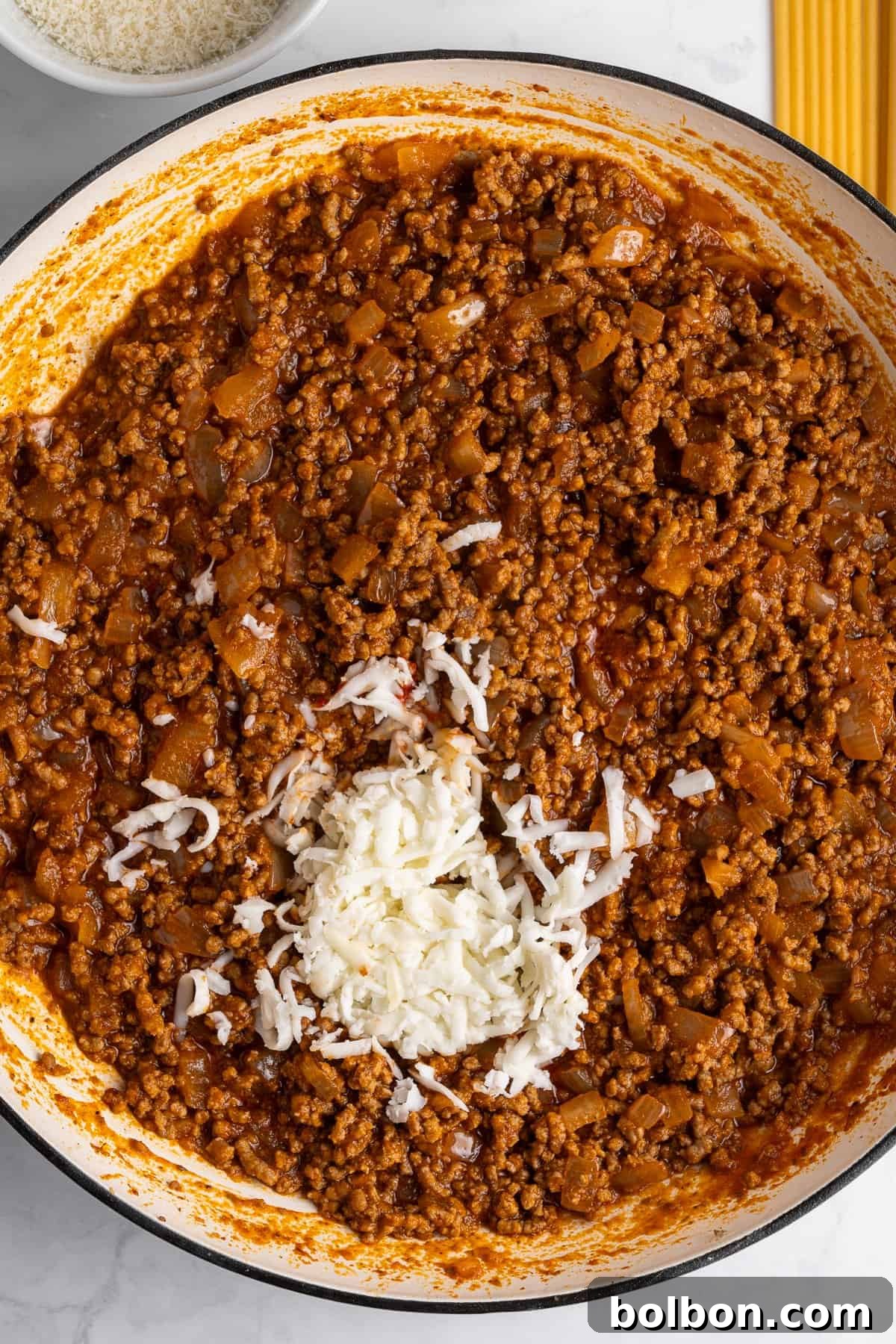
🧀 Remove the meat sauce from the heat. Stir in 1/4 cup of grated mozzarella cheese (this is optional but helps bind the sauce). Allow the meat sauce to cool slightly and thicken further. A thicker sauce helps create distinct layers when assembling the Pastitsio.
Whipping Up the Velvety Béchamel Sauce
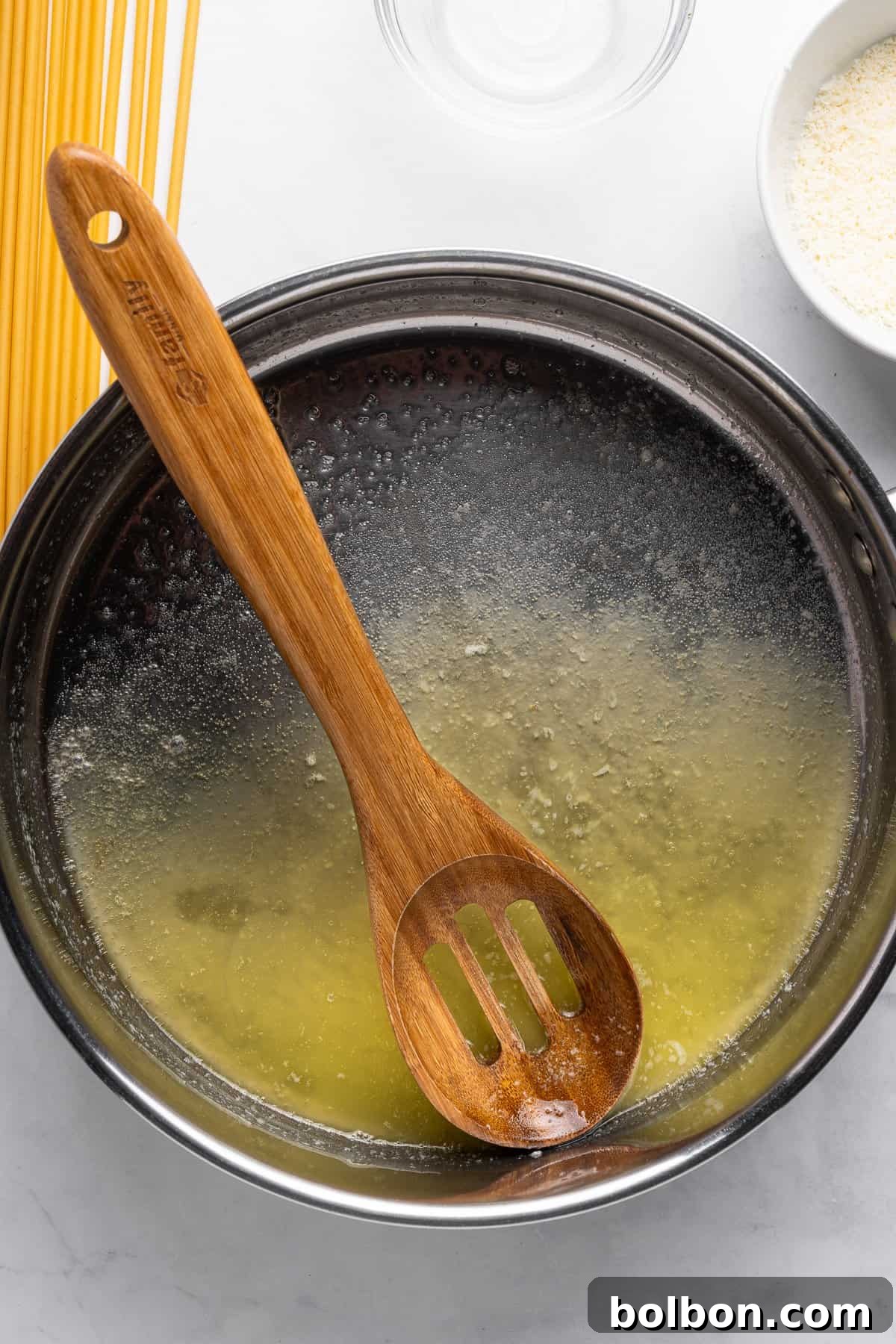
🧈 While your meat sauce is simmering or cooling, you can begin preparing the creamy béchamel sauce. In a separate, large pot, melt the unsalted butter over medium heat until it’s completely liquid and bubbly.
🥛 Gradually stir in the all-purpose flour to the melted butter, mixing continuously until it forms a thick paste, known as a roux. Continue to cook this roux for a minute or two, stirring, to cook out the raw flour taste. Then, switch to a whisk and, while whisking vigorously and constantly, gradually add in the milk (2% or whole milk works best). Continue whisking until the sauce is completely smooth and free of lumps. Patience and continuous whisking are key here.
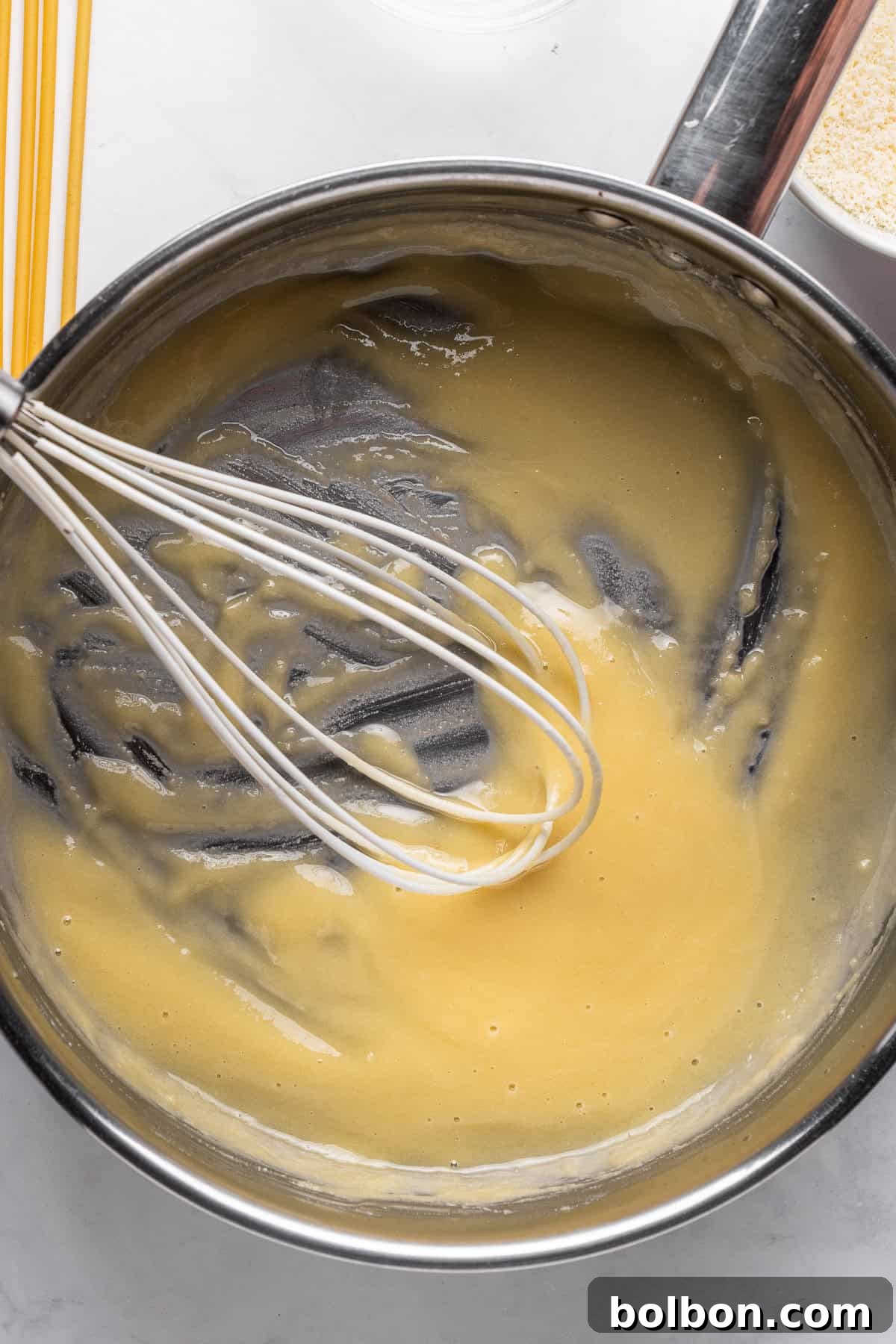
🥄 Continue to whisk for a few more minutes after all the milk has been added, until the sauce has fully thickened and coats the back of a wooden spoon beautifully. Once it reaches this consistency, remove it from the heat.
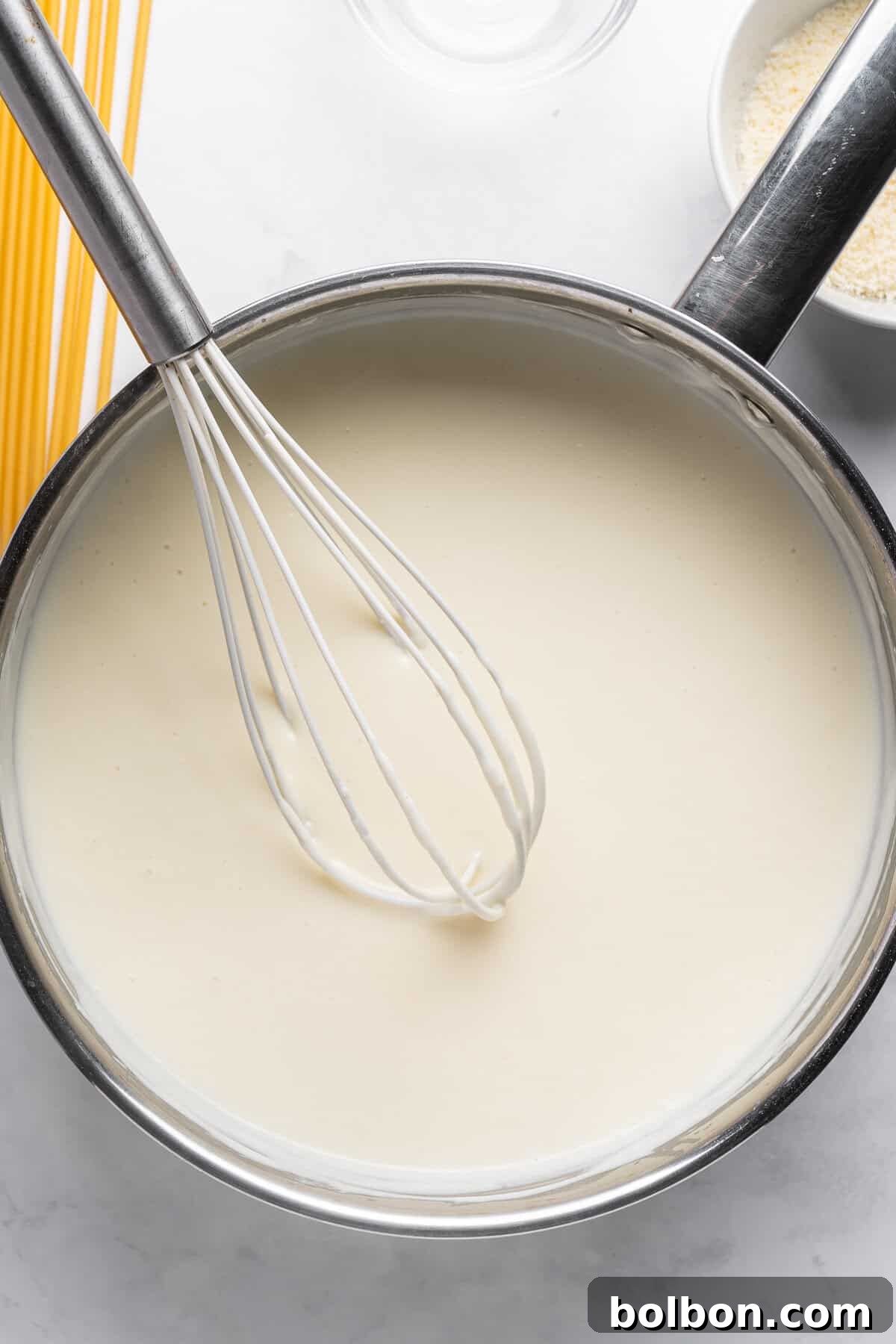
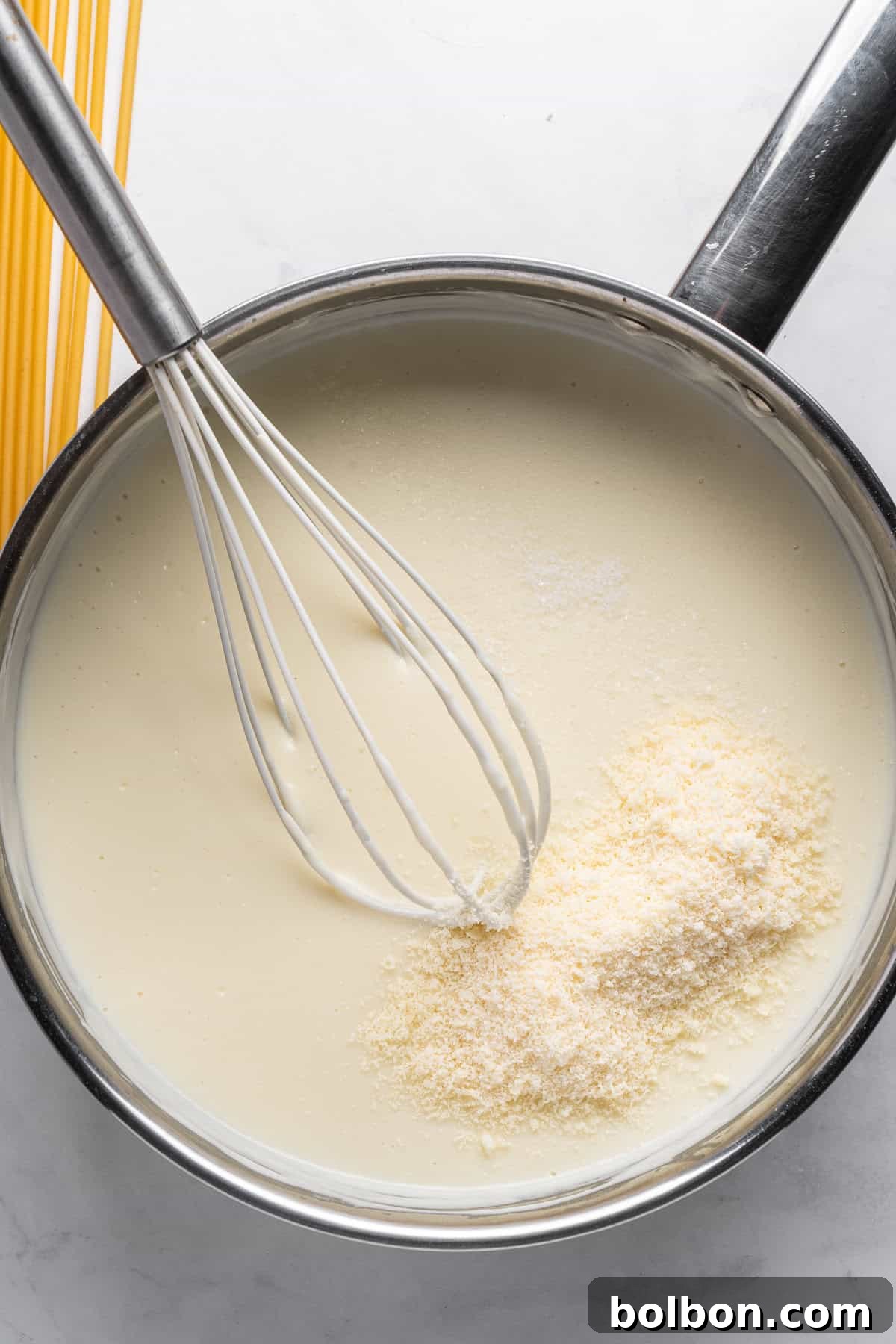
❄️ Season the béchamel with salt to taste. Then, stir in the grated Parmigiano Cheese (or Kefalotyri). Allow the sauce to cool for about 5 minutes. This slight cooling prevents the eggs from scrambling.
🥚 Quickly whisk in the egg yolks until fully incorporated, working swiftly to prevent them from cooking. Place a lid on the pot and set the béchamel aside. If it thickens too much, a gentle reheat on low will make it pourable again. If it is lumpy, you can pass it through a fine-mesh sieve for ultimate smoothness.
Preparing the Perfect Pasta Foundation
🌡️ Preheat your oven to 400°F (200°C) as you finalize the remaining steps.
🍝 In a large pot of boiling salted water, cook the Greek pastitsio pasta (or your chosen substitute like ziti or penne) until it is al-dente. This usually takes around 6 minutes from the boiling point for Pastitsio #2 pasta. Al-dente pasta will continue to cook in the oven, ensuring it doesn’t become mushy.
💦 Once the pasta is cooked to al-dente, drain the water thoroughly. Return the pasta to the pot and add a drizzle of olive oil, tossing gently to prevent sticking.
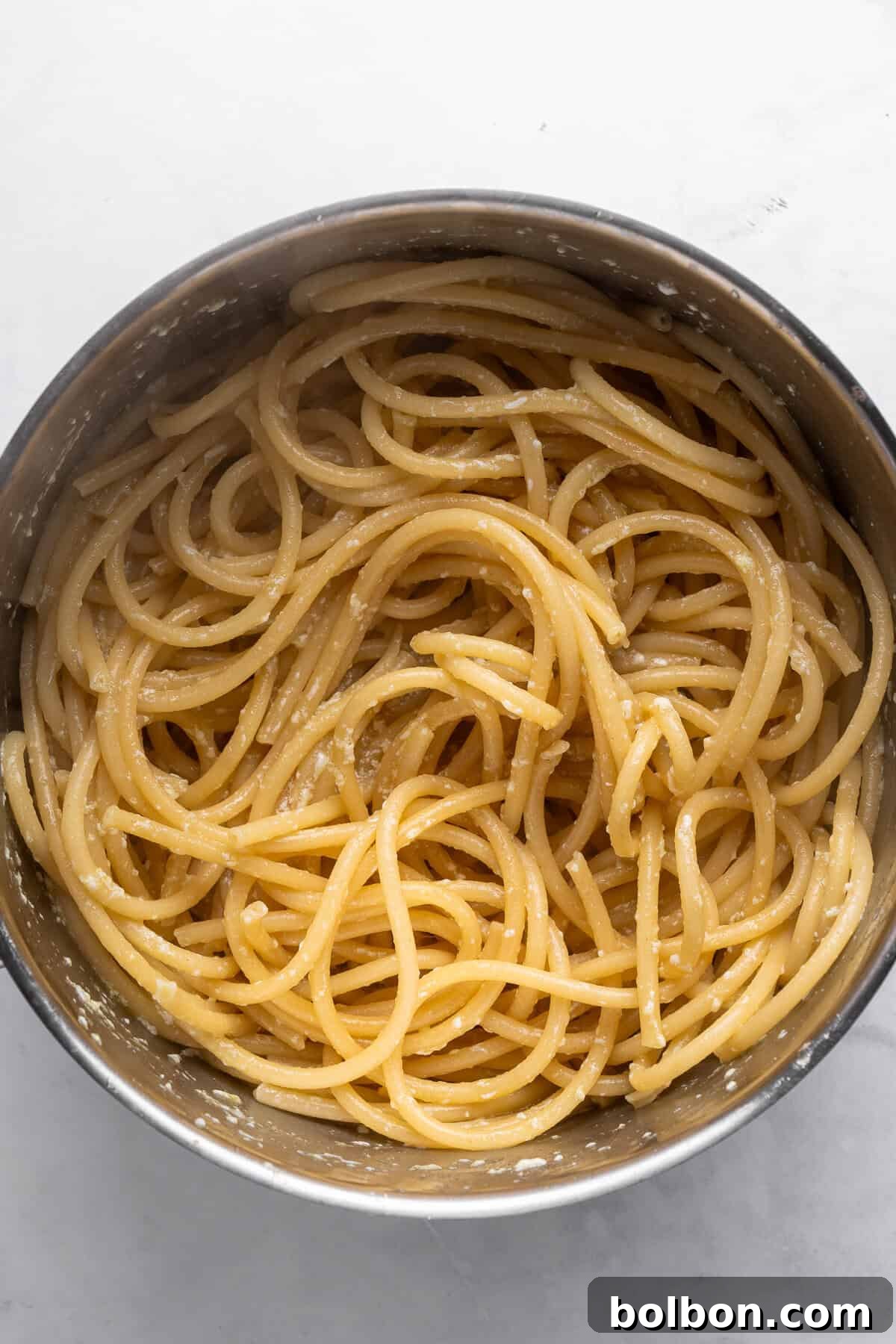
🥚 Immediately add two room temperature whisked egg whites to the pasta. Stir vigorously and thoroughly until every strand of pasta is coated. These egg whites act as a crucial binder, helping the pasta set beautifully and hold its shape when sliced.
Assembling and Baking Your Golden Pastitsio
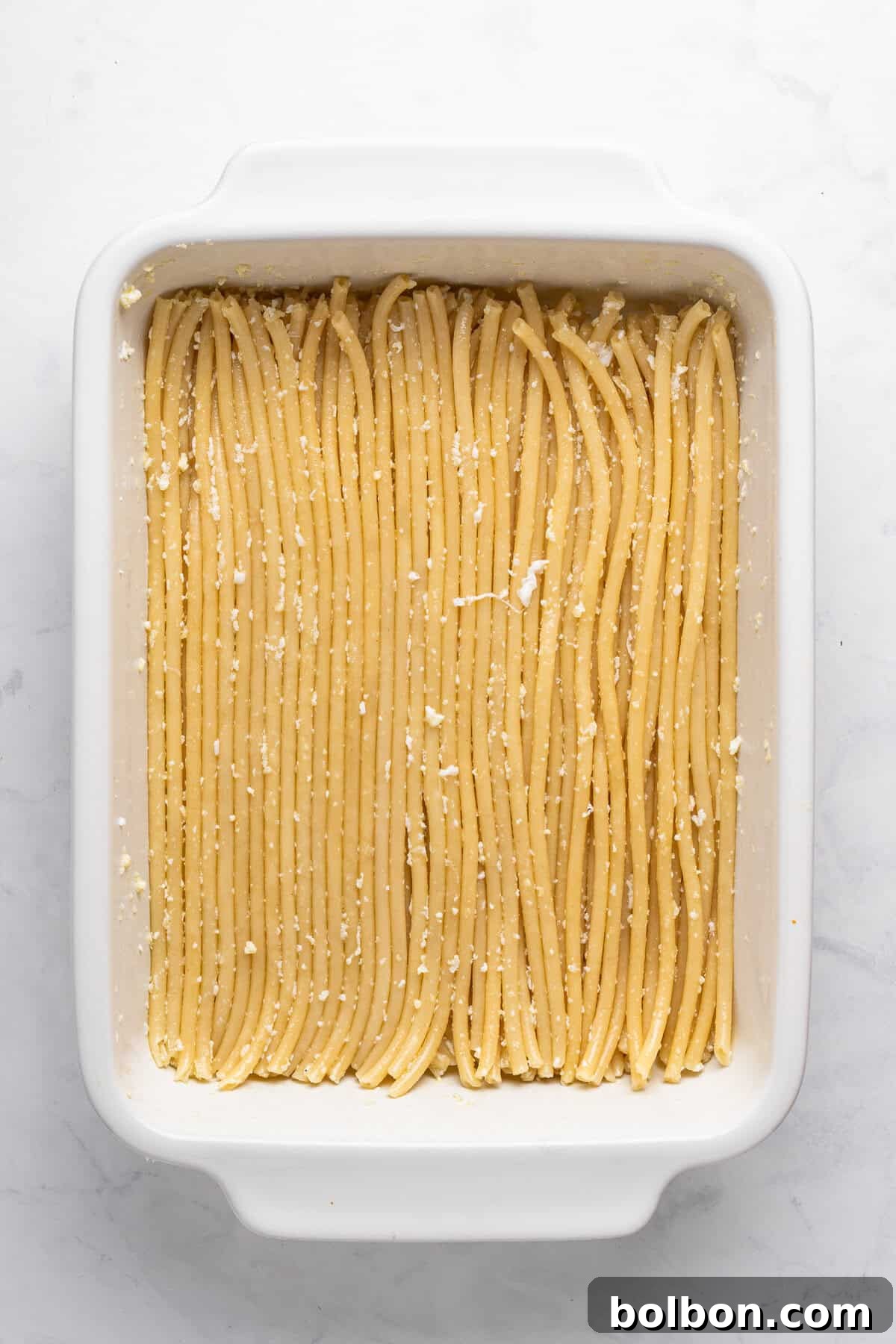
👩🍳 Now it’s time to assemble your magnificent Pastitsio! Pour the coated pasta into a large rectangular baking dish, ideally one with higher sides (a 9×13-inch dish that is 3 inches deep works perfectly).
➡️ For that classic, impressive presentation, use tongs (or clean hands) to carefully arrange the pasta noodles so they are all facing in one uniform direction. This might seem like a small detail, but it ensures that when you cut into your Pastitsio, you’ll see those beautiful, organized pasta holes, making each slice a work of art. While optional, it elevates the final dish.
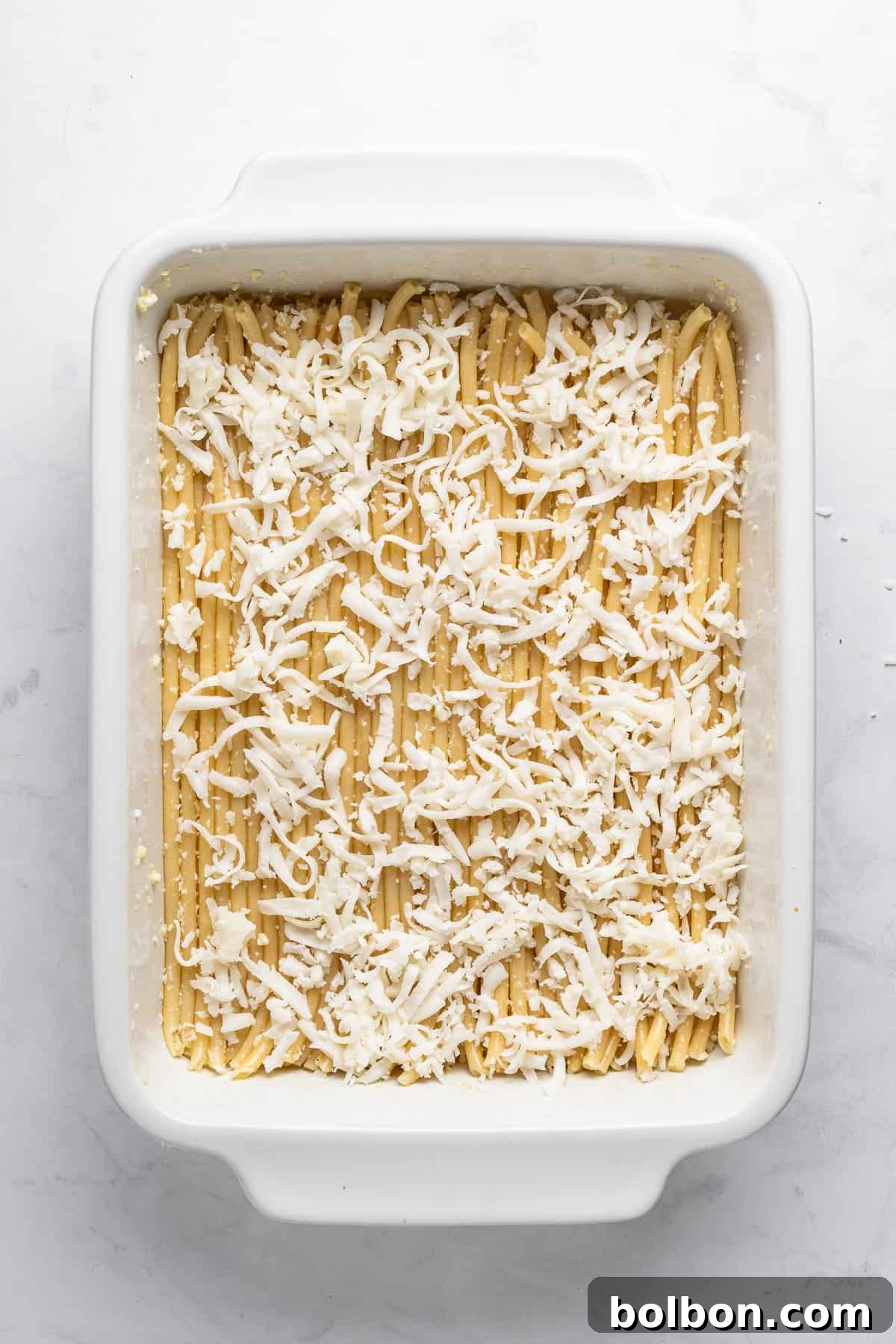
🧀 Sprinkle a generous handful of grated mozzarella cheese evenly over the pasta layer.
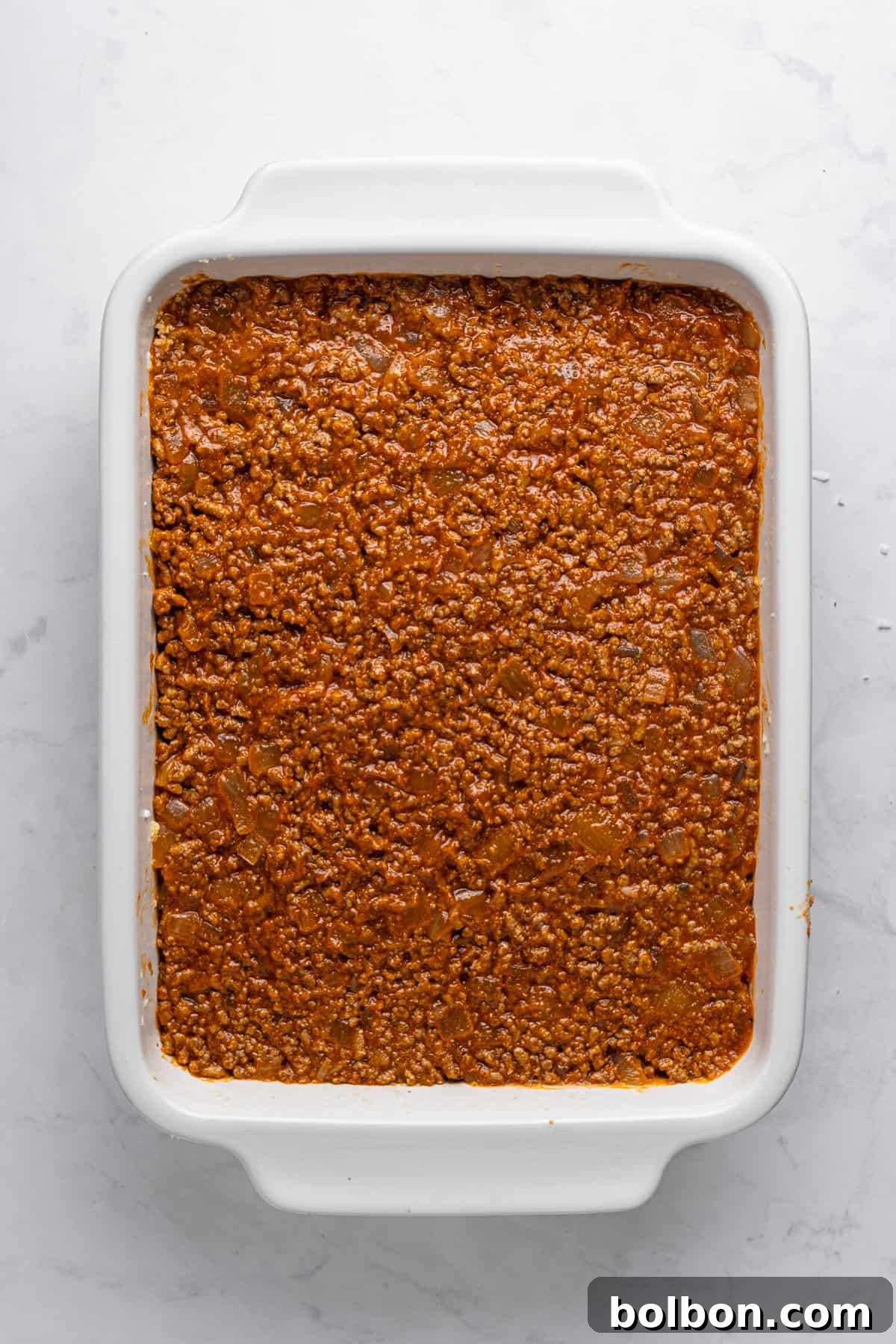
🥄 Carefully spoon the rich meat sauce over the pasta, ensuring it covers the entire surface evenly. Use the back of a spoon or a spatula to smooth out the sauce, creating a distinct and even layer.
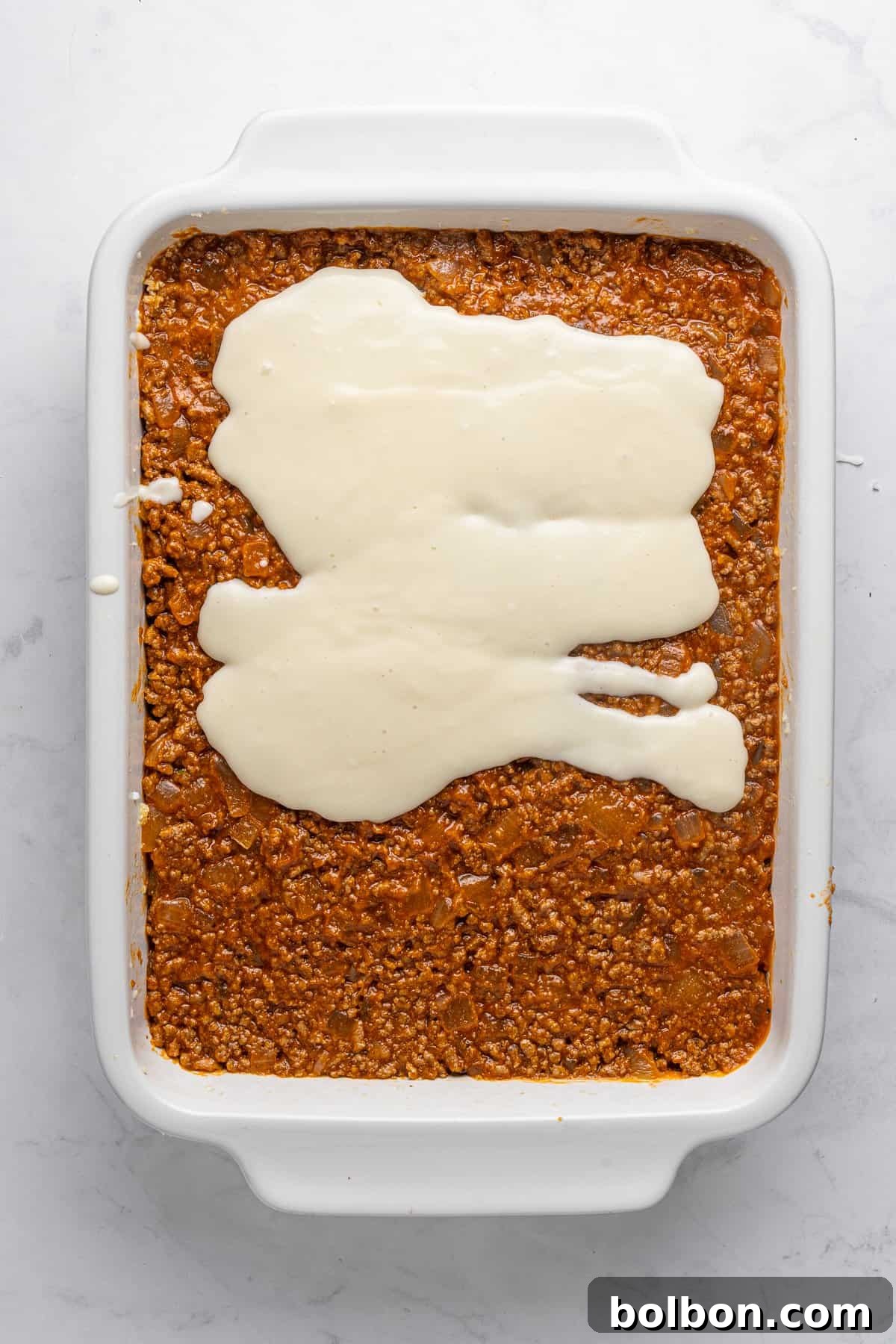
🧈 Next, pour the creamy béchamel sauce generously over the meat layer. Again, use a spoon or spatula to gently smooth it out, ensuring it completely covers the meat sauce and extends to all edges of the dish. This forms the signature golden crown of your Pastitsio.
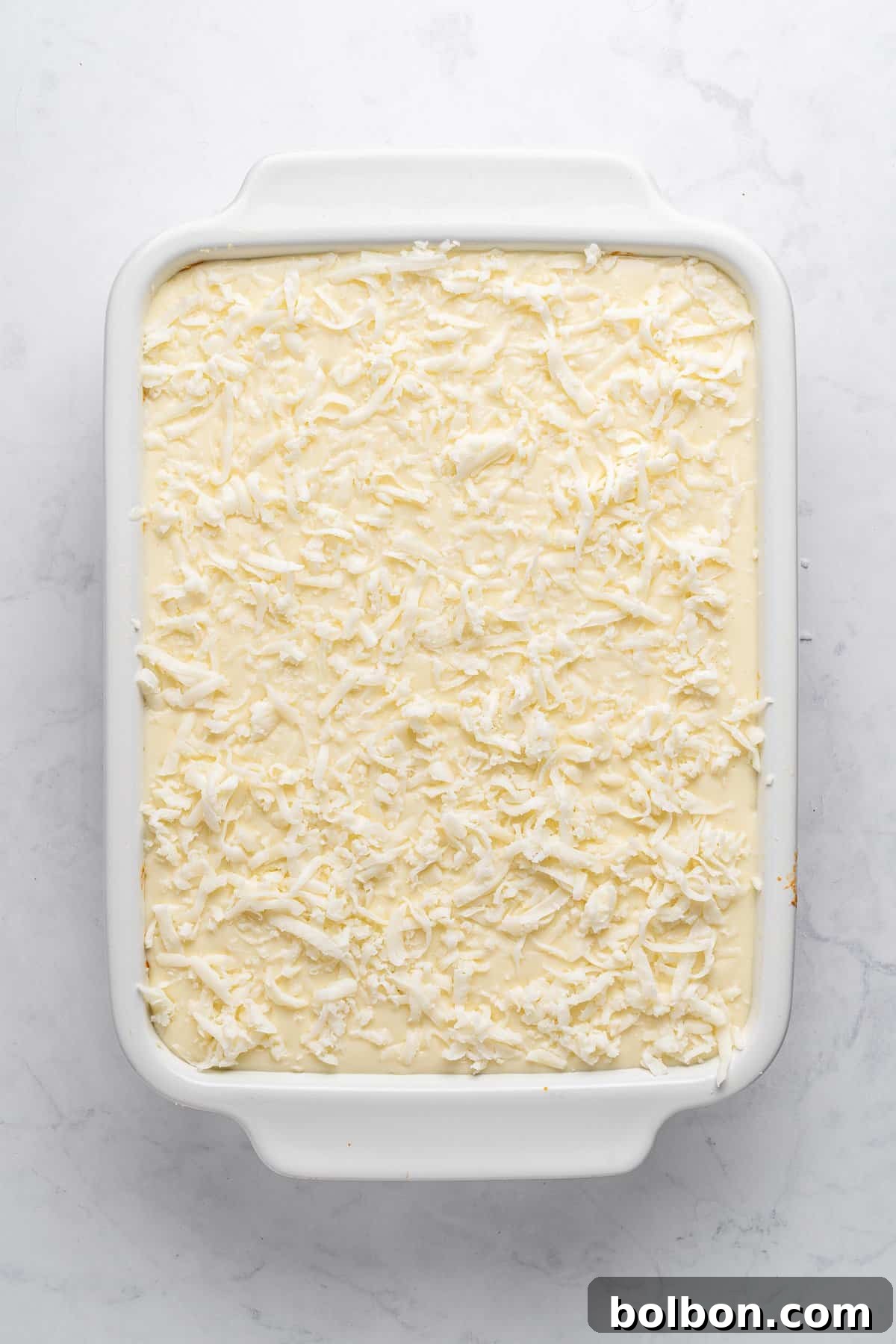
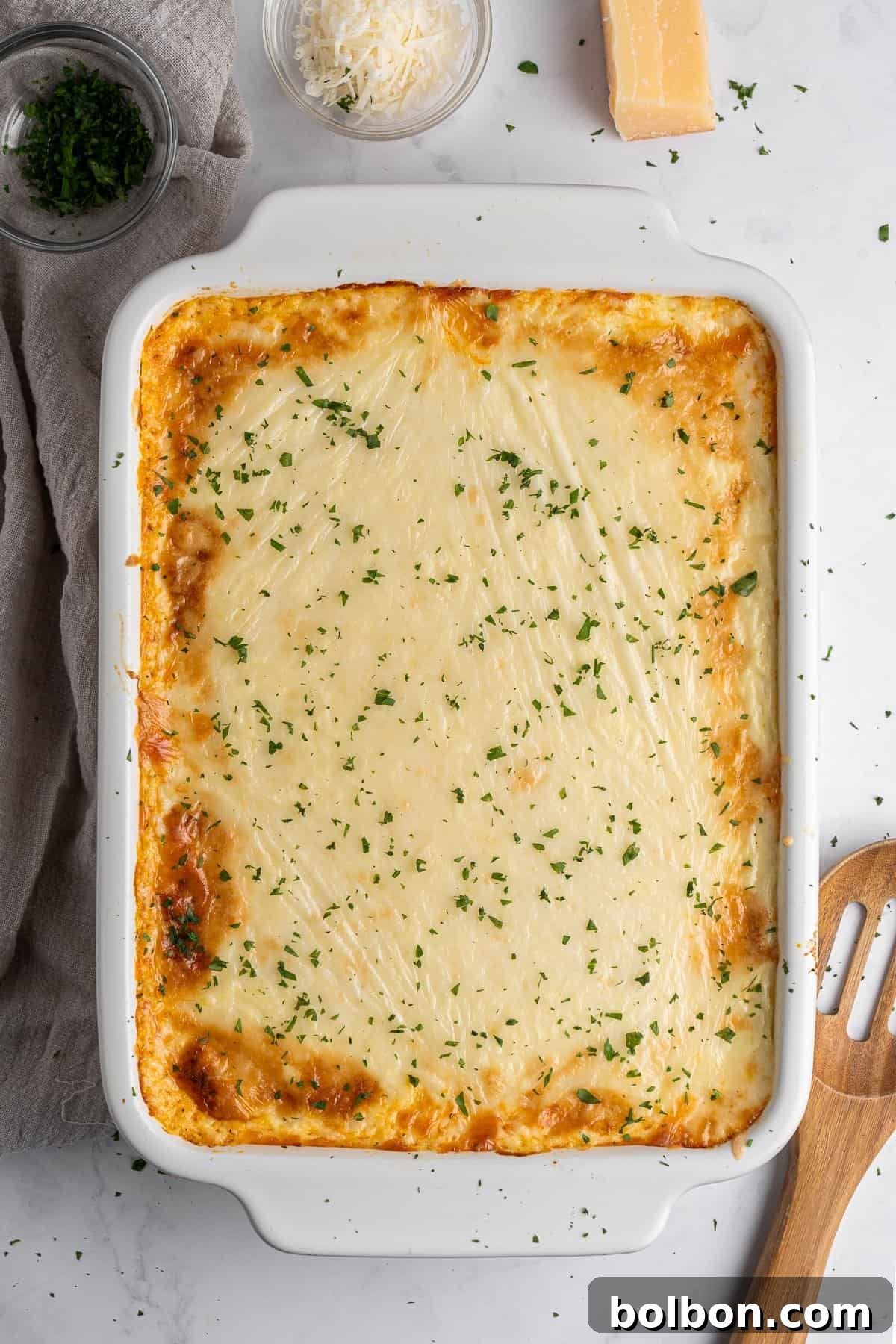
🔥 Top the béchamel layer with another generous amount of grated mozzarella cheese, enough to create a beautiful, even covering across the top. Place the baking dish into your preheated oven and bake UNCOVERED at 400°F (200°C) until the top is gloriously golden brown and bubbly, indicating that the layers beneath are perfectly cooked through. This typically takes anywhere from 40-60 minutes, but cooking times can vary by oven, so keep a watchful eye.
🔪 Once baked to perfection, remove the Pastitsio from the oven. Resist the urge to cut into it immediately! For clean, intact slices, allow it to cool and set for a minimum of 30 minutes. This resting period is essential for the layers to firm up, ensuring each slice is perfectly formed. Then, slice it up and savor every comforting bite!
Nonna’s Tip 🏛️
While Kefalotyri cheese is traditionally favored in Pastitsio for its distinctive flavor, it’s not always readily available. If you can’t find it, don’t worry! Excellent alternatives include Parmigiano Reggiano, which offers a similar sharp, salty profile, or even simple Mozzarella, which provides a wonderfully melty and comforting texture. Use what you have on hand or what best suits your taste!
Explore Variations & Smart Substitutions for Your Pastitsio
One of the beauties of a classic recipe like Greek Pastitsio is its versatility. Whether you’re adapting to dietary preferences, eager to experiment with different flavor profiles, or simply want to personalize this beloved Greek classic, there are numerous creative variations and substitutions you can explore. From plant-based alternatives to diverse cheese selections, spice adjustments, and even different pasta types, the possibilities are vast and exciting.
- Vegetarian or Vegan Adaptations: For a hearty plant-based version, consider using a high-quality plant-based ground meat alternative in your ragù. Another excellent option is to prepare a rich lentil-based sauce, simmered with similar aromatics and tomato, to mimic the texture and savory depth of the traditional meat sauce. This makes Pastitsio accessible for vegetarian diets.
- Cheese Explorations: While Kefalotyri is traditional, don’t shy away from experimenting with different cheeses 🧀 for both the béchamel and the top layer. Beyond Parmigiano Reggiano and Mozzarella, consider Pecorino Romano for a sharper, saltier kick, or even a blend of Greek cheeses if available. Each cheese will impart a slightly different character to the creamy topping.
- Pasta Alternatives for Texture and Preference: If bucatini-style pasta is unavailable, or if you simply prefer a different texture, you can absolutely use other pasta🍝shapes. Penne, rigatoni, or ziti are excellent tubular alternatives that will still hold the meat sauce well. Remember the tip: arrange them so they all face one direction in the baking dish for a visually stunning and uniform presentation when sliced.
- Dietary-Friendly Pasta Choices: For those with specific dietary requirements, opt for whole wheat 🌾 pasta for a fiber-rich alternative, or select a high-quality gluten-free pasta. Ensure that the cooking time for these alternatives is adjusted according to package instructions, as they can differ from regular pasta.
- Alcohol-Free Sauce Option: Traditionally, red wine is used in the meat sauce to add complexity and depth of flavor. If you prefer to avoid alcohol, a simple and effective substitution is to use unsalted vegetable, beef, or chicken broth. This will still provide a rich liquid base for the sauce without compromising on flavor.
What to Serve Alongside Your Hearty Greek Pastitsio
Pastitsio, with its rich and hearty layers, pairs exceptionally well with a variety of light, fresh Greek 🇬🇷 and Mediterranean side dishes. These accompaniments not only complement its robust flavors but also provide a refreshing balance, creating a well-rounded and delightful meal experience.
- Creamy Greek Salad: My refreshing yogurt-based Creamy Greek Salad 🥗would be the absolute perfect counterpoint to the richness of Pastitsio. Its cool, tangy notes and crisp vegetables cut through the savory meat and creamy béchamel beautifully, offering a burst of freshness.
- Roasted Mediterranean Vegetables: An assortment of vibrant roasted Mediterranean vegetables 🫑 is always an excellent choice. Bell peppers, zucchini, and eggplant, tossed with a generous drizzle of olive oil, fragrant herbs like oregano and thyme, and minced garlic, roast into tender, caramelized perfection. Their sweetness and slight char provide a wonderful contrast.
- Simple Green Salad: For a lighter option, my Simple Green Salad, a beloved Bulgarian 🇧🇬 staple, makes a fantastic pairing. You can easily omit the eggs in this salad for a cleaner, fresher profile that harmonizes perfectly with the robust flavors of Greek Pastitsio. Its simplicity allows the main dish to truly shine while offering a refreshing bite.
- Crusty Bread: Don’t forget a warm, crusty loaf of bread to sop up any delicious remnants of the meat sauce or béchamel!
Discover More Beloved Ground Meat Recipes from Our Kitchen
If you’ve fallen in love with the comforting layers and rich flavors of Pastitsio, then you’re sure to enjoy some of my other hearty ground meat recipes. These dishes share that same satisfying, wholesome quality, perfect for family meals or cozy evenings.
- Potato Moussaka Recipe
- Meat and Zucchini Rice
- Healthier Chili
Your Top Questions About Pastitsio Answered
Absolutely! Pastitsio is an excellent dish for meal prepping. You have several options: You can prepare the meat sauce and the béchamel sauce a day in advance and store them separately in the refrigerator. The next day, simply warm them up gently before assembling and baking. Alternatively, you can fully assemble the Pastitsio a day ahead, cover it tightly, and keep it in the fridge; then bake it as usual on the day you plan to serve. Cooked Pastitsio leftovers can be stored in an airtight container in the refrigerator for 4 to 5 days, or in the freezer for up to 3 months. To reheat from frozen, thaw it in the refrigerator overnight, then reheat covered in the oven until warmed through.
Certainly! The meat sauce is versatile. While ground beef is most common, you can use ground lamb for a more traditional Greek flavor, ground pork, or a combination of beef and pork. Each will lend a slightly different richness to the sauce, so feel free to choose based on your preference and what’s available.
No, it is not necessary. While cinnamon and sometimes nutmeg are traditional spices in many Greek meat sauces, they are entirely optional. If you or your family do not enjoy the distinct flavors these spices impart to savory dishes, you can confidently omit them from the recipe. The Pastitsio will still be incredibly flavorful and delicious without them.
To achieve a perfectly smooth béchamel sauce, the key is gradual addition and constant whisking. First, ensure you create a smooth roux (the butter and flour mixture) without any lumps. Then, gradually add the milk, a little at a time, while whisking vigorously and continuously. It also helps if the milk is at room temperature or slightly warmed, as cold milk can sometimes cause lumps. If, despite your best efforts, the béchamel sauce does become lumpy, don’t despair! You can easily fix it by pressing it through a fine-mesh sieve with the back of a spoon to remove any lumps, yielding a silky-smooth sauce.
Yes, absolutely! Creating a delicious vegetarian Pastitsio is entirely possible. Instead of ground meat, you can use a hearty lentil ragù or a plant-based ground meat alternative. Ensure your chosen substitute is well-seasoned and cooked down to a thick consistency to maintain the integrity of the Pastitsio layers. The creamy béchamel and pasta layers remain the same, ensuring a satisfying vegetarian meal.
For a truly traditional Pastitsio, bucatini-style Greek Pastitsio pasta (often labeled as #2, like Misko Pasticcio Pasta 2) is ideal. Its thick, hollow strands absorb the sauce beautifully. You can often find this at Greek specialty stores or larger international supermarkets. If this specific pasta is not available, excellent substitutes include other tubular pasta shapes like La Molisana Zitoni Napoletani N.8A, penne, or ziti. The key is to choose a pasta that can stand up to the rich sauce and béchamel without becoming mushy.
The secret to a beautifully crispy, golden-brown top on your Pastitsio lies in baking it uncovered during the final stages of cooking. This allows the béchamel and cheese topping to dry out slightly and caramelize. If you find your Pastitsio isn’t browning as much as you’d like towards the end of the baking time, you can briefly place it under the broiler for a minute or two. Be sure to watch it very closely during this step, as broiler heat can be intense and quickly lead to burning!
Yes, Pastitsio freezes wonderfully! To freeze, allow the cooked dish to cool completely. Then, either wrap individual portions or the entire remaining dish tightly in plastic wrap, followed by a layer of aluminum foil, or place it in an airtight, freezer-safe container. It can be stored in the freezer for up to 2-3 months. When you’re ready to enjoy it, thaw it in the refrigerator overnight, then reheat in the oven (covered with foil to prevent drying) or in the microwave until heated through.
If you prefer not to use wine in your meat sauce, an excellent alternative is unsalted broth of your choice. Beef broth will complement the meat flavors beautifully, while vegetable broth can be used for a lighter touch. Ensure it is unsalted, as you will be adding salt later, allowing you to control the seasoning precisely.
Greek Pastitsio Recipe
Facebook Share
Rate Recipe
Print Recipe
Main Course
Greek
8
portions
The Modern Nonna
30 minutes
20 minutes
1 hour
1 hour
50 minutes
Equipment
Ingredients
Servings: 8 portions
Meat Sauce
-
2
tablespoons
olive oil -
454
grams
ground beef, or pork -
1
onion, finely diced -
4
cloves
garlic, finely diced -
1
teaspoon
salt, to taste -
1
teaspoon
dry oregano, to taste -
1
teaspoon
paprika -
½
teaspoon
pepper -
¼
cup
wine, red or white (or unsalted broth) -
1
teaspoon
tomato paste -
2
cups
tomato sauce, we use our homemade sauce which has salt, basil and tomatoes only -
¼
cup
mozzarella, grated, optional
Béchamel Sauce
-
⅓
cup
unsalted butter -
½
cup
all-purpose flour -
2
cups
milk, 2% or whole -
2
egg yolks -
1
pinch
salt, to taste -
¼
cup
Parmigiano Reggiano (grated), or Greek Kefalotyri
Additional Ingredients
-
350
grams
Greek pastitsio pasta, boiled in salted water to al-dente -
1
drizzle
olive oil -
2
egg whites, room temperature, whisked -
2
cups
mozzarella cheese, grated, or Greek Kefalotyri cheese
Instructions
The Meat Sauce
-
Heat the olive oil in a large pan (with high sides) over medium-high heat. Add the ground meat and begin to break it up. Fry the ground meat for about 10 minutes or until it begins to pop. The water should completely evaporate and the pan should be dry.
-
When the water has evaporated, reduce the heat to medium-low. Add the onions. Add in the garlic and stir. Add the oregano, paprika, salt, pepper and stir.
-
Add in the red wine (or unsalted broth) and let it evaporate by cooking it for another few minutes.
-
Stir in the tomato paste and cook for another minute. Add in the tomato sauce and cook the sauce for 10-20 minutes on low heat or until thick.
-
Note: Spices like cinnamon and clove are traditional to most Greek meat sauces and what give Pastitsio that distinctive and rich flavor. My family prefers the sauce without it but feel free to add it in if you want a more traditional version.
-
Take the meat sauce off the heat, stir in 1/4 cup grated Mozzarella cheese (you can omit, it’s optional). Let the meat sauce cool and thicken.
Béchamel Sauce
-
While the meat sauce is cooking or cooling, you can get started on the béchamel sauce.
-
On medium heat, add the butter to a big pot and let it melt completely.
-
Stir in the flour, it should look like a thick paste. Switch to a whisk and gradually add in the milk as you vigorously whisk the whole time.
-
Once the milk has finished whisk for a few more minutes until the sauce has fully thickened as you stir the whole time. It should coat the back of a wooden spoon. Take it off the heat.
-
Next, add the salt and stir in the Parmigiano Cheese (or Kefalotyri). Nutmeg is also traditional but we leave it out.
-
Let the sauce cool for 5 minutes. Then, whisk in the egg yolks quickly. Place the lid on and set aside. Set aside and start on the pasta.
-
Note: if the sauce gets too thick as it cools, just reheat on low heat until it’s pourable. If the béchamel sauce is lumpy, feel free to pass it through a strainer to smooth it out.
Additional Steps + Assembly
-
Preheat the oven to 400F (200C)
-
In boiling salted water, boil the Greek pastitsio pasta until al-dente. We like to boil it for about 6 minutes from the boiling point.
-
Note: if you can’t find Pastitsio pasta, use ziti, bucatini, or penne.
-
When the pasta is boiled, strain the water and add a drizzle of olive oil to the pasta. Then add in 2 room temperature whisked egg-whites (our binder) and stir it well immediately so that the pasta gets fully coated.
-
Pour the pasta out into a large rectangular baking dish with higher sides. I use a 9 by 13 inch dish which is 3 inches deep.
-
We like to take the tongs (or clean hands) and turn each pasta noodle all in one direction (you don’t have to if you don’t want to). We lay out the pasta so they are all in one direction because we want to see the uniformed pasta holes when we cut it.
-
Add a handful of grated mozzarella cheese on top of the pasta.
-
Pour the meat sauce onto the pasta making sure to cover the pasta fully and smooth it out with the back of a spoon or spatula.
-
Pour the bechamel sauce on top of the meat sauce making sure to smooth it out so that it covers the meat fully.
-
Add grated mozzarella (enough to cover the top) and bake UNCOVERED at 400F (200C) until golden and bubbly. This can take anywhere from 40-60 minutes depending on the oven.
-
Let it cool for a minimum of 30 minutes and enjoy!
Notes
The Wine: In traditional Greek Pastitsio, red wine is often used instead of white and spices like cinnamon and nutmeg. My family and I don’t prefer these spices in savory dishes so we leave it out.
The Cheese: Traditionally Greek Kefalotyri cheese (similar to Parmesan) is used but we like a soft cheese like mozzarella. You can also use Parmigiano Reggiano, Pecorino or any you like.
Egg Binder: The purpose of this step is to help the pasta set and bind better. We do this right before assembling so the egg whites don’t dry out before baking.
Meat Sauce: You want a thick meat sauce with barely any sauce/liquid left in the pot to achieve the layers that you see in this recipe. If the sauce is too runny, you won’t be able to achieve that perfect cut. It will not alter the taste but be mindful of this.
The Pasta: Pastitsio pasta can be found in any Greek store or Highland Farms. I like to use the Misko brand #2 but if you can’t find it feel free to use bucatini, penne, or ziti.
Nutrition
Serving:
1
portion
,
Calories:
628
kcal
,
Carbohydrates:
48
g
,
Protein:
29
g
,
Fat:
35
g
,
Saturated Fat:
16
g
,
Polyunsaturated Fat:
2
g
,
Monounsaturated Fat:
13
g
,
Trans Fat:
1
g
,
Cholesterol:
144
mg
,
Sodium:
921
mg
,
Potassium:
634
mg
,
Fiber:
3
g
,
Sugar:
8
g
,
Vitamin A:
1047
IU
,
Vitamin C:
6
mg
,
Calcium:
325
mg
,
Iron:
3
mg
Nutrition information is automatically calculated, so should only be used as an approximation.
Additional Info
Main Course
Greek