
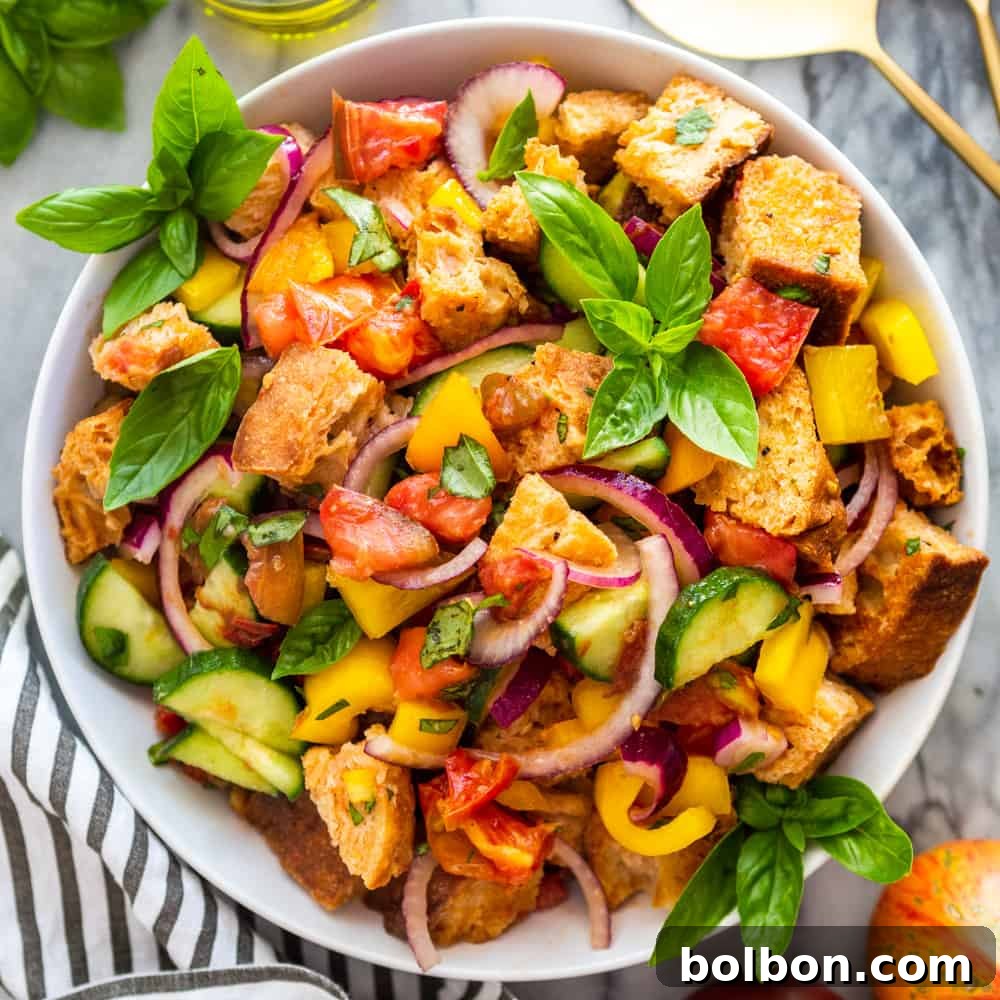
Welcome to the ultimate guide for crafting the perfect Panzanella Salad, a timeless Italian bread salad that embodies the vibrant flavors of summer. Originating from the picturesque region of Tuscany, Panzanella is a testament to resourceful Italian cooking, traditionally transforming humble stale bread, ripe tomatoes, and fragrant basil into an extraordinary culinary experience. Paired with a zesty vinaigrette and often featuring crisp cucumbers and sharp red onions, this salad is more than just a dish; it’s a celebration of seasonal produce and simple elegance.
As the days grow longer and temperatures rise, my cravings invariably turn to cool, refreshing dishes that require minimal cooking. Panzanella fits this desire perfectly, offering a satisfyingly light yet incredibly flavorful meal that champions the freshest bounty of the season. Whether you’re seeking a simple summer dinner to beat the heat or an impressive side dish for a backyard barbecue or picnic, this Tuscan bread salad is an excellent choice. Its rustic charm and bright flavors make it a crowd-pleaser that’s both easy to prepare and deeply delicious.
Unpacking Panzanella: What’s Inside This Tuscan Gem?
At its heart, Panzanella is a celebration of simple, high-quality ingredients. While the traditional recipe primarily calls for stale bread and tomatoes, modern variations often incorporate other fresh vegetables to enhance its texture and flavor profile. In this particularly delightful rendition, we utilize a combination of classic and complementary components to create a harmonious blend of tastes and textures:
- Ciabatta Bread: The foundation of our salad, offering a delightful chewiness once soaked in the dressing.
- Heirloom Tomatoes: The star of the show, providing unparalleled sweetness, juiciness, and a beautiful spectrum of colors.
- English Cucumber: Adds a refreshing crunch and cool contrast to the rich tomatoes.
- Yellow Bell Pepper: Contributes a mild sweetness and vibrant color.
- Red Onion: Offers a sharp, pungent bite that balances the other fresh flavors.
- Fresh Basil Leaves: An essential aromatic herb that ties all the Italian flavors together.
- Extra-Virgin Olive Oil: The base for our rich and fruity vinaigrette.
- Red Wine Vinegar: Provides the necessary tang and acidity.
- Dijon Mustard: Helps emulsify the dressing and adds a subtle piquant note.
- Garlic: Infuses the vinaigrette with its pungent aroma and flavor.
- Salt and Pepper: Crucial for seasoning and enhancing every ingredient.
The Foundation: Choosing the Best Bread for Panzanella
The bread is arguably the most crucial component of Panzanella, serving as the canvas that soaks up all the glorious flavors of the dressing and fresh vegetables. Renowned culinary figures often weigh in on this topic. Ina Garten, for instance, recommends using French bread, while Marcella Hazan simply advises a “firm, good bread.” After experimenting with various types, I’ve found that ciabatta bread yields truly wonderful results due to its sturdy crust and open, airy crumb, which is ideal for absorbing moisture without becoming overly mushy.
However, the beauty of Panzanella lies in its versatility. Other excellent choices for this Italian bread salad include a rustic French baguette, a hearty Pugliese loaf, or even a robust sourdough bread. The key is to select a bread that is crusty on the outside and has a good, dense interior that can withstand being tossed with the dressing. Avoid soft, fluffy sandwich breads, as they will quickly disintegrate and compromise the desired texture of your salad.
Stale vs. Toasted Bread: A Matter of Texture and Taste
Traditionally, Panzanella was born out of a desire to prevent food waste, utilizing stale bread that might otherwise be discarded. This historical context lends a rustic authenticity to the dish. However, for a truly superior Panzanella experience, I’ve discovered that toasting fresh bread in the oven offers a significant advantage over merely using stale bread. While stale bread works, toasted bread cubes provide a slightly crisper exterior and a more consistent texture, allowing them to absorb the vinaigrette beautifully without instantly becoming soggy.
My preferred method involves cutting a good, crusty bread, such as ciabatta, into 1-inch cubes. These cubes are then lightly tossed with a generous drizzle of olive oil, seasoned with a pinch of salt and pepper, and baked in a preheated oven at 350°F (175°C) for approximately 15 minutes. The goal is to achieve a golden-brown hue and a satisfyingly crisp texture, similar to the technique I employ when making my popular Thanksgiving stuffing. This extra step ensures that your Panzanella bread cubes maintain a pleasant bite, even after mingling with the juicy tomatoes and tangy dressing.
The Heart of the Flavor: Crafting the Perfect Vinaigrette
A phenomenal Panzanella is incomplete without an equally phenomenal vinaigrette. This tangy dressing is what binds all the fresh ingredients together, infusing the bread and vegetables with its vibrant character. My absolute favorite tip for an unforgettable Panzanella vinaigrette comes from Serious Eats: utilize the precious juice drained from the tomatoes! This brilliant technique amplifies the inherent tomato flavor in the dressing, adding an extra layer of complexity and depth that truly elevates the entire salad.
You should aim for approximately 1/2 cup of this flavorful tomato juice. If you happen to collect significantly more, you might consider saving the excess for another culinary use, such as a broth base or a light sauce, to avoid making your vinaigrette too thin. Along with this liquid gold, your vinaigrette will require a few other essential ingredients:
- Extra-virgin olive oil: Choose a high-quality oil for the best flavor.
- Red wine vinegar: Provides the classic tangy profile.
- Dijon mustard: Acts as an emulsifier, helping the oil and vinegar combine smoothly, and adds a slight tang.
- Minced garlic: For that irresistible aromatic kick.
- Salt and pepper: To season and balance the flavors perfectly.
Whisking these ingredients together creates a balanced, zesty, and incredibly aromatic dressing that perfectly complements the fresh produce and toasted bread, making every bite of your Panzanella salad burst with flavor.
Optimal Enjoyment: Is Panzanella Best the Next Day?
While some salads miraculously improve with time, Panzanella truly shines brightest on the day it is made. The toasted bread cubes are designed to soak up the glorious juices from the tomatoes and the tangy vinaigrette, transforming into tender, flavor-packed morsels. However, this absorption process is continuous. If left overnight, the bread can become overly soft and even soggy, losing that desirable texture that makes Panzanella so appealing. The crispness of the vegetables might also diminish.
That being said, personal preferences vary! My husband, a self-proclaimed bread enthusiast, has never had an issue devouring leftover Panzanella the next day. For him, the fully saturated bread is a feature, not a bug. However, if you are preparing this vibrant Italian bread salad for guests, a party, or any special occasion where presentation and optimal texture are paramount, I strongly recommend assembling and serving it on the same day. Ideally, allow it to rest for about half an hour after tossing to allow the flavors to meld beautifully, but enjoy it within a few hours for the best possible experience.
Storing Leftover Panzanella: Tips for Freshness
As highlighted, Panzanella is a dish truly meant to be savored fresh. The interplay of textures – crisp vegetables, yielding bread, and a lively dressing – is at its peak shortly after assembly. However, if you find yourself with a surplus of this delicious Italian bread salad, proper storage can extend its life by a day or two, albeit with a slight compromise in texture.
To store leftovers, transfer the Panzanella into a sealed airtight container and place it in the refrigerator. It can typically be kept for 1 to 2 days. Be aware that the bread will continue to soften and absorb the dressing, becoming progressively less “salad-like” and more “bread pudding-like” over time. While still flavorful, it won’t retain its original crispness. For this reason, consuming any leftovers within a few hours of preparation is always recommended to enjoy Panzanella at its absolute best.
Perfect Pairings: What to Serve with Panzanella
One of Panzanella’s many charms is its versatility. It’s robust enough to stand alone as a delightful and light meal, especially on a sweltering summer evening. To elevate it to a more substantial main course, consider adding some creamy fresh mozzarella cheese, torn burrata, or even grilled halloumi. These additions introduce a rich, milky counterpoint to the vibrant, tangy flavors of the salad.
However, Panzanella also excels as a vibrant and refreshing side dish. Its bright flavors and hearty texture make it an ideal accompaniment to a variety of grilled meats and fish. Imagine it alongside perfectly grilled chicken breasts, succulent pork chops, or a flaky piece of salmon or white fish. Its fresh, acidic notes cut through the richness of grilled proteins, creating a beautifully balanced meal. It’s also a fantastic addition to any picnic spread or barbecue, offering a welcome departure from heavier pasta or potato salads.
Variations and Customizations for Your Panzanella
While the classic Panzanella recipe is undeniably perfect, there’s always room for creative twists to suit your palate or whatever seasonal produce you have on hand. Don’t be afraid to experiment! Consider adding Kalamata olives for a briny kick, capers for a burst of salty tang, or even sun-dried tomatoes for a more concentrated tomato flavor. Cherry tomatoes or grape tomatoes can be used if heirloom varieties are unavailable, just be sure to halve them and drain them thoroughly.
For an added layer of freshness and a touch of color, include finely chopped celery, thinly sliced radishes, or even some grilled corn kernels. If you’re looking to boost the protein content, shredded rotisserie chicken or canned cannellini beans can be a great addition. A sprinkle of red pepper flakes will introduce a subtle heat, while a handful of toasted pine nuts can provide extra crunch and richness. The beauty of Panzanella is its adaptability, allowing you to make it truly your own while still honoring its delicious Italian roots.
More Refreshing Summer Salad Recipes
If you’re as passionate about vibrant, fresh salads as we are, explore some of our other favorite recipes that are perfect for warm weather and entertaining:
- Mediterranean Orzo Salad: A pasta salad packed with bright Mediterranean flavors, perfect for a light lunch or side.
- Summer Corn Salad: A celebration of sweet summer corn, ideal for barbecues and picnics.
- Watermelon Feta Salad: A surprisingly delicious combination of sweet, salty, and refreshing flavors.
- Israeli Couscous Salad: A hearty and flavorful salad featuring pearl couscous, fresh vegetables, and a zesty dressing.
Panzanella Salad
Meghan McMorrow | Fox and Briar
15
mins
15
mins
30
mins
8
Servings
Ingredients
-
2
pounds
ripe heirloom tomatoes
cut into 1 inch pieces -
2
teaspoons
kosher salt, plus more for seasoning
use half the amount if using regular table salt -
1
yellow bell pepper
diced -
1/2
English cucumber
sliced in half and cut into half moons -
1/2
red onion
thinly sliced -
1/2
cup
basil leaves
roughly chopped -
12
oz
ciabatta bread
cut into 1 inch cubes -
2
tablespoons
extra-virgin olive oil
For Vinaigrette
-
1/2
cup
juice drained from tomatoes -
2
cloves
garlic
minced -
1/2
teaspoon
Dijon mustard -
2
tablespoons
red wine vinegar -
1/2
cup
extra virgin olive oil - Freshly ground black pepper
Instructions
-
Place chopped tomatoes in a strainer set over a bowl and season with 2 teaspoons kosher salt (if using regular table salt, use half that amount). Toss to coat. Set aside at room temperature to drain for at least 15 minutes.
-
Meanwhile, preheat oven to 350°F (175°C). On a large rimmed baking sheet, toss bread cubes with 2 tablespoons olive oil, season with salt and pepper. Bake for about 15 minutes, until crisp and starting to turn golden.
-
Remove strainer with tomatoes from bowl. Measure tomato juice. You can strain it through a fine mesh sieve to remove any seeds or pulp if you want.
-
Add garlic, mustard, and vinegar to the bowl with about 1/2 cup tomato juice. Whisking constantly, gradually drizzle in the remaining 1/2 cup olive oil. Season dressing to taste with salt and pepper if needed.
-
Into the same bowl with the dressing, add the drained tomatoes, cucumber, yellow pepper, red onion, and basil. Add the toasted bread cubes and toss until everything is thoroughly coated in the dressing. Taste before final seasoning, adding more salt and pepper only if needed. Allow the salad to sit for about half an hour for the flavors to fully meld.
Nutrition
Serving:
1
serving
|
Calories:
290
kcal
|
Carbohydrates:
28
g
|
Protein:
5
g
|
Fat:
18
g
|
Saturated Fat:
3
g
|
Polyunsaturated Fat:
2
g
|
Monounsaturated Fat:
13
g
|
Sodium:
802
mg
|
Potassium:
415
mg
|
Fiber:
3
g
|
Sugar:
4
g
|
Vitamin A:
1310
IU
|
Vitamin C:
48
mg
|
Calcium:
25
mg
|
Iron:
1
mg
Nutrition information is automatically calculated, so should only be used as an approximation.
Additional Info
Salads
Italian
Did you like this recipe?
Please comment, rate and share! And don’t forget to tag me on Instagram @foxandbriar AND #foxandbriar so I can see what you made!