
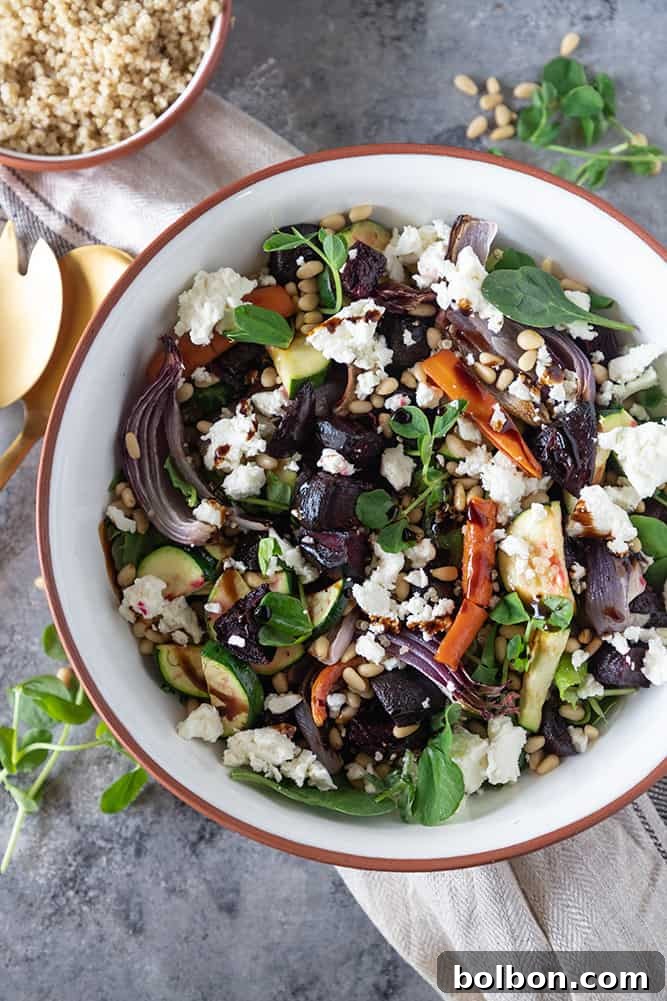
Discover a vibrant and satisfying culinary experience with our **Hearty Roasted Vegetable Quinoa Salad**. This isn’t just another salad; it’s a wholesome meal designed to nourish your body and delight your palate, leaving you feeling truly satiated. Forget bland greens and uninspired dishes; this salad combines the earthy sweetness of perfectly roasted vegetables, the robust goodness of warm, fluffy quinoa, the creamy tang of crumbled feta, and the delightful crunch of toasted pine nuts. It’s a symphony of textures and flavors that will redefine your perception of healthy eating.
Whether you’re looking for an ideal solution for your weekly meal prep, a vibrant and easy side dish for a busy weeknight dinner, or a substantial vegetarian main course, this roast vegetable quinoa salad fits the bill perfectly. It’s naturally gluten-free, packed with essential nutrients, and incredibly adaptable to your preferences. Prepare to transform your kitchen into a haven of health and flavor with this exquisite recipe.
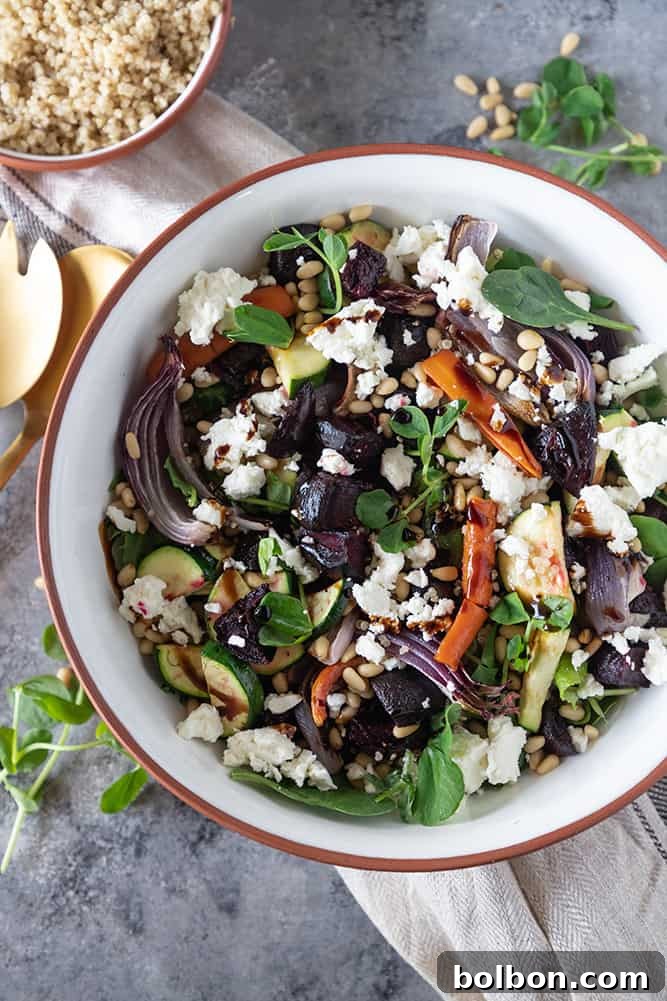
Hello, fellow food enthusiasts! It’s Georgie here, your guide from The Home Cook’s Kitchen, and I’m absolutely thrilled to share one of my all-time favorite creations with you: this magnificent roast vegetable quinoa salad. My passion lies in crafting dishes that are not only healthy and wholesome but also deeply flavorful and incredibly comforting, especially during the colder months when hearty meals are most cherished. This particular salad perfectly encapsulates that philosophy, making it an excellent choice for anyone striving to eat healthier without sacrificing taste or satisfaction.
I understand the struggle of maintaining a healthy diet when the temperature drops. We often crave warm, comforting foods, and sometimes salads just don’t feel like they hit the spot. That’s precisely why this quinoa salad with roasted vegetables has become a staple in my winter repertoire. It offers all the warmth and coziness you desire from a comforting meal, while still being packed with vital nutrients. It’s a complete meal that keeps you feeling fuller for longer, banishing those post-salad hunger pangs for good. By incorporating more substantial salads and vegetarian dishes into my diet, I’ve found a renewed sense of energy and well-being, and I’m eager for you to experience the same.
Why This Quinoa Salad is a Must-Try for Healthy Eaters
This roast vegetable quinoa salad stands out for several compelling reasons. Firstly, its simplicity. It’s a straightforward recipe that doesn’t demand hours in the kitchen, making it incredibly accessible for cooks of all skill levels. Secondly, its incredible flexibility. While I have my preferred combination of vegetables, the beauty of this salad lies in its adaptability. You can effortlessly substitute or add any vegetables you have on hand, transforming potential food waste into a delicious meal. This allows for endless variations, ensuring that your salad experience is always fresh and exciting.
My go-to vegetable combination for this dish includes beetroot, carrots, red onion, and zucchini. This quartet brings a delightful spectrum of colors, flavors, and textures to the salad. The beetroot, with its striking color and earthy undertones, adds a depth that is truly unique. Carrots contribute a natural sweetness and vibrant orange hue, while red onions offer a pungent kick that mellows beautifully upon roasting. Zucchini, mild and tender, rounds out the medley, absorbing the flavors of its roasting companions. These vegetables, when roasted until tender and slightly caramelized, develop an irresistible sweetness and depth that elevates the entire dish. Paired with fluffy quinoa, fresh greens, creamy feta, crunchy pine nuts, and a sweet-tangy balsamic glaze, you have a salad that is far from boring – it’s a gourmet experience in a bowl.
Understanding the Power of Quinoa: Your Superfood Staple
Before we dive deeper into the cooking process, let’s take a moment to appreciate quinoa, the nutritional cornerstone of this salad. Quinoa is often referred to as a grain, but it is actually a gluten-free seed from a plant related to spinach, beets, and chard. It’s celebrated worldwide as a superfood, and for good reason. Quinoa is one of the few plant foods that contains all nine essential amino acids, making it a complete protein. This is a significant advantage, especially for those following vegetarian or vegan diets, as it helps build and repair tissues, and supports overall bodily functions.
Beyond its impressive protein content, quinoa is an excellent source of dietary fiber, which is crucial for digestive health, helping to maintain bowel regularity and preventing constipation. The fiber also contributes to the feeling of fullness, which is why incorporating quinoa into your meals can help with weight management. Furthermore, quinoa is rich in essential minerals such as magnesium, manganese, phosphorus, folate, copper, iron, and zinc. It’s a powerhouse of nutrition that adds both substance and a slightly nutty flavor to any dish. I love using quinoa as a base for salads, or as a healthy substitute for rice in curries and stir-fries, instantly upgrading the nutritional profile of my meals.
Mastering Quinoa Cooking for Perfect Salads
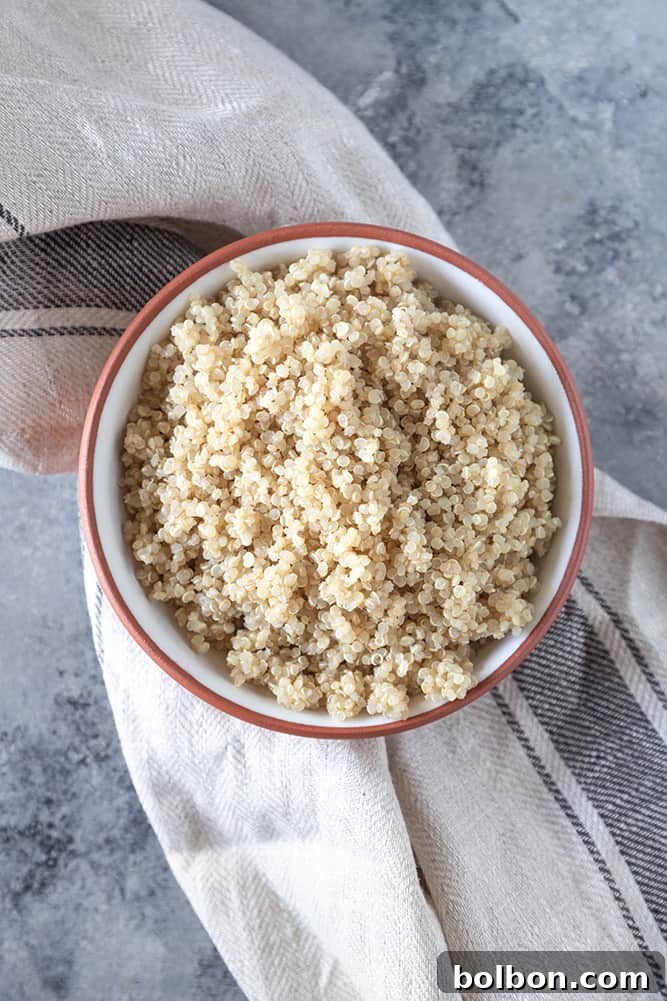
Cooking quinoa to perfection is surprisingly simple, and once you get the hang of it, it becomes an effortless part of your kitchen routine. You only need three basic ingredients: quinoa, water, and a pinch of salt. Quinoa comes in various colors – white, black, and red – each with slight differences in texture and cooking time. White quinoa is generally softer and cooks fastest, while red and black quinoa maintain a bit more chewiness and take a few minutes longer. For this recipe, any type of quinoa will work beautifully. I often opt for tri-color quinoa for its visual appeal and varied texture, but white quinoa, which I had on hand for this particular veggie salad, is just as delicious.
Here’s how to achieve perfectly fluffy, distinct quinoa every time:
- **Rinse Thoroughly:** This is a crucial step that many overlook. Quinoa has a natural coating called saponin, which can impart a bitter, soapy taste if not removed. Place your raw quinoa in a fine-mesh sieve and rinse it thoroughly under cold running water for at least 1-2 minutes, or until the water runs clear. This process washes away the saponin, ensuring a clean, pleasant flavor.
- **Measure Accurately:** The ideal quinoa-to-water ratio is 1:2. For every 1/3 cup of raw quinoa (which yields approximately 1 cup of cooked quinoa), you will need 2/3 cup of water. Add the rinsed quinoa, measured water, and a pinch of salt to a small saucepan.
- **Boil and Simmer:** Bring the mixture to a boil over medium-high heat. Once it reaches a rolling boil, reduce the heat to low, cover the saucepan with a tight-fitting lid, and let it simmer gently for 15-20 minutes. The goal is for the quinoa to absorb all the water. You’ll know it’s done when all the liquid has evaporated and the quinoa grains appear translucent, with a tiny white germ visible around the outside.
- **Fluff and Serve:** Once cooked, remove the saucepan from the heat and let it sit, covered, for another 5 minutes. This allows the quinoa to steam and become even fluffier. Finally, use a fork to gently fluff up the grains before serving. Your perfectly cooked quinoa is now ready to be incorporated into your salad or enjoyed as a side dish.
The Art of Roasting Vegetables for Flavor and Texture
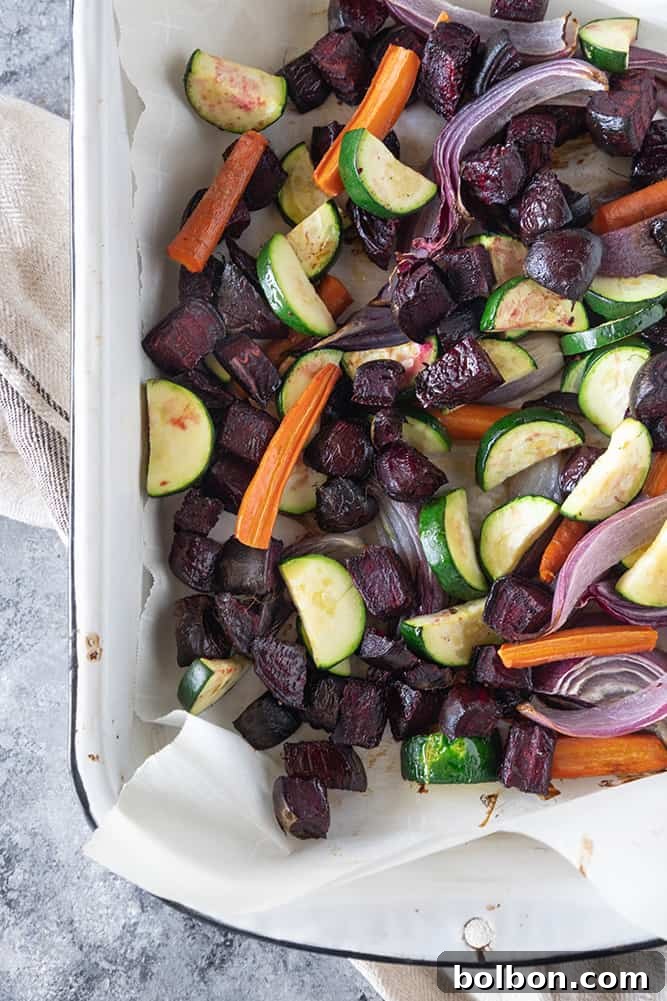
Roasting vegetables is a simple yet transformative cooking method that brings out their natural sweetness and creates a wonderful depth of flavor and appealing caramelization. For this hearty quinoa salad, I’ve chosen a mix of beetroot, red onion, carrots, and zucchini. Each vegetable contributes uniquely to the overall profile of the salad, both in terms of taste and texture. Beetroots offer a deep, earthy flavor and a stunning crimson color, while carrots become intensely sweet and tender. Red onions, often sharp when raw, mellow into a delightful sweetness with savory notes when roasted. Zucchini, a milder vegetable, becomes soft and slightly charred, absorbing the flavors of its companions.
A key aspect of successful roasting is understanding that different vegetables require different cooking times. To ensure everything is perfectly tender and caramelized without being over or undercooked, it’s best to add them to the oven in stages. This staggered approach guarantees that each vegetable reaches its optimal doneness, contributing its best to the final salad.
Achieving Perfectly Roasted Vegetables Every Time
For succulent, flavor-packed roasted vegetables, follow these steps:
- **Preparation is Key:** Start by washing and chopping your vegetables. For beetroot, I prefer them diced to a manageable size. Carrots can be sliced into longer, thinner pieces for quicker cooking and elegant presentation. Zucchini should be sliced lengthwise and then diced, allowing for maximum surface area to caramelize. Red onions are best cut into wedges, which helps them hold their shape and develop a beautiful sweetness.
- **Oil and Season:** In separate bowls (or on the baking tray if you’re mindful of cooking times), toss your prepared vegetables with a generous tablespoon or two of good quality olive oil. Olive oil helps them brown beautifully and adds a rich flavor. Season generously with salt and freshly ground black pepper. These simple seasonings enhance the natural flavors of the vegetables.
- **Preheat Your Oven:** Preheat your oven to a robust 400°F (200°C). A hot oven is essential for achieving that desirable crisp exterior and tender interior.
- **Staggered Roasting Times:** As mentioned, vegetables cook at different rates. To ensure everything is perfect, follow these general guidelines:
- **Beetroots:** Place the diced beetroots on a baking tray. Roast for approximately **40 to 45 minutes**. Beetroots are dense and take the longest to soften and caramelize.
- **Red Onions and Carrots:** After the beetroots have had a head start (around 10-15 minutes), add the sliced carrots and red onion wedges to the baking tray (or a separate tray if space is limited). Roast for an additional **30 minutes**, alongside the beetroots.
- **Zucchini:** Zucchini cooks relatively quickly. Add the diced zucchini to the baking tray during the last **15 minutes** of roasting. You can often add them directly on top of the carrots and onions if space allows.
- **Check for Doneness:** The goal is for your vegetables to be tender when pierced with a fork and to have lovely caramelized edges without being burnt. Cooking times can vary slightly depending on the size of your cuts and your oven, so always keep an eye on them towards the end.
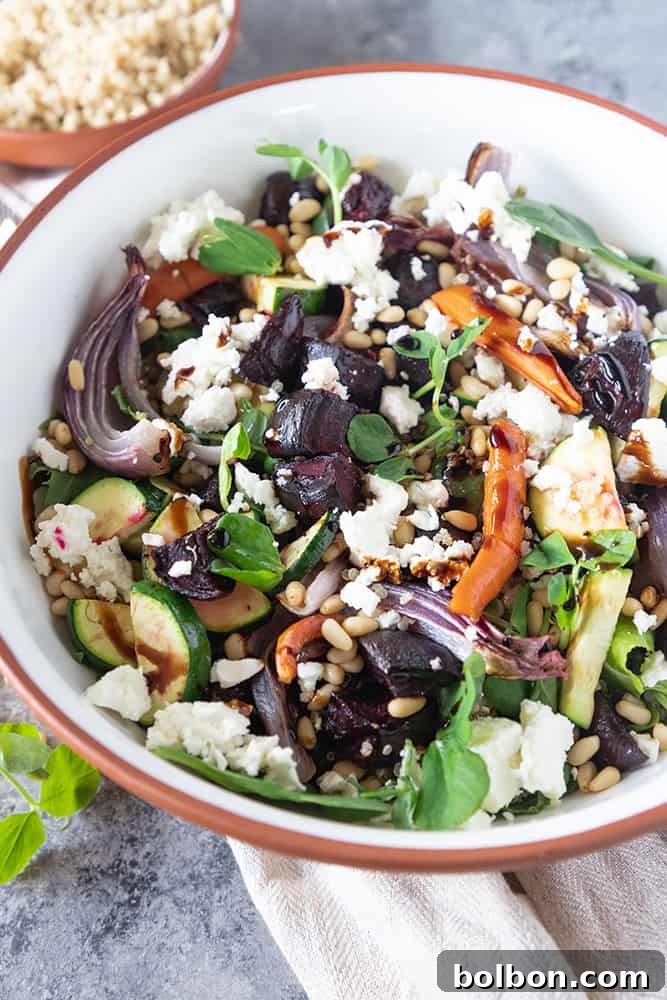
Assembling Your Vibrant Quinoa Salad: The Perfect Harmony
Once your quinoa is fluffed and your vegetables are perfectly roasted, the final step is to bring all these wonderful components together to create a harmonious and visually stunning salad. The key to a great salad is balancing flavors and textures, and this recipe excels at that.
To begin the assembly, you’ll need a bed of fresh greens. I’m currently obsessed with baby kale for its slightly peppery bite and robust texture, which holds up beautifully to the warm roasted vegetables and quinoa. However, you can easily substitute baby spinach for a milder flavor or peppery arugula (rocket) if you prefer a more pronounced zest. Place your chosen greens in a large salad bowl, creating a vibrant foundation for your masterpiece.
Next, gently fold in the warm, fluffy cooked quinoa and your tender, caramelized roasted vegetables. The warmth from these elements will slightly wilt the greens, releasing their aromatic qualities and softening them just enough to integrate perfectly with the other ingredients. This warmth is what makes this a truly comforting and hearty salad, especially suitable for cooler weather.
To finish the salad, we add elements that contribute creamy richness and satisfying crunch. Crumble a generous amount of feta cheese over the top. Its salty, tangy, and creamy notes perfectly complement the earthy vegetables and nutty quinoa. For an irresistible textural contrast, scatter some toasted pine nuts. Pine nuts offer a buttery, slightly sweet crunch that adds another layer of sophistication to the dish. Finally, drizzle the entire salad with balsamic glaze. Balsamic glaze is a thickened, reduced balsamic vinegar with a lovely balance of sweetness and tang. It’s readily available in most supermarkets and is a fantastic shortcut to a delicious dressing. Its rich, syrupy consistency clings beautifully to all the ingredients, providing a cohesive and flavorful finish without the need for a separate, elaborate dressing. This thoughtful combination of ingredients ensures every forkful is packed with flavor, texture, and nutritional goodness.
This salad is genuinely one of the easiest, most satisfying meals you can create. It’s quick to prepare, fantastic for weekly meal prep, and makes for an effortless yet impressive weeknight dinner. Staying healthy, even during the colder months, doesn’t have to be a challenge when you have recipes like this in your arsenal!
Roast Vegetable Quinoa Salad
By Meghan McMorrow | Fox and Briar
Cook: 45 mins
Total: 55 mins
Print Recipe
A beautiful, hearty and healthy salad that is great for weekly meal prep or easy weeknight dinners. Fresh roasted veggies, quinoa for extra protein, feta and pine nuts.
Ingredients
For The Quinoa:
- 1/3 cup quinoa
- 2/3 cup water
- pinch salt
For The Roast Vegetables & Assembly:
- 2 tablespoons olive oil
- 3 beetroots diced
- 2 carrots sliced into long pieces
- 1 zucchini sliced longways then diced
- 1 red onion cut into wedges
- 4 cups baby kale or spinach or arugula
- 2 tablespoons pine nuts
- 3 ounces feta cheese
- 1/2 tablespoons balsamic glaze just enough to dress the salad
- salt
- pepper
Instructions
For The Quinoa:
- Place your quinoa in a sieve and rinse under cold water for 1-2 minutes. Place quinoa, water and salt in a small saucepan and heat over medium to high heat.
- Once the quinoa is boiling, reduce heat and simmer for 15-20 minutes, until the water has absorbed.
- Use a fork to fluff up the quinoa.
For The Roast Vegetables:
- Preheat oven to 400°F (200°C).
- Place the beetroot in a small bowl and add a dash of olive oil, and season with salt and pepper. Place in a baking tray and bake for 40-45 minutes.
- Repeat the same step with the carrot and onion, and bake in the oven for 30 minutes.
- Finally, repeat again with the zucchini, and place in the oven for 15 minutes. You can put the zucchini on top of the carrots and onion.
Assemble the Salad:
- Add your spinach/baby kale/arugula to a large salad bowl. Top with the cooked quinoa and roast vegetables.
- Finish up by scattering the pine nuts and feta onto the salad and drizzle with the balsamic glaze.
Nutrition
Serving: 1 Serving |
Calories: 181kcal |
Carbohydrates: 17g |
Protein: 6g |
Fat: 11g |
Saturated Fat: 3g |
Cholesterol: 13mg |
Sodium: 225mg |
Potassium: 504mg |
Fiber: 4g |
Sugar: 6g |
Vitamin A: 5410IU |
Vitamin C: 16mg |
Calcium: 117mg |
Iron: 1.8mg
Nutrition information is automatically calculated, so should only be used as an approximation.
Additional Info
Course: Dinner, Salad
Cuisine: American
Tips for Meal Prepping and Customizing Your Quinoa Salad
This Roasted Vegetable Quinoa Salad is not just delicious fresh; it’s also a superstar for meal prepping. Its components hold up exceptionally well, making it a fantastic option for healthy lunches or dinners throughout the week. Here are some tips to maximize its meal prep potential and explore creative customizations:
Meal Prep Strategies:
- **Component Separation:** For best results, store the cooked quinoa, roasted vegetables, and greens separately. This prevents the greens from wilting too much and maintains the texture of the vegetables.
- **Dressing on the Side:** Always keep the balsamic glaze or any other dressing in a separate small container. Add it just before serving to prevent the salad from becoming soggy.
- **Storage:** Cooked quinoa can be stored in an airtight container in the refrigerator for up to 5 days. Roasted vegetables can be kept for 3-4 days. Fresh greens should be washed and dried thoroughly before storing to extend their freshness.
- **Reheating:** While this salad is delicious served cold, you can gently warm the quinoa and roasted vegetables in a microwave or a pan before combining them with fresh greens, feta, pine nuts, and balsamic glaze for a cozier meal.
Customization Ideas to Keep Things Fresh:
- **Protein Boost:** For an even more substantial meal, consider adding grilled chicken, pan-seared salmon, baked tofu, roasted chickpeas, or black beans. These additions will further enhance the protein content and make the salad more filling.
- **Vary Your Vegetables:** Don’t limit yourself to the suggested vegetables. Try roasting broccoli florets, cauliflower, bell peppers (any color), sweet potatoes, butternut squash, or even mushrooms. Each will bring a different flavor and nutritional profile.
- **Switch Up the Greens:** While baby kale is excellent, feel free to experiment with mixed greens, romaine lettuce for crunch, or even massaged kale for a softer texture.
- **Cheese Alternatives:** If feta isn’t your preference, crumbled goat cheese or a sprinkle of shaved Parmesan can offer a delightful alternative. For a dairy-free option, nutritional yeast can add a cheesy flavor.
- **Nut and Seed Varieties:** Instead of pine nuts, try toasted walnuts, pecans, almonds, or pumpkin seeds (pepitas) for a different kind of crunch and healthy fats.
- **Dressing Innovations:** While balsamic glaze is quick and easy, a homemade lemon-tahini dressing, a simple vinaigrette, or a creamy herb dressing can also elevate this salad to new heights.
Why Choose a Hearty Winter Salad?
The concept of a “winter salad” might seem counterintuitive to some, but it’s a culinary approach that offers immense benefits, especially when compared to lighter, summer-focused salads. During the colder months, our bodies naturally crave warmth and comforting foods, and hearty winter salads fulfill this desire while still providing essential nutrients that are often lacking in heavier winter fare.
A hearty winter salad, like our Roasted Vegetable Quinoa Salad, focuses on ingredients that are seasonal and robust. Root vegetables, cruciferous greens, and grains form the backbone of these salads, offering complex carbohydrates, fiber, and a wide array of vitamins and minerals. Roasting these vegetables not only brings out their natural sugars and deepens their flavors but also adds a comforting warmth that is perfect for a chilly day. The addition of a wholesome grain like quinoa provides sustained energy and a satisfying texture, making the meal truly substantial.
Beyond the nutritional benefits, winter salads are incredibly versatile and can be tailored to suit any palate. They challenge the notion that salads are only for summer, proving that they can be just as satisfying and cozy as a hot soup or stew. Embracing winter salads means enjoying vibrant colors, diverse textures, and rich flavors, all while maintaining a balanced and healthy diet throughout the year. It’s a smart way to get your daily dose of vegetables and fiber, even when fresh, light produce is less abundant.
Explore More Healthy Salad Recipes:
If you’ve enjoyed this hearty and healthy salad, you might love exploring other delicious and nutritious options:
- Spicy Peanut Quinoa Salad
- Autumn Harvest Salad with Pomegranate
- Citrus Kale Salad with Blood Orange Vinaigrette
Did you like this recipe?
Please leave a comment below to share your thoughts and experiences! And don’t forget to tag me on Instagram @foxandbriar and use the hashtag #foxandbriar so I can see what wonderful creations you’ve made!