
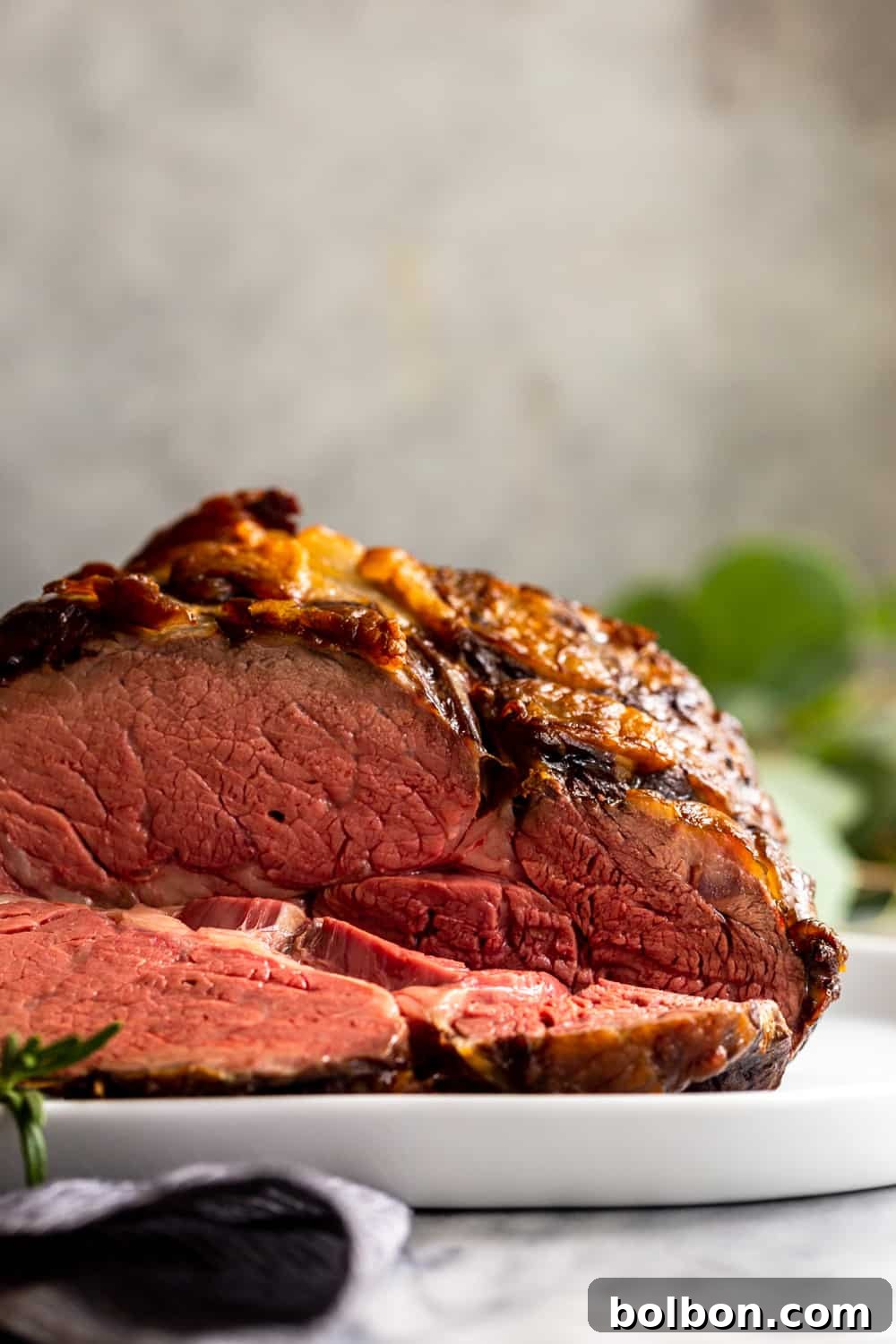
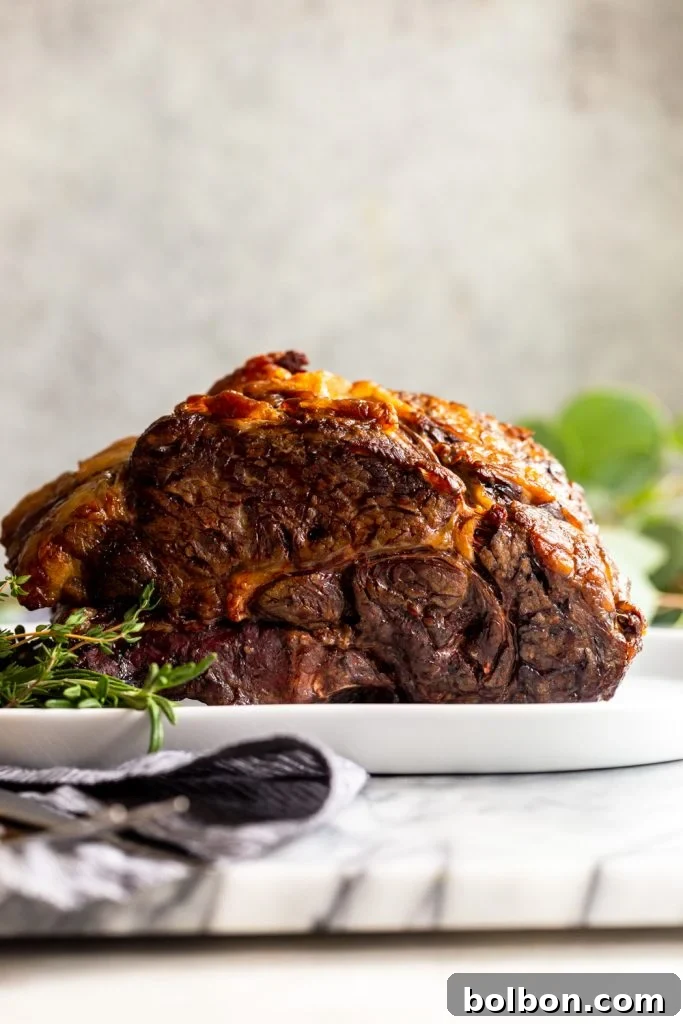
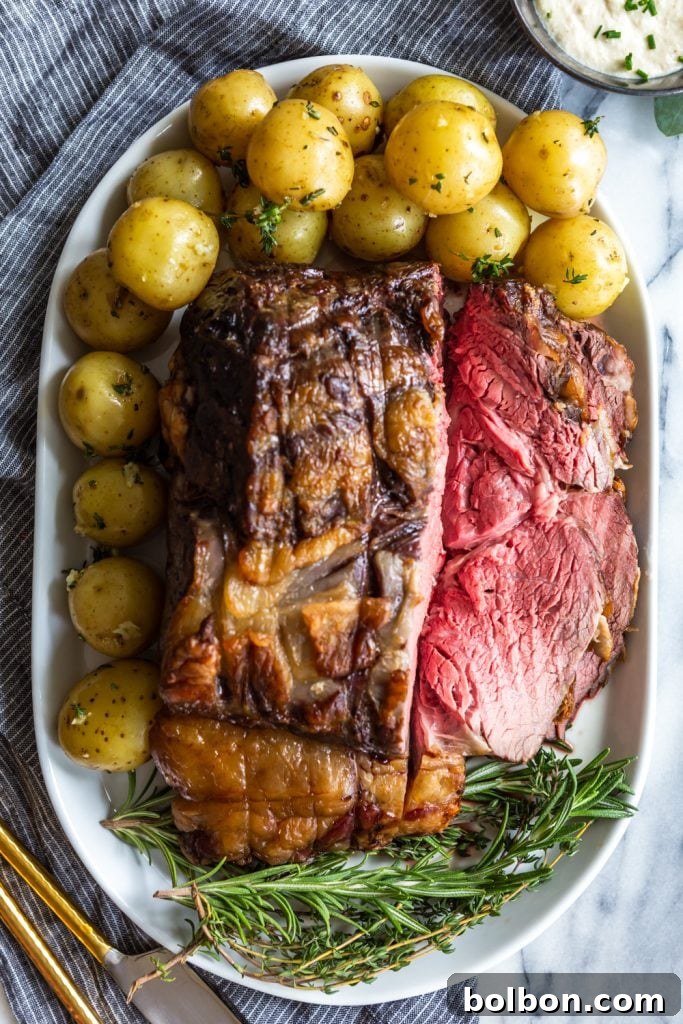
Elevate your special occasion dinners with the unparalleled elegance and exquisite flavor of a perfectly Slow Roasted Prime Rib. This magnificent main course, often referred to as a standing rib roast, promises a dining experience that is both luxurious and deeply satisfying. Imagine tender, juicy meat, cooked to an ideal edge-to-edge pink, crowned with a flavorful, crusty exterior. Whether it's a cherished family tradition for Christmas dinner or the centerpiece of any festive gathering, mastering the art of slow roasting prime rib in your oven will undoubtedly impress your guests and create unforgettable culinary memories.
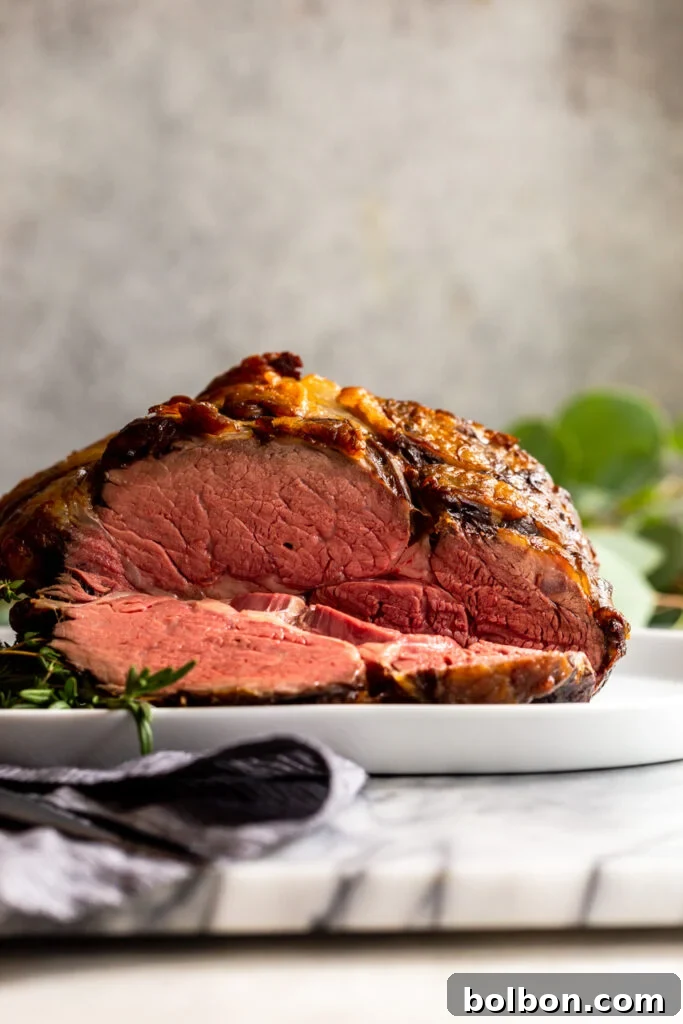
For many, a succulent prime rib roast is more than just a meal; it's a celebration. The sheer grandeur of presenting a beautifully cooked roast at the table sets a tone of festivity and abundance. This comprehensive guide will walk you through the precise steps to achieve a truly magnificent prime rib, ensuring every slice is tender, perfectly juicy, and consistently cooked from one end to the other. Forget the common pitfalls of dry edges or an unappealing "grey ring"; with our slow roasting method, your holiday dinner or special event will feature a show-stopping roast beef that is nothing short of perfection.
Why Slow Roasting Unlocks the Best Prime Rib Experience
When it comes to cooking a premium cut like prime rib, the method matters immensely. Many traditional recipes advocate for starting the roast in a very hot oven before drastically reducing the heat. While this approach aims to sear the exterior quickly, it often leads to a significant drawback: uneven cooking. The intense initial heat can cause the outer layers of the roast to cook much faster than the interior, resulting in a thick, undesirable "grey ring" of overcooked meat beneath the crust. This means you lose that coveted, uniform pink tenderness throughout the roast.
Slow roasting, by contrast, is a gentle and patient technique that ensures your prime rib cooks evenly from the surface to the very core. By maintaining a consistently low oven temperature, the heat permeates the meat gradually, preventing the exterior from overcooking while the interior slowly rises to the desired doneness. This method allows the meat's natural enzymes to work effectively, breaking down muscle fibers and contributing to an incredibly tender texture. Furthermore, slow roasting minimizes moisture loss, locking in those precious juices that define a truly succulent prime rib. The result is a roast beef with an impeccable, edge-to-edge pink hue, astonishing tenderness, and unparalleled juiciness that makes every bite a revelation.
Understanding Prime Rib: Grade vs. Name
The name "prime rib" might suggest that every cut of standing rib roast is automatically of the highest USDA "Prime" grade. However, this isn't always the case, and it's an important distinction for consumers to understand when purchasing. The USDA grades beef based on factors like marbling (intramuscular fat) and the animal's maturity, with "Prime" representing the highest quality, followed by "Choice," and then "Select."
USDA Prime beef boasts the most abundant marbling, which translates to superior tenderness, juiciness, and flavor. It is often found in high-end steakhouses and gourmet markets, and its premium quality comes with a higher price tag. Fortunately, you can still achieve a remarkably delicious prime rib roast with a "Choice" grade cut. Choice beef is also high quality, with good marbling, and is widely available at most supermarkets. While "Select" grade beef has less marbling and can be less tender, it's generally not the preferred choice for a prime rib roast where rich flavor and tenderness are paramount. When selecting your roast, a "Choice" grade standing rib roast is an excellent and more accessible option that will yield fantastic results with the right cooking method.
Expert Tips for Buying a Standing Rib Roast
Purchasing the right cut of prime rib is the first crucial step towards culinary success. When you visit your butcher, you'll encounter two primary types of standing rib roast cuts, each with distinct characteristics:
The "first cut," also known as the loin end or the small end, typically comes from ribs 10-12. This cut is highly prized for its larger rib eye muscle and less fatty composition, offering a magnificent balance of tenderness and flavor. It tends to be leaner, making it a favorite for those who prefer a less marbled, yet incredibly tender, roast.
The "second cut" is located closer to the chuck end, encompassing ribs 6-9. This section features more muscles and a higher fat content. While still an excellent cut for roasting, it is generally considered less desirable than the first cut due to its varied muscle structure and increased fattiness. However, for those who appreciate richer marbling and robust flavor, the second cut can be a fantastic, often more economical, choice.
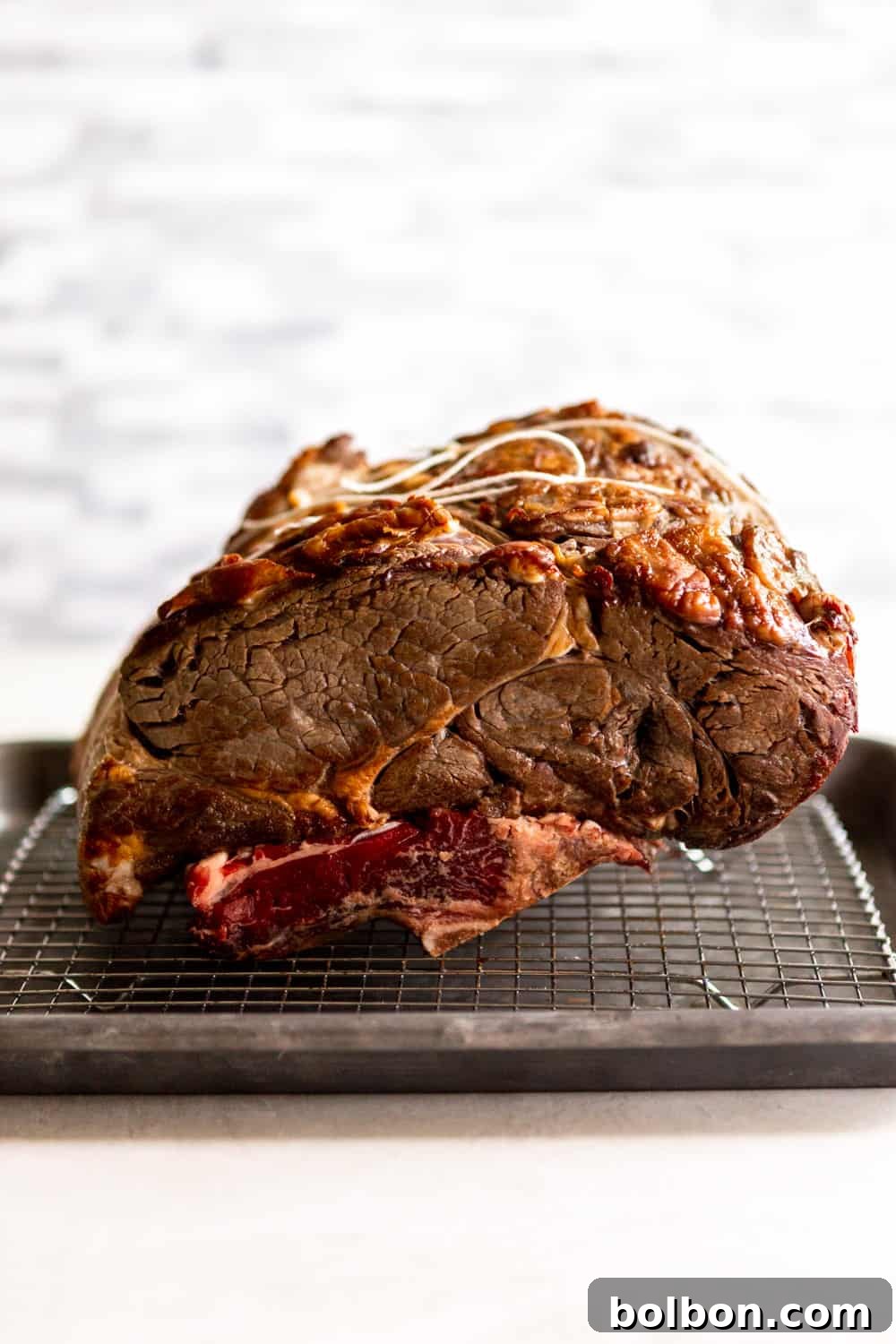
To enhance both the cooking and carving experience, I highly recommend asking your butcher to remove the bones from the roast and then tie them back in place. This simple request offers several benefits: it allows you to generously season the meat directly underneath the bones, ensuring flavor penetrates every part of the roast. Furthermore, it makes carving significantly easier after cooking, as you can effortlessly separate the cooked meat from the bone structure. Even with the bones detached and tied back, they continue to serve a vital purpose during roasting. The bones insulate the meat, helping to prevent overcooking and contributing to a more even internal temperature. Additionally, many argue that roasting with the bones attached imparts a deeper, more profound flavor to the meat. Plus, let's be honest, who can resist gnawing on a savory prime rib bone?
Determining the Right Amount: How Much Prime Rib Per Person?
Planning for the perfect amount of prime rib ensures every guest is satisfied without excessive waste. For a bone-in rib roast, a good rule of thumb is to plan on one pound per person. Alternatively, you can calculate one rib for every two people, as ribs are typically quite substantial. This generous portion allows for hearty servings and often leaves a little extra for those who might want seconds or for delicious leftovers. If you opt for a boneless prime rib, you can slightly reduce this amount to about 12-14 ounces per person, as there's no bone weight to account for. Always consider your guests' appetites and whether you desire leftovers for sandwiches or future meals when deciding on the size of your roast.
The Ideal Cooking Temperature for Slow Roasted Prime Rib
The secret to achieving that coveted, uniformly pink and tender prime rib lies in maintaining a low and consistent oven temperature. For this slow roasting method, we recommend setting your oven to 225 degrees Fahrenheit. If you are fortunate enough to have a convection oven, you can utilize its fan-assisted heat distribution by reducing the temperature slightly to 200 degrees Fahrenheit. This lower temperature is critical because it allows the roast to cook gently, preventing the outer layers from drying out or overcooking before the center reaches your desired doneness. It’s a patient process, but the resulting tenderness and even cooking are well worth the wait, creating a prime rib that's succulent from crust to core.
Ensuring Perfect Doneness: The Indispensable Meat Thermometer
When cooking a prime rib, an expensive and exquisite cut of meat, leaving its doneness to guesswork is simply not an option. There is only one reliable and accurate way to know when your roast has reached its perfect internal temperature, and that is with an instant-read meat thermometer. This isn't just a kitchen gadget; it's an essential tool that protects your investment and guarantees a perfectly cooked roast every single time.
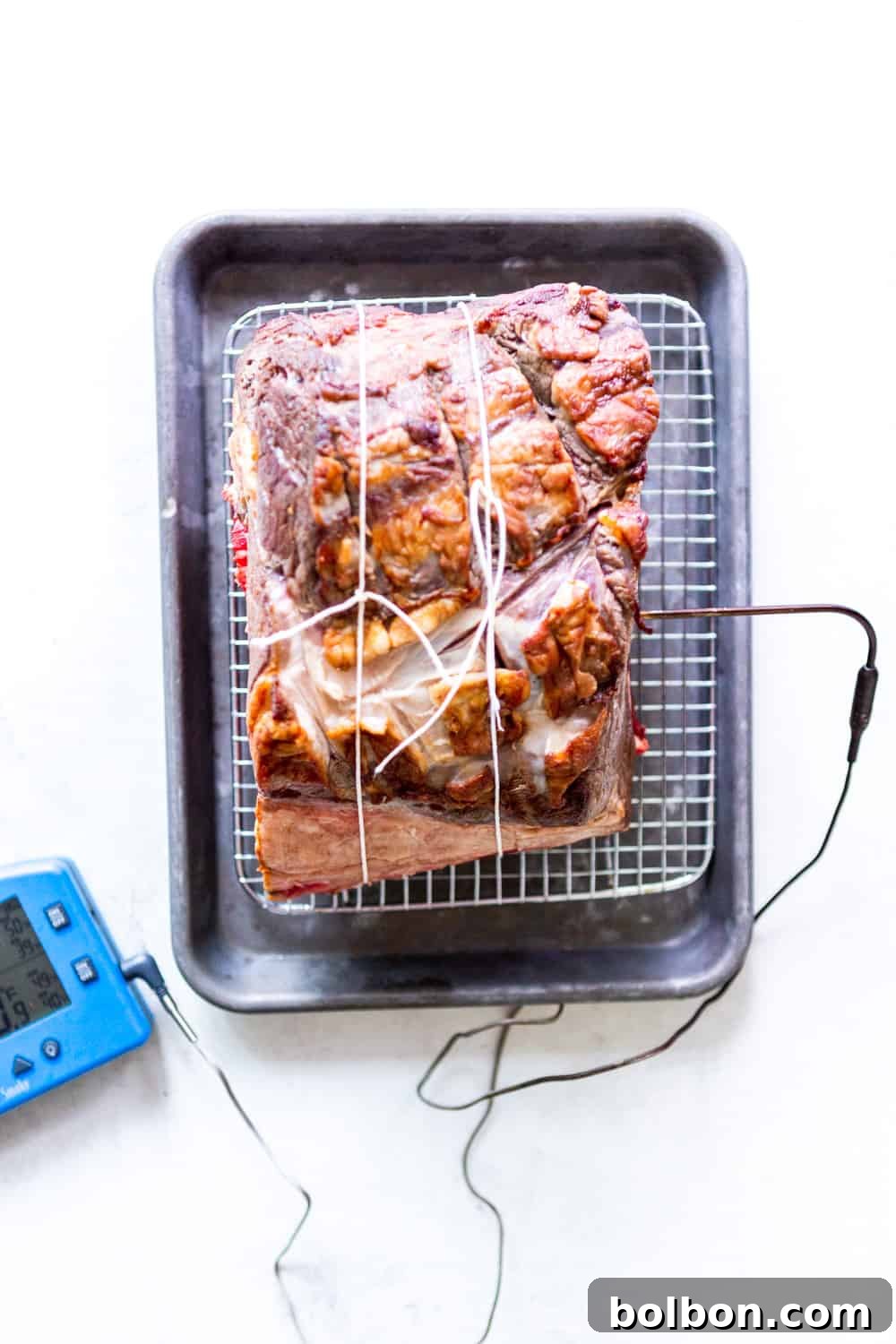
An instant-read thermometer allows you to quickly and precisely measure the internal temperature of the meat without losing too much heat from the oven. For even greater convenience and accuracy, especially for a large roast that cooks over several hours, a high-quality probe thermometer with an alarm feature can be invaluable. This type of thermometer allows you to insert the probe into the thickest part of the roast, set your target temperature, and monitor it wirelessly or from outside the oven. The alarm will notify you the moment your roast hits the mark, eliminating the need to constantly open the oven door. While there are many options available, investing in a reliable meat thermometer, even a less expensive one with good reviews, will transform your roasting confidence and ensure flawless results.
Understanding Internal Temperatures: When to Remove Your Prime Rib from the Oven
One of the most critical aspects of cooking prime rib to perfection is understanding carryover cooking. The roast will continue to cook and its internal temperature will rise by 5-10 degrees Fahrenheit (or even more for larger roasts) after it's removed from the oven due to residual heat. Therefore, it is crucial to take your roast out of the oven *before* it reaches your desired final temperature. Always use your meat thermometer to track the temperature diligently.
Prime Rib Temperature Chart – When to Remove the Roast from the Oven:
- Rare: Remove from the oven at 115 degrees F (final temperature after resting: 120-125 F)
- Medium Rare: Remove from the oven at 120 degrees F (final temperature after resting: 125-130 F)
- Medium: Remove from the oven at 125 degrees F (final temperature after resting: 130-135 F)
- Medium Well: Remove from the oven at 130 degrees F (final temperature after resting: 135-140 F)
- Well Done: Remove from the oven at 140 degrees F (final temperature after resting: 145-150 F). (Please exercise caution if aiming for well done; cooking past medium can compromise the tenderness and juiciness of such a fine cut of beef. We generally recommend cooking no further than medium for the best prime rib experience.)
Crafting the Best Slow Roasted Prime Rib: A Step-by-Step Guide
Achieving a truly spectacular slow roasted prime rib is a process that rewards patience and attention to detail. Follow these steps for an unforgettable centerpiece:
- Bone Separation (Butcher's Assist): Begin with a bone-in prime rib roast. Ask your butcher to expertly remove the bones from the roast while keeping them intact and tied back onto the roast. This crucial step simplifies carving later and allows for thorough seasoning under the bones.
- Prepare the Roast: If the fat cap is excessively thick, trim it down to about 1/4 to 1/2 inch, leaving a protective layer. Using a sharp knife, score the fat cap in a crosshatch pattern, cutting through the fat but not into the meat. This helps the fat render and crisp up beautifully.
- Dry Brining and Seasoning: Liberally season the entire surface of the roast, including under the separated bones, with kosher salt. The salt will draw out moisture, create a natural brine, and contribute to a crispy crust.
- Refrigeration (Dry Brine): Place the seasoned roast, uncovered, on a wire rack set over a sheet pan in the refrigerator. Allow it to dry brine for at least 24 hours, and up to three days. This step is vital for developing flavor and ensuring a superior crust.
- Preheat Oven: When ready to cook, preheat your oven to 225°F (200°F if using a convection oven). Ensure you have a reliable meat thermometer at hand.
- Searing for Flavor and Crust: In a large, heavy-bottomed skillet (cast iron works wonderfully) over medium-high heat, add 2 tablespoons of canola oil (or another high-smoke-point oil). Once shimmering, carefully sear all sides of the prime rib until a rich, golden-brown crust forms. This creates the Maillard reaction, developing complex flavors and a beautiful exterior.
- Secure and Roast: After searing, place the roast back onto its bones and securely tie it together with kitchen twine. This helps the roast maintain its shape and keeps the bones in place for insulation and flavor. Transfer the roast, on a rack fitted to a baking sheet, into the preheated oven. Season with freshly ground black pepper if desired.
- Slow Roasting: Roast uncovered until the internal temperature, measured in the thickest part of the meat (avoiding bone), registers 110 degrees F. This typically takes about 3-4 hours, depending on the size of your roast.
- Rest in Oven (Crucial Step): Once 110 degrees F is reached, turn off the oven. Leave the roast inside, undisturbed and uncovered, allowing carryover cooking to gently bring it to your desired doneness: 115 degrees F for rare, or 120 degrees F for medium-rare. Monitor the temperature carefully.
- Final Rest: Remove the roast from the oven. Loosely tent it with aluminum foil and allow it to rest for a minimum of 30 minutes before carving. This resting period is critical; it allows the juices to redistribute throughout the meat, ensuring every slice is incredibly moist and tender.
- Carving and Serving: After resting, remove the kitchen twine and separate the roast from the bones. Slice the ribs to serve separately if desired, and then carve the roast into generous 3/4-inch slices. Season each slice lightly with a pinch of flaky sea salt before serving to highlight its rich flavor.
Perfect Pairings: What to Serve as a Side Dish for Slow Roasted Prime Rib
A magnificent prime rib deserves an equally impressive supporting cast of side dishes. The right accompaniments can elevate the entire meal, balancing the richness of the beef and offering complementary textures and flavors. Here are some delectable options to consider:
For a hearty potato pairing, consider my Crispy Smashed Potatoes, which offer a delightful crunch and fluffy interior, or my Roasted Garlic Mashed Potatoes, creamy and infused with aromatic garlic. Fluffy dinner rolls are always a welcome addition, perfect for soaking up any delicious juices; try my easy Make Ahead Dinner Rolls for a stress-free option.
To add freshness and a vibrant touch to your meal, a vegetable side dish is essential. My Honey Roasted Carrots offer a touch of sweetness, while Roasted Asparagus provides a crisp, green counterpoint. For those who appreciate a slightly bitter and savory note, my Roasted Brussels Sprouts are always a crowd-pleaser. Any of these sides will beautifully complement the robust flavor of your Slow Roasted Prime Rib.
Slow Roasted Prime Rib Recipe
Meghan McMorrow | Fox and Briar
1 day
3-4 hrs
6 Servings
Print Recipe
Ingredients
- 6 lb Bone In Standing Rib Roast
- Kosher salt (for generous seasoning)
- 2 TBSP canola oil (or other high-smoke-point oil)
- Freshly ground black pepper (optional, to taste)
Instructions
-
Separate roast from rib bones (ask your butcher to do this for ease).
-
Trim fat cap to about 1/4 to 1/2 inch thickness (you can also ask your butcher to do this). Use a knife to slice slits into the fat cap in a crosshatch pattern, cutting through the fat but not the meat. Season liberally with kosher salt all over the surface of the meat, including under the separated bones.
-
Place roast back on the bones. Set roast on a wire rack fitted over a sheet pan in the fridge for at least 24 hours up to 3 days, uncovered. This dry brining process enhances flavor and promotes a crispy crust.
-
Preheat oven to 225 F (if using a convection oven, use 200 F). Ensure you have an accurate meat thermometer ready.
-
Heat a large, heavy-bottomed skillet (like cast iron) with 2 TBSP oil over medium-high heat. Brown all sides and the top of the roast until a rich, golden-brown crust forms. After browning, place the roast back onto the bones and tie securely with kitchen twine. Season with pepper if desired.
-
Place the roast on a rack fitted to a baking sheet and roast uncovered in the preheated oven. Cook until the internal temperature registers 110 degrees F in the thickest part (avoiding bone) – this should take approximately 3-4 hours, depending on the size and initial temperature of your roast.
-
Turn off the oven. Let the roast sit in the oven, undisturbed and uncovered, until its internal temperature hits 115 F for rare, or 120 F for medium-rare. (Remember, the temperature will continue to rise after removing from the oven due to carryover cooking). If a darker, crispier crust is desired, you can briefly broil the roast for a few minutes before removing it from the oven for resting.
-
After removing from the oven, loosely tent the roast with foil and allow it to rest for at least 30 minutes before carving. This critical step allows the juices to redistribute, ensuring maximum tenderness and juiciness.
-
After resting, remove the twine and separate the roast from the bones for easy carving. Slice the roast into 3/4-inch thick slices. You can carve the ribs to serve alongside the roast for those who enjoy them. Season individual slices with a pinch of flaky sea salt before serving.
Video Tutorial
For a visual guide on preparing this exquisite Slow Roasted Prime Rib, watch our detailed video tutorial:
Video Description: Tender and juicy Slow Roasted Prime Rib is the best main course for a special occasion dinner! Learn how to cook the best prime rib roast!
Nutrition Information
Serving: 8 ounces |
Calories: 773 kcal |
Protein: 51 g |
Fat: 62 g |
Saturated Fat: 25 g |
Cholesterol: 188 mg |
Sodium: 143 mg |
Iron: 6 mg
Nutrition information is automatically calculated and should only be used as an approximation. Actual nutritional values may vary based on ingredients and preparation methods.
Additional Information
Did you savor this recipe?
Please take a moment to comment, rate, and share your experience! We love seeing your culinary creations. Don’t forget to tag me on Instagram @foxandbriar and use the hashtag #foxandbriar so I can see what you made!