
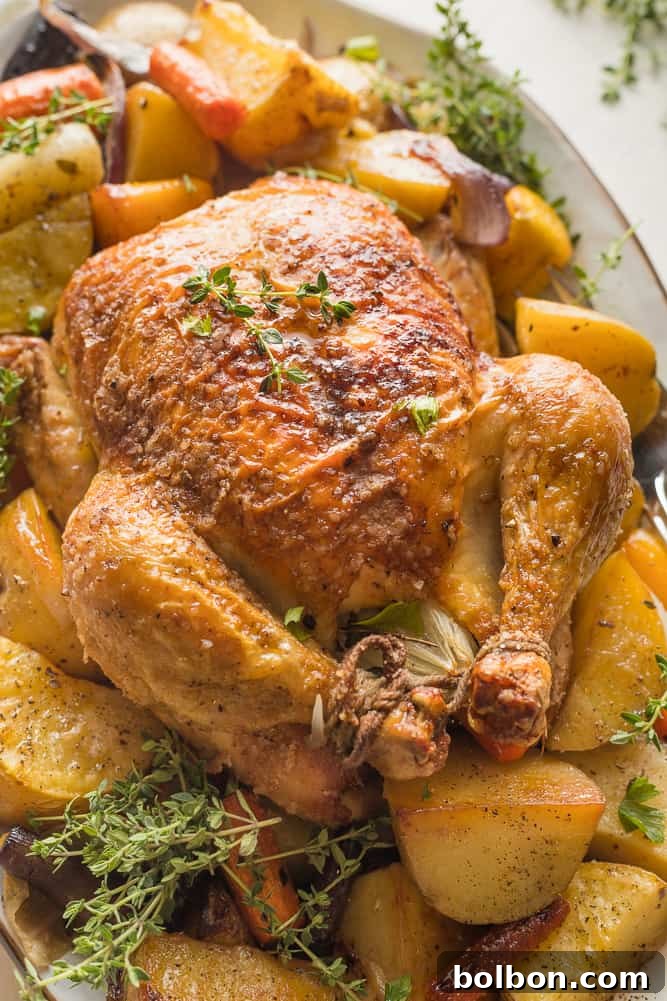
The Ultimate One-Pan Roasted Chicken Recipe with Crispy Skin and Flavorful Root Vegetables
There are few dishes as universally comforting and impressive as a perfectly roasted whole chicken. Whether you’re seeking a cozy family dinner on a crisp Sunday evening or aiming to enchant guests with minimal effort, this easy, one-pan roasted chicken recipe is an absolute kitchen essential. Imagine succulent, juicy chicken beneath a beautifully golden, crispy skin, surrounded by tender, caramelized root vegetables—all cooked together in a single pan, making cleanup a breeze. This recipe is mostly hands-off, allowing you to enjoy a quiet day at home while your oven works its magic, delivering unparalleled flavor and a truly satisfying meal.
The aroma of a whole roasted chicken filling your home is an experience in itself, signaling warmth and deliciousness. While this isn’t a 30-minute weeknight meal, the active preparation time is surprisingly short, leaving the oven to do the heavy lifting. This makes it ideal for those relaxing weekends when you want a gourmet-quality meal without being tied to the stove. We’ll guide you through every step to ensure your roasted chicken is nothing short of spectacular, from selection and preparation to achieving that coveted crispy skin and tender interior.
Achieving Perfection: Essential Tips for Roasting a Whole Chicken
The secret to an unforgettable roasted chicken lies in a few crucial preparation steps. These tips are simple but make a significant difference in the final texture, flavor, and evenness of your roast.
- Proper Thawing is Key: Many grocery store chickens, even those labeled “fresh,” can be partially frozen in the center, especially if purchased the day of roasting. This hidden ice can lead to uneven cooking, resulting in some parts being undercooked while others dry out. For best results and food safety, purchase your whole chicken a day or two in advance and allow it to fully thaw in the refrigerator. This ensures a consistent temperature throughout the bird, promoting even cooking.
- Bring to Room Temperature: About an hour before you plan to roast, remove the chicken from the refrigerator and let it sit on your kitchen counter. This practice helps the meat cook more uniformly. A cold chicken will take longer for the internal temperature to rise, risking the outer layers overcooking before the center is done. Bringing it closer to room temperature allows for more even heat penetration and a juicier result.
- Check the Cavity: Before you begin seasoning, always check the chicken’s cavity. It’s common for poultry to contain a small package of giblets (the neck, gizzards, heart, and liver) or a fat pad. These are usually tucked away for cooking into gravy or stock, but they should always be removed before roasting the chicken itself. Forgetting to do so can create an unpleasant aroma and interfere with even cooking. Also, check the neck cavity, as items can sometimes be hidden there.
- Pat the Skin Dry: This step is non-negotiable for achieving that coveted crispy skin. Using paper towels, thoroughly pat the entire exterior of the chicken dry. Any moisture on the skin’s surface will steam rather than crisp, preventing it from reaching that beautiful golden-brown, crackling texture we all desire. Dry skin is the foundation for crispy skin.
Mastering the Art of Trussing Your Chicken
Trussing is a simple technique that can elevate your roasted chicken from good to spectacular, both in appearance and in how evenly it cooks. Using kitchen twine, you tie up the chicken, essentially compacting its shape. This prevents the wing tips and drumsticks from overcooking and drying out before the breast meat is done, ensuring a uniformly cooked bird. It also results in a neater, more appealing presentation, making your roast look like it came straight from a gourmet kitchen.
While it might seem intimidating at first, trussing is surprisingly easy to master. Once you’ve done it a couple of times, you’ll feel like a seasoned chef! The technique involves tucking the wings under the body and tying the legs together, creating a compact, roast-ready shape. If you’re a visual learner, there are many online videos demonstrating how to truss a chicken, often using the same method as trussing a turkey.
Optimal Roasting Temperature and Time for Juicy Chicken and Crispy Skin
The temperature at which you roast your chicken is crucial for achieving the perfect balance of crispy skin and succulent meat. In this recipe, we recommend roasting the whole chicken at a relatively high temperature of 425 degrees Fahrenheit (218°C) for approximately 90 minutes. This initial high heat blast helps to quickly crisp up the skin, rendering the fat underneath, and allows the vegetables to caramelize beautifully.
The exact cooking time will vary depending on the size of your chicken and your oven’s calibration. The most reliable way to determine doneness is by using an instant-read thermometer. Insert the thermometer into the thickest part of the thigh, avoiding the bone. The chicken is perfectly cooked when it reaches an internal temperature of 165°F (74°C) and the juices run clear. Allowing the chicken to rest for 15-20 minutes after roasting is also essential; this helps the juices redistribute throughout the meat, resulting in a more tender and flavorful chicken.
The Supporting Cast: Best Root Vegetables for Roasting
A true one-pan roasted chicken isn’t complete without an array of tender, caramelized root vegetables absorbing all those delicious chicken drippings. The selection of vegetables can dramatically enhance the overall flavor profile of your meal. Here are our top picks and why they work so well:
- Yukon Gold Potatoes: These are a star choice for roasting due to their creamy texture and naturally buttery flavor. When roasted, their skins crisp up slightly, and their interiors become wonderfully tender, soaking up all the savory juices from the chicken. Quartering them ensures they cook evenly and get plenty of surface area for browning.
- Onions: A large sweet onion, cut into wedges, adds a foundational layer of sweetness and aromatic depth to the pan. As they roast, onions caramelize beautifully, releasing their sugars and contributing a rich, savory-sweet flavor that complements the chicken and other vegetables. Any type of onion will work, but sweet varieties tend to soften and sweeten more.
- Carrots: Roasting transforms carrots into something truly special—they become incredibly sweet and tender, almost like candy. Their natural sugars concentrate under high heat, adding a delightful sweetness and vibrant color to your dish. Chop them into 2-inch chunks for optimal roasting.
- Parsnips (Optional but Recommended): For an added layer of earthy sweetness and a slightly peppery note, don’t skip the parsnips. These root vegetables have a unique flavor profile that pairs wonderfully with roasted chicken and other hearty vegetables. Peel and chop them into 1-inch chunks to ensure they cook through.
- Garlic Cloves: Instead of minced garlic, opt for whole, unpeeled garlic cloves. As they roast in the pan alongside the chicken and vegetables, they become incredibly soft, sweet, and mellow. After roasting, these tender cloves will easily pop out of their skins, revealing a spreadable, butter-like consistency that is perfect for spreading on crusty bread or simply enjoying with the chicken. Don’t be shy; use eight or more for maximum flavor!
To ensure your vegetables achieve that irresistible browned and caramelized exterior, arrange them in a single layer in the roasting pan. Crucially, turn each piece so that its flat, cut side is facing down against the bottom of the pan. This maximizes contact with the hot surface, promoting deep browning and intensifying their natural flavors.
Helpful Tools for a Seamless Roasted Chicken Experience
While you don’t need a professional kitchen setup, a few key tools can significantly enhance your roasting success and make the process more enjoyable:
Roasting Pan: A good quality roasting pan is truly a versatile and essential piece of kitchen equipment. We highly recommend a multi-clad roasting pan because it ensures excellent, even heat distribution—critical for preventing hot spots and ensuring your chicken and vegetables cook uniformly. Look for one with a flat bottom and a non-stick surface is not necessary; in fact, a pan that allows for fond (the browned bits at the bottom) to form is ideal for developing rich flavors and creating delicious pan sauces later. If you don’t yet own a dedicated roasting pan, you can improvise with a large, heavy-duty baking dish, a Dutch oven, or even a spacious cast iron skillet. The key is to have enough surface area to accommodate the chicken and vegetables without overcrowding.
Instant-Read Thermometer: This is arguably the most important tool for cooking any meat, and a whole chicken is no exception. An instant-read thermometer takes the guesswork out of roasting, providing the most accurate and reliable way to know when your chicken is perfectly cooked and safe to eat. Overcooking leads to dry, tough meat, while undercooking poses health risks. While professional-grade options like a Thermapen offer incredible speed and accuracy, there are many more affordable models that are highly effective. Simply insert it into the thickest part of the thigh, avoiding the bone, to confirm an internal temperature of 165°F (74°C).
Kitchen Twine: As discussed, kitchen twine is indispensable for trussing your chicken. It helps the bird cook more evenly and maintains a compact, attractive shape. Make sure to use food-safe, unbleached cotton twine.
Basting Brush: A silicone basting brush is handy for evenly spreading melted butter or olive oil over the chicken’s skin, ensuring a consistent layer for maximum crispiness.
Investing in these basic tools will not only make preparing this roasted chicken recipe easier but will also empower you to tackle a wide range of other culinary adventures with confidence.
Serving Suggestions for Your Perfect Roast Chicken Dinner
This one-pan roasted chicken with vegetables is a complete meal in itself, but you can easily elevate it further with a few simple additions. Consider serving it with a fresh green salad dressed with a light vinaigrette to add a refreshing contrast. A basket of warm, crusty bread is perfect for soaking up any delicious pan juices, especially those sweet, roasted garlic cloves. For a touch of elegance, you could quickly whip up a simple pan gravy using the drippings from the roasting pan.
Troubleshooting Common Roasted Chicken Issues
Even with the best instructions, sometimes things don’t go exactly as planned. Here are solutions to a few common issues:
- Dry Chicken: The most common culprit is overcooking. Always rely on an instant-read thermometer, not just time. Ensure you’re not using too high a temperature for too long, and allow the chicken to rest sufficiently after roasting. Trussing also helps to keep moisture in.
- Soggy Skin: This usually comes down to insufficient drying of the chicken skin before roasting or not enough fat (butter/oil) applied. Make sure to pat the chicken very dry with paper towels and brush generously with melted butter or olive oil.
- Undercooked Vegetables: If your vegetables are still too firm, they might have been cut too large or the pan was overcrowded. Ensure vegetables are cut into appropriate sizes and spread in a single layer with their cut sides down for maximum contact with the hot pan. You can also give them a head start by roasting them for 15-20 minutes before adding the chicken to the oven.
More Delicious Recipes You Will Love
- Slow Roasted Prime Rib: For a truly special occasion, this impressive prime rib recipe is slow-roasted to perfection, promising tender, flavorful results every time.
- Roasted Rack of Lamb: Elegant and surprisingly easy, this roasted rack of lamb is a showstopper, ideal for entertaining or a luxurious weeknight treat.
- Easy Herb Butter Roasted Turkey: Perfect for holidays or large gatherings, this herb butter roasted turkey recipe ensures a moist, flavorful bird with golden skin.
Roasted Chicken
★
★
★
★
Pin
Ingredients
- 1 whole chicken 4-5 pounds
- 4 Yukon gold potatoes quartered
- 4 carrots peeled and chopped into 2 inch chunks (set aside 2-3 small pieces for the cavity)
- 3 parsnips peeled and chopped into 1 inch chunks (optional)
- 1 large onion sliced into wedges (set aside 2-3 small pieces for the cavity)
- 8 or more garlic cloves not peeled
- 1 large bunch of fresh thyme set aside 20 sprigs for vegetables, rest for cavity
- 2-3 tablespoons olive oil
- 2 tablespoons unsalted butter melted
- kosher salt
- fresh ground pepper
Instructions
-
Approximately one hour before you plan to cook, remove the whole chicken from the refrigerator and place it on the counter. This allows it to come closer to room temperature, promoting more even cooking.
-
Preheat your oven to 425°F (218°C).
-
Prepare your vegetables: In the bottom of a large roasting pan, combine the quartered potatoes, chopped carrots, sliced onion wedges, parsnips (if using), and whole garlic cloves. Add about 20 sprigs of fresh thyme. Drizzle generously with olive oil and season well with kosher salt and fresh ground pepper. Toss everything to ensure the vegetables are evenly coated with the oil and seasonings. Arrange the seasoned vegetables in a single layer at the bottom of the roasting pan, making sure to turn each piece so that its flat, cut side is facing down. This technique helps them brown and caramelize beautifully.
-
If you have one, place a roasting rack directly on top of the arranged vegetables. If not, the chicken can be placed directly on the vegetables. Position the whole chicken on the roasting rack (or directly on the vegetables). Double-check that all giblets and any other packages have been removed from both the main cavity and the neck cavity of the chicken. Pat the entire exterior of the chicken thoroughly dry with paper towels to ensure crispy skin.
-
Liberally season the inside cavity of the chicken with kosher salt and fresh ground pepper. Place a few small pieces of the reserved onion and carrot into the cavity, along with the remaining fresh thyme sprigs.
-
Tuck the wing tips under the chicken’s body to prevent them from burning, then use kitchen twine to truss the chicken. This helps the chicken cook more evenly and maintain a compact shape.
-
Melt the unsalted butter and brush it generously all over the outside of the chicken. This butter layer, along with a liberal seasoning of kosher salt and fresh ground pepper, is crucial for developing that irresistible golden, crispy skin. Don’t be shy with the salt!
-
Carefully transfer the roasting pan to your preheated oven. Roast the chicken for approximately 90 minutes. The chicken is done when its internal temperature, measured with an instant-read thermometer inserted into the thickest part of the thigh (avoiding the bone), reaches 165°F (74°C), and the juices run clear.
-
Once cooked, remove the roasting pan from the oven and tent it loosely with foil. Allow the chicken to rest for 15-20 minutes before carving. This resting period is essential for the juices to redistribute throughout the meat, resulting in a more tender and flavorful chicken. After resting, carve the chicken and serve it alongside the beautifully roasted vegetables. Enjoy!
Nutrition
Nutrition information is automatically calculated, so should only be used as an approximation.
Additional Info
This recipe is lovingly adapted from Ina Garten’s renowned Perfect Roast Chicken, a testament to its timeless appeal and flawless technique.
This post was originally published November 2nd, 2015. It was updated with new pictures and text on August 17th, 2022.
Disclosure: This post contains affiliate links, which means that if you purchase the items I recommend through the links I provide, I get a small commission. For more info, please see my disclosure policy. I only recommend products if I actually love them. Thanks for supporting Fox and Briar!