
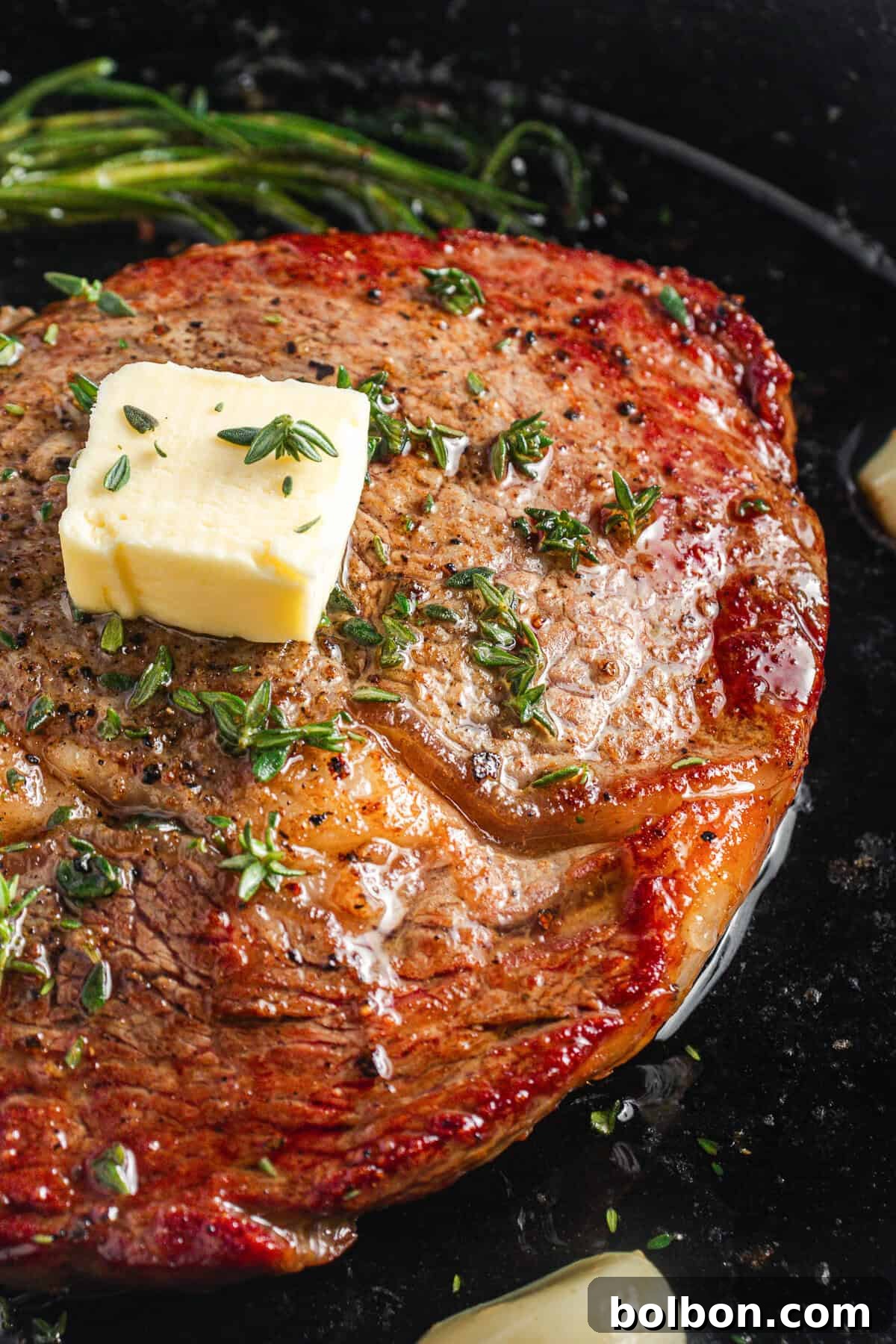
If you’ve ever dreamt of cooking a Ribeye Steak 🥩 so perfect it rivals your favorite steakhouse, then you’ve landed in the right spot! There’s a special kind of magic that happens when a beautifully marbled ribeye hits a sizzling hot pan. It’s not just a meal; it’s an experience – a juicy, tender, medium-rare masterpiece that truly outshines almost any fancy dish. While it might seem deceptively simple, mastering the art of steak cookery is like unlocking a culinary superpower 💥. Whether you’re aiming to impress a loved one on a special occasion or simply treat yourself to an unforgettable meal, these foolproof methods will guide you to flawless steak skills. Prepare to become the talk of the town, because with this guide, you’ll be cooking steak so good, everyone will be craving *yours*!
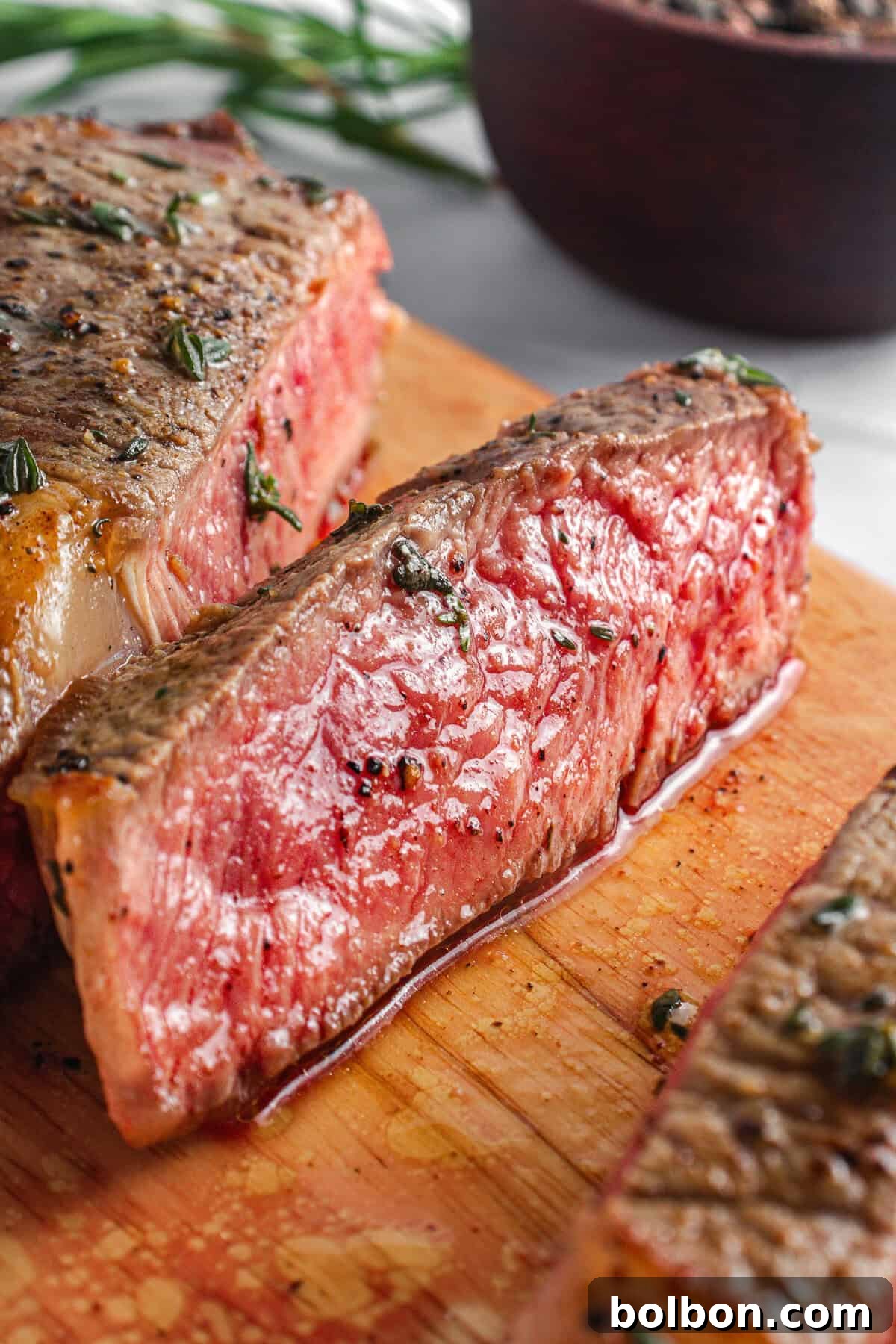
Why This Ribeye Steak Recipe Is a Must-Try
This isn’t just another steak recipe; it’s your definitive guide to achieving steak perfection every single time. It guarantees a perfectly cooked, exceptionally juicy, and incredibly tender steak 🥩, regardless of the cut you choose. We’ll delve into a few simple yet impactful techniques that elevate your ribeye from good to gourmet. Learn how to sear the fat cap to unlock incredible depth of flavor, master the art of basting with aromatic butter and garlic, and discover the critical importance of resting your steak to lock in all those magnificent juices. By following these straightforward steps, you’ll transform into the confident steak master 👩🍳 you were always meant to be. Forget dry, overcooked steak; your culinary creations will be praised for weeks to come, ensuring every bite is a memorable one.
Essential Steps to Prepare Your Perfect Ribeye Steak
The journey to a flawless ribeye begins with thoughtful preparation. Each step is designed to build layers of flavor and ensure an exquisite texture.
-
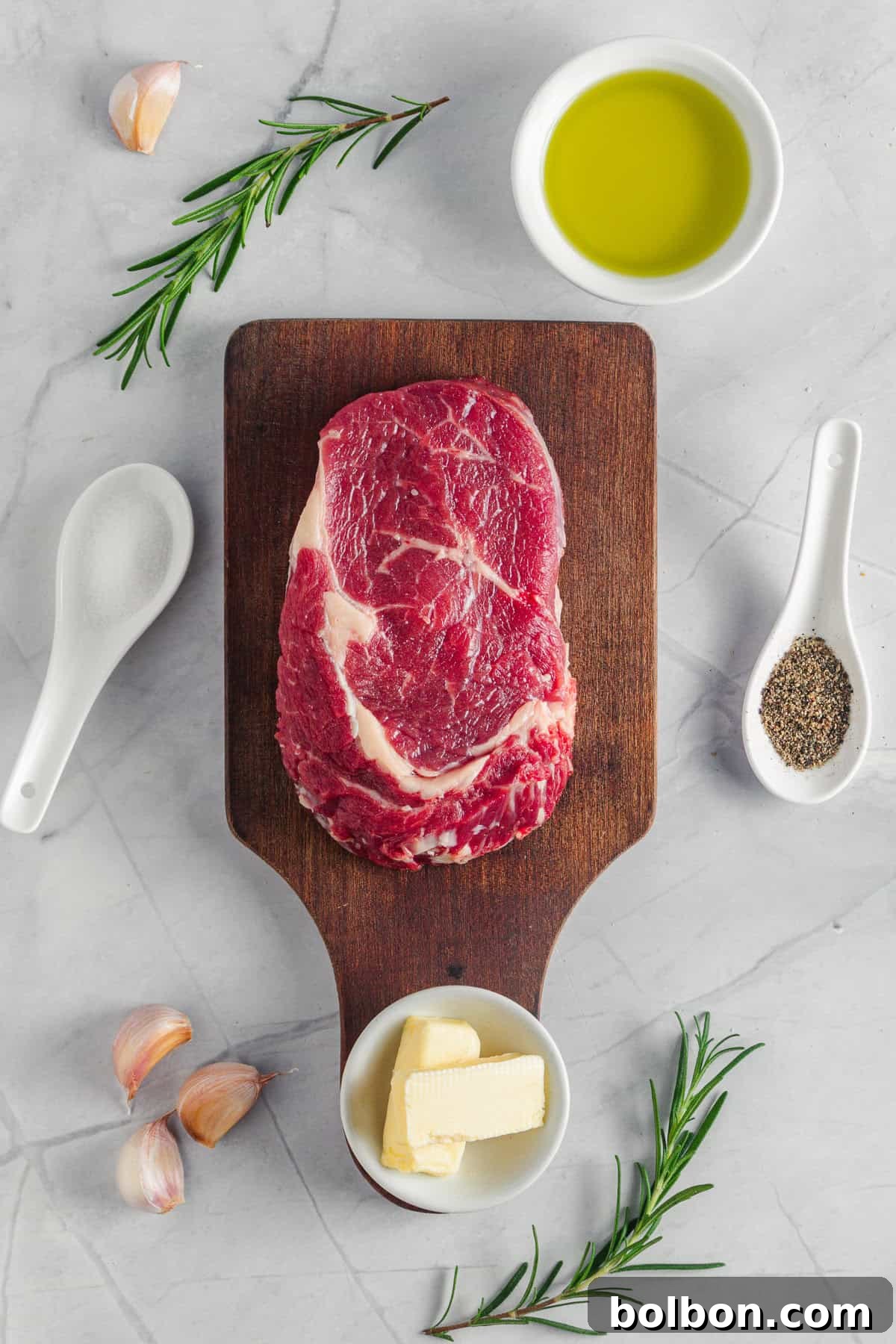
Bring to Room Temperature: Take your ribeye out of the refrigerator at least 30-60 minutes before cooking. Allowing it to reach room temperature ensures more even cooking throughout the steak, preventing a cold center and an overcooked exterior. This crucial step helps in achieving that beautiful medium-rare from edge to edge.
-
Thoroughly Pat Dry: Before seasoning, use paper towels to thoroughly pat both sides of the steak dry. Excess moisture on the surface can prevent a proper sear, leading to a steamed rather than a beautifully crusted exterior. A dry surface is key to developing that irresistible golden-brown crust.
-
Generous Seasoning: Season both sides of your ribeye generously with coarse sea salt or Redmond Real Salt and freshly ground black pepper. For best results, sprinkle the salt from about 10-12 inches above the steak. This technique helps distribute the seasoning more evenly across the surface, ensuring every bite is perfectly flavored. Don’t be shy with the seasoning; a thick steak can handle a good amount.
-
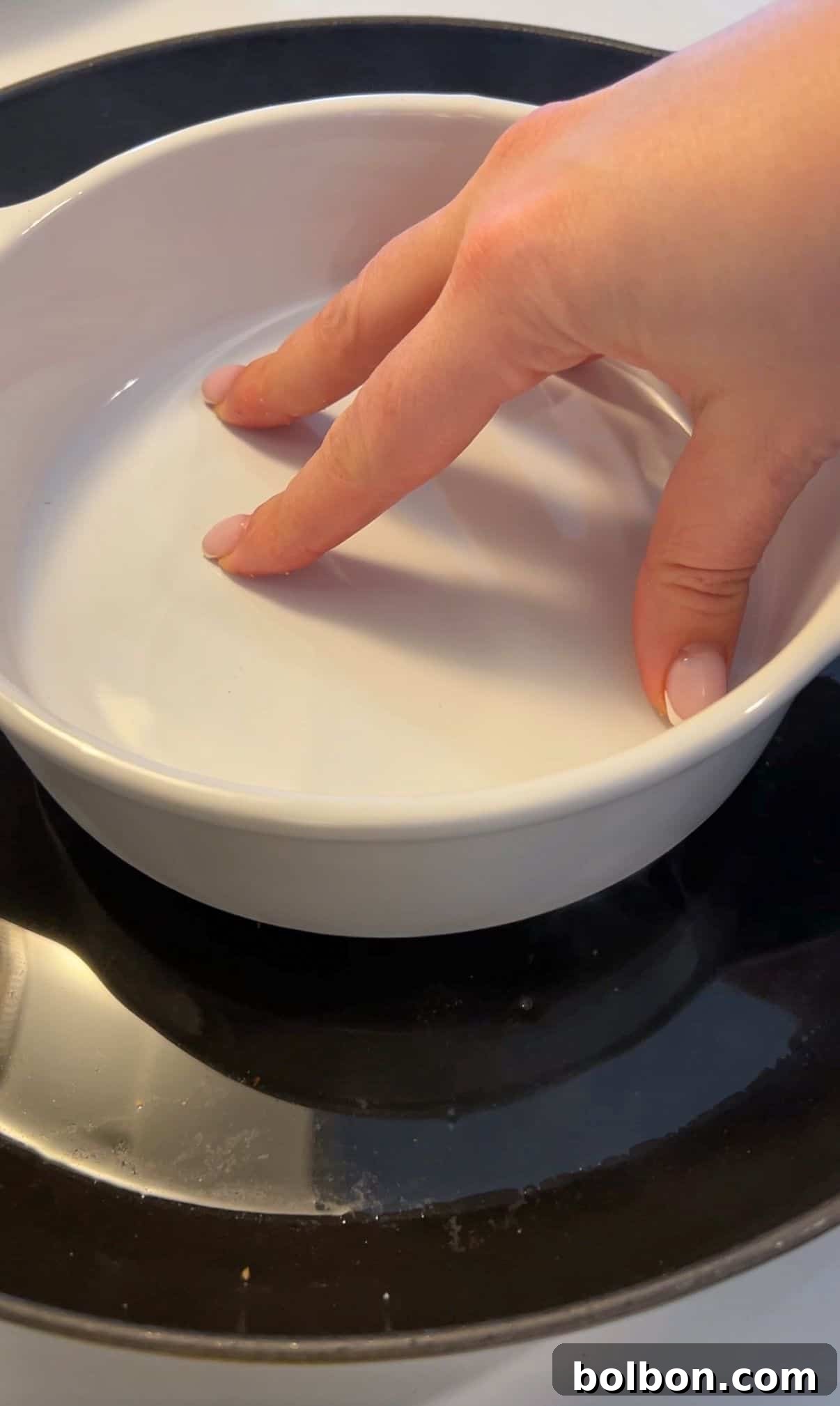
Preheat Your Skillet: Place a cast iron skillet over medium-high heat. Cast iron is preferred for its exceptional heat retention, which is vital for a consistent, high-temperature sear. Add 1-2 tablespoons of avocado oil (or any high smoke point oil like grapeseed or canola). Allow the oil to get smoking hot and shimmering before adding the steak. This hot pan is crucial for achieving a deep, flavorful crust.
-
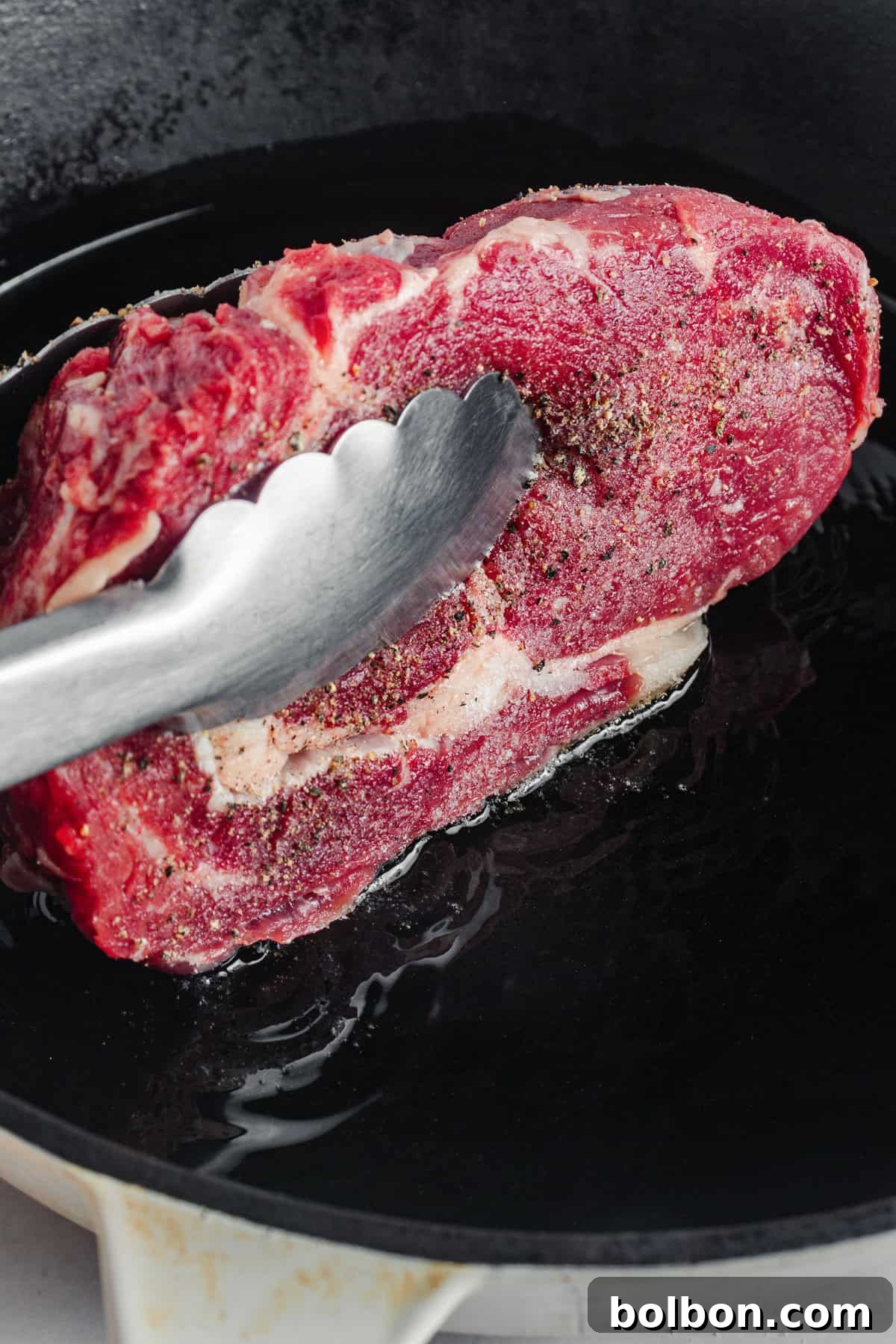
Sear the Fat Cap: Using tongs, carefully hold the ribeye on its side and sear the thick fat cap until it’s beautifully rendered and deeply browned. This step is a game-changer, as the rendered fat adds incredible flavor and richness to the pan, which will later contribute to basting.
-
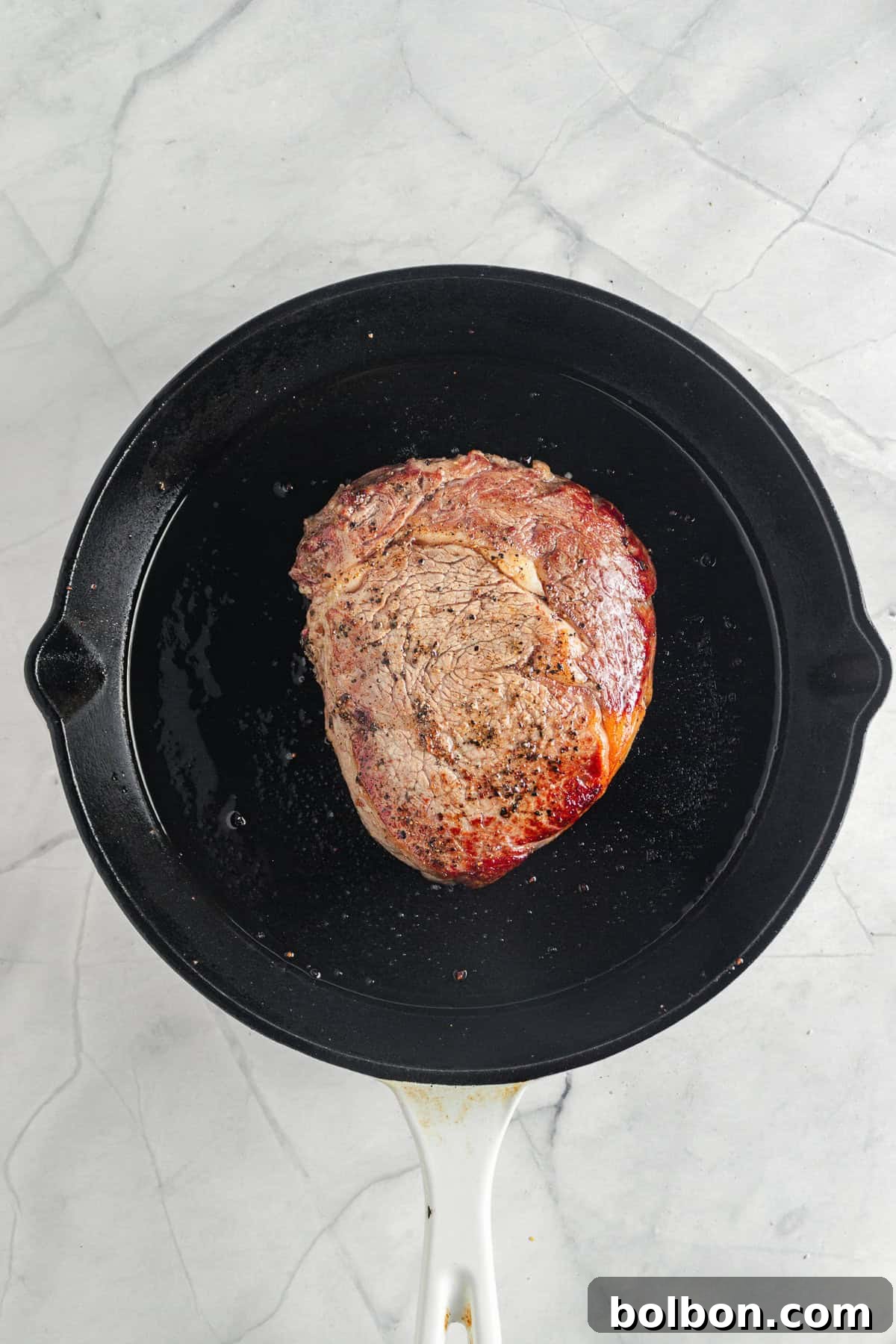
Initial Sear for the Crust: Gently lay the ribeye flat into the hot pan. For an even and deep golden crust, place something heavy on top of the steak, such as a grill press or a heavy-bottomed pot wrapped in foil. This ensures maximum contact between the steak and the hot skillet, promoting the Maillard reaction that creates a savory, crispy crust. Sear for about 2-3 minutes until a rich brown crust forms.
-
Flip and Sear Again: Flip the steak to the other side and sear for another 2-3 minutes. This initial searing on both sides establishes a fantastic crust and starts the cooking process evenly. For thicker steaks, you might do a few more flips every minute or so to ensure even cooking and crust development.
-
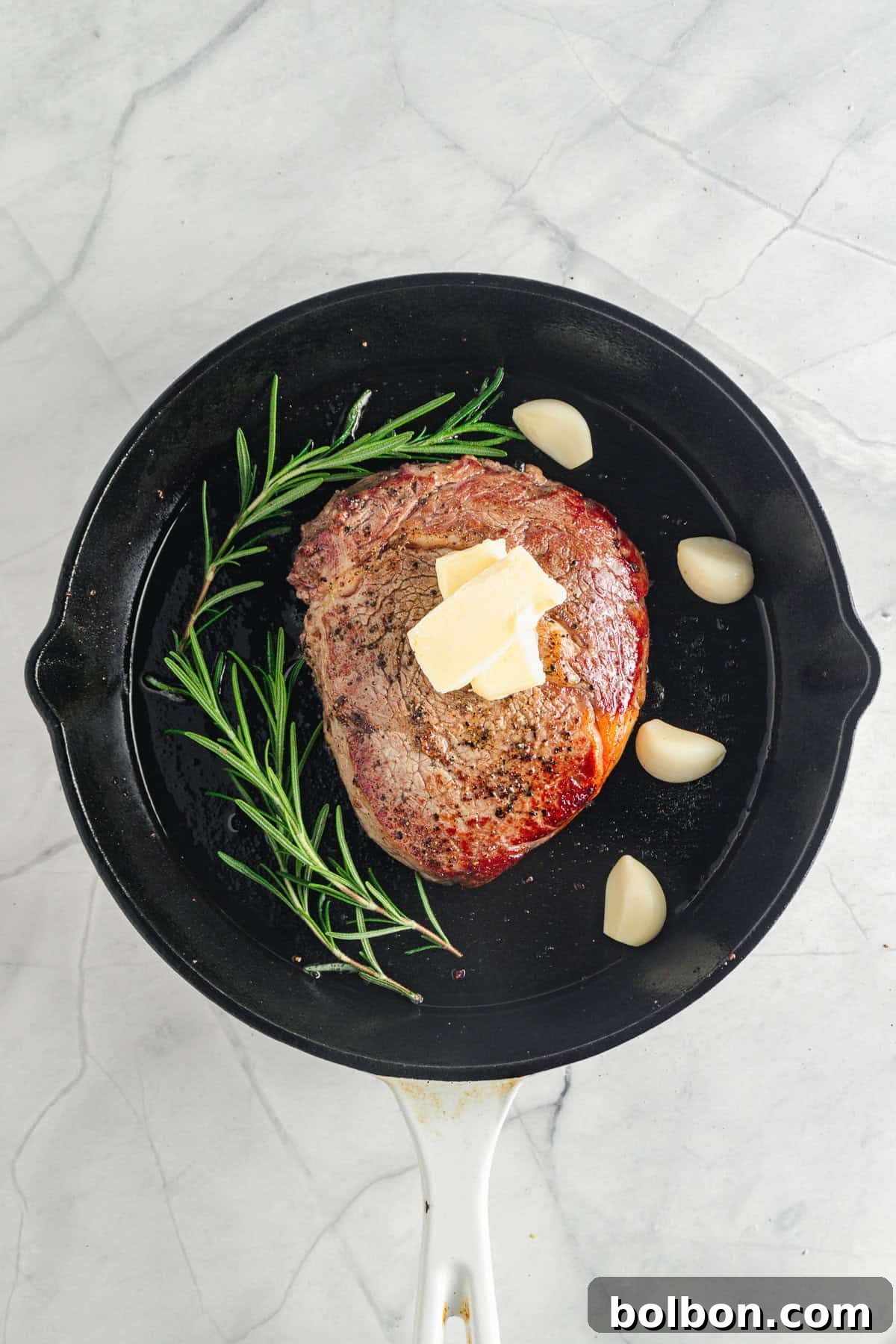
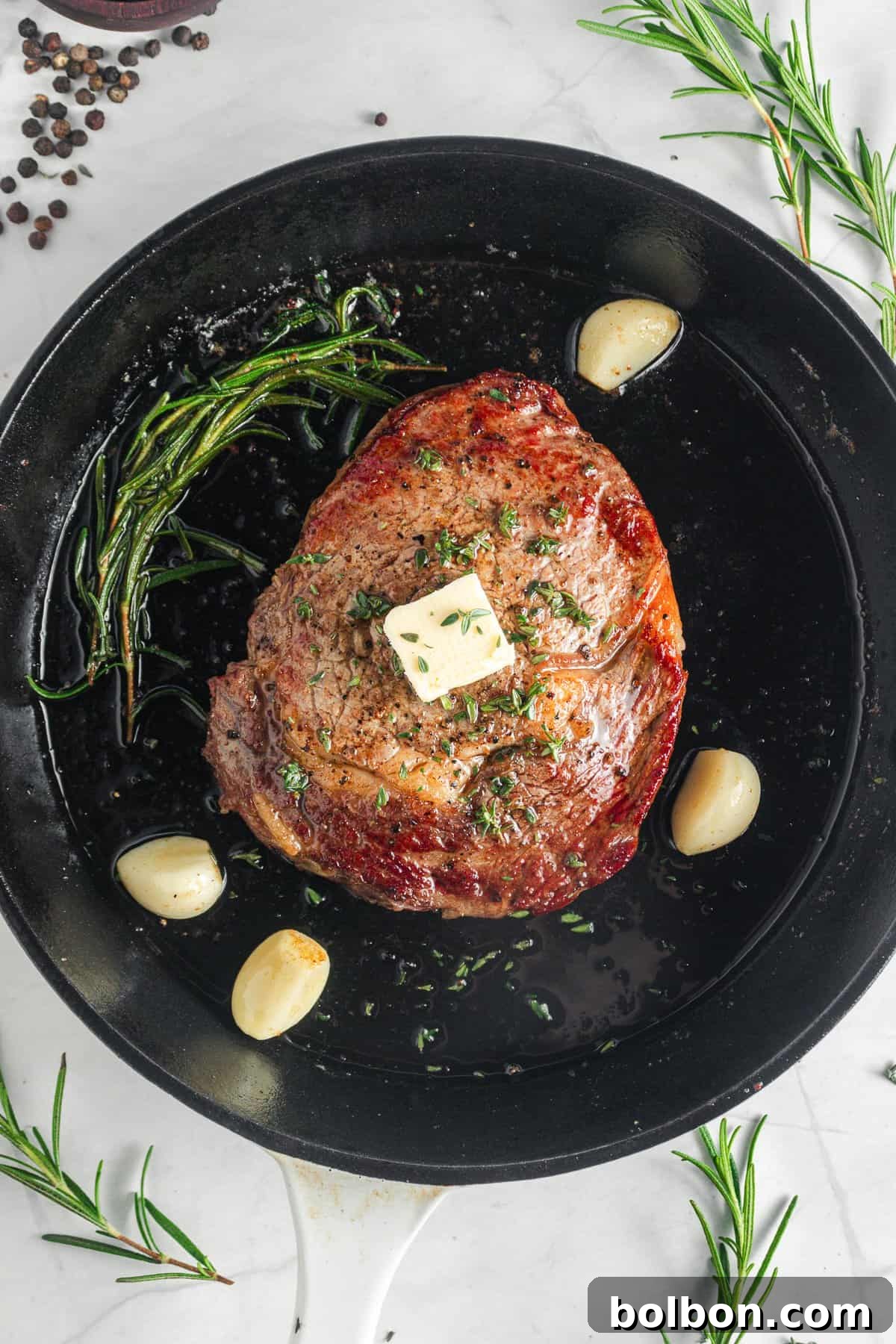
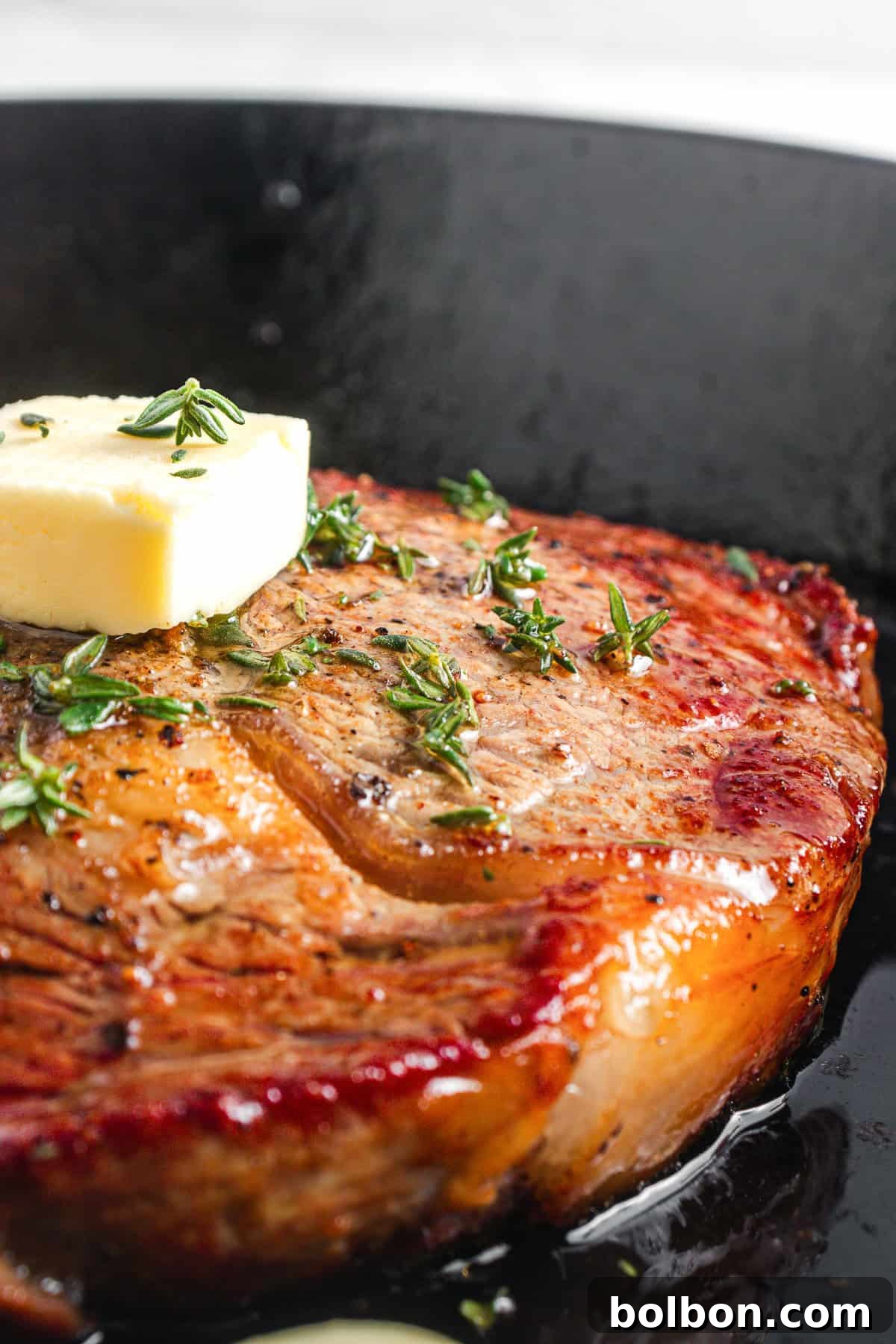
Baste with Flavor: Reduce the heat to low. Add a generous knob of unsalted butter, 4 whole garlic cloves (lightly smashed to release their aroma), and a sprig of fresh rosemary or thyme to the pan. Tilt the pan slightly so the melted butter pools to one side. Using a spoon, repeatedly baste the melted, herb-infused butter over the steak for 1-2 minutes. This coats the steak in incredible flavor, helps create a beautiful golden sheen, and adds a final touch of richness.
-
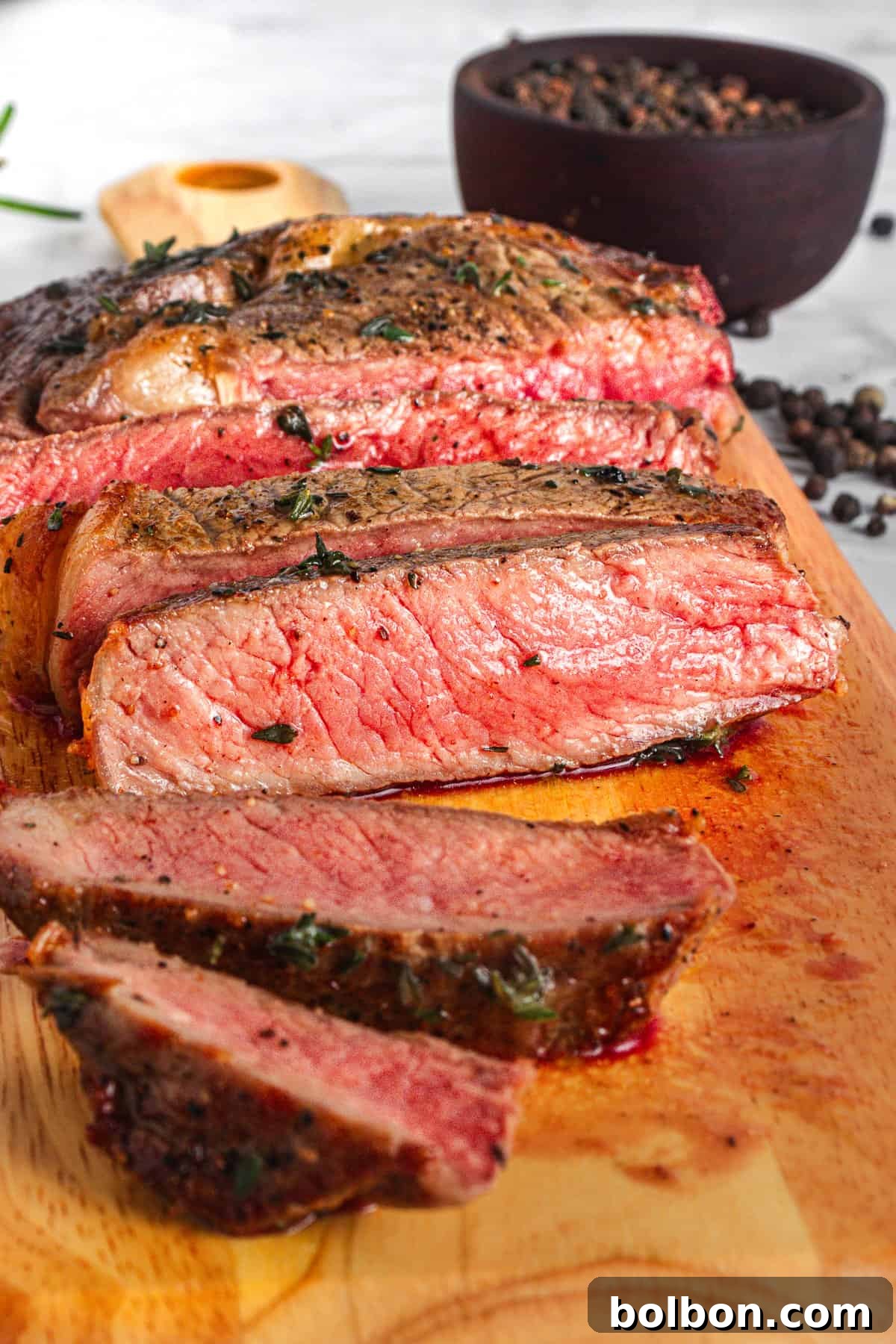
Crucial Resting Period: Immediately remove the steak from the pan and transfer it to a cutting board or plate. Allow it to rest for at least 10 minutes (for thicker steaks, up to 15 minutes) before slicing with a sharp knife. Resting is perhaps the most critical step; it allows the muscle fibers to relax and reabsorb the juices that have migrated to the center during cooking. Cutting too soon will result in a dry steak as all those delicious juices will spill out.
-
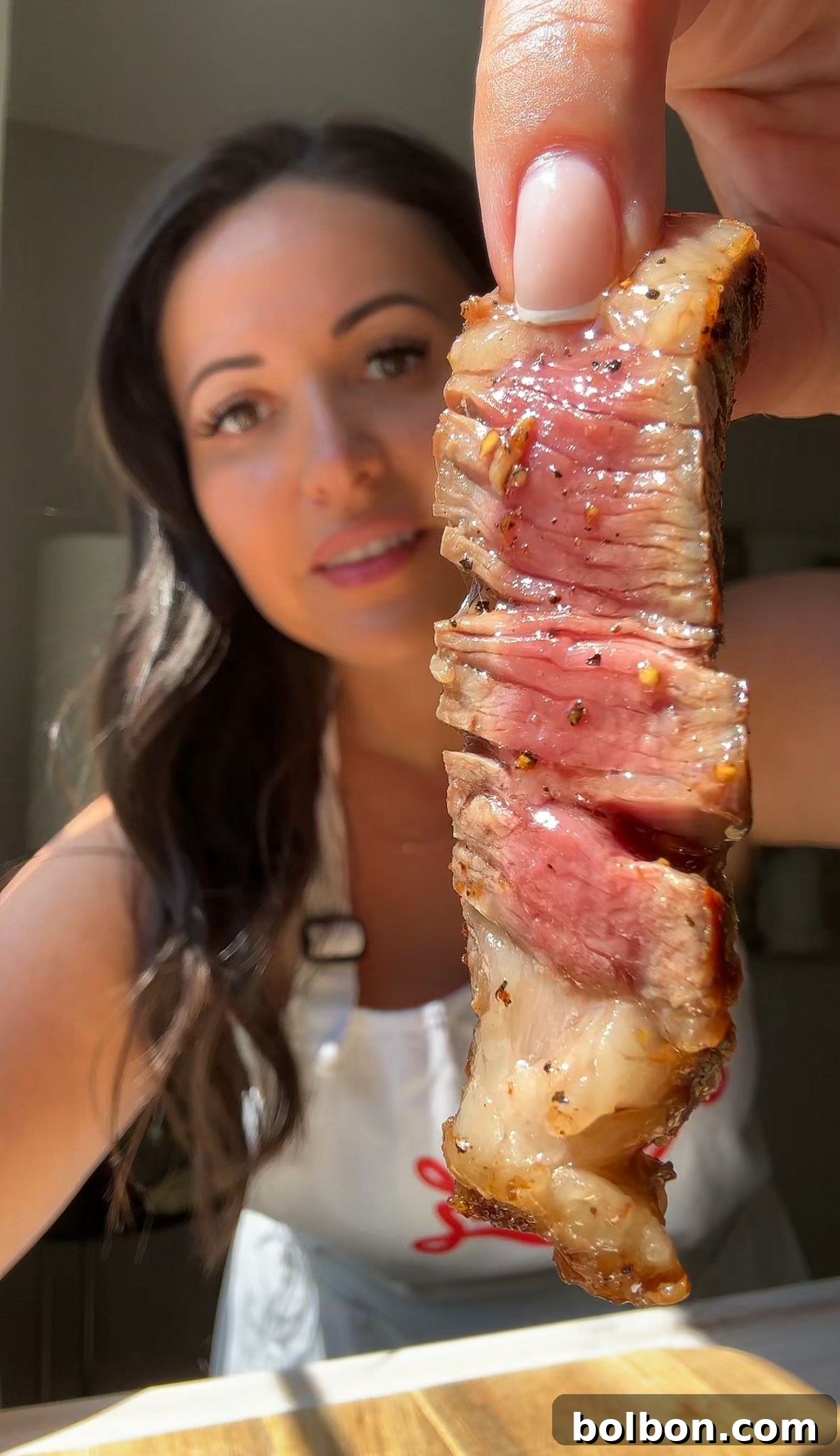
Perfect Doneness (with a Thermometer): For a perfect medium-rare, aim for an internal temperature of 125°F (52°C) when you remove the steak from the pan. Use a reliable meat thermometer for accuracy. Remember, the internal temperature will continue to rise by 5-10°F (3-6°C) as the steak rests, known as carry-over cooking. Adjust your cooking time based on the steak’s thickness and your preferred doneness level.
Nonna’s Tip for Steak Perfection 🥩
Always allow your steak to come to room temperature before cooking. This simple step ensures quicker, more even cooking and contributes significantly to developing that desirable crispy, flavorful crust!
Variations and Substitutions for Your Ribeye Steak Recipe
While ribeye is undoubtedly a magnificent choice, this versatile cooking method can be adapted to various preferences and ingredients.
- Explore Other Cuts: Beyond ribeye, this technique works wonderfully with other premium cuts like New York strip, filet mignon, or T-bone. Each cut has its unique flavor and fat content, so you’ll just need to slightly adjust the cooking time based on its thickness and marbling. Thinner cuts will cook faster, while thicker ones may require a longer total cook time.
- Elevate Your Seasoning: Don’t limit yourself to just salt 🧂 and pepper. Experiment with additional spices such as garlic powder, onion powder, smoked paprika, a pinch of cayenne for heat, or a pre-made steak seasoning blend. Fresh herbs like thyme or oregano can also be incorporated into the basting butter for an extra aromatic kick.
- High-Smoke Point Oils: If avocado oil isn’t available, any oil with a high smoke point will work effectively for searing. Grapeseed oil, canola oil, vegetable oil, or even clarified butter (ghee) are excellent alternatives that can withstand high temperatures without burning and imparting bitter flavors.
- Infuse with Compound Butter: For an even richer, more complex flavor profile, consider using compound butter 🧈. This is butter blended with herbs (like chives, parsley, or rosemary), minced garlic, shallots, or even a touch of blue cheese. Add a dollop of this flavorful butter during the basting stage for an extraordinary finish.
- Alternative Cookware: While a cast iron skillet is highly recommended for its superior heat retention and crust-building capabilities, a heavy-duty stainless-steel pan can also yield excellent results. The key is to ensure it’s adequately preheated to a high temperature before adding the steak. For tips on working with stainless steel, check out our guide: How To Make Stainless Steel Non-Stick!
- Grill Version: To adapt this recipe for the grill, preheat your grill to high heat. Sear the steak over direct high heat for 2 minutes ⏲️ per side to develop those beautiful grill marks and a flavorful crust. Then, move the steak to a cooler, indirect heat zone, close the lid, and continue cooking until it reaches your desired doneness, basting with butter and herbs as you go.
Avoid These Common Steak Cooking Mistakes
Even the finest cuts of steak can be ruined by simple oversights. Steer clear of these common pitfalls to ensure a perfectly cooked ribeye every time!
- Cooking a Cold Steak: This is a cardinal sin in steak cooking. Placing a cold steak directly from the fridge into a hot pan results in uneven cooking. The exterior will overcook while the center struggles to reach temperature, leaving you with an undesirable gradient of doneness. Always let your ribeye come to room temperature first.
- Improper Seasoning Technique: Just dumping salt and pepper onto one spot won’t cut it. For even flavor distribution, sprinkle your seasonings from a higher distance (about a foot above the steak). This allows the salt and pepper to “rain” down, covering the entire surface uniformly.
- Skipping the Weight Trick: The simple act of placing a heavy object on top of your steak during the initial sear is a game-changer. It maximizes contact with the hot pan, ensuring a consistent, deep, and gorgeous crust – the hallmark of a perfectly pan-seared steak.
- Not Allowing It to Rest: Patience is a virtue, especially after cooking a steak. Cutting into your steak immediately after removing it from the pan will cause all the precious juices to flood out onto the cutting board, leaving your steak dry and less flavorful. Allow it to rest for at least 10 minutes to reabsorb the juices, ensuring a tender and moist result.
- Guessing Doneness: Relying solely on touch or visual cues can be unreliable, especially for beginner cooks. If you’re aiming for a specific doneness like medium-rare, precision is key. Invest in a reliable meat thermometer. It’s your best friend for achieving the exact internal temperature you desire, accounting for carry-over cooking.
Similar Recipes to Inspire You
Carne Asada Recipe
Total Time: 8 hrs 16 mins
How To Make Stainless Steel Non Stick
Total Time: 5 mins
Best Burger Recipe
Total Time: 18 mins
Copycat Carbone Spicy Rigatoni
Total Time: 25 mins
Ribeye Steak Recipe Is Best Served With
A perfectly cooked ribeye deserves equally impressive accompaniments. Here are some ideal pairings to complete your meal:
- Potatoes, Please! Steak 🥩 and potatoes 🥔 are an iconic duo for a reason. Complement your juicy ribeye with tangy Greek Lemon Potatoes, rich and creamy Roasted Garlic Mashed Potatoes, or wholesome Roasted Sweet Potatoes for a comforting and satisfying meal.
- Vibrant Grilled Veggies: Create a hearty and balanced plate by serving sliced ribeye strips atop a bed of rustic Grilled Veggies. The smoky char of the vegetables provides a fantastic contrast to the rich steak.
- Surf & Turf Extravaganza: Elevate your dinner to a luxurious surf & turf feast by pairing your ribeye with this exquisite Coconut Shrimp Recipe.
- Sweet Endings: No magnificent meal is complete without a delightful dessert. Our Easy Moist Chocolate Cake Recipe is the ultimate sweet finish to a decadent steak dinner!
Common Questions About Cooking Ribeye Steak
A meat thermometer is your ultimate secret weapon to cooking steak like a 👩🍳 chef! It eliminates guesswork and helps you achieve that perfect doneness every single time. Trust me, this often-underrated tool will consistently elevate your steak game to an entirely new level of precision and deliciousness!
Yes, you can, but a cast iron skillet is highly recommended as it retains heat exceptionally well and creates a superior, more even crust. If you opt for a stainless steel pan, ensure it’s heavy-bottomed and properly preheated to achieve a good sear. For tips on making your stainless steel pan more effective, refer to: How To Make Stainless Steel Non-Stick!
Achieving your preferred doneness is easy with a meat thermometer:
- Rare: 120-125°F (49-52°C)
- Medium-Rare: 125-130°F (52-54°C)
- Medium: 135-145°F (57-63°C)
- Medium-Well: 145-155°F (63-68°C)
- Well Done: 160°F+ (71°C+)
For medium-rare, remove the steak when it reaches 125°F (52°C), as its internal temperature will continue to rise by 5-10°F (3-6°C) while resting.
Searing the fat cap is a crucial step that renders the fat, allowing it to melt and impart incredible flavor into the pan, which then bathes the steak. This also helps create a delicious, crispy edge around the steak, adding texture and taste.
Always use a high smoke point oil for searing to prevent it from burning and imparting off-flavors to your steak. Excellent choices include avocado oil, grapeseed oil, canola oil, or vegetable oil. These oils can withstand the high heat necessary for a proper sear.
Absolutely! For a grilled version, preheat your grill to high heat. Sear the steak directly over the flames for approximately 2 minutes ⏲️ on each side to create a beautiful crust and sear marks. Then, move it to a cooler, indirect heat zone on the grill and continue cooking until it reaches your desired doneness, basting with butter and herbs as you cook.
Pan-Seared Ribeye Steak Recipe
This Ribeye Steak Recipe is designed to be the only steak recipe you’ll ever need. It guarantees a perfectly cooked, incredibly juicy, and tender steak 🥩 every time, no matter the cut. Master the art of searing and basting for steakhouse-quality results at home!
Facebook Share
Rate Recipe
Print Recipe
Equipment
Ingredients
- 1 ribeye steak (mine was 12 ounces)
- Salt + pepper (to taste)
- 1 tablespoon avocado oil (or any high smoke point oil)
- 2 tablespoons butter
- 4 whole garlic cloves
- 1 sprig rosemary
Instructions
- Remove the steak from the fridge and let it come to room temperature (30-60 minutes). Pat it thoroughly dry with paper towels. Generously season both sides with salt and pepper, sprinkling from higher above for even distribution.
- Heat a cast iron skillet over medium-high heat. Add 1-2 tablespoons of avocado oil. Let the oil heat until it’s shimmering and just starting to smoke lightly.
- Using tongs, hold the steak on its side and sear the fat cap until it’s beautifully browned and rendered. This usually takes 1-2 minutes.
- Lay the steak flat in the pan. Place a heavy object (like a grill press or a heavy pot) on top to ensure maximum contact. Sear for about 2-3 minutes until a deep, golden crust forms. Flip the steak and sear the other side for another 2-3 minutes (for medium-rare).
- Lower the heat to low. Add the butter, whole garlic cloves, and rosemary sprig to the pan. Tilt the pan slightly and continuously spoon the melted, aromatic butter over the steak, basting repeatedly for 1-2 minutes.
- Remove the steak from the pan and immediately transfer it to a cutting board. Let it rest for at least 10 minutes before slicing. Resting allows the juices to redistribute, ensuring a moist and tender steak.
- For a medium-rare steak, the internal temperature should read 125°F (52°C) with a meat thermometer before resting. Remember, the temperature will rise by another 5-10°F (3-6°C) while the steak rests. Adjust cooking time for your desired doneness.
- Slice against the grain and enjoy your perfectly seared ribeye! 🔥🥩
Expert Notes & Tips
Nutritional Info: The nutritional information provided is an approximation, as one 12oz ribeye typically has around 1200 calories. For precise calculations, please weigh and measure your ingredients and input them into a nutritional tracking app.
Steak Temperature: For medium-rare, aim for an internal temperature of 125°F (52°C) before resting, as it will continue to rise by 5-10°F (3-6°C). Use a meat thermometer and cook longer if you prefer medium or medium-well.
Key Steak Tips for Success:
- Always let the steak reach room temperature before cooking.
- Pat the steak very dry and season generously from a higher distance.
- Sear off the fat cap first for extra flavor.
- Crucially, allow the steak to REST once it’s out of the pan.
Doneness Guide:
- Rare: 120-125°F (49-52°C)
- Medium-Rare: 125-130°F (52-54°C)
- Medium: 135-145°F (57-63°C)
- Medium-Well: 145-155°F (63-68°C)
- Well Done: 160°F+ (71°C+)
Nutrition
Nutrition information is automatically calculated, so should only be used as an approximation.
Additional Info
