
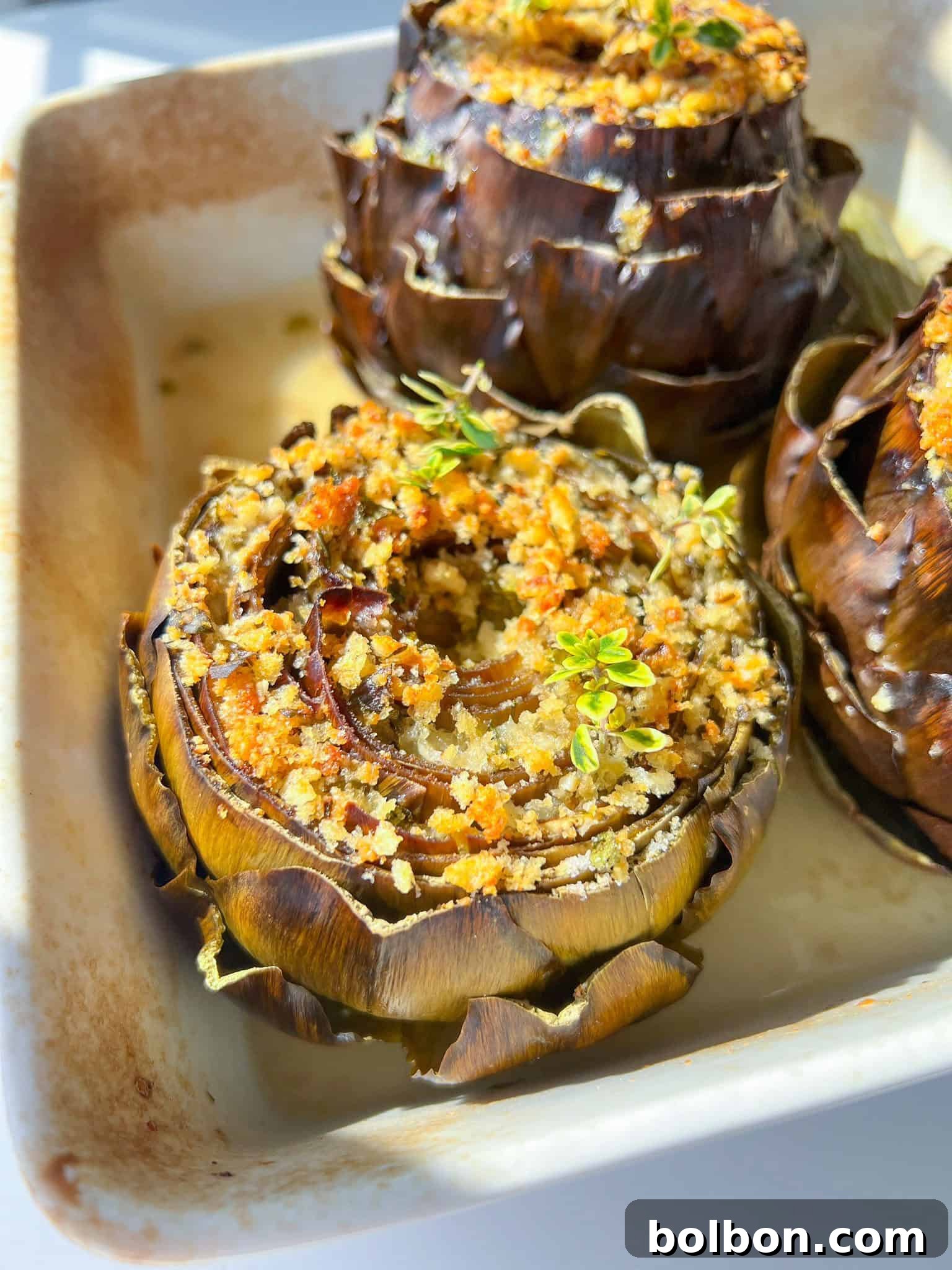
In the heart of Italian culinary tradition, where food is synonymous with love and family, few dishes capture the essence quite like baked stuffed artichokes. These majestic thistles, often seen as an intimidating vegetable, transform into a tender, flavorful masterpiece when prepared with care and an authentic Italian touch. More than just an appetizer, each meticulously prepared leaf offers a delightful journey, inviting you to savor every bite until you reach the highly anticipated, succulent heart.
Artichokes hold a special place in Italian kitchens, cherished for their unique taste and versatility. From Roman-style fried artichokes (carciofi alla giudia) to simple steamed varieties with a drizzle of olive oil, Italians celebrate this beloved vegetable in countless ways. Yet, for many outside this culinary heritage, the artichoke remains a mystery. The common questions persist: how do you properly cut it? How do you clean it? And perhaps most perplexing, how do you eat it? It’s a challenge I understand well, and one I’m thrilled to demystify with this absolute best and most foolproof method for creating Italian Stuffed Artichokes.
This recipe promises a truly unforgettable experience. We’ll guide you through the process of selecting, trimming, and cleaning fresh artichokes, before generously stuffing them with a rich, aromatic breadcrumb and Parmesan mixture. Baked to perfection, these stuffed artichokes emerge from the oven golden and tender, their savory filling creating an irresistible aroma that will have everyone eagerly awaiting their turn. While the exquisite artichoke heart is often considered the grand prize, the individual leaves, when gently scraped with your teeth, deliver a tender morsel, especially when dipped in warm, melted butter. This dish is not just food; it’s an interactive, delicious ritual.
Before diving into the recipe, it’s essential to understand the anatomy of an artichoke. The key to enjoying this vegetable lies in knowing which parts are edible and which are not. The innermost, soft leaves and the fleshy base of each leaf are utterly delicious. The ultimate culinary reward is the artichoke heart, also known as the bottom, which is the tender, meaty core from which all the leaves sprout. However, there are a few parts to avoid. The most crucial inedible portion is the hairy “choke” located directly above the heart. This fibrous layer must be completely scooped out before cooking. Additionally, the sharp, rigid tips of the leaves and the very toughest outer leaves should be trimmed and discarded to ensure a pleasant eating experience. With this guidance, you’re well on your way to mastering the art of artichoke preparation.
Irresistible Italian Stuffed Artichokes
Facebook Share
Rate Recipe
Print Recipe
Appetizer
Italian
3
The Modern Nonna
20
1
1 20
Video
Ingredients
-
1 lemon -
3 large artichokes, freshly trimmed and thoroughly cleaned (refer to detailed notes below for preparation) -
1 cup Italian breadcrumbs, for the most authentic flavor, consider using homemade Italian Breadcrumbs -
½ cup grated Parmigiano Reggiano cheese -
3 large garlic cloves, minced -
2 to 3 tablespoons extra virgin olive oil for the breadcrumbs, plus additional for baking the artichokes -
¼ cup finely chopped fresh parsley -
1 cup water -
½ cup dry white wine, a Pinot Grigio or Sauvignon Blanc works beautifully -
Fine sea salt, to taste -
Melted butter, for serving
Instructions
-
Begin by preheating your oven to a steady 400°F (200°C). This ensures the oven is at the optimal temperature when your artichokes are ready to bake, leading to perfectly cooked results.
-
Prepare a large bowl of cold water with the juice of one lemon squeezed into it. This crucial step prevents the cut artichokes from oxidizing and turning brown, preserving their fresh appearance.
-
To prepare each artichoke, first, slice off the stem at the base so that the artichoke can sit flat without wobbling. You can also remove the very toughest, outermost leaves from the bottom, as these tend to be too fibrous to enjoy. Interestingly, the stems are also edible; you can peel them and bake them alongside the artichokes for an extra treat!
-
Next, using a sharp chef’s knife, carefully cut about one-third off the top (pointy end) of the artichoke. Then, with kitchen shears, snip off the sharp, thorny tips from all the remaining leaves. This makes the artichokes much safer and more pleasant to handle and eat. Discard all the trimmed pieces.
-
Gently spread open the artichoke leaves with your hands. This process helps create space between the leaves, allowing for a more even distribution of the delicious stuffing and ensuring every part gets beautifully flavored.
-
Now for the “choke” removal: using a small spoon (a melon baller or grapefruit spoon works wonders), carefully scoop out the fuzzy, hairy center known as the “choke.” This part is completely inedible. Continue to scoop until all the fuzz is gone and you reveal the pale, smooth, and tender artichoke heart at the bottom.
-
Immediately place the cleaned artichoke, upside down, into the prepared bowl of lemon water. This will prevent any discoloration. Repeat the cleaning process for the remaining artichokes. While they are soaking, it’s the perfect time to prepare your flavorful stuffing.
-
In a separate mixing bowl, combine the Italian breadcrumbs, grated Parmigiano Reggiano cheese, minced garlic, 2 to 3 tablespoons of olive oil, and the finely chopped fresh parsley. Mix these ingredients thoroughly until they are well combined and the mixture is moist and fragrant.
-
Once your breadcrumb mixture is ready, remove the cleaned artichokes from the lemon water. Place them upside down on a clean kitchen towel or several layers of paper towels for 1 to 2 minutes to allow any excess water to drain. This ensures the stuffing adheres properly and prevents the artichokes from becoming soggy.
-
Arrange the drained artichokes in a baking dish, stem side down. With a small spoon, carefully nestle the savory breadcrumb mixture in between the individual leaves. You can gently pull back the leaves with your fingers to create more space for the filling, ensuring each one gets a generous amount.
-
Continue adding stuffing into the middle cavity and throughout as many leaves as possible. Once all artichokes are stuffed, pour the water and white wine into the base of the baking dish, being careful not to pour directly onto the stuffed artichokes. This liquid will create steam, helping the artichokes cook tenderly from the inside out and infuse them with delicate flavor.
-
Lightly season the tops of the stuffed artichokes with a pinch of salt, then drizzle each one generously with a little extra olive oil. This promotes a beautiful golden-brown crust. Cover the baking dish tightly with aluminum foil to trap the steam and ensure even cooking.
-
Bake the covered artichokes for 30 minutes. After this initial baking period, remove the foil and continue to bake uncovered for another 30 minutes, or until the tops are golden brown and slightly crispy. To check for doneness, you should be able to easily insert a small knife into the base of a leaf with little to no resistance.
-
Carefully remove the baking dish from the oven. Serve these magnificent Italian Stuffed Artichokes immediately, accompanied by a small bowl of warm, melted butter for dipping. To eat, pull off each leaf, dip the fleshy end into the butter, and scrape the tender portion off with your front teeth. While some outer leaves might be slightly tougher, the interior leaves and the grand artichoke heart at the bottom will be wonderfully tender and packed with flavor.
-
Enjoy your culinary masterpiece! These artichokes are best served fresh, but any leftovers can be refrigerated for up to four days and gently reheated in the oven for continued enjoyment.
Notes
Understanding Edible Parts of the Artichoke: A common point of confusion for new artichoke eaters is distinguishing between edible and non-edible parts. As detailed in the instructions, the only truly inedible part is the fuzzy, hairy “choke” inside the center, which must be completely removed. Additionally, the very toughest, outermost leaves and the sharp, thorny tips of the remaining leaves should be discarded after trimming. The tender, fleshy base of each leaf is what you scrape off and enjoy, leading you to the ultimate prize: the succulent and meaty artichoke heart.
Breadcrumb Selection: This recipe truly shines with high-quality Italian breadcrumbs. For a truly authentic and flavorful experience, I highly recommend using my homemade Italian Breadcrumbs recipe. However, feel free to use your favorite store-bought Italian breadcrumbs if that is more convenient. The key is to ensure they are seasoned well.
The Joy of Eating Artichoke Leaves: While the primary “meat” of the artichoke is found in its magnificent heart (the bottom part where all leaves are attached), do not underestimate the pleasure of eating the individual leaves! Each leaf offers a small, tender morsel at its base. To enjoy, pull off a leaf, dip the fleshy end into some melted butter (or even the pan juices!), and gently scrape the soft portion with your upper teeth. It’s a delightful process that adds to the overall experience of this traditional Italian dish.
Nutrition
Carbohydrates: 46g,
Protein: 17g,
Fat: 16g,
Saturated Fat: 5g,
Polyunsaturated Fat: 2g,
Monounsaturated Fat: 9g,
Cholesterol: 12mg,
Sodium: 933mg,
Potassium: 686mg,
Fiber: 10g,
Sugar: 5g,
Vitamin A: 653IU,
Vitamin C: 43mg,
Calcium: 353mg,
Iron: 5mg
Nutrition information is automatically calculated and should be used as an approximation only. Individual results may vary based on specific ingredients and preparation.
Additional Tips for Stuffed Artichokes
Perfect as an elegant Appetizer or a hearty Side Dish.
Classic Italian Family Recipe
For an extra burst of flavor, consider adding a pinch of red pepper flakes to your breadcrumb mixture for a subtle heat. You can also experiment with different fresh herbs like oregano or basil, finely chopped, to complement the parsley. Some home cooks also like to add a tablespoon of grated Pecorino Romano for a sharper, saltier kick alongside the Parmigiano Reggiano.
Ensuring your artichokes are fresh is key to this recipe’s success. Look for artichokes that feel heavy for their size, have tightly packed leaves, and make a squeaking sound when squeezed. Avoid any with brown spots, dried-out tips, or leaves that are significantly spread open, as these are signs of an older artichoke.