
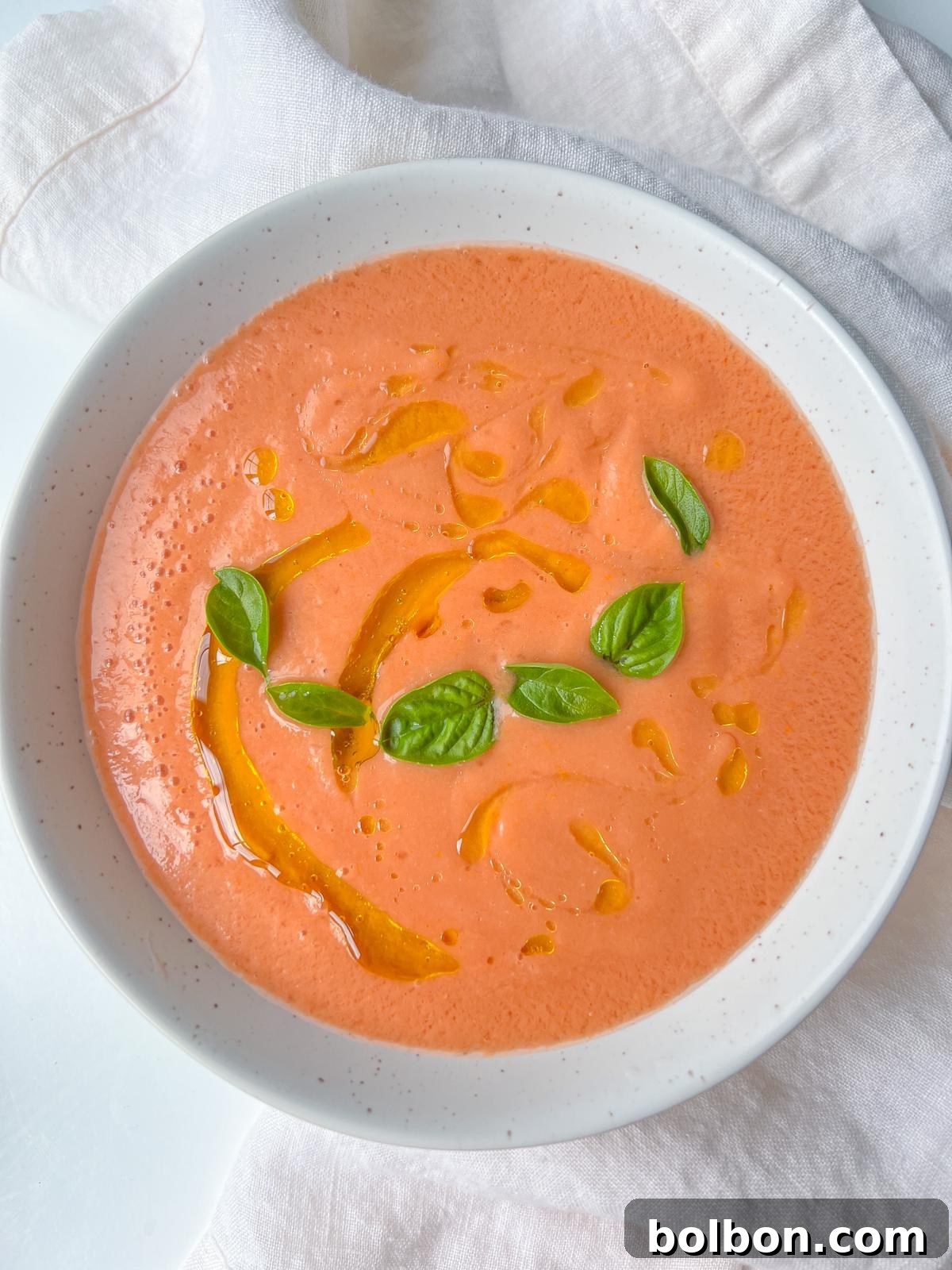
When the sun shines brightest and tomatoes are at their peak, there’s one dish that truly captures the essence of summer: Gazpacho. This vibrant, refreshing, and incredibly healthy soup is more than just a meal; it’s a celebration of fresh produce, a testament to simple elegance, and an absolute must-have in your culinary repertoire. Imagine gathering the juiciest, sun-ripened tomatoes 🍅 from your garden or local market, pairing them with a few other garden-fresh ingredients, and, with the magic of your blender, crafting a gorgeous, flavourful meal in mere minutes.
Gazpacho effortlessly combines visual appeal with delightful simplicity. It looks and feels so special, especially when artfully garnished with a swirl of rich olive oil, a sprinkle of flaky sea salt, crunchy homemade croutons, and fragrant fresh herbs 🌿. Yet, behind its sophisticated presentation lies a preparation process that is remarkably simple and quick. This makes it the quintessential dish for almost any occasion: whether you’re hosting a lively summer gathering, preparing a light and nutritious lunch for the week, or seeking a cool, no-cook solution when the kitchen heat is simply unbearable.
Discover the Allure of Gazpacho: A Taste of Spanish Summer
For those new to its charm, gazpacho is essentially a luxurious summer tomato salad reimagined in a velvety soup form, traditionally served chilled or at room temperature. Its origins trace back to the sun-drenched landscapes of Spain 🇪🇸 and Portugal 🇵🇹, where it began as a humble, nourishing meal for shepherds. Early versions were famously resourceful, often incorporating a small amount of stale bread to provide a satisfying thickness and a hint of sherry vinegar for its characteristic tartness, relying on just a few basic ingredients with tomatoes providing a burst of essential freshness.
Over centuries, gazpacho evolved from its rustic roots into the diverse and beloved dish we know today. Modern recipes frequently feature an expanded array of fresh vegetables, enriching its flavour and nutritional profile. It’s common to find additions like crisp cucumber, pungent onion, aromatic garlic, and various fresh herbs enhancing the foundational tomato base. Each region, and even each family, often boasts its unique rendition, making gazpacho a truly dynamic culinary experience.
It’s important to distinguish gazpacho from a similar, equally delightful dish: Salmorejo. Hailing specifically from Southern Spain, Salmorejo shares many similarities but is notably thicker and creamier. This enhanced texture comes from its heavier reliance on stale bread 🥖 and tomatoes 🍅, which form its core, often without the inclusion of other fresh vegetables like those found in more contemporary gazpacho recipes. Both are exquisite examples of Spanish culinary heritage, but their distinct textures offer different sensory experiences – gazpacho being lighter and more fluid, Salmorejo offering a rich, almost dip-like consistency.
Beyond its refreshing taste, gazpacho is a nutritional powerhouse. Packed with raw vegetables, it’s an excellent source of vitamins, antioxidants, and hydration, making it a fantastic addition to any healthy diet. Its vibrant flavors are a direct result of using peak-season ingredients, ensuring a maximum nutritional punch and an unforgettable taste that will have you coming back for more.
Crafting Your Perfect Gazpacho: A Simple Guide
Creating your own homemade gazpacho is a surprisingly straightforward process that yields incredibly rewarding results. The key lies in selecting the freshest, most flavourful ingredients, which truly shine in this raw preparation. Here’s a step-by-step guide to achieving gazpacho perfection:
🍅 **Step 1: Gather & Combine Ingredients**
Begin by adding your carefully selected ingredients to a blender. This includes ripe tomatoes (Roma, heirloom, or any sweet garden variety are excellent choices), peppers (Cubanelle or bell peppers for a milder flavour), crisp cucumber, a quarter of a red onion for a subtle bite, a clove of garlic for depth, and if you appreciate a touch of heat, a deseeded jalapeño. Drizzle in a generous amount of high-quality olive oil, add your preferred vinegar (red wine or sherry vinegar work beautifully), and season lightly with salt to start. Remember, the quality of your olive oil and vinegar will significantly impact the final taste, so opt for the best you can find.
**Step 2: Blend to Perfection**
Secure the lid on your blender and process everything on medium-high speed for approximately 1 to 2 minutes. The goal is to achieve a wonderfully smooth and homogenous consistency. Take a moment to observe the texture; if the gazpacho appears too thick for your liking, you can easily thin it out by adding about 1/2 cup of cold filtered water, a little at a time, until it reaches your desired pourable consistency.
🥖 **Step 3: Optional Thickness & Refinement**
For those who prefer a slightly richer, more substantial gazpacho, here’s an optional twist: introduce a piece of stale bread (a slice of baguette works wonders) into the blended mixture. Allow it to soak for about a minute, absorbing the vibrant flavours, then blend again until the bread is fully incorporated and the soup is thickened. This traditional method adds a beautiful creaminess without dairy. After blending, taste the gazpacho and adjust the seasoning as needed. This is your chance to balance the salt, acidity, and any optional spice to your preference.
To achieve an impeccably smoother texture, especially if you used bread or prefer a restaurant-quality consistency, carefully pour the mixture through a fine-mesh sieve. This step removes any remaining bits of skin or seeds, resulting in an incredibly silken soup that is pure luxury on the palate.
❄️ **Step 4: Chill & Serve**
Once you are satisfied with the flavour and texture, the most crucial step for gazpacho is to refrigerate it. It needs to chill thoroughly for at least 2-4 hours, or ideally overnight. This chilling period allows the flavours to meld beautifully and intensify, transforming it into the truly refreshing experience it’s meant to be. When it’s time to serve, ladle the perfectly chilled gazpacho into bowls. Enhance its presentation and flavour with a final drizzle of premium olive oil, a scattering of fresh basil leaves (or other fresh herbs), and a side of crunchy croutons or a hearty slice of fresh sourdough bread. Enjoy this delightful summer staple!
The Modern Nonna’s Tip for Gazpacho Perfection
One of the beautiful things about gazpacho is its adaptability. You are the chef, and you can make this soup as thick or as thin as you desire! For a more robust, thicker soup, consider increasing the quantity of stale bread blended into the mixture. The bread acts as a natural thickener, providing a heartier consistency. Conversely, if you prefer a lighter, more refreshing soup, simply use more cold filtered water to achieve a thinner, more pourable texture. Don’t be afraid to experiment to find your ideal balance!
Unleashing Creativity: Variations and Substitutions for Your Gazpacho
Gazpacho, while delicious in its classic form, is also a fantastic canvas for culinary creativity. Its simple base welcomes a myriad of additions and substitutions, allowing you to tailor it perfectly to your taste and available ingredients. Here are some ideas to inspire your gazpacho adventures:
- **Adjusting the Heat:** The original recipe includes jalapeño for a subtle kick. If you’re not a fan of spice, feel free to omit it entirely. For a gentler, sweeter pepper flavour, you can replace the jalapeño with a small amount of sweet bell peppers (red, yellow, or orange) – they add vibrant colour and a mild sweetness without any heat. For those who crave more fire, a pinch of cayenne pepper or a dash of hot sauce can elevate the spice level.
- **Vinegar Choices:** Traditional gazpacho often features sherry vinegar, known for its complex, nutty notes. If sherry vinegar isn’t readily available or you prefer an alternative, red wine vinegar is an excellent substitute, offering a bright tanginess. Other great options include apple cider vinegar for a fruitier acidity, or even a squeeze of fresh lemon or lime juice for a zesty twist.
- **Adding Body with Bread:** Incorporating a stale piece of bread is a time-honoured technique that adds optional thickness and creaminess to the soup. If you’re looking for a gluten-free option or simply prefer a lighter soup, you can easily omit the bread. For a richer, dairy-free creaminess without bread, try adding half an avocado to the blender.
- **Spice it Up:** While traditional gazpacho is typically fresh and bright, a touch of spice can add an interesting dimension. A small amount of ground cumin, as suggested, would indeed be a lovely addition, lending a warm, earthy undertone that complements the tomatoes beautifully. Other spices to consider include smoked paprika for a hint of smokiness, or a dash of black pepper for a simple, universal enhancer.
- **Explore Other Vegetables:** Don’t limit yourself to the basic ingredients. For added nutrients and flavour, consider blending in other vegetables. A handful of roasted red bell peppers (skins removed) can add a deep, sweet flavour. Carrots can bring a subtle sweetness and extra vitamins, while celery can contribute a refreshing crispness. For a touch of green, a handful of fresh spinach or even kale can be blended in.
- **Herb Power:** Basil is a classic garnish, but experiment with other fresh herbs. Fresh cilantro offers a bright, citrusy note, while parsley provides a clean, green flavour. A sprig of oregano or even a hint of mint can introduce unexpected and delightful aromatic layers.
- **Garnish Extravaganza:** Elevate your gazpacho beyond the basics. Think about finely diced bell peppers, red onion, and cucumber for texture. Crumbled feta or goat cheese can add a creamy, salty counterpoint. For a truly Mediterranean flair, add a few chopped olives or capers. Toasted almonds or pumpkin seeds can provide a wonderful crunch.
Embrace the flexibility of gazpacho and let your palate guide you. Each variation offers a new adventure, ensuring you can enjoy this sensational soup countless times without ever getting bored.
Perfect Pairings: What to Serve with Your Gazpacho
Gazpacho is wonderfully versatile, making it an excellent starter or a light main course, depending on what you pair it with. Its cool, vibrant profile complements a wide array of dishes, particularly those that are equally fresh and light. Here are some of our favourite accompaniments to complete your gazpacho meal:
- **Artisan Breads:** A classic pairing that never disappoints. The tanginess and rich texture of gazpacho are beautifully balanced by crusty bread. Our Cheesy Pull-Apart Garlic Bread offers a comforting, savoury counterpoint, perfect for dipping and soaking up every last drop of soup. For a simpler yet equally satisfying option, our No Knead Peasant Bread, with its rustic crust and soft interior, would be an ideal compliment.
- **Easy Focaccia:** If you’re seeking a simple yet impressive bread, our No-Knead Focaccia recipe is a no-brainer. Its airy texture and olive oil richness make it a superb companion, offering a delightful chewiness that contrasts with the soup’s smoothness.
- **Gluten-Free Options:** For those adhering to a gluten-free diet, gazpacho is naturally gluten-free if no bread is added for thickening. However, you can still enjoy a delicious bread pairing with our Gluten-Free Bread, ensuring everyone can partake in the full culinary experience.
- **Light Mains & Salads:** Gazpacho is excellent when served alongside grilled fish, such as salmon or cod, or lean proteins like grilled chicken or shrimp. A crisp green salad with a light vinaigrette also makes for a refreshing and complete summer meal. Consider a traditional Spanish omelette (tortilla española) for an authentic tapas-style spread.
- **Tapas & Appetizers:** Embrace the Spanish spirit by serving gazpacho as part of a larger tapas selection. Think marinated olives, patatas bravas, or a small charcuterie board with cured meats and cheeses.
- **Beverage Pairings:** A crisp, dry white wine or a light rosé complements the fresh flavours of gazpacho beautifully. For non-alcoholic options, sparkling water with a slice of lemon or cucumber, or a homemade iced tea, are wonderfully refreshing.
No matter how you choose to serve it, gazpacho promises a delightful culinary experience, inviting you to savour the simple pleasures of summer.
Frequently Asked Questions About Gazpacho
As you embark on your gazpacho-making journey, you might have a few questions. Here are some common queries and their helpful answers to ensure your gazpacho turns out perfectly every time:
This recipe, when stored properly in an airtight container, will last for a few days in the refrigerator. While it’s certainly delicious on subsequent days as the flavours continue to meld, it is often best enjoyed chilled on the same day it’s prepared for optimal freshness and vibrant taste.
Yes, you absolutely can use a food processor for making gazpacho. However, it’s worth noting that a high-speed blender typically yields a much smoother and more homogenous consistency. A food processor might leave you with a slightly chunkier texture, which some people prefer, but if you’re aiming for that silky-smooth traditional gazpacho, a blender is your best bet.
I personally love using Roma tomatoes for their balanced flavour and firm flesh, but honestly, any variety of ripe, sweet tomatoes will work wonderfully. Sweet garden tomatoes, vibrant heirlooms, or even beefsteak tomatoes can all contribute delicious flavour and colour. The key is to use tomatoes that are truly ripe and in season, as their natural sweetness and juiciness are fundamental to a great gazpacho.
I prefer to use Redmond Real Salt for its mineral richness. However, the type of salt you use can significantly impact the overall saltiness of your dish, as different salts have varying levels of sodium and crystal sizes. My best advice is always to season to taste. Start with a smaller amount, blend, taste, and then adjust as needed. It’s much easier to add more salt than to fix an oversalted soup!
While it’s best enjoyed fresh, gazpacho can be frozen. However, the texture may change slightly upon thawing, becoming a bit less smooth. To freeze, pour the chilled soup into freezer-safe containers or bags, leaving some headspace. Thaw overnight in the refrigerator, then re-blend briefly if desired to restore some of its original consistency before serving.
If your gazpacho tastes bland, it likely needs more seasoning. Start by adding a bit more salt, a splash more vinegar (for acidity), or even a small amount of sugar to enhance the natural sweetness of the tomatoes. A pinch of ground cumin or smoked paprika can also add depth. And remember to use ripe, flavourful tomatoes – they are the star of the show!
Authentic Spanish Gazpacho: The Ultimate Summer Soup
Facebook Share
Rate Recipe
Print Recipe
Recipe Video (Optional)
A video tutorial for this Gazpacho recipe would typically be embedded here, showcasing the step-by-step preparation for visual learners.
Equipment
Ingredients
- 5 Roma tomatoes, halved (about 1 1/2 pounds, or use any ripe, sweet tomatoes)
- 1-2 Cubanelle peppers, cored and seeds removed (or use bell peppers for milder flavour)
- ¼ English cucumber, peeled and roughly chopped (about 1/2 pound)
- ¼ red onion, sliced (adds a subtle bite)
- 1 clove garlic , peeled
- 1 jalapeño , optional (remove seeds for less heat)
- 2 tablespoons high-quality olive oil
- 1 tablespoon red wine vinegar , or traditional sherry vinegar
- ½ cup cold filtered water , (optional, for thinning, see note in instructions)
- fine sea salt, to taste
- 1 slice baguette, ideally stale (optional, for thickening)
Optional Toppings:
- extra virgin olive oil, crusty croutons, fresh basil leaves (or other herbs like cilantro, parsley)
Instructions
-
In your high-speed blender, combine the halved tomatoes, cored peppers, peeled cucumber, sliced red onion, garlic clove, and jalapeño (if using). Add the olive oil and vinegar, then season with an initial pinch of salt. Blend on medium-high speed for 1 to 2 minutes, or until the mixture is completely smooth and no large chunks remain.
-
NOTE: If you find the gazpacho is too thick for your preference after initial blending, gradually add up to 1/2 cup of cold filtered water, blending after each addition until you reach your desired consistency.
-
For an optional, richer texture and traditional thickness, once the vegetables are blended, add a slice of stale baguette into the gazpacho mixture. Allow it to soak for about 1 minute to soften, then blend again until the bread is fully incorporated and the soup is smooth and creamy. Taste and adjust seasoning (salt, vinegar, or even a touch of sugar if tomatoes are less sweet) as needed.
-
For an impeccably smooth consistency, pour the gazpacho mixture through a fine-mesh sieve, pressing down on any solids with a spatula to extract all the liquid. Discard any pulp left in the sieve. Transfer the sieved gazpacho to a pitcher or container and refrigerate for at least 2-4 hours, or until thoroughly chilled. This chilling time is crucial for the flavours to fully develop and meld.
-
Serve the perfectly chilled gazpacho in bowls. Garnish generously with a final drizzle of high-quality olive oil, a sprinkle of fresh basil leaves (or other preferred herbs), and a side of crunchy croutons or a fresh piece of sourdough bread for dipping. Enjoy this refreshing taste of summer!
Nutrition Information
Nutrition information is automatically calculated, so should only be used as an approximation and can vary based on ingredients and portion sizes.