
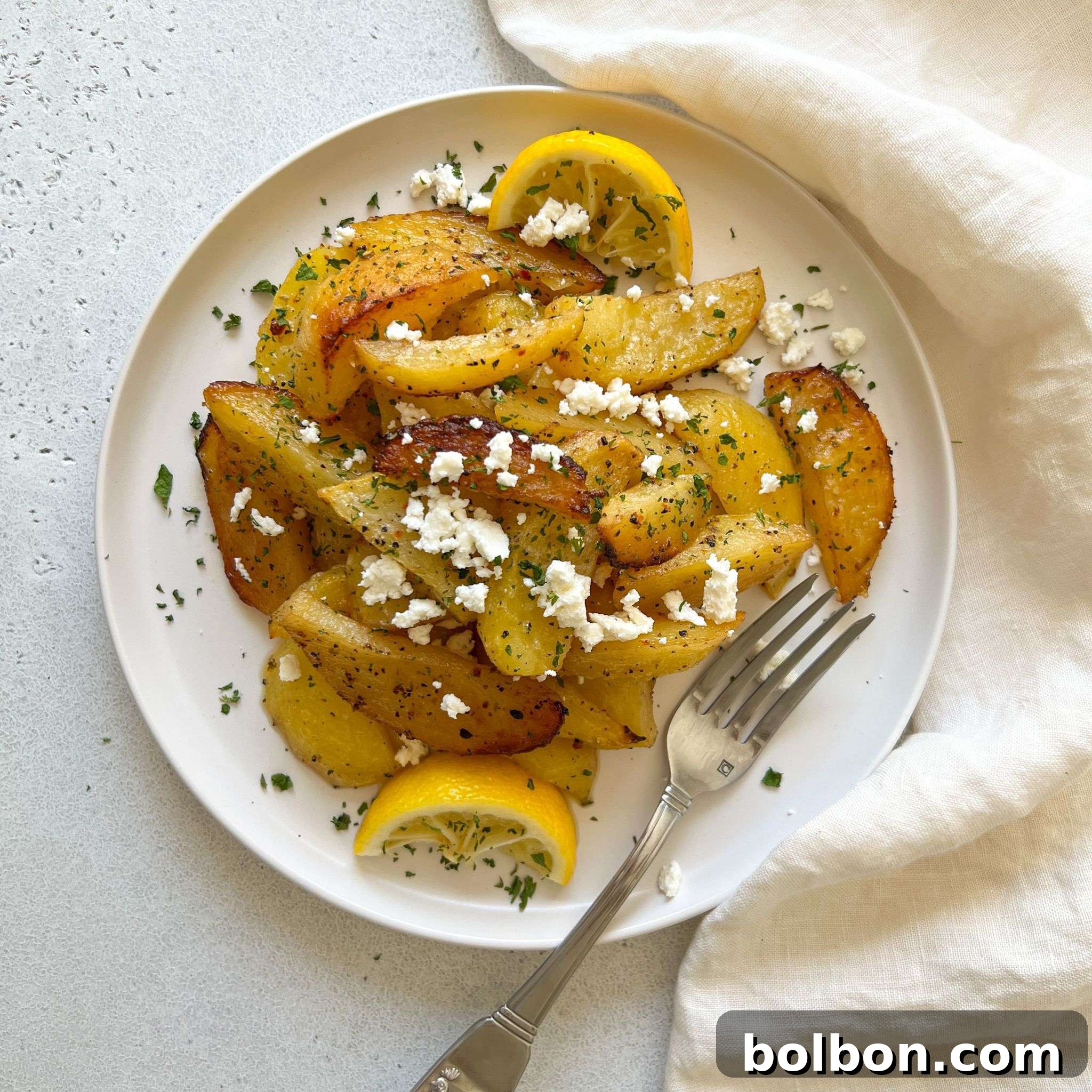
Prepare to be whisked away to the sun-drenched shores of the Aegean Sea with these absolutely sensational Greek Potatoes with Feta. Imagine dining at a charming seaside taverna, the gentle breeze carrying the aroma of fresh herbs and roasting potatoes – that’s the authentic experience these potatoes deliver right to your kitchen. The secret to their irresistible juiciness lies in a clever combination of bright lemon juice and rich olive oil, which bathe the potatoes as they slowly bake to perfection, covered, in the oven. What truly elevates this dish is the symphony of Mediterranean flavors: tender roasted garlic, the delightful saltiness of creamy feta cheese, and a robust blend of traditional Greek seasoning. This seasoning, though simple, packs a powerful punch, infusing the potatoes with a harmonious medley of oregano, basil, thyme, and rosemary. While feta is, for many, an essential part of the Greek culinary experience and truly ‘life-changing’ in this context, it remains an optional addition, allowing you to tailor the dish to your preference.
Key Takeaways: Mastering Greek Potatoes with Feta
- Effortless Elegance: This recipe for Greek Potatoes with Feta is renowned for its straightforward preparation, yet it consistently delivers remarkable flavors that captivate and impress every guest at your table. Its simplicity belies its profound taste, making it a go-to for both weeknight meals and special occasions.
- Sweet Roasted Garlic: To unlock the naturally sweet and mellow notes of garlic, always roast the cloves whole and in their peels. This crucial step prevents them from burning and transforms their pungent raw flavor into a delightful, caramelized sweetness that perfectly complements the potatoes.
- Versatile Pairing: These flavorful Greek potatoes are incredibly versatile, serving as an ideal accompaniment to a wide range of main courses, from succulent grilled chicken and tender roasted lamb to any protein of your choice. For an authentic Greek dining experience, be sure to serve them with a generous dollop of creamy, homemade tzatziki for dipping.
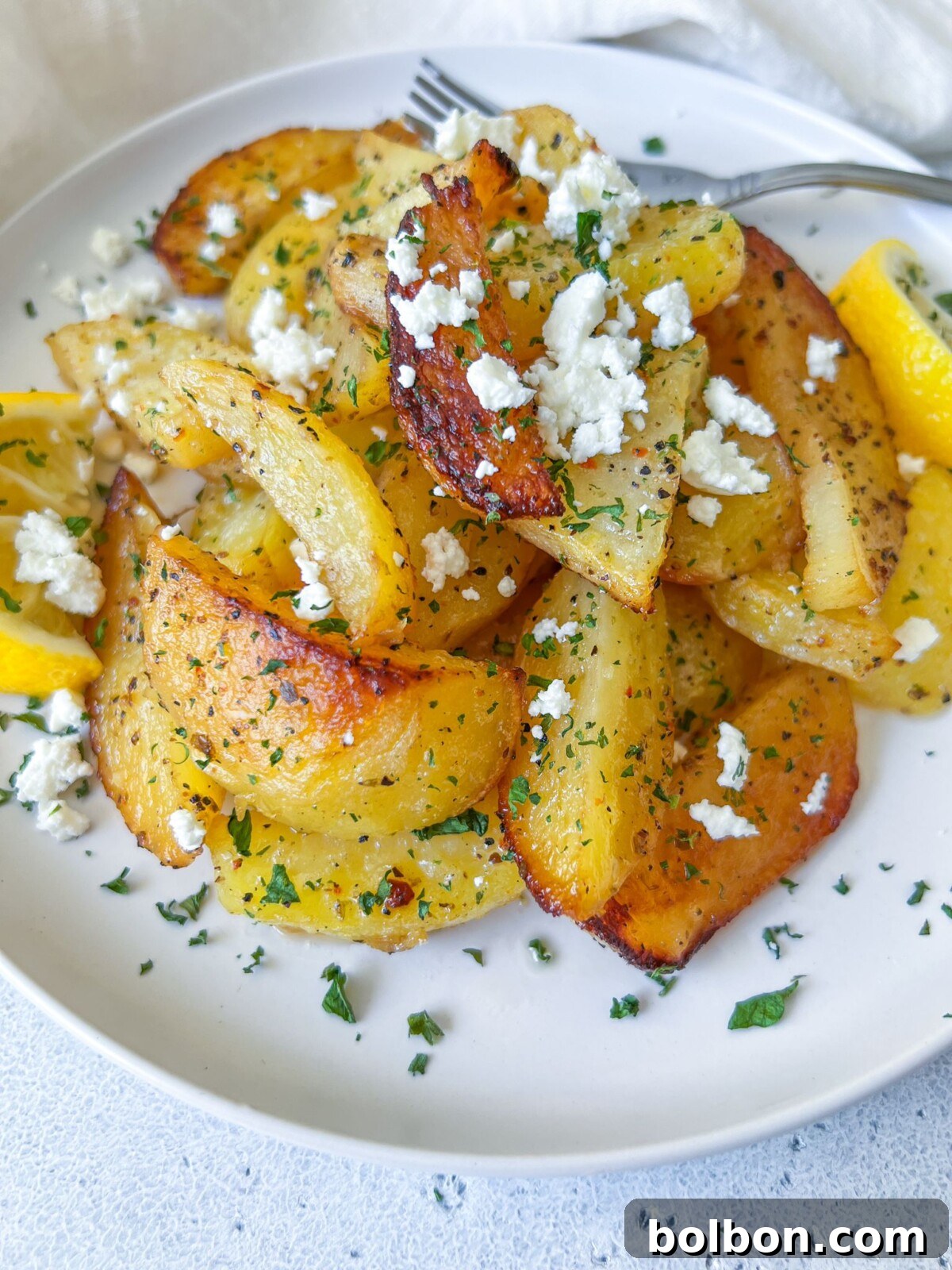
Table of Contents
- Key Takeaways: Mastering Greek Potatoes with Feta
- Why You’ll Adore These Greek Potatoes with Feta
- Essential Ingredients for Authentic Greek Potatoes
- Nonna’s Expert Tip for Perfect Roasted Garlic
- Creative Variations and Smart Substitutions
- Explore More Mediterranean Potato Recipes
- Perfect Pairings: What to Serve with Your Greek Potatoes
- Common Questions About Greek Roasted Potatoes
- The Ultimate Greek Potatoes with Feta Recipe
Why You’ll Adore These Greek Potatoes with Feta
There are countless reasons why these Greek Potatoes with Feta have become a beloved staple in my kitchen and a perennial favorite among family and friends. Beyond their undeniable deliciousness, this dish stands out for its exceptional simplicity, making it a perfect choice for both novice cooks and seasoned chefs alike. The preparation is remarkably straightforward, requiring minimal effort for results that are truly extraordinary. Each bite transports you, thanks to the harmonious blend of flavors that are truly “out of this world.”
The foundation of their incredible taste lies in the thoughtfully curated Greek seasoning blend – a medley of aromatic herbs that delivers a captivating depth. Complementing this, the fresh tang of lemon juice provides a vibrant lift, ensuring the potatoes remain wonderfully juicy throughout the baking process. But perhaps the unsung hero of this recipe is the roasted garlic. Unlike raw garlic, which can be pungent, roasting whole cloves transforms them into sweet, caramelized gems with a deep, mellow flavor that beautifully integrates with the potatoes without overpowering them. This simple addition makes a monumental difference, adding a layer of sophisticated sweetness and complexity.
Whether you’re looking for a reliable side dish that impresses every time or simply craving a taste of the Mediterranean, this baked potato recipe will quickly become a cherished part of your culinary repertoire. Its comforting warmth and vibrant flavors make it a dish you’ll find yourself returning to again and again, proving that truly great food doesn’t have to be complicated.
So glad I made this recipe, absolutely delicious and the entire family was impressed and now obsessed with these delicious potatoes, thank you Sneji.
– Sofia
Essential Ingredients for Authentic Greek Potatoes
To create the most mouthwatering Greek Potatoes with Feta, selecting the right ingredients is key. Here’s a detailed look at what you’ll need:
🥔 Yellow Potatoes: For this recipe, waxy yellow potatoes like Yukon Golds are highly recommended due to their creamy texture and ability to hold their shape beautifully after roasting. However, you can certainly use any type of potato you prefer. Whether or not to peel them is entirely up to you; leaving the skin on can add a rustic touch and extra fiber.
🌶️ Greek Seasoning: A high-quality Greek seasoning blend is the heart and soul of this dish. Most blends typically feature a wonderful combination of oregano, basil, thyme, and rosemary. When selecting your blend, be mindful of its salt content. If the blend already contains salt, you’ll want to be very judicious with any additional salt you add to prevent over-seasoning.
🧂 Salt: Salt is crucial for enhancing all the other flavors. My philosophy is to “measure with your heart” – adjust to your personal taste preference, keeping in mind any salt already present in your Greek seasoning and feta.
🫒 Olive Oil: Greek cuisine is synonymous with exquisite olive oil, and this dish is no exception. Invest in the best quality extra virgin olive oil you can find; its rich, fruity notes will significantly elevate the overall flavor profile. I personally love this particular Greek olive oil for its authentic taste.
🧄 Garlic: Whole, unpeeled garlic cloves are a game-changer here. It is absolutely important to bake the garlic cloves with their peels on. This ingenious method protects them from burning, allowing them to roast slowly and transform into incredibly sweet, caramelized, and mellow morsels. Once the dish has cooled slightly, you can easily squeeze the tender, cooked garlic from its peels and either mash it into the potatoes or spread it on warm bread.
🍋 Lemon: Fresh lemon juice is indispensable. It not only keeps the potatoes wonderfully juicy and moist as they bake but also brightens all the accompanying flavors, adding a zesty, refreshing counterpoint to the richness of the olive oil and herbs.
🧀 Feta: Let’s have a moment of silence for pre-crumbled feta, and then repeat after me: “I will not buy pre-crumbled feta.” For an unparalleled taste and texture, always buy feta that is sold in brine. Feta in brine is infinitely more delicious, creamy, and fresh than its pre-crumbled counterparts, which often have a drier texture and a less vibrant flavor. Its salty tang is a perfect complement to the roasted potatoes.
🌿 Parsley: A generous garnish of fresh parsley adds a beautiful pop of color and a touch of herbaceous freshness to the finished dish. If parsley isn’t available, fresh oregano or finely chopped chives would also make excellent alternatives.
Nonna’s Expert Tip for Perfect Roasted Garlic 🧄
For a truly sublime garlic experience in your Greek potatoes, always leave the cloves whole and unpeeled while baking. This simple yet crucial step prevents them from burning and drying out, allowing them to gently roast and transform into incredibly sweet, tender, and caramelized morsels. The intense, pungent flavor of raw garlic mellows into a beautiful, buttery sweetness. At the end of baking, once the dish has cooled slightly, you can easily squeeze the soft, roasted garlic from its papery peels. These delectable cloves can then be tossed with the potatoes to infuse every bite with their garlicky goodness, or even spread onto a piece of fresh, crusty bread for a delightful appetizer. It’s a small detail that makes a world of difference in flavor!
Creative Variations and Smart Substitutions for Your Greek Potatoes
While the classic Greek Potatoes with Feta recipe is divine as is, feel free to experiment with these variations and substitutions to customize it to your taste or what you have on hand:
- Craft Your Own Greek Seasoning Blend: If you don’t have a pre-made Greek seasoning blend, or simply prefer to mix your own, you can easily achieve similar fantastic results. Combine dried oregano, paprika, black pepper, onion powder, and garlic powder with salt to taste. Adjust the ratios until you find your perfect balance of authentic Greek flavors.
- Boost the Lemon Zest: For an even more intense and aromatic lemon flavor, consider adding some finely grated lemon zest along with the fresh lemon juice. The zest contains concentrated essential oils that will impart a brighter, more fragrant citrus note, elevating the dish’s overall freshness.
- For a Stronger Garlic Kick: If you prefer a more pungent and robust garlic flavor than what roasted whole cloves offer, you can certainly use freshly minced garlic. Just be mindful that minced garlic tends to brown quicker and deliver a sharper taste. To prevent burning, you might want to add it during the last 20-30 minutes of baking, or sauté it briefly before adding to the potatoes.
- Herb Power-Up: While parsley is a wonderful garnish, don’t hesitate to incorporate other fresh herbs into the dish. Fresh dill pairs beautifully with potatoes and feta, offering a distinct herbaceous freshness. A sprinkle of fresh mint or marjoram can also add an unexpected layer of Mediterranean authenticity.
- Cheese Alternatives: If feta isn’t your preference or you’re looking for something different, other crumbly, salty cheeses work well. Traditional Greek Mizithra cheese (the hardened, aged variety) offers a sharp, tangy flavor. Alternatively, a good quality crumbled goat cheese can provide a lovely creamy texture and a mild tang.
- Spicy Twist: For those who enjoy a little heat, a pinch of red pepper flakes added with the seasoning can introduce a subtle warmth that complements the savory and tangy notes of the dish.
Explore More Mediterranean Potato Recipes
Roasted Dill Potatoes
50 mins
Discover another delightful herb-infused potato dish that highlights the fresh, aromatic flavor of dill. These roasted potatoes are wonderfully tender inside with crispy edges, making them a refreshing alternative or complement to your Mediterranean feast.
Greek Lemon Potatoes
1 hr 30 mins
If you’re a fan of vibrant citrus, these classic Greek Lemon Potatoes are a must-try. Slow-roasted in a tangy lemon and olive oil broth, they become incredibly flavorful and tender, developing a beautiful golden crust that’s simply irresistible.
Grilled Greek Potatoes
35 mins
For those sunny days when you want to take your cooking outdoors, these Grilled Greek Potatoes offer all the beloved Mediterranean flavors with a smoky char. Quick to prepare and bursting with zest, they make an excellent barbecue side.
Crispy Smashed Potatoes
45 mins
While not strictly Greek, these Crispy Smashed Potatoes share the same commitment to a perfect potato texture: soft and fluffy on the inside, incredibly crispy on the outside. They are a fantastic canvas for Mediterranean herbs and a sprinkle of feta.
Perfect Pairings: What to Serve with Your Greek Potatoes
These versatile Greek Potatoes with Feta are truly a culinary chameleon, making them an ideal accompaniment to a wide array of dishes. Their robust flavors and satisfying texture allow them to shine whether as a hearty side or even as a light main course.
- With Poultry and Meats: This recipe is an absolute match made in heaven with perfectly cooked chicken. The bright lemon and savory herbs beautifully complement the richness of poultry. They are equally delightful served alongside any protein of choice, from succulent grilled lamb chops to tender roasted pork loin. Consider pairing them with my Roasted Leg of Lamb for an unforgettable Hellenic feast, or with my light and flavorful yogurt chicken recipe for a lighter, yet equally satisfying meal.
- Creamy Tzatziki Dip: To truly enhance the authentic Greek experience, these potatoes are absolutely perfect when dipped into a cool, creamy, and tangy tzatziki. The refreshing cucumber and garlic notes of my homemade tzatziki offer a delightful contrast to the warm, savory potatoes, creating a truly irresistible combination. It’s a simple addition that elevates the entire dish.
- Fresh Salads: For a balanced meal, serve your Greek potatoes alongside a crisp, fresh Greek salad. The acidity of the salad dressing and the crunch of fresh vegetables provide a wonderful counterpoint to the warm potatoes and feta.
- Grilled Fish: The flavors of lemon and herbs in the potatoes also make them an excellent partner for grilled or baked fish, such as cod, salmon, or snapper, creating a light and healthy Mediterranean-inspired dinner.
Common Questions About Greek Roasted Potatoes
Absolutely! While yellow potatoes like Yukon Golds are highly recommended for their wonderfully creamy texture and ability to maintain their shape beautifully after roasting, you are welcome to use any type of potato you prefer. Red potatoes or even small new potatoes can also work well, offering a slightly different texture. Keep in mind that starchier potatoes might result in a fluffier interior. Peeling the potatoes is entirely optional; many enjoy the rustic charm and added fiber that the skin provides.
You certainly can, but it’s important to understand the difference in flavor profile. Using freshly minced garlic will result in a much stronger, more pungent garlic flavor in your Greek potatoes. Roasting whole, unpeeled garlic cloves, as recommended, transforms them into sweet, mellow, and caramelized morsels, offering a deeper, more subtle garlic essence. Both methods are delicious, so choose based on your desired garlic intensity. If using minced garlic, consider adding it a little later in the baking process to prevent it from burning.
Achieving crispy Greek potatoes is all about maximizing air circulation and direct heat. Firstly, ensure that the potato wedges are not touching or overlapping in the baking dish. If they are too crowded, they will steam instead of roast, leading to a softer texture. Use a larger baking dish or two dishes if necessary to spread them out in a single layer. Secondly, make sure your oven is adequately preheated to 425°F (220°C). For an extra boost of crispiness, you can bake them uncovered for an additional 10-15 minutes after the initial covered baking period, or even briefly increase the oven temperature during the final uncovered phase. You can also lightly toss them halfway through the uncovered baking for even browning.
You can certainly do some prep work in advance to save time. You can peel and cut the potatoes into wedges up to a day before you plan to bake them. To prevent them from oxidizing and turning brown, store the cut potatoes submerged in cold water in an airtight container in the refrigerator. However, for the best possible texture and crispiness, it is always recommended to bake them just before serving. Freshly baked potatoes will have the most appealing golden-brown exterior and tender interior.
To ensure your delicious Greek potatoes don’t stick to the baking dish, several factors are important. First, make sure to generously coat the potatoes with olive oil before baking. The oil creates a protective barrier. Second, preheat your baking dish with a little oil in the oven before adding the potatoes; this helps create a non-stick surface. Alternatively, you can line your baking dish with parchment paper, which is a foolproof way to prevent sticking and makes cleanup a breeze. Using a quality, heavy-bottomed baking dish or even a well-seasoned cast-iron pan can also help.
No Greek seasoning blend? No problem! You can easily create your own aromatic mix using common kitchen herbs. Simply combine any combination of the following, either fresh or dried: oregano, basil, thyme, and rosemary. For an authentic touch, you might also add a pinch of garlic powder, onion powder, and a touch of paprika. Remember, seasoning should always be to taste – feel free to “measure with your heart” until you achieve a blend that you love. Start with equal parts and adjust as needed.
Greek Potatoes with Feta: An Irresistible Mediterranean Side
Facebook Share
Rate Recipe
Print Recipe
Video
Essential Equipment
Ingredients
- 5 medium yellow potatoes, peeled (optional) and cut into wedges
- 3 tablespoons extra virgin olive oil
- Greek seasoning blend, generously, to taste (adjust if blend contains salt)
- salt, if needed, to taste
- ½ lemon, freshly juiced
- 5 cloves garlic, whole and unpeeled
- fresh parsley, roughly chopped, for garnish
- feta cheese, crumbled (preferably from brine), for garnish (optional)
Detailed Instructions
-
Prepare the Potatoes: Begin by preheating your oven to 425°F (220°C). If desired, peel your yellow potatoes. Once peeled (or if keeping skins on), carefully cut each potato into even wedges. To achieve uniform wedges, first cut the potato in half lengthwise, then cut each half lengthwise again into desired wedge sizes. Aim for pieces of similar size to ensure even cooking. Place these prepared potato wedges into a sturdy baking dish.
-
Season and Toss: Drizzle the potato wedges generously with the high-quality extra virgin olive oil. Sprinkle them liberally with your chosen Greek seasoning blend, adding extra salt only if needed and to your taste. Pour the fresh lemon juice over everything, and then add the whole, unpeeled garlic cloves directly into the baking dish. Using your hands, gently but thoroughly massage the potatoes, ensuring that each wedge is well-coated with the oil, seasoning, and lemon juice. This step is crucial for infusing flavor. Once coated, arrange the potato wedges in a single layer in the baking dish, making sure there is sufficient space between each piece. Overlapping potatoes will steam rather than roast, preventing them from developing that desirable crispy exterior.
-
Bake to Perfection: Cover the baking dish tightly with aluminum foil. This helps trap moisture, allowing the potatoes to cook through evenly and become tender. Bake in the preheated oven for 45 minutes. After this initial baking period, carefully remove the foil and continue to bake for an additional 15-20 minutes, or until the potatoes are beautifully golden brown and crispy around the edges. Once the dish is out of the oven and has cooled slightly, you can easily squeeze the soft, roasted garlic cloves from their peels directly into the potatoes. Garnish generously with freshly chopped parsley and crumbled feta cheese, if you desire. Serve immediately and enjoy the exquisite flavors!
Chef’s Notes & Tips
- The Role of Foil: Covering the baking dish with foil during the initial cooking phase is a key technique. It creates a steamy environment that ensures the potatoes cook thoroughly and become tender inside without drying out. Removing the foil for the final baking period then allows the potatoes to achieve that irresistible golden-brown color and crispy texture around the edges. Don’t skip either step!
- Choosing Your Baking Dish: Any oven-safe baking dish with reasonably high sides will work beautifully for this recipe. If you prefer, a sturdy cast-iron pan can also be used, as it provides excellent heat retention and often helps in achieving extra crispy bottoms. Just ensure you have enough surface area to spread the potatoes in a single layer.
- Exploring Cheese Options: While feta is the traditional and highly recommended cheese for its salty, tangy, and creamy notes, you can certainly experiment with other crumbly, salty cheeses. For an authentic Greek touch, try using a hardened, aged variety of Greek Mizithra cheese, which offers a unique sharp flavor. A good quality crumbled goat cheese can also provide a delicious creamy texture and a mild tang that complements the herbs and lemon.
- Storage and Reheating: Leftover Greek potatoes can be stored in an airtight container in the refrigerator for up to 3-4 days. To reheat, spread them on a baking sheet and warm them in a preheated oven (around 375°F / 190°C) until heated through and re-crisped, about 10-15 minutes. Avoid microwaving if you want to retain any crispiness.
- Make-Ahead Tip: As mentioned in the FAQs, you can peel and cut your potatoes a day ahead and store them in cold water in the fridge to save time on busy days. However, always toss and bake them fresh for the best texture.
Nutrition Information
Nutrition information is automatically calculated, so should only be used as an approximation.
Additional Information
