

Finding truly good cottage cheese can be a real challenge, especially in places like Canada where options often feel limited. It’s frustrating to pick up a container and find a long list of unpronounceable ingredients, gums, and stabilizers. Many store-bought varieties prioritize an extended shelf-life over authentic flavor and quality, a compromise no dairy enthusiast should have to make. I grew up watching my grandmother craft various cheeses, and her philosophy always resonated with me: the best cheese is simple. By keeping ingredients wholesome and minimal, you unlock an unbeatable freshness and creamy texture that mass-produced alternatives simply cannot match. This commitment to pure ingredients ensures a superior taste and a product free from the unnecessary additives that dilute the true essence of good cottage cheese.

This deep-seated belief is why I decided to embark on the journey of making my own Homemade Cottage Cheese. While the idea might sound a bit daunting at first, I promise you, the reward far outweighs any initial apprehension. With just a few basic tools and a handful of genuinely wholesome ingredients, you can create this surprisingly easy version of cottage cheese. Say goodbye to mysterious additives and preservatives, and welcome a pure, unadulterated dairy delight into your kitchen. This recipe simplifies the traditional process, making it accessible for anyone eager to enjoy fresh, high-quality cottage cheese made right in their home.
Why You’ll Fall in Love with Homemade Cottage Cheese
Prepare to transform any cottage cheese skeptic into a devoted fan with this incredible Homemade Cottage Cheese. It’s a revelation of texture and taste – utterly fresh, indulgently creamy, and perfectly tangy. Forget the grainy, slimy, or overly firm curds often found in store-bought options; this is the authentic experience. The texture is exquisitely soft and pillowy, featuring delicate, small curds that literally melt in your mouth. Imagine a delightful cross between the crumbly richness of feta and the smooth indulgence of creamy yogurt – truly a dairy lover’s dream come true. One of the greatest advantages of making your own is the complete control you have over the flavor profile. You can effortlessly adjust the saltiness and creaminess to perfectly suit your personal preference, ensuring every spoonful is exactly to your liking. This level of customization is simply unavailable with pre-packaged products.
Beyond its superb taste and texture, homemade cottage cheese offers a versatility that makes it a staple in any kitchen. Enjoy it by the spoonful for a satisfying snack, spread it generously on warm toast for a wholesome breakfast, or use it as a creamy dip for your favorite crisp vegetables. Whether it’s a quick bite or a gourmet topping, its fresh flavor elevates any dish. Be warned: once you experience the superior quality of homemade cottage cheese, you’ll likely become a connoisseur, unable to return to inferior store-bought varieties. This commitment to fresh, simple ingredients and superior taste is a journey from which there’s no turning back, solidifying your status as a true cottage cheese aficionado.

Simple Ingredients for Superior Homemade Cottage Cheese
One of the most compelling reasons to make your own cottage cheese at home is the drastic difference in ingredient lists. Store-bought varieties often feature a parade of emulsifiers, thickeners, and preservatives like xanthan gum, guar gum, and monoglycerides – ingredients that are hard to pronounce and even harder to digest. My recipe, however, champions simplicity and purity, requiring only four essential, whole ingredients. That’s it! You’ll recognize and be able to pronounce every single one, guaranteeing a clean, natural product that’s better for you and incredibly flavorful.
- Milk: The foundation of exceptional cottage cheese is high-quality milk. I strongly recommend using grass-fed whole milk. Its inherent purity, rich flavor, and naturally creamy consistency are paramount for developing the best curds. The higher fat content of whole milk contributes significantly to the luxurious, melt-in-your-mouth texture that distinguishes homemade cottage cheese from its commercial counterparts. While 2% milk can be used, it will yield a slightly less creamy product. Non-dairy milks, unfortunately, do not curdle in the same manner and are not suitable for this specific recipe.
- Vinegar: This common pantry staple plays a crucial role in the curdling process. Distilled white vinegar is my preferred choice as it efficiently helps the milk proteins separate and form firm, distinct curds. Many people worry about a residual sour taste, but rest assured, the final rinsing and draining steps ensure no unwelcome vinegary flavor remains. If white vinegar isn’t on hand, lemon juice or apple cider vinegar can be excellent substitutes, each imparting a subtle, unique note to the finished product.
- Salt: The beauty of homemade cottage cheese lies in your ability to customize every aspect, including sodium levels. Unlike store-bought options with fixed salt content, you can add salt precisely to your taste, ensuring a perfectly seasoned batch every time. I recommend starting with a small amount and adding more as needed, tasting along the way.
- Cream or Yogurt (Optional, but Recommended): This is where you can truly enhance the creaminess and add a delightful tang. While optional, stirring in a few tablespoons of heavy cream at the end will enrich the curds, making them even more decadent. For an added probiotic boost and a subtle tangy flavor reminiscent of a fresh dairy culture, I love to incorporate 3 tablespoons of good quality plain yogurt. This step transforms the curds into an even more irresistible, health-conscious treat.
How to Make Homemade Cottage Cheese: A Step-by-Step Guide
Crafting your own fresh cottage cheese is a rewarding experience that yields a superior product to anything you’ll find in stores. This straightforward method requires minimal effort and delivers maximum flavor. Follow these simple steps to create luscious, additive-free cottage cheese in your kitchen.
🥛 In a large pot, pour one gallon of high-quality milk. Place the pot over medium heat, stirring gently every few seconds to prevent scorching. Continue heating the milk until it reaches precisely 180°F (82.2°C). Using a reliable kitchen thermometer is crucial here for accurate temperature control and successful curd formation.
🥄 Once the milk reaches the target temperature, immediately remove the pot from the heat. Promptly add the recommended amount of vinegar. Stir the mixture very gently for approximately 30 seconds. As you stir, you will notice the remarkable transformation as the milk solids begin to visibly separate from the clear, yellowish liquid, which is the whey. This is the magic of curdling taking place.
🥣 After stirring, cover the pot and allow the mixture to sit undisturbed. This crucial resting period, ideally for 30 to 60 minutes, gives the curds ample time to fully form and settle. Some prefer to let it cool completely to room temperature during this phase, which can take up to an hour.
🧀 Prepare your straining setup by placing a cheesecloth-lined strainer or a fine mesh sieve over a large bowl. Carefully pour the curdled milk mixture into the prepared strainer. Allow it to drain naturally for another 30 minutes. This process separates the curds from the remaining whey, which, as you’ll discover, is a valuable byproduct.
💦 At this stage, you have a choice that influences the final texture and flavor. For a milder flavor and firmer texture, gently rinse the curds under cold running water, then delicately squeeze out any excess liquid from the cheesecloth. This rinse washes away some of the acidity. If you prefer a creamier, tangier, more yogurt-like cottage cheese, skip the rinse entirely. The choice is yours and depends on your preference.
🧂 Finally, transfer the drained curds to a clean bowl. Stir in salt to taste. This is also the opportune moment to incorporate heavy cream or plain yogurt (if using) for that extra creamy texture and a delicious tang. Mix until everything is well combined, and your fresh, homemade cottage cheese is ready to enjoy!
Note: This recipe presents a quick and accessible method for making cottage cheese. The traditional approach, often used in commercial production, involves curdling milk with starter cultures (live bacteria) and sometimes rennet, followed by a more intricate process of gently cutting, cooking, and draining the curds to achieve specific textures and flavors. Our simplified version focuses on purity and ease for the home cook.
Nonna’s Essential Tip: Don’t Discard the Whey!
The liquid byproduct from making cottage cheese – the whey – is a nutrient powerhouse, brimming with protein. Far from being waste, it’s incredibly versatile and can be used in a multitude of ways. It’s excellent in smoothies for a protein boost, can replace water in baking recipes for added richness, or enhance the nutritional value of soups. For more inspiring ideas and uses, be sure to check out my detailed “How to Use Leftover Whey” section below! Reusing whey is a fantastic way to minimize food waste and maximize the nutritional benefits of your homemade dairy products.

Homemade Cottage Cheese vs. Ricotta: Understanding the Differences
While homemade cottage cheese and ricotta might share a similar appearance as soft, white dairy products, they are fundamentally distinct in their production methods, resulting in very different textures and flavor profiles. Understanding these differences helps appreciate the unique qualities of each.
👉 Cottage Cheese: The Curd-Focused Delight
The essence of cottage cheese lies in its curds, which are the primary milk solids. The process typically begins with heating whole milk and then introducing an acidic agent, such as lemon juice or vinegar. This acidity causes the milk proteins (casein) to coagulate, separating into distinct curds and the liquid whey. After the curds form, they are carefully drained, often rinsed (depending on desired tanginess), and then typically mixed with a touch of cream or yogurt to achieve that signature moist, chunky, and chewy texture. The flavor of cottage cheese is characteristically fresh, with a pleasant, mild tang that makes it wonderfully versatile for both savory and sweet applications.
👉 Ricotta: The Elegant Whey Cheese
Ricotta, whose name literally means “recooked” in Italian, traditionally utilizes the whey left over from other cheese productions, although it can also be made directly from milk. To make ricotta, the whey (or milk) is gently heated to a higher temperature, just below boiling. At this point, a small amount of acid is added, which encourages the remaining milk proteins (albumins and globulins) in the whey to coagulate. The curds that form are incredibly fine, delicate, and soft – much smaller and smoother than cottage cheese curds. Ricotta is strained gently, without pressing or extensive rinsing, to preserve its light, airy texture. The resulting cheese is naturally subtle, slightly sweet, and possesses a creamy, cloud-like consistency that makes it perfect for spreading, baking into pastries, or stuffing pasta.
Creative Variations and Smart Substitutions for Homemade Cottage Cheese
One of the true joys of making homemade cottage cheese is the freedom to customize it to your personal taste and dietary preferences. This basic recipe provides a fantastic canvas for experimentation, allowing you to explore different flavors and textures. Here are some popular variations and smart substitutions to help you make your cottage cheese truly unique:
- Enhanced Creaminess and Probiotic Boost: For an even richer, creamier texture and a delightful, subtle tang, stir in some plain yogurt to your finished cottage cheese. If the yogurt contains live and active cultures, you’ll also be adding a beneficial probiotic boost, making your snack as good for your gut as it is for your taste buds. This is an excellent way to introduce more complexity to the flavor profile.
- Alternate Acids for Unique Flavors: While distilled white vinegar is reliable, don’t hesitate to experiment with other acidic agents. Fresh lemon juice not only curdles the milk effectively but also imparts a bright, citrusy undertone to the cottage cheese, enhancing its freshness. Alternatively, apple cider vinegar can be used, lending a slightly sweeter and fruitier note, adding another layer of depth to your homemade creation.
- Infuse with Flavor Boosters: Elevate your cottage cheese from simple to sensational by incorporating various flavor enhancers. Mix in finely chopped fresh herbs like chives, dill, or parsley for a vibrant, savory profile. A pinch of garlic powder or onion powder can add an aromatic depth. For those who enjoy a warm, earthy spice, smoked paprika works wonders. And if you crave a bit of heat, a sprinkle of chili flakes will provide a delightful spicy kick, making your cottage cheese a bold and exciting snack.
- Milk Choices and Their Impact: While whole milk is recommended for the creamiest and most flavorful curds due to its higher fat content, you can certainly use 2% milk. Be aware that 2% milk will produce a slightly firmer cottage cheese with a marginally lower yield. For an adventurous twist, consider using goat’s milk, which will result in a tangier, more robust, and funkier flavor profile that some dairy connoisseurs adore. It’s crucial to remember, however, that non-dairy milks (like almond, soy, or oat milk) do not contain the same proteins as dairy milk and therefore will not curdle in the same way, making them unsuitable for this particular cheese-making method.
Delicious Ways to Enjoy Your Homemade Cottage Cheese
Once you’ve experienced the fresh, creamy goodness of homemade cottage cheese, you’ll find countless ways to incorporate it into your meals and snacks. Its versatility makes it a fantastic addition to both savory and sweet dishes. Here are some of my favorite ways to serve this wholesome dairy delight:
- Cottage Cheese Flatbread: Use it as the nutritious and creamy base for this savory Cottage Cheese Flatbread. It adds a delightful texture and protein punch.
- Savory Breakfast Eggs: Elevate your morning meal by making savory Cottage Cheese Eggs. The cottage cheese melts into the eggs, creating a fluffy, protein-packed breakfast.
- Post-Workout Protein Boost: Add a generous spoonful to your Strawberry Protein Shake for a guilt-free and delicious way to boost its protein content, aiding muscle recovery after a workout.
- Sweet Berry Bowl: Create a refreshing and wholesome dessert or breakfast bowl by topping a scoop of homemade cottage cheese with your favorite fresh berries like blueberries and strawberries, then drizzle generously with honey for natural sweetness.
- Classic Toast Topping: Simply spread it on a piece of toasted sourdough or whole-grain bread, perhaps with a sprinkle of everything bagel seasoning or a slice of avocado, for a quick and satisfying snack.
- Salad Enhancer: Dollop cottage cheese onto a fresh green salad for an added creamy texture and protein, transforming a simple salad into a more substantial meal.
- Stuffed Vegetables: Mix it with herbs and spices and use it as a filling for bell peppers, tomatoes, or zucchini boats, then bake for a comforting and healthy dish.
Creative Ways to Utilize Leftover Whey: A Nutritional Bonus
Making homemade cottage cheese naturally yields a significant amount of whey, the liquid byproduct. Far from being waste, this whey is a nutritional powerhouse, rich in protein and beneficial nutrients. Repurposing it is not only economical but also a fantastic way to add a healthy boost to other recipes. Here are several creative and delicious ways to ensure every drop of your leftover whey is put to good use:
🧀 Craft Homemade Ricotta: This is perhaps the most famous and delicious use for leftover whey! Whey is the KEY ingredient in traditional Homemade Ricotta. By heating the whey to a higher temperature and adding a touch more acid, you can extract even more delicate milk proteins, creating a second, distinct type of cheese from the same gallon of milk – truly a win-win situation!
🍞 Enhance Your Baking: Replace water with whey in virtually any of your favorite bread, pastry, or pancake recipes. Whey adds moisture, a subtle tang, and significantly boosts the protein content of your baked goods, contributing to a richer flavor and often a softer crumb. It’s an excellent secret ingredient for healthier, more flavorful baking.
🍲 Enrich Soups and Stews: Use whey as a nutritious and flavorful liquid base for your favorite soups and stews. Adding it to recipes like The Best Chicken Soup Ever provides a subtle creaminess, enriches the broth with protein, and imparts a nuanced depth of flavor that water or plain broth simply cannot achieve.
🍹 Boost Your Smoothies: For an easy and effective way to increase the protein content of your daily smoothies, simply add a splash or two of leftover whey. Its mild flavor integrates seamlessly with fruits and other ingredients, making your smoothie more satisfying and nutritionally complete without needing protein powders.
🌿 Watering Plants: For a non-culinary use, diluted whey can be beneficial for acid-loving plants in your garden, providing nutrients to the soil. Always dilute it significantly before using.
Explore More Homemade Delights
Homemade Mayo
5 mins
Homemade Electrolyte Drink
5 mins
Homemade Almond Milk Recipe
8 hrs 5 mins
Easy Oat Milk Recipe
6 mins
Homemade Cottage Cheese: The Best Easy Recipe
Facebook Share
Rate Recipe
Print Recipe
Video Guide for Homemade Cottage Cheese
Essential Equipment for Making Cottage Cheese
Ingredients
- 1 gallon grass-fed whole milk
- ¾ cup white vinegar
- 1 teaspoon salt, or to taste
- ¼ cup heavy cream, or more, optional
- 3 tablespoons plain yogurt (for tang and probiotics), optional
Step-by-Step Instructions
-
Pour the milk into a large, heavy-bottomed pot. Heat the milk over medium heat, stirring gently every 15-20 seconds to prevent scorching on the bottom, until it reaches precisely 180°F (82.2°C). A meat thermometer is highly recommended for accuracy.

-
Immediately remove the pot from the heat once it reaches 180°F. Add the white vinegar directly into the hot milk. Stir gently and continuously for about 30 seconds. During this time, you will observe the milk solids (curds) visibly beginning to separate from the greenish-yellow liquid (whey).
-
Cover the pot and let it sit undisturbed for at least 30 minutes, or up to 60 minutes. Allowing it to rest for a full hour, or until it reaches room temperature, ensures the curds fully develop and settle.
-
Place a fine mesh sieve or a colander lined with cheesecloth over a large bowl. Carefully pour the curdled mixture into the prepared strainer. Let it drain for another 30 minutes. The curds will remain in the cheesecloth/sieve while the whey collects in the bowl below.
-
After 30 minutes of draining, you have an optional step: rinsing. If you prefer a milder flavor and firmer texture, gently rinse the curds with cold water while still in the cheesecloth, then gently squeeze out the excess liquid. If you desire a creamier, tangier, more acidic, yogurt-like cottage cheese, skip the rinse. I chose not to rinse mine for maximum tang, but this choice is entirely up to your preference.
-
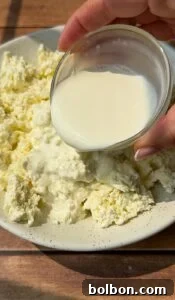
Transfer the drained curds to a mixing bowl. Stir in salt to taste. For added richness and a velvety texture, stir in the heavy cream (optional). If you want to incorporate active probiotic cultures and enhance the tanginess, add a few tablespoons of your favorite plain yogurt. Mix until thoroughly combined. Your fresh, homemade cottage cheese is now ready to savor!





Helpful Notes and Expert Tips
- Quick Method: This recipe offers a fast and straightforward version of cottage cheese, requiring no starter cultures or rennet, making it perfect for home cooks.
- Milk Matters: For the creamiest and richest curds, opt for whole milk. While 2% milk can also be used, anticipate a slightly less creamy result and potentially a smaller yield. Dairy-free milks will not curdle effectively with this method.
-
Rinsed vs. Unrinsed:
- Rinsed: Produces firmer curds with a milder, less tangy flavor profile.
- Unrinsed: Results in softer, tangier, and more acidic cottage cheese, similar to a fresh yogurt.
- Acid Options: Feel free to swap white vinegar with fresh lemon juice or even apple cider vinegar for a subtle, alternative flavor dimension.
- Flavor Enhancements: Get creative! Stir in chopped fresh herbs, garlic powder, smoked paprika, or a pinch of chili flakes for a savory and exciting twist.
- Probiotic Boost with Yogurt: Mixing in plain yogurt (ensure it contains live cultures) not only adds to the creaminess and tang but also provides beneficial probiotics for gut health.
-
Don’t Waste the Whey!: The byproduct, whey, is protein-packed and highly versatile. Use it in:
- 🧀 Homemade ricotta cheese
- 🍞 Bread dough (replaces water)
- 🍲 Soups and stews (adds richness)
- 🍹 Smoothies (for a protein boost)
Nutritional Information (Approximate per Serving)
Nutrition information is automatically calculated and should only be used as an approximation. Actual values may vary based on ingredients and preparation.
Additional Recipe Information
Frequently Asked Questions About Homemade Cottage Cheese
Once your freshly made cottage cheese has completely cooled to room temperature, transfer it to an airtight container. Store this container in the refrigerator to maintain its freshness and quality. Proper storage is key to maximizing its shelf life.
Since homemade cottage cheese contains no artificial preservatives, it has a shorter shelf life compared to commercial varieties. You should plan to consume your fresh homemade cottage cheese within 4-5 days of making it for the best taste and safety. Always use your best judgment regarding freshness.
From one gallon of whole milk, you can typically expect to yield approximately 3 cups of delicious, fresh homemade cottage cheese. The exact amount can vary slightly based on the fat content of your milk and how thoroughly you drain the whey.
Absolutely! Many commercial cottage cheeses utilize rennet, an enzyme, for curdling. However, my easy homemade version effectively separates the curds from the whey by using a simple acid, such as white distilled vinegar. Lemon juice is another excellent alternative that works just as well, making rennet entirely unnecessary for this recipe.
The transformation of milk into cottage cheese is a fascinating process known as curdling. When an acid—in this recipe, white vinegar—is introduced to warm milk, the milk proteins (casein) coagulate and clump together, forming solid curds. After these curds have fully formed, the liquid whey is drained and, optionally, rinsed. Finally, you stir in salt and, if desired, cream or yogurt to achieve the desired creamy texture and flavor. And voilà! You have fresh, wholesome cottage cheese.
Absolutely, it is! Making Homemade Cottage Cheese is surprisingly easy to accomplish with the right tools and a basic set of ingredients. The benefits are numerous: you get an incredibly fresher and creamier product, entirely free from mystery additives or extra preservatives commonly found in store-bought versions. Once you experience the superior taste and quality of your homemade batch, you’ll likely find yourself unwilling to go back to pre-packaged options!
Yes, you certainly can use 2% milk for making cottage cheese. While I personally prefer whole milk for its richer flavor and the lusciously creamy texture it imparts, 2% milk will still yield a delicious cottage cheese. However, keep in mind that the fat content difference means the overall yield might be slightly less, and the curds might be a bit less rich compared to using whole milk.
To achieve probiotic-rich cottage cheese with a delightful creamy and slightly tangy flavor, I recommend using plain yogurt that explicitly states it contains live and active cultures. Greek yogurt or a good quality natural yogurt are excellent choices. I typically stir in about three generous tablespoons of plain yogurt at the very end of the recipe to infuse the cottage cheese with beneficial bacteria and enhance its taste and texture.
While homemade cottage cheese and farmer’s cheese are indeed “cousins” in the fresh cheese family, they are not identical!
Cottage cheese is characterized by its soft, somewhat wet curds, which are often mixed with a touch of cream or yogurt to enhance their moistness and flavor.
Farmer’s cheese begins with a similar curdling process, but it undergoes more extensive draining, and is often pressed, resulting in a significantly firmer, drier, and more crumbly texture. This makes farmer’s cheese ideal for slicing, crumbling, or grating, whereas cottage cheese is known for its distinct, separate curds.